
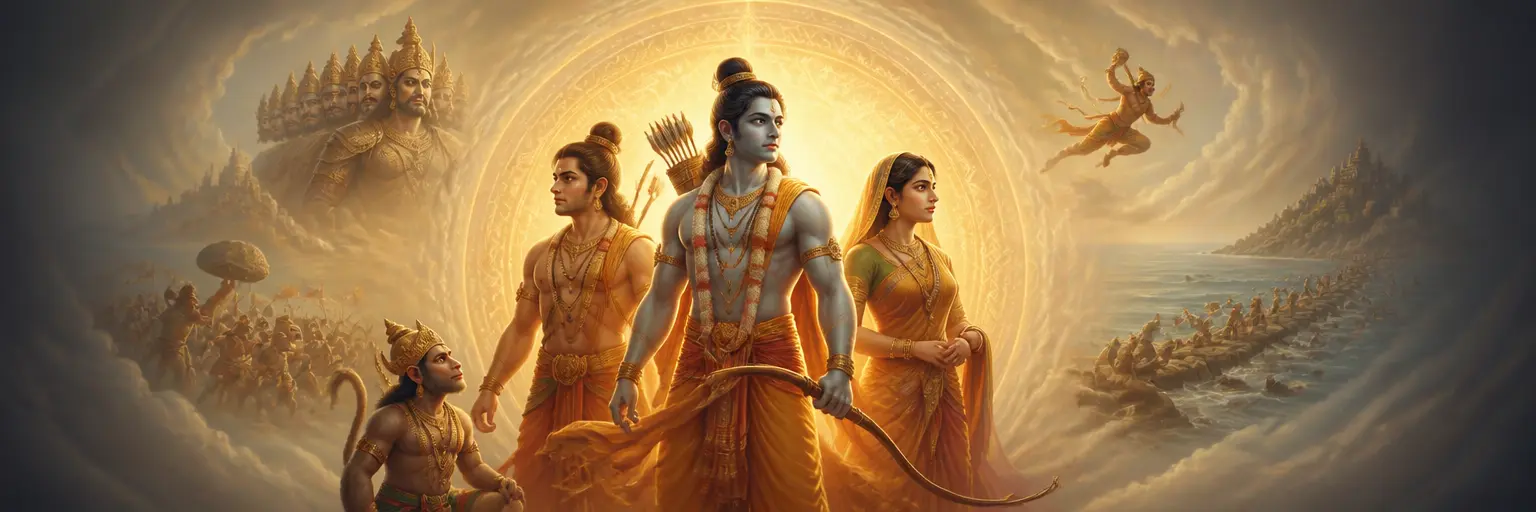

Ramayana
Read more about this topic
Explore the timeless Ramayana, one of India’s greatest epic narratives, featuring Lord Rama’s journey, Sita’s devotion, Hanuman’s loyalty, and the enduring triumph of dharma. Discover its mythology, characters, cultural influence, and historical significance as a cornerstone of ancient Indian literature and a living tradition that continues to inspire readers worldwide.
More in Ramayana



📖 Ramayana: Ancient Indian Epic Literature
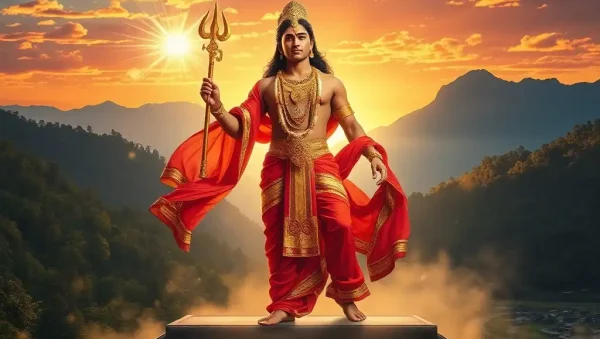
The Ramayana is one of the most influential Sanskrit epics in Indian history, literature, religion, and cultural tradition. This subcategory explores the story of Rama, Sita, Lakshmana, Hanuman, and Ravana, while examining the epic’s historical context, literary structure, ethical teachings, mythology, regional adaptations, and lasting influence across South and Southeast Asia. Readers can discover how the Ramayana reflects ancient Indian ideas about dharma, duty, kingship, devotion, family, justice, and moral responsibility.
🏹 The Story and Main Characters of the Ramayana
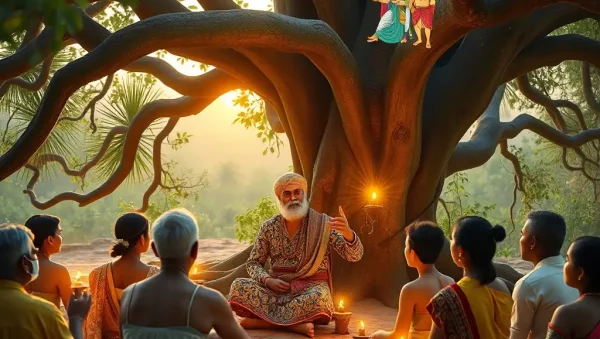
Explore the central narrative of the Ramayana, from Rama’s birth and royal upbringing to his exile, Sita’s abduction, the alliance with Hanuman and the vanara armies, and the final conflict with Ravana. Detailed explanations introduce the major characters, including Rama, Sita, Bharata, Lakshmana, Hanuman, Sugriva, Vibhishana, and Ravana, helping readers understand their roles in the epic.
This section also examines the relationships and decisions that drive the story forward. Readers can learn how loyalty, sacrifice, courage, devotion, and personal responsibility shape the Ramayana’s narrative and make it one of the most enduring works of ancient Indian epic literature.
📜 Valmiki Ramayana and Sanskrit Epic Tradition
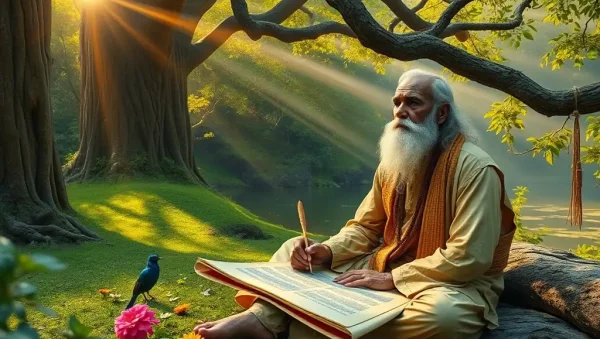
Learn about the Valmiki Ramayana, traditionally regarded as the earliest and foundational version of the epic. This section discusses Valmiki’s role, the structure of the seven kandas, Sanskrit poetic style, important episodes, and the Ramayana’s place within the wider tradition of Indian literature.
Readers can also explore how the epic combines mythology, royal history, moral philosophy, spiritual ideas, and dramatic storytelling. Key themes such as dharma, ideal kingship, righteous conduct, and the responsibilities of family and society are explained in a clear and accessible way.
🌿 Dharma, Morality, and Teachings in the Ramayana
The Ramayana is more than a heroic adventure; it is also a major source of ethical and philosophical reflection. Discover how the epic presents different interpretations of dharma, including the duties of a ruler, son, spouse, brother, friend, warrior, and devotee.
This section examines difficult moral questions found throughout the story, including Rama’s exile, Sita’s trials, Bharata’s loyalty, Lakshmana’s service, and Ravana’s misuse of power. Readers can consider how the Ramayana explores justice, honor, obedience, free will, compassion, leadership, and the consequences of desire.
🛕 Ramayana in Ancient Indian Religion and Culture
Discover the importance of the Ramayana in Hindu religious tradition and ancient Indian cultural history. The epic has influenced devotional practices, temple traditions, festivals, pilgrimage sites, storytelling, classical performance, and popular celebrations such as Rama Navami and Diwali.
Readers can learn how Rama is understood as an ideal king and divine figure, how Sita represents strength and devotion in different traditions, and why Hanuman remains a powerful symbol of faith, courage, and service. The section also highlights the connection between epic literature and the development of Indian cultural identity.
🌏 Regional and Southeast Asian Versions of the Ramayana
The Ramayana has inspired numerous retellings throughout India and across Southeast Asia. Explore regional versions such as the Ramcharitmanas, Kamba Ramayanam, Adhyatma Ramayana, and other literary, oral, and devotional traditions that reinterpret the story for different languages and communities.
This section also introduces adaptations from Thailand, Cambodia, Indonesia, Laos, Myanmar, Malaysia, and the Philippines. Readers can compare how characters, events, religious ideas, artistic styles, and political themes change across cultures while preserving the epic’s central interest in heroism, loyalty, righteousness, and the struggle between good and evil.
🎭 Ramayana in Art, Performance, and Popular Culture
Learn how the Ramayana has shaped Indian painting, sculpture, temple architecture, dance, theatre, puppetry, music, television, film, and modern literature. Famous episodes such as the building of Rama Setu, Hanuman’s journey to Lanka, and the battle between Rama and Ravana have inspired generations of artists and performers.
Readers can explore traditions including Ramlila, Kathakali, Yakshagana, shadow-puppet theatre, Southeast Asian dance dramas, and illustrated manuscripts. These artistic forms demonstrate how the Ramayana continues to evolve while remaining a significant source of history, mythology, education, and cultural memory.
❓ Frequently Asked Questions About the Ramayana
What is the Ramayana?
The Ramayana is an ancient Sanskrit epic traditionally attributed to the sage Valmiki. It tells the story of Rama, his exile, Sita’s abduction by Ravana, the search for Sita, and the battle to restore justice. It is one of the foundational works of Indian epic literature.
Who wrote the Ramayana?
The earliest major Sanskrit version is traditionally attributed to Valmiki, who is honored as the Adi Kavi, or first poet. Many later authors composed regional, devotional, and literary adaptations in languages including Awadhi, Tamil, Bengali, Telugu, Kannada, Malayalam, and Sanskrit.
How many books are in the Valmiki Ramayana?
The Valmiki Ramayana is generally divided into seven sections known as kandas: Bala Kanda, Ayodhya Kanda, Aranya Kanda, Kishkindha Kanda, Sundara Kanda, Yuddha Kanda, and Uttara Kanda. These sections describe the major stages of Rama’s life and quest.
Why is the Ramayana important in ancient Indian history?
The Ramayana is important because it preserves ideas about ancient Indian society, kingship, family structures, religious beliefs, moral duties, geography, warfare, and cultural values. Although it is an epic and not a modern historical chronicle, it provides valuable insight into Indian civilization, mythology, literature, and social imagination.
How has the Ramayana influenced other cultures?
The Ramayana has influenced literature, religion, theatre, dance, visual art, festivals, and political traditions across South and Southeast Asia. Its stories appear in regional forms such as the Ramakien of Thailand, the Reamker of Cambodia, and Indonesian adaptations, demonstrating the epic’s enduring global cultural influence.