
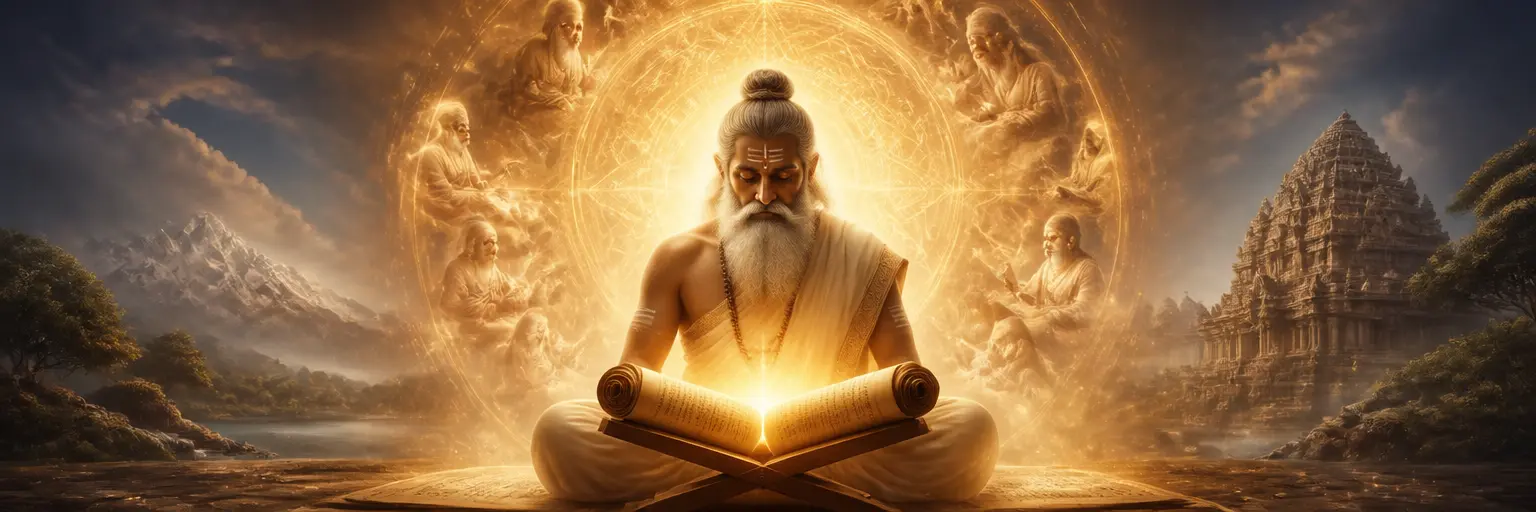

Vedas
Read more about this topic
Explore the Vedas, the foundational sacred texts of ancient Indian civilization and a cornerstone of Epic Literature. Discover timeless hymns, rituals, spiritual philosophies, and cultural insights that illuminate early Indian history, religion, language, and society. 📜✨ Dive into the origins of Vedic tradition and uncover how these influential scriptures shaped India’s intellectual and cultural heritage.
More in Vedas



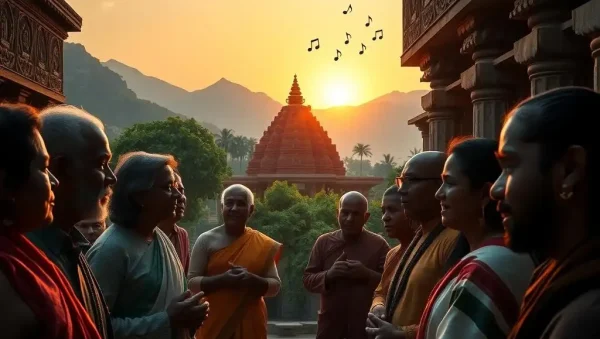


📜 Vedas: Sacred Texts of Ancient India
Explore the Vedas, the oldest sacred literature of India and a foundational source for understanding ancient Indian history, religion, philosophy, language, and culture. This subcategory examines the Rigveda, Samaveda, Yajurveda, and Atharvaveda, along with Vedic rituals, hymns, deities, social traditions, cosmology, and the development of early Indian thought. As part of Epic Literature on Ancient India History, these resources help readers discover how Vedic traditions influenced later Hindu philosophy, Sanskrit literature, religious practices, and the intellectual heritage of the Indian subcontinent.
🔥 The Four Vedas and Their Importance
Learn about the four principal Vedic texts: the Rigveda, known for its hymns; the Samaveda, associated with sacred musical chants; the Yajurveda, which preserves ritual formulas; and the Atharvaveda, containing prayers, healing traditions, domestic rites, and reflections on everyday life. Each Veda has a distinct purpose and provides valuable insight into the religious and cultural world of early Vedic India.
Readers can explore the structure of Vedic literature, including the Samhitas, Brahmanas, Aranyakas, and Upanishads. These texts reveal the gradual development of Vedic religion, Sanskrit composition, ritual knowledge, and philosophical inquiry, making them essential for anyone studying ancient Indian civilization.
🌅 Vedic Society, Religion, and Daily Life
Discover how the Vedas describe early Indo-Aryan society, family life, kingship, agriculture, pastoral communities, social duties, and relationships between humans and the natural world. Vedic hymns offer evidence about important institutions, religious specialists, tribal communities, and the changing social organization of northern India.
This section also explores Vedic gods and goddesses, including Indra, Agni, Soma, Varuna, Ushas, Surya, and Sarasvati. Readers will learn how sacrifices, prayers, sacred fire, seasonal observances, and oral recitation shaped Vedic religious practice and influenced later Indian traditions.
🕉️ Vedic Philosophy and Spiritual Thought
Examine the philosophical ideas that emerged from Vedic literature, including the nature of creation, cosmic order, the self, death, immortality, knowledge, and the relationship between human beings and the universe. Concepts such as ṛta, dharma, Brahman, and ātman developed through a long process of religious and philosophical reflection.
The Vedas and their later explanatory texts provide an important foundation for understanding Hindu philosophy and Indian spiritual traditions. Readers can trace how ritual-centered beliefs gradually expanded into deeper questions about consciousness, ultimate reality, liberation, and the meaning of existence.
🎶 Sanskrit, Oral Tradition, and Vedic Preservation
The Vedas were preserved for centuries through highly accurate oral traditions rather than relying solely on written manuscripts. Explore the complex methods of Vedic recitation, pronunciation, accent, memorization, and teacher-student transmission that helped protect the integrity of these ancient Sanskrit texts.
Readers will also discover why the Vedas are important to the history of Sanskrit literature and comparative linguistics. Their language, poetic meters, vocabulary, and ritual terminology offer valuable evidence for studying the evolution of Indo-Aryan languages and the intellectual achievements of ancient Indian scholars.
🏺 Archaeology and the Historical Vedic Period
Learn how historians and archaeologists study the Vedic period through textual evidence, settlement patterns, material culture, agriculture, metallurgy, pottery, river systems, and connections with earlier civilizations. The Vedas are interpreted alongside archaeological discoveries to develop a more balanced understanding of ancient Indian history.
This approach highlights both the possibilities and limitations of using sacred literature as historical evidence. Readers can explore discussions about the Indus Valley Civilization, early Vedic communities, migration theories, chronology, and the formation of ancient Indian society while distinguishing literary tradition from archaeological interpretation.
❓ Frequently Asked Questions About the Vedas
What are the Vedas?
The Vedas are a collection of ancient Sanskrit texts that preserve hymns, prayers, ritual instructions, philosophical reflections, and religious knowledge. They are regarded as the oldest sacred scriptures of Hinduism and are central to the study of ancient Indian religion and culture.
How many Vedas are there?
There are four main Vedas: the Rigveda, Samaveda, Yajurveda, and Atharvaveda. Each has a different focus, ranging from hymns and melodies to sacrificial formulas, healing practices, domestic rituals, and spiritual teachings.
Which is the oldest Veda?
The Rigveda is generally considered the oldest of the four Vedas. It contains more than one thousand hymns dedicated to various deities and natural forces and is one of the most important sources for understanding early Vedic religion and Sanskrit poetry.
Why are the Vedas important in ancient Indian history?
The Vedas provide evidence about early Indian beliefs, rituals, social organization, political authority, language, geography, economy, and ideas about the cosmos. Although they are religious texts rather than straightforward historical chronicles, they are essential sources for researching the Vedic period.
What is the connection between the Vedas and Hinduism?
The Vedas form the foundation of many Hindu religious concepts and practices, including sacred fire rituals, mantras, priestly traditions, and ideas of dharma. Later texts such as the Upanishads, epics, Puranas, and major philosophical schools developed and reinterpreted themes that originated in Vedic literature.