
The Role of Sage Valmiki in the Creation of the Ramayana

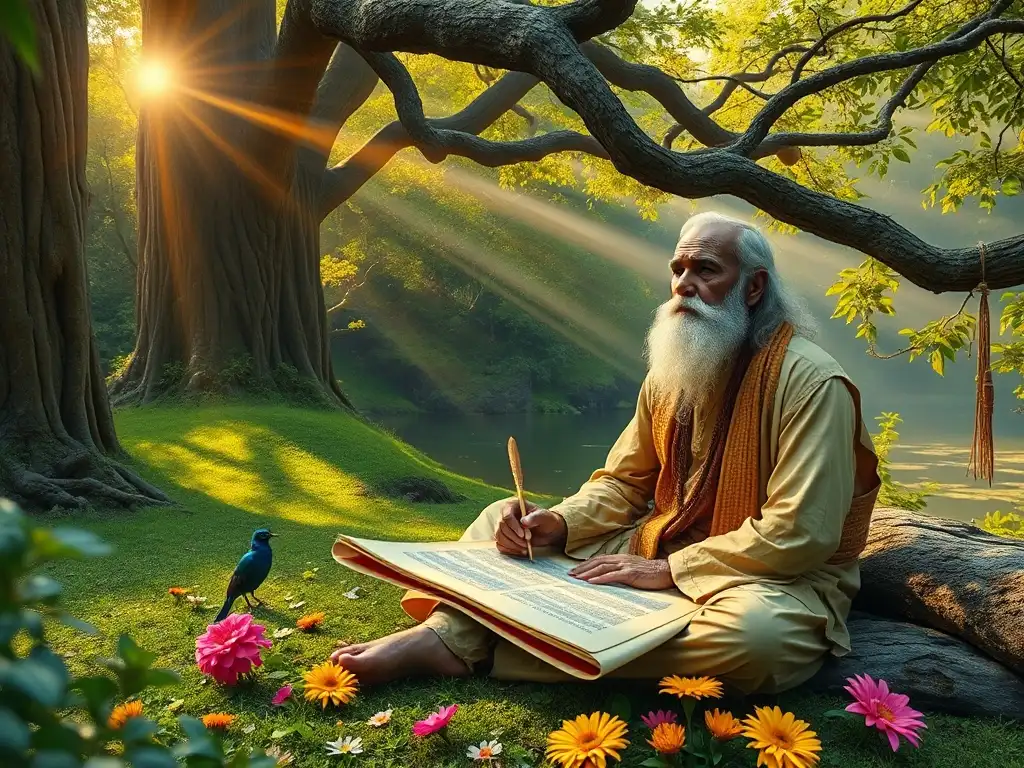
Welcome to Ancient India History, where we embark on a captivating journey through the rich tapestry of India's past! Delve into the remarkable contributions of ancient Indian civilizations, from the sophisticated cultures of the Indus Valley to the philosophical advancements of the Gupta Empire. In this article, we will explore the profound significance of Sage Valmiki and his monumental work, the Ramayana, a cornerstone of epic literature that continues to inspire generations.
What makes Valmiki's narrative resonate through the ages? Join us as we unravel the layers of this timeless epic and uncover the wisdom it holds for us today!
Introduction to Sage Valmiki and the Ramayana
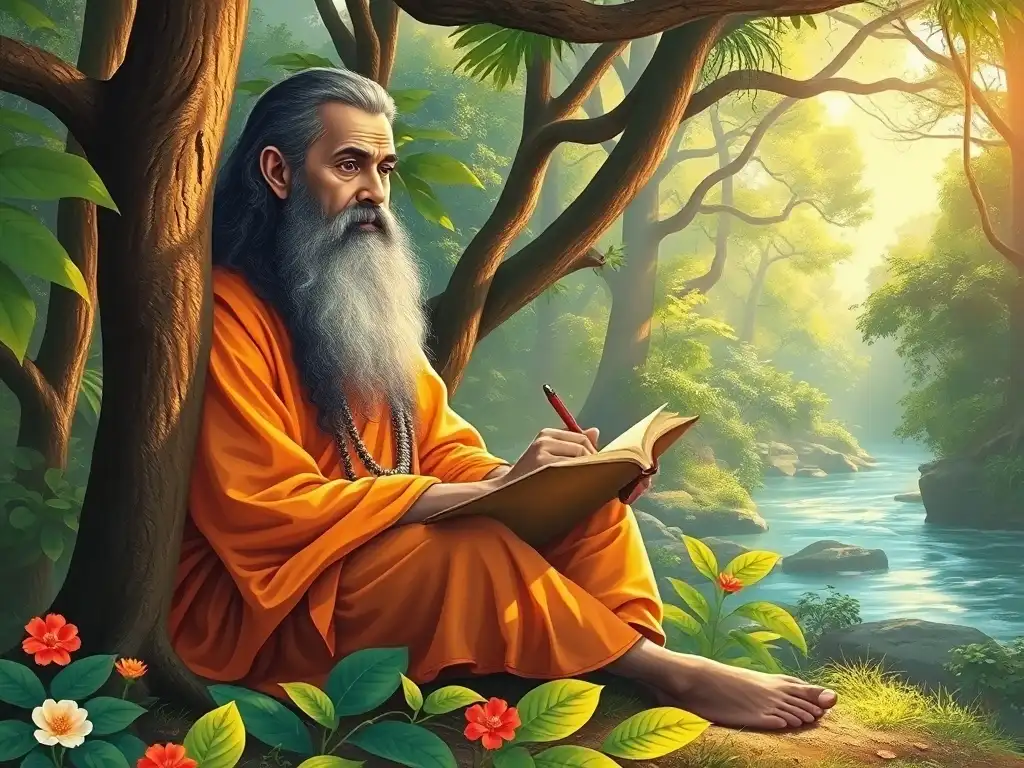
The creation of the Ramayana, one of the two great epics of ancient Indian literature, is intrinsically linked to the revered figure of Sage Valmiki. Renowned as the first poet or Adi Kavi, Valmiki's contributions extend beyond mere narration; he crafted a profound narrative that encapsulated the ethos, morality, and cultural values of ancient Indian society.
The significance of Sage Valmiki in the context of the Ramayana not only highlights his literary genius but also emphasizes the epic's role in shaping the spiritual and ethical framework of Hindu civilization. This article delves into the multifaceted contributions of Sage Valmiki, exploring his life, historical context, and the enduring impact of the Ramayana on Indian culture.
Overview of the Ramayana's Importance in Epic Literature
The Ramayana stands as a monumental work in epic literature, distinguished by its intricate characters, moral dilemmas, and narrative depth. Composed in Sanskrit, it recounts the life of Lord Rama, his virtues, and the trials he faces, ultimately emphasizing the principles of dharma (righteousness) and devotion.
- Cultural Significance: The Ramayana has influenced literature, art, and dance across India and beyond, serving as a source of inspiration for countless adaptations and retellings.
- Moral Lessons: The epic encapsulates timeless moral lessons, making it a cornerstone of ethical teaching in Indian philosophy.
- Spiritual Depth: It offers profound insights into devotion and the human condition, making it a spiritual guide for millions.
Significance of Sage Valmiki in Ancient Indian History
Sage Valmiki's significance transcends his role as the author of the Ramayana; he is a symbol of transformation and redemption. His journey from a bandit to a revered sage epitomizes the possibility of change and moral evolution.
- Literary Innovation: Valmiki introduced the shloka (verse) form, which revolutionized Sanskrit poetry and set a precedent for future literary works.
- Cultural Legacy: His narratives not only reflect the socio-political landscape of his time but also instill values that continue to resonate within contemporary Indian society.
- Historical Reverence: Valmiki’s contributions have been commemorated in various forms, including temples and festivals, signifying his enduring legacy in the spiritual fabric of India.
Historical Context of Sage Valmiki
Life and Background of Sage Valmiki
Valmiki's life story is as compelling as the epic he composed. Born into a humble family, his early years were marked by hardship and moral ambiguity. His transformation into a sage is often attributed to divine intervention, which led him to renounce his past and seek enlightenment.
- The Encounter with Narada: The pivotal moment in his life came when he met the sage Narada, who inspired him to reflect on his actions and pursue a righteous path.
- The Composition of the Ramayana: After several years of meditation and introspection, Valmiki was divinely inspired to pen down the Ramayana, thus beginning a literary journey that would shape Indian culture for centuries.
The Time Period of Sage Valmiki's Contributions
Sage Valmiki emerged during a period of significant transition in ancient India, approximately between the 5th century BCE and the 2nd century BCE. This era was characterized by:
- Cultural Flourishing: The rise of various philosophical schools and the establishment of major trade routes contributed to a vibrant cultural and intellectual climate.
- Religious Developments: The evolution of Hindu thought, alongside the emergence of Buddhism and Jainism, influenced the narratives and themes Valmiki incorporated into the Ramayana.
- Historical Significance: The time was marked by the formation of powerful kingdoms and the consolidation of social structures, providing a rich backdrop for the tales of valor and virtue depicted in the epic.
In exploring the life and contributions of Sage Valmiki, we gain a deeper understanding of how his epic, the Ramayana, not only narrates a tale of heroism but also serves as a moral compass that continues to guide and inspire generations.
The Creation of the Ramayana
The Ramayana, one of the two great epics of ancient India, is attributed to Sage Valmiki, who is often referred to as the 'Adi Kavi' or the first poet. The epic narrates the life and adventures of Lord Rama, his wife Sita, and his loyal companion Hanuman, encapsulating the ideals of virtue, duty, and righteousness. Valmiki's contribution to this timeless narrative is immense, as he not only authored the text but also infused it with profound philosophical and ethical dimensions that continue to resonate with readers across generations.
Inspiration Behind the Ramayana's Composition
Sage Valmiki's inspiration for composing the Ramayana is said to have stemmed from a deeply personal experience. According to legend, while meditating by the banks of the Tamasa River, he witnessed a poignant scene of a hunter killing a bird, causing the surviving mate immense grief. This moment profoundly affected him and prompted him to reflect on the themes of loss, love, and the transient nature of life.
Moved by this incident, Valmiki sought to articulate the virtues of compassion and righteousness, which would later become central themes in the Ramayana. The epic is thus not merely a story of heroism but also a meditation on human emotions and moral dilemmas, capturing the essence of the human experience.
The Process of Writing the Ramayana
Valmiki's approach to writing the Ramayana was methodical and innovative. He utilized a unique meter known as shloka, which allowed him to convey complex ideas in a rhythmic and lyrical form. The composition was not merely a linear storytelling exercise; instead, it involved careful planning and a deep understanding of character development and thematic exploration.
Valmiki is said to have drawn from various oral traditions and local legends while crafting the narrative, ensuring that the epic would resonate with diverse audiences. The Ramayana is structured into seven books, known as Kandas, each detailing different phases of Lord Rama's life, from his birth to his eventual return to Ayodhya. This structured approach contributed to the epic's enduring appeal and accessibility, establishing a framework that has influenced countless adaptations and retellings.
Structure and Style of Valmiki's Ramayana
The Ramayana is characterized by its intricate narrative structure and poetic style, which reflects Valmiki's mastery of language. The epic is composed in the Anushtubh meter, a 32-syllable verse form that enhances the lyrical quality of the text. Valmiki's use of vivid imagery and descriptive language immerses readers in the world of the epic, allowing them to visualize the characters and events.
The narrative is rich with dialogues, allowing for a dynamic exchange of ideas and emotions among characters. Valmiki's skillful characterization brings to life a diverse cast, from the noble and virtuous Rama to the cunning Ravana, each embodying various aspects of human nature. The interplay of dharma (duty), karma (action), and the moral complexities faced by the characters are central to the epic's style, making it a profound exploration of ethical principles.
Themes and Messages in the Ramayana
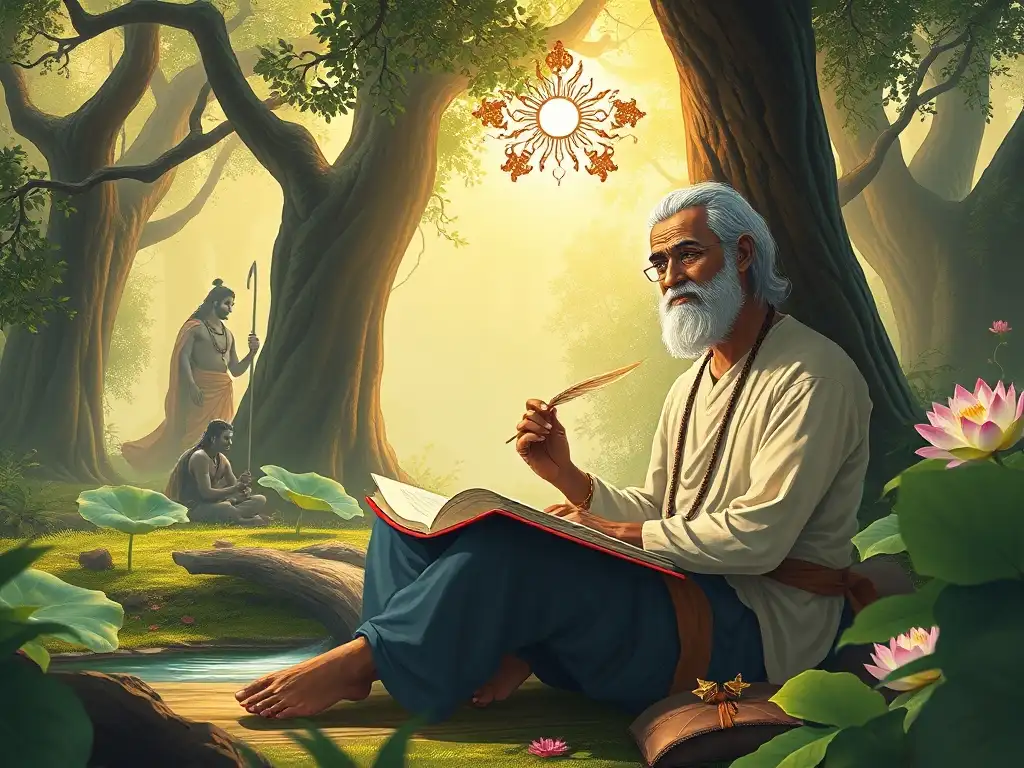
The Ramayana is not only a tale of adventure but also a profound exploration of various themes that reflect the cultural and moral fabric of ancient Indian society. Sage Valmiki's narrative delves into the complexities of life and the human condition, presenting a rich tapestry of themes that continue to be relevant today.
Moral Lessons Conveyed by Sage Valmiki
Sage Valmiki's Ramayana is replete with moral lessons that guide readers on the path of righteousness. One of the most prominent lessons is the concept of dharma, or duty, which is exemplified through Lord Rama's unwavering commitment to uphold righteousness, even in the face of personal loss and hardship. The epic teaches the importance of integrity, loyalty, and sacrifice, showcasing the consequences of choices made by its characters.
For instance, Sita's steadfastness and loyalty to Rama, despite facing dire challenges, serve as a testament to the strength of character and devotion. Additionally, the narrative illustrates the repercussions of unrighteous actions, as seen in Ravana's downfall, underscoring the principle that one's actions ultimately determine their fate.
The Representation of Dharma in the Ramayana
Dharma, or righteousness, is a central theme in the Ramayana, shaping the actions and decisions of its characters. Valmiki portrays the struggles of individuals as they navigate their responsibilities and moral dilemmas. Lord Rama embodies the ideal of dharma, consistently making choices that reflect his duty as a son, husband, and king.
His exile, though a personal sacrifice, is depicted as a necessary adherence to his father's promise, illustrating the complexities of familial duty. Conversely, Ravana's disregard for dharma ultimately leads to his destruction, highlighting the consequences of straying from the path of righteousness. Through these contrasting portrayals, Valmiki emphasizes the significance of adhering to one's dharma, reinforcing the belief that moral integrity is paramount to achieving harmony and balance in life.
Sage Valmiki's Influence on Indian Culture
Sage Valmiki, often referred to as the "Adi Kavi" or the first poet, holds a pivotal role in shaping the cultural fabric of India through his magnum opus, the Ramayana. This epic not only narrates the story of Lord Rama but also encapsulates the moral and ethical values that are central to Indian society. Valmiki's portrayal of virtue, duty, and righteousness resonates deeply within the cultural consciousness of India, influencing various aspects of life, including art, music, dance, and drama.
The Ramayana has inspired numerous adaptations across different regional languages and forms, each reflecting local cultures while adhering to the core narrative established by Valmiki. The epic has become a cultural touchstone, often recited in households and celebrated during festivals, such as Diwali, emphasizing the triumph of good over evil. Valmiki's teachings on dharma (duty) and the importance of family values continue to guide moral conduct, showcasing the enduring impact of his work on Indian culture.
Valmiki's Role in Shaping Indian Literature
Valmiki's contributions to Indian literature extend beyond the Ramayana; he set a precedent for literary expression in Sanskrit poetry. His use of the shloka meter established a rhythmic pattern that has been emulated by countless poets throughout history. This innovative approach to poetry laid the groundwork for future epics and literary works, influencing writers across generations.
The narrative techniques employed by Valmiki, such as character development and vivid imagery, have enriched the storytelling tradition in India. His ability to weave philosophical themes into the fabric of a captivating story has inspired countless adaptations and reinterpretations. As a result, Valmiki is often regarded as a cornerstone of Indian literary heritage, whose influence can be seen in the works of later poets and playwrights, including Kalidasa and Bhasa, who drew inspiration from his epic storytelling style.
The Legacy of Sage Valmiki in Modern Context
The legacy of Sage Valmiki resonates strongly in contemporary Indian society. His teachings and the principles embedded in the Ramayana continue to inspire modern literature, cinema, and even political discourse. Valmiki's emphasis on righteousness and justice serves as a moral compass for individuals and communities, urging them to uphold ethical values in an ever-changing world.
In modern times, various reinterpretations of the Ramayana explore themes of gender, ethics, and social justice, showcasing the epic's relevance in addressing contemporary issues. Moreover, Valmiki's life story, from a thief to a revered sage, serves as a powerful narrative of transformation and redemption, encouraging individuals to seek personal growth and moral rectitude. His legacy is celebrated through literature festivals, workshops, and academic discussions, solidifying his place as a significant figure not only in ancient Indian history but also in present-day cultural discourse.
Conclusion
The significance of Sage Valmiki in the creation of the Ramayana is profound and multifaceted. His influence permeates various aspects of Indian culture, literature, and societal values, establishing him as a central figure in the narrative of Indian civilization. Valmiki's work continues to inspire and guide generations, highlighting the timeless nature of his teachings.
The Lasting Significance of Sage Valmiki in the Ramayana
Sage Valmiki’s role in the Ramayana transcends mere authorship; he embodies the spirit of the epic itself. The values of compassion, duty, and righteousness that he espouses are vital components of Indian ethos. His ability to articulate complex human emotions and moral dilemmas makes the Ramayana a significant spiritual and philosophical text. The reverence for Valmiki in various traditions, including those that worship him as a deity, emphasizes his importance in the spiritual landscape of India.
Reflection on the Impact of the Ramayana in Ancient Indian Civilization
The Ramayana, as crafted by Sage Valmiki, played a crucial role in shaping the socio-political and cultural landscape of ancient India. It served as a means of imparting moral education, reinforcing social norms, and providing a framework for understanding the divine. The epic's narratives fostered a sense of unity and identity among diverse populations, helping to bridge regional and linguistic divides.
The lessons derived from the Ramayana continue to resonate, reminding us of the enduring power of storytelling in shaping civilizations and guiding human behavior. Through Valmiki’s lens, the Ramayana remains not only a literary masterpiece but also a vital cultural artifact that enriches our understanding of ancient Indian civilization.
- Introduction to Sage Valmiki and the Ramayana
- Historical Context of Sage Valmiki
- The Creation of the Ramayana
- Themes and Messages in the Ramayana
- Sage Valmiki's Influence on Indian Culture
- Conclusion
Frequently Asked Questions
What is the significance of Sage Valmiki in Indian literature?
Sage Valmiki is often referred to as the "Adi Kavi" or the first poet, credited with composing the Ramayana, a foundational epic that shapes Indian literature and culture.
How did Sage Valmiki contribute to the Ramayana?
Sage Valmiki is known for crafting the Ramayana into a structured poem, weaving moral lessons, devotion, and the heroic journey of Lord Rama throughout the narrative.
What themes are explored in the Ramayana by Sage Valmiki?
The Ramayana explores various themes like dharma (duty), loyalty, love, and the struggle between good and evil, which are central to Indian moral philosophy.
What impact did the Ramayana have on ancient Indian society?
The Ramayana played a crucial role in shaping cultural values, traditions, and social norms in ancient India, influencing everything from literature to performing arts.
How is Sage Valmiki's legacy preserved in modern times?
Sage Valmiki's legacy continues through various adaptations of the Ramayana in literature, theater, and television, ensuring his teachings and stories remain relevant in contemporary society.
Final Reflection: The Enduring Significance of Sage Valmiki in the Ramayana
The legacy of Sage Valmiki in the creation of the Ramayana is not just a tale from ancient texts; it is a profound reflection of our cultural and spiritual ethos that resonates deeply in today's world. As we navigate the complexities of modern life, the teachings and narratives woven by Valmiki continue to inspire and guide us, reminding us of the timeless values of righteousness, duty, and devotion. The Ramayana is more than a story; it is a mirror reflecting our own struggles and aspirations.
Sage Valmiki's influence extends beyond literature; it shapes our understanding of morality and ethics in society. His portrayal of characters grappling with dilemmas and their journeys towards enlightenment serves as a powerful reminder of the human experience. As Valmiki himself once said, The one who is steadfast in their duty, even in the face of adversity, is the true hero.
This sentiment echoes through generations, urging us to embody resilience and integrity in our own lives.
As we conclude our exploration of Sage Valmiki's significance in the Ramayana, I invite you to reflect on how these ancient teachings can be applied to your own journey. Consider the virtues of compassion, courage, and commitment that Valmiki exemplified. Let the stories inspire you to cultivate these qualities in your daily life, fostering a deeper connection with yourself and the world around you. In doing so, we not only honor Valmiki's legacy but also contribute to a more harmonious and understanding society.
Unveil the Legacy of Valmiki: Take Action Today!
Thank you for diving into the fascinating world of Sage Valmiki and his monumental contribution to the Ramayana! Your interest in this rich tapestry of Indian history is truly commendable, and we hope you’ve been inspired by the lessons and insights shared in our article. Now, let’s take the next step together.
Here’s how you can deepen your connection to this epic tale:
- Explore your local library or online resources to read various interpretations of the Ramayana and its enduring themes.
- Join a community group, forum, or social media platform dedicated to Indian mythology to share insights and engage in discussions with fellow enthusiasts.
- Volunteer for storytelling events that promote the teachings of Valmiki, bringing this ancient wisdom to new audiences.
What aspect of Valmiki's story resonates with you the most, and how will you share that message with others?