
Discovering the Hidden Meanings in the Ramayana's Verses


Welcome to Ancient India History, where we embark on a captivating journey through the rich tapestry of ancient Indian civilizations. Delve into the hidden meanings in the Ramayana, an epic that not only narrates a timeless story but also unveils profound insights into life, morality, and devotion. As we explore the layers of this monumental text, you'll uncover its significance beyond mere tales, sparking your curiosity to discover what lies beneath the surface.
Prepare to be enlightened and inspired as we unravel the wisdom woven into the verses of the Ramayana. Join us as we dive deeper into this epic literature and the remarkable legacy of ancient India!
Introduction to the Ramayana
The Ramayana is not just a narrative of adventure and heroism; it is a profound epic that encapsulates the essence of ancient Indian philosophy, ethics, and spirituality. Composed by the sage Valmiki, the Ramayana traces the life of Lord Rama, his devoted wife Sita, and his loyal companion Hanuman, weaving a tale rich with moral lessons, cultural values, and deep emotional undertones.
As readers delve into its verses, they often encounter layers of meaning that extend beyond the surface narrative, revealing insights into human nature, societal norms, and spiritual truths. This exploration of the hidden meanings in Ramayana invites readers to look beyond the obvious and discover the deeper messages that have resonated through generations.
Overview of the Ramayana Epic
The Ramayana is divided into seven Kandas (books) and consists of approximately 24,000 verses. Each Kanda serves as a distinct chapter in Rama's journey, from his exile in the forest to the eventual triumph over the demon king Ravana. The epic is not only a story of good versus evil but also incorporates themes of duty (dharma), righteousness, and devotion. Its characters embody various ideals, serving as archetypes that reflect the complexities of human experiences. For instance:
- Rama represents the ideal man and king.
- Sita symbolizes virtue and fidelity.
- Hanuman exemplifies devotion and courage.
Through these characters, the Ramayana conveys messages about moral integrity, the importance of relationships, and the quest for truth, making it a timeless piece of literature.
Significance of the Ramayana in Ancient Indian Literature
The Ramayana holds a pivotal place in ancient Indian literature and culture. Its influence extends beyond mere storytelling; it has shaped social norms, artistic expressions, and religious practices in India and across Southeast Asia. The epic has inspired countless adaptations, performances, and artistic representations, including:
- Dance dramas (such as Kathakali and Bharatanatyam)
- Theatrical plays
- Literary reimaginings
Moreover, the Ramayana's teachings on ethics and morality continue to resonate in contemporary society. It serves as a guiding framework for personal conduct and public duty, emphasizing the significance of righteousness in both individual and collective life.
In exploring the hidden meanings in Ramayana, it is essential to understand that sacred texts often employ symbolism and allegory to convey deeper spiritual truths. The layers of meaning found within these texts challenge readers to engage actively with the material, encouraging reflection and personal interpretation.
Understanding Symbolism in Epic Literature
Symbolism is a powerful tool used in epic literature to impart complex ideas and emotions. In the Ramayana, various elements symbolize larger concepts:
- The forest represents the trials and tribulations of life.
- Ravana symbolizes the ego and attachment that lead one astray from righteousness.
- The journey of Rama signifies the pursuit of dharma and the quest for self-realization.
By dissecting these symbols, readers can unlock a wealth of wisdom that transcends the narrative itself, allowing for a more profound appreciation of the text.
The Role of Allegory in the Ramayana
Allegory further enriches the Ramayana, offering a dual narrative that addresses both the literal and metaphorical dimensions of the story. The characters and events often serve as representations of broader philosophical concepts and moral dilemmas. For instance, Rama's exile can be seen as an allegory for the struggles faced in adhering to one's duty, while the ultimate victory over Ravana illustrates the triumph of good over evil.
Understanding these allegorical elements invites readers to reflect on their own lives and the choices they make, fostering a deeper connection to the text and its teachings. The Ramayana thus becomes not only a story to be read but a source of guidance for navigating the complexities of life.
Layers of Interpretation in the Ramayana
The Ramayana, one of the greatest epics in Indian literature, is rich with layered meanings that go beyond the surface narrative. Each character, event, and dialogue is imbued with philosophical, moral, and spiritual lessons that resonate with readers across generations. The beauty of the Ramayana lies in its ability to be interpreted in various ways, reflecting different aspects of life, society, and personal conduct. Scholars and devotees alike have dissected the text, revealing layers of interpretation that include literal, allegorical, and metaphysical dimensions.
- Literal Interpretation: This involves understanding the story as a historical narrative about Lord Rama, his exile, the abduction of Sita, and the subsequent battle with Ravana. For many, this is the foundational layer that provides the storyline and characters.
- Allegorical Interpretation: Many verses are viewed as metaphors for the struggles of life, depicting the battle between good and evil, righteousness (dharma), and the moral dilemmas faced by individuals. This layer encourages readers to reflect on their own lives and the choices they face.
- Metaphysical Interpretation: The Ramayana also explores profound spiritual concepts, such as the nature of the soul, the quest for liberation (moksha), and the relationship between the individual and the divine. This interpretation invites readers to contemplate their existence and the ultimate truths of life.
Historical Context and Its Influence on Meaning
Understanding the historical context of the Ramayana is crucial for grasping its hidden meanings. Composed during a time when Indian society was undergoing significant changes, the epic reflects the ideals, values, and challenges of its era. The Ramayana encapsulates the socio-political dynamics of ancient India, where concepts of kingship, duty, and righteousness were paramount.
- Political Landscape: The epic is set against the backdrop of ancient kingdoms, with specific reference to the struggles for power and justice. The character of Rama is often seen as an ideal king, embodying the virtues of dharma and effective governance. His journey can be interpreted as a commentary on the responsibilities of rulers and the moral complexities of leadership.
- Cultural Norms: The Ramayana also mirrors the societal norms of its time, particularly regarding gender roles, familial duties, and social hierarchy. The interactions between characters highlight the expectations placed upon individuals within their familial and societal structures. Sita's unwavering loyalty and strength serve as both a critique and a celebration of feminine virtues in ancient times.
- Religious Influence: The text is steeped in Hindu philosophy and spirituality, reflecting the religious sentiments of the period. The portrayal of divine characters and their interactions with humans illustrates the connection between the earthly and the divine, providing a framework for understanding duty, devotion, and the pursuit of righteousness.
The Ramayana contains numerous verses that encapsulate profound wisdom and insight. These verses often serve as aphorisms that provide guidance on moral dilemmas and the complexities of human relationships. By delving into these key verses, readers can uncover layers of meaning that resonate with their own experiences and challenges.
Exploration of Major Verses in the Ramayana
Several verses in the Ramayana stand out for their depth and significance. For instance, the verse "Dharma rakshati rakshitah" translates to "Dharma protects those who protect it." This encapsulates the essence of living a life of righteousness and the reciprocal relationship between duty and protection.
Another notable verse is Sita's declaration of her purity, which raises questions about honor, loyalty, and societal expectations. These verses not only drive the narrative but also serve as focal points for deeper philosophical inquiry.
Interpretation of Specific Verses and Their Symbolism
Each verse in the Ramayana can be viewed through various interpretative lenses:
- Sita's Agni Pariksha (Trial by Fire): This episode symbolizes the trials of purity and fidelity. Sita's willingness to undergo the test reflects her strength and resilience, while also critiquing societal standards imposed on women.
- Rama's Exile: Rama’s acceptance of his exile is a powerful lesson in self-sacrifice and adherence to dharma, emphasizing the importance of duty over personal desire. This event serves as a reminder of the struggles individuals face when balancing personal and societal expectations.
- Hanuman's Devotion: The character of Hanuman exemplifies the ideals of devotion and service. His unwavering loyalty to Rama serves as an archetype for bhakti (devotion) and illustrates the transformative power of faith and dedication.
By exploring these verses and their symbolism, readers can uncover the hidden meanings in the Ramayana that continue to inspire and guide individuals in their spiritual and moral journeys.
Themes and Motifs Unveiled
The Ramayana, one of the quintessential texts of ancient Indian literature, is rich with layered meanings that extend beyond its narrative. The verses are imbued with themes and motifs that resonate deeply with the human experience, reflecting moral dilemmas, spiritual quests, and the complexities of relationships. By examining these themes, readers can uncover the hidden meanings in the Ramayana, enriching their understanding of its characters and storylines.
The Theme of Dharma: Duty and Morality
At the heart of the Ramayana lies the concept of Dharma, often translated as duty or righteousness. This theme is pivotal as it underscores the moral responsibilities each character faces, influencing their actions and decisions throughout the epic. Rama, as the embodiment of Dharma, showcases the struggles of adhering to one's duties even in the face of personal loss. His commitment to uphold his father’s promise and his role as an ideal son, husband, and king illustrates the challenges of balancing personal desires with societal obligations.
The theme of Dharma is not one-dimensional; it raises questions about the nature of morality itself. For instance, Sita’s abduction poses ethical dilemmas regarding loyalty and honor. The complexities of each character’s choices reflect the intricate web of moral expectations in their society. Thus, the Ramayana serves as a profound commentary on the perennial struggle between duty and personal happiness, offering readers a framework to explore their own moral landscapes.
The Role of Bhakti: Devotion and Faith
Another significant theme in the Ramayana is Bhakti, or devotion. This theme manifests through various characters' unwavering faith in divine beings and their commitment to spiritual practice. Hanuman, the devoted monkey god, epitomizes Bhakti with his selfless service to Rama. His unwavering loyalty and courage highlight the power of devotion in overcoming seemingly insurmountable obstacles.
The verses emphasize that true devotion transcends mere ritualistic worship; it is a heartfelt connection with the divine. This relationship is illustrated through the interactions between Rama and his devotees, signaling that faith can be a source of strength and guidance. By unraveling the layers of Bhakti, readers can appreciate the profound spiritual dimensions of the Ramayana, recognizing that devotion can lead to transformative experiences in one's life.
Concept of Good vs. Evil: Symbolic Representations
The Ramayana intricately explores the binary of good vs. evil, presenting complex characters who embody these opposing forces. Rama, representing virtue and righteousness, stands in stark contrast to Ravana, the demon king, who symbolizes adharma or unrighteousness. However, the epic transcends simplistic dichotomies by revealing the nuances of each character's motivations and humanity.
Ravana, despite his antagonistic role, is portrayed as a learned scholar and a powerful ruler, challenging the notion of absolute evil. His hubris and desire for power serve as cautionary tales about the consequences of unchecked ambition. This complexity invites readers to reflect on their own perceptions of good and evil, recognizing that these concepts often exist on a spectrum, rather than in black and white.
The Characters as Symbols
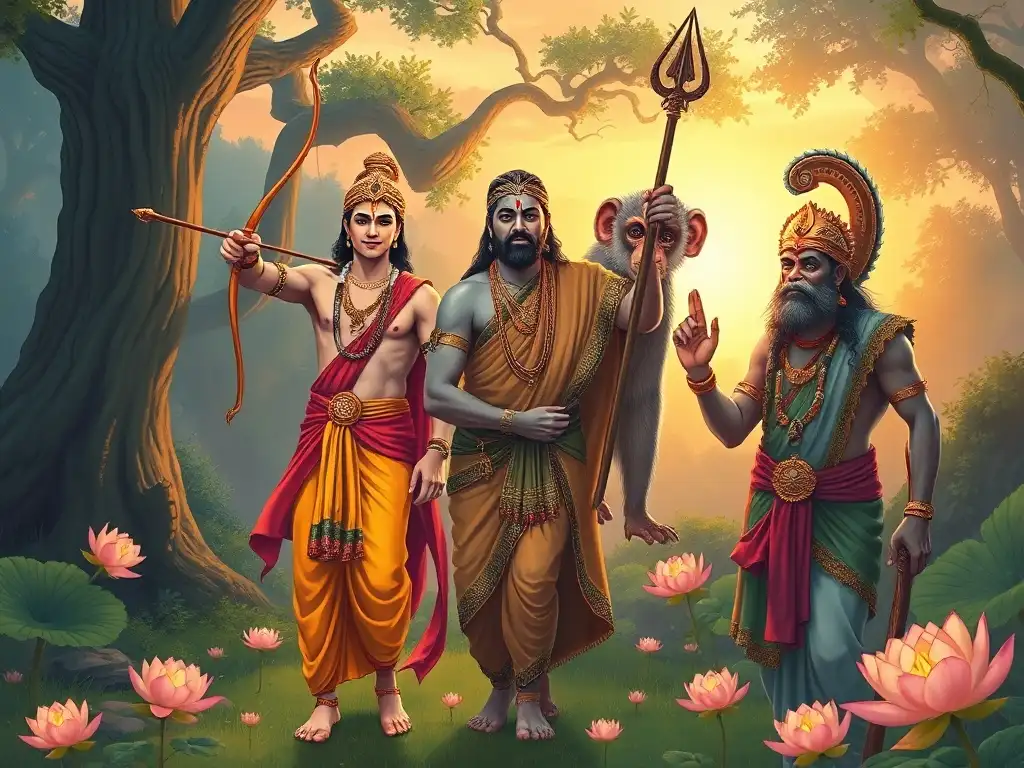
The characters in the Ramayana are not merely figures in a story; they serve as symbols representing various virtues, vices, and philosophical ideas. Their journeys are interwoven with the epic’s themes, allowing for a deeper exploration of human nature and societal values.
Rama: The Ideal Man and His Hidden Qualities
Rama is often hailed as the Maryada Purushottama, or the ideal man. His character embodies the virtues of courage, honor, and righteousness. However, hidden within his noble facade are qualities that reflect the struggles of an individual faced with life's complexities. His emotional depth, vulnerability, and moments of doubt reveal a more relatable human experience, allowing readers to connect with his journey on a personal level.
Rama's adherence to Dharma, despite personal sacrifices, underscores the importance of integrity and moral clarity. His decisions, while guided by duty, often lead to significant emotional turmoil, illustrating the dualities of leadership and personal sacrifice. By recognizing these hidden qualities, one can appreciate the multifaceted nature of Rama's character, making him a timeless symbol of virtue.
Sita: The Embodiment of Strength and Virtue
Sita, Rama's wife, is often viewed through the lens of traditional femininity, yet her character represents profound strength and resilience. Throughout the Ramayana, Sita faces numerous trials, from her abduction by Ravana to her eventual trial by fire. Each challenge reveals her unwavering virtue and inner strength, which often goes unrecognized in conventional interpretations.
Sita's character challenges the norms of her time, portraying a woman who actively influences her destiny rather than merely being a passive figure. Her loyalty to Rama, even in adversity, showcases the complexities of love and sacrifice. By delving into Sita’s character, readers can uncover a narrative that celebrates feminine strength and virtue, transcending traditional gender roles.
Ravana: The Complex Antagonist with Deeper Meanings
Ravana, often depicted as the archetypal villain, possesses a depth that invites further exploration. His character embodies the complexities of ambition, power, and desire. As a learned scholar and a devout follower of Shiva, Ravana’s multifaceted nature complicates the simplistic view of him as purely evil.
His actions, driven by a desire for power and recognition, reflect the human inclination towards ego and ambition. The Ramayana presents Ravana not just as an antagonist but as a symbol of the darker aspects of human nature, urging readers to confront their own inner demons. By examining Ravana’s character, the Ramayana encourages a deeper understanding of the motivations behind one’s actions, emphasizing that even those who stray from the path of righteousness can possess redeeming qualities.
Modern Interpretations of the Ramayana
The Ramayana, an ancient Indian epic attributed to the sage Valmiki, has been subject to numerous interpretations throughout history. In modern times, the text has been re-evaluated to reflect contemporary values, social issues, and cultural transformations. Scholars and literary critics have explored themes of morality, duty, and human relationships within the narrative, revealing layers of meaning that resonate with today's audiences.
One significant aspect of modern interpretations is the focus on gender roles portrayed in the Ramayana. Characters like Sita and Ravana are examined not only as mythological figures but also as representations of societal norms and expectations. Scholars argue that Sita's unwavering devotion and resilience can be viewed as a commentary on women's agency, while Ravana's complexities challenge the simplistic binary of good versus evil. Such interpretations encourage readers to engage with the text critically, prompting discussions about gender, power dynamics, and ethical dilemmas in contemporary society.
Contemporary Relevance of the Ramayana's Messages
The messages embedded in the Ramayana continue to hold relevance in modern society. Themes such as dharma (duty), loyalty, and righteousness resonate with individuals navigating the complexities of everyday life. For instance, the concept of dharma is not merely a relic of ancient philosophy but serves as a guiding principle for personal and communal conduct today. The dilemmas faced by characters like Rama and Sita reflect the moral quandaries individuals confront in their own lives, fostering a connection between ancient wisdom and contemporary experiences.
Moreover, the Ramayana's emphasis on the triumph of good over evil inspires movements for justice and equality in modern contexts. Activists and social reformers have drawn parallels between the struggles depicted in the epic and their efforts to combat injustice, thus reinforcing the idea that the Ramayana is not static but rather a living text that adapts to current socio-political landscapes.

The pursuit of hidden meanings within the Ramayana enriches our understanding of the epic and deepens our appreciation of its literary complexity. By analyzing the verses, readers can uncover allegorical interpretations that speak to universal truths and human experiences. For example, the journey of Rama can be seen as a metaphor for the human quest for self-realization and fulfillment.
Additionally, the nuanced character portrayals and intricate plotlines reveal deeper philosophical inquiries into the nature of existence, morality, and the human condition. The exploration of these hidden meanings allows for a multifaceted understanding of the epic, encouraging readers to reflect on their own values and beliefs in relation to the narratives presented.
Conclusion
Recap of the Hidden Meanings in the Ramayana
The Ramayana is a treasure trove of hidden meanings that transcend its narrative, offering insights into ethical dilemmas, societal norms, and the human psyche. Modern interpretations have unearthed themes that resonate with contemporary issues, demonstrating the epic's enduring significance. The exploration of these meanings not only enhances our appreciation of the text but also invites critical reflection on our own lives.
Final Thoughts on the Importance of Exploring Epic Literature
Exploring the hidden meanings in epics like the Ramayana is crucial for understanding the cultural and philosophical foundations of societies. Such literature serves as a mirror reflecting the values, struggles, and aspirations of humanity. By engaging with these texts, we not only preserve our heritage but also gain valuable perspectives that inform our present and shape our future. Epic literature, therefore, remains a vital source of wisdom and inspiration, urging us to delve deeper into the narratives that define our collective identity.
Further Reading and Resources
To fully appreciate the layers of meaning within the verses of the Ramayana, it is essential to explore a variety of texts and resources that delve into its themes, characters, and historical context. Here are some valuable recommendations for further reading and exploration.
Recommended Texts on the Ramayana
-
"The Ramayana" by Valmiki
This is the original Sanskrit epic that serves as the foundation for all subsequent retellings. Reading the text in its original form allows for a deeper understanding of its intricate verses and poetic structure.
-
"The Ramayana: A New Translation" by Ramesh Menon
This modern translation provides an accessible version of the classic text, highlighting the emotional and philosophical nuances of the original.
-
"Ramayana: The Game of Life" by Shubha Vilas
This series presents the Ramayana in a contemporary context, interpreting its lessons and morals for modern readers while maintaining the essence of the ancient text.
-
"The Ramayana: A Shortened Modern Prose Version of the Indian Epic" by R.K. Narayan
Narayan's rendition captures the core themes and characters of the epic in a concise and engaging format, making it an excellent introduction for newcomers.
-
"The Ramayana: An Illustrated Retelling" by Ranjit Hoskote
This illustrated version combines text and artwork, providing a visual representation of the epic's key moments, which can enhance comprehension and appreciation of its themes.
Resources for Deeper Understanding of Epic Literature
-
"The Epic in World Literature" by M. H. Abrams
This book offers insights into the role of epics in different cultures, including the Ramayana, exploring the literary devices and themes common across epic narratives.
-
"The Ramayana: An Anthology of Translations" edited by K. R. Srinivasa Iyengar
This anthology features various translations of the Ramayana, showcasing different interpretations and styles, which helps readers understand the text's multifaceted nature.
-
Online Courses and Lectures
Platforms like Coursera and edX offer courses on Indian epics, including the Ramayana. These courses often include video lectures by experts, reading materials, and discussion forums for in-depth study.
-
Scholarly Articles and Journals
Websites such as JSTOR or Google Scholar provide access to academic papers and articles analyzing various aspects of the Ramayana, including its themes, characters, and historical significance.
-
Documentaries and Podcasts
There are several documentaries and podcasts that discuss the Ramayana's cultural impact and its interpretations throughout history. Listening to these can provide additional context and engage different modes of learning.
By delving into these recommended texts and resources, readers can uncover the hidden meanings in the Ramayana, enriching their understanding of this monumental epic and its enduring legacy in ancient Indian culture.
- Introduction to the Ramayana
- Overview of the Ramayana Epic
- Significance of the Ramayana in Ancient Indian Literature
- The Concept of Hidden Meanings in Sacred Texts
- Layers of Interpretation in the Ramayana
- Historical Context and Its Influence on Meaning
- Key Verses with Hidden Meanings
- Themes and Motifs Unveiled
- The Characters as Symbols
- Modern Interpretations of the Ramayana
- Contemporary Relevance of the Ramayana's Messages
- How Hidden Meanings Shape Current Understanding of the Epic
- Conclusion
- Further Reading and Resources
Frequently Asked Questions
What is the Ramayana about?
The Ramayana is an ancient Indian epic that narrates the life of Lord Rama, his wife Sita, and his loyal companion Hanuman, highlighting themes of duty, honor, and devotion.
The hidden meanings in the Ramayana often reflect deeper philosophical insights into human nature, morality, and the cosmic order, inviting readers to explore beyond the literal narrative.
How does the Ramayana influence Indian culture?
The Ramayana has profoundly influenced Indian culture, shaping literature, art, and theater, and continues to be a source of inspiration for moral values and spiritual teachings.
What can we learn from the characters in the Ramayana?
The characters in the Ramayana, such as Rama, Sita, and Ravana, embody various virtues and vices, teaching lessons about leadership, sacrifice, and the consequences of hubris.
How does the Gupta Empire relate to the Ramayana?
During the Gupta Empire, the Ramayana was further popularized, and its values were integrated into the society, showcasing the cultural richness of ancient India and its literary heritage.
The exploration of the hidden meanings in the Ramayana is not just an academic pursuit; it is a journey into the depths of human experience and spirituality. As we navigate through the complexities of modern life, the timeless lessons embedded within this ancient text resonate more than ever. The Ramayana serves as a mirror reflecting the challenges we face today, reminding us of the virtues of duty, love, and sacrifice that transcend time and culture.
The Ramayana has profoundly shaped our cultural and social landscape, influencing countless generations with its rich tapestry of narratives and moral teachings. Its verses invite us to look beyond the surface, encouraging a deeper understanding of our own lives and relationships. As we engage with these stories, we find echoes of our struggles and triumphs. The Ramayana teaches us that every challenge is an opportunity for growth and self-discovery.
This ongoing influence underscores the relevance of these ancient teachings in our contemporary world, where the quest for meaning remains ever-present.
As you reflect on the hidden meanings in the Ramayana, I invite you to embrace the lessons it offers and apply them to your own life. Consider how the themes of resilience, love, and righteousness can guide your actions and decisions. Let the wisdom of the Ramayana inspire you to seek deeper connections with yourself and others, fostering a sense of purpose in your journey. In doing so, you not only honor the legacy of this great epic but also enrich your own life with its profound insights.
Unveil the Wisdom of the Ramayana!
Thank you for diving deep into the profound meanings within the verses of the Ramayana! You've uncovered valuable insights that can enhance your understanding of this epic's cultural significance. Now, take your journey a step further and immerse yourself even more in the wisdom of ancient texts.
Here are a few actions you can take right now:
- Join a local or online discussion group focused on the Ramayana to share your insights and gain new perspectives from fellow learners.
- Explore related texts or adaptations to see how the themes of the Ramayana resonate across various cultures and contexts.
- Share your newfound knowledge with friends or on social media to inspire others to appreciate this rich literary heritage.
Which aspect of the Ramayana do you find most inspiring, and how do you see it influencing our modern world?