
Mahabharata
Read more about this topic
Mahabharata is one of ancient India’s greatest epic works, blending heroic legends, moral dilemmas, family conflict, philosophy, and timeless teachings. Explore the legendary Kurukshetra war, the Pandavas and Kauravas, and profound insights from the Bhagavad Gita while discovering the cultural, historical, and spiritual legacy of this remarkable Indian epic.
More in Mahabharata
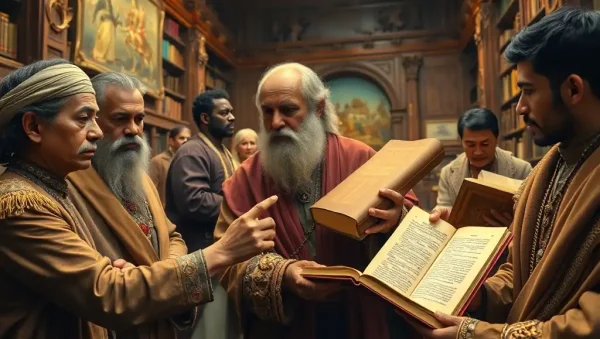
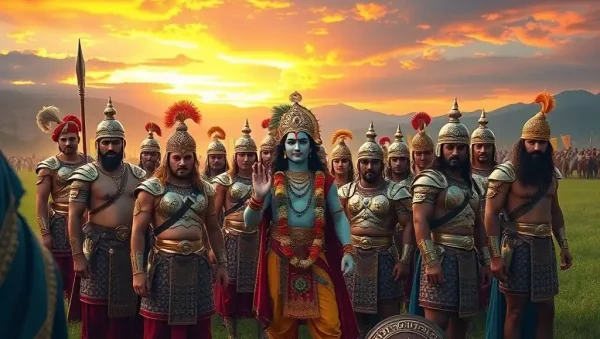
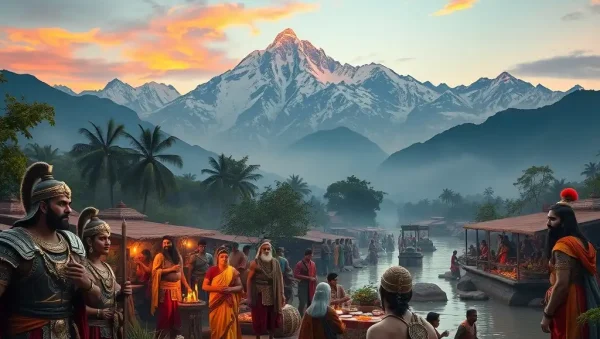

📖 Mahabharata: Epic Literature of Ancient India
Explore the Mahabharata, one of the world’s greatest Sanskrit epics and a foundational work of ancient Indian literature. This subcategory examines the epic’s stories, characters, philosophy, mythology, historical traditions, and cultural influence within the wider heritage of Epic Literature. Discover the conflict between the Pandavas and Kauravas, the significance of the Kurukshetra War, the teachings of the Bhagavad Gita, and the enduring ideas about dharma, duty, justice, family, power, and human morality. Through carefully researched articles, readers can better understand how the Mahabharata continues to shape Indian history, religion, art, storytelling, and cultural identity.
⚔️ The Story and Structure of the Mahabharata
Learn about the expansive narrative of the Mahabharata, traditionally attributed to Sage Vyasa. Articles in this section explore the epic’s major events, narrative layers, genealogies, sub-stories, and eighteen parvas, or books. Readers can follow the rise of the Kuru dynasty, the rivalry between the Pandavas and Kauravas, the dice game, the exile of the Pandavas, and the events that lead to the great war at Kurukshetra.
This section also explains why the Mahabharata is more than a simple war story. It is a vast literary and philosophical work containing legends, moral debates, political teachings, religious ideas, social observations, and reflections on human nature. Clear summaries and historical context help readers understand the epic’s complex composition and remarkable scope.
👑 Pandavas, Kauravas, and Legendary Characters
Discover the lives and personalities of the Mahabharata’s most important characters, including Yudhishthira, Bhima, Arjuna, Nakula, Sahadeva, Draupadi, Krishna, Duryodhana, Karna, Bhishma, Drona, Vidura, Gandhari, Kunti, and Shakuni. Each character represents different ideals, conflicts, strengths, weaknesses, and interpretations of dharma.
Readers can explore character relationships, family loyalties, political ambitions, personal tragedies, and ethical choices. From Karna’s contested identity and Draupadi’s powerful presence to Bhishma’s vows and Krishna’s guidance, these articles reveal why Mahabharata characters remain central to Indian mythology, Sanskrit literature, education, television, theatre, and popular culture.
🕉️ Bhagavad Gita and Mahabharata Philosophy
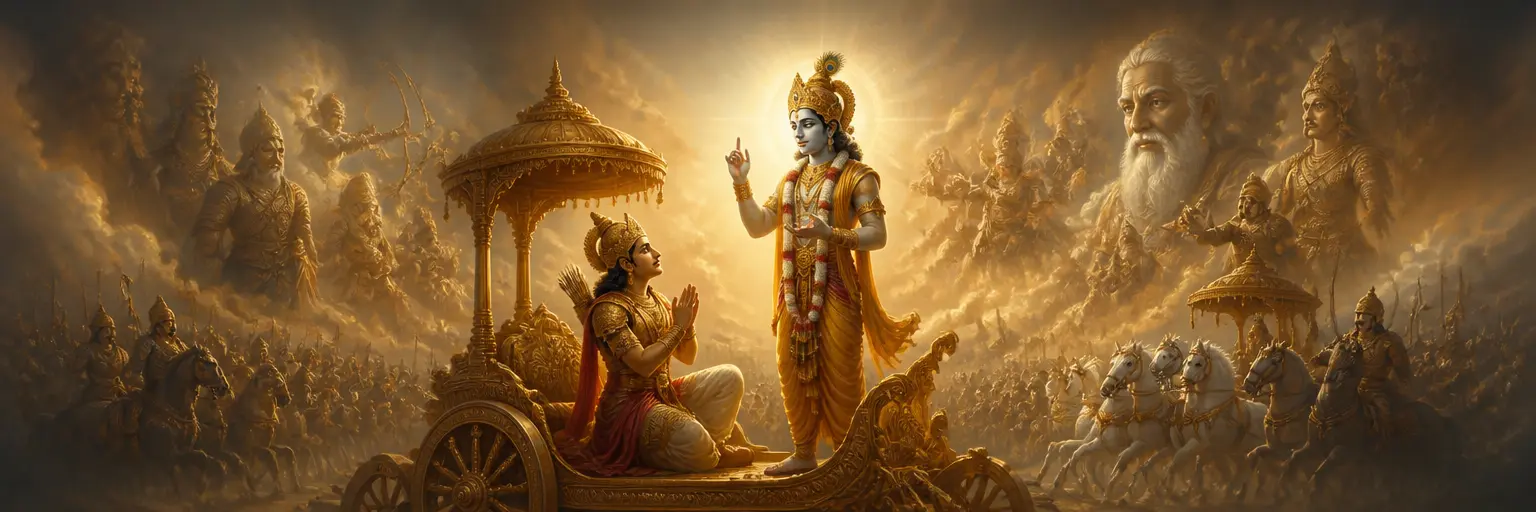
Examine the Bhagavad Gita, the celebrated philosophical dialogue between Arjuna and Krishna on the battlefield of Kurukshetra. This section introduces key ideas such as karma yoga, jnana yoga, bhakti yoga, selfless action, spiritual knowledge, devotion, duty, and the nature of the self.
The discussion places the Bhagavad Gita within the broader Mahabharata rather than treating it as an isolated text. Readers will learn how Arjuna’s moral crisis reflects universal questions about responsibility, violence, justice, leadership, and personal conviction. Accessible explanations make these ancient teachings meaningful for students, researchers, and anyone interested in Indian philosophy.
🏹 Kurukshetra War, Dharma, and Political History
Study the causes, alliances, strategies, commanders, weapons, and major battles of the Kurukshetra War. Articles explore military formations such as the chakravyuha, important confrontations between legendary warriors, and the consequences of the conflict for the Kuru kingdom. The section also considers how the war is remembered in Indian historical tradition and epic storytelling.
Beyond military events, the Mahabharata presents complicated debates about dharma, kingship, law, justice, and political power. Readers can examine the decisions of rulers and warriors, the tension between personal duty and moral responsibility, and the ways the epic portrays the destruction caused by ambition, revenge, and divided loyalties.
📜 Sanskrit Text, Oral Tradition, and Historical Context
Explore the Mahabharata as a product of India’s rich oral and literary traditions. This section introduces the role of Sanskrit, traditional recitation, regional retellings, manuscript culture, and the long process through which the epic developed. It also explains the importance of distinguishing between mythological tradition, literary interpretation, and historical evidence.
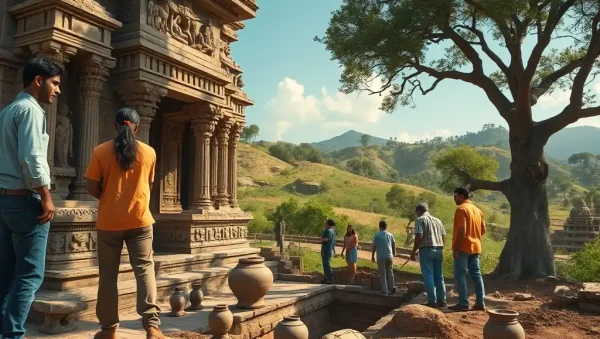
Readers interested in ancient India can learn how the Mahabharata relates to the social, political, and cultural world of early Indian civilization. Articles may discuss the Kuru-Panchala region, ancient kingdoms, genealogical traditions, archaeological questions, and the challenges of dating the epic. The goal is to provide balanced information without reducing this complex text to a single historical conclusion.
🎭 Regional Retellings and Cultural Influence
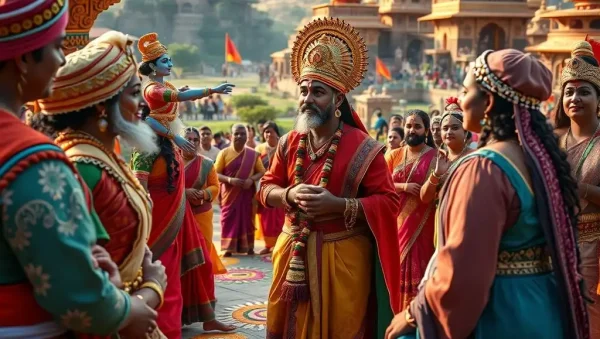
Discover how the Mahabharata has been adapted across India and beyond through languages, poems, plays, dance traditions, paintings, temple art, folk performances, films, television series, and modern novels. Regional versions often highlight different characters, local traditions, and unique interpretations while preserving the epic’s central themes.
This section demonstrates the continuing influence of Mahabharata literature on Indian culture and global storytelling. From Yakshagana and Kathakali to shadow puppetry and contemporary adaptations, readers can see how the epic remains a living tradition. Comparative perspectives help explain the diversity of Mahabharata narratives across South Asia.
❓ Frequently Asked Questions About the Mahabharata
What is the Mahabharata?
The Mahabharata is an ancient Indian Sanskrit epic traditionally attributed to Sage Vyasa. It tells the story of the Kuru dynasty, especially the conflict between the Pandavas and Kauravas, and includes the Kurukshetra War, the Bhagavad Gita, philosophical teachings, legends, genealogies, and discussions of dharma.
Who wrote the Mahabharata?
Tradition credits Vedavyasa, or Sage Vyasa, with composing and compiling the Mahabharata. Scholars generally understand the epic as a large work that developed over centuries through oral transmission, expansion, editing, and regional literary traditions.
What is the relationship between the Mahabharata and the Bhagavad Gita?
The Bhagavad Gita is a section of the Mahabharata, presented as a dialogue between the warrior Arjuna and Lord Krishna before the Kurukshetra War. It discusses duty, action, devotion, knowledge, ethics, and spiritual liberation.
Who are the main characters in the Mahabharata?
The principal characters include the five Pandavas—Yudhishthira, Bhima, Arjuna, Nakula, and Sahadeva—and their wife Draupadi. Other major figures include Krishna, Duryodhana, Karna, Bhishma, Drona, Kunti, Gandhari, Vidura, and Shakuni.
Is the Mahabharata history or mythology?
The Mahabharata combines epic literature, mythology, religious tradition, moral philosophy, genealogy, and memories of ancient political communities. Some locations and cultural details may reflect historical traditions, but the complete narrative should be studied with care because literary and supernatural elements cannot be verified in the same way as conventional historical evidence.