
Modern Applications of Ancient Indian Science
Modern Applications of Ancient Indian Science
29 articles in this topic
Start here
- Modern Applications of Ancient Indian ScienceThe Revival of Ancient Indian Games: A Cultural Renaissance in Modern Sports
- Modern Applications of Ancient Indian ScienceAncient Indian Architecture: Timeless Principles for Sustainable Design
- Modern Applications of Ancient Indian ScienceExploring the Secrets of Ayurveda: Modern Medicine's Ancient Roots in India
Read more about this topic
Discover how ancient Indian science continues to inspire modern innovation—from Ayurveda and yoga to mathematics, astronomy, architecture, metallurgy, and sustainable engineering. 🌿 Explore the enduring wisdom, practical techniques, and groundbreaking ideas of India’s early scholars, and see how they influence today’s technology, wellness, design, and scientific research. 🔬✨
More in Modern Applications of Ancient Indian Science
Modern Applications of Ancient Indian Science
Unlocking Innovation: The Ancient Indian Approach to Problem Solving
Modern Applications of Ancient Indian Science
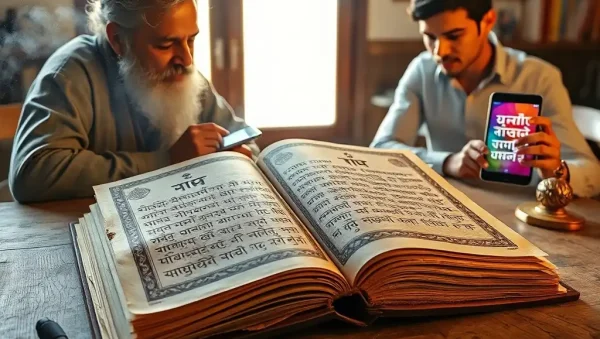
The Relevance of Ancient Indian Scripts in Today's Digital Communication

Modern Applications of Ancient Indian Science
Ancient Indian Rituals: Their Impact on Contemporary Wellness Trends

Modern Applications of Ancient Indian Science
The Role of Ancient Indian Textiles in Today's Fashion Industry

Modern Applications of Ancient Indian Science
The Legacy of Ancient Indian Ritual Arts in Contemporary Performance Practices

Modern Applications of Ancient Indian Science
The Influence of Ancient Indian Astronomy on Modern Space Exploration

Modern Applications of Ancient Indian Science
Rediscovering Vedic Science: Applications in Contemporary Environmental Solutions
Modern Applications of Ancient Indian Science
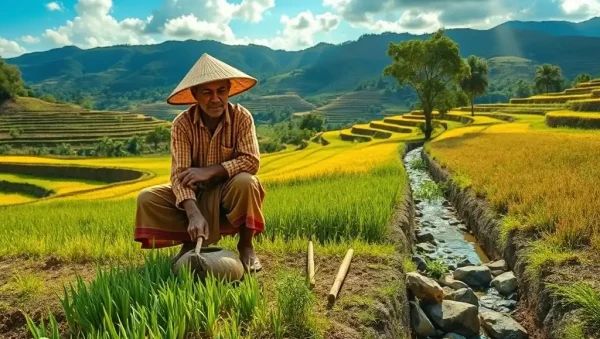
The Revival of Ancient Indian Agriculture: Techniques for Sustainable Farming
🌟 Modern Applications of Ancient Indian Science
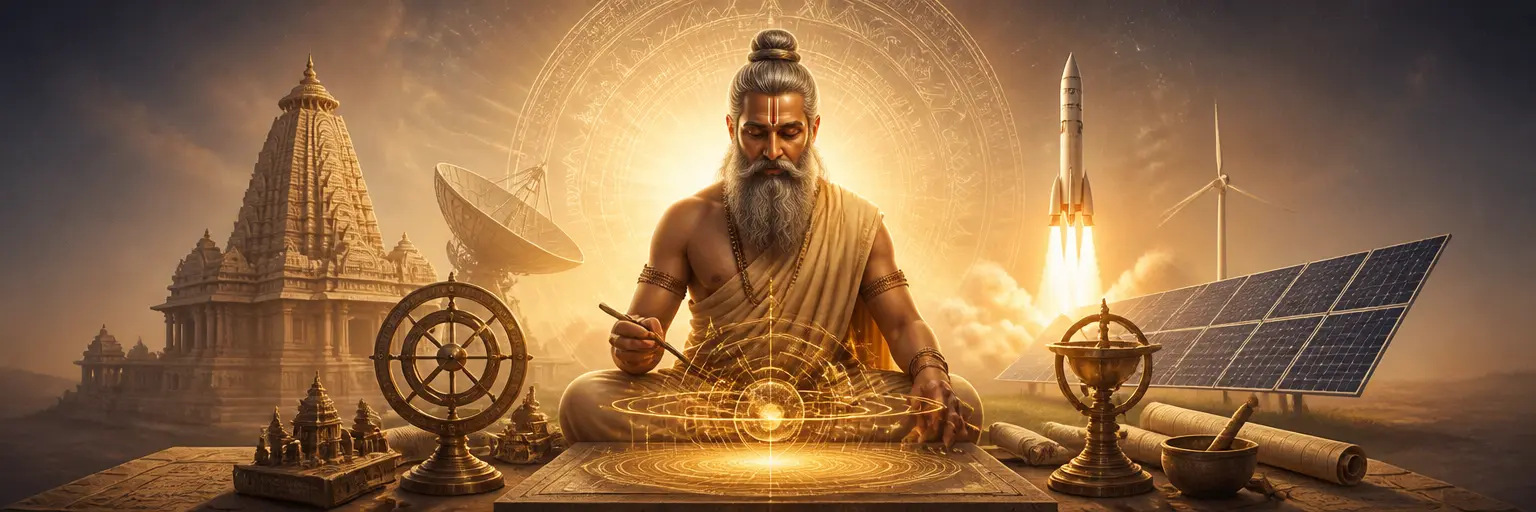
Discover how ancient Indian science, technology, and intellectual traditions continue to inspire modern innovation. This subcategory explores the practical relevance of India’s historic achievements in mathematics, astronomy, medicine, architecture, metallurgy, environmental knowledge, agriculture, and engineering. At Ancient India History, readers can learn how ideas developed from the Indus Valley Civilization through the Gupta Empire and later Indian traditions are being reexamined in the modern world through research, education, sustainable design, healthcare, and digital technology.
🔢 Ancient Indian Mathematics in Modern Technology
Explore the continuing influence of ancient Indian mathematics on modern computing, engineering, finance, science, and education. Topics may include the development of the decimal system, the concept of zero, place-value notation, arithmetic methods, algebraic thinking, and the mathematical works associated with scholars such as Aryabhata and Brahmagupta.
Readers can expect clear explanations of how these historic mathematical innovations support today’s digital systems, algorithms, data analysis, coding, artificial intelligence, and scientific research. The content also distinguishes documented historical evidence from exaggerated claims, helping readers understand the genuine significance of Indian mathematical heritage.
🌌 Ancient Indian Astronomy and Space Science
Learn how ancient Indian observations of the sky contributed to the study of calendars, planetary motion, eclipses, seasons, and timekeeping. This section examines astronomical texts, observatories, calculation methods, and the work of scholars who advanced scientific knowledge in early India.
Modern applications include astronomy education, calendar science, observational research, navigation, and interest in space technology. Readers will discover how historical methods can inspire curiosity about modern astrophysics and space exploration while appreciating the careful observations and mathematical reasoning used by ancient Indian astronomers.
🌿 Ayurveda, Yoga, and Holistic Health Practices
Discover the modern relevance of Ayurveda, yoga, meditation, and traditional Indian approaches to wellbeing. This section explores historical ideas about diet, daily routines, herbal knowledge, physical balance, breathing practices, and mental discipline, placing them within their cultural and historical context.
Readers can learn how these traditions influence contemporary wellness programs, preventive healthcare, stress management, physical fitness, rehabilitation, and complementary medicine. Each topic emphasizes responsible use, evidence-based interpretation, and consultation with qualified healthcare professionals, especially when discussing herbs, treatments, or medical conditions.
🏛️ Ancient Indian Architecture and Sustainable Design
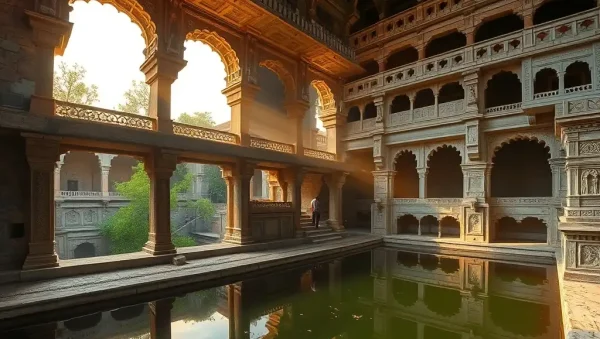
Explore how ancient Indian architecture offers valuable ideas for modern buildings, urban planning, climate-responsive design, and cultural conservation. The section may cover the planning of Indus Valley cities, drainage systems, water management, temple architecture, stepwells, courtyards, natural ventilation, and the use of locally available materials.
These historical examples can inspire sustainable architecture, passive cooling, water conservation, energy efficiency, and environmentally sensitive construction. Readers will see how ancient design principles can be studied and adapted for modern needs without treating historical structures as one-size-fits-all solutions.
⚙️ Metallurgy, Materials, and Ancient Engineering
Examine the achievements of ancient Indian metallurgists, craftsmen, engineers, and builders. Topics include iron production, steelmaking, corrosion resistance, metal casting, tools, weapons, coinage, construction techniques, and notable artifacts such as the Iron Pillar of Delhi.
Modern researchers and engineers can draw inspiration from traditional materials science, durable manufacturing, craft knowledge, and resource-efficient production. Readers will learn how archaeological evidence, laboratory analysis, and conservation science help explain ancient technologies while separating verified achievements from unsupported legends.
💧 Water Management and Environmental Innovation
Ancient Indian civilizations developed sophisticated ways to collect, store, transport, and conserve water. This section explores reservoirs, wells, stepwells, irrigation channels, urban drainage, rainwater harvesting, and community-based water systems found across the Indian subcontinent.
Such examples remain relevant to modern water conservation, climate adaptation, sustainable agriculture, urban resilience, and rural development. Readers can discover how historical water wisdom may inform present-day solutions, while also considering population growth, changing climates, public health, and the need for modern engineering standards.
🌾 Traditional Agriculture and Sustainable Food Systems
Learn how ancient and early historic Indian communities adapted farming practices to local soils, monsoon cycles, rivers, and diverse ecosystems. Topics may include crop diversity, seed preservation, irrigation, organic inputs, seasonal farming, livestock integration, and traditional knowledge of medicinal and food plants.
These practices can inform modern discussions about regenerative agriculture, biodiversity, food security, soil health, and climate-resilient farming. The content presents traditional knowledge as a valuable source of insight that can be combined with contemporary agricultural science, improved seeds, digital monitoring, and responsible resource management.
🧠 Knowledge Systems, Education, and Digital Innovation
Explore ancient Indian centers of learning, manuscript traditions, oral transmission, debate, logic, linguistics, and methods of preserving knowledge. This section highlights institutions and scholars connected with historic learning networks, including traditions associated with Takshashila, Nalanda, Sanskrit scholarship, grammar, philosophy, and scientific inquiry.
Modern applications can be seen in digital humanities, language technology, manuscript digitization, online education, knowledge databases, and artificial intelligence research. Readers will discover how historical texts and intellectual traditions are being preserved, translated, cataloged, and made accessible to new generations through modern tools.
🔍 Frequently Asked Questions About Modern Applications of Ancient Indian Science
❓ What is meant by modern applications of ancient Indian science?
Modern applications refer to the ways historical Indian ideas, techniques, observations, and knowledge systems can inspire contemporary research, education, design, healthcare, sustainability, and technology. They do not mean that every modern invention existed in ancient India.
❓ Which ancient Indian contributions are most relevant today?
Important examples include the decimal place-value system, zero, astronomy, Ayurveda, yoga, water management, metallurgy, urban planning, agriculture, architecture, and linguistic scholarship. Their relevance depends on careful interpretation, historical evidence, and responsible adaptation.
❓ Did ancient Indian science include modern technology?
Ancient Indian civilizations developed impressive technologies for their time, including drainage systems, metalworking, mathematics, surgery traditions, construction, irrigation, and astronomical calculation. However, these achievements should be understood within their historical context rather than described as identical to modern computers, aircraft, or machines.
❓ How can ancient Indian knowledge support sustainability?
Historical practices such as rainwater harvesting, stepwells, local materials, passive ventilation, crop diversity, and community resource management can offer useful ideas for water conservation, sustainable architecture, ecological farming, and climate resilience. Modern testing and engineering are essential before applying them today.
❓ How does Ancient India History present these topics?
Ancient India History presents ancient Indian science through historical evidence, cultural context, and modern relevance. The goal is to celebrate India’s intellectual heritage while encouraging critical thinking, reliable research, and a balanced understanding of the achievements of civilizations from the Indus Valley to the Gupta Empire and beyond.