
The Concept of Kingship: Ancient Indian Political Philosophy in Southeast Asian Monarchies

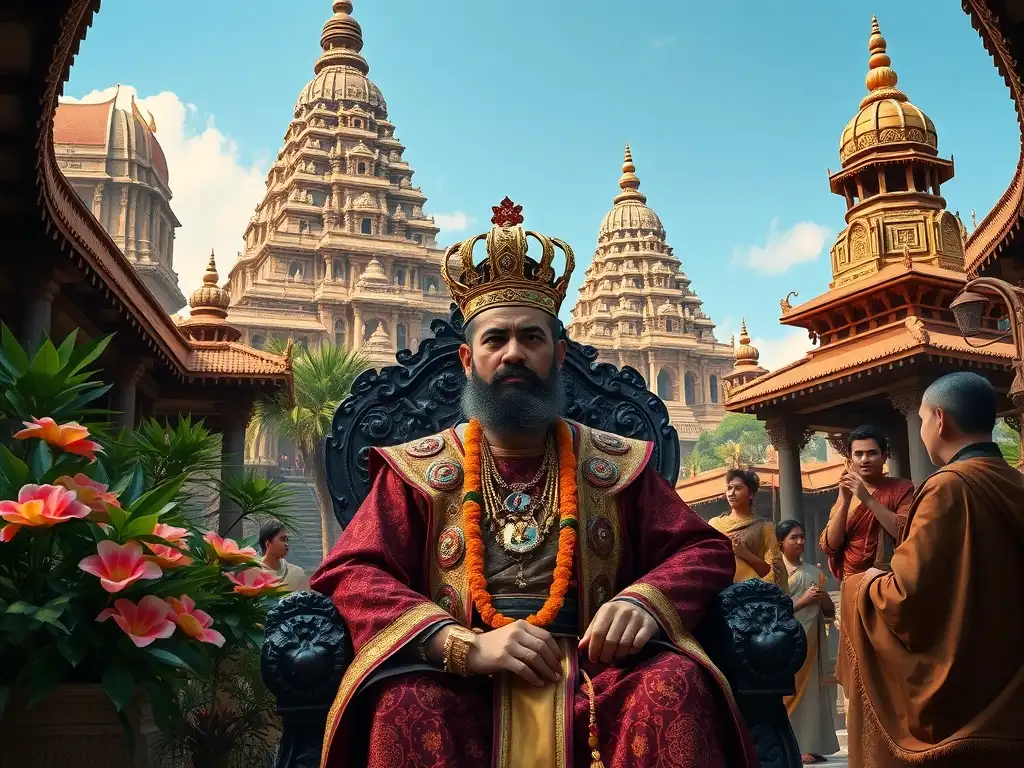
Welcome to Ancient India History, where we embark on an enthralling journey through the rich tapestry of ancient Indian civilizations. Here, we delve into the fascinating realm of Ancient Indian political philosophy, exploring its profound impact on Southeast Asian monarchies. As we unravel the concept of kingship, you'll discover how the wisdom of ancient thinkers shaped governance far beyond the subcontinent. Prepare to be captivated as we unlock the secrets of cultural exchanges and the enduring legacy of India's past, inviting you to explore deeper into this intriguing narrative.
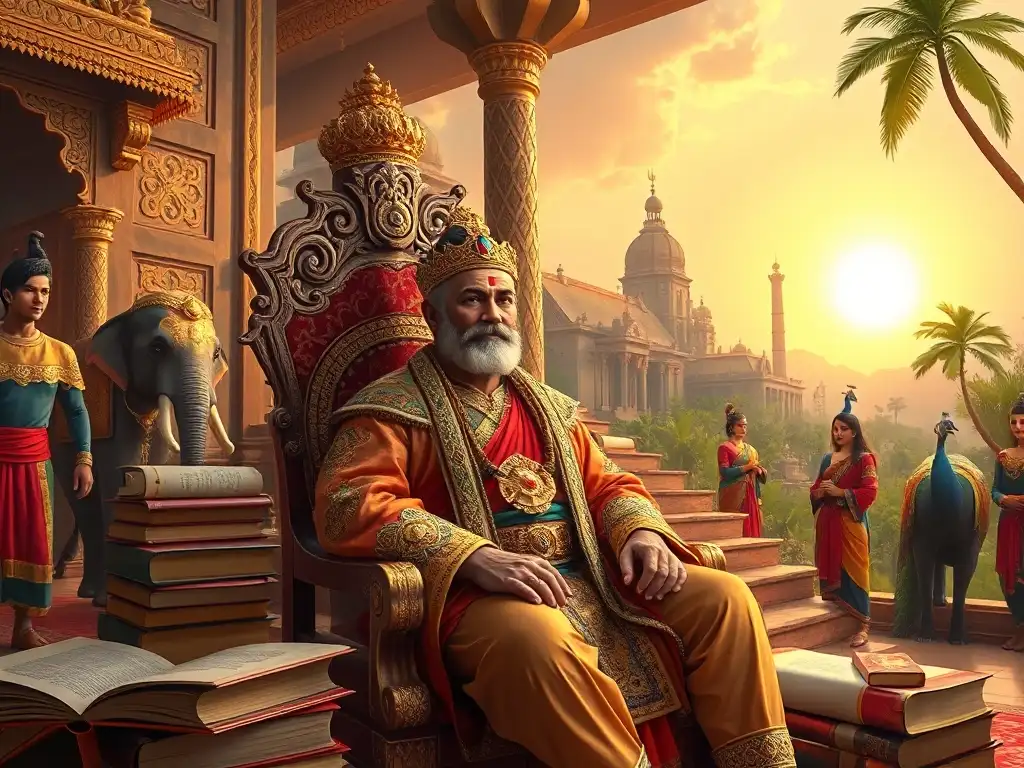
Introduction to Ancient Indian Political Philosophy
The concept of kingship in ancient Indian political philosophy is a profound reflection of the values, norms, and governance structures that characterized the region's historical landscape. This philosophy not only shaped the political environment within the Indian subcontinent but also influenced various Southeast Asian monarchies as they adopted and adapted Indian political principles to their own contexts.
By exploring the intricate relationship between rulership, moral duties, and statecraft, we can uncover how ancient Indian political philosophy has left an indelible mark on the governance systems of Southeast Asia. This article delves into the essence of kingship as envisioned in ancient Indian texts and its broader implications for political thought in neighboring regions, highlighting the intricate web of cultural exchanges that facilitated this influence.
Overview of Political Philosophy in Ancient India
Ancient Indian political philosophy is rooted in a rich tapestry of texts, traditions, and practices that span several centuries. Central to this philosophy is the idea that governance is not merely a function of power but a moral and ethical obligation. Key philosophical texts, such as the Arthashastra and Manusmriti, provide insights into the principles that guided rulers, emphasizing the importance of dharma (righteousness) and artha (political and economic prosperity).
The interplay of various schools of thought, including Buddhism, Jainism, and Hinduism, contributed to a multifaceted understanding of governance. This diversity allowed for a dynamic discourse on the role of the state, the responsibilities of rulers, and the rights of subjects, laying the groundwork for political ideologies that would resonate beyond India's borders.
Importance of Kingship in Indian Thought
Kingship in ancient Indian thought was not only about authority and power; it embodied a sacred duty towards the subjects. A king was seen as a Dharma Raja, or a ruler who upholds dharma, ensuring justice and welfare for his people. This idealization of kingship emphasized the moral responsibilities of rulers, who were expected to act as protectors of society, maintain order, and promote the welfare of their subjects.
Moreover, the notion of kingship was intertwined with religious beliefs, where rulers often derived their legitimacy from divine sanction. This connection between the sacred and the secular elevated the status of kings, making them central figures in both governance and spiritual life, and thereby reinforcing the ideological framework that governed ancient Indian societies.
Historical Context of Kingship in Ancient India
Understanding the historical context of kingship in ancient India requires examining the socio-political structures that existed during various periods, including the Vedic, Mauryan, and Gupta eras. Each era brought forth unique interpretations and practices of kingship that were reflective of the prevailing cultural and political conditions.
The Role of Rulers in Ancient Indian Society
In ancient Indian society, rulers played a pivotal role as both political leaders and custodians of cultural heritage. They were responsible for establishing and maintaining order, administering justice, and facilitating economic development. The king's duties extended beyond mere governance; he was expected to be a patron of the arts, a promoter of religion, and a champion of social welfare.
Rulers were also seen as embodiments of the collective identity of their people. Their actions and decisions had profound implications for societal cohesion and stability, making their role a critical factor in the evolution of ancient Indian civilization.
Key Texts Influencing Political Philosophy (e.g., Arthashastra, Manusmriti)
Several key texts served as foundational pillars of ancient Indian political philosophy, shaping the understanding of kingship and governance. The Arthashastra, attributed to Kautilya (Chanakya), is perhaps the most renowned treatise on statecraft, emphasizing pragmatic and often ruthless strategies for maintaining power and control. It explores various aspects of governance, including diplomacy, warfare, and economic management, providing a comprehensive guide for rulers.
On the other hand, the Manusmriti offers insights into the moral and ethical dimensions of kingship, detailing the responsibilities of rulers towards their subjects and the importance of upholding dharma. Together, these texts illustrate the complex interplay between power, ethics, and governance in ancient India, laying the groundwork for political philosophies that would resonate throughout Southeast Asia.
The exploration of ancient Indian political philosophy, particularly the concept of kingship, reveals a nuanced understanding of governance that transcends geographical boundaries, influencing not only the Indian subcontinent but also shaping the political landscapes of Southeast Asian monarchies.
The Spread of Ancient Indian Political Philosophy in Southeast Asia
The diffusion of ancient Indian political philosophy into Southeast Asia is a notable facet of cultural exchange that shaped the region's monarchies. This spread can be traced back to several key factors, including trade, migration, and the influence of Indian religious and cultural practices. As Indian merchants and traders traversed the maritime routes, they brought not only goods but also ideas and philosophies that resonated with local rulers and elites.
The establishment of Indianized kingdoms, such as Srivijaya and Majapahit, served as conduits for the transmission of political thought. These kingdoms adopted and adapted elements of Indian governance, such as concepts of dharma (moral law) and artha (economic prosperity), to suit their own sociopolitical contexts. The Sanskrit language also played a crucial role in this exchange, as it became the lingua franca of administration and culture, facilitating the dissemination of philosophical texts and ideas throughout the region.
Cultural Exchanges Between India and Southeast Asia
Cultural exchanges between India and Southeast Asia were multifaceted and dynamic, encompassing religion, art, language, and governance. The arrival of Indian traders and travelers introduced Hinduism and Buddhism, which profoundly influenced local customs, rituals, and political ideologies. Temples, such as Angkor Wat in Cambodia and Borobudur in Indonesia, reflect this cultural synthesis, showcasing the architectural and artistic styles inspired by Indian traditions.
Moreover, the flourishing trade routes facilitated not only the exchange of commodities but also the intermingling of ideas. Historical records indicate that local rulers often sought legitimacy by associating themselves with Indian dynasties, adopting titles and practices that emphasized their divine right to rule. This reciprocal relationship fostered a rich tapestry of cultural and political interactions that shaped the identity of Southeast Asian societies.
Adoption and Adaptation of Indian Political Ideas
The adoption of Indian political ideas in Southeast Asia was characterized by a selective process, where local leaders integrated Indian philosophies with indigenous practices. Concepts such as the Mandala, which describes the political landscape as a series of concentric circles of influence, were particularly influential. This model allowed Southeast Asian rulers to conceptualize their authority in relation to neighboring states and tribes, facilitating diplomatic and military strategies.
Additionally, the integration of Indian notions of kingship, which emphasized the king's role as a protector and moral leader, transformed local governance. Southeast Asian monarchs often adopted the title of "raja" or "sultan," reflecting their alignment with Indian political traditions. However, these rulers also infused their practices with local customs, resulting in unique interpretations of kingship that resonated with their subjects.
Characteristics of Kingship in Southeast Asian Monarchies
The characteristics of kingship in Southeast Asian monarchies highlight the profound influence of ancient Indian political philosophy while also emphasizing local adaptations. Kings were often viewed as intermediaries between the divine and the earthly realm, tasked with maintaining order and prosperity in their realms. This notion of kingship was deeply intertwined with the socio-religious fabric of society, where the king's legitimacy was reinforced through ceremonies and rituals.
A significant aspect of Southeast Asian kingship was the emphasis on the king's moral and ethical responsibilities. The concept of dharma found expression in the expectations placed upon rulers to govern justly and benevolently. Consequently, the king was often seen as a benevolent figure whose actions directly affected the welfare of the kingdom.
Divine Kingship and Sacred Sovereignty
Divine kingship and sacred sovereignty were pivotal characteristics of Southeast Asian monarchies, echoing the Indian concept of the divine right of kings. Rulers were often regarded as semi-divine beings, possessing a sacred aura that justified their authority. This belief was manifested in elaborate coronation rituals and the veneration of the king as a representative of the divine on earth.
The integration of Hindu and Buddhist cosmology further reinforced this divine status. Rulers not only governed secular affairs but also performed religious duties, acting as patrons of temples and religious institutions. This dual role solidified their power and positioned them as central figures in both political and spiritual realms, thus enhancing their legitimacy in the eyes of their subjects.
Administrative Structures Influenced by Indian Models
Indian political philosophy significantly influenced the administrative structures in Southeast Asian monarchies. The implementation of bureaucratic systems, inspired by ancient Indian texts such as the Arthashastra, facilitated effective governance and resource management. Rulers adopted various administrative titles and roles, reflecting the hierarchical nature of Indian governance.
Moreover, the introduction of legal codes and taxation systems that mirrored Indian practices helped establish order and stability within these kingdoms. Southeast Asian monarchs often appointed local officials to oversee regions, ensuring that Indian-inspired methods of governance were adapted to local contexts. This blend of Indian and indigenous administrative practices not only enhanced the efficiency of governance but also provided a framework for the evolution of political systems in Southeast Asia.
Comparative Analysis of Kingship: India vs. Southeast Asia
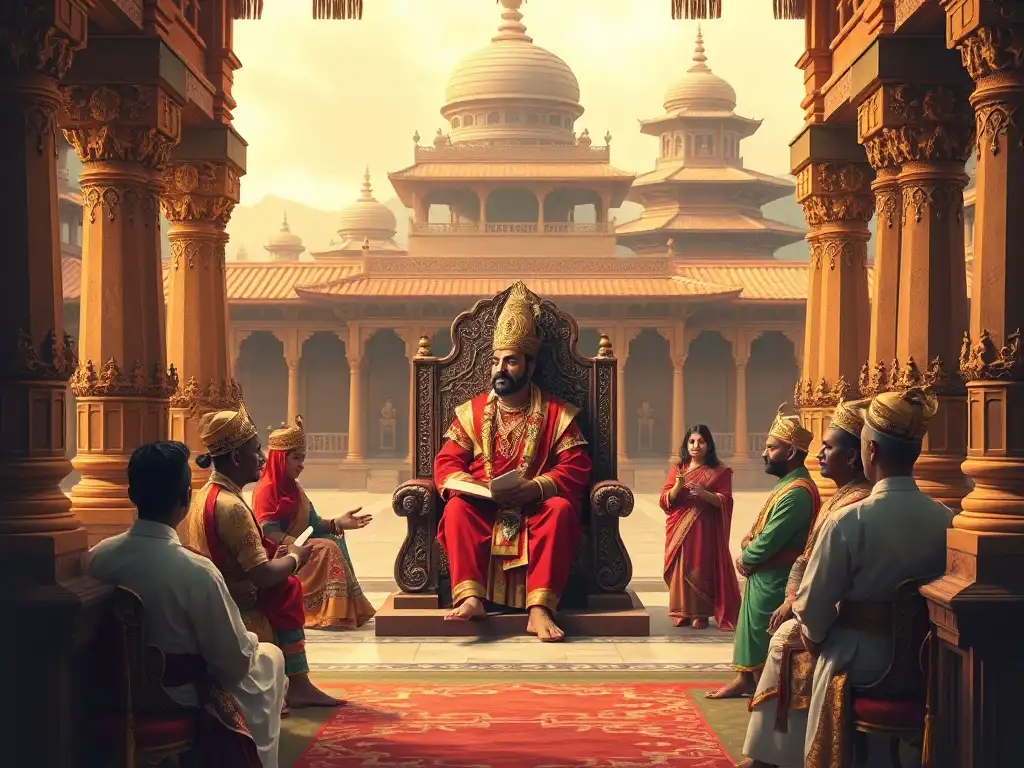
The concept of kingship in ancient India has played a significant role in shaping political philosophies across Southeast Asia. While both regions exhibit a rich tapestry of governance, the influence of Indian political thought is evident in various aspects of Southeast Asian monarchies. This comparative analysis highlights the similarities and differences in political ideologies and their implementation.
Similarities in Political Ideology
One of the primary similarities between ancient Indian and Southeast Asian political thought is the divine right of kings. In both cultures, rulers were often seen as divinely ordained, possessing a sacred duty to govern. This philosophy is rooted in the ancient Indian texts such as the Arthashastra and the Manusmriti, which emphasized dharma (righteousness) as a guiding principle for kingship. Similarly, Southeast Asian monarchies adopted this ideology, where kings were viewed as protectors of religion and enforcers of moral order.
Another striking similarity lies in the patronage of religion. In ancient India, kings would often support Brahmanical traditions and other religious practices to legitimize their rule. Likewise, in cultures such as the Khmer Empire, monarchs were seen as intermediaries between the divine and their subjects, often commissioning temples and religious artifacts to solidify their authority and promote social cohesion.
Differences in Implementation and Practice
Despite these similarities, the implementation of kingship diverged notably between the two regions. In India, the political landscape was characterized by a complex caste system, which influenced the structure of governance. Rulers were often part of the Kshatriya (warrior) caste, and their legitimacy was tied to their adherence to dharma and the support of Brahmins. Conversely, Southeast Asian monarchies, such as those in the Malay Peninsula, often adopted more fluid social structures. Political power could be concentrated in merchant classes or local chieftains, leading to a different dynamic in governance.
Moreover, the influence of local customs and traditions in Southeast Asia resulted in a unique blend of Indian and indigenous practices. While Indian texts provided a framework for governance, local leaders often adapted these ideas to suit their cultural contexts. This led to variations in the roles and responsibilities of kings, with some monarchies, like the Srivijaya Kingdom, emphasizing trade and maritime power over the military conquests that were more prevalent in ancient India.
Case Studies of Prominent Southeast Asian Monarchies
To further illustrate the influence of ancient Indian political philosophy, we can examine two prominent Southeast Asian monarchies: the Khmer Empire and the Srivijaya Kingdom.
The Khmer Empire: Emulation of Indian Political Concepts
The Khmer Empire (9th-15th centuries CE) stands as a testament to the profound impact of Indian political philosophy on Southeast Asia. The rulers of the Khmer Empire, such as King Jayavarman II, explicitly adopted Indian concepts of kingship, proclaiming themselves as devaraja or "god-kings." This title underscored their divine status and justified their absolute authority over the empire.
The Khmer kings incorporated Indian religious and cultural practices, leading to the construction of monumental temples, including Angkor Wat, which served as both a religious center and a symbol of royal power. The political ideology of the Khmer Empire was heavily influenced by Hinduism, with its rituals and ceremonies reinforcing the connection between the monarch and divine will.
The Srivijaya Kingdom: Blending Local and Indian Ideals
The Srivijaya Kingdom (7th-13th centuries CE), located in what is now Indonesia, exemplifies the synthesis of local and Indian political ideals. While the kingdom drew heavily from Indian political philosophy, particularly through the spread of Buddhism, it also maintained indigenous practices that shaped its governance.
Srivijaya's rulers emphasized trade and maritime supremacy, illustrating a different interpretation of kingship that prioritized economic power as much as religious legitimacy. The political structure was more decentralized compared to Indian models, allowing local leaders to wield significant influence while still acknowledging the authority of the king. This blend of Indian and local ideals created a unique political environment that facilitated the kingdom's prosperity and cultural richness.
The exploration of kingship within ancient Indian political philosophy reveals both shared beliefs and significant distinctions in practice across Southeast Asia. The case studies of the Khmer Empire and Srivijaya Kingdom highlight the adaptability of Indian political concepts in new cultural contexts, demonstrating the enduring legacy of ancient Indian political thought in shaping the monarchies of Southeast Asia.
The Legacy of Ancient Indian Political Philosophy in Modern Southeast Asia
The influence of ancient Indian political philosophy on contemporary Southeast Asian monarchies is profound and enduring. Concepts such as dharma (righteousness), artha (prosperity), and the ideal ruler, often epitomized by the figure of the "Chakravartin" or universal monarch, have shaped governance structures and political thought across the region. These philosophical tenets were not merely theoretical; they were integrated into the sociopolitical fabric of various Southeast Asian cultures, leading to a unique blend of indigenous and Indianized governance practices that continue to resonate today.
In modern Southeast Asia, the legacy of ancient Indian political thought can be observed in the ceremonial functions of kings, their roles as moral exemplars, and the symbolic significance of their authority. Monarchs are often viewed as custodians of culture and tradition, embodying the ideals set forth in ancient texts such as the Arthashastra and the Ramayana. This philosophical heritage has helped maintain a sense of continuity and identity amidst the myriad changes brought about by colonialism and globalization.
Continuing Influence on Contemporary Governance
The principles of ancient Indian political philosophy remain evident in the governance of several Southeast Asian nations. For instance, in Thailand, the king is seen not only as a political figure but also as a spiritual leader, a concept rooted in the Hindu-Buddhist traditions that were significantly influenced by Indian thought. The Thai royal family often invokes the notion of "Raja Dharma," emphasizing the king's duty to govern justly and uphold moral values, reflecting the ancient ideas about kingship.
In Indonesia, the concept of "Bhinneka Tunggal Ika" or unity in diversity can be traced back to similar philosophical underpinnings that emphasize harmony and balance, key elements in ancient Indian governance. The legacy of these ideas is also visible in the governance practices of Malaysia, where the sultans are regarded as upholders of tradition and cultural heritage, roles that echo the ancient Indian model of kingship.
Preservation of Cultural Heritage in Modern States
Modern Southeast Asian states have made concerted efforts to preserve their cultural heritage, with ancient Indian political philosophy playing a pivotal role in this process. Festivals, rituals, and royal ceremonies often draw upon the rich tapestry of narratives and ideals derived from ancient texts. For example, in Cambodia, the annual ceremonies honoring the king reflect the ancient Hindu influences on the Khmer Empire, showcasing the intertwining of political authority and cultural expression.
Moreover, educational systems in several countries have incorporated elements of ancient Indian thought, promoting a deeper understanding of the region's historical ties. By studying ancient texts and philosophies, contemporary societies not only honor their historical roots but also foster a sense of national identity that is enriched by the contributions of ancient Indian political philosophy.
Conclusion
Summary of the Influence of Ancient Indian Political Philosophy
Ancient Indian political philosophy has left an indelible mark on the political frameworks of Southeast Asian monarchies. The core tenets of governance, moral responsibility, and the role of the king as a custodian of culture have been pivotal in shaping contemporary political practices. By integrating these philosophies into their governance models, modern Southeast Asian states continue to reflect the values and principles established centuries ago.
Reflection on the Cultural Significance of Kingship in Southeast Asia
The cultural significance of kingship in Southeast Asia cannot be overstated. As embodiments of ancient political philosophy, monarchs serve as bridges between the past and present, preserving the rich heritage of their civilizations. This enduring legacy emphasizes the importance of moral governance and cultural identity, ensuring that the ideals of ancient Indian political thought remain vital in contemporary society. Through the lens of kingship, the historical influence of ancient Indian political philosophy is not merely a relic of the past but a living tradition that continues to shape the cultural landscape of Southeast Asia today.
- Introduction to Ancient Indian Political Philosophy
- Historical Context of Kingship in Ancient India
- The Spread of Ancient Indian Political Philosophy in Southeast Asia
- Characteristics of Kingship in Southeast Asian Monarchies
- Comparative Analysis of Kingship: India vs. Southeast Asia
- Case Studies of Prominent Southeast Asian Monarchies
- The Legacy of Ancient Indian Political Philosophy in Modern Southeast Asia
- Conclusion
- What is the main theme of the article?
- How did ancient Indian political philosophy impact Southeast Asia?
- What are some key features of ancient Indian political philosophy?
- Which Indian empires are referenced in the context of political philosophy?
- Why is the concept of kingship significant in ancient Indian political thought?
Frequently Asked Questions
What is the main theme of the article?
The article explores ancient Indian political philosophy, particularly focusing on the concept of kingship and its influence on Southeast Asian monarchies.
How did ancient Indian political philosophy impact Southeast Asia?
Ancient Indian political philosophy helped shape the political structures and monarchical practices in Southeast Asian kingdoms, promoting the idea of a divine right to rule.
What are some key features of ancient Indian political philosophy?
Key features include the concept of dharma, the role of the king as a protector, and the importance of justice and morality in governance.
Which Indian empires are referenced in the context of political philosophy?
The article discusses various empires, with a focus on the Maurya and Gupta Empires, highlighting their contributions to political thought and governance.
Why is the concept of kingship significant in ancient Indian political thought?
The concept of kingship is significant because it emphasizes the moral and ethical responsibilities of rulers, shaping the political landscape in both ancient India and its influence on neighboring regions.
Final Reflection: The Enduring Legacy of Ancient Indian Political Philosophy
The exploration of ancient Indian political philosophy reveals its profound influence on contemporary governance and societal structures in Southeast Asia. This enduring legacy serves as a reminder that the principles of kingship, justice, and moral duty articulated centuries ago still resonate in today’s political discourse. The intricate tapestry woven by these philosophies not only shaped the monarchies of the past but continues to inform the values and practices of modern leadership.
The impact of ancient Indian political thought is evident in the cultural and social landscapes of Southeast Asia, where the ideals of dharma and righteous rule remain pivotal. These concepts have transcended time and geography, fostering a sense of identity and continuity among nations. As Mahatma Gandhi once said, "> The best way to find yourself is to lose yourself in the service of others." This quote encapsulates the essence of kingship as envisioned by ancient Indian philosophers, emphasizing the ruler's duty to serve their people with integrity and compassion.
As we reflect on the teachings of ancient Indian political philosophy, let us consider how these timeless principles can guide our actions and decisions today. I invite you to engage with these ideas, to ponder how the virtues of leadership and responsibility can be integrated into your own life. By embracing the wisdom of the past, we can contribute to a future where governance is rooted in ethical principles and the welfare of all, ensuring that the legacy of kingship continues to inspire generations to come.
Embrace the Wisdom of Kingship Today!
Thank you for diving into the fascinating world of ancient Indian political philosophy and its influence on Southeast Asian monarchies. You've just uncovered the profound connection between culture and governance that spans centuries! Now, it’s time to turn this newfound knowledge into action.
- Explore further: Visit your local library or online archives to discover more about historical figures and their impact on modern governance.
- Share your insights: Engage in discussions with friends and family or join online forums dedicated to history. Your perspective could spark meaningful conversations!
- Engage with local culture: Attend cultural events or lectures that highlight the legacies of leadership within your community.
As you continue your journey of discovery, consider this: How does understanding ancient leadership philosophies influence your view on contemporary governance in your own country?