
The Influence of Zoroastrianism on Ancient Indian Beliefs and Practices


Welcome to Ancient India History, your gateway to uncovering the rich tapestry of India’s past. Here, we delve into the fascinating influence of Zoroastrianism on ancient Indian beliefs and practices, a topic that unveils the intricate cultural exchanges that shaped our civilization. What connections can be drawn between these two ancient cultures? Join us as we explore how Zoroastrian principles intermingled with Indian thought, leaving an indelible mark on spirituality and societal norms. Dive deeper into this intriguing narrative and discover the profound impacts that have echoed through time.

Introduction to Zoroastrianism and Its Origins
Zoroastrianism, one of the world's oldest monotheistic religions, has played a significant role in shaping the spiritual and cultural landscapes of various civilizations, particularly in ancient India. As a faith that emphasizes the duality of good and evil, the worship of Ahura Mazda, and the importance of individual choice, Zoroastrianism offers a unique perspective that contrasts with the polytheistic traditions prevalent in the Indian subcontinent.
This article delves into the rich tapestry of Zoroastrian beliefs and practices, exploring their profound influence on ancient Indian thought, rituals, and social structures. By examining the origins, key tenets, and historical migration of Zoroastrians to India, we can better understand how this ancient religion intertwined with Indian culture, creating a lasting legacy that resonates through the ages.
Overview of Zoroastrianism
Zoroastrianism was founded by the prophet Zoroaster (or Zarathustra) in ancient Persia, traditionally dated to around 1200 BCE, although some scholars suggest a later timeframe. This religion is distinct in its dualistic worldview, characterizing the eternal struggle between Ahura Mazda (the supreme god of light and truth) and Angra Mainyu (the spirit of chaos and deceit). The essence of Zoroastrianism revolves around ethical living, communal responsibility, and the pursuit of truth. Key components include:
- Scriptures: The Avesta, which includes the Gathas (hymns attributed to Zoroaster) and the Yasna (ritual texts).
- Rituals: Fire worship is central, as fire symbolizes purity and the divine presence.
- Eschatology: Beliefs about the afterlife, judgment, and the eventual triumph of good over evil.
Key Beliefs and Principles of Zoroastrianism
The core beliefs of Zoroastrianism emphasize moral choice and accountability, encapsulated in several fundamental principles:
- Good Thoughts, Good Words, Good Deeds: This triad serves as a guiding ethical framework for adherents.
- Concept of Asha: Represents order, truth, and righteousness, contrasting with Druj, the spirit of falsehood and chaos.
- The Role of Free Will: Individuals are seen as capable of choosing their path between good and evil, thus influencing their fate in the afterlife.
These principles not only shaped Zoroastrian ethics but also resonated with various aspects of ancient Indian philosophy, leading to potential cross-cultural exchanges that enriched both traditions.
Historical Context of Zoroastrianism in Ancient Persia
Zoroastrianism flourished in ancient Persia, particularly during the Achaemenid Empire (c. 550-330 BCE), when it became the state religion. The empire's vast reach facilitated the dissemination of Zoroastrian ideas across regions, including interactions with neighboring cultures like the Greeks, Egyptians, and Indian kingdoms. The religion's emphasis on justice, community welfare, and environmental stewardship influenced governance and social structures, establishing a model that would later resonate in Indian thought.
The Arrival of Zoroastrianism in India
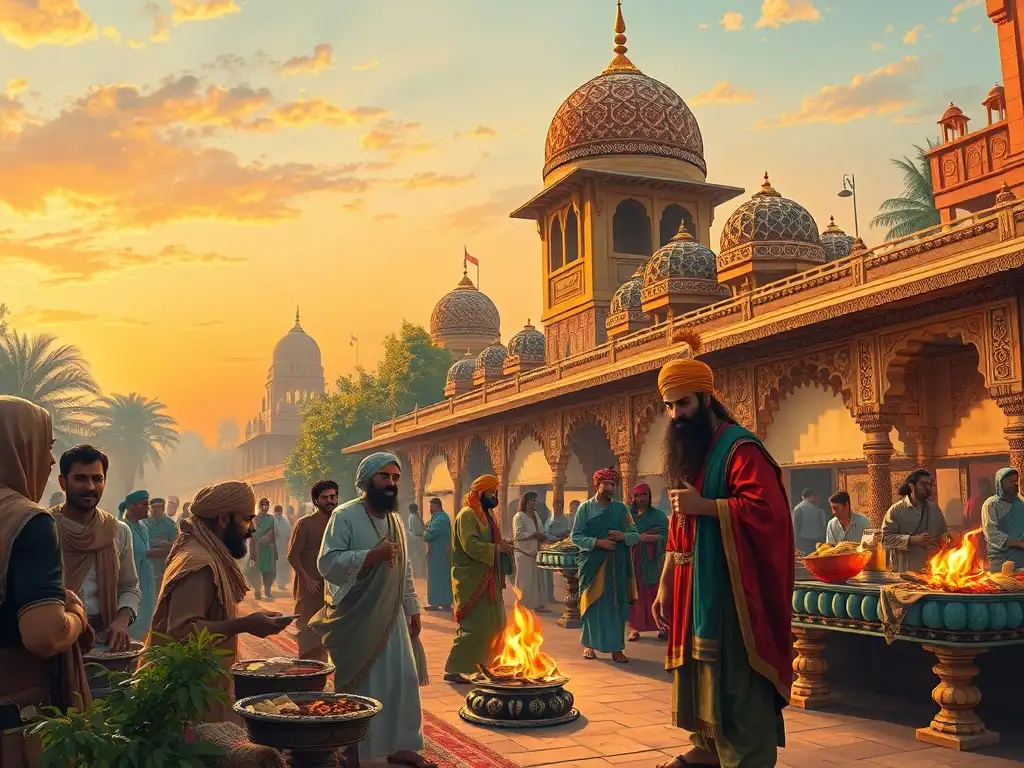
Historical Migration of Zoroastrians to India
The arrival of Zoroastrians in India can be traced back to the 8th century CE, primarily through migration due to the Arab conquest of Persia. Many Zoroastrians, seeking refuge from religious persecution, journeyed to the Indian subcontinent, particularly to the western coasts of Gujarat. This migration marked the beginning of the Parsi community, who preserved their religious identity while integrating into the diverse cultural fabric of India.
Factors Contributing to the Spread of Zoroastrianism in India
Several factors facilitated the spread and acceptance of Zoroastrianism in India:
- Trade Relations: The established maritime trade routes between Persia and India allowed for cultural exchanges and interactions that promoted Zoroastrian ideas.
- Societal Acceptance: The Indian ethos of pluralism and tolerance provided a conducive environment for the Zoroastrian community to thrive while maintaining their distinct beliefs.
- Cultural Syncretism: As Zoroastrians engaged with local customs and traditions, they contributed to a rich tapestry of cultural and religious practices, further embedding their influence within Indian society.
Through these interactions, Zoroastrianism became a part of the broader narrative of India's cultural exchanges, leaving an indelible mark on its spiritual and social landscape.
Zoroastrianism Influence on Ancient Indian Religion
Zoroastrianism, one of the world’s oldest monotheistic religions, significantly impacted the religious landscape of ancient India, especially during the time of the Achaemenid Empire when Persian influence permeated the region. The interaction between Zoroastrianism and indigenous Indian religions led to the exchange of ideas, beliefs, and practices that reshaped spiritual thought in India. This influence is particularly evident in the evolution of concepts surrounding divinity, morality, and the afterlife, which were integrated into various Indian religious practices.
One of the most notable influences of Zoroastrianism on Indian religion is the emphasis on a cosmic struggle between good and evil. This duality resonates in Indian belief systems, particularly in Hinduism, where the eternal battle between deities and demons mirrors Zoroastrian themes. Furthermore, the notion of a linear progression of time, culminating in a messianic age, found parallels in Indian eschatological views, enriching the spiritual dialogue between these ancient civilizations.
Comparison of Zoroastrian and Hindu Belief Systems
The core tenets of Zoroastrianism and Hinduism present intriguing parallels, despite their distinct origins. Both religions emphasize the concept of a supreme entity, although Zoroastrianism is strictly monotheistic with Ahura Mazda as the one god, while Hinduism encompasses a diverse pantheon of deities. This fundamental difference influences worship practices and theological frameworks within each religion.
In terms of cosmology, Zoroastrianism introduces a clear dualistic structure, where the forces of good (represented by Ahura Mazda and his spiritual entities) are in constant opposition to the forces of evil (led by Angra Mainyu). Hinduism, while also recognizing good and evil, often presents a more fluid relationship where deities can embody both aspects. The moral consequences of actions (karma) in Hinduism echo Zoroastrian beliefs, as both systems advocate for righteous living and ethical behavior as pathways to spiritual fulfillment.
Shared Concepts: Dualism and Cosmic Order
Both Zoroastrianism and ancient Indian religions share profound concepts of dualism and cosmic order, which serve as fundamental principles guiding their respective moral frameworks. In Zoroastrianism, the dualistic nature of existence is articulated through the ongoing battle between good and evil, light and darkness, which directly influences ethical practices. This idea has found resonance in the Indian context, particularly within the framework of Hindu mythology, where the eternal conflict between divine beings (devas) and malevolent forces (asuras) mirrors Zoroastrian narratives.
The concept of cosmic order, or Asha in Zoroastrianism, parallels the Hindu idea of Rta (cosmic law), emphasizing the importance of maintaining harmony and balance in the universe. This shared understanding of the cosmos influences ritual practices and the moral obligations of individuals within both traditions. Consequently, the emphasis on order and ethical behavior reflects a deeper philosophical alignment between Zoroastrian and Indian beliefs, fostering a mutual respect for righteousness and cosmic balance.
Impact on Indian Rituals and Practices
The impact of Zoroastrianism on Indian rituals and practices can be observed in various cultural expressions and religious observances. One significant area of influence is the incorporation of fire in worship, as both Zoroastrians and certain Hindu sects revere fire as a purifying and divine element. The sacred fire, known as Atar in Zoroastrianism, resonates with the Hindu Agni, symbolizing purity, transformation, and the presence of the divine.
Moreover, certain Zoroastrian rituals, such as prayers at specific times of the day and the observance of festivals, found their way into Hindu practices, blending with indigenous traditions to create new forms of worship. The emphasis on cleanliness, both physical and spiritual, is another shared value that originated from Zoroastrian teachings and permeated Indian customs, influencing daily life and religious ceremonies.
Zoroastrian Influence on Indian Philosophy
The philosophical exchanges between Zoroastrianism and Indian thought are rich and multifaceted, reflecting a deep engagement between these two ancient civilizations. Zoroastrianism introduced ideas about ethics, dualism, and the nature of the divine, which interacted with and enriched Indian philosophical discourse. This cross-pollination of ideas contributed to the development of various schools of thought in India, particularly during the period of the Maurya and Gupta Empires, when there was heightened interaction through trade and diplomacy.
Indian philosophers began to explore the implications of Zoroastrian concepts, integrating them into their own frameworks. The discussions surrounding the nature of the self, the universe, and moral responsibility were influenced by Zoroastrian teachings, leading to a more complex understanding of existence. This synthesis of ideas underscored a broader philosophical dialogue that transcended cultural boundaries, promoting a shared quest for truth and understanding.
Philosophical Exchanges between Zoroastrianism and Indian Thought
The philosophical exchanges between Zoroastrianism and Indian thought are characterized by a mutual exploration of ethical and metaphysical questions. Zoroastrianism's focus on the ethical implications of choice and free will resonated with Indian philosophies, particularly those articulated in the Upanishads and later in Buddhist thought. The notion that individuals are responsible for their choices and their subsequent consequences aligns with the principles of karma prevalent in Hinduism and Buddhism.
Furthermore, the Zoroastrian concept of Asha (truth and order) influenced Indian philosophical discussions on the nature of reality and the pursuit of knowledge. This interaction led to a richer understanding of the interconnectedness of all beings and the moral imperatives that guide human action. Through dialogues and debates, Indian philosophers were able to incorporate Zoroastrian ethics into their own systems, promoting a more holistic approach to understanding the human condition.
Contributions to Indian Cosmology and Ethics
Zoroastrianism's contributions to Indian cosmology and ethics are significant and enduring. The Zoroastrian view of the universe as a battleground of cosmic forces laid the groundwork for Indian cosmological thought, particularly in the context of cyclical time and the evolution of the cosmos. This perspective influenced Indian cosmological models, which embrace the concepts of creation, preservation, and destruction, echoed in both Hindu and Buddhist traditions.
In terms of ethics, Zoroastrian influences can be seen in the emphasis on righteousness, truthfulness, and the pursuit of wisdom in Indian ethical frameworks. The Zoroastrian belief in the ultimate triumph of good over evil resonates within Indian philosophies that advocate for dharma (righteous duty) as a guiding principle for ethical living. This shared commitment to moral integrity has forged a lasting impact on the ethical landscape of ancient India, enriching its philosophical traditions and guiding its cultural practices.
Cultural Interactions and Exchanges

The interactions between Zoroastrianism and ancient Indian civilizations can be traced back to the early contact between the Persians and the Indian subcontinent. With the rise of the Achaemenid Empire, which extended into parts of northwestern India, the exchange of ideas and beliefs began to flourish. This period saw a blending of Zoroastrian and Vedic concepts, particularly in regions like Gandhara, where trade routes facilitated cultural exchanges. The shared geographical proximity led to mutual influences in various aspects of life, including religion, philosophy, and societal structures.
Both cultures exhibited a rich tapestry of rituals and beliefs that occasionally intersected. Zoroastrian tenets like the duality of good and evil, the concept of a savior figure, and the emphasis on moral responsibility resonated with Indian philosophical thought. The incorporation of these ideas into local practices fostered a unique syncretism, enriching the spiritual landscape of ancient India. Furthermore, the movement of Zoroastrian traders into Indian territories helped cement these interactions, as they brought not only their belief systems but also their cultural practices, which found resonance within the Indian milieu.
Zoroastrian Influence on Art and Architecture in Ancient India
Zoroastrianism's influence on art and architecture in ancient India is notable, particularly in the regions that experienced substantial Persian interaction. The architectural styles of the Achaemenid Empire, characterized by grand palaces, intricate relief carvings, and monumental structures, left a lasting mark on Indian architecture. For instance, the use of columns and decorative motifs can be seen in various ancient Indian temples, which may reflect Zoroastrian stylistic elements.
Moreover, the iconography of Zoroastrianism, particularly the representation of divine beings and symbols such as the Faravahar (a winged disc), found parallels in Indian art. Temples built during the Mauryan and Gupta periods exhibit a blend of these influences, showcasing a diverse array of religious iconography. The artistic motifs often intertwine Zoroastrian themes with local deities, illustrating the cultural assimilation that occurred due to these ancient exchanges.
The Role of Zoroastrianism in Trade and Economic Relations
Trade played a pivotal role in the interactions between Zoroastrianism and ancient Indian civilizations. Zoroastrian merchants were extensively involved in trade routes, connecting the Persian Empire with the Indian subcontinent. These economic exchanges facilitated not only the movement of goods but also the transfer of cultural and religious beliefs. The bustling trade centers of ancient India, such as Taxila and Ujjain, became melting pots of diverse cultures, where Zoroastrian traders shared their beliefs alongside commodities like silk, spices, and precious stones.
The economic relations fostered by this trade often resulted in the establishment of Zoroastrian communities within India, particularly in coastal areas. As these communities settled, they continued to practice their faith while contributing to the local economy, thus embedding Zoroastrianism deeper into the Indian cultural fabric. This economic interdependence further reinforced the spiritual and cultural influences emanating from Zoroastrianism.
Language and Literature: Zoroastrian Influence on Indian Texts
The impact of Zoroastrianism on Indian language and literature is evident in several ancient texts. Scholars have noted similarities between Zoroastrian scriptures, such as the Avesta, and certain Indian philosophical and religious writings. The concepts of cosmic order (asha) and moral righteousness find echoes in the Indian texts, particularly in the Upanishads and later philosophical works.
Additionally, the Persian influence on Sanskrit vocabulary is significant, with numerous words and phrases entering the Indian lexicon through cultural exchanges. This linguistic blending illustrates the interaction between the two civilizations and highlights the mutual influence that shaped their literary traditions. The incorporation of Zoroastrian ideas into Indian literature not only enriched the narrative forms but also deepened the philosophical discourse, fostering a broader understanding of ethics and morality.
The Legacy of Zoroastrianism in Modern Indian Context
The legacy of Zoroastrianism continues to resonate in modern India, particularly through the Parsi community, which has preserved many ancient traditions and practices. The historical journey of Zoroastrians from Persia to India, particularly during the Islamic conquests, has created a unique cultural identity that survives to this day.
Zoroastrian festivals such as Nowruz and Jashn-e Sadeh are celebrated with great fervor within the Parsi community, highlighting the enduring nature of these ancient customs. These celebrations often involve rituals that emphasize the core Zoroastrian beliefs of purity, community, and the worship of fire, which remains a central element of their faith. The Parsi community's commitment to preserving these practices underscores the resilience of their culture amidst the evolving landscape of modern India.
Preservation of Zoroastrian Practices in India Today
Today, the preservation of Zoroastrian practices in India is a testament to the community's dedication to their heritage. Despite facing challenges such as declining numbers and assimilation pressures, Parsis continue to uphold their rituals and traditions. Temples known as Agiaries serve as places of worship and community gathering, where rituals involving sacred fire are performed, maintaining a connection to their ancestral beliefs.
Moreover, educational institutions and cultural organizations within the Parsi community actively promote awareness of Zoroastrian history and philosophy. Initiatives such as workshops, lectures, and cultural festivals aim to instill a sense of pride in their heritage, encouraging younger generations to embrace and continue their ancient customs. The commitment to preserving Zoroastrian practices serves as a bridge connecting the past with the present, ensuring that the influence of Zoroastrianism remains vibrant in modern India.
The Parsi Community and Its Cultural Contributions
The Parsi community has significantly contributed to Indian society in various domains, including commerce, industry, and the arts. Historically, Parsis played a crucial role in the development of modern industries in India, particularly in sectors such as textiles, banking, and shipbuilding. Notable figures such as Jamsetji Tata, the founder of the Tata Group, exemplify the community’s impact on India’s economic landscape.
In addition to their economic contributions, Parsis have also enriched Indian culture through literature, music, and theater. Renowned Parsi playwrights and authors have produced works that reflect the community's unique identity, often addressing themes of cultural integration and resilience. The fusion of Zoroastrian and Indian elements in artistic expressions showcases the harmonious coexistence of these rich traditions.
Furthermore, the Parsi community's commitment to philanthropy and social service has left a lasting legacy. Initiatives aimed at education, healthcare, and the preservation of heritage sites exemplify their dedication to contributing positively to Indian society. The cultural contributions of the Parsi community not only enhance the diversity of India but also serve as a reminder of the enduring influence of Zoroastrianism on the subcontinent.
Conclusion: The Enduring Impact of Zoroastrianism on Indian Civilization
Zoroastrianism, one of the oldest known religions, has left a profound legacy on ancient Indian civilization. Its influence permeated various aspects of Indian society, including religious beliefs, social customs, and philosophical thought. The confluence of Zoroastrian and Indian beliefs shaped not only the spiritual landscape but also the cultural and ethical frameworks of the time. This enduring impact can still be seen in some modern practices and philosophies within Indian society.
The spread of Zoroastrian ideas through trade and cultural exchanges facilitated a unique syncretism, where Indian traditions absorbed and adapted concepts from Zoroastrianism. The emphasis on concepts such as dualism, the moral struggle between good and evil, and the importance of righteous living contributed significantly to the ethical and moral discourse in ancient India. Moreover, the shared focus on fire as a sacred element fostered a mutual respect for spiritual practices across both cultures.
Zoroastrianism's influence on Indian civilization was not merely a historical footnote; it was a dynamic interaction that enriched the cultural and spiritual fabric of ancient India. The acknowledgment and study of these influences provide critical insights into the complexities of ancient civilizations and their interconnectedness.
Summary of Key Influences and Contributions
- Philosophical Ideas: Zoroastrianism introduced significant philosophical concepts, particularly dualism. This framework influenced Indian thought, particularly in the context of good versus evil, which resonated with Hindu and Buddhist teachings.
- Ritual Practices: The importance of fire in Zoroastrian worship found echoes in Hindu practices, where fire rituals (yajnas) play a central role. This shared reverence for fire symbolizes purity and divine presence in both religions.
- Social Ethics: The Zoroastrian emphasis on truth, righteousness, and moral responsibility contributed to the ethical dimensions of ancient Indian society. This can be seen in texts like the Manusmriti, which reflect similar moral concerns.
- Cultural Interactions: Trade routes, particularly those involving the Persian Empire, facilitated cultural exchanges that allowed for the blending of religious and social practices. This intermingling enriched the cultural tapestry of ancient India.
These influences demonstrate the significant role that Zoroastrianism played in shaping various aspects of Indian civilization, highlighting the importance of intercultural dialogue and exchange.
Reflection on the Importance of Cultural Exchanges in Shaping Ancient Indian History
Cultural exchanges, such as those between Zoroastrianism and ancient Indian beliefs, underscore the importance of interaction among civilizations in shaping historical narratives. These exchanges were not one-sided; they involved mutual influence that fostered growth and adaptation across societies. In ancient India, such interactions were crucial in developing a rich and diverse cultural heritage.
These exchanges allowed for the spread of ideas, technologies, and practices that transcended geographical boundaries. They enabled civilizations to learn from one another, leading to advancements in philosophy, science, and the arts. The intermingling of Zoroastrian and Indian beliefs exemplifies how cultures can influence each other in profound ways, leading to the evolution of spiritual and ethical thought.
Recognizing the significance of cultural exchanges is essential for understanding the complexities of ancient civilizations. The interactions between Zoroastrianism and Indian beliefs illustrate how interconnected the ancient world was, laying the groundwork for future cultural and religious developments. This understanding enriches our appreciation of the shared human experience and highlights the enduring impact of ancient beliefs on contemporary societies.
- Introduction to Zoroastrianism and Its Origins
- Overview of Zoroastrianism
- Key Beliefs and Principles of Zoroastrianism
- Historical Context of Zoroastrianism in Ancient Persia
- The Arrival of Zoroastrianism in India
- Zoroastrianism Influence on Ancient Indian Religion
- Zoroastrian Influence on Indian Philosophy
- Cultural Interactions and Exchanges
- The Legacy of Zoroastrianism in Modern Indian Context
- Conclusion: The Enduring Impact of Zoroastrianism on Indian Civilization
Frequently Asked Questions
What is Zoroastrianism?
Zoroastrianism is one of the oldest monotheistic religions, founded by the prophet Zoroaster in ancient Persia. It emphasizes the duality of good and evil and has significantly influenced various cultures, including ancient India.
How did Zoroastrianism influence ancient Indian beliefs?
Zoroastrianism influenced ancient Indian beliefs through the exchange of ideas along trade routes. This interaction introduced concepts like dualism and ethical monotheism to the Indian spiritual landscape.
What are some specific contributions of Zoroastrianism to Indian culture?
Zoroastrianism contributed to various aspects of Indian culture, including philosophy, literature, and ritual practices. Elements such as fire worship and the concept of a soul’s journey have parallels in Indian traditions.
Did Zoroastrianism affect the development of Indian religions?
Yes, Zoroastrianism played a role in the development of Indian religions, especially in shaping the concept of righteousness and moral values. Its ideas influenced Hinduism and Jainism, particularly regarding ethical conduct.
Are there any modern remnants of Zoroastrian influence in India?
Yes, the Parsis, a Zoroastrian community in India, retain aspects of their ancient beliefs and practices. They have integrated their cultural heritage into Indian society while maintaining their unique religious identity.
Final Reflection: The Enduring Legacy of Zoroastrianism's Influence on India
The intricate tapestry of beliefs and practices in ancient India is undeniably woven with threads of Zoroastrianism, illustrating how cultural exchanges shape societies. Today, as we navigate a world increasingly defined by globalization, understanding these historical influences becomes crucial in appreciating the diverse foundations of our contemporary beliefs. The profound impact of Zoroastrianism on Indian spirituality and ethics serves as a reminder of the interconnectedness of human thought and the enduring legacy of ancient wisdom.
Cultural and social landscapes are often shaped by the interplay of different belief systems, and the influence of Zoroastrianism on India is a testament to this dynamic relationship. The ethical principles and cosmological ideas introduced by Zoroastrianism have not only enriched Indian philosophy but have also fostered a spirit of inquiry and coexistence among various traditions. In the tapestry of human history, threads of different colors and textures come together to create a masterpiece of shared understanding.
This observation underscores the importance of recognizing the contributions of diverse cultures in shaping our collective identity.
As we reflect on the lessons drawn from the influence of Zoroastrianism on India, let us embrace the call to explore our own beliefs and the origins behind them. Consider how the values of tolerance, respect, and ethical living can be integrated into your daily life. In a world that often feels divided, let us take inspiration from the past to foster unity and understanding in our communities, ensuring that the legacy of ancient wisdom continues to illuminate our paths forward.
Unveil the Legacy of Zoroastrianism in India!
Thank you for diving into the fascinating world of Zoroastrianism and its profound impact on ancient Indian beliefs and practices. Your interest is a step towards understanding the rich tapestry of cultural exchange that has shaped India’s spiritual landscape. Now, let's take the next step and explore this connection further!
Here are a few ways you can deepen your understanding and share this knowledge with others:
- Discover a local or online discussion group focused on ancient Indian religions to expand your insights and meet fellow enthusiasts.
- Share this article with friends or on social media—let others join the conversation about how ancient beliefs influence modern practices.
- Research a specific aspect of Zoroastrianism that intrigues you and write about it or create a visual guide to enhance your learning experience.
What unique insights have you uncovered about the interplay of Zoroastrianism and Indian culture that you would like to explore further?