
The Economic Impact of CasteBased Occupations in Ancient India

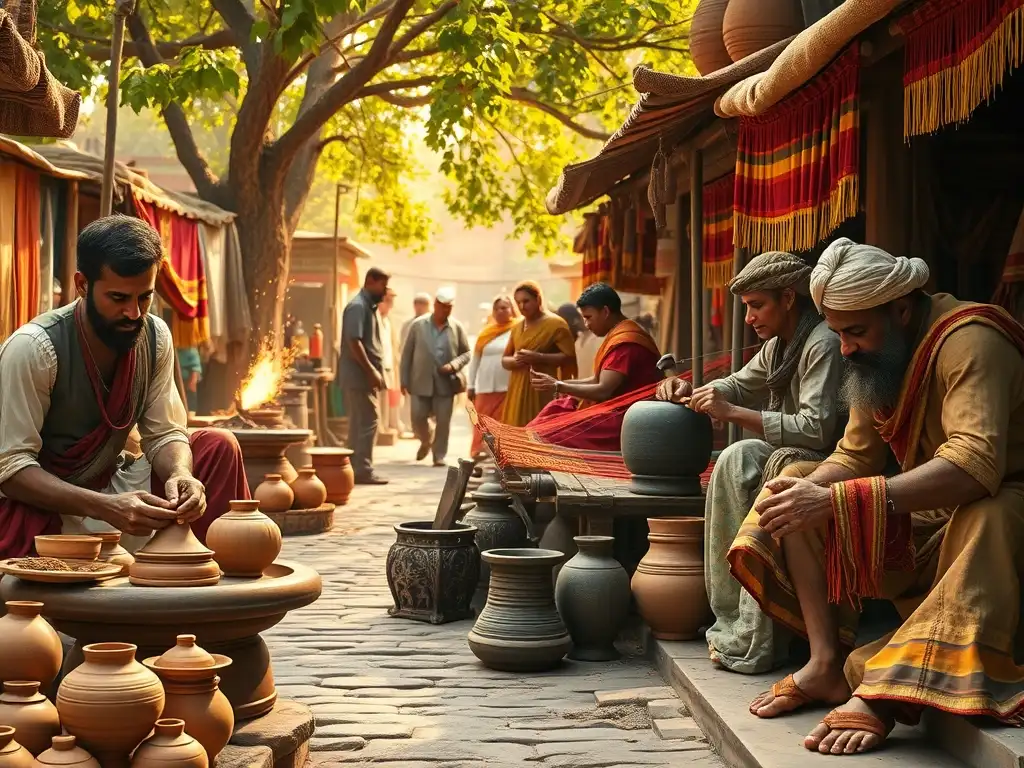
Welcome to Ancient India History! Here, we embark on a fascinating journey through the intricate tapestry of ancient Indian civilizations, uncovering their rich cultural heritage and remarkable contributions to society. In our featured article, "The Economic Impact of Caste-Based Occupations in Ancient India," we delve into how social structures shaped the daily lives and economic frameworks of these ancient societies.
What were the roles and responsibilities tied to various castes, and how did they influence the prosperity of the time? Join us as we unravel these compelling questions and more, sparking your curiosity about the vibrant history that has shaped modern India. Dive in to explore!

Introduction to Caste-Based Occupations in Ancient India
The intricate tapestry of ancient Indian civilization is not only woven with threads of rich culture, spirituality, and philosophy but is also significantly shaped by its social structure, particularly through caste-based occupations. This complex system defined not just social interactions but also the economic landscape of the time. By examining the economic impact of caste-based occupations in ancient India, we can uncover how these roles influenced trade, agriculture, craftsmanship, and overall societal development. Understanding this aspect allows us to appreciate the depth of ancient Indian society and its contributions to economic practices that resonate even today.
Definition and Overview of Caste System
The caste system in ancient India, known as Varna, is traditionally divided into four main categories:
- Brahmins - Priests and scholars, responsible for spiritual and educational duties.
- Kshatriyas - Warriors and rulers, tasked with protection and governance.
- Vaishyas - Merchants and agriculturists, involved in trade and agriculture.
- Shudras - Laborers and service providers, supporting the economy through various trades.
Each caste was associated with specific occupations, creating a structured yet rigid social hierarchy. This division of labor not only ensured the smooth functioning of society but also contributed to economic specialization, whereby individuals developed expertise in their respective fields.
Significance of Caste-Based Occupations in Society
Caste-based occupations played a pivotal role in shaping the economic framework of ancient India. The specialization of labor led to increased efficiency and productivity, fostering trade and commerce. Here are some key significances:
- Economic Stability: By assigning specific roles, the caste system provided a sense of stability and reliability in production and service.
- Cultural Identity: Occupations were often linked with cultural practices, preserving traditional crafts and skills.
- Social Mobility: Although limited, certain avenues existed for individuals to move between castes, influencing economic dynamics.
Historical Context of Caste-Based Occupations
Understanding the historical context of caste-based occupations requires a look into their origins and evolution throughout ancient Indian history.
Origins of the Caste System in Ancient India
The origins of the caste system can be traced back to the Vedic period (circa 1500-500 BCE), where texts such as the Rigveda highlighted the Varna system. Initially, these classifications were likely based on occupational roles rather than hereditary status. Over time, however, these distinctions became more rigid, leading to the social stratification observed in later periods. The roles assigned to each caste became intertwined with religious beliefs, further solidifying their positions within society.
Evolution of Caste-Based Occupations Over Time
As ancient Indian civilization progressed through various empires, such as the Maurya and Gupta empires, the caste system evolved in response to changing social and economic needs.
- Maurya Empire (322-185 BCE): During this period, trade flourished, and the roles of merchants (Vaishyas) became increasingly significant, contributing to the economy through extensive trade networks.
- Gupta Empire (circa 240-550 CE): Known as the "Golden Age" of India, this era saw a diversification of occupations, including advancements in science, mathematics, and art, with various castes contributing to the cultural and economic prosperity.
The interplay of caste-based occupations with economic development in ancient India illustrates a complex relationship that shaped the lives of individuals and the nation as a whole. Understanding this dynamic offers valuable insights into the foundations of modern Indian society and its enduring legacy.
Economic Roles of Different Castes
In ancient India, the caste system played a pivotal role in shaping the economic landscape. Each caste was associated with specific occupations that were not only essential for the functioning of society but also contributed to the overall economic prosperity of the region. The division of labor based on caste allowed for a system of specialization, where individuals could hone their skills in particular trades or professions, thereby enhancing efficiency and productivity. This specialization not only facilitated local economies but also created a network of interdependence among the various castes, ensuring that the needs of society were met effectively.
Overview of Major Caste Groups and Their Occupations
The caste system in ancient India was broadly categorized into four primary groups, known as varnas. These groups were:
- Brahmins: Traditionally priests and scholars, responsible for religious rituals and educating society.
- Kshatriyas: The warrior and ruling class, tasked with protecting and governing the land.
- Vaishyas: Merchants and farmers, playing a crucial role in trade and agriculture.
- Shudras: Servants and laborers, providing essential services and manual labor.
Each of these groups had distinct roles and responsibilities, contributing to the economy in different ways. The Brahmins ensured the continuity of knowledge and tradition, the Kshatriyas maintained order and governance, the Vaishyas facilitated trade and agricultural output, and the Shudras provided the necessary labor force for various tasks.
Contribution of Brahmins: Education and Administration
Brahmins held a significant position in the economic framework of ancient India due to their roles as educators and administrators. They were responsible for imparting knowledge through scriptures and teachings, which was vital for the governance and functioning of society. The administrative roles undertaken by Brahmins included record-keeping, taxation, and advising rulers on various matters.
Their influence extended beyond religious and educational spheres, as they were often involved in the management of land and resources. By ensuring that the ruling class was educated and informed, Brahmins contributed to stable administration, which in turn fostered economic growth.
Role of Kshatriyas: Warrior Class and Land Management
The Kshatriyas, as the warrior class, played a crucial role in maintaining order and security in ancient India. Their responsibilities included defending the realm, which was essential for safeguarding trade routes and agricultural lands. This protection allowed for the flourishing of commerce and trade.
Additionally, Kshatriyas were often landowners and were responsible for the management and distribution of land among peasants. They collected taxes from the agricultural produce, which supported the economy and funded public projects. Their dual role as warriors and land managers made them integral to the economic stability of ancient Indian society.
Vaishyas: Merchants and Agriculturalists
The Vaishyas served as the backbone of the ancient Indian economy through their roles as merchants and agriculturalists. They were involved in trade, both locally and with distant regions, facilitating the exchange of goods such as textiles, spices, and metals. Their entrepreneurial spirit helped in the establishment of markets and trade routes.
In agriculture, Vaishyas played a significant role in cultivating land and managing agricultural production. They employed innovative farming techniques and were responsible for the surplus production that sustained not only their families but also contributed to the economy at large. The wealth generated by the Vaishyas through trade and agriculture was vital for the prosperity of the society.
Shudras: Service and Labor Roles
Shudras, as the lowest caste in the hierarchy, provided essential services and labor to support the economic activities of the higher castes. They were engaged in various occupations, including artisanship, construction, and manual labor. Their contributions were crucial for the functioning of towns and cities, as they undertook the physical work necessary for infrastructure development.
Despite the restrictive nature of their roles, Shudras formed a significant part of the economic framework. They were often skilled in specific crafts and trades, contributing to local economies and ensuring the availability of goods and services necessary for daily life.
Economic Impact of Caste-Based Occupations
The economic impact of caste-based occupations in ancient India was profound and multifaceted. These occupations influenced various aspects of society, including trade, agriculture, and local economies, creating a complex network of interactions that sustained the livelihoods of millions.
Influence on Trade and Commerce in Ancient India
Caste-based occupations significantly influenced trade and commerce in ancient India. Merchants and traders from the Vaishya caste established extensive trade networks that connected different regions, facilitating the exchange of goods and ideas. Trade fairs and markets became hubs of economic activity, where products were exchanged, and cultural interactions occurred.
The specialization of labor allowed for efficient production and distribution of goods, which in turn stimulated demand and economic growth. The involvement of Brahmins in trade practices, such as record-keeping and taxation, further contributed to the development of a structured commercial environment that supported long-distance trade.
Impact on Agricultural Production and Land Use
Agricultural production in ancient India was heavily influenced by the caste system, particularly through the roles played by the Kshatriyas and Vaishyas. The Kshatriyas managed land and ensured its protection, while the Vaishyas utilized innovative farming techniques to maximize output. This collaboration led to increased agricultural productivity, which was essential for sustaining the population.
The caste system also dictated land use patterns, with certain castes specializing in specific crops or farming techniques. The organization of labor within the caste framework ensured that agricultural activities were carried out efficiently, contributing to food security and economic stability.
Caste-Based Occupations and Local Economies
Caste-based occupations were crucial for the development of local economies in ancient India. Each caste contributed to the economy in a way that created a symbiotic relationship among them. The labor of Shudras supported the artisanship of Vaishyas, while the agricultural output ensured the sustenance of all castes.
Local economies thrived on the interdependence created by the caste system, with each group fulfilling necessary roles. This structure not only facilitated economic activities but also contributed to the cultural and social fabric of ancient Indian society, shaping the way communities interacted and functioned together.
Socio-Economic Mobility and Caste

The caste system in ancient India significantly shaped socio-economic mobility, dictating the professional roles individuals could assume based on their caste affiliation. While the rigid structure of the caste system often restricted movement across caste boundaries, it also created specific pathways for mobility within certain contexts. This mobility was influenced by various factors, including economic necessity, regional dynamics, and individual merit.
Opportunities and Restrictions in Caste-Based Occupations
In ancient India, caste-based occupations often provided a framework within which individuals could thrive economically. For example, members of the Vaishya caste were traditionally engaged in trade and commerce, offering opportunities for wealth accumulation. However, these opportunities were accompanied by restrictions; individuals were often expected to adhere strictly to the occupational roles defined by their caste. The restrictions imposed by the caste system meant that while some could achieve success within their designated roles, others faced significant barriers to entering more lucrative trades or professions outside their caste.
Case Studies of Mobility within the Caste System
Historical accounts highlight instances of mobility within the caste system, although these cases were often exceptions rather than the rule. For instance, some individuals from lower castes, through exceptional skill or entrepreneurial spirit, were able to ascend the social ladder. A notable example can be found in the lives of certain artisans and merchants who, despite their lower caste status, gained wealth and respectability, eventually being able to negotiate better social standings. These case studies illustrate that while the caste system imposed limitations, individual tenacity and changing economic conditions could allow for some degree of movement.
The Influence of Economic Status on Caste Identity
Economic status played a pivotal role in shaping caste identity in ancient India. Wealth could enhance an individual's caste standing, leading to a reevaluation of their social position. Conversely, those from higher castes who fell into poverty often faced stigmatization and a loss of social prestige. This dynamic created a complex interplay between wealth and caste identity, where economic success could lead to a more favorable social perception, while economic failure could result in a decline in caste identity.
Caste-based occupations not only shaped economic realities but also had profound cultural and social implications. The occupations assigned to each caste often influenced the cultural practices, traditions, and communal identities that emerged around them.
Interrelation Between Caste Occupations and Social Norms
Social norms in ancient India were intricately linked to caste-based occupations. Each caste's role within the economy was underpinned by societal expectations and cultural rituals. For instance, the Brahmins, primarily engaged in religious and scholarly activities, were afforded a status that reinforced their authority in spiritual and educational spheres. Similarly, the Kshatriyas, as warriors, were expected to uphold honor and valor. Such interrelations established a normative framework that dictated acceptable behavior and roles within society according to one's caste, fostering a sense of belonging and identity.
Impact on Art, Craft, and Cultural Contributions
The specialization of labor within caste-based occupations significantly contributed to the richness of Indian art and culture. For example, the mastery of certain crafts, such as pottery, weaving, and metalwork, was often confined to specific castes, leading to the development of unique regional styles and techniques. The artisans’ dedication to their craft not only enhanced local economies but also enriched cultural heritage, as these crafts became intertwined with religious and social ceremonies, thereby preserving traditions across generations.
The Role of Religion in Shaping Caste-Based Work
Religion played a crucial role in reinforcing and perpetuating the caste system and its associated occupations. Many caste-based roles were linked to religious duties and practices, which often legitimatized the social hierarchy. For example, the priestly caste (Brahmins) derived their authority from religious texts and rituals, while other castes performed occupations deemed necessary for societal function, such as sanitation and agriculture. The intertwining of religious belief with occupational roles established a divine justification for the caste system, making it a deeply entrenched aspect of ancient Indian society.
Conclusion: Legacy of Caste-Based Occupations in Ancient India
The caste-based occupations in ancient India have left a profound legacy that continues to influence the socio-economic landscape of the region. These occupations were not merely jobs; they were integral components of an elaborate social structure that defined the roles and responsibilities of individuals based on their caste. The economic contribution of these occupations was evident in various sectors, including agriculture, trade, craftsmanship, and services, which collectively sustained the ancient Indian economy.
Moreover, the specialization within these castes fostered a sense of community and belonging, which played a crucial role in the cultural and social cohesion of ancient Indian society. Each caste developed its own set of skills and knowledge, which contributed to the diversity and richness of India's economic tapestry. This legacy has persisted over the centuries, influencing modern economic practices and social interactions in contemporary India.
Summary of Economic Contributions
Caste-based occupations in ancient India significantly shaped the economy by creating a structured labor system that was efficient and sustainable. Each caste was associated with specific trades or professions, leading to a division of labor that optimized productivity. For instance:
- Agricultural Castes: Primarily responsible for farming, these groups cultivated the land and produced food, which was the backbone of the economy.
- Artisan Castes: Skilled in various crafts, artisans contributed to local and regional markets by producing goods ranging from textiles to metalwork.
- Merchant Castes: Engaged in trade, these groups facilitated the exchange of goods between different regions, enhancing economic interactivity and cultural exchange.
- Service Castes: Providing essential services, these castes supported the daily functioning of society, contributing to both urban and rural economies.
The interdependence of these castes created a robust economic framework that allowed ancient Indian civilizations to thrive and prosper.
Reflection on Modern Implications of Ancient Caste-Based Occupations
The historical context of caste-based occupations provides valuable insights into contemporary economic and social structures in India. While modern society has seen significant changes, the legacy of these ancient occupations persists in various forms.
Today, the caste system continues to influence job opportunities, social mobility, and economic status in many regions. The specialization inherent in caste-based occupations has evolved but still exists in the form of professional networks and community-based business practices. Understanding this connection between ancient and modern occupations can help address ongoing socio-economic disparities and provide a framework for inclusive development.
Moreover, recognizing the contributions of these ancient occupations is essential for appreciating the diverse cultural heritage of India. It allows for a more nuanced understanding of how economic practices intersect with social identities, thereby fostering a richer dialogue about equity and opportunity in contemporary society.
References and Further Reading on Caste-Based Occupations in Ancient India
Suggested Books and Articles
-
"Caste in Ancient India: A Historical Perspective" by A. K. Sharma
This book explores the historical roots and evolution of the caste system in ancient India, detailing its economic implications.
-
"The Economic Life of Northern India, A.D. 600-1200" by D. N. Jha
Jha analyzes the economic activities during this period, highlighting the role of caste-based occupations in shaping the economy.
-
"Castes and Tribes of Southern India" by Edgar Thurston
Although focused on southern India, this extensive work provides insights into the economic roles of various castes and their societal impacts.
Online Resources for Further Exploration
- Digital South Asia Library: A rich repository of historical texts and resources related to ancient Indian history, including caste and economy.
- Internet Archive: Offers digitized versions of numerous historical books and articles on caste-based occupations in ancient India.
- Academia.edu: A platform where scholars publish papers and articles, including research on ancient Indian social structures and economic practices.
By delving into these resources, readers can deepen their understanding of the complex relationship between caste-based occupations and the evolving socio-economic landscape of ancient India.
- Introduction to Caste-Based Occupations in Ancient India
- Historical Context of Caste-Based Occupations
- Economic Roles of Different Castes
- Economic Impact of Caste-Based Occupations
- Socio-Economic Mobility and Caste
- Cultural and Social Implications of Caste-Based Occupations
- Conclusion: Legacy of Caste-Based Occupations in Ancient India
- References and Further Reading on Caste-Based Occupations in Ancient India
Frequently Asked Questions
What were caste-based occupations in ancient India?
Caste-based occupations were roles and professions assigned to individuals based on their social caste, which was determined by birth. These occupations significantly influenced the economic structure of ancient Indian society.
How did the caste system affect the economy of ancient India?
The caste system created a hierarchical structure where different castes specialized in specific trades and services. This specialization led to efficient production and trade systems, contributing to the overall economic growth of ancient India.
Were there any exceptions to the caste-based occupations?
Yes, while most people adhered to their caste's traditional roles, there were instances of mobility and exceptions, especially during periods of social change or under influential rulers who promoted merit over caste.
What role did religion play in caste-based occupations?
Religion played a significant role in defining and justifying caste-based occupations, with many jobs linked to ritual purity and spiritual duties. This connection reinforced the social hierarchy and the importance of maintaining caste roles.
How did the Gupta Empire influence caste-based occupations?
The Gupta Empire saw a flourishing of trade and commerce, which led to the expansion of caste-based occupations. The empire's emphasis on artisanship and entrepreneurship allowed for greater opportunities within the caste system, enhancing the economy.
Final Reflection: Understanding the Legacy of Caste-Based Occupations in Ancient India
The economic impact of caste-based occupations in ancient India remains a crucial topic, as it not only shaped the societal structure of its time but also continues to influence contemporary discussions on social equity and economic disparity. The intricate relationship between caste and occupation has left a lasting imprint on the socio-economic landscape of modern India, highlighting the need for a deeper understanding of how historical frameworks can inform current policies and societal attitudes.
Caste-based occupations have profoundly influenced the cultural and social fabric of India, creating a legacy that is both rich and complex. This historical context serves as a reminder of the systemic inequalities that persist today, urging us to reflect on our own roles within these structures. As Mahatma Gandhi once said, "> The true measure of any society can be found in how it treats its most vulnerable members." This perspective invites us to consider how the remnants of these ancient practices continue to affect marginalized communities and the broader economic environment.
As we move forward, let us take a moment to reflect on the lessons learned from the economic impact of caste-based occupations in ancient India. I encourage you to engage with this history, not just as a distant past, but as a living narrative that informs our present and shapes our future. By acknowledging and addressing these historical injustices, we can work towards a more equitable society that values all contributions, regardless of caste or background. Together, we can foster a dialogue that promotes understanding, empathy, and ultimately, change.
Unveil the Legacy: Take Action on Caste-Based Occupations!
Thank you for taking the time to explore the fascinating economic impact of caste-based occupations in ancient India. You've gained insights into how these roles shaped society and influenced trade and the economy throughout history. Now, it's time to put this knowledge into action!
Here’s how you can deepen your understanding and engage with this rich history:
- Dive deeper: Read scholarly articles or books on caste systems and their economic implications to broaden your perspective.
- Share your insights: Engage in discussions with friends or online communities, fostering conversations about how these historical structures continue to resonate in today’s world.
- Preserve the knowledge: Join local history groups or participate in online forums to help promote awareness and educate others on this important aspect of ancient Indian economy.
How do you think the historical context of caste-based occupations influences today's social and economic structures? We would love to hear your thoughts!