
The Influence of Buddhism on the Caste System in Ancient India


Welcome to Ancient India History, where we embark on a fascinating journey through the vibrant tapestry of ancient Indian civilizations! Dive deep into the impact of Buddhism on the caste system, a pivotal theme that shaped daily life and society in this remarkable era. How did this profound philosophy challenge societal norms and foster a new understanding of equality?
As you explore our content, prepare to uncover the intricate connections between spirituality and social structure that defined a culture rich in diversity and innovation. Join us in unraveling the mysteries of the past and discover the legacies that still resonate today!
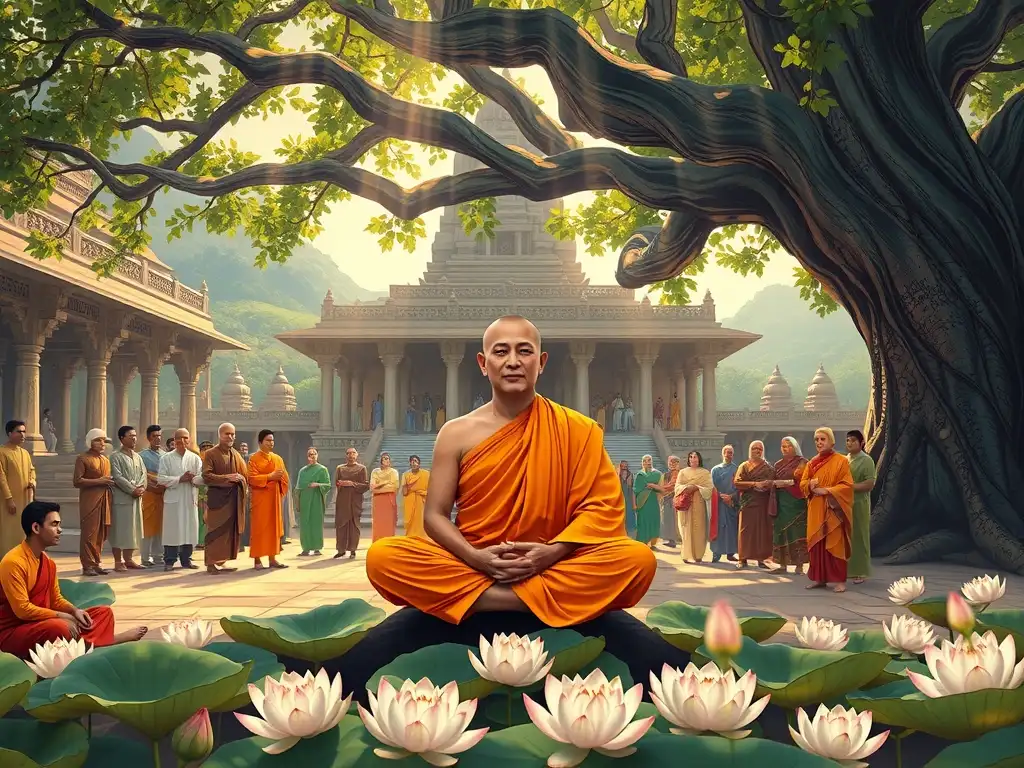
Introduction to Buddhism and the Caste System
The intricate relationship between Buddhism and the caste system in ancient India presents a fascinating narrative of social dynamics and spiritual evolution. Buddhism, which emerged in the 5th century BCE, questioned the rigid social hierarchies dictated by the caste system, advocating for a more egalitarian society.
This article delves into the Buddhism impact on caste system, exploring how the teachings of the Buddha influenced societal structures and individual identities within the framework of ancient Indian civilization. By analyzing the intersection of these two significant aspects of Indian history, we gain insight into the broader implications of religious thought on social order and hierarchy.
Overview of Buddhism in Ancient India
Buddhism originated with the teachings of Siddhartha Gautama, known as the Buddha, who sought to address the suffering inherent in human existence. His philosophy emphasized the Four Noble Truths and the Eightfold Path, promoting values such as compassion, mindfulness, and the pursuit of enlightenment. As Buddhism spread across India and beyond, its principles began to resonate with various classes of society, including those marginalized by the existing caste system.
- Core Teachings:
- Four Noble Truths: Understanding suffering and the path to liberation.
- Eightfold Path: A guide to ethical and mental development.
Buddhism's emphasis on personal experience and morality over birthright challenged the established norms of hierarchy, laying the groundwork for a more inclusive social framework.
Definition and Origins of the Caste System
The caste system, or Varna system, is a social stratification prevalent in ancient India, traditionally divided into four main categories:
- Brahmins: Priests and scholars.
- Kshatriyas: Warriors and rulers.
- Vaishyas: Traders and agriculturists.
- Shudras: Laborers and service providers.
This hierarchical organization was believed to be divinely ordained and deeply ingrained in the societal fabric of ancient India. The origins of the caste system are often linked to the Rigveda, which established these divisions based on occupational roles and spiritual duties.
The Intersection of Buddhism and Social Hierarchies
Buddhism's rise presented an ideological challenge to the caste system. The Buddha's teachings rejected the notion that one's social status was determined by birth. Instead, he posited that personal merit and ethical conduct should define an individual's worth. This perspective attracted followers from various strata of society, including those from lower castes, who found solace in the idea of equality and redemption through spiritual practice.
Historical Context of the Caste System
Evolution of the Caste System Before Buddhism
Before the advent of Buddhism, the caste system was a rigid framework that governed virtually every aspect of life, from occupation to marriage. The early societal structure was less formalized, but as Vedic culture developed, the classification of individuals into specific castes became more pronounced. Over time, this led to the entrenchment of social barriers that dictated interactions and relationships among different groups.
Key Features of the Caste System in Ancient Indian Society
- Social Stratification: A clear hierarchy that defined roles and responsibilities.
- Endogamy: Marriages were typically confined within one's caste.
- Occupational Specialization: Each caste was associated with specific professions.
These features reinforced not only social boundaries but also religious and cultural practices that were often justified through sacred texts and traditions.
The Role of Religion in Establishing Social Order
Religion played a pivotal role in sustaining the caste system. The belief in karma and dharma, linked to one's caste duties, was prevalent and served to justify the status quo. Religious rituals and texts often reinforced the idea that social hierarchy was part of a divine plan, making it difficult for lower castes to challenge their circumstances.
In this context, Buddhism emerged as a revolutionary force, advocating for social reform and challenging the established norms. Its influence on the caste system marked a significant moment in the history of ancient India, paving the way for future discussions on equality and justice within society.
The Emergence of Buddhism and Its Principles
Buddhism emerged in the 5th century BCE in the Indian subcontinent, founded by Siddhartha Gautama, known as the Buddha. This period was marked by significant social and religious upheaval, as the rigid structures of the Vedic tradition began to be questioned. Buddhism offered a new spiritual path that emphasized personal enlightenment over ritualistic practices and caste hierarchies, which were prominent in the prevailing Brahmanical society. The core principles of Buddhism revolved around the Four Noble Truths and the Eightfold Path, which encouraged individuals to seek understanding, ethical conduct, and mental discipline.
Core Teachings of Buddhism
At the heart of Buddhism lie the Four Noble Truths:
- The Truth of Suffering (Dukkha): Life is characterized by suffering and dissatisfaction.
- The Truth of the Cause of Suffering (Samudaya): Suffering arises from attachment and desire.
- The Truth of the End of Suffering (Nirodha): It is possible to end suffering by overcoming desire.
- The Truth of the Path Leading to the End of Suffering (Magga): The Eightfold Path provides a practical guide to ending suffering.
The Eightfold Path includes:
- Right Understanding
- Right Intent
- Right Speech
- Right Action
- Right Livelihood
- Right Effort
- Right Mindfulness
- Right Concentration
These teachings emphasized ethical living and mental training, enabling followers to transcend worldly attachments and ultimately achieve Nirvana.
Rejection of Social Class Distinctions
Buddhism fundamentally challenged the rigid social stratification of the caste system. Unlike the Brahmanical tradition, which upheld the social order as divinely ordained, Buddhism rejected the idea that one's social status was a determinant of spiritual worth. The Buddha taught that all individuals, regardless of caste, could attain enlightenment. This egalitarian approach attracted a diverse following, which included individuals from various social backgrounds, particularly those marginalized by the caste system.
Buddhism’s Appeal to the Lower Castes
Buddhism's inclusive nature made it particularly appealing to the lower castes, who faced discrimination and social ostracism under the caste system. The promise of spiritual equality and the possibility of attaining Nirvana were compelling incentives for individuals seeking liberation from oppressive social structures. Many people from the Shudra and other lower castes found solace and hope in the teachings of Buddhism, leading to a significant number of conversions. These conversions contributed to the rapid spread of Buddhism across ancient India.
Buddhism’s Impact on the Caste System
Buddhism's teachings and expansion had profound effects on the caste system in ancient India. The movement encouraged a shift in social dynamics, fostering environments where individuals could transcend their birth-based identities.
Changes in Social Perceptions Due to Buddhism
As Buddhism gained traction, it began to alter societal perceptions of caste. The emphasis on personal merit and moral behavior over birthright led to a gradual questioning of caste norms. Buddhist philosophy promoted the idea that spiritual progress was accessible to anyone, which encouraged individuals to challenge the status quo. This shift contributed to a more fluid social structure, where some traditional caste boundaries started to blur.
Buddhist Monastic Communities and Their Influence
Buddhist monastic communities, or Sanghas, played a crucial role in reinforcing the movement's impact on the caste system. These communities were open to all, regardless of caste, and emphasized collective living and equality among members. Monasteries became centers of learning and social reform, where individuals of different castes interacted and collaborated. This interaction further facilitated the erosion of rigid caste divisions and promoted a sense of communal identity that transcended social barriers.
Case Studies: Localized Changes in Caste Practices
Numerous localized case studies illustrate the impact of Buddhism on caste practices. For example, in regions like Bihar, where Buddhism flourished, historical records show a notable decline in caste-based discrimination as Buddhist teachings gained popularity. In some areas, traditional caste rituals were replaced with Buddhist practices that emphasized communal gatherings and shared spiritual experiences. These changes contributed to the weakening of the caste system, illustrating how Buddhism not only provided a spiritual alternative but also instigated significant social transformations in ancient India.
Overall, the influence of Buddhism on the caste system was a complex interplay of spiritual, social, and cultural factors, leading to a re-evaluation of traditional hierarchies and promoting a more inclusive society.
Comparison of Buddhist and Hindu Views on the Caste System

Buddhism and Hinduism offer contrasting perspectives on the caste system, which was a fundamental aspect of social organization in ancient India. While Hinduism typically emphasized the rigid hierarchy of varnas (the four primary categories of society: Brahmins, Kshatriyas, Vaishyas, and Shudras), Buddhism posed significant challenges to these established social norms.
Hindu beliefs often anchored the caste system in the concept of dharma, which varies according to one's caste and stage of life. In contrast, Buddhism rejected the notion that social status should dictate a person’s spiritual worth or potential for enlightenment. This fundamental difference in worldview led to the broader acceptance of egalitarian principles in Buddhist communities, promoting the idea that all individuals can attain nirvana regardless of their caste affiliation.
Contrasting Beliefs: Dharma vs. Karma
In Hinduism, dharma represents the moral duties and responsibilities unique to each caste, enforcing social order and hierarchy. Each caste has its own set of obligations, and adherence to dharma is believed to influence one’s future reincarnations through the law of karma. In this framework, social status is often justified as a result of past actions, reinforcing the caste system as a divine order.
Conversely, Buddhism emphasizes karma without the caste-based differentiation inherent in Hindu dharma. According to Buddhist teachings, actions (good or bad) determine one's future rebirth, but these actions are not confined to caste obligations. This perspective encourages individuals to seek spiritual truth and moral conduct irrespective of their social standing, thereby undermining the legitimacy of the caste system.
The Role of Rituals and Practices in Both Religions
Rituals and practices play a significant role in both Hinduism and Buddhism, but they are fundamentally different in their implications for the caste system. Hindu rituals often reinforce caste distinctions, with specific rites and ceremonies designated for each caste. These rituals can serve to maintain social hierarchies, often requiring participation from individuals of a particular caste.
In contrast, Buddhism introduced a more universal approach to spiritual practices that transcended caste boundaries. The Sangha, or monastic community, welcomed individuals from all walks of life, emphasizing meditation, ethical conduct, and communal harmony over caste-specific rituals. The Buddhist practice of dana (almsgiving) illustrated this principle, as it involved giving to monks from all backgrounds, promoting a sense of equality and shared spiritual pursuit.
The Decline of Buddhism and Its Long-term Effects on the Caste System
The decline of Buddhism in India, particularly by the end of the first millennium CE, had profound implications for the caste system and Indian society as a whole. As Buddhism waned, the caste system became more entrenched, adapting to the socio-political dynamics of subsequent empires.
Factors Leading to the Decline of Buddhism in India
Several factors contributed to the decline of Buddhism in India. The rise of Hindu revivalist movements, particularly during the Gupta Empire, re-emphasized traditional Hindu practices and philosophies. Additionally, competition with emerging sects, such as Shaivism and Shaktism, alongside the patronage of Hindu kings, diminished Buddhist influence. The dissolution of Buddhist monastic institutions and the loss of royal support further exacerbated the decline, leading to a significant reduction in the number of followers and monasteries.
Lasting Changes in the Caste System Post-Buddhism
As Buddhism receded, the caste system underwent significant transformations. The revival of Brahmanical authority saw a reinforcement of caste hierarchies, often incorporating elements of Buddhist egalitarianism into a restructured caste framework. The once rigid boundaries began to adapt, leading to the emergence of sub-castes and a more complex social stratification. This evolution facilitated the coexistence of Buddhist values within a predominantly Hindu context, albeit often in a diluted form.
Resurgence of Caste Identity in Later Periods
In the centuries following Buddhism's decline, caste identity experienced a resurgence, particularly during the medieval period. The establishment of regional kingdoms and socio-political dynamics allowed for the reassertion of caste-based identities. This resurgence was characterized by the consolidation of caste networks and the reaffirmation of social roles, often in reaction to the previous Buddhist ideals of equality. The interplay between caste and emerging religious movements, including Bhakti and later Sikhism, further complicated the landscape, leading to a nuanced relationship between caste, identity, and spiritual practice in India’s diverse society.
Conclusion
The influence of Buddhism on the caste system in ancient India is a complex and multifaceted topic that highlights the interactions between religion, philosophy, and social structures. While Buddhism emerged as a reformative movement challenging the rigid hierarchies of the caste system, its impact varied across different regions and periods.
Summary of Buddhism's Influence on the Caste System
Buddhism's teachings fundamentally questioned the legitimacy of the caste system, advocating for the equality of all individuals regardless of their birth status. The core principles of Buddhism, such as compassion (karuna) and the pursuit of enlightenment (nirvana), emphasized ethical behavior over social stratification.
- Key Aspects of Influence:
- Promotion of Social Equality: Buddhist communities often included members from various castes, thereby fostering a more inclusive approach to social interactions.
- Monastic Communities: The establishment of Buddhist monastic orders provided a platform where individuals could escape the confines of caste, as entrance into monastic life was based on personal choice rather than birth.
- Philosophical Teachings: The Buddhist rejection of ritualistic practices associated with caste further undermined the traditional social order.
The spread of Buddhism throughout India and beyond resulted in a gradual transformation of social norms, although the caste system remained deeply entrenched in many aspects of society.
Reflection on the Legacy of Buddhism in Social Structures
Buddhism's challenge to the caste system has left a lasting legacy in Indian society. While it did not completely eradicate caste distinctions, it contributed to a broader dialogue on social justice and equality. The ethical teachings of Buddhism influenced subsequent philosophical thought and social movements, paving the way for later reformers who sought to dismantle oppressive social structures.
- Cultural Integration: As Buddhism spread, it often merged with local customs and practices, leading to a more nuanced understanding of social relations. This integration helped to soften the rigid boundaries of caste.
- Enduring Philosophical Impact: The emphasis on individual agency and moral conduct in Buddhism inspired various reform movements throughout Indian history, including those led by figures such as Mahatma Gandhi, who advocated for the upliftment of the marginalized.
Future Implications for Understanding Ancient Indian Society
Understanding the impact of Buddhism on the caste system provides valuable insights into the dynamics of ancient Indian society. It highlights the interplay between religious beliefs and social structures, emphasizing that social systems are not static but are subject to change through philosophical and ethical challenges.
- Interdisciplinary Research: Future studies could benefit from an interdisciplinary approach, incorporating historical, sociological, and anthropological perspectives to better understand the complexities of caste dynamics influenced by Buddhism.
- Comparative Analysis: Comparing Buddhism's impact on the caste system with other religious movements in India can reveal patterns of social reform and resistance, enriching our comprehension of ancient societal structures.
The examination of Buddhism's influence on the caste system not only sheds light on the past but also informs contemporary discussions on social equality and justice, making it a relevant topic for ongoing exploration in the context of Indian history.
- Introduction to Buddhism and the Caste System
- Historical Context of the Caste System
- The Emergence of Buddhism and Its Principles
- Buddhism’s Impact on the Caste System
- Comparison of Buddhist and Hindu Views on the Caste System
- The Decline of Buddhism and Its Long-term Effects on the Caste System
- Conclusion
Frequently Asked Questions
What was the caste system in ancient India?
The caste system was a hierarchical social structure that divided people into various groups based on their occupation and social status. It played a significant role in the social dynamics of ancient Indian society.
How did Buddhism emerge in ancient India?
Buddhism emerged in the 5th century BCE with the teachings of Siddhartha Gautama, known as the Buddha. It advocated for a path toward enlightenment and challenged the rigid caste system prevalent at the time.
In what ways did Buddhism impact the caste system?
Buddhism promoted equality and rejected the hereditary nature of the caste system. It encouraged followers to focus on personal merit and ethical conduct rather than social class, leading to a more inclusive society.
Did Buddhism lead to the decline of the caste system?
While Buddhism contributed to the questioning of the caste system, it did not lead to its complete decline. However, its teachings influenced many to adopt a more egalitarian perspective within society.
The legacy of Buddhism includes the advocacy for social justice and the reform of social hierarchies. It inspired other movements that continued to challenge the caste system and promote social equality in subsequent centuries.
Final Reflection: The Lasting Impact of Buddhism on the Caste System
The exploration of Buddhism's influence on the caste system in ancient India reveals a profound connection between spiritual beliefs and social structures. Today, as we navigate issues of inequality and discrimination, understanding how Buddhism challenged the rigid hierarchies of its time is not just an academic exercise; it is a vital lesson in compassion and inclusivity. The teachings of the Buddha, emphasizing equality and the potential for enlightenment for all, resonate deeply in our contemporary discussions about social justice and human rights.
Clearly, the ripple effects of Buddhism's teachings continue to shape societal norms and cultural practices. The movement towards a more equitable society, inspired by Buddhist principles, has sparked dialogues around caste and class that persist today. As Dr. B.R. Ambedkar, a key figure in the fight against caste discrimination, once said, I measure the progress of a community by the degree of progress which women have achieved.
This quote encapsulates the ongoing struggle for equality, reminding us that the fight against the remnants of the caste system is intertwined with broader issues of gender and social justice.
As we reflect on the lessons from Buddhism's impact on the caste system, let us carry forward the spirit of inclusivity and compassion in our own lives. Consider how you can challenge discriminatory practices in your community and advocate for equality. By embodying the principles of understanding and acceptance that Buddhism espouses, we can contribute to a more just society, honoring the legacy of those who fought against oppression and paving the way for future generations to thrive in harmony.
Unveil the Transformative Power of Buddhism!
Thank you for exploring the intricate connections between Buddhism and the caste system in ancient India. We hope this journey has deepened your understanding of how these philosophies shaped societal structures. Now, let’s take practical steps to further engage with this profound topic!
- Explore local Buddhist practices or temples—witness firsthand how the values of equality and compassion continue to influence communities today.
- Share your insights with friends or on social media—start meaningful conversations about the relevance of these teachings in contemporary society.
- Join a discussion group or online forum focused on Buddhism’s impact—connect with others who share a passion for history and philosophy.
What aspects of Buddhism's influence on social structures resonate most with you, and how do you think they can be applied in today's world?