
How Ancient Indian Texts Influenced Educational Reforms in Other Cultures


Welcome to Ancient India History, where we embark on a captivating journey through the rich tapestry of India's past. Delve into the profound influence of ancient Indian texts on educational reforms across cultures—a topic that not only sheds light on the wisdom of our ancestors but also reveals how their insights continue to shape modern educational systems. As you explore the intricate connections between ancient philosophies and contemporary practices, prepare to uncover the remarkable legacy of India’s intellectual heritage. Continue reading to discover how these timeless texts have transcended borders and enriched the global discourse on education.
- Introduction to Ancient Indian Texts and Their Educational Influence
- The Role of Ancient Indian Texts in Shaping Educational Practices
- Comparative Analysis of Ancient Indian Educational Influences
- Specific Educational Reforms Inspired by Ancient Indian Texts
- Modern Implications of Ancient Indian Educational Practices
- Conclusion: The Lasting Legacy of Ancient Indian Texts on Global Education
-
Frequently Asked Questions
- What are some key ancient Indian texts that influenced education?
- How did ancient Indian texts impact educational reforms in other cultures?
- What role did the Guru-shishya tradition play in education?
- How do ancient Indian texts address the concept of learning and knowledge?
- In what ways can we see the influence of ancient Indian education in modern systems?
- Final Reflection: The Enduring Legacy of Ancient Indian Texts in Education
- Unveil the Legacy of Ancient Indian Education!
Introduction to Ancient Indian Texts and Their Educational Influence

The legacy of ancient Indian texts is profound and multifaceted, echoing through the corridors of educational systems across the globe. Rooted in a rich tapestry of history, philosophy, and spirituality, these texts have not only shaped the intellectual landscape of India but have also served as pivotal sources of inspiration for educational reforms in various cultures around the world.
From the pragmatic teachings of the Arthashastra to the philosophical musings found in the Upanishads, ancient Indian literature presents a wealth of knowledge that continues to resonate in contemporary discussions on education. This article delves into the intricate ways in which ancient Indian texts have influenced educational practices beyond their geographical origins, illuminating their enduring relevance and transformative power.
Overview of Ancient Indian Texts
Ancient Indian texts encompass a diverse array of literature that includes religious scriptures, philosophical treatises, scientific writings, and poetic works. Key texts include:
- Vedas: The oldest sacred scriptures of Hinduism, which form the foundation of Indian philosophy and spirituality.
- Upanishads: Philosophical texts that explore metaphysical concepts and the nature of reality, emphasizing knowledge and introspection.
- Puranas: Mythological texts that convey historical narratives and moral lessons, often serving educational purposes in ancient society.
- Mahabharata and Ramayana: Epic poems that not only tell grand tales of heroism and duty but also impart ethical teachings relevant to personal and societal conduct.
- Arthashastra: A treatise on statecraft, economics, and military strategy, offering practical guidance that has been studied and adapted in various contexts.
These texts collectively contributed to a framework of knowledge that prioritized critical thinking, ethical reasoning, and holistic education, laying foundational principles that would influence educational systems far beyond the Indian subcontinent.
Importance of Education in Ancient Indian Civilizations
Education in ancient Indian civilizations was regarded as a cornerstone of societal development and personal growth. The ancient Indian approach to education can be summarized through several key elements:
- Holistic Learning: Education was not limited to rote memorization; it encompassed a wide range of subjects, including arts, sciences, mathematics, and philosophy. This comprehensive approach fostered well-rounded individuals capable of contributing to society.
- Guru-Shishya Parampara: The traditional teacher-student relationship emphasized mentorship and personal guidance, where knowledge was transmitted through dialogue and experiential learning. This system has inspired similar mentorship models in various cultures.
- Moral and Ethical Education: Ancient texts emphasized the importance of values, ethics, and dharma (duty), shaping not just knowledgeable individuals but also responsible citizens. This moral education has been a significant influence in cultures seeking to establish ethical frameworks in learning.
- Accessibility and Inclusivity: While education was predominantly offered to the higher castes, there were provisions for broader access through institutions like the Gurukula system, which sometimes allowed for diverse learners to engage with knowledge.
The educational practices rooted in ancient Indian civilization have left an indelible mark on educational thought worldwide, prompting reforms that prioritize holistic and ethical frameworks in modern curricula.
The Role of Ancient Indian Texts in Shaping Educational Practices
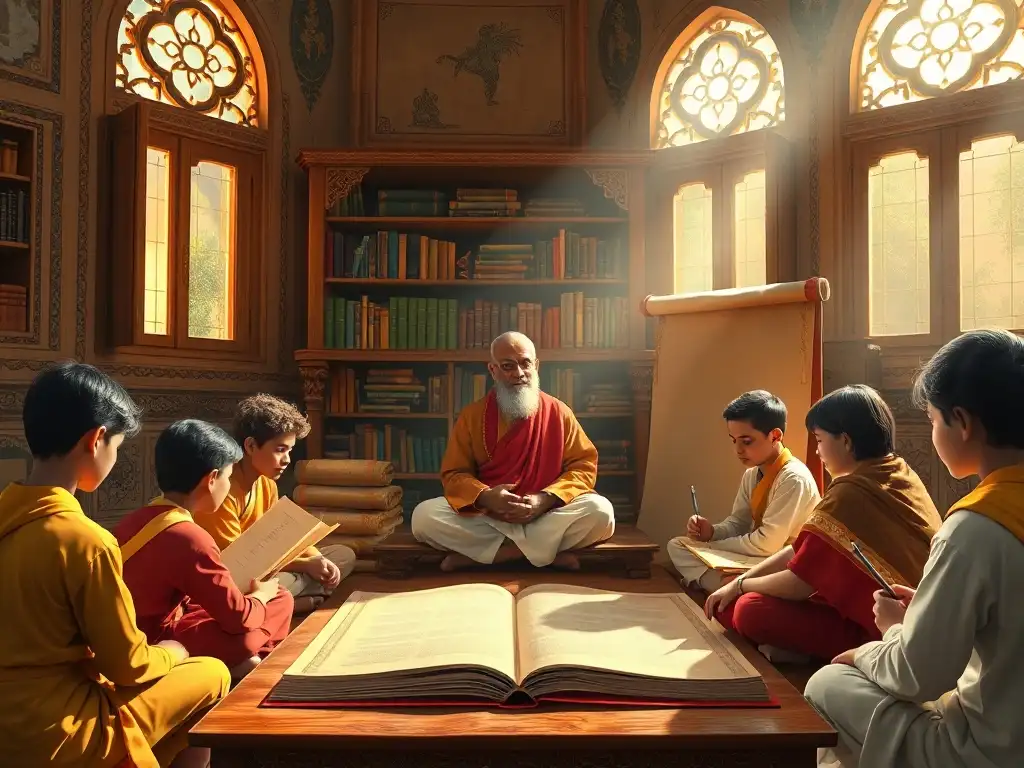
The role of ancient Indian texts in shaping educational practices is profound and multifaceted. These texts not only laid the groundwork for educational systems but also served as a bridge between spiritual knowledge and practical learning. The intricate philosophies embedded within these texts influenced not just local educational practices, but also resonated with educational reforms in various cultures worldwide.
Key Texts Influencing Education: Vedas, Upanishads, and Sutras
Ancient Indian education was deeply rooted in a variety of texts, each contributing uniquely to the educational framework:
- Vedas: The oldest sacred texts of Hinduism, comprising four collections—Rigveda, Samaveda, Yajurveda, and Atharvaveda. They emphasize the importance of knowledge (jnana) and its pursuit through rigorous study and reflection. The Vedas advocate for the transmission of knowledge orally, highlighting the role of the guru (teacher) in education.
- Upanishads: These philosophical writings delve into the nature of reality and the self. They foster critical thinking and introspection, encouraging students to question and ponder deep existential queries. The Upanishads promote the idea of experiential learning, where understanding is achieved through personal insight rather than rote memorization.
- Sutras: Texts like the Yoga Sutras of Patanjali and the Brahma Sutras provide structured frameworks for learning and practice. They emphasize discipline, ethical conduct, and the systematic approach to knowledge acquisition. The succinct nature of sutras encourages memorization and deep study, influencing educational methods in various cultures.
These texts collectively created a knowledge-centric approach to education, emphasizing the significance of holistic learning that integrates ethics, philosophy, and practical skills.
Philosophical Foundations of Learning in Ancient India
The philosophical foundations of learning in ancient India are deeply intertwined with concepts of dharma, karma, and moksha. These principles shaped the educational ethos and methodologies, influencing both individual and societal development.
- Dharma (Righteous Duty): Education was seen as a means to fulfill one’s duty in society. The ancient Indian texts taught that learning should align with one’s responsibilities and contribute to the greater good. This principle encouraged learners to pursue knowledge that was not only self-serving but also beneficial to the community.
- Karma (Action and Consequences): The understanding of karma instilled a sense of accountability in learners. Ancient Indian education emphasized that the pursuit of knowledge should lead to virtuous actions and positive consequences. This view influenced other cultures by promoting the concept that education is not merely about acquiring facts but also about developing moral character.
- Moksha (Liberation): The ultimate goal of education, as suggested by many ancient texts, was the attainment of moksha, or liberation from the cycle of birth and rebirth. This philosophical underpinning encouraged a comprehensive approach to education, blending spiritual, ethical, and intellectual development. It inspired educational reforms in other cultures to incorporate a more holistic view of learning.
Ancient Indian texts have profoundly influenced educational practices, providing rich philosophical foundations that have transcended cultural boundaries. Their emphasis on ethical learning, practical knowledge, and spiritual growth continues to resonate in modern educational systems, highlighting the enduring legacy of ancient Indian education on a global scale.
Comparative Analysis of Ancient Indian Educational Influences
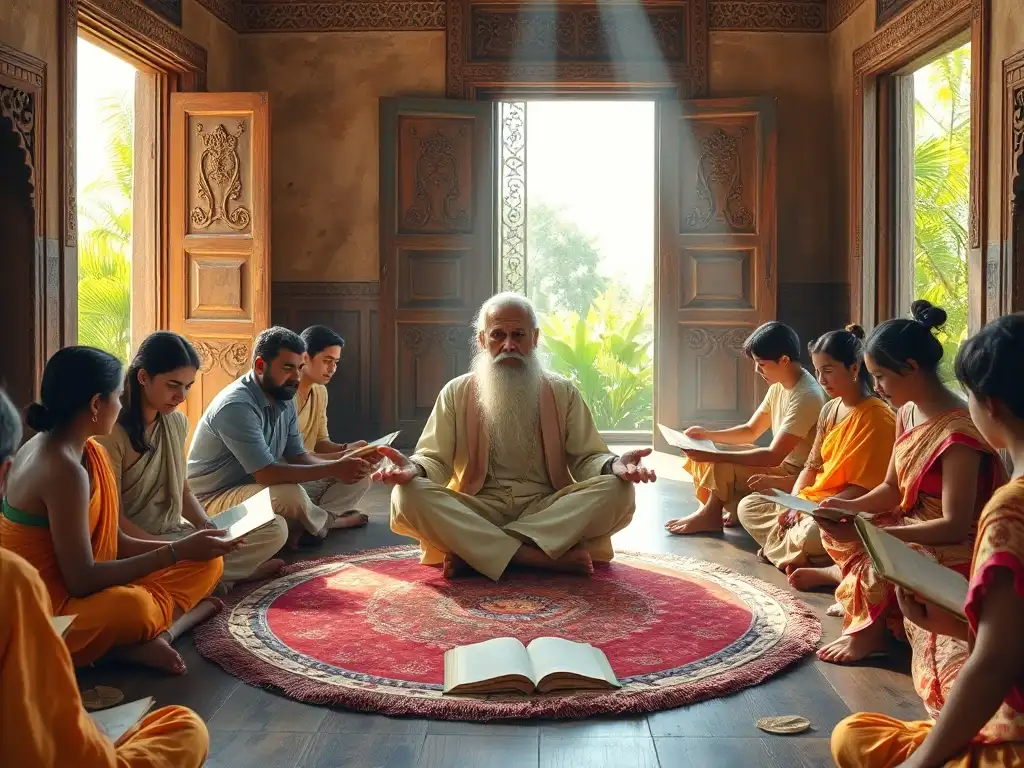
Influence on Neighboring Cultures and Civilizations
The influence of ancient Indian texts on educational practices extended far beyond the subcontinent, impacting neighboring cultures and civilizations significantly. Ancient Indian texts, such as the Vedas, Upanishads, and Brahmanas, provided foundational frameworks for various subjects including philosophy, mathematics, and astronomy. This body of knowledge was not only preserved but also adapted by neighboring societies, leading to a broader educational paradigm.
- Cultural Exchange: The Silk Road facilitated the exchange of ideas, where traders and scholars would carry texts and concepts between India and regions such as Persia, Central Asia, and beyond. The transmission of ancient Indian mathematical concepts, like the decimal system and the concept of zero, revolutionized educational practices in these regions.
- Philosophical Underpinnings: The philosophical concepts found in texts like the Bhagavad Gita and Yoga Sutras influenced educational methodologies in neighboring cultures, particularly in terms of ethics and moral education. These texts emphasized the importance of duty (dharma) and self-realization, which were integrated into the educational systems of various cultures.
Educational Reforms Inspired by Ancient Indian Texts in China
Chinese education underwent several reforms influenced by ancient Indian texts, particularly during the Tang Dynasty (618-907 CE). The arrival of Buddhist texts from India introduced new educational ideas and methodologies.
- Buddhist Monastic Schools: The establishment of monastic schools based on the Indian model played a pivotal role in the Chinese educational reform. These institutions focused on meditative practices and philosophical discourses derived from Indian Buddhism, fostering a unique blend of Indian and Chinese educational traditions.
- Literary and Linguistic Influence: Translations of Indian texts into Chinese not only enriched the literary landscape but also introduced complex philosophical concepts. The Lotus Sutra, for instance, became a fundamental text in Chinese education, shaping the curriculum around moral teachings and social responsibility.
- Integration of Mathematics and Astronomy: Indian astronomical texts, such as the Aryabhatiya, provided frameworks that influenced Chinese astronomical calculations and education. The introduction of Indian numerals and mathematical methods led to significant advancements in Chinese mathematics.
The Impact on Educational Systems in Southeast Asia
The influence of ancient Indian texts on education extended significantly into Southeast Asia, where Indian culture and scholarship had a profound impact on local educational systems.
- Spread of Hinduism and Buddhism: The introduction of Hindu and Buddhist texts through trade routes and conquest led to the establishment of educational institutions modeled after Indian gurukuls. Countries like Indonesia and Cambodia adopted these teachings, integrating them into their local context and curricula.
- Curricular Structures: In regions like Java and Bali, ancient Indian texts contributed to the establishment of formal schooling systems where Sanskrit was taught alongside local languages. This bilingual education enriched the cultural fabric and intellectual discourse of these societies.
- Art and Architecture: The educational influence also manifested in art and architecture, where the principles found in ancient texts guided the construction of temples and monuments. This integration of education, religion, and art reflected a holistic approach to learning, deeply rooted in Indian traditions.
The educational influence of ancient Indian texts has had a lasting legacy across various cultures and civilizations. Their integration into the educational systems of neighboring regions showcases the profound impact of these texts on global educational reforms.
Specific Educational Reforms Inspired by Ancient Indian Texts
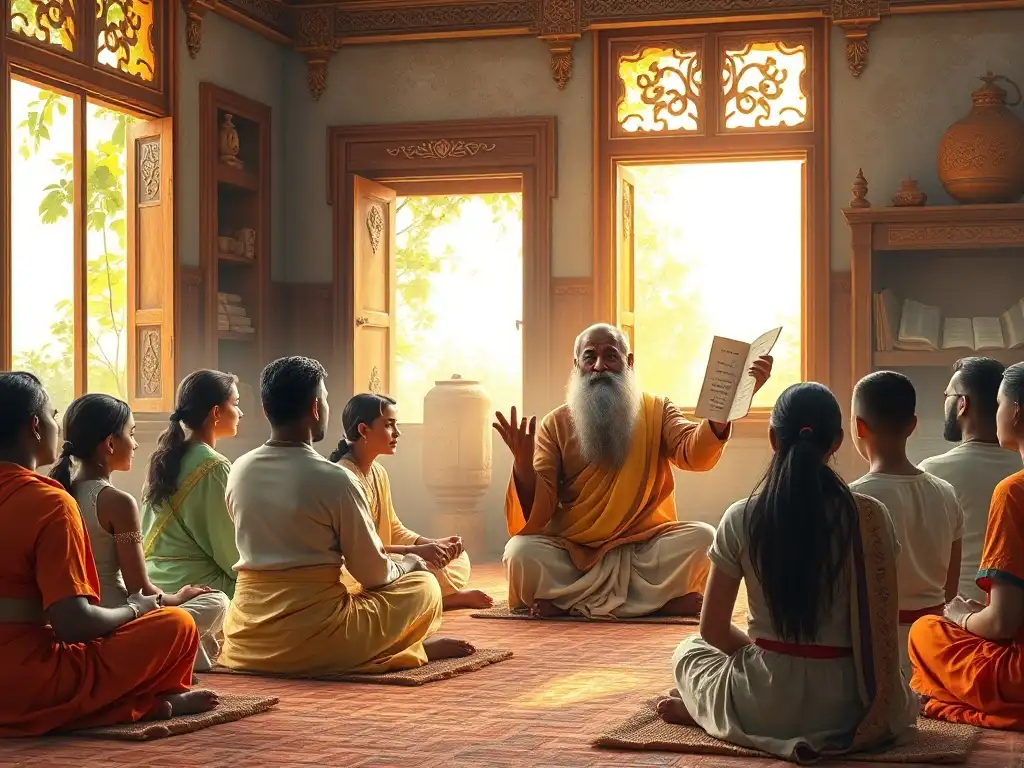
Curriculum Development Based on Ancient Indian Knowledge
The influence of ancient Indian texts on educational reforms in various cultures is profound, particularly regarding curriculum development. Texts such as the Vedas, Upanishads, and Arthashastra have provided frameworks for educational content that emphasizes both knowledge acquisition and moral development.
- Interdisciplinary Learning: Ancient Indian texts often blend subjects such as philosophy, mathematics, and science. This interdisciplinary approach has inspired many modern curricula to integrate diverse subjects, promoting a more holistic understanding of knowledge. For instance, the teachings in the Brahmanas emphasize the connection between rituals and astronomy, leading educational systems to adopt a comprehensive view of disciplines.
- Focus on Ethics and Morality: Works like the Bhagavad Gita stress the importance of duty (dharma) and ethics in personal development. Educational reforms inspired by these texts advocate for curricula that not only teach academic skills but also instill values, fostering responsible citizenship and ethical behavior.
- Adaptation of Learning Methodologies: The Nyaya philosophy introduces logical reasoning and debate as methods of learning. Modern educational systems have incorporated similar methodologies, emphasizing critical thinking and analytical skills in their curricula.
The Concept of Gurukula and its Global Adoption
The Gurukula system, a traditional form of education in ancient India, has had a lasting impact on educational practices around the world. In this system, students lived with their teachers (gurus) and engaged in a hands-on, immersive learning experience.
- Mentorship Models: The Gurukula approach emphasizes the teacher-student relationship, fostering mentorship as a key component of education. This model has been adopted in various cultures, encouraging personalized learning experiences and close mentorship in educational settings.
- Community Learning: The Gurukula system is built on communal living and learning, which has inspired similar educational frameworks that prioritize collaborative learning environments. Schools and institutions worldwide have started to incorporate practices that encourage group work and community involvement, reflecting the Gurukula ethos.
- Lifelong Learning: The Gurukula approach underscores the importance of learning throughout life. This concept resonates with contemporary educational reforms that advocate for lifelong learning and continuous personal development, shaping policies that encourage ongoing education beyond formal schooling.
Integration of Holistic Learning Approaches in Other Cultures
Ancient Indian texts are rich in philosophical insights that promote holistic learning—an approach increasingly recognized in educational reforms globally.
- Mind-Body Connection: Texts like the Yoga Sutras emphasize the integration of physical and mental well-being in education. This holistic perspective has influenced various cultures to adopt physical education and mental health programs as essential components of the curriculum, fostering overall student well-being.
- Emphasis on Creativity and Arts: The ancient Indian education system valued arts and creativity alongside academic subjects. This has led to reforms in other cultures that promote the arts as a vital part of education, recognizing their role in fostering creativity, critical thinking, and emotional intelligence.
- Adaptation of Inquiry-Based Learning: The Socratic method of questioning, which has roots in ancient philosophical traditions, aligns closely with the inquiry-based learning approaches found in ancient Indian texts. This has influenced educational systems worldwide to incorporate questioning and exploration as fundamental aspects of learning, encouraging students to engage deeply with material.
The ancient Indian texts education influence extends far beyond their original context, shaping educational reforms and practices across cultures through their innovative approaches to curriculum development, mentorship, and holistic learning.
Modern Implications of Ancient Indian Educational Practices
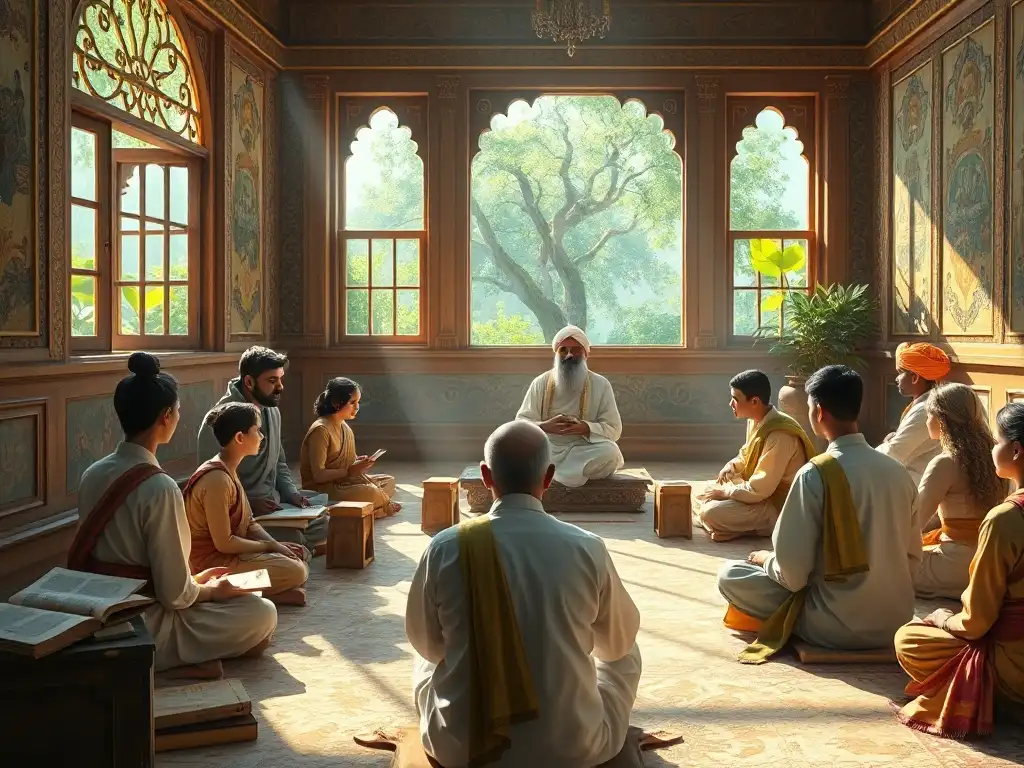
How Ancient Indian Texts Continue to Influence Today's Educational Reforms
Ancient Indian texts, particularly those related to education such as the Vedas, Upanishads, and Arthashastra, have left a significant imprint on modern educational philosophies and practices around the world. These texts emphasize a holistic approach to learning that integrates moral, intellectual, and spiritual development, which has gradually resurfaced in contemporary educational reforms.
- Holistic Education: Ancient Indian education systems prioritized the all-rounded development of students. The Gurukula system, where students lived with their teachers, emphasized not only academic learning but also the cultivation of character and virtues. This principle is mirrored in modern educational reforms that advocate for social-emotional learning (SEL) as a key component of education.
- Curriculum Diversity: The Darshanas, or schools of philosophy, present in ancient Indian texts encourage critical thinking and exploration of diverse perspectives. Modern pedagogical frameworks often incorporate interdisciplinary approaches, reflecting the ancient Indian emphasis on a broad spectrum of knowledge, from sciences to arts.
- Focus on Ethics and Morality: Texts like the Bhagavad Gita stress the importance of ethics in education. This focus on moral reasoning has influenced contemporary educational policies that seek to instill values such as integrity and social responsibility in students.
- Adaptation of Learning Styles: Ancient Indian texts recognized the uniqueness of individuals and their learning styles. Today, differentiated instruction and personalized learning paths in classrooms echo this ancient wisdom, promoting an inclusive educational environment.
Reviving Ancient Wisdom in Contemporary Education Systems
The resurgence of interest in ancient Indian educational practices presents opportunities to integrate these valuable insights into modern curricula. Here are some ways this revival manifests:
- Curricular Integration: Many educational institutions are beginning to incorporate teachings from ancient texts into their curricula. This includes subjects like philosophy, ethics, and environmental science, all of which draw on the rich heritage of Indian wisdom.
- Mindfulness and Meditation: Practices derived from ancient Indian traditions, such as yoga and meditation, are increasingly being embraced in schools to promote mental well-being and focus among students. Research supports that these practices can enhance concentration and reduce stress, aligning with the ancient understanding of mind-body harmony.
- Community-Based Learning: Inspired by the Gurukula system, there is a growing trend towards community-based learning where students engage with local cultures and histories. This approach fosters a sense of belonging and connection to their heritage, which is pivotal in shaping well-rounded individuals.
- Teacher Training Programs: Initiatives aimed at training educators in ancient pedagogical methods are gaining traction. Programs that emphasize the role of a teacher as a mentor and guide, rather than merely a transmitter of knowledge, reflect the values espoused in ancient Indian education.
The influence of ancient Indian texts on education is profound and multifaceted. By reviving these principles, contemporary educational systems can create a more inclusive, ethical, and holistic learning experience for students worldwide. The synergy between ancient wisdom and modern educational practices promises to pave the way for a more enlightened and responsible generation.
Conclusion: The Lasting Legacy of Ancient Indian Texts on Global Education
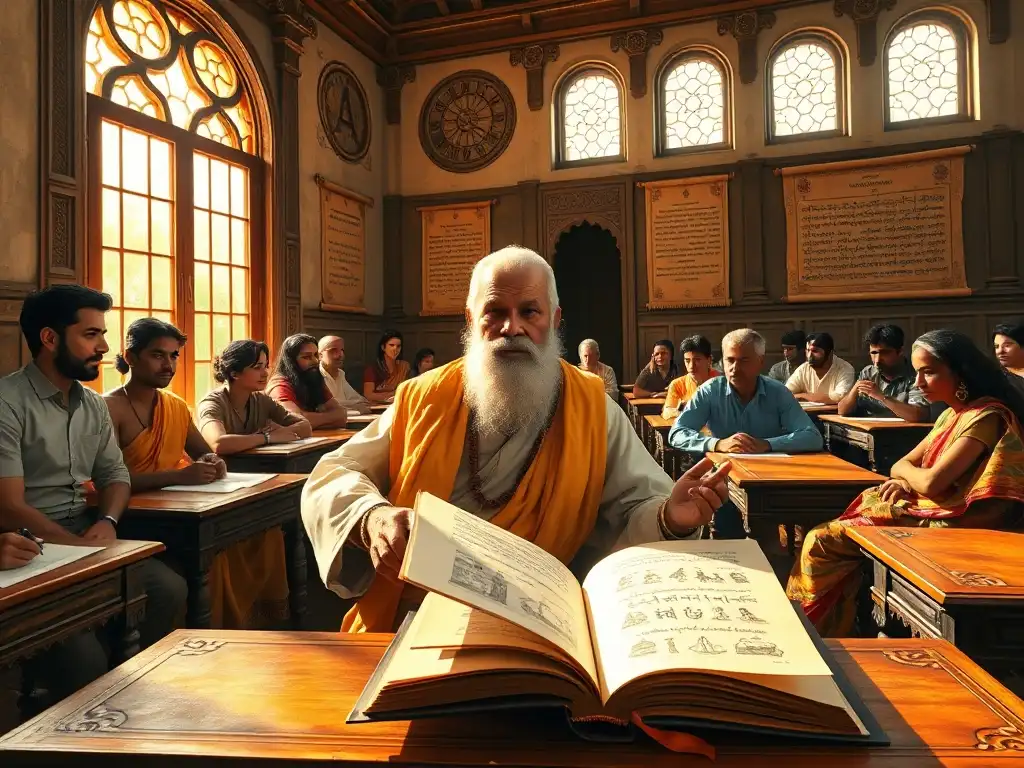
The educational philosophies and methodologies embedded in ancient Indian texts have left a profound and enduring impact on educational systems worldwide. The richness of these texts, such as the Vedas, Upanishads, and the works of renowned scholars like Panini and Aryabhata, offers a wealth of knowledge that transcends cultural boundaries. Their contributions have not only shaped the educational landscape of India but have also influenced various cultures across the globe, promoting values of inquiry, critical thinking, and holistic learning.
Summary of Key Influences
Ancient Indian texts have introduced several foundational concepts that have been integral to educational reform in various cultures:
- Holistic Education: Texts like the Bhagavad Gita emphasize the unity of knowledge and self-realization. This concept has inspired educational frameworks that advocate for a balanced approach, integrating emotional and intellectual development.
- Pedagogical Techniques: The Arthashastra illustrates practical learning and strategic thinking, influencing curricula that prioritize real-world applications and critical analysis over rote learning.
- Interdisciplinary Approach: The Nyaya Sutras promote logic and reasoning, encouraging the integration of diverse fields of study. This approach has informed modern educational practices that value interdisciplinary learning.
- Cultural Context: Ancient Indian educators recognized the importance of local culture in the learning process, a principle that resonates in contemporary educational reforms aimed at making learning relevant to students' backgrounds and experiences.
These key influences highlight the adaptability and relevance of ancient Indian educational philosophies in today's global context, fostering innovative practices that continue to evolve.
Reflections on the Future of Educational Practices Inspired by Ancient Indian Texts
As educational systems worldwide grapple with the challenges of modernity, the teachings embedded in ancient Indian texts offer valuable insights for future reforms. The emphasis on experiential learning, ethics, and community engagement can guide contemporary educators in creating more inclusive and effective curricula.
- Integrating Technology: While ancient texts may not have foreseen modern technology, their principles of inquiry and exploration can inform the development of educational technologies that enhance learning experiences.
- Promoting Lifelong Learning: The ancient Indian emphasis on continuous knowledge acquisition aligns with modern educational goals of fostering lifelong learning habits, encouraging students to remain curious and engaged throughout their lives.
- Cultural Sensitivity: As globalization leads to increasingly diverse classrooms, the holistic and culturally aware approaches found in ancient Indian texts can help educators develop curricula that respect and celebrate multicultural perspectives.
The ancient Indian texts' influence on education exemplifies a legacy that is both rich and relevant, offering timeless wisdom that can inform and inspire future generations of educators and learners alike. By embracing these teachings, we can cultivate educational practices that are not only effective but also deeply rooted in the values of humanity, inquiry, and growth.
Frequently Asked Questions
What are some key ancient Indian texts that influenced education?
Ancient Indian texts such as the Vedas, Upanishads, and Brahmanas are foundational works that contain philosophical and educational principles that have influenced educational systems globally.
How did ancient Indian texts impact educational reforms in other cultures?
The teachings within these texts provided frameworks for moral education, philosophy, and science, which were adopted and adapted by various cultures, leading to significant educational reforms.
What role did the Guru-shishya tradition play in education?
The Guru-shishya tradition emphasized a mentor-student relationship, fostering a deep transmission of knowledge and values, which influenced educational practices in many cultures.
How do ancient Indian texts address the concept of learning and knowledge?
These texts often emphasize the pursuit of knowledge as a means of achieving spiritual enlightenment and societal well-being, shaping educational ideologies across civilizations.
In what ways can we see the influence of ancient Indian education in modern systems?
The principles derived from ancient Indian texts can be seen in modern curricula, the importance placed on holistic education, and the integration of spirituality in learning processes worldwide.
Final Reflection: The Enduring Legacy of Ancient Indian Texts in Education
The profound influence of ancient Indian texts on educational reforms across cultures is a testament to their timeless wisdom and relevance. Today, as we navigate an increasingly interconnected world, the principles embedded in these texts continue to shape educational philosophies and practices globally. Their emphasis on holistic learning, critical thinking, and moral development resonates with contemporary educational needs, reminding us that the quest for knowledge is a universal journey that transcends geographical boundaries.
The impact of ancient Indian texts on education is not merely historical; it is a living force that continues to inspire educators and learners alike. As we witness the integration of these teachings into modern curricula, we recognize their role in fostering a more inclusive and comprehensive approach to education. This ongoing influence is beautifully encapsulated in the words of Mahatma Gandhi: Live as if you were to die tomorrow. Learn as if you were to live forever.
This quote underscores the importance of lifelong learning, a principle deeply rooted in ancient Indian philosophy, and highlights the need for educational systems that nurture curiosity and moral integrity.
As we reflect on the lessons drawn from ancient Indian texts, let us embrace the opportunity to integrate these timeless teachings into our own lives and educational practices. Consider how you can apply the principles of holistic education, critical inquiry, and ethical development in your personal and professional journey. By doing so, we not only honor the legacy of these texts but also contribute to a more enlightened and compassionate world. The future of education lies in our hands, and it is our responsibility to ensure that the wisdom of the past continues to illuminate the path forward.
Unveil the Legacy of Ancient Indian Education!
Thank you for joining us on this enlightening journey through the profound influence of ancient Indian texts on educational reforms worldwide. We hope you're inspired by the enduring wisdom and innovative ideas that emerged from these rich traditions. Now, let’s take those insights and put them into action!
- Delve deeper into the texts that shaped education as we know it by exploring translated versions of ancient scriptures like the Rigveda or the Yoga Sutras.
- Share your newfound knowledge with friends or family—consider starting a book club focused on ancient philosophies and their modern applications.
- Participate in online discussions or forums centered around educational reforms influenced by diverse global perspectives; your voice could spark meaningful conversations!
What aspects of ancient Indian educational principles resonate most with you, and how might they transform modern learning experiences in your community?