
The Great Scholars of Nalanda: A Look at Their Contributions

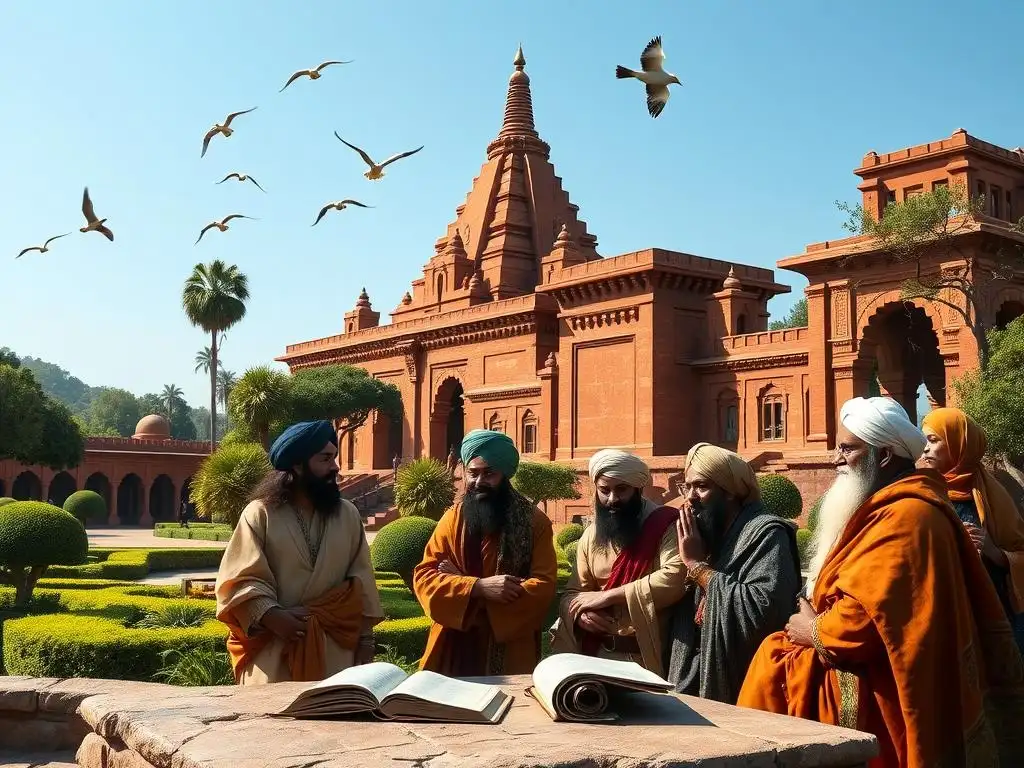
Welcome to Ancient India History, where we embark on a fascinating journey through time, delving into the rich and diverse tapestry of ancient Indian civilizations. Today, we shine a spotlight on the remarkable contributions of Nalanda scholars, whose intellectual legacy has shaped educational systems not just in India but across the globe. What secrets do these ancient minds hold, and how did their groundbreaking ideas influence the course of history?
Join us as we explore the brilliance of the Great Scholars of Nalanda and uncover the profound impact they had on knowledge and learning. Your adventure into the depths of ancient wisdom begins here!
- Introduction to Nalanda University and Its Scholars
- Prominent Scholars of Nalanda University
- Contributions of Nalanda Scholars to Various Fields
- The Legacy of Nalanda Scholars
- Conclusion
- Frequently Asked Questions
- Final Reflection: The Enduring Legacy of Nalanda Scholars
- Ignite Your Curiosity: Explore the Legacy of Nalanda!
Introduction to Nalanda University and Its Scholars

Nalanda University stands as a monumental testament to the rich tapestry of educational excellence that flourished in ancient India. Established in the 5th century CE in Bihar, Nalanda emerged as one of the first residential universities in the world, attracting students and scholars from across Asia, including China, Korea, Japan, Tibet, Mongolia, and Sri Lanka. This institution was not just a center for academic learning, but a vibrant hub where diverse cultures and ideas converged, fostering an environment of intellectual growth and philosophical discourse.
The contributions of Nalanda scholars significantly shaped various fields, including philosophy, mathematics, astronomy, and medicine. As we delve into the contributions of Nalanda scholars, we uncover the profound impact they had on the educational landscape of ancient India and beyond.
Overview of Nalanda University
Nalanda University was founded by Kumaragupta I during the Gupta Empire, and it quickly gained a reputation as a premier center for higher learning. The university encompassed numerous temples, monasteries, and lecture halls, facilitating a unique blend of religious and secular education.
- Curriculum: The curriculum at Nalanda was vast and included subjects such as:
- Philosophy
- Logic
- Medicine
- Mathematics
- Astronomy
- Linguistics
- Notable Scholars: Among the esteemed scholars who graced Nalanda’s halls were:
- Dharmakirti: A prominent philosopher known for his work in epistemology.
- Nagarjuna: Renowned for his contributions to Buddhism and Mahayana philosophy.
- Vasubandhu: A significant figure in the development of Buddhist thought.
Importance of Nalanda in Ancient Indian Education
Nalanda's significance in the realm of education cannot be overstated. It served as a beacon of knowledge during a time when educational institutions were scarce.
- Cultural Exchange: Nalanda was pivotal in promoting cultural exchange among various civilizations. Scholars from different regions shared their knowledge, which enriched the academic environment.
- Legacy of Learning: The university’s rigorous academic standards and diverse curriculum laid the groundwork for future educational institutions. It influenced the establishment of similar universities across Asia.
- Research and Innovation: Scholars at Nalanda were not merely students; they were innovators who contributed original thoughts and ideas, pushing the boundaries of contemporary knowledge.
Significance of Scholar Contributions in Ancient India
The contributions of Nalanda scholars played a crucial role in shaping various domains of knowledge in ancient India.
- Philosophy and Logic: The philosophical discourses initiated by Nalanda scholars laid the foundation for many philosophical traditions in India. Their works continue to influence contemporary thought.
- Mathematics and Astronomy: Scholars like Aryabhata and Brahmagupta, although not directly from Nalanda, were influenced by the academic environment fostered there. Their contributions to mathematics and astronomy have had lasting impacts.
- Medicine and Healing: The medical knowledge developed at Nalanda contributed to the advancement of Ayurvedic practices, which are still relevant today.
The contributions of Nalanda scholars were not only significant for their time but also left an enduring legacy that continues to resonate in modern academia and various fields of study.
Prominent Scholars of Nalanda University

Nalanda University, one of the ancient world's most renowned centers of learning, was home to an array of prominent scholars whose contributions significantly impacted various fields, including mathematics, astronomy, philosophy, and religion. This section delves into the notable figures of Nalanda, highlighting their key contributions and lasting influence.
Aryabhata: The Mathematician and Astronomer
Aryabhata, often regarded as the father of mathematics and astronomy in ancient India, was a pivotal figure at Nalanda University. His work laid foundational principles that would influence scholars for centuries.
Contributions to Mathematics
Aryabhata's contributions to mathematics are both profound and revolutionary. He introduced several key concepts, including:
- Place Value System: Aryabhata was one of the first to use a positional number system, allowing for the representation of large numbers efficiently.
- Zero: His work emphasized the importance of zero, which was crucial for the development of mathematics as we know it today.
- Algebra: He made significant advancements in algebraic equations and provided methods for solving them, which were far ahead of his time.
His major work, the Aryabhatiya, is a comprehensive treatise that covers arithmetic, algebra, and geometry, providing rules and techniques for calculations that are still relevant.
Innovations in Astronomy
In the field of astronomy, Aryabhata made groundbreaking contributions:
- Heliocentric Theory: He proposed that the Earth rotates on its axis daily, a concept that would not be widely accepted in the Western world for many centuries.
- Calculations of Time: Aryabhata developed methods to calculate the lengths of days and nights and provided accurate estimates for the solar year.
- Lunar and Solar Eclipses: His theories on eclipses were notably precise, and he described their causes, contributing to a deeper understanding of celestial events.
His work laid the groundwork for future astronomers and mathematicians, influencing Islamic scholars during the Golden Age of Islam and beyond.
Nagarjuna: The Philosopher of Emptiness
Nagarjuna, another eminent scholar of Nalanda, is celebrated for his profound philosophical insights and teachings that shaped Buddhist thought. His approach centered around the concept of emptiness ( śūnyatā), which has had lasting implications in various philosophical realms.
Philosophical Contributions: Madhyamaka Buddhism
Nagarjuna is primarily known for establishing the Madhyamaka school of thought, which emphasizes the middle path between existence and non-existence. His contributions include:
- Two Truths Doctrine: He articulated the distinction between conventional truth and ultimate truth, arguing that while phenomena appear concrete, they lack inherent existence.
- Critique of Essentialism: By challenging the idea of inherent essence in all things, Nagarjuna advanced a non-dualistic approach that has influenced both Buddhist and non-Buddhist philosophical traditions.
His key text, the Mūlamadhyamakakārikā, elaborates on these concepts, providing a rigorous philosophical framework that remains a cornerstone of Buddhist philosophy.
Influence on Later Buddhist Thought
Nagarjuna's ideas profoundly influenced the development of later Buddhist thought and practices:
- Integration into Tibetan Buddhism: His teachings on emptiness and dependent origination became foundational in Tibetan schools of Buddhism, particularly in the Gelug tradition.
- Interplay with Other Philosophies: His work influenced not only Buddhist scholars but also engaged with Western philosophical traditions, fostering dialogue between Eastern and Western thought.
Through his contributions, Nagarjuna established a legacy that continues to resonate in contemporary discussions on philosophy and spirituality.
The contributions of Nalanda scholars like Aryabhata and Nagarjuna exemplify the rich intellectual heritage of ancient India. Their work has shaped the trajectory of various fields and continues to inspire scholars and thinkers across the globe today.
Dharmakirti: The Logician
Dharmakirti was a prominent figure in ancient Indian philosophy, particularly known for his contributions to Buddhist logic and epistemology. As a philosopher and logician, he played a crucial role in shaping the intellectual landscape of his time. His works laid the foundation for the development of Buddhist thought and significantly influenced later scholars in both India and Tibet. Dharmakirti's arguments emphasized the importance of reasoning and evidence in philosophical discourse, marking a pivotal shift in how knowledge was perceived and analyzed.
Contributions to Epistemology
Dharmakirti's contributions to epistemology are profound, particularly through his seminal work, the Pramana Varttika. In this text, he articulates a comprehensive theory of knowledge, distinguishing between valid and invalid means of knowledge acquisition. He categorizes pramanas (means of knowledge) into three main types: perception, inference, and verbal testimony.
- Perception: He argued that direct sensory experience is a primary source of knowledge, emphasizing its reliability.
- Inference: Dharmakirti developed a sophisticated framework for logical reasoning, demonstrating how valid conclusions can be drawn from premises.
- Verbal Testimony: He acknowledged the role of authoritative sources in knowledge acquisition, but insisted on the need for corroboration through personal experience.
His rigorous approach to epistemology not only advanced Buddhist thought but also influenced other philosophical traditions, leading to rich dialogues about the nature of knowledge and belief.
Impact on Buddhist Logic and Philosophy
The impact of Dharmakirti on Buddhist logic and philosophy cannot be overstated. His logical framework established a systematic approach to philosophical inquiry, enabling scholars to engage deeply with questions of existence, perception, and reality. He introduced the concept of apoha, which asserts that language and concepts are defined by what they exclude, thus redefining the relationship between language and meaning.
Moreover, Dharmakirti’s works influenced subsequent generations of scholars, both within Buddhism and in other philosophical traditions. His ideas were foundational to the Yogacara and Madhyamaka schools of thought, which explored the nature of reality and perception in innovative ways. The rigorous logical methodologies he promoted became essential in the study of Buddhist philosophy, making him a central figure in the intellectual heritage of ancient India.
Xuanzang: The Chinese Scholar and Traveler
Xuanzang, a renowned Chinese monk, scholar, and traveler, is celebrated for his epic pilgrimage to India in the 7th century CE. His journey to Nalanda University was not only a personal quest for knowledge but also a significant chapter in the cultural exchange between India and China. Xuanzang's dedication to understanding Buddhist texts and philosophy had lasting implications for both regions.
Documentation of Nalanda’s Academic Environment
Xuanzang’s detailed accounts of Nalanda University provide invaluable insight into the academic environment of ancient India. His writings, particularly in the Great Tang Records on the Western Regions, describe Nalanda as a bustling center of learning, attracting scholars from various parts of Asia.
- Institutional Structure: He noted the university's structured curriculum, emphasizing subjects such as philosophy, medicine, and astronomy.
- Diverse Faculty: Xuanzang highlighted the diversity and expertise of the faculty, noting that scholars engaged in rigorous debates and discussions, which fostered a rich intellectual atmosphere.
- Student Life: His observations included the daily life of students, who came from different cultures and backgrounds, showcasing Nalanda’s role as a melting pot of ideas and traditions.
This documentation not only preserves the legacy of Nalanda but also serves as a crucial resource for understanding the broader educational practices of ancient Indian civilizations.
Contributions to Cultural Exchange between India and China
Xuanzang's journey and scholarly pursuits significantly contributed to cultural exchange between India and China. His translations of Buddhist texts, including key works of Indian philosophy, bridged the gap between these two civilizations.
- Translation Efforts: Xuanzang translated numerous Sanskrit texts into Chinese, making them accessible to a wider audience and facilitating the spread of Buddhist philosophy.
- Influence on Chinese Buddhism: His work profoundly influenced the development of Buddhism in China, particularly the Huayan and Tiantai schools, which integrated Indian philosophical concepts with Chinese thought.
- Diplomatic Relations: The journey of Xuanzang also fostered diplomatic ties between India and China, promoting mutual respect and understanding between the two cultures.
Xuanzang's contributions to the cultural exchange between India and China not only enhanced the understanding of Buddhist philosophy but also laid the groundwork for future interactions between these two great civilizations. His legacy continues to resonate in the study of Buddhism and intercultural dialogue today.
Contributions of Nalanda Scholars to Various Fields

Contributions to Philosophy and Religion
The scholars of Nalanda University made significant strides in the realms of philosophy and religion, which influenced not only Indian thought but also the broader Asian context. Nalanda’s rich intellectual environment attracted thinkers from various traditions, resulting in a vibrant exchange of ideas.
- Buddhism and Philosophy: One of the most notable figures from Nalanda was Nagarjuna, who is best known for developing the philosophy of Madhyamaka. His writings, particularly the Mulamadhyamakakarika, explored the concept of emptiness (śūnyatā) and have had a lasting impact on Mahayana Buddhism. His dialectical method of argumentation laid the groundwork for future philosophical inquiry.
- Vaishnavism and Advaita Vedanta: Scholars like Shankara, although later than the peak of Nalanda, were influenced by the tradition that emerged from such institutions. His non-dualistic interpretation of the Upanishads reflects the philosophical depth nurtured by earlier Nalanda scholars.
- Interfaith Dialogue: Nalanda served as a melting pot for various religious traditions. Scholars engaged in discussions that fostered mutual respect and understanding among Buddhists, Jains, and followers of Hinduism. This interfaith dialogue was crucial in shaping a pluralistic society in ancient India.
Overall, the contributions of Nalanda scholars to philosophy and religion not only enriched Indian thought but also laid the groundwork for future philosophical discourse across Asia.
Contributions to Mathematics and Science
Nalanda University was not just a center for philosophical discourse but also a cradle for advanced studies in mathematics and science. The rigorous academic environment fostered groundbreaking developments that were instrumental in the evolution of these fields.
- Mathematical Innovations: One of the prominent mathematicians associated with Nalanda was Aryabhata, whose work in the field of astronomy and mathematics included the introduction of the concept of zero and the decimal system. His seminal text, the Aryabhatiya, contained sophisticated calculations and astronomical observations that laid the foundation for later mathematicians.
- Astronomy: Scholars at Nalanda contributed significantly to astronomy. They conducted extensive studies on planetary motion, eclipses, and the calculation of time. The works of Brahmagupta, who furthered Aryabhata’s theories, demonstrated the advanced understanding of celestial mechanics prevalent in Nalanda.
- Medicine and Ayurveda: Nalanda also played a pivotal role in the development of medical science, particularly through the study of Ayurveda. Scholars like Sushruta, known for his work in surgery, provided insights into human anatomy and surgical techniques that were unparalleled for their time. The texts from Nalanda included detailed descriptions of surgical procedures and medicinal plants, influencing medical practices for centuries.
The contributions of Nalanda scholars in mathematics and science were foundational and continue to inspire modern disciplines in these fields.
Contributions to Literature and Linguistics
The literary and linguistic contributions of Nalanda scholars were instrumental in preserving and advancing ancient Indian texts and languages. Their work not only enriched the cultural tapestry of India but also had a lasting impact on the global literary landscape.
- Sanskrit Literature: Nalanda was a hub for Sanskrit studies, where scholars composed and preserved literary works that remain influential today. Scholars such as Dignaga contributed to the field of logic and epistemology, thereby enhancing the linguistic richness of Sanskrit through the exploration of semantics and grammar.
- Translation Movements: Nalanda scholars played a key role in the translation of texts from Sanskrit to other languages, including Tibetan and Chinese. This not only facilitated the spread of Indian philosophical and religious texts but also enriched the literary traditions of these cultures. The translations helped in bridging cultural gaps and fostering a better understanding of Indian thought.
- Poetic Forms: The tradition of poetry flourished at Nalanda, with notable poets crafting works that were celebrated for their aesthetic and intellectual depth. The interaction between different literary forms, including philosophical poetry, contributed to a rich literary culture that influenced future generations of poets and writers.
The contributions of Nalanda scholars to literature and linguistics were profound, ensuring the survival and evolution of ancient Indian literary traditions while also influencing global literary narratives.
Contributions to Medicine and Health Sciences
The ancient university of Nalanda was not only a hub for philosophy and theology but also made significant strides in the field of medicine and health sciences. Scholars at Nalanda contributed to the body of medical knowledge that would influence both contemporary and future practices. The following aspects highlight their key contributions:
Development of Ayurvedic Medicine
One of the most remarkable contributions of Nalanda scholars was the furtherance of Ayurveda, the traditional system of medicine that emphasizes balance in bodily systems. Scholars such as Dharmakirti and Buddhaghosa played crucial roles in documenting and systematizing Ayurvedic practices. Their works emphasized the importance of herbal medicine, therapeutic diets, and the holistic approach to health, which are still relevant in modern practices.
- Key texts: The Sushruta Samhita and Charaka Samhita were foundational texts that were studied and expanded upon at Nalanda. These texts discussed surgical techniques, medicinal plants, and the importance of diagnosis and prognosis in patient care.
Surgical Innovations
Nalanda was also a center for surgical education. The contributions of scholars like Sushruta, often referred to as the "father of surgery," laid the groundwork for various surgical procedures that were revolutionary for their time. His detailed descriptions of surgical techniques, including plastic surgery and cataract operations, showcased advanced understanding and skill.
- Surgical Techniques: Scholars at Nalanda practiced and taught techniques such as rhinoplasty (reconstruction of the nose) and cesarean sections, which demonstrated their innovative approaches to complex medical challenges.
Pharmacology and Medicinal Plants
The study of pharmacology was another significant aspect of medical education at Nalanda. Scholars meticulously documented the properties of various medicinal plants, their preparation, and their uses in treating ailments. This knowledge was vital for developing effective remedies and contributed greatly to the field of herbal medicine.
- Medicinal Botany: The meticulous cataloging of over 700 medicinal plants and their applications can be traced back to the teachings at Nalanda, influencing practices across Asia.
Holistic Approach to Health
Nalanda scholars embraced a holistic view of health, understanding the interconnectedness of the body, mind, and spirit. This approach not only focused on physical ailments but also considered psychological and emotional well-being, which was quite advanced for the time.
- Psychological Medicine: Texts from Nalanda discussed the importance of mental health and methods for treating psychological disorders, reflecting a sophisticated understanding of human health.
The contributions of Nalanda scholars to medicine and health sciences were profound and multifaceted, shaping the foundations of medical knowledge that continue to resonate in various health traditions today. Their holistic approach and innovative practices not only addressed the physical aspects of health but also recognized the importance of mental and spiritual well-being. This legacy remains a vital part of the history of medicine in India and the world.
The Legacy of Nalanda Scholars

Nalanda University, one of the most renowned centers of learning in ancient India, played a pivotal role in shaping intellectual thought and academic discourse. Its legacy is deeply intertwined with the contributions of its scholars, who not only advanced various fields of knowledge but also influenced educational practices that resonate even today. This section explores the profound impact these scholars had on subsequent generations, the evolution of educational systems in India, and the revival of Nalanda's principles in contemporary education.
Influence on Subsequent Generations of Scholars
The contributions of Nalanda scholars significantly shaped the trajectory of knowledge and scholarship in India and beyond. Notable figures such as Buddhaghosa, Dharmakirti, and Vasubandhu made groundbreaking advancements in disciplines such as philosophy, logic, and medicine. Their works laid foundational principles that would influence later thinkers.
- Buddhaghosa, for example, is celebrated for his commentaries on Buddhist texts, which helped disseminate Buddhist philosophy across Asia.
- Dharmakirti's contributions to epistemology and logic set the stage for rigorous philosophical inquiry, influencing both Indian and Tibetan Buddhism.
- Vasubandhu, with his works on the Abhidharma, significantly enriched Buddhist thought, impacting scholars in both the Indian subcontinent and Central Asia.
The rigorous debate and discourse fostered at Nalanda encouraged students to engage critically with texts and ideas, cultivating a tradition of scholarly inquiry that inspired future generations of academics. The educational methods employed—such as dialogue, rigorous examination, and interdisciplinary study—became benchmarks for institutions that followed.
Impact on Educational Systems in Ancient and Modern India
The educational framework established at Nalanda set a precedent for future learning institutions throughout India. Its model emphasized:
- Critical Thinking: Students were encouraged to question established norms and engage in debates.
- Interdisciplinary Studies: Scholars pursued knowledge across various domains, from mathematics to astronomy to philosophy.
- Mentorship: The relationship between teachers and students was central, fostering a nurturing environment for intellectual growth.
These principles not only influenced contemporary ancient Indian universities but also laid the groundwork for modern educational practices. The emphasis on a holistic education approach can be seen in various educational reforms in India, where the integration of multiple disciplines is encouraged.
In modern times, the resurgence of interest in Nalanda's educational philosophies has prompted educational leaders to revisit these ancient practices, advocating for a blend of traditional knowledge with contemporary pedagogical strategies.
Revival of Nalanda's Educational Principles in Contemporary Times
In recent years, there has been a renewed effort to revive the principles of Nalanda in contemporary educational systems. Various initiatives have emerged to:
- Establish New Nalanda Institutions: Several universities and research centers have been founded, inspired by Nalanda’s commitment to knowledge and interdisciplinary study. These institutions aim to emulate the educational ethos of Nalanda.
- Cultural Exchanges: International collaborations and cultural exchanges have been promoted to foster dialogue among scholars, reminiscent of the vibrant intellectual exchanges that characterized ancient Nalanda.
- Curriculum Development: Modern educators are increasingly incorporating aspects of Nalanda's curriculum, emphasizing critical thinking, ethics, and a global perspective on education.
This revival is not merely about recreating an ancient institution; it is about adapting its core values—such as inclusivity, diversity in thought, and the pursuit of wisdom—to meet the challenges of contemporary society. The contributions of Nalanda scholars continue to resonate, serving as a testament to the enduring legacy of this ancient center of learning.
The revival of Nalanda’s educational principles underscores the timeless nature of its contributions, ensuring that future generations of scholars and learners draw inspiration from its rich history.
Conclusion

Summary of the Contributions of Nalanda Scholars
The scholars of Nalanda University made significant contributions across various fields of knowledge, which played a pivotal role in shaping not only Indian civilization but also the intellectual landscape of the world. The university, which thrived from the 5th to the 12th centuries CE, became a beacon of learning that attracted students and scholars from far and wide, including regions like Tibet, China, Korea, and Japan.
- Philosophy and Logic:
- Dignāga and Dharmakīrti were instrumental in the development of Buddhist logic and epistemology. Their works laid the groundwork for later philosophical discourse in both Buddhist and non-Buddhist traditions.
- Their writings emphasized critical thinking and reasoning, influencing a wide range of philosophical schools in India and beyond.
- Mathematics and Astronomy:
- Scholars like Aryabhata, although slightly later than Nalanda’s peak, were influenced by the mathematical traditions established there. The contributions of Nalanda scholars to mathematical concepts included advancements in algebra and geometry.
- Astronomers at Nalanda developed models of planetary motion and contributed to the understanding of eclipses, which were significant for both religious and practical purposes.
- Medicine and Ayurveda:
- The medical texts from Nalanda, particularly those focusing on Ayurveda, highlighted the importance of holistic health and herbal medicine. Scholars like Sushruta, although earlier, influenced the teachings at Nalanda.
- The university fostered discussions on surgical techniques and medicinal treatments that were utilized throughout the region.
- Literature and Linguistics:
- Nalanda was a hub for the study of Sanskrit and other languages, contributing to the preservation and advancement of literary traditions.
- Scholars produced numerous texts that explored poetics, drama, and grammar, which enriched the cultural fabric of India.
The Lasting Impact on Indian Civilization and Beyond
The contributions of Nalanda scholars extended far beyond the confines of the university, leaving a lasting legacy on both Indian civilization and the wider world. Their intellectual output influenced various cultures and civilizations, facilitating a rich exchange of ideas.
- Cultural Exchange:
- Nalanda served as a melting pot of ideas, where scholars from diverse backgrounds engaged in dialogue and debate. This exchange of knowledge fostered cultural and religious interactions, shaping the spiritual landscape of Asia.
- The university's reputation attracted international students, creating a global academic network that linked India with other regions.
- Preservation of Knowledge:
- The texts and teachings preserved by Nalanda scholars ensured that crucial philosophical, scientific, and medical knowledge was not lost. This preservation was vital, particularly during periods of turmoil in the region.
- Many of these works were translated into other languages, spreading Indian thought and scholarship across Asia.
- Influence on Later Education Systems:
- The educational model established at Nalanda influenced later universities in India and abroad. Its emphasis on a structured curriculum, rigorous debate, and diverse disciplines set a precedent for higher education.
- The legacy of Nalanda can be seen in modern educational philosophies that advocate for interdisciplinary studies and the importance of critical inquiry.
The contributions of Nalanda scholars not only enriched the intellectual heritage of India but also laid the foundations for future educational practices and cultural exchanges across the globe. Their enduring impact continues to inspire scholars and students, reminding us of the significance of knowledge and learning in shaping civilizations.
Frequently Asked Questions
What was the significance of Nalanda University in ancient India?
Nalanda University was a prestigious center of learning that attracted scholars from various regions, significantly contributing to the intellectual and cultural development of ancient India.
Who were some notable scholars from Nalanda?
Notable scholars included Aryabhata, who made contributions to mathematics and astronomy, and Vasubandhu, a significant figure in Buddhist philosophy and psychology.
What were the main contributions of Nalanda scholars?
The contributions of Nalanda scholars spanned various fields, including philosophy, mathematics, astronomy, and medicine, influencing future generations and cultures.
How did Nalanda influence education in ancient India?
Nalanda set a standard for higher education, emphasizing rigorous academic inquiry, debate, and the importance of critical thinking which shaped the educational landscape of India.
What led to the decline of Nalanda University?
The decline of Nalanda University was due to a combination of factors including political instability, invasions, and gradual changes in educational priorities during the later centuries.
Final Reflection: The Enduring Legacy of Nalanda Scholars
The contributions of Nalanda scholars are not just relics of the past; they resonate profoundly in our contemporary world. Their pioneering work in philosophy, science, and education laid the groundwork for modern thought and inquiry. As we navigate an era marked by rapid technological advancement and cultural shifts, the insights and methodologies developed by these great minds remind us of the timeless value of knowledge and intellectual curiosity.
Clearly, the influence of Nalanda's scholars extends beyond historical significance; it continues to shape our cultural and social landscapes today. Their commitment to learning and dialogue fosters a spirit of inquiry that is crucial in addressing the complex challenges we face. As the philosopher and educator John Dewey once said, Education is not preparation for life; education is life itself.
This sentiment echoes the essence of Nalanda, where education was seen as a lifelong journey, encouraging us to embrace learning as an integral part of our existence.
As we reflect on the lessons imparted by the great scholars of Nalanda, I invite you to consider how you can apply their principles of inquiry and open-mindedness in your own life. Let us honor their legacy by cultivating a passion for learning, engaging in meaningful discussions, and striving for a deeper understanding of the world around us. In doing so, we not only pay tribute to the past but also pave the way for a brighter, more enlightened future.
Ignite Your Curiosity: Explore the Legacy of Nalanda!
Thank you for diving into the rich history of Nalanda with us! Your interest in the great scholars and their invaluable contributions enriches our understanding of ancient wisdom. Now it's time to take this knowledge a step further and unleash the potential of what you've learned.
Here are some actionable steps you can take right now:
- Embark on a personal research journey by reading more about one of Nalanda's notable scholars. Discover their teachings and how they influence modern thought.
- Share this article with friends or on social media to spread the wisdom of Nalanda and open a dialogue about the historical evolution of education.
- Consider visiting a local library or an online forum dedicated to ancient Indian history to engage with a community that shares your passion.
What aspect of Nalanda’s legacy do you find most inspiring, and how might it shape your perspective on learning today?