
The Contribution of Ancient Indian Scholars to Global Educational Practices

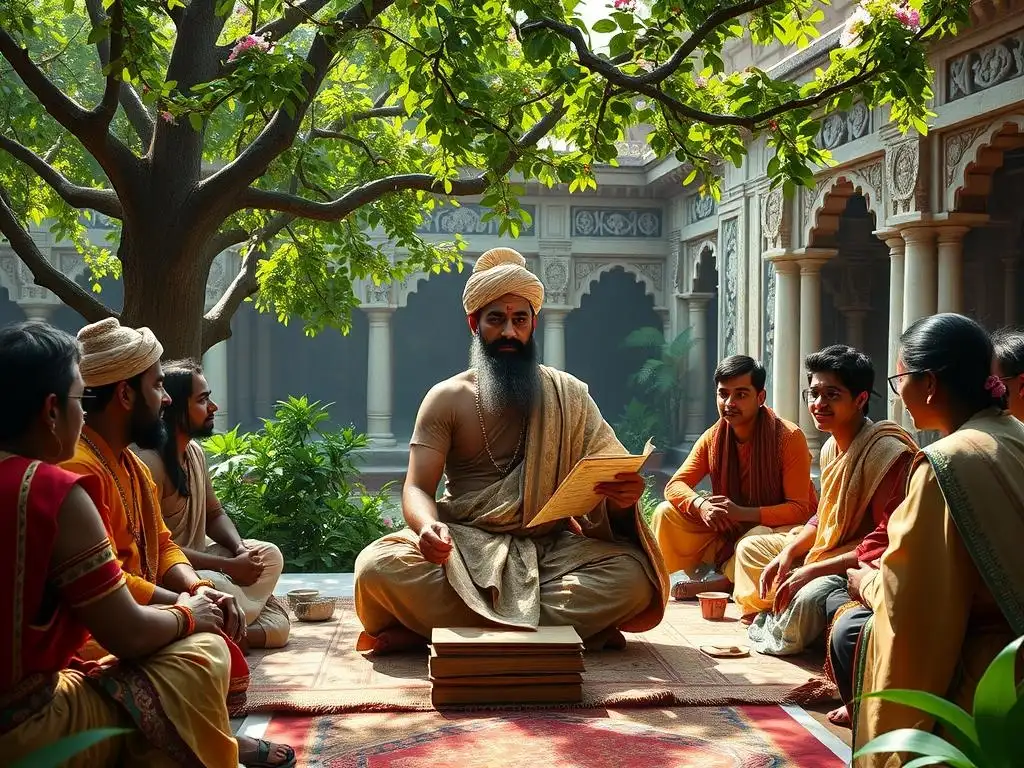
Welcome to Ancient India History, where we embark on a fascinating journey through time to uncover the rich and diverse history of one of the world's oldest civilizations. In our featured article, we delve into the remarkable contributions of ancient Indian scholars to global educational practices, revealing how their groundbreaking ideas and teachings continue to resonate today.
Prepare to be intrigued as we explore the profound impact of these intellectual giants, and discover how their legacy shapes our understanding of education. Join us as we unravel the threads of history and ignite your curiosity about the treasures of ancient India!
Introduction to Ancient Indian Scholars Contributions
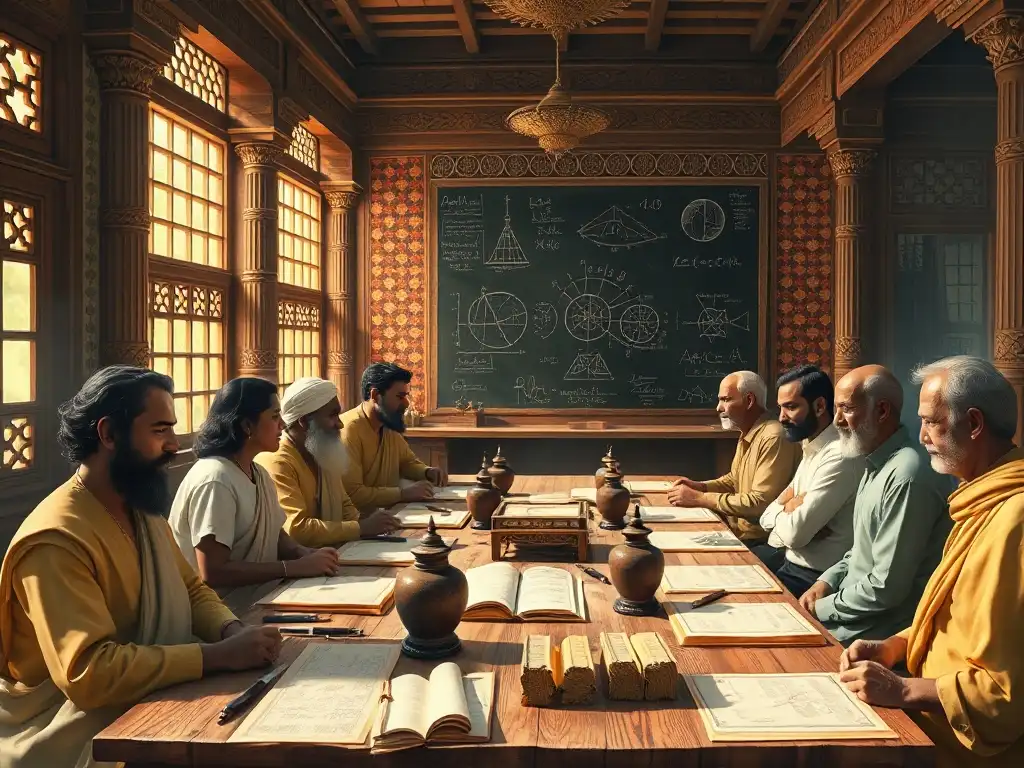
The contributions of ancient Indian scholars to global educational practices are manifold and profound, shaping not only the educational landscape of India but also influencing various cultures across the globe. From the sophisticated educational systems that emerged during the Vedic period to the advancements made during the Maurya and Gupta Empires, ancient India laid the groundwork for numerous educational methodologies that still resonate today.
This article delves into the remarkable achievements of these scholars, exploring their innovative teaching methods, curriculum designs, and the philosophical underpinnings that all contributed to a rich educational heritage. By understanding these contributions, we can appreciate how ancient Indian scholars played a pivotal role in evolving educational practices that have stood the test of time.
Overview of Ancient Indian Educational Systems
Ancient Indian educational systems were characterized by a unique blend of spirituality, philosophy, and practical knowledge. The Gurukul system, where students lived with their teachers (gurus), emphasized a holistic approach to learning that included:
- Vedic Studies: Focused on scriptures, rituals, and philosophies.
- Arts and Sciences: Mathematics, astronomy, medicine, and music were integral parts of the curriculum.
- Moral and Ethical Education: Instilling values and ethics was crucial to the educational process.
This structured yet flexible approach allowed for the adaptation of teaching methods to cater to the needs and interests of individual students, fostering a nurturing environment that encouraged critical thinking and creativity.
Importance of Ancient Indian Scholars in Education
Ancient Indian scholars such as Panini, Aryabhata, and Charaka made significant contributions that not only advanced their own fields but also laid the foundations for future generations. Their work included:
- Grammar and Linguistics: Panini's formulation of grammar rules revolutionized the study of language.
- Mathematics and Astronomy: Aryabhata's contributions to mathematics, including the concept of zero and the decimal system, had a lasting global impact.
- Medicine: Charaka's writings on Ayurveda provided insights into holistic health practices that continue to influence modern medicine.
The ability of these scholars to synthesize knowledge across disciplines showcases the interconnectedness of different fields of study, reinforcing the idea that education is a comprehensive endeavor.
Historical Context of Ancient Indian Education
The Vedic Period and Educational Foundations
The Vedic period, dating back to approximately 1500–500 BCE, serves as the cornerstone of ancient Indian education. During this time, the Vedas were composed, laying the philosophical and spiritual groundwork for subsequent educational developments. The period emphasized the importance of:
- Oral Tradition: Knowledge was transmitted orally, fostering memorization and recitation skills.
- Spiritual Learning: Education was intertwined with spiritual practices, focusing on understanding the universe and one's place within it.
- Inclusivity in Learning: While initially limited, the scope of education gradually expanded to include various social classes, especially in philosophical and ethical studies.
These foundations established a culture of learning that valued inquiry, debate, and the pursuit of knowledge.
Influence of the Maurya and Gupta Empires on Education
The Maurya (322–185 BCE) and Gupta (c. 320–550 CE) Empires marked a golden age of education in ancient India. Key developments included:
- Institutionalization of Learning: Establishment of universities, such as Nalanda and Takshashila, which attracted scholars from across the world, promoting a global exchange of ideas.
- Curricular Diversification: Subjects expanded to include logic, philosophy, arts, and sciences, creating a rich tapestry of knowledge.
- Government Patronage: Both empires recognized the value of education, providing support and resources for scholars and educational institutions.
This era exemplified the pinnacle of ancient Indian educational practices, showcasing how ancient Indian scholars' contributions not only enriched their civilization but also had a lasting impact on global education systems.
Key Ancient Indian Scholars and Their Contributions
Ancient Indian scholars made significant contributions to various fields, shaping educational practices that resonate globally even today. Their insights and methodologies laid the groundwork for various branches of knowledge, including linguistics, mathematics, astronomy, medicine, and philosophy. Scholars like Panini, Aryabhata, and Charaka are pivotal figures whose works not only influenced their contemporaries but also left a lasting legacy on educational systems worldwide.
Contributions of Panini to Linguistics and Grammar
Panini, often hailed as the father of linguistics, made monumental contributions to the study of language through his seminal work, the Ashtadhyayi. This text, comprised of eight chapters, systematically analyzes Sanskrit grammar and phonetics, establishing rules that underpin the structure of the language.
- Sanskrit Grammar: Panini introduced a formalized grammar that included concepts like phonetics, morphology, and syntax. His work laid the foundation for modern linguistic theories and is still studied in linguistic departments worldwide.
- Generative Grammar: His innovative approach to grammar, known as generative grammar, influenced not only Indian linguistics but also Western linguistic theories, particularly in the 20th century with Noam Chomsky's works.
Panini's contributions exemplify how ancient Indian scholarship provided rigorous frameworks that have shaped linguistic studies globally.
Aryabhata's Impact on Mathematics and Astronomy
Aryabhata, an illustrious mathematician and astronomer, revolutionized various mathematical concepts and practices. His work, the Aryabhatiya, presents pioneering ideas that have influenced mathematics and astronomy.
- Place Value System: Aryabhata introduced the concept of zero and the place-value system, which are fundamental to modern mathematics. This innovative numerical system allowed for complex calculations and laid the groundwork for algebra.
- Astronomical Calculations: He developed methods for calculating the circumference of the Earth and the length of a solar year with remarkable accuracy. His astronomical theories, particularly regarding planetary motion and eclipses, were well ahead of his time and have been referenced throughout history.
Aryabhata's insights have had a profound impact on mathematics and astronomy, cementing his legacy as a foundational figure in global education.
Charaka's Role in Medicine and Health Education
Charaka, one of the principal contributors to Ayurveda, played a crucial role in the development of medicine and health education in ancient India. His work, the Charaka Samhita, serves as one of the foundational texts in Ayurveda.
- Holistic Medicine: Charaka emphasized a holistic approach to health, integrating physical, mental, and spiritual well-being. His theories on the balance of the body's doshas (energies) are integral to Ayurvedic practices today.
- Clinical Practice and Ethics: He introduced systematic methods for diagnosis and treatment, including the importance of patient history and ethical considerations in medical practice. This approach laid the groundwork for modern medical ethics and practices.
Charaka's emphasis on health education and holistic practices has greatly influenced both traditional and contemporary approaches to medicine.
Other Notable Scholars and Their Educational Innovations
In addition to Panini, Aryabhata, and Charaka, several other scholars made noteworthy contributions to educational practices in ancient India:
- Brahmagupta: A mathematician and astronomer who expanded on Aryabhata’s work, particularly in algebra and the concept of negative numbers.
- Bhaskara II: Known for his work in calculus and astronomy, he introduced concepts like the differentiation of functions and the application of mathematics to solve real-world problems.
- Vatsyayana: Authored the Kama Sutra, which, while primarily a text on love and relationships, also discusses the importance of education in moral and social contexts.
These scholars enriched the educational landscape of ancient India, each contributing unique insights that have been integrated into global educational practices.
Educational Practices Developed by Ancient Indian Scholars
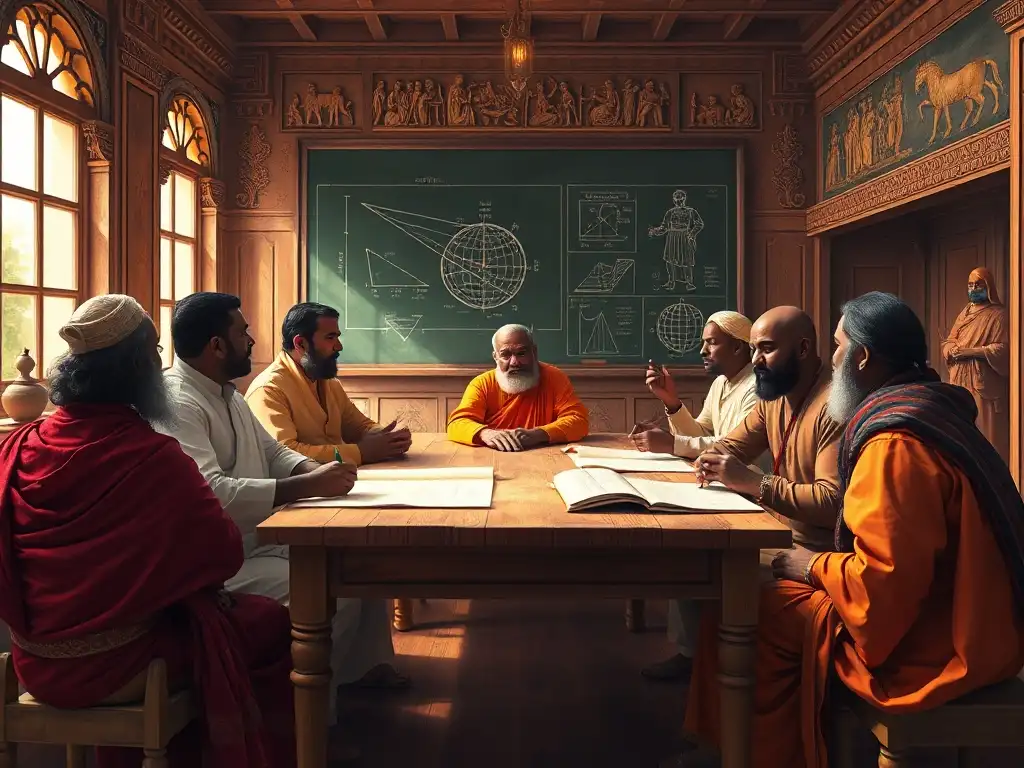
Ancient Indian scholars established various educational practices that emphasized discipline, knowledge retention, and practical application. These practices not only facilitated learning but also fostered a deep respect for knowledge and teachers.
The Gurukul System: A Model of Traditional Education
The Gurukul system was a traditional form of education that involved students living with their teachers (gurus) in a secluded environment. This system was characterized by:
- Residential Learning: Students resided in the guru's home, fostering a close-knit learning environment that emphasized mentorship and personal guidance.
- Holistic Education: Education was comprehensive, covering spiritual, physical, and intellectual development. Subjects included scriptures, philosophy, arts, sciences, and practical skills.
This model created a strong sense of community and collaboration among students, promoting lifelong learning.
Curriculum and Subjects Taught in Ancient India
The curriculum in ancient Indian educational institutions was extensive and diverse, covering a wide range of subjects:
- Vedic Studies: Focused on the study of sacred texts, rituals, and philosophy.
- Mathematics and Astronomy: Included extensive teachings on geometry, algebra, and celestial mechanics, with practical applications for agriculture and navigation.
- Medicine and Health Sciences: Emphasized Ayurveda and holistic health practices, integrating physical education and wellness.
These subjects not only prepared students for their future roles in society but also cultivated critical thinking and analytical skills.
Methods of Teaching and Learning in Ancient Indian Education
Teaching methods in ancient India were diverse and innovative, emphasizing active participation and critical engagement:
- Interactive Learning: Socratic dialogue and debates were encouraged, allowing students to engage critically with concepts and challenge existing ideas.
- Practical Application: Learning was often experiential, with students applying knowledge in real-world contexts, particularly in fields like agriculture, trade, and medicine.
- Oral Tradition: Knowledge was primarily transmitted through oral means, fostering strong memory skills and the ability to articulate thoughts clearly.
These methods not only facilitated the retention of knowledge but also encouraged a culture of inquiry and exploration, which is essential for effective education.
Influence of Ancient Indian Educational Practices on the World
Ancient Indian educational practices have significantly influenced global educational systems, offering a unique blend of philosophical inquiry, practical knowledge, and holistic learning. The ancient universities of India, such as Nalanda and Takshashila, were not merely institutions of higher learning but vibrant centers of cultural exchange where scholars from various regions gathered to share knowledge. These institutions emphasized critical thinking, debate, and the pursuit of knowledge for personal and societal betterment.
The educational philosophy of ancient India was characterized by the concept of Gurukula, where students lived with their teachers, fostering a close mentor-mentee relationship. This model has inspired various educational frameworks worldwide, emphasizing the importance of personal interaction in learning processes. Furthermore, the integration of ethics, arts, and sciences in their curriculum laid the groundwork for a more interdisciplinary approach to education, which has gained traction in modern educational systems.
Ancient Indian Contributions to Global Mathematics
The contributions of ancient Indian scholars to mathematics are profound and far-reaching. One of the most notable figures is Aryabhata, who introduced the concept of zero and the decimal system, allowing for more complex calculations and advancements in mathematics. His work, Aryabhatiya, laid the foundation for algebra and trigonometry, influencing mathematicians in the Islamic Golden Age and eventually spreading to Europe.
Brahmagupta, another prominent mathematician, made significant strides in arithmetic and algebra, providing rules for operations with negative numbers and methods for solving quadratic equations. These principles were foundational in developing modern algebraic concepts. Additionally, the Sulbasutras, ancient texts on geometry, provided essential knowledge regarding the construction of altars and contributed to the field of geometry, influencing both Indian architecture and mathematical practices globally.
The Spread of Ayurvedic Practices and Medical Knowledge
Ayurveda, the ancient Indian system of medicine, has not only shaped healthcare practices in India but has also influenced global medical knowledge. Texts such as the Charaka Samhita and Sushruta Samhita detail surgical techniques, herbal remedies, and holistic approaches to health, emphasizing balance in body and mind.
The principles of Ayurveda, particularly its focus on natural healing and preventative care, have gained recognition in Western medicine, leading to the integration of certain Ayurvedic practices into contemporary healthcare. The global interest in holistic wellness and alternative medicine has further propelled Ayurvedic practices into the mainstream, showcasing the relevance of ancient Indian medical wisdom in today's health paradigms.
Linguistic Contributions and Their Global Impact
Ancient India has made remarkable contributions to linguistics, particularly through the development of Sanskrit, one of the oldest languages in the world. Sanskrit's structured grammar, as outlined by Panini in his seminal work Ashtadhyayi, has influenced the study of linguistics globally, offering insights into phonetics, syntax, and semantics that form the basis of many modern linguistic theories.
Furthermore, the literary works produced in Sanskrit and other regional languages, such as the Vedas, Upanishads, and epics like the Mahabharata and Ramayana, have not only enriched Indian literature but have also inspired writers and scholars around the world. The impact of these texts on storytelling, narrative techniques, and philosophical discourse is profound, fostering a deeper understanding of human experience across cultures.
Legacy of Ancient Indian Scholars in Modern Education
The legacy of ancient Indian scholars continues to resonate in modern educational practices, particularly in the emphasis on inquiry-based learning and holistic education. The ancient Indian approach to education was not merely about rote memorization but encouraged students to engage critically with content, fostering a spirit of inquiry that is essential in today’s educational landscape.
How Ancient Educational Practices Inform Contemporary Systems
Contemporary educational systems are increasingly adopting principles from ancient Indian practices, such as experiential learning and the integration of arts and sciences. The Gurukula model of mentorship is mirrored in modern educational frameworks that value personal connections between educators and students, promoting a nurturing learning environment.
Moreover, the emphasis on ethics and values in ancient education has led to the incorporation of character education in schools today, highlighting the importance of developing not just knowledgeable individuals but also responsible citizens. This holistic approach resonates with the growing recognition of social-emotional learning as a critical component of personal and academic development.
The Continuing Relevance of Ancient Indian Thought in Global Education
The philosophical insights of ancient Indian scholars, particularly those related to knowledge, ethics, and the interconnectedness of all beings, continue to hold relevance in global education. Concepts like Dharma (duty) and Karma (action) inspire educational frameworks that prioritize social responsibility and ethical decision-making.
Furthermore, the ancient Indian belief in the pursuit of knowledge as a means to achieve Moksha (liberation) encourages a lifelong love of learning that transcends traditional academic boundaries. This perspective is increasingly valued in contemporary education, as educators strive to cultivate learners who are not only academically proficient but also socially conscious and globally minded.
The contributions of ancient Indian scholars to educational practices have left an indelible mark on global education, fostering a rich tapestry of knowledge that continues to evolve and inspire future generations.
Conclusion: The Lasting Impact of Ancient Indian Scholars Contributions
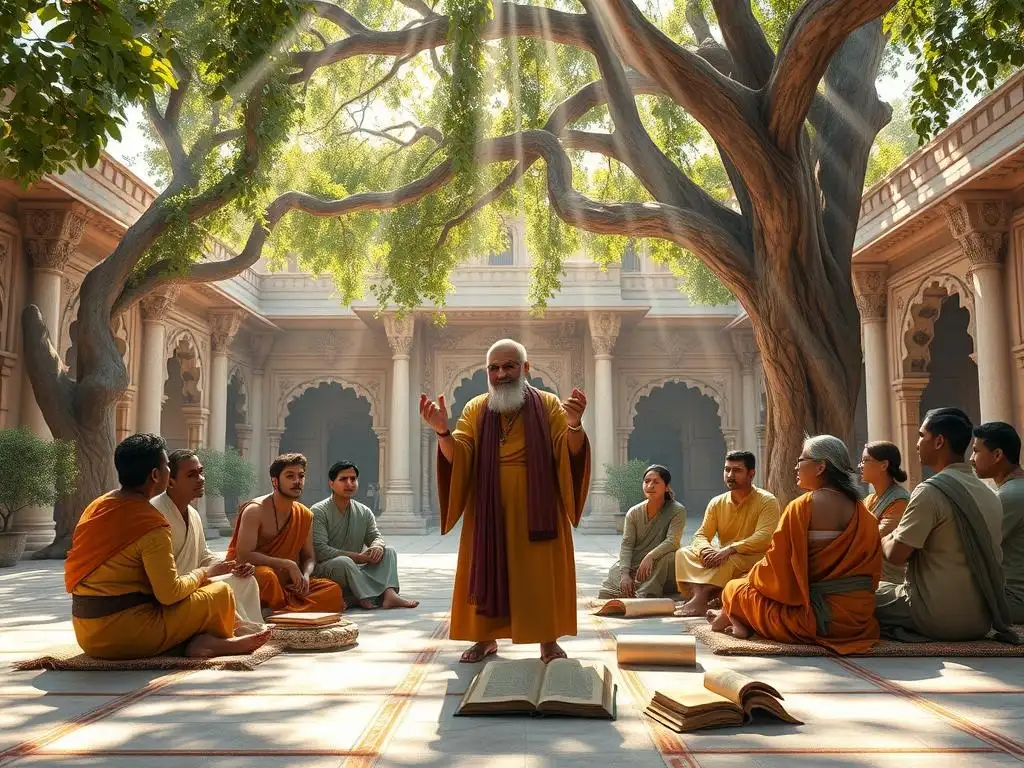
The contributions of ancient Indian scholars have left an indelible mark on global educational practices. From the foundational principles established in early texts such as the Vedas and Upanishads to the sophisticated methods of pedagogy developed during the time of the Gupta Empire, these scholars laid the groundwork for various educational systems around the world. Their focus on logic, mathematics, astronomy, and philosophy not only propelled Indian society forward but also influenced cultures beyond its borders.
The legacy of ancient Indian scholars can be seen in the emphasis on holistic education, the integration of diverse subjects, and the encouragement of critical thinking. These elements remain integral to modern educational frameworks, showcasing how timeless their insights were. The establishment of learning centers like Nalanda and Takshashila emphasized the importance of intellectual discourse, a principle that continues to resonate in today's academic institutions globally.
Reflection on Educational Innovations and Global Influence
Ancient Indian scholars were pioneers in educational innovations that transcended geographical boundaries and cultural divides. Their approach to education was characterized by a commitment to inquiry and exploration, which encouraged students to engage deeply with subjects rather than merely memorizing facts. This method fostered creativity and intellectual curiosity, which are essential components of education today.
One significant contribution was the development of the Guru-Shishya tradition, emphasizing the mentor-student relationship that remains a cornerstone in many educational systems worldwide. Scholars such as Aryabhata and Brahmagupta introduced groundbreaking concepts in mathematics and astronomy, influencing not just Indian scholars but also those in the Islamic Golden Age and Renaissance Europe. Furthermore, the ancient Indian philosophical discourse on epistemology and ethics has shaped educational paradigms in various cultures, promoting a broader understanding of knowledge and its application in societal contexts.
Future Perspectives on Ancient Indian Educational Practices
As the world continues to evolve, revisiting ancient Indian educational practices offers invaluable insights for contemporary educational reforms. The principles of inclusivity, critical thinking, and experiential learning that were hallmarks of ancient Indian education systems can be adapted to meet the challenges of modern learning environments.
In a globalized world where interdisciplinary approaches are increasingly valued, the curriculum inspired by ancient Indian scholars can foster a more integrated understanding of subjects. Additionally, as technology transforms education, the ancient emphasis on dialogue and mentorship can inform new pedagogical strategies that blend traditional wisdom with modern methodologies.
Overall, the future of education can benefit significantly from the rich tapestry of ideas and practices established by ancient Indian scholars. By embracing these contributions, educators and policymakers can create more effective and meaningful learning experiences that honor the past while preparing for the complexities of the future.
- Introduction to Ancient Indian Scholars Contributions
- Historical Context of Ancient Indian Education
- Key Ancient Indian Scholars and Their Contributions
- Educational Practices Developed by Ancient Indian Scholars
- Influence of Ancient Indian Educational Practices on the World
- Legacy of Ancient Indian Scholars in Modern Education
- Conclusion: The Lasting Impact of Ancient Indian Scholars Contributions
- Reflection on Educational Innovations and Global Influence
- Future Perspectives on Ancient Indian Educational Practices
- What were the main contributions of ancient Indian scholars to education?
- How did the Indus Valley Civilization contribute to education?
- Which ancient Indian scholars are most recognized for their contributions?
- What role did the Gupta Empire play in educational advancements?
- How are the contributions of ancient Indian scholars relevant today?
Frequently Asked Questions
What were the main contributions of ancient Indian scholars to education?
Ancient Indian scholars made significant contributions in fields like mathematics, astronomy, and medicine, influencing global educational practices through their innovative ideas and methods.
How did the Indus Valley Civilization contribute to education?
The Indus Valley Civilization is known for its advanced urban planning and script, laying a foundation for systematic education and knowledge dissemination in later Indian civilizations.
Which ancient Indian scholars are most recognized for their contributions?
Notable scholars include Aryabhata in mathematics and astronomy, Charaka in medicine, and Panini in linguistics, whose works have had a lasting impact on various disciplines worldwide.
What role did the Gupta Empire play in educational advancements?
The Gupta Empire is often referred to as the Golden Age of India, where scholars thrived, establishing universities like Nalanda that became centers for higher learning attracting students globally.
How are the contributions of ancient Indian scholars relevant today?
The concepts and methodologies developed by ancient Indian scholars are still reflected in modern educational systems, particularly in mathematics, science, and philosophy, showcasing their timeless relevance.
Final Reflection: The Enduring Legacy of Ancient Indian Scholars' Contributions
The contributions of ancient Indian scholars to global educational practices resonate profoundly in today's learning environments. As we navigate an increasingly interconnected world, the wisdom and methodologies developed by these scholars continue to shape educational frameworks, fostering critical thinking and holistic learning. Their pioneering ideas remind us that education is not merely a transfer of knowledge but a transformative journey that empowers individuals and communities alike.
The influence of ancient Indian scholarship is evident in various aspects of contemporary culture and education. These scholars laid the groundwork for interdisciplinary studies, emphasizing the importance of integrating diverse fields of knowledge. Their teachings have transcended time, inspiring generations to seek wisdom beyond conventional boundaries. Education is the most powerful weapon which you can use to change the world.
- Nelson Mandela. This quote encapsulates the essence of what ancient Indian scholars envisioned: an education that not only enlightens the mind but also uplifts the spirit and transforms society.
As we reflect on the invaluable lessons from ancient Indian scholars, I invite you to consider how their insights can be applied in your own life. Embrace the spirit of inquiry and the pursuit of knowledge, and strive to foster a learning environment that values diversity and critical thought. Let us honor their legacy by becoming advocates for education that inspires, empowers, and transforms, ensuring that their contributions continue to illuminate the path for future generations.
Unleash the Wisdom of Ancient Scholars!
Thank you for diving into the extraordinary contributions of ancient Indian scholars to educational practices around the globe! We hope you feel inspired by their knowledge and the timeless relevance it holds. Now, it's time to take action and integrate this wisdom into your own life and community.
Here are a few ways you can continue to explore and share this incredible legacy:
- Embrace the teachings of ancient Indian scholars by selecting one principle that resonates with you and applying it to your daily learning practices.
- Share what you’ve learned with your peers: consider hosting a discussion or writing a post on social media to encourage others to explore this rich history.
- Explore your local libraries or online resources for more insights into ancient educational systems and methodologies—discover what’s often overlooked!
How will you incorporate the wisdom of these ancient scholars into your journey of lifelong learning?