
The Evolution of Education: From Ancient Indian Universities to Today

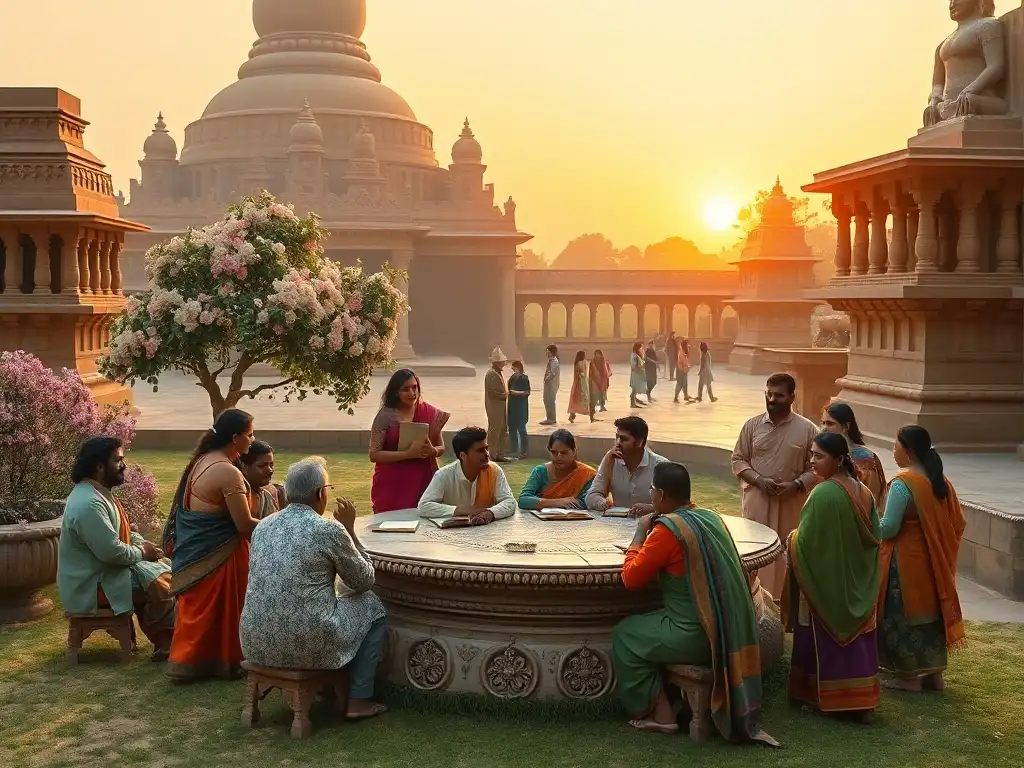
Welcome to Ancient India History, where we embark on a fascinating journey through the rich tapestry of India's past! Dive deep into the intricate world of ancient Indian education systems, where knowledge flourished in grand universities and scholars shaped the future. In our featured article, "The Evolution of Education: From Ancient Indian Universities to Today," you'll discover how these early institutions laid the groundwork for modern learning.
Prepare to be captivated by the wisdom of the ages and the enduring legacy of ancient Indian civilizations. Are you ready to explore the profound impact of education on society? Let's begin this enlightening adventure!
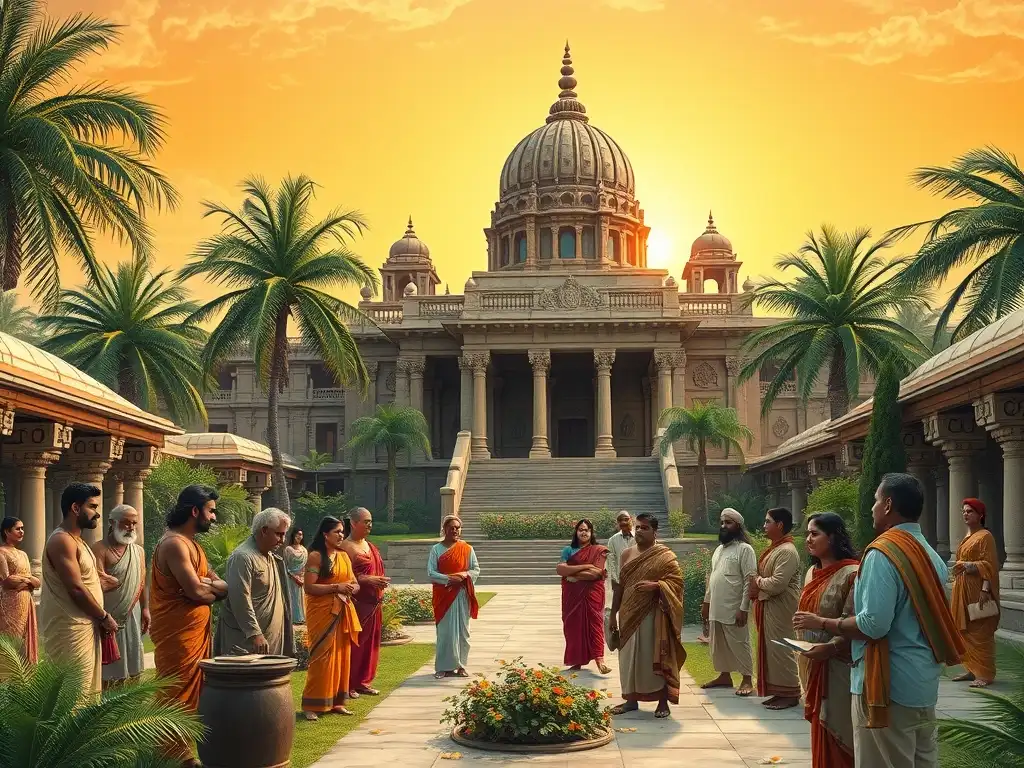
Introduction to Ancient Indian Education Systems
The educational legacy of ancient India is a profound testament to the civilization's intellectual achievements and cultural richness. From the early days of oral tradition to the establishment of renowned universities like Nalanda and Takshashila, ancient Indian education systems were characterized by a unique blend of spirituality, philosophy, and practical knowledge.
This article delves into the evolution of these educational frameworks, tracing their roots and examining the various influences that shaped them. By exploring the intricate tapestry of ancient Indian education, we gain a deeper understanding of how these systems laid the groundwork for contemporary educational paradigms, impacting not only India but the wider world.
The Foundations of Ancient Indian Education
The foundations of ancient Indian education can be traced back to several key factors that contributed to its development. These include:
- Religious texts and philosophical discourse
- Cultural practices and societal needs
- Institutional frameworks that facilitated learning
Each of these components played a crucial role in forming a structured yet diverse educational landscape that catered to various aspects of life, from the spiritual to the scientific.
The Vedic Period: The Birth of Learning
The Vedic period (circa 1500-500 BCE) marks a significant chapter in the history of ancient Indian education systems. During this time, learning was primarily oral, with knowledge transmitted through hymns and chants. The Vedas, the oldest sacred texts, served as the cornerstone of this educational framework. Key features of education during the Vedic period included:
- Guru-Shishya Parampara: This traditional system emphasized a close teacher-student relationship, where the guru (teacher) imparted wisdom to the shishya (student) in an informal setting, often in nature.
- Focus on Spiritual and Practical Knowledge: Education encompassed a wide range of subjects, including philosophy, mathematics, astronomy, and rituals, reflecting a holistic approach to learning.
The Vedic education system laid the groundwork for subsequent developments, influencing later educational institutions and practices.
Influence of Religion on Education
Religion played a pivotal role in shaping ancient Indian education systems. The intertwining of education with religious teachings led to the establishment of many institutions dedicated to learning, such as monasteries and universities. Notable influences include:
- Buddhism and Jainism: The rise of these religions introduced new educational paradigms, emphasizing ethics and philosophical inquiry. Monastic universities became centers of learning, attracting scholars from across Asia.
- Hindu Philosophy: The diverse schools of thought within Hinduism contributed to a rich curriculum that encompassed various disciplines, promoting critical thinking and debate.
As education evolved, it continued to reflect the values and beliefs of society, reinforcing the importance of knowledge as a means of spiritual and intellectual growth.
Prominent Ancient Indian Universities
Ancient India was home to some of the most prestigious universities in the world, which set a high standard for education that would influence systems globally. These institutions were not merely places for rote learning; they were centers of critical thinking, philosophical discourse, and advanced research.
Among the most notable universities were Nalanda and Takshashila, which attracted scholars from various parts of Asia and beyond. The educational systems at these universities were characterized by a diverse curriculum that encompassed not just religious studies but also sciences, arts, and humanities, reflecting the holistic approach to education prevalent in ancient Indian society.
Nalanda University: A Beacon of Knowledge
Nalanda University, established in the 5th century CE, is often regarded as one of the first residential universities in the world. It attracted thousands of students and scholars from across the globe, including China, Korea, Japan, Tibet, Mongolia, Sri Lanka, and Southeast Asia. The university had a vast library known as Dharmaganja, which housed an extensive collection of texts in various languages, including Sanskrit, Pali, and Tibetan.
The curriculum at Nalanda was comprehensive, covering subjects such as philosophy, theology, mathematics, astronomy, medicine, and logic. Students were encouraged to engage in debates and discussions, fostering an environment of intellectual rigor. The teaching methodology involved a combination of lectures, self-study, and group discussions, which helped in developing critical thinking skills among students. The university played a pivotal role in preserving and transmitting knowledge, particularly in Buddhist studies, and its influence can still be felt in educational practices today.
Takshashila: The Cradle of Learning
Takshashila, located in present-day Pakistan, is believed to have been established around the 6th century BCE and is often considered the first university in the world. It served as a major hub for learning and attracted students from various regions, including those from the Indian subcontinent and beyond. The university was known for its diverse curriculum, which included subjects such as Vedic studies, medicine, astronomy, military science, and political science.
One of the unique aspects of Takshashila was its flexible approach to education. Students could choose their subjects and were encouraged to pursue their interests. This autonomy allowed for a more personalized educational experience, fostering creativity and innovation. The university is also renowned for producing notable scholars, including Chanakya, who later played a crucial role in the establishment of the Maurya Empire. Takshashila's emphasis on practical knowledge and real-world applications has had a lasting impact on educational systems in the region.
The Curriculum of Ancient Indian Education Systems
The curriculum of ancient Indian education systems was diverse and multifaceted, reflecting the complexities of society and the various fields of knowledge that were valued. Education was not limited to religious teachings; rather, it encompassed a wide range of subjects that aimed to develop well-rounded individuals equipped for various roles in society. This holistic approach ensured that students were not only knowledgeable but also capable of critical thought and practical application of their learning.
Subjects and Disciplines in Ancient Indian Education
Ancient Indian education systems emphasized a broad spectrum of subjects, divided into several disciplines. The primary areas of study included:
- Religious Studies: Focused on Vedic texts, philosophy, and theology, imparting knowledge about the spiritual and moral aspects of life.
- Sciences: Covered subjects such as mathematics, astronomy, and medicine, with notable contributions from scholars like Aryabhata and Charaka.
- Arts and Humanities: Included music, dance, literature, and drama, fostering creativity and cultural expression.
- Political Science and Administration: Taught principles of governance and statecraft, preparing students for roles in leadership and administration.
This diverse curriculum aimed to cultivate not only academic knowledge but also practical skills, ethical values, and a sense of social responsibility among students.
Pedagogical Approaches in Ancient India
The pedagogical approaches used in ancient Indian education systems were dynamic and varied, tailored to meet the needs of individual learners. Key methods included:
- Guru-Shishya Tradition: This mentoring system involved close interaction between a teacher (guru) and a student (shishya), promoting personalized learning and guidance.
- Debate and Discourse: Students were encouraged to engage in discussions and debates, enhancing their critical thinking and analytical skills.
- Experiential Learning: Practical application of knowledge was emphasized, with students often learning through observation and real-world experiences rather than through textbooks alone.
These pedagogical strategies not only facilitated deep learning but also instilled values of respect, humility, and lifelong learning, which are still relevant in contemporary educational practices.
The Transition to Medieval Education Systems
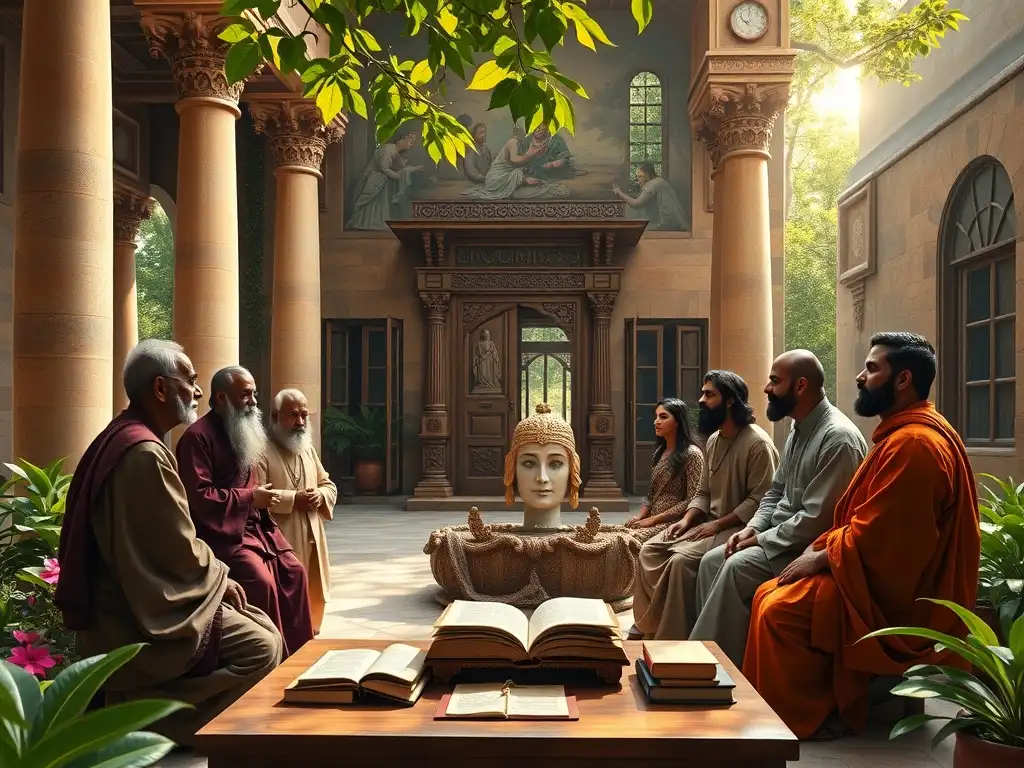
The transition from ancient Indian education systems to medieval educational frameworks marked a significant shift in the way knowledge was disseminated and structured. During the late ancient period, institutions like Nalanda and Takshashila thrived, focusing on a wide array of subjects including philosophy, medicine, mathematics, and astronomy. However, as the political landscape in India transformed due to invasions and the rise of new empires, the educational paradigms also evolved to adapt to changing societal needs.
In the medieval period, the influence of Islamic scholarship began to permeate the educational systems. This era saw the establishment of madrasas, which were centers of learning primarily focused on Islamic theology, law, and philosophy. These institutions incorporated elements from ancient Indian educational practices, blending them with new pedagogical methods brought in by Persian scholars. This fusion facilitated a broader curriculum, but it also led to a decline in the prominence of traditional Hindu educational institutions.
The transition involved a shift from the community-based, open-access education of ancient universities to a more centralized and often exclusivist system. The emphasis on rote learning and memorization became more pronounced, sometimes at the expense of critical thinking and inquiry, which had characterized early Indian education.
Changes in Educational Practices
The changes in educational practices during the transition to medieval systems were profound and multifaceted. One of the most notable shifts was the introduction of formalized curricula. While ancient universities operated on a more fluid basis, allowing scholars to pursue diverse fields of study, medieval education began to categorize subjects into distinct disciplines. This segmentation laid the groundwork for future educational systems but also limited the interdisciplinary approach that had flourished in ancient times.
Another significant change was the method of instruction. In ancient Indian universities, education was often conducted through dialogues and debates, fostering a spirit of inquiry and discussion. In contrast, the medieval period saw a rise in the use of lectures, where a teacher would impart knowledge directly to a passive audience of students. This shift not only changed the dynamics of classroom interactions but also altered the role of the teacher from a facilitator of learning to an authoritative figure.
Moreover, the accessibility of education underwent a transformation. Ancient Indian universities were generally open to all, regardless of caste or gender, promoting inclusivity. However, the medieval education system became more stratified, with many educational opportunities restricted to certain social classes, particularly among the elite and religious scholars. This exclusivity created a divide in educational access that would have lasting implications on Indian society.
The Impact of Cultural Exchange on Education
Cultural exchange played a crucial role in shaping the educational landscape during the transition to medieval systems. The arrival of Persian and later European influences brought new ideas, techniques, and subjects into the Indian educational milieu. For instance, the Persian emphasis on literature and poetry enriched the educational content available in madrasas and other institutions, fostering a synthesis of Indian and Islamic cultural elements.
Additionally, the introduction of new languages, such as Persian and Arabic, necessitated a shift in language instruction. Educational institutions began to offer courses in these languages, which not only expanded the curriculum but also facilitated greater cultural exchange and interaction across different communities. This bilingualism and multilingualism became essential in the context of trade, diplomacy, and cultural interactions with neighboring regions.
Furthermore, the cross-pollination of ideas led to innovations in various fields, particularly in mathematics and science. Scholars from both Indian and Islamic traditions collaborated, leading to significant advancements, such as the introduction of the numeral system that included the concept of zero and the decimal system, which would later have a profound impact on global mathematics.
Modern Perspectives on Ancient Indian Education Systems
The legacy of ancient Indian education systems continues to resonate in contemporary society. Modern perspectives on these systems highlight their relevance and adaptability in today’s educational landscape. The ancient emphasis on holistic education, where moral, intellectual, and physical development were all considered integral, is increasingly seen as a valuable model.
Relevance of Ancient Educational Practices Today
Ancient Indian educational practices offer insights that are pertinent in today’s context, especially in addressing the challenges of modern education. The focus on critical thinking, debate, and the Socratic method of questioning can enhance current pedagogical approaches, encouraging students to engage actively with their learning process.
Furthermore, the ancient practice of mentorship, where students lived with their teachers, fosters a deep teacher-student relationship that is often missing in large, impersonal educational institutions today. This personalized approach can be adapted in contemporary settings to improve student engagement and retention.
Moreover, the inclusivity of ancient education systems, which catered to diverse populations, serves as a critical reminder of the need for equitable access in modern education. As societies strive for inclusivity, the principles of ancient Indian education can guide initiatives aimed at breaking down barriers and ensuring that education is accessible to all, regardless of background.
The Legacy of Ancient Indian Education Systems
The legacy of ancient Indian education systems is profound, influencing not only the Indian subcontinent but also the broader global educational narrative. The establishment of renowned universities like Nalanda and Takshashila set a precedent for higher education that emphasized inquiry, scholarship, and a comprehensive curriculum.
Today, this legacy is reflected in various educational reforms and initiatives that seek to revive the spirit of ancient learning. Institutions are increasingly recognizing the value of integrating traditional knowledge systems with modern educational frameworks, creating a more holistic approach to learning.
Additionally, the recognition of ancient Indian texts and philosophies has sparked interest in interdisciplinary studies that bridge the gaps between science, humanities, and arts, much like the ancient curriculum. This revival fosters a richer academic environment, where diverse perspectives can converge, echoing the ancient principles of knowledge sharing and cultural exchange that were hallmarks of the educational systems of the past.
The evolution of education from ancient Indian universities to modern practices illustrates a dynamic interplay between tradition and innovation, highlighting the enduring significance of ancient Indian education systems in shaping contemporary educational paradigms.
Conclusion: The Journey of Education through Time
The evolution of education in ancient India reflects a rich tapestry of intellectual growth and cultural development that has shaped not only the subcontinent but also the broader world. From the early Vedic tradition that emphasized oral transmission of knowledge to the establishment of renowned universities like Nalanda and Takshashila, ancient Indian education systems demonstrated a commitment to scholarship and critical inquiry. These institutions were not merely centers of learning; they were vibrant ecosystems where students from diverse backgrounds engaged in rigorous debates, exchanged ideas, and contributed to various fields such as mathematics, astronomy, medicine, and philosophy.
As we trace the journey of education through time, it becomes evident that ancient Indian education systems were characterized by their inclusivity and diversity. The curriculum was expansive, encompassing subjects ranging from the sciences to the arts, and was designed to cultivate a holistic understanding of the world. Moreover, the emphasis on teacher-student relationships fostered an environment of mentorship that encouraged personal and intellectual growth.
In contemporary times, while the modalities of education have transformed drastically—through the advent of technology and new pedagogical approaches—the foundational principles established by ancient Indian scholars still resonate. The focus on critical thinking, holistic development, and the pursuit of knowledge continues to be relevant in today's educational discourse.
As we reflect on the legacy of ancient Indian education systems, it is essential to recognize their role in laying the groundwork for future generations. By valuing knowledge and learning as a lifelong journey, ancient Indian civilizations have imparted lessons that remain pertinent in our ongoing quest for enlightenment and understanding. The journey of education, from the ancient universities to the present, underscores the enduring significance of learning as a transformative force in society.
- Introduction to Ancient Indian Education Systems
- The Foundations of Ancient Indian Education
- Prominent Ancient Indian Universities
- The Curriculum of Ancient Indian Education Systems
- The Transition to Medieval Education Systems
- Modern Perspectives on Ancient Indian Education Systems
- Conclusion: The Journey of Education through Time
- What were the key characteristics of ancient Indian education systems?
- How did ancient Indian universities contribute to education?
- What subjects were taught in ancient Indian education?
- What role did religion play in ancient Indian education?
- How has ancient Indian education influenced modern systems?
Frequently Asked Questions
What were the key characteristics of ancient Indian education systems?
Ancient Indian education systems were characterized by gurukul systems, where students lived with their teachers, and emphasized holistic learning, including arts, sciences, and philosophy.
How did ancient Indian universities contribute to education?
Ancient Indian universities, like Nalanda and Takshashila, were renowned for their scholarly excellence and attracted students from various regions, promoting a diverse exchange of knowledge.
What subjects were taught in ancient Indian education?
Subjects included mathematics, astronomy, medicine, grammar, and philosophy, focusing on both theoretical knowledge and practical applications.
What role did religion play in ancient Indian education?
Religion was integral to education, with many teachings derived from Hindu scriptures and Buddhist texts, shaping the moral and ethical framework of learning.
How has ancient Indian education influenced modern systems?
The foundations of ancient Indian education, such as critical thinking and debate, continue to influence modern educational philosophies, promoting a well-rounded approach to learning.
Final Reflection: Embracing the Legacy of Ancient Indian Education Systems
The evolution of education, particularly through the lens of ancient Indian universities, underscores the profound influence of historical pedagogies on contemporary learning. Today, as we navigate an increasingly complex world, the principles and values embedded in ancient Indian education systems—such as holistic development, critical thinking, and a deep respect for knowledge—remain remarkably relevant. These systems not only shaped the intellectual landscape of their time but continue to inspire modern educational frameworks, reminding us that the quest for knowledge is a timeless endeavor.
The rich tapestry of ancient Indian education has woven itself into the very fabric of our cultural and social identity. From the Gurukuls to the grand universities of Nalanda and Takshashila, these institutions fostered an environment of inquiry and exploration that resonates with our current educational aspirations. As we reflect on this legacy, we can appreciate how these ancient practices have laid the groundwork for our modern systems. Education is the most powerful weapon which you can use to change the world.
– Nelson Mandela. This quote encapsulates the enduring power of education, a sentiment that echoes through the ages, urging us to honor and build upon the foundations set by our predecessors.
As we look to the future, let us take a moment to reflect on how we can incorporate the lessons from ancient Indian education into our own lives and communities. Consider how you can foster a spirit of inquiry, cultivate a love for learning, and promote holistic development in your surroundings. By embracing the wisdom of the past, we can create a more enlightened and compassionate future, ensuring that the legacy of ancient Indian education systems continues to thrive in our modern world.
Uncover the Future of Learning!
Thank you for exploring the fascinating journey of education from ancient Indian universities to our modern-day systems! Your engagement with this rich history not only enhances your understanding but also inspires a fresh perspective on the evolution of learning. Now, let's take those insights and turn them into action!
Here are some concrete steps you can take to further explore and contribute to the educational landscape:
- Engage with the past: Visit a local museum or cultural center that showcases the history of education in India. You'll gain a deeper appreciation for our roots!
- Spread the word: Share this article with friends and family on social media—let's spark conversations about the value of education throughout history!
- Join a community: Connect with online forums or local groups dedicated to historical education and philosophy. Share your thoughts and learn from others who are passionate about this topic.
What insights from the ancient education system can you apply to enhance your own learning journey today?