
How the Gupta Empire Revolutionized Educational Practices in Ancient India


Welcome to Ancient India History, where we embark on a captivating journey through the intricate tapestry of India's past! As we delve into the Gupta Empire and its remarkable educational practices, you will discover how this golden age transformed learning and knowledge dissemination in ancient times. What groundbreaking methods did the Guptas introduce that resonated through the ages? Join us as we uncover the innovations and philosophies that shaped the educational landscape of India, inviting you to explore the profound legacy that still influences us today. Your adventure into the depths of ancient wisdom begins here!

Introduction to the Gupta Empire and Its Educational Significance
The Gupta Empire, often referred to as the "Golden Age of India," flourished from approximately 320 to 550 CE and marked a significant period of cultural, scientific, and educational advancements in ancient Indian history. This era is notable not just for its achievements in art and literature, but also for the profound transformations in educational practices that laid the groundwork for future generations.
The Gupta Empire's contributions to education were multifaceted, reflecting a society that valued knowledge, learning, and intellectual discourse. As we delve into the educational practices of the Gupta Empire, we will explore how these systems shaped the educational landscape of ancient India and influenced subsequent civilizations.
Overview of the Gupta Empire's Influence on Ancient India
The Gupta Empire established a centralized and stable government that promoted trade, culture, and scholarship. This stability created an environment conducive to learning and the development of various educational institutions. The emphasis on education during this period can be attributed to several factors:
- Patronage of Learning: The Gupta rulers were known for their support of scholars and educational institutions, leading to the flourishing of arts and sciences.
- Cultural Renaissance: This era witnessed a renewed interest in philosophy, mathematics, astronomy, and literature, which were integral to the educational curriculum.
- Integration of Diverse Knowledge: The Gupta Empire was a melting pot of cultures, which allowed for the exchange and integration of various educational practices and philosophies.
Importance of Education in Gupta Society
Education in Gupta society was not merely a means to acquire knowledge; it was seen as a path to personal development and societal contribution. The following aspects underscore its importance:
- Moral and Ethical Training: Education was intertwined with moral teachings, aiming to cultivate virtuous citizens who would contribute positively to society.
- Preparation for Governance: Education prepared individuals for roles in administration, military, and various professions, ensuring a competent leadership class.
- Cultural Transmission: The educational practices during this period played a crucial role in preserving and transmitting cultural values, traditions, and knowledge across generations.
The Structure of Educational Institutions in the Gupta Empire
The Gupta Empire's educational landscape was characterized by various institutions that catered to different segments of society. This diversity allowed for a broad spectrum of educational experiences.
Types of Educational Institutions: Gurukulas, Monastic Schools, and Universities
- Gurukulas:
- These were traditional schools run by a guru (teacher) in a residential setting, often in the forest or village. Students, known as shishyas, lived with their guru, fostering close teacher-student relationships.
- Curriculum included subjects such as Vedas, mathematics, grammar, and philosophy.
- Monastic Schools:
- Associated with Buddhist monasteries, these schools focused on spiritual education alongside secular subjects.
- They served as centers for higher learning, attracting students from various regions.
- Universities:
- Notable institutions like Nalanda and Takshashila emerged during this period, offering advanced studies in various disciplines.
- These universities became international centers of learning, drawing scholars from different parts of Asia.
Role of Teachers and Scholars in Gupta Educational Practices
Teachers and scholars held esteemed positions in Gupta society, significantly influencing educational practices:
- Gurus as Mentors:
- Gurus were not only educators but also spiritual guides, providing holistic education that encompassed moral and ethical dimensions.
- Scholarship and Research:
- Scholars such as Aryabhata and Kalidasa made remarkable contributions to mathematics and literature, respectively, showcasing the high level of intellectual activity during the Gupta period.
- Collaboration and Dialogue:
- The exchange of ideas among scholars fostered a rich intellectual environment, promoting debates and discussions that further advanced knowledge.
Through these structured educational practices, the Gupta Empire significantly transformed the landscape of education in ancient India, setting the stage for future developments in the region's educational systems.
Curriculum and Subjects Taught in Gupta Educational Institutions
During the Gupta Empire, educational institutions flourished, and the curriculum reflected the diverse intellectual pursuits of the time. The educational system was predominantly centered around Gurukuls (traditional schools) and Viharas (monastic universities), which offered a wide range of subjects. The curriculum encompassed both theoretical knowledge and practical skills, aiming to develop well-rounded individuals.
The subjects taught were classified into various categories, including the sciences, arts, and humanities, ensuring a holistic approach to education. Students engaged in discussions, debates, and hands-on activities, which helped in the assimilation of knowledge and its practical application. The emphasis was on critical thinking and creativity, allowing learners to explore their interests while adhering to the foundational teachings of their respective disciplines.
Core Subjects in Gupta Education: Mathematics, Astronomy, and Philosophy
The Gupta Empire is renowned for its significant advancements in mathematics, astronomy, and philosophy, which were core subjects in the educational curriculum.
- Mathematics: Gupta scholars made remarkable contributions, particularly in the field of numerals and arithmetic. The introduction of the decimal system and the concept of zero are pivotal achievements from this era. Students studied geometry and algebra, often applying these concepts to real-world problems, which laid the groundwork for future mathematical explorations.
- Astronomy: Gupta astronomers, such as Aryabhata, revolutionized the understanding of celestial bodies and planetary movements. Education in astronomy included the study of celestial navigation, eclipses, and the calculation of the earth's circumference. This knowledge was crucial not only for scientific inquiry but also for agricultural planning and religious observances.
- Philosophy: Philosophy played a vital role in Gupta education, with students exploring various schools of thought, including Nyaya (logic), Vaisheshika (atomism), Samkhya (enumeration), and Vedanta (the end of the Vedas). Discussions on ethics, metaphysics, and epistemology encouraged students to engage with profound questions about existence, knowledge, and morality.
These core subjects equipped students with critical analytical skills and a deep understanding of the world, fostering a culture of inquiry and intellectual growth.
The Inclusion of Arts and Literature in Gupta Educational Practices
The Gupta Empire is often celebrated as a golden age of arts and literature, and this cultural richness was well-integrated into the educational practices of the period. Students were encouraged to explore various forms of artistic expression, including music, dance, drama, and visual arts.
- Literature: The curriculum included the study of classical texts, poetry, and prose, with a focus on renowned works such as the Mahabharata and Ramayana. Students learned not only to appreciate literary forms but also to create their own compositions, fostering creativity and communication skills.
- Performing Arts: The Gupta period saw a flourishing of classical music and dance. Educational institutions often hosted performances, allowing students to participate and learn from skilled practitioners. This not only preserved cultural heritage but also provided students with platforms to showcase their talents.
- Visual Arts: Art education involved practical training in sculpture, painting, and pottery. Students were taught the techniques of creating intricate sculptures and murals, reflecting the rich aesthetics of Gupta architecture. This hands-on approach ensured that artistic skills were passed down through generations.
Overall, the inclusion of arts and literature in the educational curriculum during the Gupta Empire enriched students' experiences, nurturing creativity alongside intellectual pursuits.
Innovations in Teaching Methods During the Gupta Empire
The Gupta Empire witnessed notable innovations in teaching methods that significantly enhanced the learning experience. Educators adopted various approaches to facilitate effective knowledge transfer, making education more engaging and impactful.
Pedagogical Techniques and Approaches to Learning
One of the hallmark features of Gupta educational practices was the emphasis on interactive learning. Teachers employed a variety of pedagogical techniques, including:
- Socratic Method: This method involved guided questioning, encouraging students to think critically and articulate their thoughts. By fostering dialogue, educators helped students develop reasoning skills and a deeper understanding of complex concepts.
- Group Discussions: Collaborative learning was encouraged through group discussions and debates. This not only allowed students to share diverse perspectives but also nurtured teamwork and communication skills.
- Mentorship: The Gurukul system emphasized mentorship, where students learned directly from knowledgeable teachers (Gurus). This personalized approach fostered strong teacher-student relationships, enhancing the learning experience.
These techniques created a dynamic educational environment that focused on student engagement and active participation.
The Role of Practical Knowledge and Experiential Learning
In the Gupta educational framework, practical knowledge and experiential learning were integral components. Education was not confined to theoretical instruction; instead, it was a blend of theory and practice, which included:
- Field Studies: Students often engaged in field studies, particularly in subjects like agriculture and astronomy. This hands-on approach helped them apply theoretical concepts to real-world scenarios, bridging the gap between knowledge and its application.
- Craftsmanship: The curriculum also included training in various crafts and trades, ensuring that students acquired practical skills that would benefit them in their future professions. Whether it was metallurgy, textile production, or pottery, students learned through direct involvement in these crafts.
- Cultural Practices: Students were exposed to cultural practices and traditions, participating in festivals and rituals that deepened their understanding of societal values and historical context.
By emphasizing practical knowledge and experiential learning, Gupta educational institutions prepared students not just for academic success but for meaningful contributions to society, ensuring a legacy of skilled and knowledgeable individuals.
The Impact of the Gupta Empire Educational Practices on Society
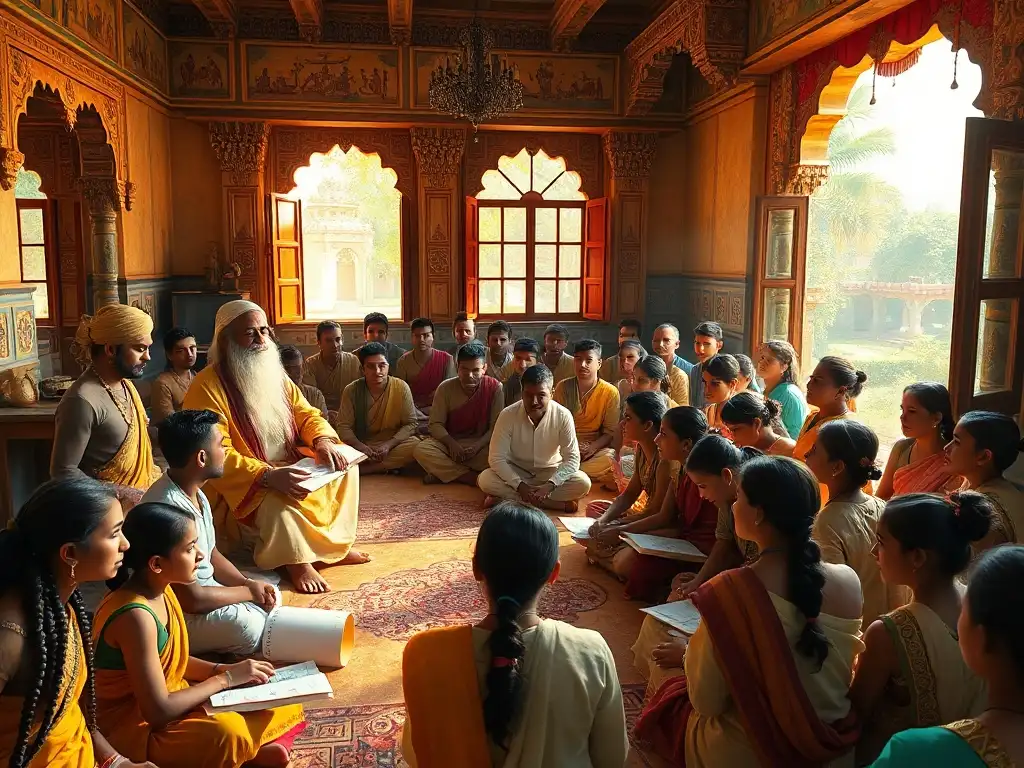
The Gupta Empire, often referred to as the Golden Age of India, made significant strides in various fields, particularly in education. The educational practices during this period had a profound impact on society, enhancing the overall intellectual and cultural landscape of ancient India. The establishment of universities and centers of learning fostered an environment where ideas could flourish, leading to advancements in science, mathematics, philosophy, and the arts. This era saw a shift in the perception of education from being a privilege of the elite to a more inclusive approach that benefitted a wider section of society.
Furthermore, the Gupta educational system emphasized practical knowledge alongside theoretical understanding. This holistic approach encouraged students not only to learn from texts but also to apply their knowledge in real-world contexts. The emphasis on critical thinking and debate nurtured a generation of scholars who contributed to various fields, ultimately enriching the cultural fabric of India during and after the Gupta period.
Contributions to Literacy and Knowledge Dissemination
One of the most significant contributions of the Gupta Empire to educational practices was the increase in literacy rates across the region. The establishment of renowned universities such as Nalanda and Vikramshila played a pivotal role in this development. These institutions attracted students from various parts of India and even from neighboring countries, creating a melting pot of ideas and knowledge. The curriculum was diverse, covering subjects such as astronomy, mathematics, medicine, and philosophy, which encouraged a culture of learning and inquiry.
The proliferation of written texts during this period also facilitated knowledge dissemination. With advancements in writing materials and techniques, scholars were able to produce and distribute texts more efficiently. This led to a greater availability of educational resources, thereby enhancing literacy among the populace. The Gupta Empire's focus on education and knowledge-sharing laid the foundation for future generations, making literacy an essential aspect of Indian culture.
The Influence of Gupta Education on Later Indian Educational Systems
The educational practices established during the Gupta Empire had a lasting influence on subsequent Indian educational systems. The emphasis on structured learning, advanced curricula, and the establishment of universities set a precedent that was followed by later dynasties. The concept of formal education institutions became more entrenched in Indian society, paving the way for the establishment of schools and colleges in the medieval period.
Moreover, the Gupta approach to education, characterized by a strong emphasis on philosophy and critical reasoning, continued to shape educational discourse in India. Scholars and educators in later periods drew inspiration from Gupta methodologies, adapting them to meet the changing needs of society. This continuity ensured that the core values of education—knowledge, inquiry, and debate—remained integral to Indian culture throughout its history.
Legacy of Gupta Empire Educational Practices
The educational practices of the Gupta Empire left an indelible mark on the landscape of Indian education. The legacy of this period can be observed not only in historical contexts but also in modern educational frameworks. The emphasis on higher learning and the establishment of institutions as centers of knowledge created a model that continues to resonate in contemporary education systems.
Lasting Effects on Ancient and Modern Indian Education
The legacy of Gupta educational practices is evident in the evolution of educational institutions in India. The model of universities that combined various disciplines and attracted students from diverse backgrounds established a blueprint that later educational institutions would follow. This tradition of holistic education, where multiple fields of study intersect, remains a cornerstone of modern Indian education.
Additionally, the focus on critical thinking, philosophical inquiry, and the arts cultivated during the Gupta period nurtured a culture that values intellectual engagement. Modern Indian education continues to reflect these values, emphasizing the importance of developing well-rounded individuals who can think critically and contribute to society.
How Gupta Educational Practices Shaped Cultural and Intellectual Movements
The educational practices of the Gupta Empire significantly influenced cultural and intellectual movements throughout Indian history. The flourishing of arts, literature, and philosophy during this period can be attributed to the robust educational framework that supported creative expression and intellectual exploration. Notable scholars, poets, and thinkers emerged from this era, contributing to a rich tapestry of cultural heritage.
Moreover, the Gupta focus on education as a means to achieve enlightenment and societal betterment inspired subsequent movements that valued knowledge and learning. This cultural ethos laid the groundwork for the Renaissance in India and influenced various reform movements in later centuries. The Gupta Empire's commitment to education not only shaped the intellectual landscape of its time but also fostered a legacy that continues to inspire and guide educational practices in India today.
Conclusion: The Enduring Influence of Gupta Empire Educational Practices
The Gupta Empire, often referred to as the Golden Age of India, significantly transformed educational practices that have had a lasting impact not only on ancient Indian society but also on the educational systems that followed. By promoting the establishment of centers of learning, integrating a diverse curriculum, and encouraging critical thinking and scholarly discourse, the Gupta Empire laid the groundwork for a sophisticated educational framework that influenced future generations.
The emphasis on subjects such as mathematics, astronomy, medicine, and philosophy during this era facilitated a thriving intellectual environment. The establishment of institutions like Nalanda University exemplified the Gupta commitment to education, attracting scholars from across Asia and becoming a beacon of learning. The legacy of these practices continues to resonate in modern educational systems, illustrating the Gupta Empire's profound and enduring influence.
Summary of Key Contributions to Education in Ancient India
The Gupta Empire's contributions to educational practices can be summarized in several key areas:
- Institutional Development: The establishment of formal educational institutions, particularly monasteries and universities, provided a structured environment for learning and scholarship. Nalanda and Takshashila emerged as premier centers, offering a range of subjects and attracting students from various regions.
- Curriculum Diversification: The curriculum during the Gupta period expanded beyond religious texts to include subjects such as mathematics, astronomy, medicine, and literature. This diversification helped cultivate a well-rounded education that fostered critical thinking and innovation.
- Promotion of Scholarship: The Gupta rulers actively supported scholars and intellectuals, creating an environment conducive to research and debate. This patronage not only advanced knowledge but also encouraged the preservation and translation of ancient texts.
- Pedagogical Innovations: The emphasis on dialogue and debate in classrooms promoted interactive learning. Students were encouraged to question and analyze, laying the foundation for independent thought and academic rigor.
These contributions highlight the Gupta Empire's role in laying the groundwork for a sophisticated educational tradition that would influence future civilizations.
Reflection on the Gupta Empire's Role in Shaping Educational Practices Today
Today, the influence of Gupta Empire educational practices can still be observed in various aspects of modern education, both in India and globally. The emphasis on a comprehensive curriculum that includes sciences, arts, and humanities can be traced back to the educational reforms initiated during this period.
Moreover, the idea of educational institutions functioning as centers of knowledge exchange has persisted. Modern universities still embody the spirit of inquiry and scholarship that characterized the Gupta educational system, fostering an environment where diverse subjects are explored and critical thinking is encouraged.
In essence, the Gupta Empire not only revolutionized educational practices in ancient India but also established a legacy that continues to inform and inspire contemporary educational philosophies. The principles of inclusivity, critical analysis, and scholarly pursuit remain foundational elements in education today, underscoring the Gupta Empire's lasting impact on the world of learning.
- Introduction to the Gupta Empire and Its Educational Significance
- The Structure of Educational Institutions in the Gupta Empire
- Curriculum and Subjects Taught in Gupta Educational Institutions
- Innovations in Teaching Methods During the Gupta Empire
- The Impact of the Gupta Empire Educational Practices on Society
- Legacy of Gupta Empire Educational Practices
- Conclusion: The Enduring Influence of Gupta Empire Educational Practices
- What were the key educational practices during the Gupta Empire?
- How did the Gupta Empire contribute to the development of mathematics?
- What role did religion play in education during the Gupta period?
- How were women educated in the Gupta Empire?
- What legacy did Gupta educational practices leave on future generations?
Frequently Asked Questions
What were the key educational practices during the Gupta Empire?
The Gupta Empire emphasized higher learning, establishing universities like Nalanda and promoting subjects such as mathematics, astronomy, and literature.
How did the Gupta Empire contribute to the development of mathematics?
The Guptas made significant advances in mathematics, introducing concepts such as zero, the decimal system, and algebra, which greatly influenced later civilizations.
What role did religion play in education during the Gupta period?
Education was often tied to religious institutions, where Buddhist and Hindu teachings were imparted, fostering a blend of spiritual and intellectual growth.
How were women educated in the Gupta Empire?
While education for women was limited, some elite women received instruction in arts and literature, reflecting a nuanced approach to gender roles in education.
What legacy did Gupta educational practices leave on future generations?
The educational frameworks established during the Gupta Empire laid the groundwork for scholarship and curricula that influenced medieval and modern Indian education systems.
Final Reflection: The Enduring Legacy of Gupta Empire Educational Practices
The Gupta Empire's revolutionary educational practices not only shaped the intellectual landscape of ancient India but also laid the groundwork for modern educational systems worldwide. In an era where knowledge was revered and scholars were celebrated, the Gupta Empire established institutions that fostered learning and innovation. This historical significance resonates today, as we continue to seek effective educational frameworks that promote critical thinking and creativity.
The influence of the Gupta Empire on education is profound and ongoing, echoing through centuries of cultural and social evolution. The emphasis on holistic education, encompassing arts, sciences, and philosophy, has inspired countless generations. As we navigate the complexities of contemporary education, we can draw from the wisdom of the past. Education is the most powerful weapon which you can use to change the world.
– Nelson Mandela. This quote encapsulates the transformative power of education, a principle that was deeply embedded in the Gupta ethos.
As we reflect on the Gupta Empire's contributions, I invite you to consider how you can apply these lessons in your own life. Whether through fostering a love for learning, supporting educational initiatives, or simply sharing knowledge with others, each of us has the potential to contribute to a culture of enlightenment. Let us honor the legacy of the Gupta Empire by committing to lifelong learning and inspiring those around us to do the same.
Embrace the Legacy: Transform Your Learning Journey!
Thank you for exploring the enriching history of the Gupta Empire and its profound influence on educational practices in ancient India. Understanding these transformative ideas can inspire us to enhance our own learning experiences today. Now, let’s turn that inspiration into action!
- Begin your own exploration by integrating a new educational practice inspired by the Gupta methods into your daily routine—whether it’s collaborative learning or self-directed study.
- Share your knowledge! Discuss what you've learned with friends or on social media to spark a conversation about innovative learning.
- Consider visiting a local museum or cultural center that showcases historical educational advancements—this could provide fresh perspectives on how far we've come and where we can go!
How will you incorporate ancient wisdom into your modern educational practices?