
The Role of Ancient Indian Universities in Shaping Global Knowledge


Welcome to Ancient India History, where we embark on an enlightening journey through time to uncover the profound legacy of ancient Indian civilizations. In our featured article, "The Role of Ancient Indian Universities in Shaping Global Knowledge," we delve into the remarkable contributions of these early centers of learning that not only shaped the intellectual landscape of India but also influenced the world.
Discover how the wisdom of the past continues to resonate today and explore the vibrant tapestry of culture and knowledge that defined an era. Join us as we unravel the stories behind these ancient institutions and their lasting impact on education and society.
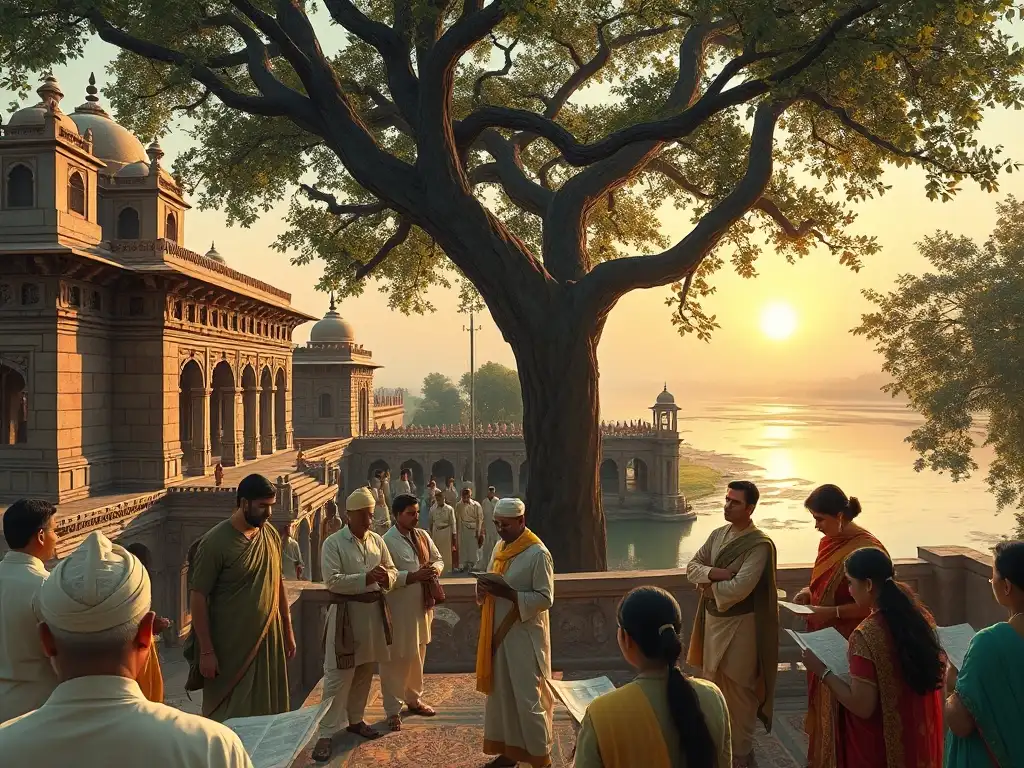
Introduction to Ancient Indian Universities
The contributions of ancient Indian universities to global knowledge are often overlooked, yet they represent a significant chapter in the history of education. Institutions like Nalanda and Takshashila were not merely centers of learning; they were vibrant hubs of intellectual pursuit that attracted students and scholars from across Asia and beyond.
These universities played a critical role in preserving, developing, and disseminating knowledge in various fields such as philosophy, medicine, mathematics, astronomy, and linguistics. As we delve into the intricate tapestry of ancient Indian educational systems, we uncover how these institutions laid the groundwork for future generations and influenced educational practices worldwide.
Overview of Ancient Indian Educational Systems
Ancient Indian educational systems were characterized by a profound emphasis on holistic learning. The Gurukula system, where students lived with their teachers, fostered a close mentor-student relationship that promoted not only academic growth but also moral and ethical development. The curriculum was diverse, encompassing:
- Philosophy: Exploration of fundamental questions about existence and ethics.
- Mathematics: Development of concepts like zero and the decimal system.
- Medicine: Practices derived from Ayurveda and herbal sciences.
- Linguistics: Mastery of languages such as Sanskrit, which was pivotal for literary and scholarly work.
This comprehensive approach ensured that students were well-rounded individuals, capable of contributing to society in multifaceted ways.
Importance of Education in Ancient Indian Civilization
Education was held in high esteem in ancient Indian civilization, often regarded as a pathway to enlightenment and societal progress. It was believed that knowledge was not merely for personal gain but was a means to uplift society as a whole. The ancient texts, including the Vedas and Upanishads, emphasized learning as a sacred duty.
- Cultural Preservation: Education played a crucial role in preserving ancient texts and traditions, ensuring the continuity of cultural heritage.
- Social Mobility: Access to education allowed individuals from various backgrounds to rise in status, contributing to a more dynamic society.
- Intellectual Exchange: Ancient Indian universities became melting pots of diverse ideas, facilitating the exchange of knowledge among scholars from different regions and cultures.
Historical Context of Ancient Indian Universities
Emergence of Universities in Ancient India
The establishment of universities in ancient India can be traced back to the 5th century BCE, with Takshashila being one of the earliest known centers of higher learning. It offered education in various subjects and attracted students from as far as Greece and China.
- Nalanda University: Founded in the 5th century CE, Nalanda became a beacon of learning, drawing thousands of students and scholars. Its extensive library housed countless texts, making it a hub for research and scholarship.
- Vikramashila: Established in the 8th century CE, this university specialized in Buddhist studies and further contributed to the intellectual landscape of the time.
These universities were instrumental in shaping the educational framework of the region and influencing neighboring cultures.
Key Periods of Development: From the Indus Valley to the Gupta Empire
The evolution of ancient Indian universities can be segmented into notable periods:
- Indus Valley Civilization (c. 2500–1900 BCE): Early forms of education emerged, focusing on practical skills and crafts.
- Vedic Period (c. 1500–500 BCE): The foundation of the Gurukula system and oral traditions of learning.
- Maurya and Post-Maurya Periods (c. 322–185 BCE): Growth of centers like Takshashila, integrating diverse knowledge streams.
- Gupta Empire (c. 320–550 CE): A golden age for education, marked by the flourishing of universities such as Nalanda and Vikramashila, which attracted scholars from across Asia.
These developments illustrate how ancient Indian universities were pivotal in shaping not only local knowledge but also contributing significantly to the global intellectual heritage.
Prominent Ancient Indian Universities
Ancient India was home to some of the most illustrious universities in the world, which played a pivotal role in the dissemination of knowledge across various disciplines. These institutions attracted students from different parts of the globe, fostering an environment of intellectual growth and cultural exchange. The universities not only focused on traditional Indian wisdom but also embraced various fields of study, including philosophy, medicine, astronomy, and linguistics. Among the most notable ancient Indian universities are Nalanda, Takshashila, and Vikramshila, each contributing uniquely to the global reservoir of knowledge.
Nalanda University: A Beacon of Knowledge
Nalanda University, established in the 5th century CE, stands as one of the earliest residential universities in the world. It quickly became a significant center for learning, attracting scholars from across Asia, including China, Korea, Japan, Tibet, Mongolia, and Sri Lanka. With a curriculum that encompassed various subjects such as philosophy, logic, grammar, medicine, and the arts, Nalanda was a melting pot of ideas and cultures.
The university was renowned for its extensive library, Dharmaganja, which housed thousands of manuscripts and texts. Students at Nalanda engaged in rigorous debates and discussions, fostering a spirit of inquiry that encouraged the pursuit of knowledge. Among its distinguished alumni was the philosopher Nagarjuna, who made significant contributions to Buddhist philosophy. The legacy of Nalanda continues to inspire educational systems worldwide, emphasizing the importance of interdisciplinary learning.
Takshashila: The First University of the World
Takshashila, often referred to as Taxila, is considered one of the oldest universities in recorded history, with roots tracing back to the 6th century BCE. Situated near modern-day Islamabad, Pakistan, this ancient university emerged as a prominent center of learning, attracting students from various regions, including India, Greece, and Persia.
The curriculum at Takshashila was diverse, covering subjects such as medicine, military science, philosophy, and linguistics. Notable figures such as Chanakya, the renowned teacher and philosopher, were associated with Takshashila. The university's emphasis on practical knowledge and skills was crucial for grooming future leaders and scholars. Takshashila's contributions to education laid the groundwork for subsequent academic institutions in India and beyond, showcasing the importance of a comprehensive approach to learning.
Vikramshila: The Center for Tantric Studies
Vikramshila University, established in the 8th century CE by King Dharmapala, was another prominent institution that contributed significantly to ancient Indian education. Located in present-day Bihar, Vikramshila emerged as a center for Tantric studies and Buddhist philosophy, attracting scholars from across Asia.
The university’s curriculum emphasized the study of Buddhism, Sanskrit grammar, and philosophy, alongside specific doctrines related to Tantric practices. Vikramshila was known for its rigorous academic environment, where students engaged in extensive debates and discussions to deepen their understanding of complex philosophical concepts. The institution played a crucial role in preserving and transmitting Buddhist teachings, particularly during a time when Buddhism faced challenges in India. Vikramshila's legacy continues to be recognized for its contributions to spiritual and philosophical discourse.
Contributions of Ancient Indian Universities
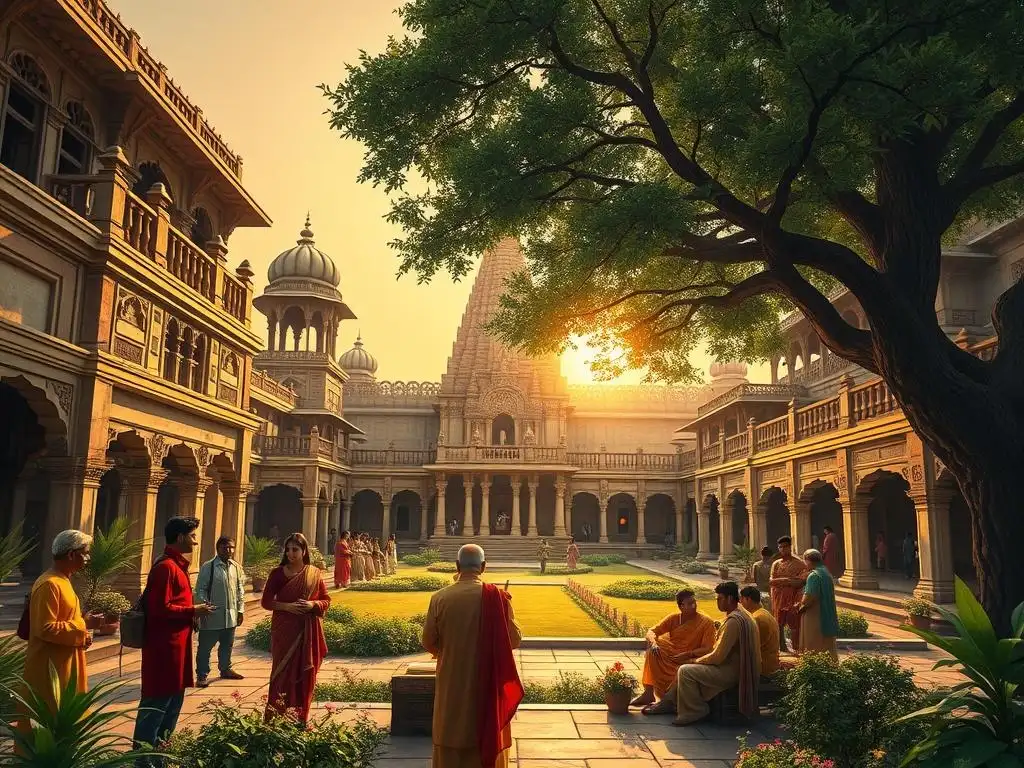
The contributions of ancient Indian universities extend far beyond their geographical boundaries, significantly influencing various fields of study and cultural practices across the globe. These institutions fostered an environment of inquiry and innovation, leading to advancements in philosophy, science, arts, and literature that have shaped human thought.
Contributions to Philosophy and Spirituality
Ancient Indian universities were instrumental in the development of various philosophical schools, including Buddhism, Jainism, and Hinduism. Scholars engaged in profound discussions about the nature of existence, ethics, and spirituality, which laid the groundwork for several philosophical traditions that continue to thrive today.
The teachings of prominent philosophers such as Adi Shankaracharya and Nagarjuna emerged from these institutions, emphasizing concepts like non-dualism and emptiness. The influence of these philosophical ideas can be traced in modern spiritual practices and philosophical discourses worldwide, illustrating the global impact of ancient Indian thought.
Advancements in Science and Mathematics
The contributions of ancient Indian universities to science and mathematics are remarkable. Scholars such as Aryabhata and Brahmagupta made groundbreaking advancements in astronomy, algebra, and trigonometry. Their works laid the foundation for future mathematicians and astronomers both in India and around the world.
For instance, Aryabhata's introduction of the concept of zero and place value revolutionized mathematics and influenced the development of numerical systems globally. The sophisticated understanding of planetary motion and timekeeping developed at institutions like Nalanda and Vikramshila further exemplifies the intellectual prowess of ancient Indian scholars in the sciences.
Innovations in Arts and Literature
The ancient Indian universities also played a crucial role in nurturing the arts and literature. They served as centers for the study of classical languages, poetry, music, and dance. The emphasis on creativity and expression led to the flourishing of literary works, many of which remain influential today.
Epic texts such as the Mahabharata and Ramayana, along with various forms of classical poetry, were studied and disseminated through these institutions. Additionally, advancements in drama and performing arts found a home in the curriculum of ancient universities, contributing to the rich cultural tapestry of India. The legacy of this artistic innovation continues to inspire contemporary artists and scholars, showcasing the enduring impact of ancient Indian universities on the global arts scene.
Global Influence of Ancient Indian Universities
Ancient Indian universities, particularly renowned institutions like Nalanda and Takshashila, played a pivotal role in the dissemination of knowledge across borders. Their influence extended far beyond the subcontinent, shaping educational practices and intellectual pursuits in various cultures. These universities were not merely centers of learning; they were vibrant hubs of cultural exchange, attracting students and scholars from diverse backgrounds. This global influence can be observed through various channels, including the transmission of knowledge to the East, the impacts on Islamic Golden Age scholars, and their influence on European Renaissance thinkers.
Transmission of Knowledge to the East
The transmission of knowledge from ancient Indian universities to the East was facilitated by a network of trade routes and cultural exchanges. Scholars from regions like Tibet, China, and Southeast Asia traveled to institutions such as Nalanda to study subjects ranging from philosophy and mathematics to medicine and astronomy. The establishment of Buddhism as a major religion across these regions further accelerated this exchange, as Buddhist scholars carried with them the teachings and texts studied in Indian universities.
For instance, the dissemination of texts like the "Yoga Sutras" and various treatises on medicine and mathematics had a profound impact on Eastern civilizations. This transfer of knowledge not only enriched local cultures but also laid the groundwork for the development of educational systems in countries such as China and Japan. The influence of Indian universities is particularly evident in the rise of Buddhist monastic universities in these regions, which mirrored the organizational structures of Indian institutions.
Impact on Islamic Golden Age Scholars
During the Islamic Golden Age, scholars from the Islamic world sought knowledge from various sources, including the ancient Indian universities. Texts on mathematics, astronomy, and medicine were translated into Arabic, significantly enriching the intellectual landscape of the time. Notable figures such as Al-Khwarizmi and Al-Biruni drew inspiration from Indian mathematical concepts, particularly in the fields of algebra and trigonometry.
The establishment of centers of learning in places like Baghdad and Cordoba showcased the integration of Indian knowledge into Islamic scholarship. The works of Indian mathematicians, such as Aryabhata and Brahmagupta, were instrumental in advancing the understanding of zero and the decimal system, which were crucial developments in mathematics. This exchange of ideas enabled Islamic scholars to not only preserve but also advance ancient knowledge, setting the stage for further innovations.
Influence on European Renaissance Thinkers
The influence of ancient Indian universities on European Renaissance thinkers was significant, as the flow of knowledge from the East to the West began to accelerate during the 15th and 16th centuries. The translations of Arabic texts, which often included Indian mathematical concepts and philosophical ideas, played a vital role in this process. Scholars like Copernicus and Galileo were influenced by the mathematical frameworks developed in ancient India, particularly in astronomy.
Moreover, the introduction of the numeral system, which included concepts derived from Indian mathematics, revolutionized European mathematics and science. The work of Renaissance figures such as Leonardo da Vinci and Johannes Kepler benefited from the rich intellectual heritage that had traveled from Indian universities through the Islamic world to Europe. This cross-pollination of ideas not only transformed scientific inquiry but also laid the groundwork for modern scientific thought.
Preservation and Transmission of Knowledge
Ancient Indian universities were not only centers for education but also crucial in the preservation and transmission of knowledge across generations. The systems they established ensured that vital texts, ideas, and practices were meticulously documented and shared among scholars. This role was fulfilled predominantly through the efforts of ancient Indian scholars and the manuscript traditions that they developed.
Role of Ancient Indian Scholars
Ancient Indian scholars were instrumental in preserving knowledge across a variety of fields, including philosophy, mathematics, medicine, and literature. They meticulously studied, annotated, and expanded upon earlier texts, ensuring that knowledge was not lost to time. Scholars like Panini, who formulated the rules of Sanskrit grammar, and Charaka, who authored significant texts on medicine, exemplify the dedication to knowledge preservation.
Additionally, these scholars often traveled to other regions, sharing their insights and teachings. Their commitment to education and scholarship inspired future generations, creating a rich intellectual tradition that spanned centuries. The legacy of these scholars is evident in the vast corpus of texts that have survived, which continues to inform contemporary studies across various disciplines.
Manuscript Traditions and Knowledge Sharing
The manuscript traditions developed in ancient Indian universities were crucial in the preservation and sharing of knowledge. Scribes and scholars meticulously copied texts, ensuring their survival through turbulent periods in history. These manuscripts, often written on palm leaves and later on paper, contained a wealth of information, from religious scriptures to scientific treatises.
The practice of knowledge sharing was formalized through debates, discussions, and public lectures held in university settings. These gatherings not only fostered an environment of inquiry but also encouraged collaboration among scholars from diverse backgrounds. The interconnected network of knowledge sharing established by these ancient universities laid the foundation for future educational systems, emphasizing the importance of community in learning.
The contributions of ancient Indian universities to global knowledge were profound and far-reaching. Their legacy continues to influence contemporary thought and educational practices, underscoring the enduring impact of India's rich intellectual heritage.
Modern Relevance of Ancient Indian Universities
The contributions of ancient Indian universities, particularly those like Nalanda and Takshashila, extend far beyond their historical timelines and continue to echo in contemporary educational paradigms. These institutions were not merely places of learning; they were vibrant centers of intellectual exchange that fostered a culture of inquiry, debate, and holistic education. The modern educational landscape can draw essential lessons from their methodologies, curricula, and community-oriented approaches.
In today's context, where education is increasingly becoming digitized and fragmented, the holistic and interdisciplinary nature of ancient Indian universities offers a blueprint for creating comprehensive educational systems that emphasize critical thinking and collaboration across disciplines. Moreover, these universities were inclusive, attracting students from various backgrounds and regions, which is a crucial aspect that modern institutions strive to replicate in fostering diversity and global citizenship.
Lessons from Ancient Educational Models

Ancient Indian universities emphasized a student-centric approach that prioritized understanding over rote memorization. This model encouraged active participation in learning, where students engaged in discussions, debates, and practical applications of their studies.
- Interdisciplinary Learning: Subjects were not isolated; philosophy, science, mathematics, and arts coexisted, allowing students to gain a multifaceted perspective on knowledge.
- Mentorship: The guru-shishya (teacher-student) tradition cultivated close relationships that facilitated personalized learning experiences, a practice that can greatly enhance modern education.
- Research and Inquiry: Students were encouraged to question and explore rather than simply accept information, fostering an environment of innovation and critical thought that is essential in today’s rapidly changing world.
By integrating these principles, modern educational institutions can create more engaging and effective learning environments.
Revival and Recognition of Ancient Indian Educational Heritage
In recent years, there has been a growing interest in reviving and recognizing the educational heritage of ancient Indian universities. Scholars and policymakers are increasingly acknowledging the need to integrate traditional knowledge systems with contemporary education.
Initiatives to revive ancient educational practices include:
- Curriculum Development: Incorporating traditional wisdom and methodologies into current syllabi to create a more rounded educational experience.
- Cultural Programs: Hosting seminars, workshops, and lectures that emphasize ancient philosophies and their relevance today.
- Research Centers: Establishing institutions dedicated to the study of ancient texts and educational practices, fostering a new wave of scholarship that marries past insights with present challenges.
These efforts not only help preserve the rich legacy of ancient Indian education but also promote a deeper understanding of its contributions to global knowledge.
Conclusion
The exploration of ancient Indian universities reveals a profound legacy that has shaped not only India’s educational landscape but also global knowledge systems.
Summary of Contributions and Influence
Ancient Indian universities made significant contributions in various fields, including:
- Mathematics: The development of concepts such as zero and decimal systems.
- Medicine: The establishment of Ayurveda and surgical techniques that influenced practices worldwide.
- Philosophy: The discourse on ethics, metaphysics, and logic that permeated various cultures.
These contributions established a foundation for academic pursuits that transcended geographical boundaries, influencing scholars and thinkers across Asia and beyond.
The Legacy of Ancient Indian Universities in Contemporary Education
The legacy of ancient Indian universities is not only preserved in historical texts but also lives on through contemporary educational reforms that aim to incorporate diverse knowledge systems. Their holistic and inclusive approaches inspire modern pedagogies, encouraging institutions to create environments that prioritize critical thinking, interdisciplinary studies, and student engagement.
As we continue to navigate the complexities of modern education, revisiting and integrating the principles of ancient Indian universities can offer valuable insights and strategies for fostering a more enriching and expansive learning environment that honors the past while embracing the future.
References
Ancient Indian universities played a pivotal role in the dissemination of knowledge across the globe. Scholars and students from various regions traveled to these institutions, fostering an exchange of ideas that enriched the academic landscape. Below are notable texts and sources that provide insights into the contributions of ancient Indian universities.
Notable Texts and Sources on Ancient Indian Universities
-
The History of Ancient Indian Universities by R. C. Majumdar
This comprehensive work details the evolution of universities in ancient India, focusing on their structure, curriculum, and the impact they had on education.
-
Nalanda: The World’s First Residential University by S. R. Sharma
A detailed analysis of Nalanda University, this text examines its role in attracting scholars from around the world, highlighting its unique educational environment.
-
The Intellectual Traditions of India by J. N. Seal
This book explores the philosophical and scientific contributions of ancient Indian scholars, many of whom were educated in these universities.
-
Education in Ancient India by R. S. Sharma
This source discusses the different forms of education present in ancient India, including the role of universities and their contributions to various fields like medicine, mathematics, and philosophy.
-
The Legacy of Ancient Indian Learning by A. K. Banerjee
Banerjee’s work focuses on the influence of ancient Indian universities on global knowledge systems, emphasizing their contributions to various disciplines.
Further Reading on Ancient Indian Contributions to Global Knowledge
-
Indian Philosophy and the West by S. Radhakrishnan
This text delves into the philosophical exchanges between ancient Indian thought and Western philosophies, showcasing how ancient Indian universities fostered such dialogues.
-
Mathematics in Ancient India by C. K. Raju
Raju provides a thorough examination of the mathematical advancements made in ancient India, many of which emerged from the academic pursuits within its universities.
-
Medicine in Ancient India by D. R. B. Dhananjay
This work outlines the medical traditions developed in ancient Indian universities, particularly focusing on Ayurveda and its global influence.
-
The Silk Road and the Spread of Knowledge by J. A. M. L. Chandra
An exploration of how knowledge from ancient Indian universities traveled along trade routes, impacting various cultures and civilizations.
-
The Influence of Ancient Indian Education on Modern Systems by L. P. Kumar
This text discusses the lasting impact of ancient educational practices on contemporary educational systems, highlighting the foundational role of universities in shaping knowledge.
These works collectively offer a deeper understanding of how ancient Indian universities not only contributed to local knowledge but also influenced global scholarship and education.
- Introduction to Ancient Indian Universities
- Overview of Ancient Indian Educational Systems
- Historical Context of Ancient Indian Universities
- Prominent Ancient Indian Universities
- Contributions of Ancient Indian Universities
- Global Influence of Ancient Indian Universities
- Preservation and Transmission of Knowledge
- Modern Relevance of Ancient Indian Universities
- Lessons from Ancient Educational Models
- Revival and Recognition of Ancient Indian Educational Heritage
- Conclusion
- References
- What were the main universities in ancient India?
- How did ancient Indian universities contribute to global knowledge?
- What subjects were taught at ancient Indian universities?
- How did ancient Indian universities influence education systems worldwide?
- What legacy did ancient Indian universities leave behind?
Frequently Asked Questions
What were the main universities in ancient India?
Ancient India was home to several prestigious universities, most notably Nalanda and Takshashila. These institutions were renowned for their scholarly excellence and attracted students from various regions.
How did ancient Indian universities contribute to global knowledge?
Ancient Indian universities played a crucial role in disseminating knowledge in fields such as mathematics, astronomy, and medicine. They produced scholars who influenced both Eastern and Western thought.
What subjects were taught at ancient Indian universities?
The curriculum included a wide range of subjects such as philosophy, grammar, logic, astronomy, and medicine. This diversity led to significant intellectual advancements in ancient times.
How did ancient Indian universities influence education systems worldwide?
The educational model established by ancient Indian universities, emphasizing critical thinking and debate, laid the groundwork for modern higher education. Their methods were adopted and adapted globally.
What legacy did ancient Indian universities leave behind?
The legacy of ancient Indian universities includes the preservation and transmission of knowledge, as well as the establishment of scholarly communities that fostered intellectual growth across civilizations.
Final Reflection: The Enduring Legacy of Ancient Indian Universities
The contributions of ancient Indian universities to global knowledge remain profoundly relevant today, as they laid the groundwork for a rich tapestry of learning and intellectual exchange. In an era where education is often viewed through a modern lens, it is crucial to recognize how these institutions fostered a spirit of inquiry and collaboration that transcended geographical boundaries. The achievements of scholars like Aryabhata and Panini not only enriched their own society but also influenced civilizations worldwide, highlighting the timeless nature of knowledge and its ability to connect humanity.
The impact of ancient Indian universities continues to resonate in our cultural and social landscapes, shaping the way we approach education and knowledge sharing. These institutions were not merely centers of learning; they were vibrant communities that encouraged critical thinking, debate, and innovation. As we navigate the complexities of the modern world, we can draw inspiration from their legacy.
As Mahatma Gandhi once said, "> Live as if you were to die tomorrow. Learn as if you were to live forever." This sentiment encapsulates the essence of lifelong learning that ancient Indian universities championed, reminding us of the importance of curiosity and intellectual growth.
As we reflect on the lessons from ancient Indian universities, I invite you to consider how you can incorporate their values into your own life. Embrace the pursuit of knowledge with an open heart and mind, and seek to contribute to the collective wisdom of our global community. Whether through formal education, personal exploration, or sharing insights with others, let us honor the legacy of these ancient institutions by fostering a culture of learning that empowers future generations. Together, we can continue the journey of knowledge that began centuries ago, ensuring its relevance and vitality in our ever-evolving world.
Unleash the Power of Knowledge—Explore Ancient Wisdom Today!
Thank you for taking the time to dive into the fascinating world of ancient Indian universities and their profound impact on global knowledge! You've uncovered a rich history that continues to shape our understanding of education and culture today. Now it's time to take that knowledge and put it into action!
Here’s how you can engage further with this captivating subject:
- Dive Deeper: Explore more about specific ancient Indian universities like **Nalanda** and **Takshashila** by reading relevant articles or books that delve into their contributions and legacies.
- Share Your Insights: Discuss what you’ve learned with friends or on social media— your voice can inspire others to appreciate this rich heritage!
- Join a Community: Engage with local cultural or educational organizations that celebrate ancient history. Participate in discussions or workshops to share and expand your understanding.
What aspect of ancient Indian knowledge do you find most inspiring, and how can you apply it to today’s world?