
The Role of Teachers in Ancient Indian Learning: Beyond Knowledge Delivery

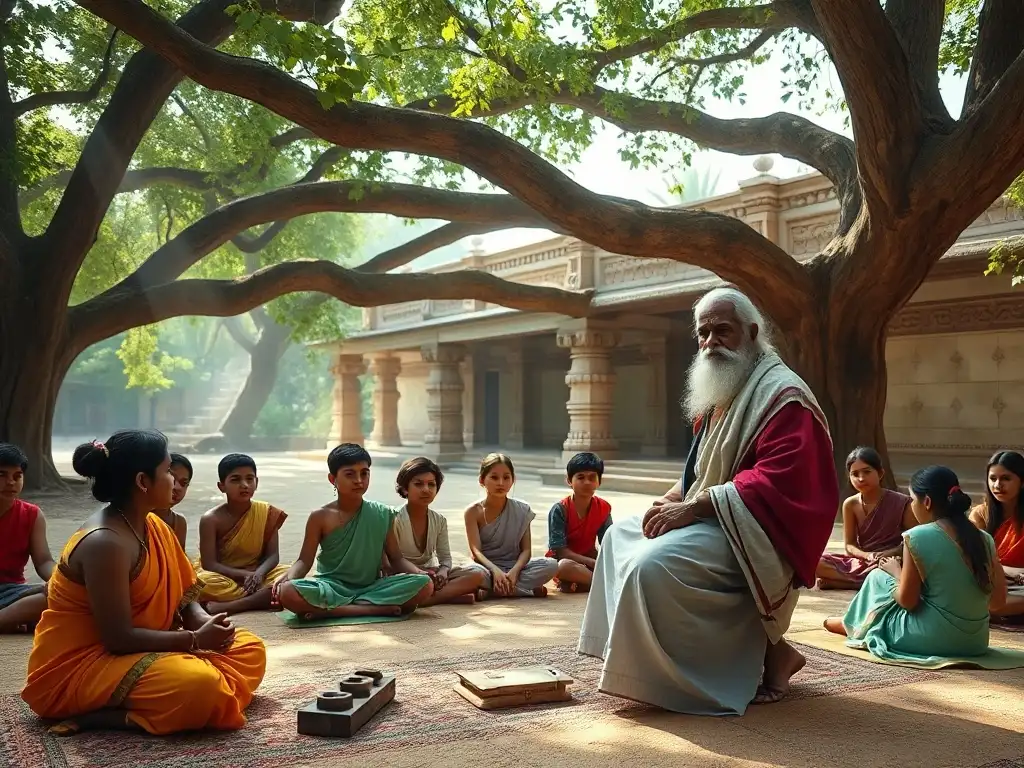
Welcome to Ancient India History, where we embark on a journey through the rich tapestry of ancient Indian civilizations. Here, we delve into the profound legacy of knowledge that shaped the very foundations of education, exploring the ancient Indian education system and its pivotal role in nurturing intellect and wisdom. In our featured article, “The Role of Teachers in Ancient Indian Learning: Beyond Knowledge Delivery,” discover how educators transcended mere instruction to inspire generations.
Prepare to be captivated as you uncover the intricate relationships between teachers and students, and the profound impact they had on society. Join us in exploring this fascinating aspect of history that continues to resonate today!
Introduction to Ancient Indian Education System
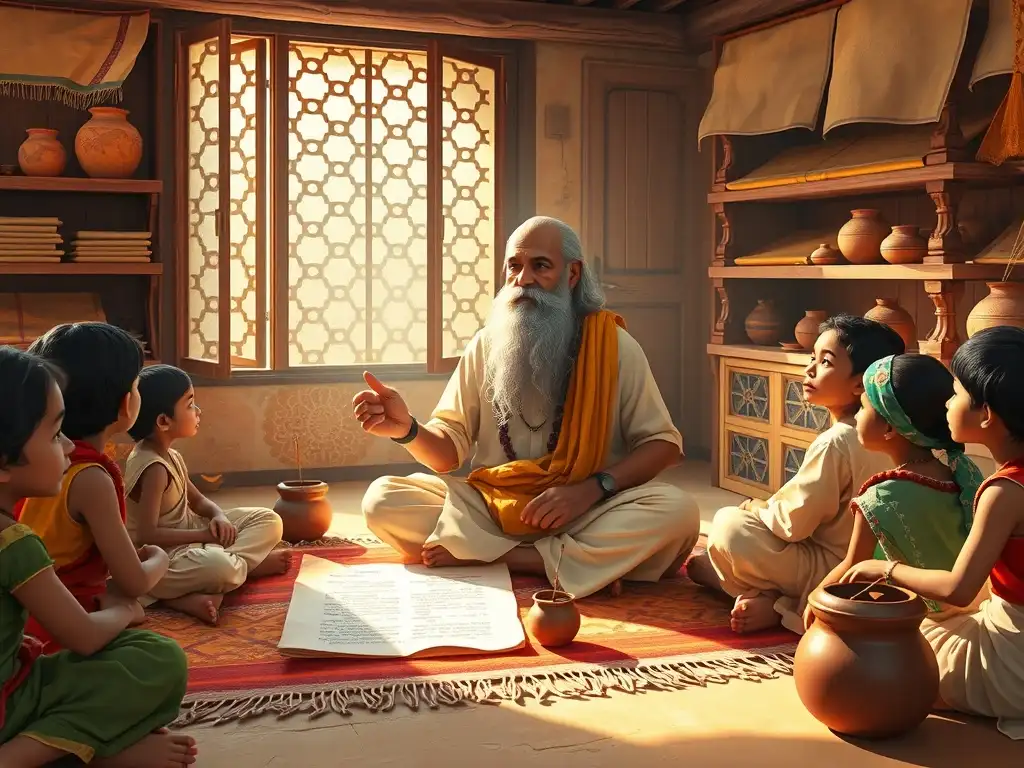
The ancient Indian education system was a complex and nuanced framework that extended far beyond mere knowledge delivery. It emphasized holistic development, moral values, and the cultivation of wisdom through a dynamic interaction between teachers and students. This system was intricately woven into the fabric of society, reflecting the diverse cultural, philosophical, and spiritual influences that shaped ancient India.
From the illustrious universities of Nalanda and Takshashila to the informal ashrams scattered across the countryside, education was a revered pursuit, deeply connected to the broader principles of dharma (duty) and karma (action). This article will explore the pivotal role that teachers played in this rich educational tradition, highlighting their responsibilities, methodologies, and lasting impact on ancient Indian learning.
Overview of Ancient Indian Education Practices
The education practices in ancient India were diverse and multifaceted, catering to a wide range of subjects and disciplines. Here are some key aspects:
- Gurukul System: Education primarily took place in gurukuls, where students lived with their teachers (gurus) and received personalized instruction in various subjects, including philosophy, mathematics, astronomy, and the arts.
- Subjects of Learning: The curriculum was extensive, covering areas such as:
- Vedas and Upanishads: Sacred texts that formed the spiritual and philosophical foundation.
- Mathematics and Astronomy: With significant contributions from scholars like Aryabhata.
- Art and Music: Integral to cultural expression and societal values.
- Practical Learning: Emphasis was placed on experiential learning, where students engaged in discussions, debates, and practical applications of their studies.
The holistic approach of the ancient Indian education system ensured that students were not only knowledgeable but also well-rounded individuals.
Importance of Teachers in Ancient Learning Environments
Teachers were not merely conveyors of knowledge; they were revered figures who shaped the moral and intellectual character of their students. Their role encompassed several vital aspects:
- Mentorship: Teachers acted as mentors, guiding students through ethical dilemmas and personal challenges.
- Role Models: They embodied the values of wisdom, integrity, and compassion, serving as role models for their disciples.
- Facilitators of Discussion: Teachers encouraged open dialogue and critical thinking, fostering an environment where students could question and explore ideas freely.
- Cultural Transmission: They played a crucial role in the preservation and transmission of cultural heritage, ensuring that traditions, languages, and customs were passed down through generations.
The reverence for teachers in ancient Indian society is encapsulated in the phrase, "Guru Brahma, Guru Vishnu, Guru Devo Maheshwara," signifying the teacher's divine status.
The Historical Context of Ancient Indian Education
To fully appreciate the role of teachers in ancient Indian education, it's essential to understand the historical context that influenced educational practices.
Evolution of Educational Institutions in Ancient India
Educational institutions in ancient India evolved significantly over time. Initially, informal learning took place in small groups led by a guru in natural settings. As societies became more complex, formal institutions emerged:
- Gurukuls: Early forms of education where students lived with their gurus.
- Viharas and Monasteries: With the rise of Buddhism, viharas became centers of learning, attracting scholars from across Asia.
- Universities: By the 5th century CE, institutions like Nalanda and Takshashila became renowned centers of higher education, drawing students from distant lands.
Key Periods Influencing the Education System
Several key periods significantly influenced the evolution of the ancient Indian education system:
- Vedic Period (1500-500 BCE): Establishment of oral traditions and the significance of Vedic texts.
- Mauryan Empire (322-185 BCE): Expansion of educational institutions and state support for learning.
- Gupta Period (c. 320-550 CE): The golden age of learning, characterized by advancements in sciences and arts, leading to the establishment of prominent universities.
Through this exploration, we will delve deeper into the intricacies of the ancient Indian education system, particularly the essential role that teachers played in shaping its legacy.
The Role of Teachers in Ancient Indian Education
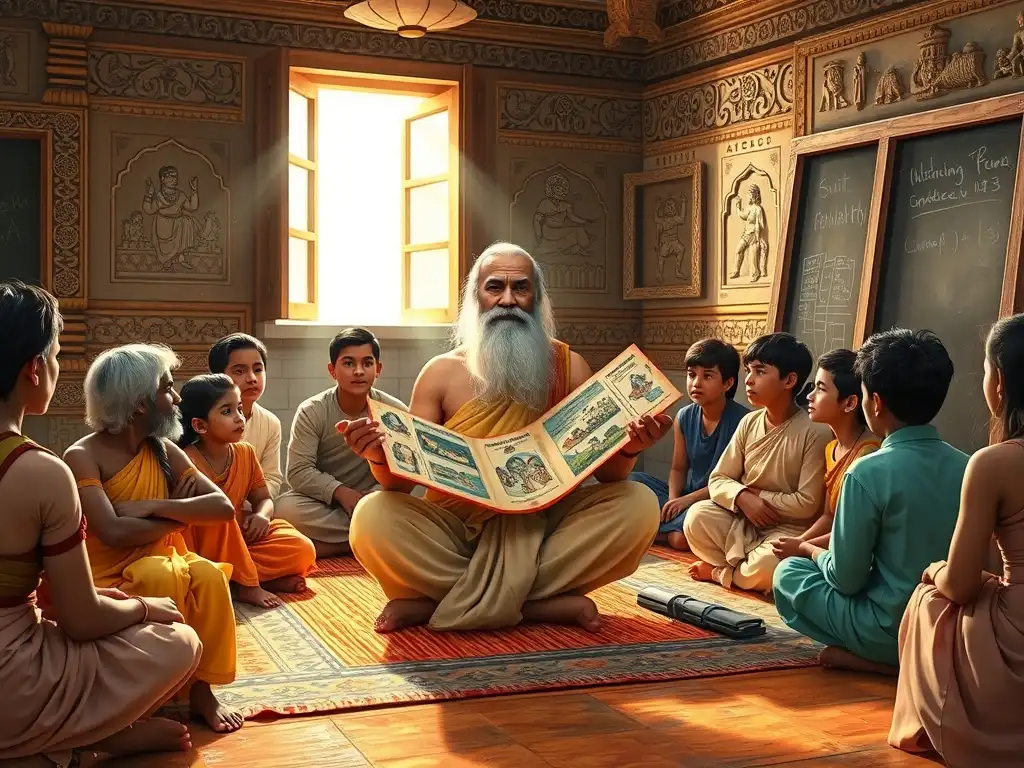
The role of teachers in ancient Indian education was multifaceted, extending far beyond the mere delivery of knowledge. In a society deeply rooted in philosophical thought and spirituality, educators were revered as mentors and guides, tasked with shaping not only the intellect but also the character of their students.
This reverence stemmed from the belief that education was a sacred endeavor, where the transfer of knowledge was intertwined with the cultivation of virtues, ethics, and cultural identity. The ancient Indian education system, characterized by its holistic approach, emphasized the importance of teachers in developing well-rounded individuals prepared to contribute to society.
Gurus: The Pillars of Knowledge
Central to the ancient Indian education system were the Gurus, or teachers, who held a prestigious position within society. They were not merely instructors; they were viewed as custodians of knowledge and wisdom. Gurus were expected to possess profound understanding and mastery of their subjects, whether it be the Vedas, philosophy, mathematics, or arts.
The relationship between a Guru and their students was deeply personal and often lifelong. Students, referred to as Shishyas, would live with their Gurus in Gurukuls, where learning took place in an informal yet immersive environment. This close-knit relationship fostered a sense of loyalty and respect, allowing the Guru to impart not just academic knowledge but also life lessons. The Gurus employed various methods, integrating storytelling, debates, and practical demonstrations to engage students actively.
Methods of Teaching in Ancient Indian Schools
Teaching methods in ancient Indian schools were diverse and innovative. The Gurukuls employed several pedagogical strategies, such as:
- Oral Transmission: Knowledge was primarily passed down orally, emphasizing memorization and recitation, particularly of sacred texts.
- Dialogue and Debate: Encouraging discussions among students facilitated critical thinking and comprehension, allowing learners to explore various perspectives on philosophical and scientific topics.
- Experiential Learning: Students engaged in activities that provided practical experience, such as agriculture, arts, and crafts, reinforcing theoretical knowledge through real-world applications.
- Mentorship: The tutor-student relationship often extended beyond academics, with Gurus providing guidance on moral and ethical dilemmas.
These methods ensured that students not only acquired knowledge but also developed skills essential for their personal and societal roles.
The Relationship Between Teachers and Students (Shishya)
The relationship between teachers and students in ancient India was characterized by mutual respect and deep emotional bonds. This relationship was built on the foundation of trust and commitment, where the Shishya would often treat their Guru with the utmost reverence, sometimes considering them as a parental figure.
The educational experience was not just about academic achievements; it involved a holistic approach where personal growth and character development were equally emphasized. Teachers played a crucial role in shaping the values and behaviors of their students, instilling in them a sense of duty, respect for knowledge, and understanding of their cultural heritage.
Beyond Knowledge Delivery: Holistic Development
In ancient Indian education, knowledge delivery was only a part of the larger educational mission. The focus was on holistic development, where intellectual growth was complemented by moral and ethical training, critical thinking, and cultural awareness.
Fostering Moral and Ethical Values in Students
One of the primary objectives of ancient Indian education was to foster moral and ethical values among students. Gurus emphasized the importance of virtues such as truthfulness, compassion, self-discipline, and respect for others. Educational practices often included lessons on ancient texts like the Bhagavad Gita, which offered philosophical insights into ethical living.
The integration of moral instruction into the curriculum aimed to produce not just knowledgeable individuals but also responsible and ethical citizens. This approach ensured that students understood the implications of their actions and decisions on society.
Encouraging Critical Thinking and Intellectual Growth
Critical thinking was a cornerstone of the ancient Indian education system. The emphasis on dialogue and debate among students encouraged them to question established norms and explore various viewpoints. This intellectual engagement fostered creativity and innovation, allowing students to develop independent thought processes.
Ancient texts often served as a basis for discussions, with students encouraged to analyze and interpret them critically. Such practices laid the groundwork for a rich tradition of philosophical inquiry, contributing to the advancement of various fields, including mathematics, astronomy, and medicine.
Promoting Cultural and Spiritual Awareness
Ancient Indian education also prioritized cultural and spiritual awareness, recognizing the significance of a shared heritage in shaping identity. Students were educated in the rich tapestry of Indian culture, including art, music, dance, and literature. Festivals, rituals, and community celebrations played a vital role in this cultural education.
Furthermore, spiritual teachings were integrated into the learning process, allowing students to explore profound existential questions and their place in the universe. This aspect of education nurtured a sense of belonging and continuity, connecting students with their ancestral roots and guiding them toward a deeper understanding of life and its mysteries.
Different Educational Settings and Teacher Roles
The ancient Indian education system was characterized by a diverse range of educational settings, each with unique teaching methodologies and roles for educators. Teachers, known as gurus, played pivotal roles in shaping the learning experiences of students across these varied environments. The interaction between students and teachers was often intimate and personal, fostering not just academic knowledge but also moral and ethical values. Understanding the distinct educational settings provides insight into how teachers influenced the intellectual and cultural landscape of ancient India.
Gurukula System: Personalized Learning Environments
The Gurukula system was an ancient educational practice that emphasized personalized learning. In this setup, students lived with their teachers, usually in a secluded environment, which fostered a close-knit community. The guru was not only a teacher but also a mentor, guiding students in various aspects of life, including spirituality, ethics, and practical skills.
- Individual Attention: The one-on-one interactions allowed teachers to tailor their instruction to meet the specific needs of each student, promoting deeper understanding and retention of knowledge.
- Holistic Development: Beyond academics, the gurukula system focused on the overall development of the individual, cultivating physical, mental, and emotional well-being through various activities such as yoga, meditation, and arts.
- Cultural Transmission: Teachers in this system were custodians of knowledge, responsible for passing down not just academic content but also cultural traditions and values, reinforcing the importance of heritage in education.
Buddhist Monasteries: Centers of Knowledge and Debate
Buddhist monasteries emerged as significant centers for learning, particularly during the early centuries of the Common Era. These monasteries were hubs of intellectual discourse and inquiry, attracting scholars from across Asia.
- Debate and Discussion: The educational environment in these monasteries was characterized by rigorous debate, where teachers encouraged students to challenge ideas and engage in critical thinking. This method fostered a dynamic learning atmosphere where knowledge was continuously refined and expanded.
- Interdisciplinary Learning: Teachers integrated various subjects, including philosophy, medicine, and ethics, promoting a comprehensive understanding of the world. This interdisciplinary approach helped in nurturing well-rounded individuals.
- Role of Monastic Teachers: Monastic educators often held esteemed positions within society, and their teachings extended beyond the classroom to influence broader philosophical and ethical teachings in society.
Nalanda and Takshashila: Advanced Learning Institutions
Nalanda and Takshashila stand out as two of the most renowned ancient universities in India, serving as prominent centers for higher learning that attracted students from far and wide.
- Curriculum Diversification: These institutions offered a wide range of subjects, from astronomy and mathematics to theology and logic. Teachers at these universities were experts in their fields, often engaging in research and contributing to the body of knowledge.
- Global Influence: The presence of international scholars facilitated a cross-cultural exchange of ideas, with teachers playing a crucial role in integrating diverse perspectives into the curriculum. This made ancient Indian education a melting pot of knowledge and innovation.
- Structured Learning Environment: Unlike the gurukula system, these institutions had a more formalized structure, with defined courses and examinations, yet they still maintained the essential role of teachers as guides and mentors in the students' educational journeys.
Challenges Faced by Teachers in Ancient India
Despite their significant roles, teachers in ancient India encountered various challenges that impacted their ability to deliver education effectively.
Societal Expectations and Responsibilities
Teachers were expected to uphold high moral standards and serve as role models in their communities. This expectation placed immense pressure on educators to not only impart knowledge but also embody the ethical principles they taught.
- Moral Authority: Teachers were seen as custodians of societal values, which sometimes led to conflicts when personal beliefs differed from societal norms. This pressure could hinder a teacher's ability to innovate or adapt their teaching methods.
- Financial Constraints: Many educators faced financial difficulties, as the Gurukula system often relied on donations and the goodwill of the community. This reliance sometimes restricted their ability to provide resources or pursue further education.
Balancing Tradition with Evolving Educational Needs
The ancient Indian education system was deeply rooted in tradition, yet the dynamic nature of society necessitated adaptations in teaching methods and content.
- Resistance to Change: Some teachers struggled with the tension between adhering to established educational practices and incorporating new ideas that reflected the changing societal context. This resistance could limit the effectiveness of their teaching.
- Integration of New Knowledge: As new philosophies and scientific discoveries emerged, teachers faced the challenge of integrating these concepts into the traditional curriculum while maintaining the integrity of established teachings. Balancing these aspects was crucial for the evolution of the educational system.
The role of teachers in ancient India transcended mere knowledge delivery. They were integral to the educational fabric of society, navigating various challenges while contributing to the rich tapestry of ancient Indian learning.
The Legacy of Ancient Indian Teachers
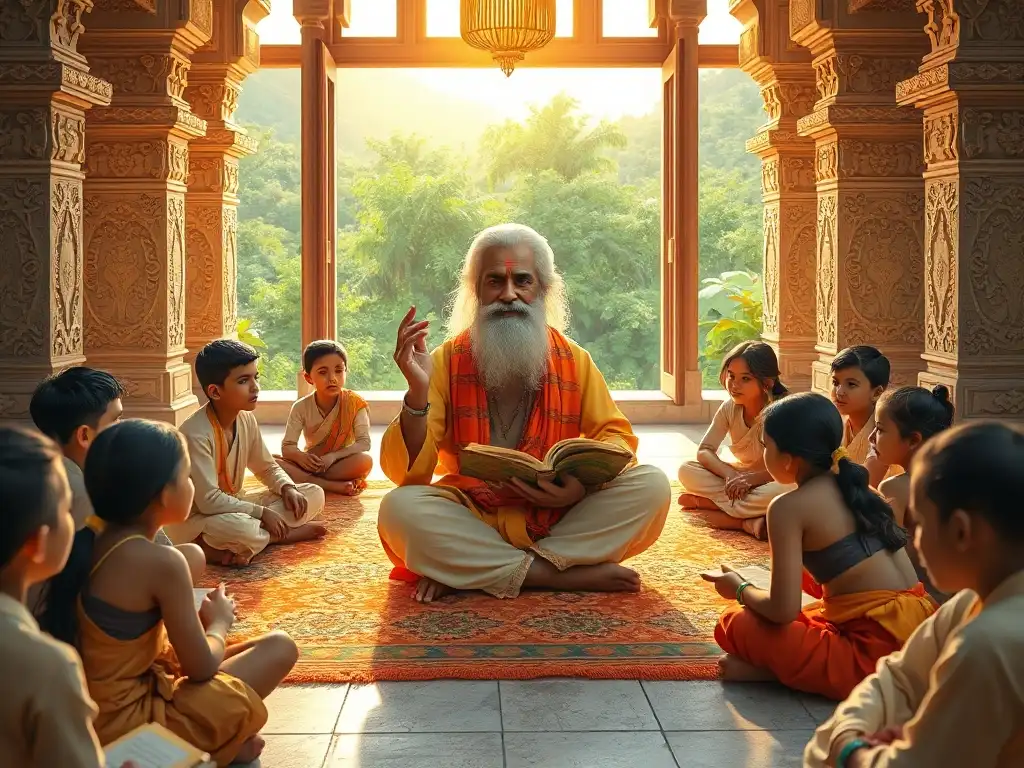
The legacy of ancient Indian teachers, or gurus, is profound and multifaceted, influencing not only the educational practices of their time but also setting foundational principles that resonate through the ages. In ancient India, the role of a teacher extended far beyond mere knowledge delivery; it encompassed moral and ethical guidance, character formation, and the holistic development of students. Gurus were revered figures, often residing in ashrams where they imparted wisdom across various disciplines, including philosophy, mathematics, astronomy, and the arts.
The Gurukul system exemplifies this educational framework, where students lived with their teachers, fostering a deep mentor-student relationship. This immersive approach not only facilitated learning but also instilled values such as respect, discipline, and devotion. The legacy of these practices can be observed in the emphasis on teacher-student relationships in modern education, highlighting the importance of mentorship and emotional intelligence in pedagogy.
Influence on Modern Educational Practices
Ancient Indian education has significantly influenced contemporary educational practices worldwide. The holistic approach adopted by ancient teachers, which emphasized the integration of intellectual, emotional, and spiritual development, is increasingly recognized in modern curricula. The Socratic method of questioning and dialogue, which encourages critical thinking and active participation, bears resemblance to the discursive styles used by ancient Indian educators.
Moreover, the emphasis on experiential learning in ancient Indian schools can be seen in current pedagogical trends that prioritize hands-on activities and real-world applications. The incorporation of ethics and values in education, a hallmark of ancient Indian practices, is gaining traction as educators seek to develop well-rounded individuals who can contribute positively to society.
Contributions to Global Education Philosophy
The contributions of ancient Indian teachers to global education philosophy are noteworthy. Concepts such as Dharma (duty/righteousness), Karma (action), and the pursuit of Moksha (liberation) introduced philosophical dimensions to education that transcended mere academic learning. These ideas have influenced various educational systems around the world, promoting a more philosophical and ethical approach to teaching and learning.
Additionally, ancient texts such as the Vedas, Upanishads, and the Brahmanas provided foundational ideas about inquiry, knowledge, and the nature of reality that have been integrated into educational discourses globally. The focus on dialogue and debate in the ancient Indian educational system has also shaped modern educational philosophies, encouraging a culture of questioning and exploration.
Conclusion: The Enduring Impact of Teachers in Ancient Indian Education
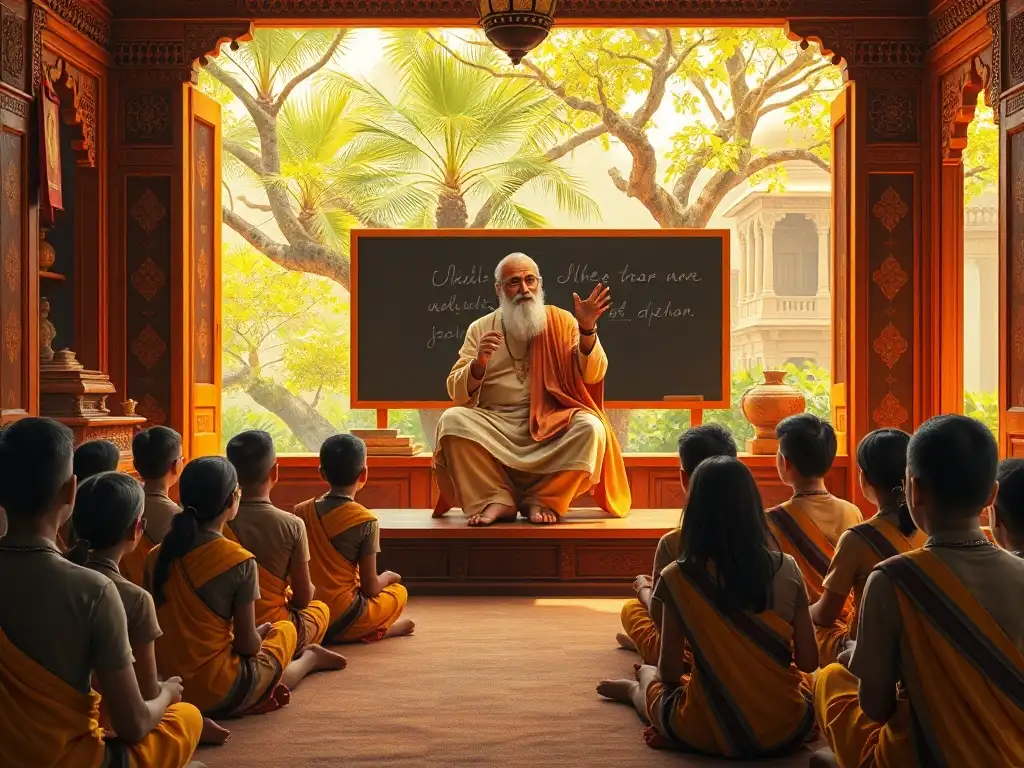
The impact of teachers in ancient Indian education is enduring, shaping not only individual lives but also the civilization as a whole. The foundational principles laid down by ancient educators continue to resonate in contemporary education systems, emphasizing the importance of personal growth, ethical development, and the nurturing of critical thinking skills.
Reflection on the Role of Teachers in Shaping Civilization
Reflecting on the role of teachers in shaping civilization reveals their vital contribution to the socio-cultural fabric of ancient India. Teachers were seen as custodians of knowledge and culture, responsible for transmitting values and wisdom to future generations. This role was essential in ensuring the continuity of societal norms and practices, which are crucial for the stability and progress of any civilization.
Their influence extended beyond the classroom, as teachers often played significant roles in community development and social reform. By fostering a sense of inquiry and ethical responsibility in their students, they contributed to the overall advancement of society, highlighting the transformative power of education.
Lessons from Ancient Indian Education for Contemporary Society
Ancient Indian education offers valuable lessons for contemporary society, particularly in the context of nurturing holistic individuals. The integrated approach to learning, which encompassed academics, ethics, and personal development, serves as a model for modern educational systems striving to develop well-rounded citizens.
Moreover, the emphasis on mentorship and the teacher-student relationship underscores the importance of emotional intelligence in education. As society grapples with challenges such as disconnection and moral ambiguity, the principles derived from ancient Indian teachers can guide modern educators in fostering environments that prioritize empathy, respect, and lifelong learning.
In revisiting these ancient practices, contemporary education can benefit from a richer, more inclusive approach that honors the legacy of the past while addressing the needs of the present.
- Introduction to Ancient Indian Education System
- Overview of Ancient Indian Education Practices
- Importance of Teachers in Ancient Learning Environments
- The Historical Context of Ancient Indian Education
- The Role of Teachers in Ancient Indian Education
- Beyond Knowledge Delivery: Holistic Development
- Different Educational Settings and Teacher Roles
- Challenges Faced by Teachers in Ancient India
- The Legacy of Ancient Indian Teachers
- Influence on Modern Educational Practices
- Contributions to Global Education Philosophy
- Conclusion: The Enduring Impact of Teachers in Ancient Indian Education
- Reflection on the Role of Teachers in Shaping Civilization
- Lessons from Ancient Indian Education for Contemporary Society
- What was the primary focus of the ancient Indian education system?
- How did teachers contribute to the learning process in ancient India?
- What subjects were commonly taught in ancient Indian schools?
- Were there any specific institutions for education in ancient India?
- How did the ancient Indian education system influence modern education?
Frequently Asked Questions
What was the primary focus of the ancient Indian education system?
The ancient Indian education system emphasized a holistic approach, focusing on moral, spiritual, and intellectual development rather than just rote learning.
How did teachers contribute to the learning process in ancient India?
Teachers, known as gurus, played a crucial role by not only delivering knowledge but also serving as mentors and guides, shaping the character and values of their students.
What subjects were commonly taught in ancient Indian schools?
Students studied a variety of subjects including grammar, philosophy, mathematics, and the Vedas, reflecting the diverse intellectual pursuits of ancient Indian civilizations.
Were there any specific institutions for education in ancient India?
Yes, institutions like Gurukuls and Nalanda University were established, providing a structured environment for learning and fostering scholarly exchange.
How did the ancient Indian education system influence modern education?
The ancient Indian education system laid the groundwork for interactive learning and the importance of teacher-student relationships, influencing contemporary educational philosophies.
Final Reflection: The Enduring Legacy of Ancient Indian Education
The exploration of the ancient Indian education system reveals a profound understanding of the role of teachers that transcends mere knowledge delivery. Today, as we navigate an increasingly complex world, the principles established in ancient India resonate more than ever. The emphasis on holistic development, moral guidance, and the nurturing of critical thinking skills in students is a powerful reminder that education is not just about facts and figures, but about shaping character and fostering wisdom.
The influence of this educational philosophy continues to permeate our cultural and social landscapes, urging us to rethink the purpose of education in contemporary society. In a world where information is abundant but wisdom is scarce, the ancient Indian approach to teaching serves as a beacon of hope. As Mahatma Gandhi once said, Live as if you were to die tomorrow. Learn as if you were to live forever.
This quote encapsulates the essence of lifelong learning and the transformative power of education, echoing the values upheld by ancient Indian educators.
As we reflect on the teachings from the past, let us carry forward the lessons of the ancient Indian education system into our lives today. I invite you to consider how you can embody the spirit of a teacher in your own journey—whether by sharing knowledge, mentoring others, or fostering a love for learning in your community. Embrace the opportunity to inspire and uplift those around you, for in doing so, you contribute to a legacy that honors the profound wisdom of our ancestors and shapes a brighter future for generations to come.
Empower the Future of Learning Today!
Thank you for exploring the rich tapestry of ancient Indian education and recognizing the profound impact teachers had beyond mere knowledge delivery. Your interest in this vital topic paves the way for a deeper understanding of how we can shape modern learning.
Now, it’s time to take action! Here are some simple yet impactful steps you can take:
- Engage in a community forum or discussion group focused on contemporary educational practices inspired by historical wisdom. Share your insights and learn from others!
- Explore various online resources about teaching methods utilized in ancient cultures and consider how they can be integrated into today's classrooms.
- Volunteer to mentor a student or participate in local educational initiatives that reflect the holistic approach of ancient educators.
How do you envision incorporating the timeless principles of ancient education into today's learning environment? Your thoughts could spark an inspiring conversation!