
How the Vedas Shaped the Spiritual Landscape of Ancient India

Welcome to Ancient India History, where we embark on a fascinating journey through the rich tapestry of ancient Indian civilizations. Here, we delve into the profound influence of the Vedas on ancient India, illuminating how these sacred texts not only shaped spiritual practices but also laid the groundwork for a culture that has thrived for millennia. As we explore the intricate connections between the Vedas and the epic literature that followed, you'll uncover insights that reveal the enduring legacy of these ancient scriptures.
Join us as we unravel the mysteries of the past and discover how the echoes of the Vedas continue to resonate in our world today. Dive in and enrich your understanding of this captivating history!
- Introduction to the Vedas Influence on Ancient India
- Historical Context of the Vedas
- The Spiritual Influence of the Vedas
- Vedas and Society in Ancient India
- The Vedas' Contribution to Indian Thought
- Vedas in the Arts and Literature
- Modern Interpretations of Vedic Influence
- Conclusion: The Lasting Legacy of the Vedas in Ancient India
-
Frequently Asked Questions
- What are the Vedas and their significance in ancient India?
- How did the Vedas influence spiritual practices in ancient India?
- In what ways did the Vedas contribute to social structure in ancient Indian society?
- Can the impact of the Vedas be seen in modern Indian culture?
- What role did the Vedas play in the development of Indian philosophy?
- Final Reflection: The Enduring Influence of the Vedas on Ancient India
- Embrace the Wisdom of the Vedas Today!
Introduction to the Vedas Influence on Ancient India
The Vedas, a collection of ancient sacred texts, hold a pivotal place in the spiritual and cultural landscape of ancient India. Composed in Sanskrit over three millennia ago, these texts are not merely religious scriptures but are foundational to the philosophical, social, and moral frameworks that shaped Indian civilization.
Understanding the Vedas influence on ancient India provides insight into the development of various aspects of life, including spirituality, rituals, governance, and societal norms. This article delves into how the Vedas have been instrumental in molding the spiritual beliefs and practices of ancient Indian societies, fostering a rich tapestry of culture that continues to resonate even in contemporary India.
Overview of the Vedas
The Vedas are divided into four primary collections: the Rigveda, Samaveda, Yajurveda, and Atharvaveda. Each of these texts serves a unique purpose and comprises various hymns, rituals, and philosophical teachings:
- Rigveda: The oldest of the four, containing hymns dedicated to deities and natural phenomena.
- Samaveda: Focuses on melodies and chants, primarily used in rituals.
- Yajurveda: A guide for performing rituals, containing prose mantras and instructional content.
- Atharvaveda: Encompasses hymns, spells, and incantations, addressing everyday life and practical issues.
These texts not only reflect the spiritual aspirations of ancient Indian society but also document the evolution of thought, ethics, and cosmology in the region. The Vedas are regarded as śruti, meaning "that which is heard," highlighting their divine origin and authority.
Importance of the Vedas in Ancient Indian Culture
The Vedas played a crucial role in ancient Indian culture, influencing various facets of life, including:
- Spiritual Practices: The rituals and hymns of the Vedas served as a guide for worship and devotion, fostering a deep spiritual connection among practitioners. The concept of dharma (duty/righteousness) as elaborated in the Vedas established ethical guidelines for individual and communal living.
- Philosophical Thought: The philosophical inquiries presented in the Upanishads, which are part of the later Vedic texts, laid the groundwork for various schools of Indian philosophy, including Vedanta and Samkhya. These teachings explored profound questions about existence, consciousness, and the nature of the universe.
- Social Structure: The Vedas contributed to the formulation of the varna system, which categorized society into four groups: Brahmins (priests), Kshatriyas (warriors), Vaishyas (traders), and Shudras (laborers). This classification influenced social dynamics and governance in ancient India.
- Cultural Traditions: The rituals and festivals derived from Vedic texts fostered communal bonds and cultural identity, forming an integral part of Indian heritage.
The Vedas are more than mere texts; they are the bedrock of ancient Indian civilization, shaping its spiritual landscape and influencing its cultural evolution. The impact of the Vedas on ancient India is a testament to their enduring significance and the profound legacy they continue to impart.
Historical Context of the Vedas
The Vedas, regarded as the oldest sacred texts of Hinduism, emerged during a transformative period in ancient Indian history, roughly between 1500 and 500 BCE. This era marked the transition from the Indus Valley Civilization to the Vedic Age, characterized by the establishment of new cultural and social paradigms. The Vedas encapsulated the spiritual knowledge, rituals, and philosophical insights that would influence generations, shaping the spiritual landscape of ancient India.
The origins of the Vedas are deeply rooted in the oral traditions of the Indo-Aryans, who migrated into the Indian subcontinent. As these tribes settled, they began to compose hymns and verses that reflected their experiences, cosmology, and relationship with the divine. This oral literature was eventually transcribed, giving rise to the four primary Vedas: Rigveda, Samaveda, Yajurveda, and Atharvaveda. Each Veda served distinct purposes in rituals, hymns, and philosophical discourses, forming the foundation of later Hindu practices and beliefs.
Origin and Composition of the Vedas
The Vedas' origin is intertwined with the socio-political and religious dynamics of ancient India. Composed in Sanskrit, the texts are believed to have been authored by various sages and seers (rishis) who received divine knowledge through intense meditation and spiritual experiences.
- Rigveda: The oldest of the Vedas, the Rigveda consists of 1,028 hymns dedicated to various deities, primarily focusing on natural elements and forces. Its verses reflect the early Indo-Aryan lifestyle, addressing themes of creation, nature, and the cosmos.
- Samaveda: Known as the "Veda of Melodies," the Samaveda consists mainly of hymns from the Rigveda restructured for musical rendition. It played a crucial role in the ritualistic practices of the Vedic society, particularly in the context of yajnas (sacrificial rituals).
- Yajurveda: This Veda serves as a guide for rituals, containing prose mantras and instructions for performing sacrifices. It is divided into two main texts: the Shukla (White) Yajurveda, which focuses on the rituals themselves, and the Krishna (Black) Yajurveda, which includes explanations and commentaries.
- Atharvaveda: Diverging from the ritualistic focus of the other Vedas, the Atharvaveda contains hymns that address daily life, healing, and magical practices. It reflects a more diverse range of beliefs and is often considered the most "earthly" of the Vedas.
The composition of the Vedas underwent a long process of oral transmission before being codified in written form. This evolution is significant, as it demonstrates how the spiritual and cultural ethos of ancient Indian civilization was preserved and adapted over centuries.
Timeline of Vedic Literature in Ancient India
Understanding the timeline of Vedic literature is crucial for grasping its influence on ancient Indian society. Here’s a concise overview:
| Time Period | Key Developments |
|---|---|
| 1500-1200 BCE | Composition of the Rigveda begins; early Indo-Aryan society forms. |
| 1200-800 BCE | Emergence of the Samaveda and Yajurveda, ritual practices evolve. |
| 800-600 BCE | Composition of the Atharvaveda; diversification of spiritual practices and philosophies. |
| 600-500 BCE | Brahmanas and Upanishads emerge, expanding on Vedic rituals and introducing philosophical concepts. |
The timeline illustrates how the Vedas served not only as religious texts but also as historical documents reflecting the socio-cultural evolution of ancient India. Their influence permeated various aspects of life, including philosophy, governance, and social structures, ultimately shaping the spiritual landscape of the region and laying the groundwork for future religious traditions.
The Vedas' comprehensive nature and profound insights continue to resonate in contemporary spiritual practices, affirming their enduring legacy in the cultural fabric of India.
The Spiritual Influence of the Vedas
The Vedas, the most ancient and revered texts of Hinduism, have profoundly influenced the spiritual landscape of ancient India. Composed in Sanskrit and representing a collection of hymns, prayers, and philosophical discourses, the Vedas encapsulate the spiritual ethos of early Indian civilization. Their impact extends beyond religious practices, shaping cultural norms, societal structure, and philosophical inquiry.
The Vedas comprise four main texts: the Rigveda, Samaveda, Yajurveda, and Atharvaveda, each serving unique purposes and embodying distinct aspects of spiritual tradition. The teachings within these texts advocate a deep connection with the cosmos, emphasizing the importance of dharma (duty/righteousness), karma (action), and moksha (liberation). This triadic framework laid the groundwork for various spiritual and philosophical movements that emerged in ancient India, influencing not only Hinduism but also Jainism and Buddhism.
Key Concepts in Vedic Philosophy
The Vedic texts introduce several foundational concepts that are pivotal in understanding ancient Indian spirituality.
- Brahman: The ultimate reality or cosmic spirit, Brahman represents the source of all existence. It transcends the material world while simultaneously pervading it, establishing a connection between the divine and the mundane.
- Atman: Closely related to Brahman, Atman refers to the individual soul or self. The realization that Atman is one with Brahman is a central theme in Vedic philosophy, emphasizing the interconnection of all beings.
- Rta: The principle of cosmic order, Rta governs the universe's natural and moral laws. It signifies the harmony between the spiritual and material realms, guiding individuals to live in accordance with the universe's rhythms.
- Dharma: This concept encompasses duty, morality, and righteousness. The Vedas articulate various forms of dharma based on one's role in society (varna) and stage of life (ashrama), providing a moral compass for individuals.
These concepts not only fostered philosophical inquiry but also guided the ethical and spiritual practices that permeated ancient Indian society.
Vedic Rituals and Their Spiritual Significance
The Vedas are replete with instructions for various rituals (yajnas) that hold immense spiritual significance. These rituals were designed to establish a connection between the human and divine realms, facilitating communication with the gods and ensuring cosmic order.
- Sacrificial Rituals: Central to Vedic practice, these rituals involved offerings to deities, often accompanied by chanting of Vedic hymns. They were believed to invoke divine favor, prosperity, and harmony within the community.
- Soma Rituals: Soma, a sacred beverage mentioned in the Vedas, was integral to many rituals. The consumption of Soma was believed to confer immortality and divine insight, connecting worshippers to higher states of consciousness.
- Fire Sacrifices (Homa): Fire is a recurring symbol in Vedic rituals, representing purity and the divine presence. Through fire sacrifices, practitioners aimed to purify themselves and their surroundings, inviting divine blessings.
The meticulous nature of these rituals underscores the Vedas' emphasis on precision and intention, reinforcing the belief that correct performance leads to spiritual efficacy.
Role of the Vedas in Shaping Religious Practices
The influence of the Vedas on ancient Indian religious practices cannot be overstated. They provided the foundational texts for various rituals and philosophical doctrines that evolved into the diverse religious landscape of ancient India.
- Establishment of Priesthood: The Vedic texts delineated the roles of priests (Brahmins) as intermediaries between the divine and the laypersons, establishing a social hierarchy that persists in various forms to this day.
- Integration of Ritual and Philosophy: The synthesis of ritualistic practices and philosophical inquiry facilitated a holistic approach to spirituality. The Vedas encouraged individuals to engage in both ritual worship and introspective meditation, fostering a balance between external and internal spiritual pursuits.
- Cultural Transmission: The oral tradition of Vedic recitation played a crucial role in transmitting knowledge across generations. This preserved not only the spiritual teachings but also the cultural heritage of ancient India, influencing subsequent texts and traditions.
- Foundation for Later Texts: The Vedic influence is evident in later philosophical works such as the Upanishads, which build upon Vedic concepts and delve deeper into metaphysical inquiries, thus shaping the trajectory of Indian philosophy.
The Vedas' influence on ancient India is profound, establishing a framework for spiritual thought, religious practice, and cultural identity that continues to resonate through the ages. Their teachings continue to inspire and guide millions, illustrating the enduring legacy of Vedic wisdom in shaping the spiritual landscape of India.
Vedas and Society in Ancient India
The Vedas, considered the oldest scriptures of Hinduism, played a pivotal role in shaping the social, cultural, and spiritual dynamics of ancient Indian society. Composed in Sanskrit, these texts not only served as religious guides but also influenced various aspects of life, including governance, social organization, and personal ethics. Their teachings and philosophies permeated everyday life, creating a framework that would guide generations.
The Vedas significantly contributed to the establishment of the varna system, which classified society into four primary categories: Brahmins (priests and scholars), Kshatriyas (warriors and rulers), Vaishyas (traders and agriculturists), and Shudras (laborers and service providers). This system, articulated in the texts, was not merely a social classification; it became a defining feature of societal structure.
Key Aspects of the Varna System:
- Brahmins: The custodians of Vedic knowledge, they were responsible for rituals, sacrifices, and preserving sacred texts. Their authority in spiritual matters set them apart as the highest caste.
- Kshatriyas: Tasked with governance and protection, they were vital in maintaining law and order. Their valor and duty in battle were frequently celebrated in Vedic literature.
- Vaishyas: As the backbone of the economy, they engaged in agriculture, trade, and commerce. Their role was crucial for the sustenance and growth of society.
- Shudras: The labor class, they were essential for performing tasks that supported the other three varnas. Despite their lower status, their work was invaluable for societal function.
The Vedas not only codified these roles but also justified them through sacred hymns, reinforcing the belief that each varna had a divine purpose. This hierarchy influenced societal interactions and established norms that governed relationships, duties, and privileges among different groups.
Vedic Texts and Their Impact on Daily Life and Ethics
The influence of Vedic texts extended beyond social structure; they permeated daily life and ethical conduct. The principles outlined in the Vedas became integral to various aspects of living, shaping moral values and practices within ancient Indian society.
Ethical Guidelines in Vedic Texts:
- Dharma: The concept of duty and righteousness is central to Vedic teachings. Each individual was expected to adhere to their dharma based on their varna and stage of life, promoting a sense of responsibility within society.
- Rituals and Sacrifices: Daily life was marked by rituals, many of which were prescribed in the Vedas. These practices not only facilitated personal devotion but also reinforced community bonds and cultural identity.
- Education and Knowledge: The Vedas emphasized the importance of learning and wisdom. The oral tradition of passing down Vedic knowledge ensured that education remained a societal cornerstone, shaping ethical and moral frameworks.
- Spiritual Practices: Meditation, chanting, and other spiritual practices derived from Vedic texts contributed to the spiritual landscape of ancient India. These practices encouraged individuals to seek higher truths and fostered a sense of unity with the cosmos.
The Vedas wielded considerable influence over the spiritual and ethical dimensions of ancient Indian life. Their teachings not only structured society but also guided individuals in their daily interactions and responsibilities. The legacy of the Vedas continues to resonate, forming the foundation of many philosophical and spiritual traditions in India today.
The Vedas' Contribution to Indian Thought
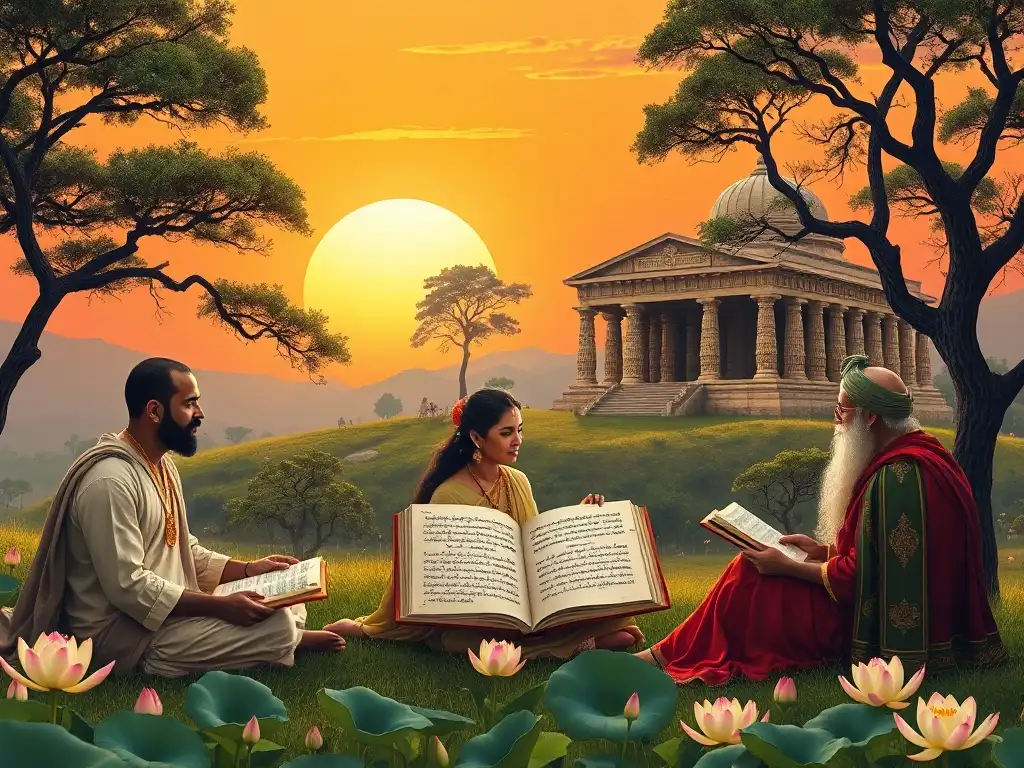
The Vedas, the oldest sacred texts of Hinduism, are not only central to the spiritual practices of ancient India but also played a crucial role in shaping the philosophical and intellectual landscape of the time. Composed in Sanskrit, the Vedas consist of four major collections: the Rigveda, Samaveda, Yajurveda, and Atharvaveda. Each of these texts encompasses hymns, rituals, and philosophical discourses that have profoundly influenced various aspects of Indian culture, including religion, philosophy, and social structure.
The Vedas introduce concepts that form the foundation of Indian thought, such as dharma (righteousness), karma (action), and moksha (liberation). These ideas permeate the fabric of Indian society and are pivotal in understanding the ethical and moral frameworks that govern human behavior. Furthermore, the Vedic texts have laid the groundwork for subsequent philosophical schools, intertwining spirituality with rational inquiry, and encouraging a quest for knowledge.
Vedic Influence on Later Philosophical Traditions
The philosophical ideas articulated in the Vedas laid the groundwork for various schools of thought that emerged in ancient India. Notably, the Upanishads, which are considered the concluding part of the Vedic literature, delve deeper into metaphysical concepts and explore the nature of reality, the self, and the ultimate truth (Brahman). This exploration significantly influenced schools such as Vedanta, which interprets the Upanishadic teachings and develops a systematic approach to understanding the relationship between the individual soul (Atman) and the universal soul (Brahman).
In addition, the Vedic emphasis on dialogue and debate as a means of philosophical inquiry can be seen in later texts like the Brahmanas and the Aranyakas, which engage in discussions about the rituals and their meanings. As a result, the Vedic influence is evident in the emergence of various philosophical traditions, including Buddhism and Jainism, which, while critiquing certain Vedic concepts, retained the emphasis on ethical living and spiritual liberation.
The following table summarizes the key Vedic concepts that influenced these philosophical traditions:
| Vedic Concept | Influenced Tradition | Key Idea |
|---|---|---|
| Dharma | Vedanta | Ethical living and duty |
| Karma | Buddhism | Action and its consequences |
| Moksha | Jainism | Liberation from the cycle of rebirth |
The Vedas and Their Role in the Development of Dharmic Religions
The Vedas have been instrumental in the formation and evolution of the Dharmic religions, particularly Hinduism, Buddhism, and Jainism. As the foundational texts, they establish core principles that guide the moral and spiritual lives of individuals.
- Hinduism: The Vedas set the stage for the development of Hindu practices and beliefs, influencing rituals, societal norms, and the concept of varna (social classes). The rituals prescribed in the Vedas, such as yajnas (sacrificial offerings), became integral to Hindu religious life, providing a framework for worship and community participation.
- Buddhism: While Buddhism arose as a reform movement in response to certain Vedic doctrines, it still retained Vedic concepts such as karma and rebirth. The emphasis on meditation and ethical conduct in Buddhism can be traced back to the Vedic quest for spiritual understanding.
- Jainism: Jainism shares several philosophical underpinnings with the Vedas, particularly the emphasis on non-violence ( ahimsa) and truthfulness. The ascetic practices promoted in Jainism resonate with the Vedic ideals of renunciation and purification.
The Vedas' influence on ancient India is profound and multifaceted, shaping not only religious practices but also philosophical discourses that continue to resonate in contemporary Indian society. The rich tapestry of ideas that emerged from the Vedas laid the foundation for the enduring legacy of Dharmic religions, highlighting the Vedas' central role in the spiritual and cultural evolution of ancient India.
Vedas in the Arts and Literature
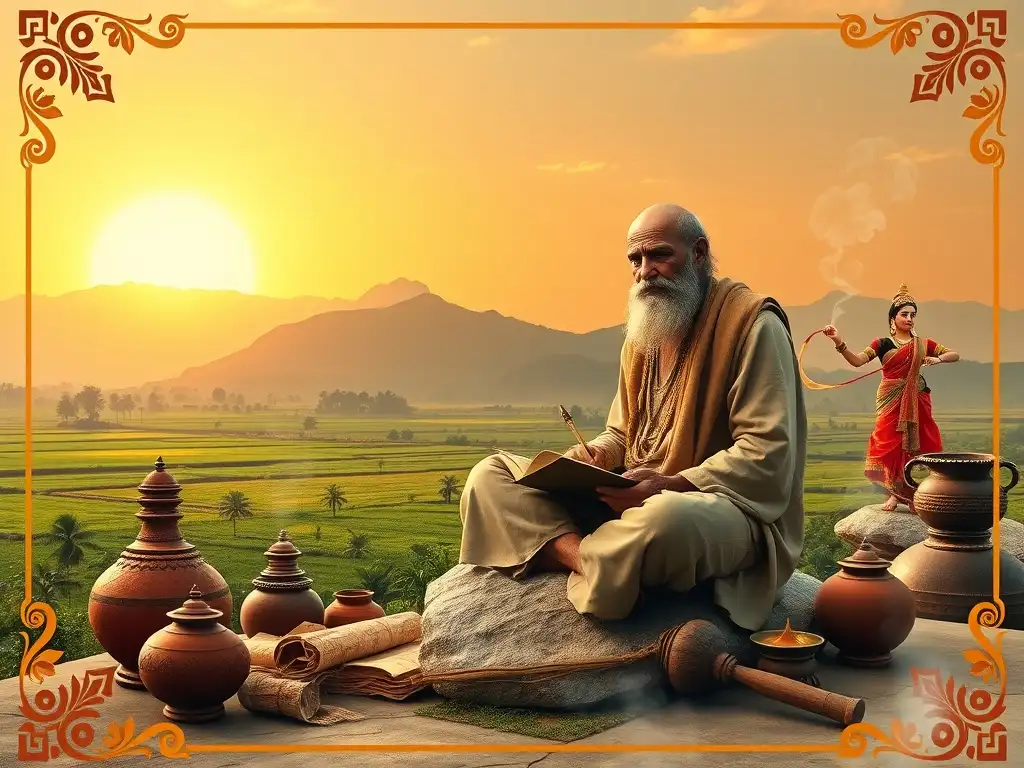
Inspiration from Vedic Texts in Ancient Indian Arts
The Vedas, as the foundational texts of ancient Indian spirituality and philosophy, have profoundly influenced various forms of art throughout Indian history. From sculpture to painting and dance, the essence of Vedic teachings is palpable in these artistic expressions.
- Sculpture and Architecture
- Temple Design: Many temples in India, especially those built during the Gupta period, embody Vedic principles in their architecture. The designs often reflect the cosmic order, a key concept in Vedic literature.
- Iconography: The representation of deities in sculptures is often derived from Vedic descriptions. For instance, the depiction of Agni, the fire god, is intricately detailed in both Vedic texts and temple art.
- Dance and Performance
- Natya Shastra: This ancient treatise on performing arts is deeply influenced by Vedic rituals. The text outlines various dance forms, many of which incorporate themes and stories from the Vedas.
- Ritual Dances: Traditional dances, such as Bharatanatyam and Kathak, often include references to Vedic hymns, depicting mythological stories and spiritual teachings.
- Painting and Visual Arts
- Miniature Paintings: Many of these artworks depict scenes from Vedic narratives, showcasing the cultural ethos of ancient India. Artists often drew inspiration from Vedic cosmology and mythological tales.
- Mural Paintings: Temples often feature murals that illustrate Vedic hymns and rituals, providing a visual narrative that complements the textual tradition.
The Vedas and Their Reflection in Epic Literature
The influence of the Vedas extends beyond the realms of arts into the core of epic literature, shaping narratives and character development in seminal texts like the Mahabharata and Ramayana.
- Themes and Philosophical Concepts
- Dharma: The concept of dharma, or righteous duty, is heavily rooted in Vedic philosophy. It serves as a central theme in the Mahabharata, guiding characters like Arjuna in their moral dilemmas.
- Cosmology: The Vedic understanding of the universe, including the cyclical nature of time, is echoed in the storytelling of epics, illustrating themes of creation, preservation, and destruction.
- Character Archetypes
- Divine Beings: Many characters in epic literature are inspired by Vedic deities and concepts. For instance, Lord Krishna, a pivotal figure in the Mahabharata, embodies the wisdom and guidance found in Vedic texts.
- Philosophical Figures: Characters such as Vyasa, the sage credited with composing the Mahabharata, reflect the Vedic tradition of wisdom and knowledge, often quoting or referencing Vedic ideas.
- Narrative Techniques
- Dialogues and Discourses: The philosophical dialogues found in the Vedas influenced the narrative style of epic literature. The conversations between characters often mirror the discourse found in texts like the Upanishads, emphasizing introspection and moral inquiry.
- Symbolism and Allegory: The use of symbolism in epic narratives often draws from Vedic metaphors, enriching the storytelling with deeper philosophical meanings.
The Vedas' influence on ancient India is evident in diverse artistic expressions and epic literature, providing a rich tapestry that interweaves spirituality, culture, and creativity. This enduring legacy continues to inspire and shape the cultural landscape of contemporary India.
Modern Interpretations of Vedic Influence
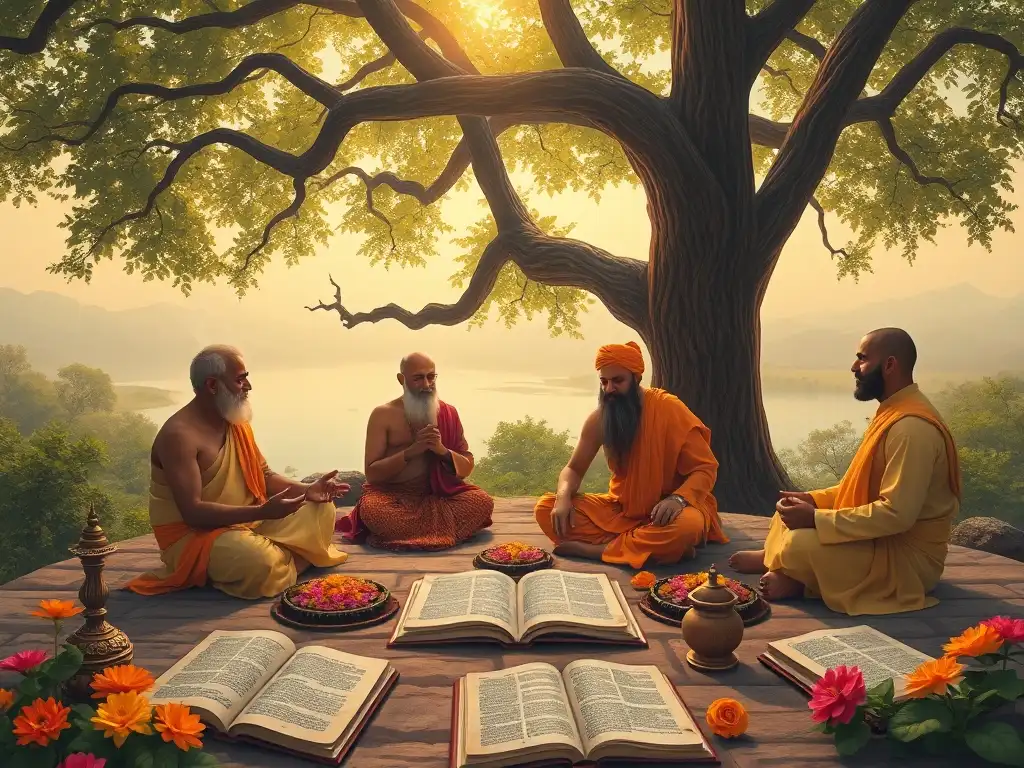
Contemporary Views on the Vedas and Ancient India
The Vedas, ancient texts that form the foundation of Hindu philosophy and spirituality, have been subject to various interpretations and analyses in contemporary times. Scholars and practitioners alike recognize the Vedas not merely as religious scriptures but as complex documents that provide insights into the socio-political, cultural, and spiritual contexts of ancient India.
- Cultural Significance: Modern scholars emphasize the Vedas' role in shaping the cultural landscape of ancient India. The Vedic hymns, rituals, and philosophical discourses reflect a sophisticated understanding of cosmology, ethics, and human nature. As such, the Vedas are seen as a crucial link to understanding the evolution of Indian civilization and its diverse traditions.
- Philosophical Contributions: Philosophers today analyze the Vedas through various lenses, including existentialism, metaphysics, and ethics. The concepts of Dharma (duty/righteousness), Karma (action and consequence), and Moksha (liberation) resonate with contemporary philosophical debates, positioning the Vedic texts as timeless sources of wisdom.
- Historical Context: Historians utilize archaeological findings and textual analysis to contextualize the Vedas within the broader narrative of ancient Indian history. The Rigveda, for instance, is often examined for its socio-political implications, including the emergence of early states and the stratification of society, which can be traced through subsequent historical developments.
The Vedas embody the intellectual, spiritual, and social ethos of a civilization that laid the groundwork for a rich tapestry of philosophical thought.
- Contemporary Historian
The Vedas' Continued Relevance in Modern Spirituality
The relevance of the Vedas in modern spirituality is profound, extending beyond traditional Hindu practices to influence global spiritual movements. Their teachings inspire a variety of contemporary spiritual practices and philosophies.
- Yoga and Meditation: Many modern spiritual practices, particularly in the West, draw heavily from Vedic principles. The integration of yoga and meditation into daily life reflects the Vedic emphasis on achieving inner peace and self-realization. The Bhagavad Gita, a Vedic text, remains a popular guide for individuals seeking spiritual growth, demonstrating the enduring appeal of Vedic thought.
- Interfaith Dialogues: The Vedic teachings promote concepts of unity and interconnectedness, which resonate in contemporary interfaith dialogues. The emphasis on non-dualism and the universal quest for truth encourages collaborative spirituality across different religious traditions, fostering an environment of respect and understanding.
- Holistic Living: The Vedas advocate for a holistic approach to life, integrating physical, mental, and spiritual well-being. This perspective aligns with modern values of sustainability and mindfulness, influencing practices in wellness communities that seek to balance individual health with environmental consciousness.
| Aspect | Vedic Influence | Modern Interpretation |
|---|---|---|
| Spiritual Growth | Yoga and Meditation | Global wellness practices |
| Cultural Exchange | Interfaith Dialogues | Collaborative spirituality |
| Holistic Approach | Integration of mind, body, and spirit | Mindfulness and sustainability movements |
The Vedas' influence on ancient India extends far beyond their historical context, continuing to shape the spiritual landscape of the modern world. Their teachings foster a deeper understanding of existence, encouraging individuals to explore their spiritual paths while remaining connected to the rich heritage of Indian civilization.
Conclusion: The Lasting Legacy of the Vedas in Ancient India
Summary of the Vedas' Influence on Ancient Indian Civilization
The Vedas, comprising the Rigveda, Samaveda, Yajurveda, and Atharvaveda, are foundational texts that have profoundly influenced the spiritual, cultural, and social fabric of ancient Indian civilization. Their impact can be summarized across several key areas:
- Philosophical Framework:
- The Vedas introduced essential philosophical concepts such as Dharma (righteousness), Karma (action and consequence), and Moksha (liberation). These ideas formed the backbone of Hindu philosophy and ethics, influencing both spiritual practices and societal norms.
- Ritualistic Practices:
- Rituals and ceremonies derived from Vedic texts guided the spiritual lives of ancient Indians. From daily rituals to grand yajnas (sacrificial ceremonies), the Vedas provided a structured approach to worship, ensuring a connection with the divine.
- Cultural Identity:
- The Vedas contributed significantly to the identity of ancient Indian culture. They encapsulated the values, traditions, and beliefs of the time, fostering a sense of unity among diverse communities across the subcontinent.
- Language and Literature:
- The Vedic Sanskrit used in these texts laid the groundwork for later literary developments in India. It influenced both classical and regional languages, enriching the literary heritage of the nation.
- Social Structure:
- The Vedas also played a role in shaping the social hierarchy. They delineated roles and responsibilities through the concept of Varna, leading to the establishment of a societal framework that persisted for centuries.
Final Thoughts on the Vedas and Their Spiritual Landscape
The influence of the Vedas on ancient India's spiritual landscape is not merely historical; it remains relevant even today. Their teachings continue to resonate with spiritual seekers and scholars alike, inviting interpretations and adaptations that align with contemporary contexts.
- Timeless Relevance: The philosophical inquiries posed in the Vedas encourage individuals to explore the nature of existence, ethics, and the divine. This timeless relevance allows the Vedas to transcend their historical context, appealing to a diverse audience.
- Spiritual Diversity: The Vedas fostered a pluralistic approach to spirituality in ancient India, accommodating various beliefs and practices. This diversity is a hallmark of Indian spirituality, encouraging dialogue and synthesis among different traditions.
- Continued Study: Modern scholarship on the Vedas highlights their complexity and depth, prompting ongoing research and exploration. Their multifaceted teachings serve as a rich resource for understanding the underpinnings of not only ancient Indian civilization but also the broader spiritual discourse.
The Vedas' influence on ancient India is profound and enduring. They shaped not only the spiritual landscape of their time but also established a legacy that continues to inspire generations. Through their teachings, the Vedas remain a vital part of the quest for knowledge, spirituality, and cultural identity in India and beyond.
Frequently Asked Questions
What are the Vedas and their significance in ancient India?
The Vedas are a collection of ancient texts that form the foundation of Hindu philosophy and spirituality. Their teachings influenced various aspects of Indian culture, including rituals, ethics, and social structures.
How did the Vedas influence spiritual practices in ancient India?
The Vedas set the standards for ritual practices and sacrifices, guiding individuals in their spiritual journeys and establishing a framework for community worship that shaped the spiritual landscape.
The Vedas played a crucial role in defining social hierarchies, such as the caste system, by categorizing people based on duties and responsibilities, thus influencing the organization of society.
Can the impact of the Vedas be seen in modern Indian culture?
Yes, the teachings of the Vedas continue to influence contemporary Indian culture, including festivals, rituals, and philosophical thought, reflecting their enduring legacy.
What role did the Vedas play in the development of Indian philosophy?
The Vedas laid the groundwork for various philosophical schools in ancient India, including Vedanta and Samkhya, which explored profound questions about existence, consciousness, and the nature of reality.
Final Reflection: The Enduring Influence of the Vedas on Ancient India
The Vedas stand as a monumental testament to the spiritual and philosophical foundations of ancient India, shaping not only religious practices but also the very fabric of societal norms and values. Today, as we navigate a world increasingly defined by diversity and complexity, the teachings and insights of the Vedas resonate more than ever. They remind us of the profound interconnectedness of life and the importance of seeking knowledge and truth in our spiritual journeys.
The influence of the Vedas has transcended time, weaving itself into the cultural and social landscape of India and beyond. Their teachings have fostered a rich tapestry of thought and practice that continues to inspire millions. The Vedas have not only shaped religious rituals but have also influenced art, literature, and philosophy, creating a legacy that is both profound and far-reaching. As Mahatma Gandhi once said, “The Vedas are the foundation of all knowledge.” This quote encapsulates the essence of how the Vedas continue to guide individuals and societies in their quest for understanding and enlightenment.
As we reflect on the teachings of the Vedas, I invite you to consider how these ancient texts can inform your own spiritual path. What lessons can you draw from their wisdom to enrich your life today? Embrace the opportunity to explore these timeless teachings, allowing them to inspire your thoughts, actions, and connections with others. In doing so, you not only honor the legacy of the Vedas but also contribute to a more enlightened and harmonious world.
Embrace the Wisdom of the Vedas Today!
Thank you for exploring the profound influence the Vedas had on the spiritual landscape of ancient India. Your journey into this ancient wisdom opens new avenues for understanding and personal growth. Now that you've gained insights into their significance, let's put that knowledge into action!
- Delve deeper: Choose a Vedic text that resonates with you. Set aside time each week to read and reflect on its teachings.
- Share your insights: Engage in discussions about your discoveries with friends or online communities passionate about spirituality. You never know how your insights might inspire others!
- Practice mindfulness: Integrate Vedic principles such as meditation or yoga into your daily routine, fostering a deeper connection to the teachings.
What aspects of the Vedic teachings do you find most compelling, and how might you apply them in your life?