
The Enigmatic Origins of Diwali: A Deep Dive into the Festival of Lights

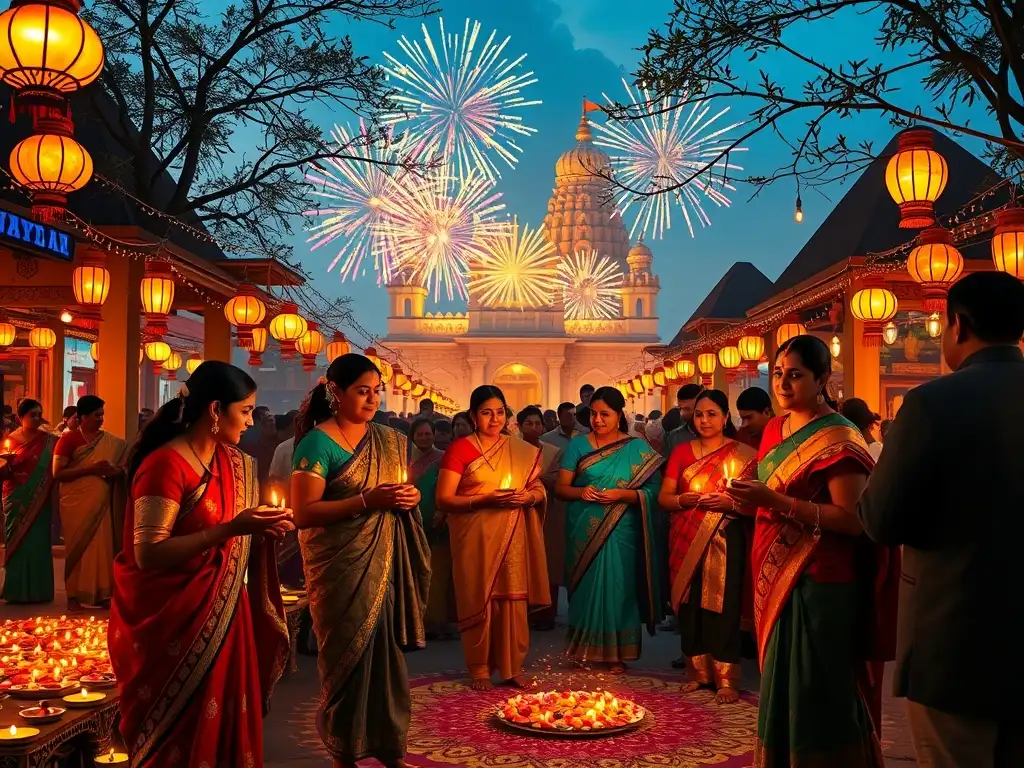
Welcome to Ancient India History, where we embark on a fascinating journey through time to uncover the rich tapestry of ancient Indian civilizations. Today, we delve into the enigmatic origins of Diwali, exploring the vibrant traditions that illuminate this beloved Festival of Lights. What secrets lie behind the rituals and celebrations that have been passed down through generations? Join us as we unravel the captivating history of Diwali festival traditions, inviting you to discover the profound cultural significance and timeless allure of this cherished celebration. Get ready to illuminate your understanding and spark your curiosity!
Introduction to the History of Diwali Festival Traditions
Diwali, known as the Festival of Lights, is one of the most celebrated and significant festivals in India and among Indian communities worldwide. The history of Diwali festival traditions is woven into the rich tapestry of ancient Indian culture, marked by rituals, stories, and customs that have evolved over millennia. This festival is celebrated by millions, symbolizing the victory of light over darkness and knowledge over ignorance. Its origins can be traced back to various ancient texts, folklore, and cultural practices, making it a fascinating subject for exploration.
As we delve into the history of Diwali, it is essential to understand not only its religious significance but also its cultural implications. The festival encompasses various regional traditions, each adding a unique flavor to the celebrations. From the lighting of diyas (oil lamps) to the bursting of firecrackers and the sharing of sweets, Diwali is a vibrant mosaic of customs that reflect the diversity of Indian civilization.
In this article, we will explore the rich historical context of Diwali, examining how its traditions have been shaped by ancient practices and beliefs, and how they continue to resonate in contemporary society.
Significance of Diwali in Ancient Indian Culture
The significance of Diwali in ancient Indian culture is profound and multifaceted. Rooted in various mythological narratives, the festival is often associated with the return of Lord Rama to Ayodhya after his 14-year exile and the defeat of the demon king Ravana. This event is celebrated as a symbol of righteousness and the triumph of good over evil.
Moreover, Diwali is linked to the worship of Lakshmi, the goddess of wealth and prosperity. In ancient texts, rituals dedicated to Lakshmi were performed to ensure abundance and well-being for families and communities. The festival thus served not only as a religious observance but also as a time for communal harmony and renewal of social ties.
Throughout ancient India, Diwali was also marked by various agricultural practices, acknowledging the seasonal changes and the harvests. This connection to the agrarian calendar highlights the festival's role in the cyclical nature of life and sustenance.
The rituals, symbols, and practices associated with Diwali have evolved, yet they continue to reflect ancient values and beliefs that emphasize the importance of light, knowledge, and community in human life. As we further explore the intricacies of this festival, we will uncover how these themes resonate through time, influencing the way Diwali is celebrated today.
- Introduction to the History of Diwali Festival Traditions
- Significance of Diwali in Ancient Indian Culture
Historical Background of Diwali
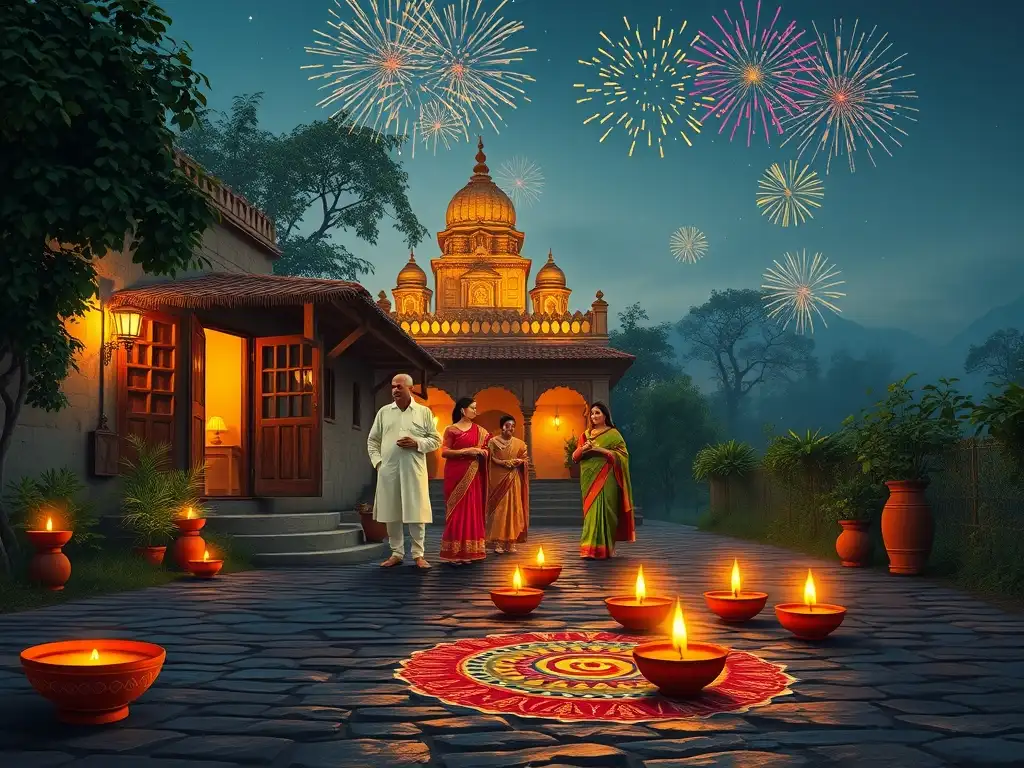
The festival of Diwali, often referred to as the Festival of Lights, has a rich historical background that intertwines various cultural and religious narratives from ancient India. Its origins can be traced back to several ancient texts that provide insights into the traditions and practices that have evolved over centuries. Diwali is celebrated not just as a single event but as a culmination of various historical events, religious beliefs, and cultural practices that reflect the diverse heritage of India.
The Roots of Diwali in Ancient Texts
The history of Diwali is deeply embedded in ancient Indian scriptures and texts, which highlight its significance and the rituals associated with it. Key texts such as the Vedas, Puranas, and the Mahabharata illustrate the festival's connection to various deities and the cosmic principles of light overcoming darkness.
- Vedic References: While the Vedas do not explicitly mention Diwali, they celebrate the concept of light and the triumph of good over evil, concepts that are central to the festival. The festival aligns with the Vedic rituals invoking deities for prosperity and well-being.
- Puranic Texts: The Padma Purana and Skanda Purana narrate tales that are associated with the worship of Goddess Lakshmi, emphasizing the importance of wealth and prosperity during Diwali.
- Mahabharata: This epic also contains references to the festival, particularly in the context of the return of the Pandavas after their exile, which is celebrated with lights and joy.
Thus, the roots of Diwali can be seen as a confluence of various ancient traditions and beliefs, setting the foundation for what is celebrated today.
Legends and Myths Surrounding Diwali
Diwali is steeped in various legends and myths that enrich its cultural significance. Each story provides a unique perspective on the festival's themes of victory, light, and prosperity.
The Ramayana and the Return of Lord Rama
One of the most popular legends associated with Diwali is the return of Lord Rama to his kingdom of Ayodhya after a 14-year exile. This narrative is primarily derived from the ancient epic, the Ramayana.
- Key Elements:
- Exile and Victory: Lord Rama's exile was marked by challenges, including the abduction of his wife, Sita, by the demon king Ravana. His eventual victory over Ravana symbolizes the triumph of good over evil.
- Celebration in Ayodhya: Upon his return, the citizens of Ayodhya celebrated by lighting oil lamps (diyas) to guide Rama home, marking the inception of Diwali as a festival of lights.
The Legend of Lord Krishna and Narakasura
Another prominent legend associated with Diwali is the victory of Lord Krishna over the demon king Narakasura. This tale is celebrated particularly in the regions of South India and Maharashtra.
- Key Elements:
- Rescue of Captives: Narakasura had imprisoned many women and had created a reign of terror. Krishna fought valiantly to defeat him, liberating the captives.
- Celebration of Freedom: The day of Naraka Chaturdashi, observed a day before Diwali, is dedicated to this victory, signifying the liberation from tyranny and the establishment of dharma.
The Story of Goddess Lakshmi
The worship of Goddess Lakshmi, the deity of wealth and prosperity, is also central to the Diwali celebrations. Her story is rooted in the Puranic texts that narrate her emergence from the ocean of milk during the churning of the ocean (Samudra Manthan).
- Key Elements:
- Symbol of Prosperity: As the goddess of wealth, Lakshmi is invoked during Diwali to bless homes and businesses with prosperity and abundance.
- Rituals and Offerings: Devotees clean their homes and decorate them with lights and rangoli, creating an inviting space for Lakshmi to visit on Diwali night.
Through these legends and myths, Diwali encapsulates a variety of themes including hope, renewal, and the assurance of divine blessings, enriching the cultural fabric of this ancient festival.
Evolution of Diwali Celebrations Over the Centuries
Early Celebrations in Ancient India
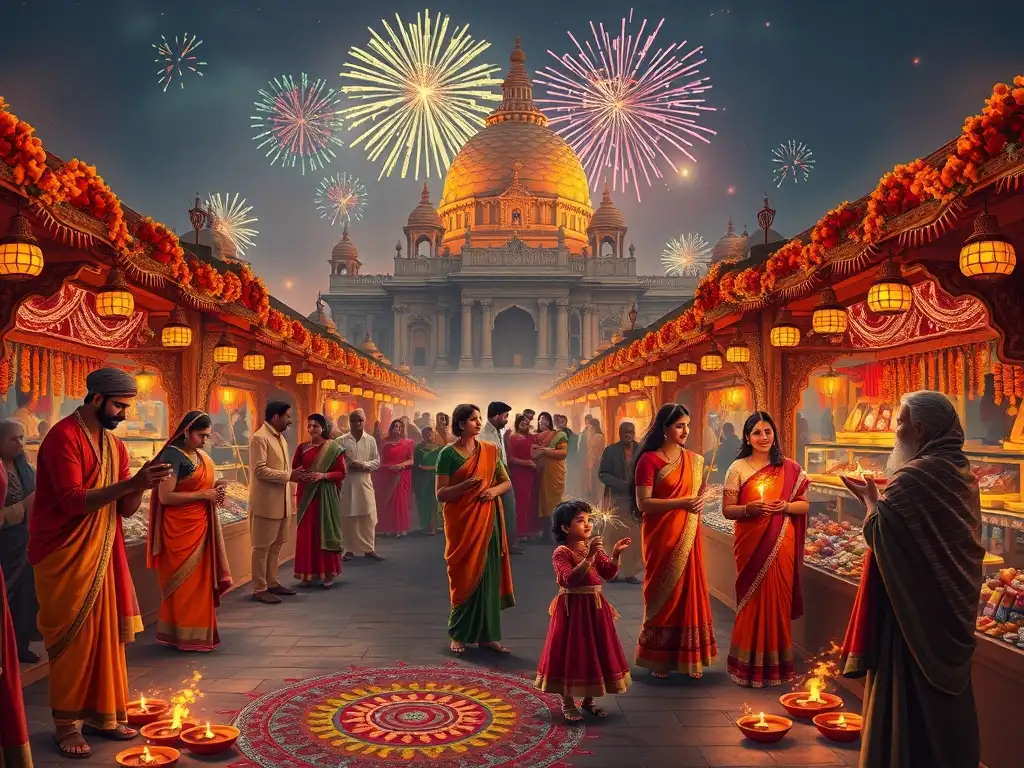
The origins of Diwali can be traced back to ancient India, where early celebrations were deeply intertwined with agricultural practices and seasonal changes. Initially, these festivities were not solely religious but also marked the end of the harvest season. The festival symbolized gratitude for the bountiful crops and the arrival of the winter solstice, which was a time for new beginnings.
- Agricultural Significance: The festival coincided with the end of the harvest, and communities would gather to celebrate their good fortune. Rituals included lighting lamps to guide the spirits of ancestors and ensure a prosperous future.
- Religious Roots: Though the festival was initially secular, it began to adopt religious connotations over time, particularly with the rise of Hinduism. Texts from the Vedic period reference the significance of light, symbolizing knowledge and the victory of good over evil.
- Cultural Practices: The early celebrations involved lighting clay lamps (diyas) and the preparation of festive foods. These practices were often communal, fostering social bonds within communities.
Diwali During the Maurya and Gupta Empires
The Maurya (322-185 BCE) and Gupta (c. 240-550 CE) Empires played a pivotal role in shaping the traditions of Diwali. Under their reigns, the festival began to evolve into a more structured celebration, integrating various religious and cultural practices.
- Imperial Influence: The Mauryan Emperor Ashoka emphasized Buddhism, and many of his edicts reflect the importance of light and enlightenment. This emphasis on light contributed to the growing association of Diwali with spiritual awakening.
- Hinduism’s Rise: During the Gupta Empire, Hinduism flourished, and Diwali became increasingly linked to the worship of deities such as Lakshmi, the goddess of wealth, and Rama, symbolizing the triumph of good. The Ramayana, an ancient epic, narrates the return of Rama to Ayodhya, which is now celebrated as a central theme of Diwali.
- Art and Architecture: The period saw a surge in artistic representations of Diwali themes through sculptures and paintings, which further entrenched the festival's cultural significance. The practice of decorating homes with lights and rangoli (colorful designs made from rice or flour) became popularized.
Regional Variations in Diwali Traditions
As Diwali spread across different regions of India, it absorbed diverse cultural influences, leading to unique local traditions and celebrations. These regional variations highlight the festival's adaptability and the rich tapestry of Indian culture.
- North India: In northern states, Diwali is predominantly celebrated as the victory of Lord Rama over Ravana. The festivities include the performance of Ramlila (a dramatic reenactment of the Ramayana) and the lighting of diyas to symbolize the triumph of light over darkness.
- South India: In southern regions, Diwali coincides with the victory of Lord Krishna over the demon Narakasura. Celebrations often include traditional rituals, fireworks, and special dishes like sweets made from jaggery and rice flour.
- West India: The western states, particularly Gujarat, celebrate Diwali as the beginning of the new year. The festival involves elaborate pujas (prayers) to Lakshmi, as well as the exchange of gifts and sweets among family and friends.
- East India: In Bengal, the festival is marked by the worship of Goddess Kali, with rituals focusing on her power to destroy evil. The celebrations include vibrant fairs and cultural performances, showcasing local art forms.
Through these regional adaptations, Diwali has become a truly pan-Indian festival, reflecting the country's diversity and the shared values of light, hope, and renewal that resonate across different communities.
Cultural Practices Associated with Diwali
Rituals and Ceremonies During Diwali
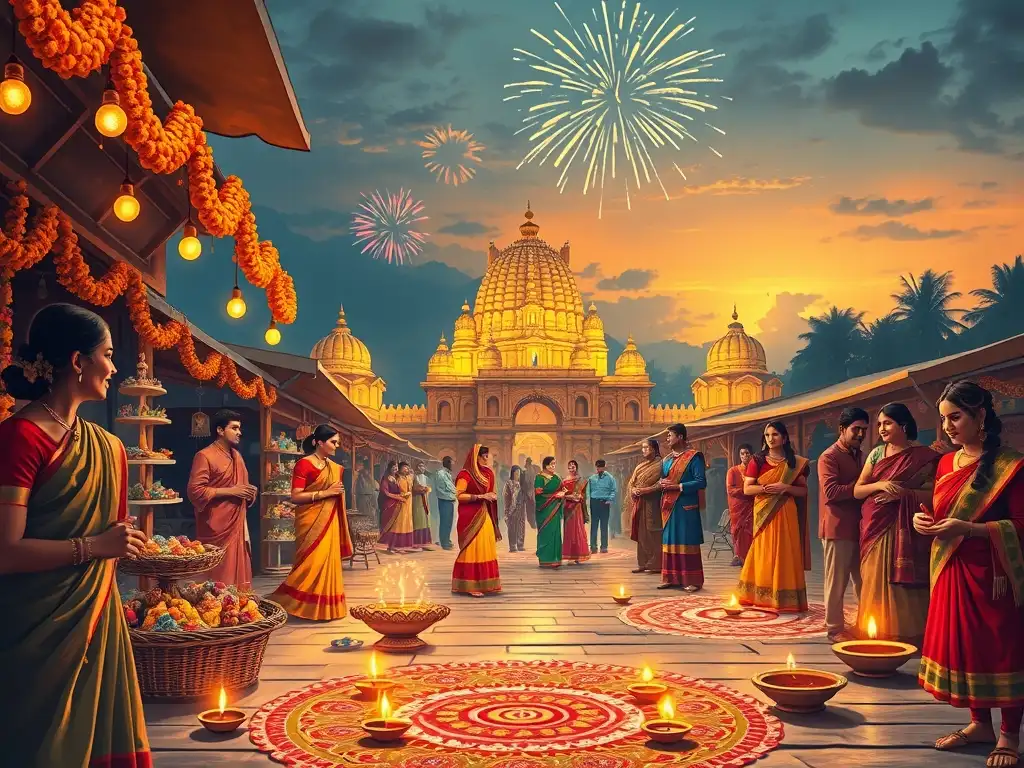
Diwali, known as the Festival of Lights, is rich in rituals and ceremonies that vary across regions and communities. Each tradition reflects the diverse cultural fabric of India, celebrating the triumph of light over darkness.
- Lakshmi Puja: One of the central rituals of Diwali is the worship of Goddess Lakshmi, the deity of wealth and prosperity. Families clean their homes thoroughly, believing that a clean space welcomes the goddess. Devotees offer prayers, light lamps, and present sweets and fruits as offerings.
- Goverdhan Puja: In some regions, the day after Diwali is celebrated as Goverdhan Puja, commemorating Lord Krishna's victory over Indra. This involves creating a small hillock of cow dung, symbolizing Mount Govardhan, and decorating it with flowers and food.
- Naraka Chaturdashi: The day before Diwali is known as Naraka Chaturdashi or Choti Diwali, marking the victory of Lord Krishna over the demon Narakasura. People light lamps in the evening, symbolizing the dispelling of darkness and ignorance.
- Fireworks: Fireworks play a significant role in the celebrations, symbolizing the joy of the occasion. The loud sounds are believed to ward off evil spirits, while the bright lights represent the victory of good over evil.
- Exchanging Gifts: The exchange of gifts and sweets among family and friends reinforces social bonds and goodwill. It is customary to share homemade delicacies, symbolizing the sharing of happiness and prosperity.
Preparation for Diwali: Cleaning and Decorating Homes
Preparation for Diwali begins weeks in advance, emphasizing the importance of cleanliness and decoration.
- Cleaning Rituals: Families engage in thorough cleaning of their homes, discarding old items and clutter. This act is considered essential to invite prosperity and good fortune. The belief is that Goddess Lakshmi prefers to enter clean and well-decorated homes.
- Decorating with Lights: Homes are adorned with lights, candles, and oil lamps (diyas). These illuminations symbolize the removal of darkness and ignorance. String lights, lanterns, and colorful bulbs create a festive atmosphere.
- Festive Colors: Traditional decorations often include vibrant colors, particularly red, orange, and gold, which are considered auspicious. Fabrics, cushions, and curtains are often changed to reflect the festive spirit.
- Shopping for New Items: It is customary to purchase new clothes and utensils during this period. Many believe that buying new items during Diwali brings good luck and prosperity.
The Significance of Rangoli and Diyas
Rangoli and diyas are integral to Diwali celebrations, each carrying deep symbolic meaning.
- Rangoli: This traditional art form involves creating intricate patterns on the floor using colored powders, rice, or flower petals. Rangoli is believed to bring good luck and ward off negative energies. The designs often depict motifs from nature, gods, and geometric shapes, showcasing creativity and cultural heritage.
- Diyas: Lighting diyas is a significant tradition during Diwali. These small oil lamps made from clay are lit to symbolize the victory of light over darkness. Placing diyas at entrances and windows not only illuminates homes but also serves as a guide for the goddess Lakshmi.
- Symbolism: Both rangoli and diyas represent hope, joy, and the spirit of celebration. The act of creating rangoli and lighting diyas fosters a sense of community and family bonding during the festival.
Traditional Foods and Sweets of Diwali
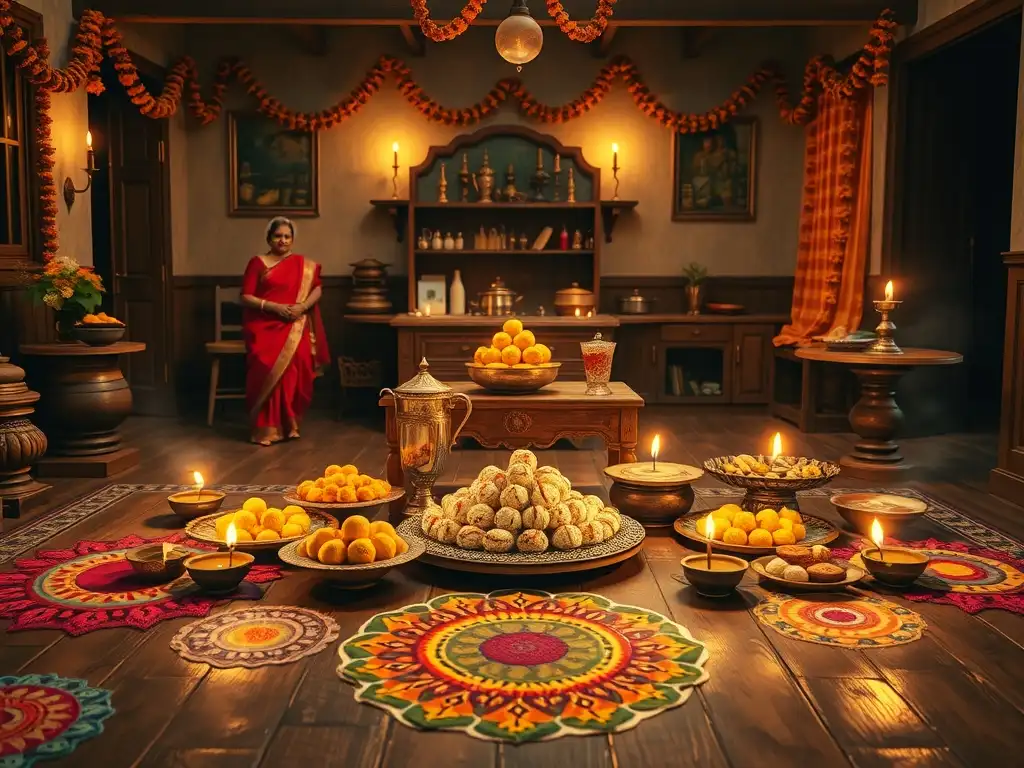
Food plays a crucial role in Diwali celebrations, with a variety of traditional dishes prepared for the occasion.
- Sweets: Sweets are a staple of Diwali. Popular varieties include:
- Gulab Jamun: Soft, round balls made from milk solids, soaked in sugar syrup.
- Barfi: A fudge-like sweet made from condensed milk and various flavorings, such as coconut or pistachio.
- Ladoo: Round sweets made from different ingredients like gram flour (besan), coconut, or semolina.
- Savory Dishes: Alongside sweets, savory snacks are also prepared, such as:
- Samosas: Triangular pastries filled with spiced potatoes, peas, or lentils.
- Pakoras: Deep-fried fritters made from vegetables or paneer, coated in gram flour batter.
- Feasts: Families come together to enjoy elaborate meals, often including rice dishes, curries, and breads. The sharing of food symbolizes unity and the joy of togetherness during the festival.
The history of Diwali festival traditions is deeply intertwined with the cultural practices, rituals, and culinary delights that have evolved over centuries, making the celebration a rich tapestry of heritage and community spirit.
The Role of Fireworks and Festivities
Fireworks play a prominent role in the celebration of Diwali, symbolizing joy, the victory of light over darkness, and the dispelling of negativity. The tradition of using fireworks during this festival can be traced back to ancient times, where they were believed to celebrate the return of Lord Rama to Ayodhya after defeating the demon king Ravana. This historical association has evolved into a widespread practice, with people lighting up the night sky to enhance the festive atmosphere.
A Symbol of Celebration
Fireworks are not just a visual spectacle; they embody the spirit of celebration that characterizes Diwali. In many households, the day is marked by the sound of crackling firecrackers and the sight of vibrant colors bursting in the sky. This exuberance is meant to invoke happiness and create a festive ambiance, encouraging families and communities to come together in merriment.
- Types of Fireworks Used:
- Rockets: Known for their high-flying displays, symbolizing aspirations and ambitions.
- Crackers: Produce loud sounds, often representing the joy of victory.
- Sparklers: Typically enjoyed by children, symbolizing innocence and joy.
Environmental Considerations
In recent years, there has been a growing awareness regarding the environmental impact of fireworks. The pollution caused by smoke and noise has prompted many communities to seek eco-friendly alternatives. Some people now favor quieter celebrations that incorporate sustainable practices, such as using flower petals or LED lights to create a dazzling display.
- Eco-Friendly Alternatives:
- LED Light Displays: Bright and colorful, these can mimic the effect of fireworks without causing pollution.
- Natural Fireworks: Using sparklers made of non-toxic materials to reduce air quality issues.
Community and Unity
The act of celebrating with fireworks often transcends individual households and fosters a sense of community. Neighbors gather to watch displays, share sweets, and partake in the festive spirit. This communal aspect is a vital part of Diwali, as it reinforces social bonds and reinforces the tradition of togetherness.
Fireworks are more than just a form of entertainment during Diwali; they are deeply intertwined with the festival's cultural significance. Their vibrant displays signify joy, community, and the triumph of good over evil, making them an essential component of Diwali festivities.
The Influence of Diwali Beyond India
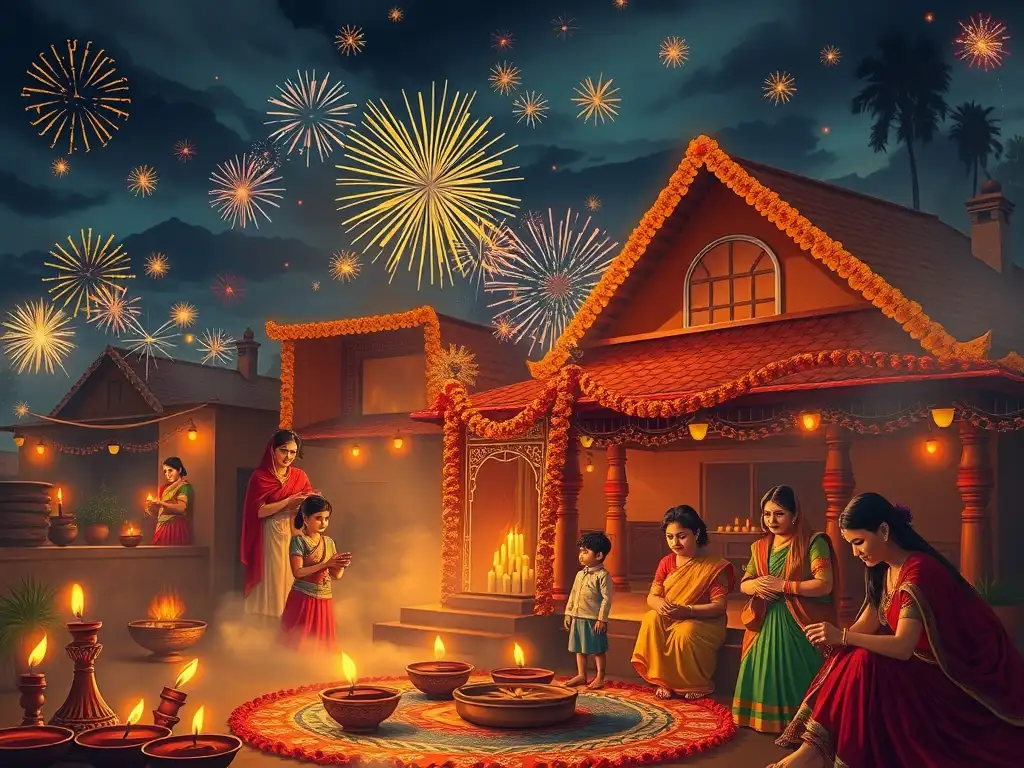
Diwali, known as the Festival of Lights, transcends geographical boundaries and cultural contexts, influencing various celebrations around the globe. Its rich symbolism and joyous customs resonate with diverse communities, making it a significant event far beyond its Indian origins. The festival's themes of light over darkness and good over evil have universal appeal, fostering connections among people from different backgrounds.
Diwali Celebrations in Different Countries
The celebration of Diwali is not limited to India; it has made its mark in various countries, each adapting the festival to their unique cultural contexts. Here are some notable examples:
- Nepal: Known as Tihar, the celebration here extends over five days, each dedicated to different animals and deities. The festival culminates with Bhai Tika, where sisters pray for their brothers' long life and prosperity.
- Mauritius: Diwali is a public holiday and is celebrated with fireworks, lanterns, and prayers. The cultural blend here reflects the island's diverse population, with Hindu, Creole, and Chinese influences evident in the festivities.
- Fiji: In Fiji, Diwali is celebrated by the Indo-Fijian community with great enthusiasm. Traditional sweets are prepared, and homes are adorned with lights and diyas, reflecting the Indian customs brought by their ancestors.
- Indonesia: In Bali, the festival is celebrated as a part of the Hindu New Year (Hari Raya Nyepi), where the Balinese people observe a day of silence following the vibrant Diwali celebrations, emphasizing reflection and renewal.
- United States: The festival has gained popularity, particularly among the Indian diaspora. Major cities such as New York and San Francisco host large public celebrations, complete with cultural performances, food fairs, and firework displays, showcasing the diversity of Indian culture.
These celebrations demonstrate how Diwali has evolved, integrating local traditions while preserving its core essence of joy and togetherness.
The Globalization of Diwali Traditions
As communities around the world embrace Diwali, the festival has undergone significant globalization, fostering a blend of traditional practices and contemporary interpretations. This phenomenon can be observed in several key areas:
- Cultural Exchange: With the increased migration of Indian communities, Diwali celebrations have become a medium of cultural exchange. Many non-Hindus participate in the festivities, leading to a broader understanding and appreciation of Indian culture.
- Commercialization: The global market has capitalized on the festival, with businesses leveraging Diwali for promotions and sales. Retailers often offer special discounts on traditional items, sweets, and decorations, making the festival a significant commercial event.
- Media Representation: The portrayal of Diwali in films, television shows, and social media has contributed to its globalization. Such representations help demystify the festival for those unfamiliar with its customs, promoting inclusivity and awareness.
- Culinary Influence: Diwali-inspired dishes and sweets have found their way into global cuisine, with many restaurants incorporating traditional Indian recipes into their menus. This culinary fusion enhances the festival's reach and impact.
- Festivals and Events: Various cities globally organize Diwali festivals, featuring cultural performances, art exhibitions, and workshops, creating a vibrant atmosphere that attracts attendees from various backgrounds. These events not only celebrate the festival but also foster community spirit and multiculturalism.
The globalization of Diwali traditions emphasizes the festival's adaptability and enduring relevance. As communities worldwide continue to celebrate Diwali, it becomes a symbol of unity, diversity, and shared joy, transcending cultural and geographical divides.
Contemporary Observations of Diwali
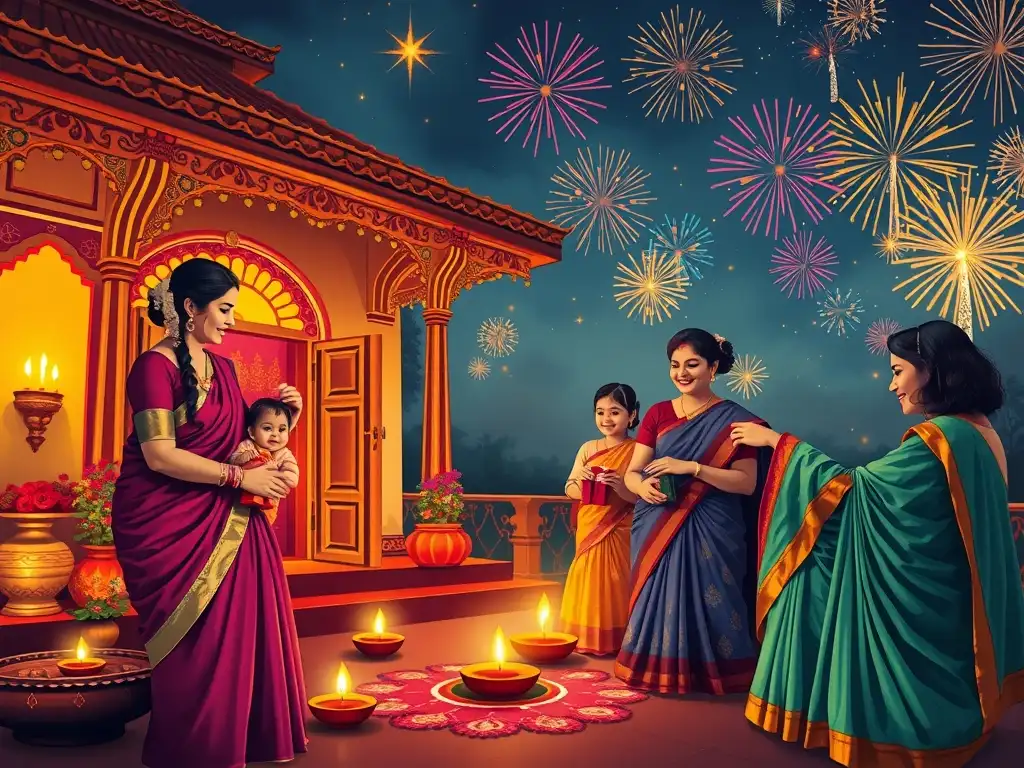
The celebration of Diwali has evolved significantly over the years, adapting to contemporary societal changes while still retaining its core traditional values. Today, Diwali is not just a religious observance but a vibrant cultural phenomenon that transcends geographical and communal boundaries. This transformation reflects a dynamic interplay between ancient customs and modern lifestyles, leading to diverse ways of celebrating the festival.
Modern Interpretations of Ancient Traditions
Modern celebrations of Diwali often reflect a blend of traditional rituals and contemporary practices. For instance:
- Cultural Inclusivity: Diwali is now celebrated by various communities, including those outside the Hindu faith, showcasing its universal appeal. This inclusivity has led to the incorporation of various regional customs and practices, making the festival a melting pot of traditions.
- Environmental Consciousness: With growing awareness of environmental issues, many individuals and communities are opting for eco-friendly celebrations. This includes using biodegradable materials for decorations, minimizing the use of firecrackers, and adopting sustainable practices for lighting up homes.
- Culinary Innovations: Traditional sweets and snacks are now being reinvented to cater to modern palates, incorporating healthier ingredients or fusion recipes that reflect global culinary trends. This has broadened the scope of Diwali cuisine beyond classic dishes, making it more inclusive and innovative.
As a result, the essence of Diwali, which revolves around the themes of light, renewal, and community, is preserved while adapting to modern sensibilities.
Diwali in the Age of Technology
The digital era has significantly transformed how Diwali is celebrated and experienced. Key aspects include:
- Social Media Influence: Platforms like Instagram and Facebook have become central to sharing Diwali celebrations. Families and friends post pictures of their festivities, spreading joy and inspiring others to partake in the celebrations, irrespective of their location. Hashtags like #Diwali2023 and #FestivalofLights have created a global community around the festival.
- Online Shopping and E-Gifting: The rise of e-commerce has revolutionized the way gifts are exchanged during Diwali. Online shopping platforms offer an array of options for traditional items, sweets, and personalized gifts, making it easier for people to send gifts across distances.
- Virtual Celebrations: In response to events like the COVID-19 pandemic, many families have turned to virtual gatherings to celebrate Diwali. Video conferencing platforms allow loved ones separated by distance to come together, ensuring that the spirit of togetherness remains unhindered.
These technological advancements not only enhance the celebratory experience but also ensure that the traditions of Diwali continue to thrive in a rapidly changing world.
Conclusion: The Enduring Legacy of Diwali
The history of Diwali festival traditions illustrates a remarkable journey—one that has adapted and evolved while retaining its foundational values. From its ancient roots linked to various mythologies and regional customs to its contemporary expressions, Diwali stands as a testament to the resilience and richness of Indian culture.
As society continues to progress, the festival of Diwali serves as a reminder of the importance of light over darkness, knowledge over ignorance, and community over isolation. Its enduring legacy is reflected in the way people from diverse backgrounds come together to celebrate, share stories, and create new memories. Ultimately, the spirit of Diwali transcends time, urging individuals to embrace positivity and hope in every aspect of life.
Reflection on the History of Diwali Festival Traditions and Their Relevance Today
The history of Diwali is steeped in ancient narratives, rituals, and cultural significance that have evolved over centuries. Understanding these historical roots provides invaluable insight into why the festival remains a cornerstone of celebration in contemporary society. The traditions associated with Diwali can be traced back to various ancient texts and mythologies, each contributing to the multifaceted nature of the festival.
One of the most prominent historical narratives linked to Diwali is the return of Lord Rama to Ayodhya after a 14-year exile and the defeat of the demon king Ravana. This story, derived from the epic Ramayana, symbolizes the triumph of good over evil, a theme that resonates deeply in modern society. Today, the lighting of diyas (oil lamps) during Diwali serves as a reminder of this victory, encouraging individuals to reflect on their personal battles against negativity and adversity.
Additionally, Diwali is associated with the worship of Goddess Lakshmi, the deity of wealth and prosperity. This aspect of the festival underscores the importance of economic well-being and abundance, which remains highly relevant in today’s consumer-driven world. The practice of cleaning and decorating homes before the festival is not just a tradition but a symbolic act of welcoming prosperity and positivity into one’s life.
Furthermore, regional variations of Diwali celebrations highlight the diversity of cultural practices across India. For instance, in some parts of the country, the festival also marks the beginning of the new year, while others celebrate it as the day Lord Krishna vanquished the demon Narakasura. These diverse interpretations of Diwali traditions foster a sense of unity in diversity, encouraging inclusivity and cultural exchange among different communities.
In contemporary times, Diwali has transcended its religious boundaries, evolving into a celebration of togetherness and community spirit. The festival is now a time for family reunions, social gatherings, and shared meals, emphasizing the importance of relationships and collective joy. The significance of sharing sweets and exchanging gifts during Diwali reinforces social bonds and promotes goodwill among individuals.
As we reflect on the history of Diwali festival traditions, it is clear that they are not merely relics of the past but living practices that continue to shape contemporary society. The festival's core values of hope, renewal, and community connection remain relevant, prompting us to celebrate the richness of our cultural heritage while fostering a sense of belonging and harmony in an increasingly modern world.
Frequently Asked Questions
What is the significance of Diwali in ancient Indian history?
Diwali, also known as the Festival of Lights, symbolizes victory of light over darkness and has roots in the Hindu, Jain, and Sikh traditions, reflecting diverse cultural practices throughout ancient India.
How did the traditions of Diwali evolve over time?
The traditions of Diwali have evolved significantly, influenced by various regional customs and historical events, leading to the incorporation of unique practices in different parts of India over centuries.
What are the key rituals associated with Diwali?
Key rituals of Diwali include lighting lamps, praying to Lakshmi, the goddess of wealth, fireworks, and the exchange of sweets, each representing the joy and prosperity of the festival.
How do other cultures celebrate Diwali?
Besides India, Diwali is celebrated in countries like Nepal, Sri Lanka, and Mauritius, often incorporating local customs and traditions, showcasing the festival's universal appeal and cultural significance.
What contributions did ancient Indian civilizations make to Diwali celebrations?
Ancient Indian civilizations contributed to the mythological tales, rituals, and cultural practices associated with Diwali, enriching its significance and establishing it as a major cultural event that transcends time.
Final Reflection: Illuminating the Past to Enrich the Present
The exploration of the history of Diwali festival traditions reveals not only the rich tapestry of cultural narratives but also their profound relevance in today's world. As we navigate through modern complexities, the timeless themes of light overcoming darkness and the triumph of good over evil resonate deeply, reminding us of our shared humanity and the values we hold dear.
Celebrating Diwali is not merely a ritual; it is a celebration of resilience, hope, and unity that transcends generations. The festival serves as a powerful reminder of the stories that shape our identities and the traditions that bind us together. As Mahatma Gandhi once said, "> The best way to find yourself is to lose yourself in the service of others." This sentiment encapsulates the essence of Diwali, encouraging us to engage with our communities and foster connections that illuminate our lives.
As we reflect on the lessons embedded in the history of Diwali, let us take a moment to consider how we can embody these principles in our daily lives. I invite you to embrace the spirit of Diwali by spreading kindness, fostering understanding, and igniting the light within yourself and others. In doing so, we not only honor the festival's rich heritage but also contribute to a brighter, more harmonious future for all.
Illuminate Your Understanding of Diwali's Origins!
Thank you for diving into the fascinating world of Diwali and exploring its rich history with us. Your curiosity unlocks the stories behind this beloved festival, and now it’s time to take that knowledge further. Let’s transform that inspiration into action!
- Join a Diwali celebration: Seek out local events or online forums where you can experience the joy of Diwali first-hand, whether through cultural performances, food festivals, or community gatherings.
- Share what you’ve learned: Engage your friends and family in conversations about the origins and significance of Diwali. You can even post interesting facts on social media to help spread awareness!
- Explore deeper: Consider reading books or watching documentaries that delve into the myths and traditions surrounding Diwali. Learning about different perspectives can greatly enhance your appreciation of this vibrant festival.
What aspect of Diwali's history resonates with you the most, and how will you celebrate or honor it this year?