
Epigraphic Evidence: Unveiling the Lives of Everyday People in Ancient India


Welcome to Ancient India History, where we embark on a fascinating journey through the rich tapestry of India's past. Here, we delve into the intricate stories that shaped ancient civilizations—from the bustling streets of the Indus Valley to the flourishing realms of the Gupta Empire.
Our main article, "Epigraphic Evidence: Unveiling the Lives of Everyday People in Ancient India," invites you to explore the remarkable insights gleaned from inscriptions that reveal the vibrant everyday life in ancient India. Prepare to uncover the hidden narratives of the people who lived in this captivating era, and let your curiosity guide you as you dive deeper into the wonders of our shared heritage.
- Introduction to Epigraphic Evidence in Ancient India
- The Context of Everyday Life in Ancient India
- Types of Epigraphic Evidence
- Deciphering Everyday Life Through Inscriptions
- Case Studies of Everyday Life in Ancient India
- The Impact of Geography on Everyday Life
- Challenges in Interpreting Epigraphic Evidence
- Conclusion: The Significance of Epigraphic Evidence in Understanding Everyday Life
-
Frequently Asked Questions
- What is epigraphic evidence?
- How does epigraphic evidence contribute to our understanding of ancient Indian civilization?
- What can we learn about everyday life from ancient Indian inscriptions?
- Were there any common themes found in the inscriptions related to everyday life?
- What time periods do these inscriptions cover in ancient India?
- Final Reflection: Uncovering the Humanity of Everyday Life in Ancient India
- Unveil the Secrets of Ancient Lives Today!
Introduction to Epigraphic Evidence in Ancient India
Epigraphic evidence serves as a crucial window into the past, enabling us to explore the multifaceted lives of individuals who shaped ancient Indian civilizations. From the majestic Indus Valley to the flourishing Gupta Empire, inscriptions etched in stone, metal, and other materials reveal the intricate tapestry of daily life, beliefs, and social structures.
By studying these ancient texts, historians and archaeologists can piece together narratives that highlight not only the grandeur of rulers and empires but also the experiences of everyday people. This article delves into the significance of epigraphy in shedding light on the everyday life in ancient India, emphasizing how inscriptions illuminate the customs, occupations, and interactions of common citizens.
Understanding Epigraphy and Its Importance
Epigraphy, the study of inscriptions, is a vital discipline within historical research that focuses on deciphering and analyzing texts from the past. These inscriptions can be found on a variety of materials, including:
- Stone tablets
- Copper plates
- Pottery
- Monuments
The significance of epigraphy lies in its ability to provide firsthand accounts of historical events, social practices, and cultural norms. Unlike artifacts, which can sometimes be open to interpretation, inscriptions often carry explicit information regarding:
- Political structure: Insights into governance and administration.
- Economic activities: Records of trade, taxation, and agricultural practices.
- Religious beliefs: References to deities, rituals, and temples.
By studying epigraphic evidence, researchers can construct a more comprehensive view of the past, allowing for a deeper understanding of how ancient Indian societies functioned.
The Role of Inscriptions in Uncovering Everyday Life
Inscriptions offer a unique lens through which to examine the everyday life in ancient India. They reveal the mundane yet significant aspects of daily existence that are often overlooked in grand historical narratives. For instance, various inscriptions document:
- Occupational Roles:
- Farmers, artisans, and merchants are frequently mentioned, providing insight into the economic fabric of society.
- Guilds and associations of craftsmen, which highlight collaborative efforts and social networks.
- Social Hierarchies:
- References to caste and community structures, illustrating how social organization influenced daily interactions.
- Inscriptions detailing donations and offerings, which reflect social status and community contributions.
- Cultural Practices:
- Celebrations, festivals, and rituals described in inscriptions shed light on the cultural life of different regions.
- Daily routines, such as cooking and household management, often inferred from the objects mentioned alongside inscriptions.
Through these various dimensions, inscriptions help to paint a vivid picture of the lives of ordinary individuals in ancient India, enriching our understanding of their experiences and contributions to society. By piecing together these fragments of history, we can appreciate the depth and complexity of the human experience in past civilizations.
The Context of Everyday Life in Ancient India

Socioeconomic Structure of Ancient Indian Society
The socioeconomic structure of ancient Indian society was intricate, characterized by a hierarchy that influenced the everyday lives of its inhabitants. This structure can be broadly categorized into four primary varnas (classes):
- Brahmins: The priestly class responsible for religious rituals and education.
- Kshatriyas: The warrior and ruling class, tasked with protection and governance.
- Vaishyas: The merchant and agricultural class, engaged in trade and farming.
- Shudras: The laboring class, performing various support roles in society.
These classes formed a complex web of interdependence, where the roles of individuals were defined by their birth. However, it’s crucial to note that this rigidity was not absolute. Many inscriptions reveal instances of mobility and flexibility within these classes, particularly during periods of economic prosperity or decline.
Economic Activities
The inscriptions often highlight various economic activities, such as agriculture, trade, and craftsmanship. For instance, pottery, weaving, and metallurgy were prevalent trades, with evidence found in both the Indus Valley Civilization and later periods. The existence of markets is attested in numerous inscriptions, suggesting a vibrant economy where goods were exchanged, fostering a sense of community among different social classes.
Cultural Practices Reflected in Inscriptions
Cultural practices depicted in inscriptions provide a fascinating glimpse into the daily lives and values of ancient Indian societies. These inscriptions often served not only as records but also as reflections of societal norms and traditions.
Religious Practices
Religious inscriptions, whether found in temples or public spaces, showcase the integral role of spirituality in everyday life. The worship of deities such as Vishnu, Shiva, and various goddesses is frequently mentioned, indicating the importance of rituals and festivals. For example, inscriptions from the Gupta period reveal elaborate ceremonies that were common, including yajnas (sacrificial rituals) and pujas (devotional worship).
Art and Literature
Inscriptions also convey insights into the artistic and literary achievements of the time. Many stone inscriptions feature poetry and prose, celebrating both historical events and personal accomplishments. The Sanskrit literature preserved in these inscriptions highlights the values of heroism, duty, and respect for tradition, providing context to the everyday lives of individuals.
Daily Routines and Occupations of Common People
The daily routines and occupations of common people in ancient India were diverse and deeply intertwined with their societal roles. Inscriptions reveal a wealth of information regarding their lives, from their work to their leisure activities.
Agricultural Life
For the majority of the population, agriculture was the primary occupation. Inscriptions detail the cultivation of staple crops such as rice, wheat, and barley, along with the seasonal festivals that marked planting and harvesting periods. The agrarian lifestyle was complemented by the practice of irrigation, evidenced by references to water management systems in inscriptions.
Craftsmanship and Trade
In addition to agriculture, many individuals engaged in craftsmanship. Occupations like blacksmithing, pottery, and textile production were vital for local economies. The inscriptions often mention guilds or associations of craftsmen, underscoring the collaborative nature of their work. Markets, as indicated by various references, were centers of daily life where artisans sold their goods, fostering trade relationships.
Social Gatherings and Leisure
Social life was marked by communal gatherings, festivals, and various forms of entertainment. Inscriptions reveal that music, dance, and storytelling were integral parts of everyday activities. Festivals often served as occasions for the community to come together, reinforcing social bonds and cultural identity.
The epigraphic evidence provides an invaluable lens into the everyday life in ancient India, painting a vivid picture of the complexities of social structures, cultural practices, and the daily routines that shaped the lives of individuals across different periods.
Types of Epigraphic Evidence

Epigraphic evidence offers a unique lens through which we can explore the everyday life in ancient India. This evidence, inscribed on various materials and artifacts, reveals insights into the social, economic, and cultural practices of people during different epochs. The major types of epigraphic evidence include inscriptions on temples and stupas, seals and tablets, and funerary inscriptions. Each of these categories provides distinct insights into the lives of ordinary individuals in ancient Indian society.
Inscriptions on Temples and Stupas
Inscriptions found on temples and stupas are vital sources that shed light on the religious and social aspects of everyday life in ancient India. These inscriptions often commemorate donations made by individuals or groups, thus indicating the role of the laity in supporting religious institutions.
- Patronage and Community Life: Many inscriptions detail the contributions of local rulers, merchants, and common people, showcasing a community’s commitment to religious activities. For example, the inscriptions at the Brahadeeswara Temple in Thanjavur not only highlight royal patronage but also mention the involvement of artisans and laborers in the temple's construction.
- Cultural Practices: The content of these inscriptions can also illustrate rituals and festivals celebrated by the community. For instance, some inscriptions mention specific festivals, indicating the communal activities that were part of everyday life.
- Architectural Insights: The inscriptions often provide information about the architectural styles and the techniques used in temple construction, reflecting the technological advancements of the time.
These inscriptions serve as a testament to the collective identity and the cultural fabric of ancient Indian society, emphasizing how the everyday lives of people were interconnected with their spiritual beliefs.
Seals and Tablets: A Window into Daily Activities
Seals and tablets from ancient India serve as an invaluable resource for understanding the daily activities of individuals and communities. These artifacts, primarily associated with trade and administration, reveal a wealth of information about economic interactions and social organization.
- Trade and Commerce: Many seals, such as those from the Indus Valley Civilization, depict motifs and inscriptions that suggest trade relationships with neighboring regions. The presence of standardized weights and measures on some seals indicates a well-organized system of commerce.
- Social Hierarchy: The inscriptions found on tablets often reflect the social structure of the time. For instance, certain titles and names inscribed indicate the ranks of individuals, which provides insight into the stratification of society.
- Daily Transactions: Some tablets contain records of transactions, debts, and agreements, showcasing the everyday economic activities. These documents not only highlight the importance of trade but also offer glimpses into family relationships and community obligations.
Through these seals and tablets, we gain a clearer understanding of the practical aspects of everyday life, including economic exchanges, social roles, and the significance of community ties.
Funerary Inscriptions and Their Significance
Funerary inscriptions are another critical type of epigraphic evidence that provides insights into the beliefs and customs surrounding death and the afterlife in ancient India. These inscriptions, often found on tombs and memorials, reflect the ways in which societies commemorated their deceased.
- Cultural Beliefs: The content of funerary inscriptions often reveals the spiritual beliefs of the time regarding the afterlife. For example, inscriptions may include prayers or mantras, indicating the hope for a favorable rebirth or spiritual journey.
- Social Status: The language and style of funerary inscriptions can also indicate the social status of the deceased. For instance, inscriptions honoring prominent individuals frequently feature elaborate scripts and decorative motifs, emphasizing their significance in society.
- Commemorative Practices: Funerary inscriptions highlight the communal aspect of mourning and remembrance. They often mention family members and their roles in the rites, showcasing the importance of familial ties and social networks in the grieving process.
These inscriptions not only provide information about death customs but also reflect the values and beliefs of the society regarding life and legacy, offering a nuanced view of everyday life in ancient India.
By examining these types of epigraphic evidence, we gain a multi-faceted understanding of the everyday life in ancient India, revealing the complexities of social interactions, economic activities, and cultural practices that shaped the lives of ordinary people.
Deciphering Everyday Life Through Inscriptions
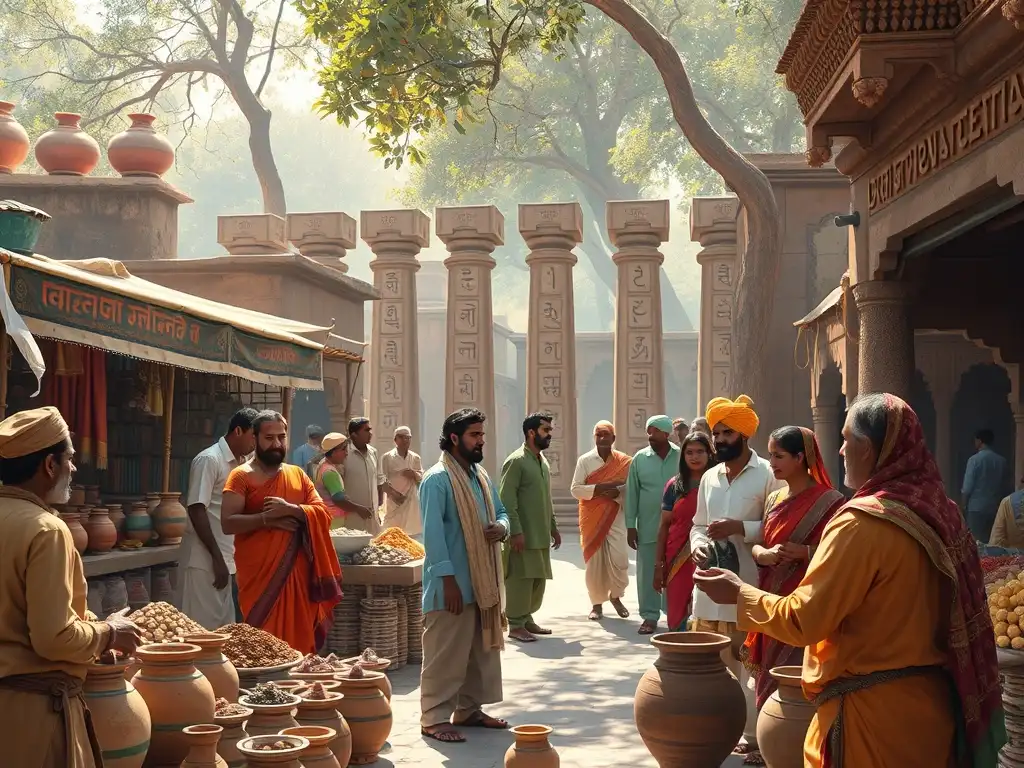
Language and Script Used in Ancient Inscriptions
The language and script utilized in ancient inscriptions are pivotal in understanding the everyday life in ancient India. Various scripts, such as Brahmi and Kharosthi, were employed across different regions and periods.
- Brahmi Script: Considered one of the earliest scripts in India, Brahmi was used extensively from the 3rd century BCE onwards. It served as a foundation for many modern Indian scripts, including Devanagari. The inscriptions etched in Brahmi often include administrative orders, religious decrees, and commemorative texts.
- Kharosthi Script: Predominantly found in the northwestern regions of ancient India, Kharosthi was primarily used for writing Gandhari, a dialect of Prakrit. This script provides insights into the socio-political landscape of the time, revealing communication between local governance and the populace.
- Prakrit Languages: Alongside these scripts, Prakrit languages played a crucial role in inscriptions. The use of these vernacular languages in everyday inscriptions indicates a direct connection to the common people, highlighting their roles and experiences.
The linguistic diversity illustrated in these inscriptions not only reflects the rich tapestry of ancient Indian society but also serves as a window into the everyday interactions and cultural nuances of its people.
Recent archaeological excavations and studies have unearthed a wealth of epigraphic evidence that illuminates various facets of everyday life in ancient India. Among the most significant discoveries are:
- Household Inscriptions: Inscriptions found in domestic settings, such as pottery and household items, have revealed details about family structures, occupations, and social roles. For example, seals from the Indus Valley civilization often depict symbols and scripts that suggest trade activities and domestic life.
- Caste and Occupation: Epigraphic evidence has provided insights into the caste system and various occupations practiced by people. Inscriptions detailing the roles of craftsmen, farmers, and traders highlight the economic activities that were integral to daily life.
- Religious Practices: Inscriptions related to temples and religious sites often reflect the rituals and festivals celebrated by the common populace. They reveal how spirituality intertwined with daily routines, providing a sense of community and identity.
- Legal Documents: Inscriptions serving as legal contracts and agreements shed light on the social norms and legal frameworks governing daily life. These documents often contain details about land ownership, trade agreements, and familial relationships.
Through these discoveries, epigraphy has significantly enriched our understanding of the nuances of daily life in ancient India, revealing how the ordinary experiences of individuals contributed to the broader historical narrative.
Notable Inscriptions that Illustrate Common Experiences
Several notable inscriptions have emerged as key pieces of evidence reflecting the common experiences of individuals in ancient India. These inscriptions provide tangible insights into various aspects of daily life:
- The Edicts of Ashoka: These inscriptions, engraved on rocks and pillars throughout his empire, not only address moral and ethical governance but also touch upon the welfare of the common people. Ashoka’s emphasis on non-violence and community service illustrates the values that shaped everyday life.
- The Hathigumpha Inscription: Inscribed by King Kharavela of Kalinga, this inscription narrates his achievements and patronage of the arts while also mentioning the contributions of local craftsmen and the importance of trade, reflecting the economic activities vital to daily existence.
- The Junagadh Rock Inscription: This inscription by Rudradaman I highlights irrigation works and public infrastructure, showcasing how governance impacted the daily lives of agrarian communities.
- The Sarnath Inscription: This inscription, dedicated to the Buddha, indicates the presence of monks and laypeople participating in religious gatherings, underscoring the communal aspects of spirituality in everyday life.
These inscriptions not only serve as historical records but also as reflections of the values, beliefs, and daily experiences of ordinary individuals in ancient Indian society. Each artifact contributes to a richer understanding of how people lived, worked, and interacted in their environments, allowing modern scholars to piece together a vivid picture of life in ancient India.
Case Studies of Everyday Life in Ancient India

The Edicts of Ashoka and Their Reflection on Society
The Edicts of Ashoka, inscribed on rocks and pillars across the Indian subcontinent during the 3rd century BCE, provide a profound insight into the everyday life in ancient India. These edicts serve not only as political proclamations but also as reflections of societal values, norms, and practices during Ashoka's reign.
- Moral and Ethical Guidelines: Ashoka emphasized the importance of dharma, which translates to moral law. His edicts highlight compassion towards all living beings, promoting non-violence and respect for life. This indicates a societal inclination towards ethical living, affecting daily interactions among individuals.
- Public Welfare Initiatives: The inscriptions detail various public welfare measures, including the establishment of hospitals for humans and animals, the planting of trees for shade and food, and the construction of wells. These initiatives underscore the state's role in enhancing the quality of life and the communal responsibility towards well-being.
- Social Harmony: Ashoka's edicts advocate for tolerance among different religious communities. This emphasis on social harmony suggests a diverse yet integrated society, where everyday life involved coexistence and mutual respect among various cultural and religious groups.
The Edicts of Ashoka, therefore, not only provide a glimpse into the governance of the Mauryan Empire but also reveal the underlying values that shaped daily life for its inhabitants.
Inscriptions from the Gupta Period: Insights into Daily Living
The Gupta Period, often referred to as the "Golden Age" of India, is marked by a flourishing of arts, science, and culture. Inscriptions from this era offer rich insights into the everyday life of people, revealing the social, economic, and cultural dynamics of the time.
- Trade and Commerce: Inscriptions indicate a vibrant trade network, with mentions of merchants and guilds. For instance, inscriptions from Ujjain highlight the role of traders in the economy, emphasizing the significance of trade in daily life. The presence of specific weights and measures in these inscriptions further illustrates the organized nature of commerce.
- Cultural Practices: The Gupta inscriptions also shed light on cultural rituals and celebrations. References to festivals, temple constructions, and patronage of the arts indicate a society deeply engaged in cultural activities. These practices not only enriched daily life but also fostered a sense of community and shared identity.
- Education and Learning: The Gupta period saw the establishment of universities, such as Nalanda, which are referenced in various inscriptions. This focus on education reflects a societal value placed on knowledge and intellectual pursuits, shaping the daily lives of individuals through learning and scholarship.
Through these inscriptions, we gain a nuanced understanding of the complexities of everyday life in ancient India, characterized by economic prosperity, cultural richness, and a commitment to education.
Local Inscriptions and Their Impact on Understanding Regional Cultures
Local inscriptions, often overlooked compared to grand epigraphs, play a crucial role in uncovering the diverse regional cultures of ancient India. These inscriptions reveal localized practices, languages, and societal structures that shaped everyday life.
- Regional Languages and Dialects: Many local inscriptions are written in regional languages, reflecting the linguistic diversity of ancient India. For example, inscriptions found in Tamil Nadu exhibit the early forms of Tamil, demonstrating the cultural significance of language in daily interactions and local identity.
- Cultural Specificities: Local inscriptions often commemorate events, such as temple donations or local governance, providing insights into regional customs and practices. These records highlight how local communities organized their social and religious lives, reflecting a tapestry of cultural identities across the Indian subcontinent.
- Economic Activities: The mention of local guilds, agricultural practices, and trade routes in these inscriptions showcases the economic landscape of various regions. This information is vital for understanding how daily life was influenced by local resources, trade opportunities, and agricultural cycles.
By examining local inscriptions, we can appreciate the rich tapestry of regional cultures in ancient India and how these localized practices contributed to the broader narrative of everyday life during this period.
The Impact of Geography on Everyday Life

The geography of ancient India played a pivotal role in shaping the daily lives of its inhabitants. From the fertile plains of the Indus Valley to the rugged terrains of the Himalayas, the diverse landscapes influenced agricultural practices, trade routes, and even social structures. Understanding how geography impacted everyday life provides insight into the cultural and economic practices of ancient Indian civilizations.
How Geography Influenced Daily Activities in Ancient India
The geographical features of ancient India dictated the livelihoods and daily routines of its people. For instance:
- River Valleys and Agriculture:
- The Indus River and its tributaries created fertile alluvial plains conducive to agriculture. This allowed for the cultivation of wheat, barley, and pulses, which became staples in the diet of the inhabitants.
- Evidence from the Harappan civilization indicates sophisticated irrigation systems, showcasing how geography directly impacted agricultural productivity.
- Himalayan Regions:
- In the northern regions, the Himalayas provided natural barriers that influenced trade and communication. The harsh climate limited agriculture, leading communities to rely on animal husbandry and trade with lower regions.
- Epigraphic evidence from this area often highlights the importance of trade routes that traversed mountainous terrains, indicating a reliance on the exchange of goods.
- Coastal Areas:
- The coastal regions of ancient India, such as those along the Arabian Sea and the Bay of Bengal, facilitated maritime trade. Inhabitants here engaged in fishing, boat building, and trading with distant lands.
- Inscriptions found in coastal cities reflect a vibrant exchange of goods, with references to spices and textiles that were highly sought after in global markets.
Geographical factors also influenced social structures, as communities adapted to their environments, leading to variations in daily activities, occupations, and even spiritual practices.
Regional Differences in Daily Life Reflected in Epigraphic Evidence
The regional diversity across ancient India is vividly captured in various inscriptions and epigraphic records, revealing how local geography shaped the lifestyles of different communities. Key observations include:
- Urban vs. Rural Lifestyles:
- Urban centers like Mohenjo-Daro and Harappa, located in fertile plains, showcased advanced urban planning, including drainage systems and public baths, reflecting a more complex societal organization. In contrast, rural communities often relied on subsistence farming and had simpler living arrangements.
- Cultural Practices:
- Epigraphic evidence from southern India, such as the inscriptions of the Chola dynasty, indicates a distinct cultural identity shaped by the coastal geography, where maritime activities played a significant role. Festivals and rituals often revolved around the sea, seen in inscriptions celebrating naval victories and trade.
- Occupational Variances:
- In the arid regions of Rajasthan, inscriptions reveal a focus on trade and resource management, as communities adapted to scarce water resources. This contrasts sharply with inscriptions from the fertile Ganges Valley, which highlight agricultural abundance and related festivals.
The examination of these inscriptions provides a window into the everyday life in ancient India, showcasing how geography influenced not only economic practices but also cultural identities and social hierarchies. Through epigraphy, we gain a deeper understanding of the rich tapestry of life that characterized ancient Indian civilizations, revealing the interplay between environment and daily existence.
Challenges in Interpreting Epigraphic Evidence

The study of epigraphic evidence presents a unique lens through which historians and archaeologists can uncover the intricacies of everyday life in ancient India. However, this approach is not without its challenges. The interpretation of inscriptions involves navigating a complex landscape of limitations and contextual issues that can hinder our understanding of the daily experiences of individuals from this rich historical tapestry.
Limitations of Epigraphy in Understanding Everyday Life
Epigraphy, the study of inscriptions, offers valuable insights into various aspects of ancient civilizations, yet it has inherent limitations that can restrict our comprehension of everyday life in ancient India.
-
Selective Nature of Inscriptions:
Inscriptions were often created for specific purposes, such as commemorating kings, documenting victories, or dedicating temples. As a result, the voices of common people are frequently absent. The focus tends to be on elite classes, which skews our understanding of the broader population's daily experiences.
-
Language and Script Variability:
The diversity of languages and scripts used in ancient inscriptions can pose significant challenges. For example, the transition from Brahmi to Devanagari scripts reflects varying linguistic practices. This variability can make it difficult to accurately interpret texts without specialized knowledge.
-
Fragmentation and Damage:
Many inscriptions have survived only in fragments due to the ravages of time, weather, or human intervention. This fragmentation can lead to incomplete narratives, making it challenging to piece together a coherent picture of everyday life.
-
Ambiguity in Symbolism:
The symbolic nature of many inscriptions may not provide clear insights into daily activities. For instance, while a stone inscription may commemorate a religious event, it might not elucidate how such practices influenced the daily life of ordinary people.
Issues of Context and Preservation of Inscriptions
Understanding the context in which inscriptions were created is crucial for accurate interpretation. However, several issues complicate this aspect:
-
Location of Inscriptions:
The geographical context of inscriptions can affect their meanings. Inscriptions found in urban centers might reflect different social dynamics compared to those in rural areas. This geographical disparity can lead to varying interpretations of daily life.
-
Cultural and Temporal Context:
The cultural milieu and historical period in which an inscription was created significantly influence its content. For example, an inscription from the Mauryan period may reflect different societal norms and practices compared to one from the Gupta Empire. Understanding these nuances is essential for analyzing the information related to everyday life.
-
Preservation Issues:
Inscriptions are often subject to natural decay and environmental factors that can obliterate their content. Many inscriptions have faded or eroded over time, leading to potential loss of crucial information about the lives of ordinary individuals.
-
Interpretative Bias:
Scholars may bring their own biases and perspectives to the interpretation of inscriptions. This can lead to misinterpretations or an overemphasis on certain themes, sidelining the ordinary experiences of the general populace.
While epigraphic evidence can provide glimpses into everyday life in ancient India, it is essential to approach these texts with a critical eye. Recognizing the limitations and contextual issues surrounding inscriptions can help build a more nuanced understanding of the lives of individuals from this remarkable historical period.
Conclusion: The Significance of Epigraphic Evidence in Understanding Everyday Life
Summarizing the Role of Inscriptions in Ancient Indian History
Epigraphic evidence serves as a crucial gateway to understanding the multifaceted aspects of everyday life in ancient India. Inscriptions, etched in stone, metal, and pottery, reveal insights into social structures, economic activities, religious practices, and cultural norms. These artifacts are not merely historical records; they are narratives that encapsulate the lived experiences of ordinary individuals.
- Social Hierarchies:
- Inscriptions often denote the roles and statuses of various groups in society, from artisans and merchants to priests and rulers. For instance, the Ashoka Edicts highlight the emperor's policies on social welfare, reflecting societal values and norms.
- The presence of terms indicating status, such as shudra or vaishya, allows historians to better understand the stratified nature of ancient Indian society.
- Economic Activities:
- Many inscriptions detail trade practices, taxation, and land ownership, providing a clearer picture of economic interactions. For example, inscriptions from the Mauryan period showcase trade routes and the goods exchanged, illustrating the vibrant economic life of the time.
- Local inscriptions often reference specific transactions, revealing the day-to-day economic dealings of common people.
- Religious Practices:
- Epigraphic evidence frequently highlights the significance of religious life, detailing rituals, temple dedications, and patronage. The inscriptions of the Gupta period shed light on the evolving nature of Hindu and Buddhist practices, emphasizing their impact on daily life.
- The recording of donations and endowments to temples underscores the intertwining of religion and daily existence for many individuals.
- Cultural Norms:
- Inscriptions reflect cultural values and beliefs, including family structures, education, and social customs. For instance, the Brahmi inscriptions reveal insights into literacy and education, indicating the level of knowledge among different strata of society.
- The artistic styles and languages used in these inscriptions also provide context regarding regional identities and cultural exchanges.
Future Directions for Research in Epigraphy and Daily Life
The field of epigraphy is ripe for further exploration, particularly concerning everyday life in ancient India. As researchers continue to analyze and translate inscriptions, several avenues for future study emerge:
- Interdisciplinary Approaches:
- The integration of archaeology, anthropology, and linguistics can yield richer interpretations of inscriptions. Collaborative projects may uncover new insights into social dynamics and daily routines of ancient populations.
- Utilizing technology, such as 3D scanning and digital analysis, can help in preserving and interpreting inscriptions, revealing details that may have been overlooked.
- Regional Studies:
- Focusing on regional variations in inscription styles and content can enhance understanding of localized cultures and practices. For example, examining the differences between Kannada and Tamil inscriptions can unveil distinct societal norms and daily life.
- Comparative studies across regions can highlight the interconnectedness of ancient Indian civilizations and their diverse lifestyles.
- Public Engagement and Education:
- Increasing public access to epigraphic studies through exhibitions, workshops, and online platforms can foster greater interest in ancient history. Citizen science initiatives may encourage non-specialists to contribute to the transcription and study of inscriptions.
- Educational programs can help disseminate knowledge about how these inscriptions shape our understanding of everyday life in ancient India, making the subject more accessible to the general public.
- Focus on Underrepresented Voices:
- Future research should aim to uncover the experiences of marginalized groups, including women and lower castes, through inscriptions. By analyzing lesser-known texts, historians can gain insights into the diverse experiences that comprised everyday life in ancient India.
- This inclusive approach can enhance the understanding of social dynamics and challenge prevailing narratives about ancient Indian society.
The study of epigraphic evidence is pivotal in unveiling the intricacies of everyday life in ancient India. By continuing to explore this rich field, researchers can enhance our understanding of the cultural legacy left by these ancient civilizations, illuminating the diverse experiences that shaped their world.
Frequently Asked Questions
What is epigraphic evidence?
Epigraphic evidence refers to inscriptions on materials like stone, metal, or pottery that provide insights into historical events, societal norms, and everyday life in ancient India.
How does epigraphic evidence contribute to our understanding of ancient Indian civilization?
It helps historians and archaeologists uncover details about social structures, economic activities, and the daily lives of people, revealing a more nuanced view of life in ancient India.
What can we learn about everyday life from ancient Indian inscriptions?
Inscriptions can reveal information about occupations, social status, family structures, and cultural practices, helping us understand the diversity of experiences in ancient Indian society.
Yes, common themes include trade activities, religious practices, and family roles, reflecting the interconnectedness of daily life and the broader cultural context.
What time periods do these inscriptions cover in ancient India?
These inscriptions span from the Indus Valley Civilization through various dynasties, including the Maurya and Gupta Empires, showcasing the continuity and evolution of everyday life over centuries.
Final Reflection: Uncovering the Humanity of Everyday Life in Ancient India
In exploring the epigraphic evidence that reveals the lives of everyday people in ancient India, we uncover a rich tapestry of human experience that transcends time. This exploration is not merely an academic pursuit; it resonates deeply in our current context, reminding us that the stories of ordinary individuals are often overlooked in favor of grand narratives. The lives of these individuals, their struggles, joys, and contributions, are as significant as those of kings and emperors, and it is through their stories that we can truly understand the fabric of ancient society.
The impact of this topic extends beyond historical curiosity; it shapes our cultural and social landscape today. By recognizing the voices of everyday people in ancient texts, we foster a deeper appreciation for the diversity of human experience. This perspective encourages us to value the contributions of all individuals, regardless of their status. As historian Romila Thapar aptly stated, History is not just about kings and battles; it is about the lives of people who lived in those times.
This sentiment underscores the importance of inclusivity in our understanding of history and its relevance to our present.
As we reflect on the lessons gleaned from the lives of everyday people in ancient India, I invite you to consider how these insights can inform your own life. What stories do you carry, and how can they contribute to the broader narrative of humanity? Embrace the richness of your own experiences and those of others around you, for in doing so, we honor the legacy of countless individuals who came before us. Let us commit to recognizing and celebrating the everyday lives that shape our world, ensuring that their stories are not lost to time.
Unveil the Secrets of Ancient Lives Today!
Thank you for diving into the fascinating world of epigraphic evidence and its insights into the lives of everyday people in ancient India. We hope you've uncovered valuable knowledge and inspiration through this exploration. Now, let’s take it a step further and engage with this intriguing history in actionable ways.
Here are some steps you can take to deepen your connection with ancient Indian culture:
- Join a Local History Group or Forum: Engage with like-minded enthusiasts to share insights and enrich your understanding. Look for local clubs or online communities where discussions on ancient India thrive.
- Visit a Museum or Archaeological Site: Experience history firsthand by planning a visit to a museum or an archaeological site that showcases ancient Indian artifacts. Your personal journey can lead to newfound revelations!
- Share Your Discoveries: Whether through social media or a personal blog, spread the word about what you’ve learned. Your unique perspective can spark interest in others and contribute to a growing community of history lovers.
What aspect of ancient Indian life intrigues you the most, and how do you plan to explore it further?