
How Inscriptions Serve as a Historical Record of Agricultural Practices in Ancient India


Welcome to Ancient India History, where we embark on a fascinating journey through the rich tapestry of India's past. In this exploration, we delve into the intriguing world of ancient Indian agricultural inscriptions, uncovering the invaluable insights they provide into the agricultural practices that shaped civilization. What stories do these inscriptions tell?
How did they influence the daily lives of people in ancient India? Join us as we uncover the layers of history embedded in these remarkable records, and discover the profound impact of agriculture on the societal development from the Indus Valley to the Gupta Empire. Your adventure into the depths of ancient Indian culture begins here!
- Introduction to Ancient Indian Agricultural Inscriptions
- Types of Ancient Indian Agricultural Inscriptions
- Key Themes in Ancient Indian Agricultural Inscriptions
- Regional Variations in Agricultural Inscriptions
- Analysis of Specific Ancient Indian Agricultural Inscriptions
- The Impact of Ancient Indian Agricultural Inscriptions on Modern Agriculture
- Conclusion: The Legacy of Ancient Indian Agricultural Inscriptions
- References and Further Reading on Ancient Indian Agricultural Inscriptions
-
Frequently Asked Questions
- What are ancient Indian agricultural inscriptions?
- Why are inscriptions important for understanding ancient agriculture?
- Where can we find these agricultural inscriptions in India?
- How did agricultural practices influence ancient Indian civilization?
- What role did inscriptions play in the governance of ancient agriculture?
- Final Reflection: The Enduring Legacy of Ancient Indian Agricultural Inscriptions
- Unveil the Secrets of Ancient Agricultural Wisdom!
Introduction to Ancient Indian Agricultural Inscriptions
The study of ancient Indian agricultural inscriptions offers a profound glimpse into the agricultural practices that shaped the civilizations of the Indian subcontinent. These inscriptions, etched into stone, metal, and clay, serve as invaluable records, revealing not only the techniques and tools employed by ancient farmers but also the socio-economic dynamics of their societies.
As we explore these inscriptions, we uncover the agricultural innovations that fueled the growth of vibrant communities and laid the foundation for India's rich agrarian culture. This article delves into the significance of these inscriptions within a broader historical context and examines the diverse agricultural practices that flourished in ancient India.
Importance of Inscriptions in Historical Context
Inscriptions are more than mere records; they are windows into the lives of those who lived centuries ago. Their importance in historical research cannot be overstated, as they provide:
- Primary Evidence: Inscriptions offer direct evidence of agricultural methods, crop varieties, and land management practices.
- Cultural Insights: They reflect the cultural values and religious beliefs that influenced agricultural practices.
- Chronological Framework: Inscriptions help establish timelines for technological advancements and shifts in agricultural paradigms.
- Economic Indicators: Many inscriptions detail land grants and taxation policies, shedding light on the economic structures of ancient societies.
For example, inscriptions from the Mauryan period reveal the importance of state-managed agriculture, while those from later periods, like the Gupta Empire, highlight advancements in irrigation techniques. Thus, these inscriptions serve as crucial tools for historians and archaeologists in reconstructing the agricultural landscape of ancient India.
Overview of Agricultural Practices in Ancient India
Agriculture was the backbone of ancient Indian civilization, and various practices evolved over millennia. Key aspects include:
- Crop Diversity: Ancient Indians cultivated a variety of crops, including:
- Cereals: Wheat, barley, rice
- Legumes: Pulses like lentils and chickpeas
- Fruits and Vegetables: Mangoes, melons, and spices
- Irrigation Techniques:
- Water Harvesting: Ancient texts mention methods like stepwells and tanks.
- Canal Systems: Evidence suggests extensive canal networks in regions like the Indus Valley.
- Farming Tools:
- Inscriptions often depict tools such as plows and sickles, showcasing technological advancements.
- Agricultural Festivals: Many inscriptions reference festivals celebrating harvests, indicating the cultural significance of agriculture.
- Land Ownership and Management: Inscriptions document land grants and ownership structures, reflecting the socio-political dynamics of the time.
By examining these aspects, we can appreciate the sophistication of agricultural practices in ancient India and their lasting impact on contemporary Indian culture. The inscriptions not only record these practices but also highlight the ingenuity and resilience of ancient Indian societies in the face of environmental and economic challenges.
Types of Ancient Indian Agricultural Inscriptions
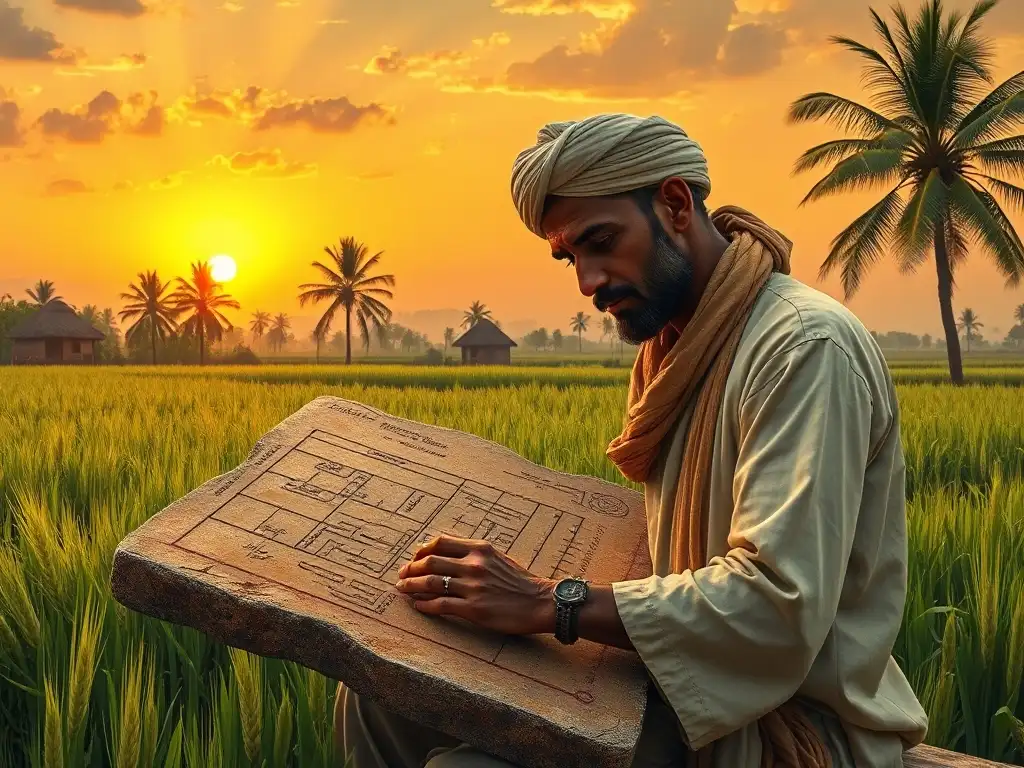
Ancient Indian agricultural inscriptions provide invaluable insights into the farming practices, crop cultivation methods, and agrarian society of early Indian civilizations. These inscriptions can be categorized into three primary types: stone inscriptions, clay tablets, and metal inscriptions. Each type offers a unique perspective on the agrarian landscape and the significance of agriculture in ancient Indian life.
Inscriptions on Stone: Durability and Significance
Stone inscriptions are among the most durable forms of historical records, often carved into rock surfaces or stone slabs. These inscriptions have survived the test of time, offering a glimpse into agricultural practices and land ownership.
- Durability: Stone inscriptions can endure harsh climatic conditions, making them reliable sources for historians. Their longevity ensures that information about agricultural practices is preserved for centuries.
- Content: These inscriptions often detail land grants, irrigation systems, and agricultural yields. For example, the famous Ashoka Edicts include references to agricultural reforms and the importance of farming in sustaining the empire.
The stone inscriptions serve as a testament to the agrarian values that were deeply embedded in the governance of ancient India.
Notable examples include inscriptions found in Uttar Pradesh and Madhya Pradesh, which indicate the taxation system based on agricultural produce. Such records highlight the relationship between rulers and farmers, revealing how agricultural productivity was crucial for economic stability.
Clay Tablets and Their Role in Agricultural Documentation
Clay tablets represent another significant medium for documenting agricultural practices in ancient India. Primarily used in the Indus Valley Civilization, these tablets provide a wealth of information about early agricultural activities.
- Material and Technique: Clay was readily available and easy to mold, allowing for detailed inscriptions. The use of a stylus to inscribe on wet clay resulted in sharp, clear markings that could be easily deciphered.
- Functionality: These tablets often contained records of crop types, harvest yields, and trade transactions. For instance, archaeological digs in Harappa and Mohenjo-Daro have uncovered tablets with inscriptions that reference the cultivation of wheat and barley.
| Key Aspects of Clay Tablets | Details |
|---|---|
| Material | Clay |
| Inscription Technique | Stylus |
| Common Content | Crop records, trade details |
In addition to agricultural documentation, clay tablets also reflect the administrative practices of the time, indicating how agriculture was interwoven with economic and social structures.
Metal Inscriptions: A Unique Perspective on Farming
Metal inscriptions, although less common than stone and clay, provide a unique perspective on agricultural practices in ancient India. These inscriptions, often made of copper or bronze, were typically used for official proclamations and commemorative purposes.
- Rarity and Importance: The rarity of metal inscriptions makes them particularly valuable. They often commemorate significant agricultural achievements or royal endorsements of farming practices.
- Examples: One notable example is the Copper Plate Inscriptions, which document land grants to temples and agricultural communities. These inscriptions often highlight the importance of agriculture to the state and its investment in agrarian development.
Metal inscriptions offer a glimpse into the socio-political dynamics of ancient agrarian societies, illustrating how agriculture was not merely an economic activity but a cornerstone of governance.
Metal inscriptions can also reveal information about irrigation techniques and crop varieties that were favored during specific periods, further enhancing our understanding of ancient Indian agriculture.
These diverse types of inscriptions collectively contribute to our understanding of ancient Indian agricultural practices, allowing historians and archaeologists to piece together the complexities of agrarian life in early Indian civilizations. Each inscription type, whether carved in stone, molded in clay, or etched in metal, plays a crucial role in preserving the narrative of ancient Indian agriculture for future generations.
Key Themes in Ancient Indian Agricultural Inscriptions

Ancient Indian agricultural inscriptions provide a valuable insight into the agrarian practices, techniques, and tools that shaped the livelihoods of civilizations over centuries. These inscriptions, carved in stone or written on metal plates, serve as historical documents that not only record agricultural methods but also reflect the socio-economic conditions of their time. The following key themes emerge from the study of ancient Indian agricultural inscriptions.
Crop Cultivation Techniques and Their Documentation
The documentation of crop cultivation techniques in ancient Indian agricultural inscriptions is extensive. These inscriptions often include detailed descriptions of various agricultural practices employed by ancient farmers. For instance, inscriptions from the Mauryan period detail the use of crop rotation and intercropping methods, enhancing soil fertility and maximizing yield.
- Examples of Cultivated Crops:
- Rice: A staple food, with inscriptions indicating its cultivation in riverine areas.
- Wheat: Frequently mentioned in the context of northern Indian agriculture.
- Millets: Noted for their drought resistance, particularly in arid regions.
The inscriptions reveal a sophisticated understanding of agronomy, with many texts discussing the timing of sowing and harvesting. This knowledge underscores the importance of climate and seasonal changes, as farmers adjusted their methods accordingly.
Seasonal Agricultural Practices Recorded
Ancient Indian agricultural inscriptions also emphasize the significance of seasons in farming practices. They often delineate specific activities associated with each season, providing a comprehensive view of the agricultural calendar.
- Spring (Vasanta):
- Preparation of fields and sowing of summer crops.
- Monsoon (Varsha):
- Irrigation techniques, such as the construction of canals and reservoirs, are frequently highlighted.
- Autumn (Sharad):
- Harvesting activities and methods for storing grains are documented.
These seasonal practices illustrate how ancient farmers adapted to environmental conditions, employing techniques like flood management and drought resistance strategies. Such adaptability is critical for understanding the sustainability of ancient agricultural systems.
Tools and Equipment Mentioned in Inscriptions
The tools and equipment used in ancient agriculture are frequently mentioned in agricultural inscriptions, shedding light on the technological advancements of the time. Various implements referenced in these texts include:
- Ploughs (Yava):
- Descriptions of wooden and iron ploughs indicate advancements in farming technology.
- Sickles (Sikha):
- Used for harvesting, the sickle's design is detailed in numerous inscriptions.
- Irrigation Tools:
- Inscriptions discuss various irrigation techniques, including the use of water-lifting devices like the persian wheel.
| Tool | Description | Period |
|---|---|---|
| Plough | Wooden/metal, designed for tilling soil | Mauryan to Gupta |
| Sickle | Curved blade, effective for harvesting crops | All periods |
| Irrigation Wheel | Mechanism for drawing water from rivers | Gupta period |
Such references not only highlight the tools' functionality but also signify the social structure surrounding agriculture, indicating the roles of craftsmen and laborers in ancient society. Understanding these tools provides a richer context for the agricultural practices that sustained ancient Indian civilizations.
Ancient Indian agricultural inscriptions are a treasure trove of information that reveals the complexity and sophistication of agricultural practices. By examining crop cultivation techniques, seasonal practices, and the tools used, we gain invaluable insights into the agricultural heritage that has significantly shaped India’s history.
Regional Variations in Agricultural Inscriptions

The study of ancient Indian agricultural inscriptions reveals a rich tapestry of regional practices and innovations. These inscriptions not only provide insights into agricultural techniques but also reflect the socio-economic conditions and cultural values of the time. Below, we explore the major inscriptions from significant periods of ancient Indian history, focusing on their contributions to our understanding of agricultural practices.
Inscriptions from the Indus Valley Civilization
The Indus Valley Civilization (IVC), which flourished between 3300 and 1300 BCE, is known for its advanced urban planning and sophisticated agricultural practices. Inscriptions from this period, primarily found on seals and pottery, provide crucial information regarding agricultural activities.
- Seals and Pottery: Many seals depict animals such as cattle and buffalo, indicating their importance in agriculture for plowing and as a source of milk. The presence of grains like barley and wheat in archaeological finds further underscores the agricultural focus of the IVC.
- Water Management: Inscriptions suggest advanced irrigation systems. For instance, the layout of the cities indicates a thorough understanding of water management, with evidence of wells and drainage systems that facilitated efficient farming.
One notable example is the Harappan seal, which features an inscription alongside a depiction of a plow, highlighting the significance of agriculture in their economy and daily life.
Agricultural Records from the Maurya Empire
The Maurya Empire (c. 322–185 BCE) represents a significant evolution in the documentation of agricultural practices. Inscriptions from this period reflect the administrative focus on agricultural productivity and land management.
- Ashoka's Edicts: Emperor Ashoka's edicts include references to agricultural practices, emphasizing the importance of sustainable farming and the welfare of farmers. For example, the Rock Edicts of Ashoka highlight the need for irrigation and the responsible use of land resources.
- Land Grants: Inscriptions detailing land grants to farmers and temples indicate the state's role in agricultural expansion. These records often specify the type of crops to be cultivated, showcasing the diversity in agricultural practices across regions.
The inscriptions from this era not only provide practical agricultural information but also reflect the moral and ethical considerations of governance related to farming.
Gupta Era Inscriptions and Their Contributions to Agriculture
The Gupta Era (c. 320–550 CE) is often referred to as the "Golden Age" of India, marked by significant advancements in science, literature, and agriculture. Inscriptions from this period highlight the intricate relationship between agriculture and economic prosperity.
- Taxation and Crop Production: Gupta inscriptions frequently mention taxes related to agricultural produce, demonstrating how agriculture was a cornerstone of the economy. The Bhabru Edicts detail the taxes imposed on various crops, providing insights into the staple crops of the time, such as rice, wheat, and pulses.
- Agricultural Innovations: The Gupta period also saw innovations in agricultural practices, including crop rotation and the use of fertilizers. Inscriptions from this time reflect a growing understanding of agricultural science, which contributed to increased yields.
- Regional Practices: Different regions under Gupta rule had unique agricultural practices, as seen in inscriptions from places like Kannauj and Pataliputra. These inscriptions often celebrate local festivals related to harvests, further emphasizing the cultural significance of agriculture.
The agricultural inscriptions from the Indus Valley, Maurya, and Gupta periods collectively illustrate the evolution of farming practices in ancient India. They serve not only as historical records but also as a testament to the ingenuity and adaptability of ancient Indian civilizations in their agricultural endeavors.
Analysis of Specific Ancient Indian Agricultural Inscriptions

The study of ancient Indian agricultural inscriptions provides invaluable insights into the agrarian practices, techniques, and socio-economic conditions of historical India. These inscriptions, often found on stone or metal plates, serve as primary sources that document not only agricultural practices but also the cultural and administrative frameworks that supported farming. By examining specific inscriptions, we can uncover the evolution of agriculture in ancient India, the relationship between governance and farming, and the technological advancements that were made over time.
Case Study: The Kharavela Inscriptions and Agricultural Insights
The Kharavela Inscriptions, found in the Udayagiri and Khandagiri caves of Odisha, date back to the 1st century BCE and are crucial for understanding agrarian practices in ancient India. These inscriptions, attributed to King Kharavela, highlight his contributions to agriculture and the promotion of farming as a vital economic activity.
- Irrigation Initiatives: The inscriptions reveal that Kharavela undertook significant irrigation projects to enhance agricultural productivity. For instance, he is credited with the construction of reservoirs and canals that facilitated water management, which was essential for crop cultivation during the dry seasons.
- Crop Variety and Production: The inscriptions also mention various crops that were cultivated, indicating a diverse agricultural landscape. The emphasis on specific crops, such as rice and pulses, suggests that these were staples in the diet of the populace. Additionally, records of surplus production demonstrate the economic prosperity of the region during Kharavela's reign.
- Land Grants: Another important aspect detailed in these inscriptions is the practice of land grants to various religious institutions and communities, which indicates the intertwining of agriculture with religious and social frameworks. This practice not only encouraged agricultural expansion but also fostered community engagement in farming activities.
Examination of Ashoka's Edicts on Agricultural Practices
Emperor Ashoka, who ruled during the 3rd century BCE, is renowned for his edicts inscribed on pillars and rocks throughout his empire. These edicts provide critical information regarding agricultural policies and practices during his reign, reflecting his commitment to the welfare of his subjects.
- Promotion of Sustainable Practices: Ashoka's edicts emphasize the importance of sustainable agricultural practices. He encouraged farmers to adopt techniques that would protect the land and ensure long-term productivity. This includes recommendations for crop rotation and soil conservation, which are foundational principles of sustainable agriculture.
- Support for Farmers: The edicts also reveal Ashoka's initiatives to support farmers, including the establishment of granaries and the regulation of market prices for essential grains. By ensuring fair prices and access to resources, Ashoka aimed to enhance the economic stability of the agrarian community.
- Moral and Ethical Guidelines: Additionally, Ashoka's emphasis on non-violence and compassion extended to agricultural practices. His edicts called for the humane treatment of animals used in farming, reflecting a broader ethical approach to agriculture that resonated with the principles of Dharma.
The Role of Inscriptions in Understanding Local Farming Techniques
Inscriptions serve as a crucial tool for understanding the local farming techniques employed in ancient India. By analyzing these texts, researchers can glean information about the agricultural methods used by different communities and the innovations that arose in response to local conditions.
- Regional Adaptations: Different regions in ancient India adapted their farming techniques based on geography, climate, and available resources. Inscriptions from various locations indicate practices such as terrace farming in hilly areas and floodplain agriculture in river valleys, showcasing the ingenuity of local farmers.
- Technological Innovations: Many inscriptions reference tools and technologies that were integral to farming. For example, mentions of ploughs, seed drills, and irrigation systems reveal advancements that significantly improved agricultural efficiency. The evolution of these technologies over time can be traced through the inscriptions, providing a timeline of agricultural development.
- Cultural Practices: Inscriptions also highlight the cultural significance of agriculture in local communities. Rituals, festivals, and agricultural calendars documented in these texts demonstrate the deep-rooted connection between farming and cultural identities, further enriching our understanding of ancient Indian society.
The analysis of ancient Indian agricultural inscriptions reveals a wealth of information regarding agricultural practices, social structures, and technological advancements. By studying these inscriptions, we can appreciate the sophistication and depth of ancient Indian agricultural systems, which laid the foundation for future generations.
The Impact of Ancient Indian Agricultural Inscriptions on Modern Agriculture

Ancient Indian agricultural inscriptions provide a fascinating glimpse into the farming practices, techniques, and philosophies of the time. These inscriptions not only serve as historical records but also offer valuable insights that can influence modern agricultural practices. By studying these inscriptions, we can uncover sustainable methods that have been employed for centuries, and integrate them into today's agricultural frameworks.
Lessons from the Past: Sustainable Practices Derived from Inscriptions
The inscriptions from various ancient Indian civilizations highlight several sustainable agricultural practices that are relevant today. These practices include:
- Crop Rotation: Many inscriptions detail the practice of rotating crops to maintain soil fertility and prevent pest infestations. This method was not only beneficial for the soil but also helped in maximizing yields.
- Water Management: Ancient texts emphasize the importance of efficient water management systems, such as irrigation channels and rainwater harvesting techniques. These systems were designed to optimize water usage, especially in arid regions.
- Organic Farming: The use of natural fertilizers, like compost and animal manure, is documented in several inscriptions. These organic methods promote soil health and reduce dependence on chemical fertilizers, aligning with modern sustainable farming principles.
- Biodiversity: Ancient farmers understood the value of planting diverse crops to enhance resilience against diseases and pests. This practice is increasingly relevant today as biodiversity is crucial for sustainable agricultural ecosystems.
The wisdom of our ancestors in agriculture is a treasure trove of sustainable practices that can guide us towards a more ecologically balanced future.
Incorporating these lessons from ancient agricultural inscriptions can help modern farmers navigate challenges such as climate change and resource depletion.
Influence of Ancient Techniques in Contemporary Farming
The agricultural techniques and philosophies found in ancient Indian inscriptions continue to resonate in contemporary farming practices. Some notable influences include:
- Traditional Knowledge Systems: Many modern agricultural methods are rooted in traditional knowledge passed down through generations. Farmers today are increasingly recognizing the value of indigenous techniques that have stood the test of time.
- Agroecology: The principles of agroecology, which focus on sustainable and biodiverse farming systems, are often reflected in ancient agricultural practices. Techniques such as intercropping and permaculture find their origins in the practices recorded in ancient inscriptions.
- Community-Based Approaches: Inscriptions often highlight the role of community in agricultural practices, where collective efforts in farming lead to better resource management and increased productivity. This community spirit is being revived in contemporary farming initiatives, fostering cooperation and shared knowledge.
- Soil Conservation: The emphasis on soil health and conservation in ancient texts aligns with current trends in regenerative agriculture. Techniques such as contour farming and cover cropping, rooted in ancient wisdom, are being adopted to combat soil erosion and degradation.
| Ancient Practice | Modern Application |
|---|---|
| Crop rotation | Sustainable crop management |
| Water management systems | Efficient irrigation techniques |
| Organic fertilizers | Organic farming methods |
| Biodiversity in crops | Permaculture and agroecology |
Ancient Indian agricultural inscriptions not only document the rich agricultural heritage of the past but also offer valuable insights that can be applied to contemporary farming. By learning from these historical practices, modern agriculture can move towards greater sustainability, ensuring food security for future generations.
Conclusion: The Legacy of Ancient Indian Agricultural Inscriptions

The legacy of ancient Indian agricultural inscriptions is profound, encapsulating a wealth of knowledge that has shaped our understanding of historical agricultural practices. These inscriptions, often etched in stone or inscribed on pottery, provide invaluable insights into the agrarian societies of ancient India, reflecting their techniques, crop choices, and societal structures.
By preserving the agricultural practices of the time, these inscriptions also highlight the cultural significance of agriculture in ancient Indian civilization. They serve as a testament to the ingenuity of farmers and the evolution of agricultural technologies, revealing how these communities adapted to their environment. The information gleaned from these inscriptions not only enriches our historical knowledge but also emphasizes the continuity of agricultural practices from ancient times to the present day.
Preservation of Agricultural Knowledge Through Inscriptions
Ancient Indian agricultural inscriptions played a crucial role in the preservation of agricultural knowledge. Through various forms of writing, such as Brahmi and Kharosthi scripts, these inscriptions documented essential practices and innovations in agriculture. Some key points regarding this preservation include:
- Documentation of Techniques: Inscriptions detail specific farming techniques, including plowing methods, irrigation systems, and crop rotation practices. For example, the use of well-documented systems like the "kharif" and "rabi" cropping cycles illustrate the agricultural calendar's significance.
- Crop Information: Many inscriptions enumerate crops cultivated during different seasons, providing insight into dietary staples. Notable crops such as rice, wheat, and pulses are frequently mentioned, indicating their importance to ancient Indian diets and economies.
- Technological Advancements: Inscriptions also reflect advancements in agricultural tools and technologies. The mentioning of plows and other implements reveals how ancient civilizations innovated to improve productivity.
- Regional Practices: Different regions of ancient India had unique agricultural practices, which are documented through local inscriptions. This diversity showcases the adaptability of agricultural methods to varied climatic and geographical conditions.
By analyzing these inscriptions, researchers can reconstruct the agricultural landscape of ancient India and appreciate the sophistication of its agrarian societies.
Future Research Directions in Agricultural Epigraphy
As the field of agricultural epigraphy continues to evolve, several promising research directions emerge that could further illuminate the rich tapestry of ancient Indian agricultural practices:
- Interdisciplinary Approaches: Collaborating with fields such as archaeology, anthropology, and environmental science can provide a more holistic understanding of agricultural practices. This interdisciplinary approach can yield new insights from existing inscriptions.
- Technological Integration: Utilizing technology, such as digital imaging and geographic information systems (GIS), can enhance the study of inscriptions. These tools can help in mapping ancient agricultural landscapes and understanding the spatial distribution of agricultural practices.
- Focus on Lesser-Known Inscriptions: While many well-known inscriptions exist, there is a wealth of lesser-known inscriptions waiting to be studied. Future research should prioritize these inscriptions to uncover regional variations and lesser-explored agricultural practices.
- Cultural Contextualization: Understanding the cultural and social contexts surrounding agricultural inscriptions can provide deeper insights into the values and beliefs of ancient societies. Exploring how agriculture influenced social structures and rituals could lead to fascinating discoveries.
- Sustainability Lessons: Ancient agricultural practices may offer valuable lessons for contemporary agriculture, particularly in sustainable farming methods. Researching these historical techniques can inform modern practices and contribute to sustainable agricultural development.
The study of ancient Indian agricultural inscriptions not only preserves the knowledge of past civilizations but also paves the way for future discoveries that can inform both historical research and modern agricultural practices.
References and Further Reading on Ancient Indian Agricultural Inscriptions
Suggested Books and Articles
- "Agriculture in Ancient India" by R. S. Sharma
- This comprehensive work delves into the agricultural practices of ancient Indian civilizations, analyzing various inscriptions to understand the techniques and crops that were prevalent during different periods.
- "Inscriptions and Epigraphy of India" by R. N. Misra
- Misra's book offers a detailed examination of inscriptions across India, including those related to agriculture. It provides context and interpretation of significant agricultural inscriptions from various dynasties.
- "The Indus Valley Civilization: A Historical Overview" by B. B. Lal
- This text discusses the agricultural practices of the Indus Valley Civilization, supported by archaeological findings and inscriptions. It is a crucial resource for understanding the roots of ancient Indian agriculture.
- "Ancient Indian Agriculture: An Overview" by K. S. Shukla
- This article discusses the evolution of agricultural practices in ancient India, highlighting the role of inscriptions in documenting these practices.
- "The Role of Inscriptions in Understanding Ancient Indian Economy" by N. P. Gupta
- Gupta analyzes how agricultural inscriptions contribute to our knowledge of the economic structures in ancient India, providing insights into trade, crop yields, and land ownership.
Online Resources for Further Exploration
- Digital South Asia Library (DSAL)
- This online resource provides access to a wealth of information on South Asian studies, including collections of agricultural inscriptions and epigraphs relevant to ancient India.
- Archaeological Survey of India (ASI) Website
- The ASI's website offers databases of inscriptions, including those related to agriculture, along with detailed descriptions and photographs that can aid research.
- India History Congress
- The congress publishes proceedings that often include articles and papers related to ancient Indian agricultural practices and their documentation through inscriptions. This is an excellent source for current research trends.
- JSTOR
- A digital library providing access to thousands of academic articles, JSTOR has numerous publications focusing on ancient Indian agriculture and inscriptions, which can be crucial for in-depth research.
- National Mission for Manuscripts
- This initiative aims to preserve and digitize manuscripts, including those containing agricultural inscriptions. Their online portal provides access to various manuscripts that can be explored for research purposes.
By engaging with these resources, researchers and enthusiasts can deepen their understanding of ancient Indian agricultural inscriptions and their significance in the historical narrative of agricultural practices in India.
Frequently Asked Questions
What are ancient Indian agricultural inscriptions?
Ancient Indian agricultural inscriptions are engravings or writings found in various historical sites that document farming practices, techniques, and crop management methods used by ancient civilizations in India.
Why are inscriptions important for understanding ancient agriculture?
Inscriptions provide first-hand evidence of agricultural practices, helping historians and researchers to uncover the evolution of farming techniques and the socio-economic conditions of ancient societies.
Where can we find these agricultural inscriptions in India?
These inscriptions can be found in various archaeological sites, temples, and monuments across India, including regions like the Indus Valley, which is known for its early urban agriculture.
How did agricultural practices influence ancient Indian civilization?
Agricultural practices were central to the economic stability and cultural development of ancient Indian civilizations, leading to urbanization, trade, and the establishment of complex societal structures.
What role did inscriptions play in the governance of ancient agriculture?
Inscriptions often served as legal records or guidelines for agricultural practices, helping to regulate land use, taxation, and resource management within ancient Indian kingdoms.
Final Reflection: The Enduring Legacy of Ancient Indian Agricultural Inscriptions
The exploration of ancient Indian agricultural inscriptions reveals their profound significance in understanding the agricultural practices of the past and their relevance in today's world. These inscriptions not only serve as historical records but also as a testament to the ingenuity and adaptability of ancient societies. In a time when sustainable practices are more crucial than ever, the lessons embedded in these inscriptions resonate deeply, reminding us of the importance of learning from our ancestors.
The influence of these inscriptions extends beyond mere historical curiosity; they shape our cultural and social landscapes by connecting us to our roots and informing contemporary agricultural practices. As we navigate modern challenges in agriculture, such as climate change and food security, these ancient records provide valuable insights into sustainable farming techniques and community-based agriculture. History is not just about the past; it is a guide to the future.
This quote encapsulates the essence of how ancient wisdom can inform our present and future agricultural endeavors.
As you reflect on the significance of ancient Indian agricultural inscriptions, consider how you can apply these lessons in your own life. Embrace the wisdom of the past to inspire sustainable practices in your community and personal choices. Let the stories etched in stone guide you toward a more mindful relationship with the land, fostering a deeper appreciation for the agricultural heritage that has shaped civilizations. Together, we can honor this legacy and cultivate a future that respects the balance between tradition and innovation.
Unveil the Secrets of Ancient Agricultural Wisdom!
Thank you for exploring the fascinating world of inscriptions and their vital role in unraveling the agricultural practices of ancient India. Your curiosity not only enriches your understanding but also helps preserve this invaluable knowledge for future generations. Now, let’s take a moment to turn that knowledge into action!
Here are some practical steps you can take right now:
- Dive Deeper: Research a specific agricultural inscription from ancient India that intrigues you. You might discover surprising techniques or crops that are still relevant today!
- Share What You Learn: Discuss your findings with friends or family. Engaging others can spark interest in our shared heritage and promote broader discussions about historical agriculture.
- Join a Community: Explore forums or groups dedicated to ancient history and agriculture. Engaging with like-minded individuals can provide new insights and foster a supportive learning environment.
Which ancient agricultural practice do you find most compelling and relevant to today's farming methods?