
The Role of Propaganda in Ashoka’s Rule: The Edicts Explained


Welcome to Ancient India History, where we embark on a journey through the rich tapestry of India's past, uncovering the remarkable civilizations that shaped its identity. In today's exploration, we delve into the profound theme of Propaganda in Ashoka's Edicts, revealing how this pivotal ruler utilized powerful communication to unify and guide his empire. What motivated Ashoka to craft these edicts, and how did they influence the course of history?
Prepare to be captivated as we unravel the intricate layers of his rule and the lasting impact of his messages. Your adventure into the depths of ancient wisdom begins now!
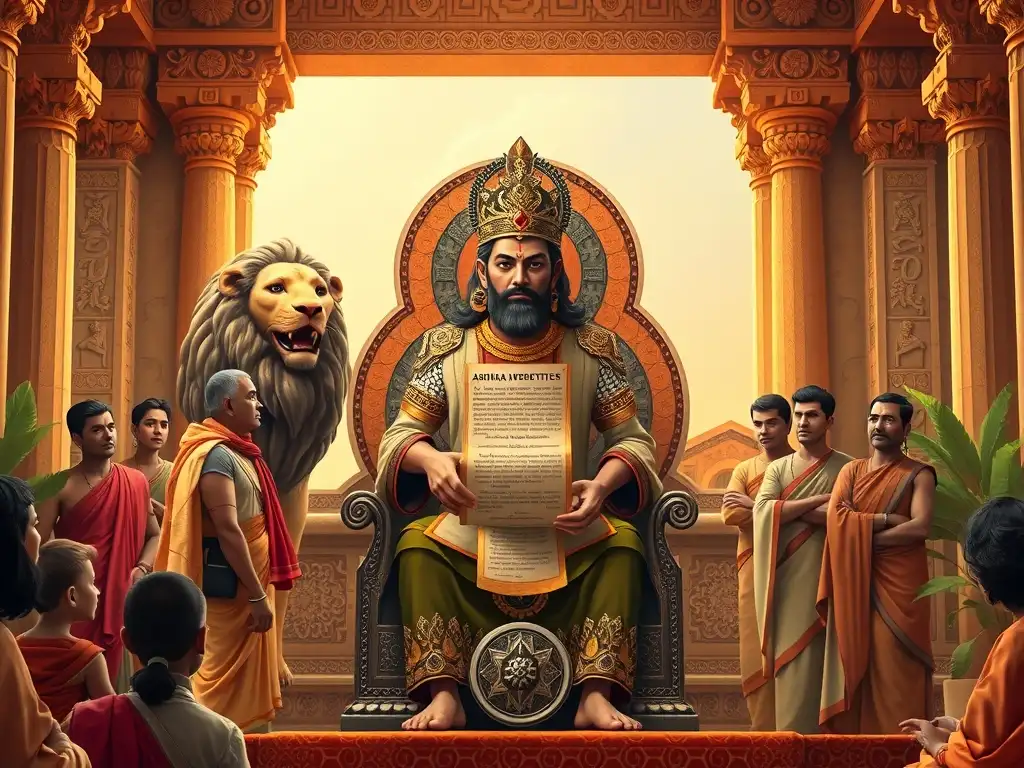
Introduction to Propaganda in Ashoka's Edicts
The reign of Ashoka the Great, one of ancient India's most renowned emperors, marked a transformative period characterized by profound cultural and political shifts. Notably, Ashoka's use of propaganda in his edicts played a crucial role in shaping public perception and consolidating his authority.
These edicts, inscribed on pillars and rocks across his empire, served not only as legal proclamations but also as powerful tools of communication that conveyed his vision of governance, morality, and societal welfare. By examining the role of propaganda in Ashoka's edicts, we uncover how these messages were intricately crafted to promote his ideals and ensure that his reign was synonymous with peace and prosperity.
Overview of Ashoka the Great
Ashoka, who ruled from 268 to 232 BCE, was the third emperor of the Maurya Dynasty. His reign is often heralded as the golden age of ancient India due to its significant advancements in art, architecture, and governance.
After a transformative experience following the Kalinga War, where he witnessed the devastation caused by violence, Ashoka embraced Buddhism and committed himself to the principles of non-violence and dharma (moral law). This shift in perspective not only influenced his policies but also set the stage for the propagation of his ideas through the edicts, which aimed to foster a unified and morally grounded society.
Significance of the Edicts in Ancient India
The edicts of Ashoka are pivotal in understanding the historical narrative of ancient India. They provide insight into the socio-political landscape of the time and the emperor's approach to governance. Composed in various languages, including Brahmi and Kharosthi, these inscriptions are invaluable for historians, as they shed light on Ashoka's administrative strategies, religious policies, and efforts towards social welfare. The edicts are not merely historical documents; they symbolize a significant shift towards ethical governance, emphasizing the importance of public morality and the welfare of the subjects under Ashoka's rule.
The Concept of Propaganda in Historical Context
Propaganda, in the context of Ashoka's edicts, refers to the strategic communication aimed at influencing public opinion and legitimizing authority. Throughout history, leaders have employed various forms of propaganda to consolidate power and promote their ideologies. In Ashoka's case, the edicts served as a medium to disseminate his vision of a just and compassionate rule, effectively utilizing the principles of Buddhism to resonate with the populace. By promoting values such as tolerance, compassion, and ethical conduct, Ashoka's propaganda not only reinforced his authority but also sought to elevate the moral standards of society.
Understanding Ashoka's Edicts
Definition and Purpose of Ashoka's Edicts
Ashoka's edicts are a collection of inscriptions that articulate his policies, moral principles, and directives. They serve multiple purposes, including:
- Legal Authority: Establishing laws and regulations.
- Moral Guidance: Promoting ethical behavior among subjects.
- Cultural Integration: Fostering unity across diverse regions of his empire.
The edicts were intended to transcend geographical and linguistic barriers, making them accessible to a broad audience and reinforcing Ashoka's role as a benevolent ruler.
The Historical Background of the Edicts
The edicts emerged during a significant period of change in ancient India. Following Ashoka's conversion to Buddhism after the Kalinga War, he sought to distance himself from the violence of his earlier campaigns. The edicts reflect this transformative phase, marked by a commitment to non-violence and the propagation of Buddhist values. They were strategically placed in public spaces to reach as many people as possible, reinforcing the message of peace and moral governance throughout his vast empire.
The Language and Format of the Edicts
The language and format of Ashoka's edicts were meticulously chosen to ensure clarity and impact. The inscriptions were predominantly written in:
- Brahmi Script: Commonly used in the Indian subcontinent.
- Kharosthi Script: Used in regions of present-day Pakistan and Afghanistan.
The straightforward language and direct tone of the edicts were designed to resonate with the common people, making complex ideas accessible. Additionally, the use of symbols and images in some edicts further enhanced their communicative power, allowing Ashoka to convey his message effectively across diverse cultures and languages.
The Role of Propaganda in Ashoka's Rule
The reign of Ashoka the Great, from 268 to 232 BCE, marked a significant period in Indian history, characterized by a shift from conquest to governance through moral and ethical leadership. Central to this transformation was the strategic use of propaganda, particularly through the dissemination of the Edicts of Ashoka. These inscriptions served not only as legal decrees but also as a means of promoting his vision of a just and compassionate rule. Ashoka's propaganda was designed to communicate his principles and policies, fostering a sense of unity and shared purpose among the diverse populations of the Mauryan Empire.
Ashoka employed various communication strategies to craft his public image as a benevolent ruler. The Edicts, inscribed on rocks and pillars across the empire, conveyed messages of peace, tolerance, and social welfare. This form of propaganda was crucial, as it helped legitimize his authority, especially following the violent conquests that characterized the early part of his reign. By promoting the values of Dharmic governance, Ashoka aimed to reshape the narrative of his rule from one of military dominance to one of moral leadership.
How Ashoka Utilized Propaganda in Governance
Ashoka's governance was heavily influenced by his conversion to Buddhism, which emphasized non-violence, compassion, and moral integrity. He skillfully utilized propaganda to embed these principles within the fabric of Mauryan society. The Edicts were a primary tool for this purpose, addressing various aspects of governance, including justice, ethical behavior, and the welfare of citizens.
The inscriptions often emphasized the importance of Dharma, or moral law, which Ashoka believed should guide both personal conduct and state affairs. By publicizing his commitment to these ideals, he sought to cultivate a civic identity grounded in ethical values. The Edicts also called for the humane treatment of animals and promoted charitable activities, thereby reinforcing the image of a ruler deeply concerned with the welfare of his subjects.
Moreover, Ashoka's choice of language and symbols in the Edicts was strategic. He employed Prakrit for accessibility, ensuring that his messages reached a broader audience. This inclusivity in communication strengthened the connection between the ruler and his subjects, fostering loyalty and social cohesion.
Key Themes in Ashoka's Edicts
The Edicts of Ashoka encapsulate several key themes that reflect his vision for the Mauryan Empire. These include:
- Non-violence (Ahimsa): Ashoka's commitment to non-violence is prominently featured in his Edicts, advocating for peaceful coexistence and the avoidance of harm to all living beings.
- Compassion and Welfare: The inscriptions emphasize the importance of compassion towards all, particularly the marginalized and suffering. Ashoka encouraged charitable acts and the establishment of hospitals and rest houses.
- Moral Governance: The promotion of Dharma as a guiding principle for both rulers and subjects is a recurring theme. Ashoka sought to instill a sense of moral responsibility within his administration.
- Tolerance and Religious Freedom: Ashoka's Edicts advocate for respect and tolerance among different religious communities, reflecting his commitment to a pluralistic society.
These themes not only communicated Ashoka's values but also served to create a unified moral framework for the diverse populations under his rule.
The Impact of Propaganda on Society
The use of propaganda through the Edicts had profound implications for society in the Mauryan Empire. By promoting ethical governance and social responsibility, Ashoka's messages resonated with the populace, fostering a culture of mutual respect and cooperation.
Influence on the Mauryan Empire's Subjects
The Edicts played a pivotal role in shaping the attitudes and behaviors of Ashoka's subjects. By consistently reiterating principles of compassion and morality, the propaganda helped cultivate a sense of civic duty among the people. The emphasis on welfare initiatives and ethical conduct encouraged citizens to engage in community service and support for the less fortunate.
Furthermore, the Edicts served as a reminder of the ruler's expectations, reinforcing the notion that ethical governance was a shared responsibility. This collective sense of purpose contributed to a more harmonious society, reducing conflicts and promoting social stability.
Changes in Public Perception and Behavior
Ashoka's propaganda led to significant changes in public perception regarding the role of the ruler and the state. The Edicts positioned Ashoka not merely as a sovereign but as a moral leader dedicated to the welfare of his people. This shift in perception encouraged subjects to view governance as a partnership between the ruler and the ruled, fostering greater engagement in civic matters.
Additionally, the promotion of non-violence and compassion influenced social behavior, encouraging individuals to act with empathy and understanding. This cultural transformation facilitated the spread of Buddhist ideals throughout the empire, leading to a gradual evolution in societal norms and values.
The Role of Edicts in Unifying Diverse Populations
One of the most significant impacts of Ashoka's propaganda was its role in unifying the diverse populations of the Mauryan Empire. The Edicts served as a common reference point, transcending regional languages and cultural differences. By promoting shared values and ethical principles, Ashoka sought to create a cohesive national identity.
The emphasis on tolerance and respect for various faiths further strengthened this unity, allowing different communities to coexist peacefully. Ashoka's vision of a unified empire based on moral governance laid the groundwork for subsequent Indian civilizations, influencing the region's sociopolitical landscape for centuries to come.
Analysis of Specific Edicts as Propaganda Tools

Ashoka's Edicts serve as remarkable examples of how propaganda can be employed to consolidate power and promote a cohesive state ideology. Through these edicts, Ashoka sought to communicate his vision of governance, emphasizing moral values, social harmony, and the importance of Dharma. Each edict was strategically placed in prominent locations, ensuring that they reached a wide audience, including both the literate elite and the common populace. This section delves into the specific edicts that exemplify Ashoka's use of propaganda as a tool for governance, examining their content and impact.
Examination of Edict I: The Importance of Dharma
In Edict I, Ashoka emphasizes the significance of Dharma, or righteousness, as a guiding principle for his rule. He articulates that the welfare of his subjects is intrinsically linked to adherence to Dharma, which encompasses ethical behavior, compassion, and moral integrity. This edict serves as a tool of propaganda by aligning Ashoka's authority with a higher moral order, thereby legitimizing his rule.
By promoting Dharma, Ashoka not only seeks to instill a sense of moral responsibility among his subjects but also positions himself as a benevolent ruler who prioritizes the well-being of his people. The emphasis on Dharma acts as a unifying force, encouraging individuals from diverse backgrounds to embrace a common ethical framework.
Analysis of Edict II: Promoting Social Harmony
Edict II focuses on the promotion of social harmony and the necessity of mutual respect among different religious and social groups. Ashoka's call for tolerance and understanding among various sects reflects his intention to create a cohesive society amidst the diversity of the Mauryan Empire. This edict serves as a propaganda tool by highlighting Ashoka's role as a unifier and protector of peace.
By advocating for social harmony, he not only seeks to reduce conflicts but also reinforces his image as a ruler committed to the welfare of all his subjects. This inclusive approach to governance is a strategic move to foster loyalty and stability within his empire.
Interpretation of Edict III: Encouragement of Non-Violence
In Edict III, Ashoka explicitly advocates for non-violence (Ahimsa) as a core tenet of his governance. This edict reflects his personal transformation following the Kalinga War, where he witnessed the devastating effects of violence. By promoting non-violence, Ashoka positions himself as a compassionate leader who prioritizes peaceful coexistence over militaristic endeavors.
This message is a powerful propaganda tool, as it not only appeals to the moral sensibilities of his subjects but also serves to distance his rule from the violent conquest associated with previous rulers. The emphasis on non-violence reinforces a new identity for the Mauryan Empire, centered around peace and ethical governance.
Comparison of Ashoka’s Propaganda Techniques with Other Rulers
Ashoka's propaganda strategies can be effectively compared to those of other historical rulers, revealing both similarities and differences in their approaches. While many leaders used propaganda to fortify their reigns, Ashoka's unique emphasis on moral governance and non-violence sets him apart.
Similarities with Persian Propaganda Strategies
Like the Persian Empire, Ashoka employed propaganda to unify diverse populations under a single rule. The Persians utilized inscriptions and monumental architecture to convey their power and benevolence, paralleling Ashoka's use of edicts. Both rulers aimed to legitimize their authority by presenting themselves as protectors of their subjects. However, while Persian propaganda often focused on military prowess and divine sanction, Ashoka's approach was distinctly moralistic, highlighting ethical governance as a foundation for his authority.
Differences in Approach Compared to Alexander the Great
In contrast to Alexander the Great, whose propaganda emphasized conquest and personal glory, Ashoka's messaging revolved around peace and moral leadership. Alexander sought to instill fear and admiration through his military successes, while Ashoka's edicts aimed to foster goodwill and ethical behavior among his subjects. This divergence illustrates a significant shift in the role of propaganda from one rooted in violence to one centered on moral teachings, marking a pivotal evolution in the use of propaganda in governance.
Lessons from Ashoka’s Propaganda for Modern Leaders
Ashoka's use of propaganda through his edicts offers valuable lessons for modern leaders. His emphasis on ethical governance, social harmony, and non-violence resonates in contemporary political discourse, where public trust and moral authority are paramount. Modern leaders can learn from Ashoka's ability to communicate effectively with a diverse populace and the importance of aligning their authority with ethical principles. By prioritizing the welfare of their constituents and promoting inclusive values, leaders today can cultivate a sense of loyalty and unity that transcends divisions, mirroring the successful strategies employed by Ashoka during his reign.
Conclusion
The exploration of propaganda in Ashoka's Edicts reveals a multifaceted approach to governance that transcended mere political control. Ashoka, through his edicts, effectively communicated his ideals of dhamma (moral law) and sought to unify a diverse empire under a banner of ethical governance. By embedding moral principles into statecraft, Ashoka not only elevated his rule but also established a template for the use of propaganda as a means of fostering social cohesion and cultural identity.
Summary of the Role of Propaganda in Ashoka's Rule
Propaganda in Ashoka's Edicts served as a strategic tool to disseminate his vision of governance and societal values. Through inscriptions carved on rocks and pillars across the Indian subcontinent, Ashoka articulated his commitment to non-violence, compassion, and social welfare. This form of communication was critical in reaching diverse populations across various regions, thus reinforcing his authority and moral legitimacy. The edicts not only functioned as reminders of Ashoka's principles but also as instruments for influencing public behavior and attitudes toward his rule.
The Lasting Legacy of Ashoka's Edicts in Indian History
The legacy of Ashoka's Edicts extends far beyond his reign, impacting subsequent generations and shaping Indian thought. These inscriptions have been pivotal in promoting concepts of ethical governance and social responsibility. The emphasis on moral values and the welfare of subjects laid a foundation for future rulers who sought to emulate Ashoka's ideals. Moreover, the edicts have left an indelible mark on the cultural and spiritual landscape of India, inspiring movements centered around peace and non-violence, as seen in later figures like Mahatma Gandhi.
Reflection on the Importance of Understanding Propaganda in Governance
Understanding propaganda in governance, particularly through the lens of Ashoka's Edicts, is crucial for comprehending the dynamics of power and authority in ancient times. It sheds light on how leaders can shape societal norms and values through strategic communication. Analyzing these historical examples provides contemporary leaders and scholars with insights into the role of propaganda in influencing public perception and driving social change. Recognizing the impact of such narratives helps us appreciate the complexities of governance and the enduring power of ideas in shaping history.
References
Key Sources on Ashoka and His Edicts
- Edicts of Ashoka: The original inscriptions and translations provide primary insights into Ashoka's thoughts and policies.
- "The Life of the Buddha and the Early History of the Buddhist Community" by A.L. Basham: A comprehensive examination of Ashoka's influence on Buddhism and governance.
- "Ashoka: The Search for the True India" by Charles Allen: This work explores Ashoka's life, his conversion to Buddhism, and the implications of his edicts.
Suggested Further Reading on Ancient Indian History
- "The History of India" by Romila Thapar: A broad overview of Indian history, including the Mauryan period and Ashoka's contributions.
- "A History of Ancient India" by Upinder Singh: This book provides a detailed account of ancient Indian civilizations, focusing on their cultural and political developments.
- "The Mauryan Empire" by R.S. Sharma: An in-depth analysis of the Mauryan Empire's structure, policies, and Ashoka's role within it.
- Introduction to Propaganda in Ashoka's Edicts
- Understanding Ashoka's Edicts
- The Role of Propaganda in Ashoka's Rule
- The Impact of Propaganda on Society
- Analysis of Specific Edicts as Propaganda Tools
- Comparison of Ashoka’s Propaganda Techniques with Other Rulers
- Conclusion
- References
Frequently Asked Questions
What are Ashoka's Edicts?
Ashoka's Edicts are a series of inscriptions on pillars and rocks across India, detailing his moral and ethical guidelines, as well as his commitment to Buddhism and non-violence.
How did Ashoka use propaganda in his rule?
Ashoka utilized propaganda through his Edicts to promote his philosophy of peace, social welfare, and to reinforce his image as a just ruler, effectively communicating with his subjects.
What themes are present in Ashoka's Edicts?
The Edicts often emphasize themes of compassion, tolerance, and the importance of dharma (moral law), showcasing Ashoka's dedication to the welfare of his people and the spread of Buddhism.
Why are Ashoka's Edicts considered significant?
They are significant because they provide insight into ancient Indian governance, reflect cultural values, and serve as early examples of state-sponsored communication aimed at shaping public opinion.
How do Ashoka's Edicts relate to modern propaganda?
Ashoka’s Edicts are an early form of propaganda that illustrate how rulers can use public messages to influence societal values and behaviors, paralleling modern techniques in political communication and public relations.
Final Reflection: The Enduring Legacy of Propaganda in Ashoka's Edicts
The exploration of propaganda in Ashoka's edicts reveals a profound connection between ancient governance and modern communication strategies. In a world where information shapes perceptions and influences decisions, understanding how Ashoka utilized propaganda to promote his ideals of Dharma and social welfare is more relevant than ever. The strategic dissemination of his edicts not only solidified his authority but also fostered a sense of unity and moral responsibility among his subjects. This historical example serves as a striking reminder of the power of narrative in shaping societies.
Clearly, the impact of Ashoka's propaganda extends beyond his reign, influencing the cultural and social landscape of India and beyond. The principles embedded in his edicts resonate with contemporary discussions on ethics, governance, and the role of leadership in society. As we navigate the complexities of modern communication, the lessons from Ashoka's time remind us of the importance of integrity and truthfulness in our narratives. What we communicate shapes who we are and how we are perceived.
As we reflect on the role of propaganda in Ashoka's edicts, let us consider how we can apply these lessons in our own lives. How can we ensure that our messages promote understanding, compassion, and unity in our communities? I invite you to think critically about the narratives you encounter and contribute to, recognizing the power they hold in shaping our collective future. Embrace the responsibility of being a thoughtful communicator, and let the legacy of Ashoka inspire you to wield the power of words for positive change.
Unlock the Wisdom of Ashoka: Take Action Today!
Thank you for exploring the fascinating world of Ashoka’s rule with us! You've gained valuable insights into how propaganda shaped an empire and the enduring impact of his edicts. Now, it’s time to transform that knowledge into meaningful action!
Here are some exciting ways you can delve deeper:
- Reflect on Ashoka's edicts: Select one edict that resonates with you and consider how its message can be applied to contemporary society.
- Share your insights: Engage with friends or share your thoughts on social media—what surprised you most about Ashoka's use of propaganda?
- Dive deeper: Investigate other historical figures who utilized communication as a leadership tool, and compare their approaches to those of Ashoka.
Which aspect of Ashoka's propaganda do you believe could inspire today’s leaders? We invite you to share your thoughts below!