
The Mysteries of Ashoka: Uncovering LesserKnown Facts

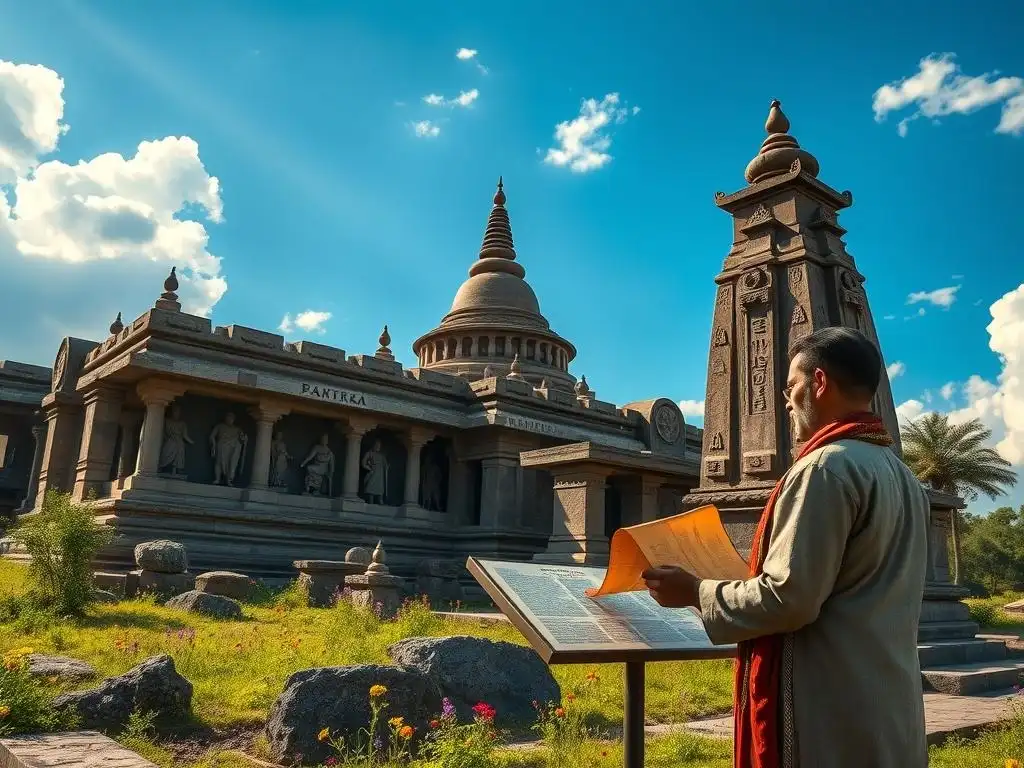
Welcome to Ancient India History, where we invite you to embark on a journey through the rich tapestry of one of the world’s oldest civilizations. Here, we delve into the fascinating stories and remarkable contributions of ancient Indian cultures, from the enigmatic Indus Valley to the illustrious Gupta Empire. In our featured article, "The Mysteries of Ashoka: Uncovering Lesser-Known Facts," we reveal surprising insights about one of history's most influential emperors.
What secrets lay hidden beneath the surface of Ashoka's reign? Join us as we unravel these captivating truths and ignite your curiosity about this pivotal figure in Indian history.
Introduction to Ashoka the Great
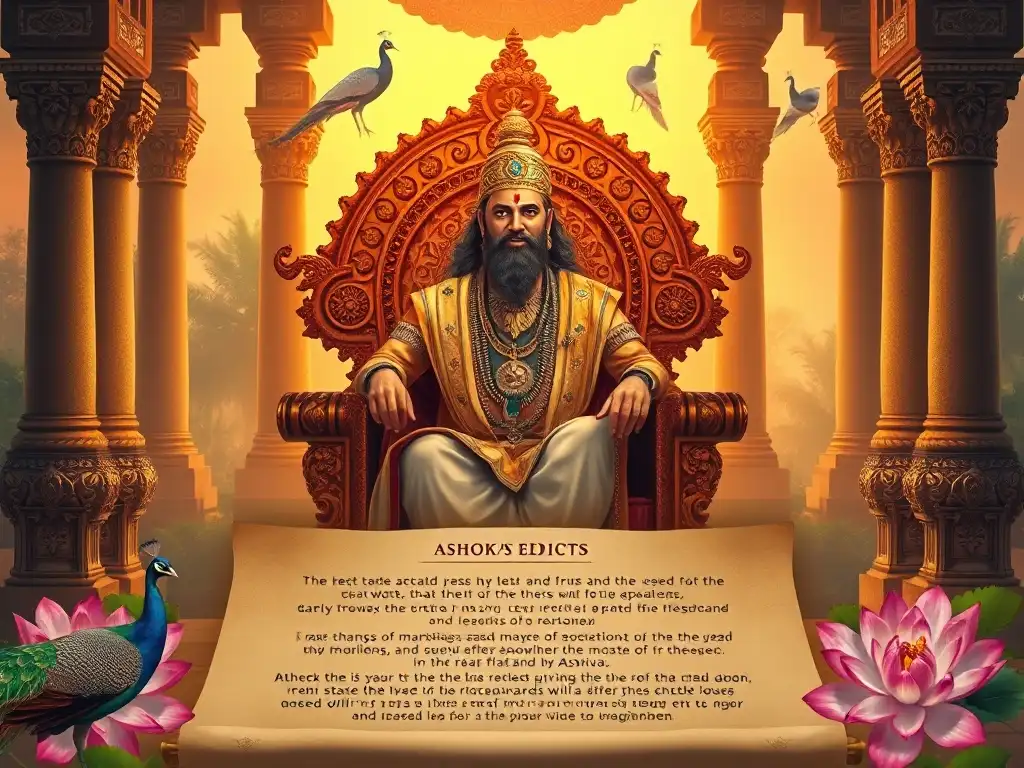
Ashoka the Great, one of the most renowned emperors of ancient India, is celebrated for his pivotal role in the spread of Buddhism and his unique approach to governance. His reign, which occurred during the 3rd century BCE, marked a significant transformation in Indian history, as he transitioned from a fierce warrior to a proponent of peace and non-violence.
However, while many are familiar with his major achievements, such as the edicts inscribed on pillars across his empire, there exists a wealth of lesser-known facts about Ashoka that can deepen our understanding of his character and the historical context in which he ruled. This article will delve into these intriguing aspects, shedding light on the complexities of his legacy and the far-reaching impact of his reign.
Overview of Ashoka's Legacy
Ashoka's legacy is multifaceted, encompassing not only his military conquests but also his philosophical evolution. After the bloody Kalinga War, which profoundly affected him, Ashoka adopted the principles of Dharma, focusing on moral governance and the welfare of his subjects. His edicts, which promote ethical conduct, religious tolerance, and non-violence, serve as a testament to his commitment to these ideals.
Moreover, Ashoka's support for Buddhism played a crucial role in its dissemination beyond India, influencing regions as far as Sri Lanka and Southeast Asia. His reign is often viewed through the lens of these well-documented facts; however, exploring lesser-known facets reveals a more nuanced portrait of this extraordinary ruler.
Importance of Lesser-Known Facts About Ashoka
Understanding the lesser-known facts about Ashoka is vital for several reasons:
- Humanizing Historical Figures: These facts provide insight into Ashoka's personal struggles, motivations, and the challenges he faced, making him a more relatable figure.
- Cultural Insights: They reveal the cultural and societal dynamics of the Maurya Empire, enhancing our comprehension of ancient Indian civilization.
- Influence on Modern Thought: Ashoka's principles continue to resonate today, and lesser-known aspects of his life can inform contemporary discussions on governance, ethics, and social justice.
Historical Context of Ashoka's Reign
To appreciate the complexities of Ashoka's character and reign, it is essential to consider the historical backdrop against which he ruled.
Overview of the Maurya Empire
The Maurya Empire, founded by Chandragupta Maurya in 322 BCE, was one of the largest empires in ancient India. At its zenith, it extended across the Indian subcontinent, characterized by a sophisticated administrative system and a flourishing economy. The empire's capital, Pataliputra (modern-day Patna), was a hub of culture and commerce.
Under Ashoka, the empire reached new heights, both territorially and culturally. Yet, the vastness of the empire also brought challenges, including the need for effective governance and the management of diverse populations with varying beliefs and practices.
Ashoka's Ascension to the Throne
Ashoka ascended to the throne following the death of his father, Bindusara, around 273 BCE. His rise was marked by familial rivalry and conflict, leading to speculation about his character and capabilities. Initially, Ashoka was known for his military prowess and strategic acumen, qualities that helped him secure his position as a powerful ruler. However, the transformative experience of the Kalinga War would forever change his outlook on life and governance, setting the stage for the philosophical shift that defined his legacy.
By exploring these dimensions of Ashoka's reign, we can uncover a more profound understanding of the man behind the title, enriching our appreciation for his contributions to ancient Indian history.
Key Achievements of Ashoka
Ashoka the Great, who reigned from 268 to 232 BCE, is renowned for several significant achievements that shaped the course of Indian history. His most prominent accomplishment was the transformation of his empire through the principles of Buddhism after the traumatic experience of the Kalinga War. This war, which resulted in massive loss of life, led Ashoka to embrace non-violence and compassion, steering the Mauryan Empire towards a path of peace.
Moreover, Ashoka expanded his empire to encompass a vast territory that included present-day India, Pakistan, and parts of Afghanistan and Bangladesh. This unification not only brought political stability but also facilitated cultural exchanges and the spread of ideas across diverse regions. His establishment of a centralized administration with a well-organized bureaucracy is another key achievement, which ensured effective governance and the implementation of his policies.
Major Contributions to Buddhism
Ashoka's contributions to Buddhism are monumental and transformative. After converting to Buddhism, he became a fervent advocate of its teachings, promoting the religion not just within his empire but also beyond its borders. He sent missionaries, including his own son Mahinda and daughter Sanghamitra, to spread Buddhism in regions such as Sri Lanka, thus establishing Buddhism as a significant world religion.
Additionally, Ashoka convened the Third Buddhist Council, which aimed to purify the Buddhist community and codify the teachings of the Buddha. He also commissioned the construction of stupas and monasteries, which served as centers of learning and meditation, contributing to the proliferation of Buddhist culture and philosophy. His patronage ensured that Buddhism flourished, leading to its enduring legacy across Asia.
Development of Edicts and Inscriptions
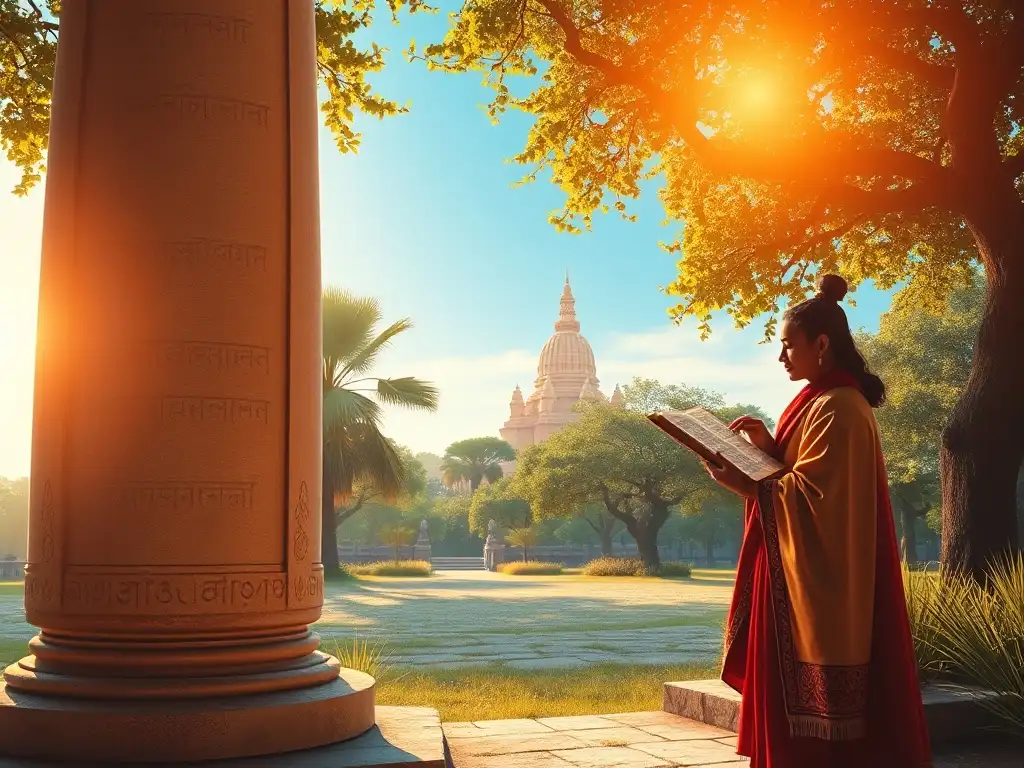
One of Ashoka's most distinctive contributions was the development of edicts and inscriptions, which served as a medium to communicate his policies and moral principles to his subjects. He inscribed these edicts on rocks and pillars throughout his empire, using a simple yet profound language that was accessible to the common people.
These inscriptions outlined his commitment to dharma (moral law), non-violence, and social responsibility. They also addressed various social issues, such as the treatment of animals and the importance of compassion towards all living beings. This enduring record not only provides insight into Ashoka's governance but also stands as a testament to his efforts to promote ethical conduct and welfare in society.
Ashoka's reign is marked by a strong emphasis on social welfare initiatives aimed at improving the quality of life for his subjects. He established hospitals for humans and animals, ensuring that healthcare was accessible to all, regardless of their social status. His concern for the well-being of his people extended to the construction of roads and irrigation systems, which facilitated trade and agriculture.
Furthermore, Ashoka implemented policies to support the elderly and the impoverished, demonstrating his commitment to the upliftment of society's most vulnerable members. His vision of a just and harmonious society laid the groundwork for future welfare policies in India, highlighting the importance of state responsibility in addressing social issues.
Lesser-Known Facts About Ashoka
While Ashoka is widely recognized for his achievements and contributions, several lesser-known facts about his life and reign offer deeper insights into his character and legacy.
Uncovering Ashoka's Early Life
Ashoka was born into the Mauryan dynasty as the son of Emperor Bindusara. His early life was marked by a competitive environment, as he had several siblings vying for their father's throne. His formative years were spent in various regions of the empire, where he gained military experience and administrative skills. Despite his royal lineage, Ashoka's ascent to power was not guaranteed, reflecting the complexities of palace politics and familial rivalries that shaped his character.
The Role of Ashoka's Family in His Life
Ashoka's family played a crucial role in his life, influencing his perspectives and policies. His wife, Devi, was a significant figure in his transformation towards Buddhism, as she belonged to a family that had strong ties to the Buddhist community. Additionally, the involvement of his children in missionary activities highlights the family's commitment to spreading the teachings of Buddhism. The dynamics within Ashoka's family not only shaped his personal beliefs but also had a lasting impact on the religious landscape of ancient India.
Ashoka's Influence on Trade and Economy
Ashoka's reign witnessed significant advancements in trade and economic development. His establishment of efficient trade routes and infrastructure facilitated commerce across the empire and beyond, connecting regions and cultures. The promotion of trade contributed to economic prosperity and cultural exchanges, making the Mauryan Empire a vibrant hub of activity.
Ashoka's policies encouraged the growth of industries such as textiles and metallurgy, further enhancing the economic landscape. His emphasis on ethical trade practices also reflected his broader commitment to dharma, ensuring that economic activities were aligned with moral principles. This holistic approach fostered a thriving economy that benefited a diverse population and left a lasting impact on the region's history.
Ashoka's Conversion to Buddhism
Ashoka, once a fierce warrior, underwent a profound transformation following his conversion to Buddhism, which marked a significant turning point in his reign as emperor. Initially, Ashoka was known for his military conquests, particularly the bloody Kalinga War around 262-261 BCE, which resulted in immense loss of life and suffering. The devastation he witnessed on the battlefield deeply affected him and led to a radical shift in his worldview.
After the Kalinga War, Ashoka embraced Buddhism, recognizing its principles of compassion, non-violence, and tolerance. This conversion was not merely a personal spiritual journey; it profoundly influenced his policies and approach to governance. Ashoka began promoting the teachings of the Buddha, emphasizing the importance of dharma (moral law) and ethical conduct. His edicts, inscribed on pillars and rocks throughout his empire, reflect his commitment to spreading Buddhist values and fostering a peaceful society.
The Transformation of Ashoka Post-Kalinga War
The Kalinga War was pivotal not only in terms of its immediate human cost but also in catalyzing Ashoka's transformation. The sheer scale of death and suffering caused by the conflict haunted him, leading to a deep sense of remorse. Historical accounts suggest that Ashoka felt a moral obligation to seek a path of peace and reconciliation.
Following his conversion, Ashoka initiated a series of reforms aimed at promoting social welfare. He established hospitals for both humans and animals, improved infrastructure, and supported the spread of education. Additionally, he sent missionaries across the Indian subcontinent and beyond to propagate Buddhism, thereby influencing cultures far beyond his empire. This transformation from a conqueror to a compassionate ruler is one of the most striking aspects of Ashoka’s legacy.
Understanding Ashoka's Philosophy of Non-Violence
Central to Ashoka's philosophy after his conversion to Buddhism was the principle of non-violence, or ahimsa. This doctrine became a fundamental tenet of his governance. Ashoka believed that peace could only be achieved through understanding and compassion, not through violence and coercion.
In his edicts, Ashoka emphasized the importance of respect for all living beings, which included advocating for vegetarianism and the humane treatment of animals. His commitment to non-violence extended to his dealings with neighboring kingdoms, where he often sought diplomatic solutions rather than military ones. This approach not only fostered stability within his empire but also set a precedent for future leaders in promoting peace and coexistence.
Ashoka's Governance and Administration

Ashoka's governance was characterized by innovative policies that sought to elevate the moral and ethical standards of his administration. His reign is often viewed as a golden period in ancient Indian history, marked by advancements in various fields due to his enlightened policies.
One of the key aspects of Ashoka's rule was his emphasis on dharma, which translated into practical governance. He established a system that prioritized the welfare of his subjects, ensuring that justice and fairness were paramount. Ashoka's administration was also notable for its extensive use of communication, with edicts disseminated across his empire to educate and inform the populace about his policies and Buddhist teachings.
Innovative Policies Implemented by Ashoka
Ashoka implemented several innovative policies that were revolutionary for his time. Among these was the establishment of a network of dharma mahamatras, officials responsible for promoting dharma and ensuring the welfare of the people. These officials played a crucial role in spreading Ashoka's ideals throughout his vast empire.
Moreover, Ashoka's policies included the construction of extensive infrastructure, such as roads, rest houses, and wells, which facilitated trade and communication. His focus on public health and welfare resulted in the founding of hospitals and veterinary clinics, reflecting a holistic approach to governance. The promotion of education and the arts under Ashoka's rule also contributed to a flourishing cultural landscape, making his administration one of the most progressive in ancient history.
The Structure of Ashoka's Government
The structure of Ashoka's government was well-organized and hierarchical, ensuring efficient administration across his vast empire. It was divided into various levels, with Ashoka at the top as the supreme ruler. Below him were various officials and administrators responsible for different regions and functions.
- Provincial Governors: Appointed to oversee large regions, these governors managed local affairs and implemented Ashoka's policies.
- Dharma Mahamatras: Tasked with promoting ethical governance, they ensured that the principles of Buddhism were upheld throughout the administration.
- Local Officials: Responsible for day-to-day governance, these administrators dealt directly with the needs of local populations, addressing grievances and implementing welfare measures.
This structured approach allowed Ashoka to maintain control over his empire while promoting a unified vision of governance based on compassion and ethical conduct, setting a benchmark for rulers in the centuries to come.
The Impact of Ashoka's Edicts
Ashoka's edicts serve as a profound testament to his reign and the ideological framework he established for his empire. These inscriptions, carved on rocks and pillars throughout his vast domain, played a pivotal role in communicating his philosophies and policies to the diverse populations under his rule. The edicts promoted values such as non-violence, compassion, and moral governance, which were revolutionary for their time.
The widespread dissemination of these edicts not only unified the empire under a common moral and ethical code but also fostered a sense of identity among the subjects. They were instrumental in promoting Buddhism as Ashoka embraced and propagated the religion after his conversion, which significantly influenced the cultural landscape of ancient India and beyond.
The edicts are also significant for their historical value, providing insights into Ashoka's governance, his concern for social welfare, and his efforts to promote dharma (moral law). These inscriptions reflect a ruler deeply committed to the betterment of society and the promotion of peace, which marked a distinct shift from the militaristic approaches of his predecessors.
Analysis of the Rock Edicts
The Rock Edicts of Ashoka are a series of inscriptions that were primarily carved on large boulders and rock surfaces across the Indian subcontinent. Dating back to around 250 BCE, these edicts consist of 14 major edicts that cover various themes, including moral conduct, ethical governance, and the promotion of Buddhist values.
One of the most notable aspects of the Rock Edicts is their emphasis on non-violence (ahimsa) and compassion towards all living beings. Ashoka urged his subjects to practice kindness and to refrain from harm, which was a radical departure from the violent conquests that characterized earlier Indian rulers.
Moreover, the language used in these edicts varies from region to region, indicating Ashoka’s intent to reach out to diverse populations. The use of Prakrit, along with Greek and Aramaic in some areas, exemplifies his commitment to inclusivity and effective communication. This approach not only solidified his authority but also encouraged cultural exchanges across different communities within the empire.
The Significance of the Pillar Edicts
The Pillar Edicts of Ashoka are another fundamental aspect of his edict system, consisting of a series of inscriptions on polished stone pillars erected in various locations. These pillars, often featuring intricate carvings and symbols, served as public monuments that conveyed Ashoka's ideals to a broad audience.
The Pillar Edicts are significant for several reasons:
- Cultural Symbolism: The pillars themselves symbolize the strength and stability of Ashoka's rule. The lion capital, which adorns many of these pillars, represents courage and power, serving as a reminder of the emperor's authority.
- Moral Guidance: The edicts inscribed on these pillars outline essential moral principles that Ashoka wanted to instill in his subjects, such as tolerance, respect for elders, and the importance of community service.
- Legal Framework: Beyond moral exhortation, these edicts functioned almost as a legal code, laying out the expectations for behavior and the consequences for moral transgressions, thus helping to maintain order within the empire.
The enduring nature of these pillars, many of which still stand today, speaks to their significance in ancient Indian history. They not only served as a physical representation of Ashoka’s values but also facilitated the spread of Buddhism, as many were located near important religious sites.
Myths and Realities Surrounding Ashoka
The legacy of Ashoka is often clouded by myths and misconceptions, leading to a distorted understanding of his character and reign. While he is celebrated as a champion of peace and Buddhism, a closer examination reveals a more nuanced figure, shaped by the complexities of his time.
Common Misconceptions About Ashoka
One prevalent misconception is that Ashoka was solely a pacifist ruler who renounced all forms of violence after his conversion to Buddhism. While it is true that his later policies emphasized non-violence, his early reign was marked by military conquests, most notably the Kalinga War. The aftermath of this conflict profoundly affected him and prompted his shift towards promoting peace.
Another common myth is that Ashoka's edicts were solely focused on religious matters. In reality, they encompassed a broader range of social, ethical, and administrative issues, reflecting his comprehensive approach to governance. The edicts aimed to unify his diverse empire through shared values and moral teachings, transcending mere religious doctrine.
Debunking Myths: What the Records Reveal
Historical records and archaeological evidence provide a clearer picture of Ashoka's reign, helping to debunk these myths. For instance, inscriptions indicate that Ashoka was not averse to using military force when necessary; rather, he evolved into a ruler who recognized the futility of war after witnessing its devastating consequences.
Moreover, a study of the edicts shows that they addressed issues such as animal welfare, environmental conservation, and the welfare of prisoners, highlighting Ashoka's broader vision for a just society. These records reveal a pragmatic leader who sought to balance his ideals with the realities of governance.
Understanding the complexities of Ashoka's reign requires a careful examination of historical sources and a willingness to look beyond simplistic narratives. By doing so, we can appreciate the depth of his contributions to ancient Indian civilization and the lasting impact of his legacy.
Legacy of Ashoka in Contemporary Times
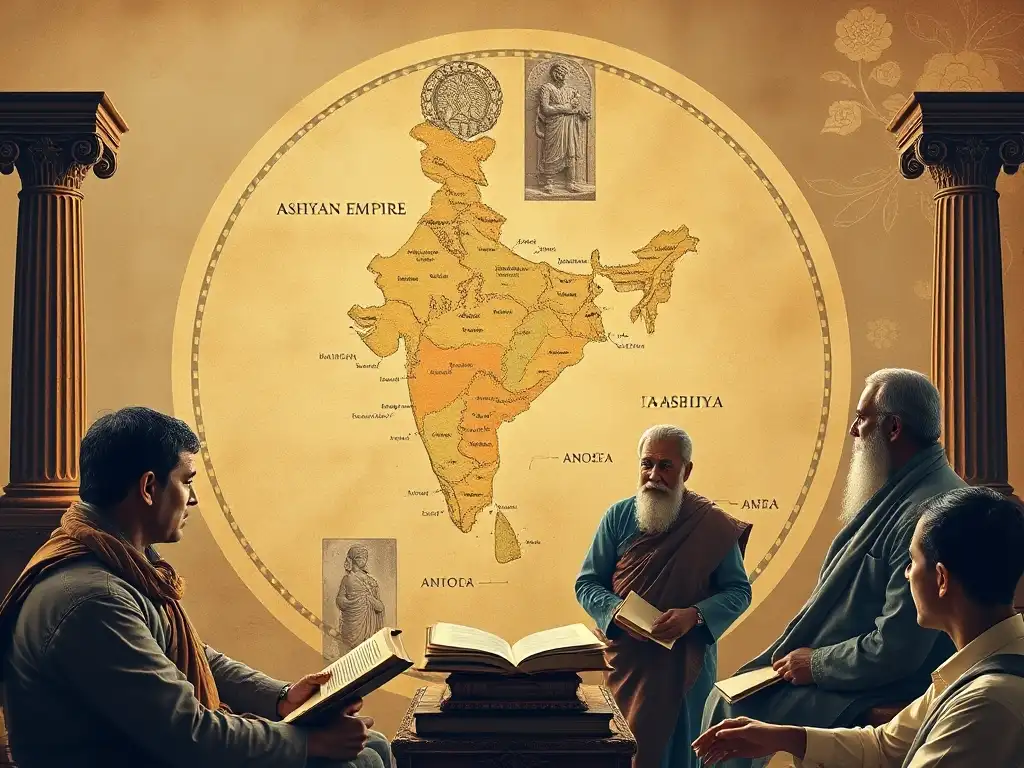
Ashoka's legacy extends well beyond his reign, echoing through the corridors of history and into contemporary society. His principles of Dharma, which emphasized non-violence, tolerance, and moral governance, have become foundational elements in various philosophies and political ideologies today. Ashoka's efforts to promote Buddhism and his commitment to the welfare of his subjects resonate strongly in modern discourses about governance and social responsibility.
The edicts of Ashoka, inscribed on pillars and rocks across the Indian subcontinent, serve as a remarkable source of inspiration for movements advocating peace, justice, and human rights. These inscriptions not only reflect his thoughts but also act as a bridge connecting ancient philosophical principles to contemporary ethical discussions.
How Ashoka is Remembered Today
Today, Ashoka is remembered as one of India's most illustrious rulers, often referred to as Ashoka the Great. His life and reign are celebrated for their unique blend of military prowess and profound commitment to the ideals of Buddhism. In contemporary India, his image is depicted on currency, and his edicts continue to be studied for their insights into governance and moral philosophy.
Various institutions and organizations, including the Ashoka University, have been named in his honor, embodying his spirit of learning and inquiry. Additionally, his legacy is not limited to India; he is recognized globally, particularly in countries where Buddhism has spread, as a symbol of peace and reconciliation.
Influence on Modern Indian Culture and Politics
Ashoka's influence permeates modern Indian culture and politics in numerous ways. His principles of governance have inspired democratic ideals, emphasizing the importance of public welfare and ethical leadership. Politicians and leaders often reference Ashoka when discussing policies aimed at social justice and communal harmony, seeking to emulate his commitment to the well-being of all citizens.
Moreover, Ashoka's promotion of Buddhism has significantly shaped the spiritual landscape of India and influenced various cultural expressions, including art, literature, and philosophy. The values he championed continue to inspire contemporary movements focused on non-violence and social equity, making his legacy a vital part of India's cultural fabric.
Conclusion
Summary of Lesser-Known Facts About Ashoka
While much is known about Ashoka's military conquests and his conversion to Buddhism, several lesser-known facts highlight his multifaceted legacy. For instance, he was a pioneer in promoting animal welfare, establishing veterinary hospitals, and advocating for the humane treatment of animals. Furthermore, his innovative use of communication through edicts laid the groundwork for future governance and public outreach. Ashoka's reign marked a significant transition from autocratic rule to a more compassionate and inclusive form of governance.
Reflection on Ashoka's Enduring Legacy in Ancient India
Ashoka's enduring legacy in ancient India is a testament to his visionary leadership and moral philosophy. His ability to transform his empire through the principles of Dharma has left an indelible mark on Indian history. The values he promoted continue to inspire generations, inviting reflection on the importance of ethical governance and social responsibility. Ashoka's life serves as a reminder that true greatness lies not just in power but in the compassion and wisdom with which it is wielded, making him a timeless figure in the annals of history.
References and Further Reading
The life and reign of Ashoka the Great, one of India's most revered emperors, have been subjects of extensive scholarly research and exploration. To gain a deeper understanding of Ashoka’s influence on Indian history, culture, and governance, the following key texts and resources are invaluable.
Key Texts on Ashoka's Life and Contributions
-
"Ashoka: The Search for India's Lost Emperor" by Charles Allen
This book delves into the historical context of Ashoka's reign and explores his transformation from a warrior king to a proponent of Buddhism. Allen provides a detailed narrative that combines historical facts with insights into Ashoka's policies and their lasting impact on Indian society.
-
"The Edicts of Ashoka" translated by Richard McKeon
This work presents the original edicts inscribed by Ashoka, unveiling his thoughts on governance, morality, and social welfare. The translation includes commentary that helps readers understand the historical significance of these inscriptions and their relevance in contemporary discussions on ethics and governance.
-
"Ashoka and the Decline of the Mauryas" by Romila Thapar
In this scholarly text, Thapar examines the complexities of Ashoka's reign and the subsequent decline of the Mauryan Empire. The book is essential for understanding the political and cultural shifts during and after Ashoka's time, providing a critical analysis of his contributions to statecraft and religion.
-
"The Life of the Buddha" by Bhikkhu Nanamoli
While primarily focused on the life of Buddha, this book provides context for Ashoka's promotion of Buddhism. It offers insights into how Ashoka’s patronage helped shape the spread of Buddhist teachings across Asia and his role in establishing Buddhism as a significant religious force.
Recommended Resources for Further Exploration
- Documentaries and Films
- "The Emperor's Journey: Ashoka the Great": — This documentary visually narrates Ashoka's life, presenting important events and insights into his character and policies.
- "Ashoka: The Great Emperor": — A dramatized portrayal that highlights key aspects of his reign, including his conversion to Buddhism.
- Online Courses and Lectures
- Coursera: "The History of Buddhism": — This course offers modules on Ashoka’s role in promoting Buddhism, providing a broader context of his contributions to the religion and its spread.
- YouTube Lectures by Historians — Various historians and scholars offer free lectures and discussions on Ashoka, his edicts, and his influence on Indian civilization.
- Academic Journals
- Journal of the Royal Asiatic Society — This journal publishes articles on Asian history, including detailed studies on Ashoka’s reign and his impact on subsequent historical developments in India.
- Indian Historical Review — A platform for scholarly articles that often feature research on Ashoka and the Mauryan Empire.
- Museums and Exhibitions
- National Museum, New Delhi — Houses artefacts related to Ashoka’s reign, including inscriptions and sculptures, providing a tangible connection to his legacy.
- Indian Museum, Kolkata — Offers exhibitions that explore Ashoka's contributions and the historical context of the Mauryan Empire.
These resources serve as a gateway for anyone interested in exploring the lesser-known facts about Ashoka and understanding the complexities of his reign and its enduring legacy in Indian history.
- Introduction to Ashoka the Great
- Historical Context of Ashoka's Reign
- Key Achievements of Ashoka
- Major Contributions to Buddhism
- Development of Edicts and Inscriptions
- Promotion of Social Welfare Initiatives
- Lesser-Known Facts About Ashoka
- Ashoka's Conversion to Buddhism
- Ashoka's Governance and Administration
- The Impact of Ashoka's Edicts
- Myths and Realities Surrounding Ashoka
- Legacy of Ashoka in Contemporary Times
- Conclusion
- References and Further Reading
Frequently Asked Questions
What were some lesser-known facts about Ashoka?
Ashoka, the third emperor of the Maurya Dynasty, is known for his transformation from a ruthless conqueror to a proponent of Buddhism and non-violence. His edicts, inscribed on pillars, spread messages of compassion and moral governance.
How did Ashoka promote Buddhism?
Ashoka played a pivotal role in the spread of Buddhism both within and outside India. He sent missionaries to various regions, including Sri Lanka, establishing Buddhism as a dominant religion in many areas.
What are the Ashoka Pillars?
The Ashoka Pillars are a series of columns dispersed throughout the Indian subcontinent. They feature inscriptions that convey Ashoka's principles of righteousness and moral conduct, showcasing his commitment to peace.
How did Ashoka's reign influence Indian history?
Ashoka's reign marked a significant shift towards non-violence and ethical governance in Indian history. His policies laid the groundwork for a more integrated and culturally rich society that influenced subsequent rulers.
What events led to Ashoka's transformation?
After the Kalinga War, which resulted in immense suffering, Ashoka experienced a profound change. This event catalyzed his commitment to Buddhism and non-violence, leading to his legacy as a benevolent ruler.
Final Reflection: Unveiling the Legacy of Ashoka
The exploration of Ashoka's lesser-known facts reveals not only the depth of his historical significance but also the timeless relevance of his principles in today's world. In an era where leadership is often measured by power and dominance, Ashoka's commitment to peace and compassion stands as a powerful reminder of the impact that benevolent governance can have on society. His transformation from a conqueror to a proponent of non-violence is a narrative that resonates deeply in our contemporary discourse on leadership and ethics.
Cultural and social landscapes are continually shaped by the legacies of historical figures like Ashoka. His edicts, which emphasized moral governance and social welfare, still echo in modern discussions about justice and human rights. As we navigate the complexities of our current world, it is essential to reflect on how Ashoka's principles can guide us toward a more harmonious society. The greatest victory is the victory over oneself.
This quote encapsulates the essence of Ashoka's journey and serves as a reminder that true strength lies in self-mastery and compassion.
As you ponder the lessons drawn from Ashoka's life, consider how you can embody these values in your own journey. Reflect on your actions and choices, and strive to cultivate a mindset that prioritizes empathy and understanding. In a world that often feels divided, let us take inspiration from Ashoka's legacy and commit ourselves to fostering peace and kindness in our communities. The mysteries of Ashoka are not just historical curiosities; they are calls to action for each of us to contribute to a better world.
Unveil the Secrets of Ashoka!
Thank you for joining us on this journey through the fascinating life of Ashoka! We hope you uncovered some surprising insights that deepen your understanding of this remarkable figure. Now, it’s time to take what you’ve learned and put it into action!
Here’s how you can continue exploring the legacy of Ashoka:
- Dive deeper: Read a historical novel or biography about Ashoka to gain a richer understanding of his life and the era he lived in.
- Share what you've learned: Discuss his principles of non-violence and governance with friends or on social media to inspire others to reflect on these important concepts.
- Join a community: Connect with history enthusiasts and exchange perspectives on Ashoka’s enduring influence today—consider participating in online forums or local history clubs!
What unexpected aspects of Ashoka's reign would you like to explore further?