
The Chola Empire's Naval Campaigns: Dominance in Southeast Asia

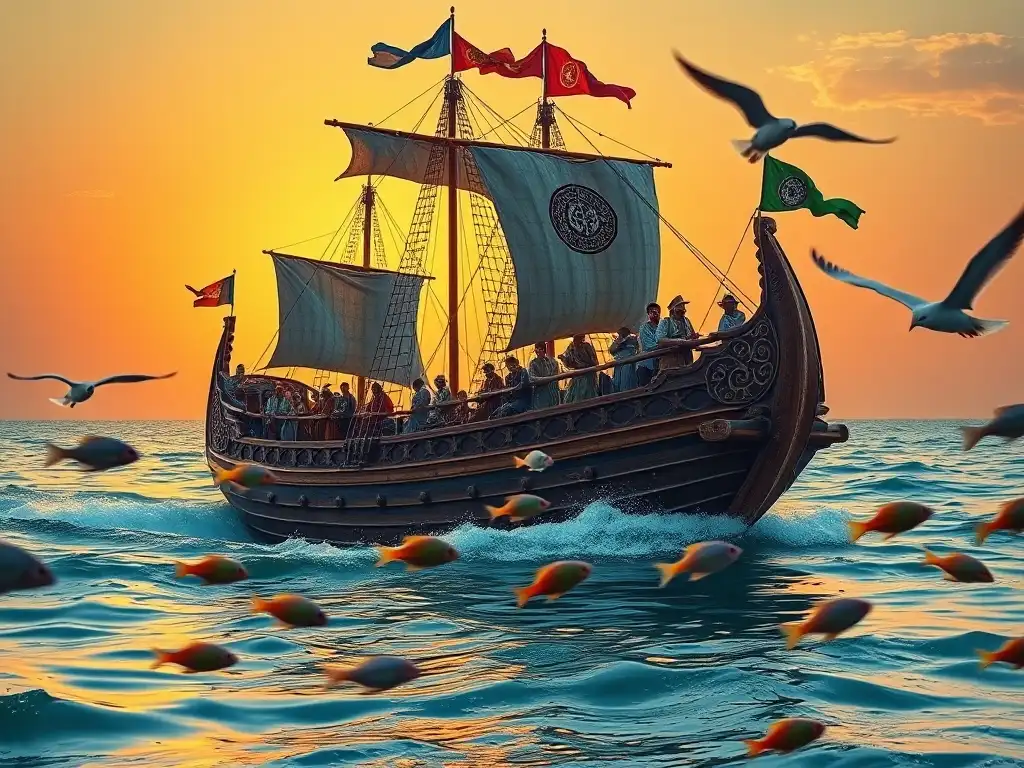
Welcome to Ancient India History, where we embark on a journey through the fascinating tapestry of India's past, rich with remarkable civilizations and unparalleled contributions. In this exploration, we delve into the Chola Empire's naval dominance history, a captivating tale of maritime prowess that reshaped the geopolitical landscape of Southeast Asia. Prepare to uncover the strategic brilliance and audacious campaigns that defined an era of naval supremacy. Join us as we set sail into the depths of military history, and discover the remarkable stories that await you!
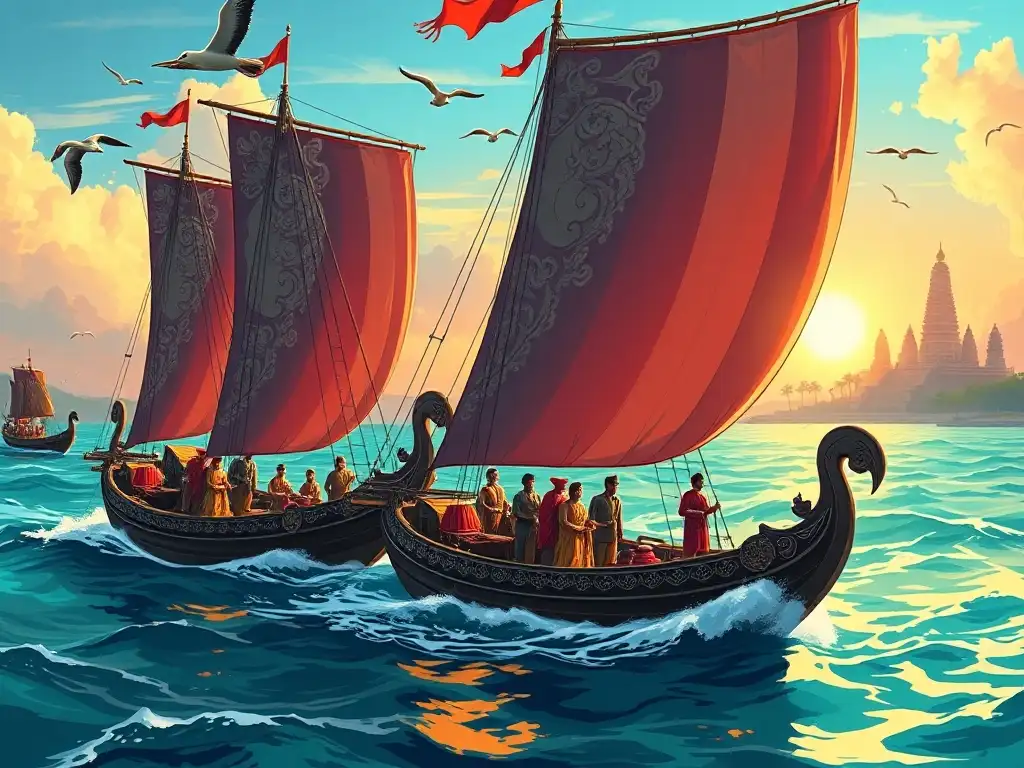
The Chola Empire, one of the most formidable dynasties in ancient India, is renowned for its extensive naval power and maritime prowess, particularly during the medieval period. Spanning from the 9th to the 13th centuries, the Cholas not only dominated the Indian subcontinent but also extended their influence across Southeast Asia.
Their naval campaigns are a testament to their ambition and strategic acumen, showcasing how they established trade routes, engaged in warfare, and spread their cultural influence across the region. Understanding the Chola Empire naval dominance history is crucial for appreciating the Empire's role in shaping the geopolitical landscape of Southeast Asia.
Rise of the Chola Empire
The rise of the Chola Empire can be traced back to the late 9th century when the dynasty began to consolidate power in Southern India. Under the leadership of rulers such as Aditya I and later Rajaraja Chola I, the empire expanded significantly, marked by military conquests and territorial acquisitions.
Rajaraja Chola I, often regarded as the architect of the Chola Empire's naval power, was pivotal in transforming the navy into a formidable force. By establishing a strong administrative framework and investing in maritime technologies, he laid the groundwork for what would become a dominant naval presence in the Indian Ocean and beyond.
- Key milestones in the rise of the Cholas:
- Establishment of a centralized administration.
- Expansion through military conquests.
- Investment in shipbuilding and naval logistics.
Geographic and Strategic Importance
The geographic positioning of the Chola Empire played a significant role in its naval dominance. Situated on the southeastern coast of India, the Cholas had access to vital sea routes that connected the Indian subcontinent with Southeast Asia, China, and the Arabian Peninsula. This strategic advantage allowed them to control trade, enhance their economic power, and project military strength across the waters.
- Geographic advantages:
- Proximity to crucial trade routes.
- Access to rich resources in the Bay of Bengal and beyond.
- Natural harbors facilitating naval operations.
The Chola navy was not merely a military tool; it was an integral part of the empire’s economy and cultural diplomacy. By controlling maritime trade, the Cholas were able to engage with various kingdoms in Southeast Asia, fostering a rich exchange of ideas, goods, and cultural practices that would leave a lasting impact on the region.
The Chola Empire, known for its incredible maritime prowess, engaged in several significant naval campaigns that cemented its dominance in Southeast Asia. These campaigns were instrumental in expanding the empire's influence, trade networks, and political power in the region. Key naval campaigns included the invasion of Srivijaya and the conquest of the Maldives, both of which showcased the Chola's strategic acumen and advanced naval capabilities.
The Invasion of Srivijaya
The invasion of Srivijaya, which occurred during the reign of Rajaraja Chola I in the late 10th century, marked a pivotal moment in the Chola Empire's naval history. Srivijaya was a prominent maritime and trade power based in present-day Sumatra, Indonesia. The Cholas sought to disrupt Srivijaya's control over the Straits of Malacca, a crucial trade route for spices and other goods.
In 1025 CE, Rajendra Chola I led a massive naval expedition against Srivijaya. This campaign was characterized by the Chola's well-coordinated naval forces, which included hundreds of ships equipped with skilled sailors and warriors. The Chola fleet engaged in several battles with Srivijayan forces, ultimately leading to the capture of key ports and cities, including Palembang. The successful invasion not only weakened Srivijaya but also established the Chola Empire as a dominant maritime power in Southeast Asia, facilitating trade and cultural exchange.
The Conquest of the Maldives
The conquest of the Maldives was another significant campaign undertaken by the Chola Empire, aimed at extending their influence over the Indian Ocean. This campaign occurred around the early 11th century, during the reign of Rajendra Chola I. The Maldives, a strategic archipelago, served as an essential waypoint for maritime trade routes.
In 1070 CE, the Chola forces launched a well-planned invasion of the Maldives, exploiting their naval strength and maritime expertise. The campaign involved swift naval operations that allowed the Cholas to capture several islands in the Maldives. The conquest not only reaffirmed the Chola's naval dominance in the region but also facilitated the establishment of trade links and the spread of Hindu culture and influence across the islands. The Chola Empire's control over the Maldives contributed significantly to their wealth and maritime trade networks.
The Chola Empire's naval campaigns were supported by innovative strategies and advanced technologies that set them apart from their contemporaries. The Chola navy was renowned for its formidable fleet, which utilized various maritime tactics and shipbuilding techniques that were critical to their success in naval warfare.
Shipbuilding Techniques of the Chola Navy
The Chola navy was equipped with advanced shipbuilding techniques that allowed them to construct a variety of vessels suited for different purposes, from trading ships to war galleys. The Cholas utilized local timber, particularly teak, which was known for its durability and resistance to seawater. These ships were designed with a shallow draft, enabling them to navigate both deep and shallow waters effectively.
One of the most notable types of vessels was the "Kottai," a warship with a reinforced hull that could withstand enemy attacks and rough seas. Additionally, the Cholas employed a unique method of constructing ships with multiple decks, which not only enhanced their cargo capacity but also allowed for the placement of archers and other soldiers during naval battles. These advancements in shipbuilding played a crucial role in the Chola Empire's successful naval campaigns.
Tactical Innovations in Naval Warfare
The Chola Empire's naval warfare strategies included several tactical innovations that maximized their effectiveness in battle. One key aspect was the use of flanking maneuvers, where Chola ships would attack enemy vessels from multiple directions, overwhelming them with coordinated assaults. This tactic disrupted enemy formations and allowed the Cholas to gain the upper hand in naval engagements.
Moreover, the Chola navy was adept at utilizing psychological warfare. They often displayed their naval might through grand displays and parades, instilling fear in their adversaries before engagements even began. The presence of larger, more formidable ships, combined with well-trained sailors and warriors, contributed to the Chola's reputation as a dominant naval force.
The combination of advanced shipbuilding techniques and innovative tactical strategies enabled the Chola Empire to achieve significant naval victories, solidifying their dominance in Southeast Asia and shaping the course of maritime history in the region.
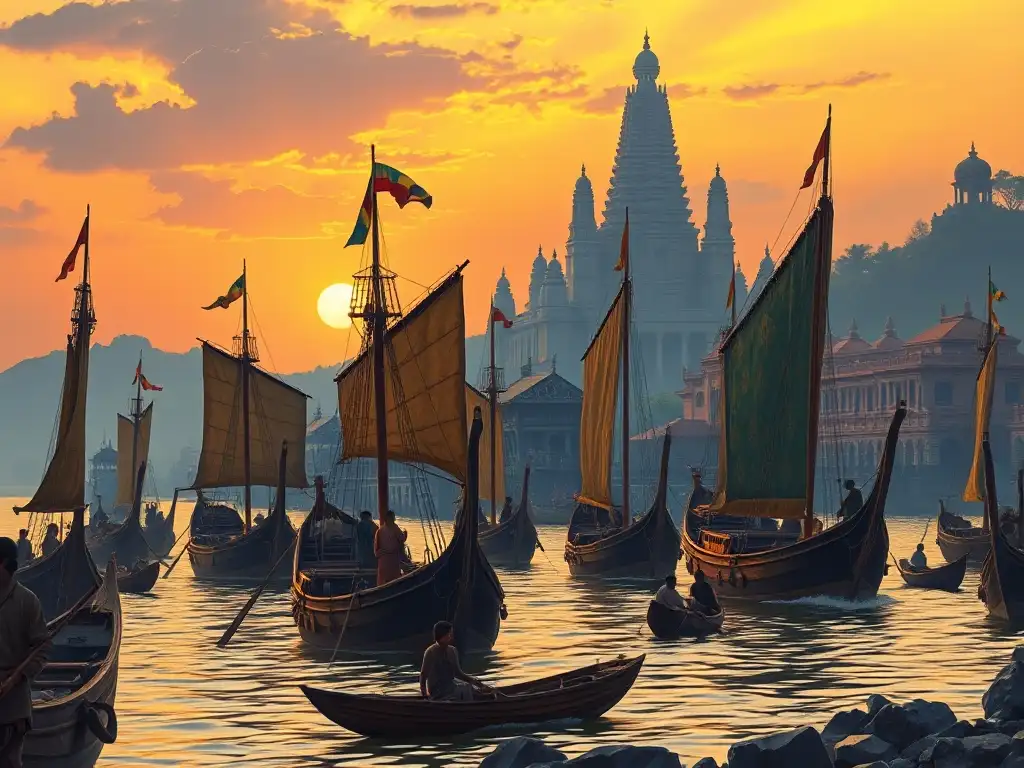
The Chola Empire, known for its formidable naval prowess, significantly influenced the cultural and economic landscapes of Southeast Asia during its zenith. The establishment of a powerful navy allowed the Cholas to expand their trade networks, facilitating commercial exchanges across the Indian Ocean and beyond. This naval dominance not only enhanced economic prosperity within the empire but also led to the spread of Chola culture, art, and religion.
By controlling vital sea routes, the Cholas were able to monopolize trade in valuable commodities such as spices, textiles, and precious metals. This not only enriched the empire but also attracted merchants from various regions, fostering a vibrant marketplace in coastal cities like Nagapattinam and Thanjavur. The influx of wealth enabled the Chola rulers to patronize art and architecture, leading to the construction of grand temples and monuments that reflected the empire's cultural richness.
Moreover, the Chola navy played a crucial role in establishing diplomatic relations with neighboring kingdoms. Through military alliances and trade agreements, the Cholas enhanced their influence, creating a network of political and economic ties that ensured their dominance in the region. The legacy of this naval power is evident in the continued interactions between India and Southeast Asia, which laid the groundwork for future cultural and commercial exchanges.
Trade Networks Established through Naval Power
The Chola Empire's naval campaigns were instrumental in establishing extensive trade networks that connected India with Southeast Asia and beyond. The Chola navy facilitated maritime trade routes, allowing for the exchange of goods between regions such as the Malay Peninsula, Sumatra, Java, and even as far as China. This expansion of trade networks was crucial in promoting economic growth and cultural interactions.
Key ports like Nagapattinam served as bustling trade hubs where merchants from various backgrounds converged. The Cholas exported a range of goods, including silk, cotton textiles, and spices, while importing precious stones, ivory, and exotic woods from Southeast Asia. The establishment of these trade routes not only increased the wealth of the Chola Empire but also provided a conduit for the exchange of ideas and technologies.
Furthermore, the Chola naval strength enabled them to exert control over maritime trade, which was vital for the prosperity of their economy. By protecting merchant vessels from piracy and ensuring safe passage, the Cholas solidified their position as a dominant maritime power in the region. This strategic control over trade networks laid the foundation for the Chola Empire's economic success and its lasting impact on regional trade.
Cultural Exchanges with Southeast Asia
The Chola Empire's naval dominance fostered significant cultural exchanges between India and Southeast Asia. As Chola merchants and sailors traveled to various territories, they brought with them their customs, beliefs, and artistic expressions, enriching the cultural tapestry of the regions they interacted with.
One of the most notable aspects of this cultural exchange was the spread of Hinduism and Buddhism. The Chola rulers actively promoted these religions, building temples and establishing trade relationships that encouraged the dissemination of their spiritual practices. This led to the adoption of Hindu and Buddhist art and architecture in Southeast Asia, as seen in the temples of Angkor Wat in Cambodia and Borobudur in Indonesia, which reflect strong Indian influences.
In addition to religion, the Cholas also introduced their language, literature, and artistic styles to Southeast Asia. The intricate bronze sculptures and temple architecture that characterized Chola art became a source of inspiration for local artisans. This cultural diffusion contributed to a shared heritage that continues to resonate in the region today.
The impact of these cultural exchanges was reciprocal; Southeast Asian societies also influenced the Chola Empire. The Cholas adopted elements of local customs, cuisine, and naval technologies, leading to a dynamic interplay that enriched both cultures. This mutual exchange helped to forge lasting connections that shaped the historical trajectories of both the Chola Empire and Southeast Asia.
The legacy of the Chola Empire's naval campaigns is marked by its profound impact on trade, culture, and regional interactions in Southeast Asia. The establishment of a dominant naval presence allowed the Cholas to control vital maritime routes, facilitating commerce and cultural exchanges that enriched both their empire and the regions they engaged with.
The economic benefits derived from their naval dominance not only fostered wealth and power but also enabled the flourishing of art and architecture, as evident in the magnificent temples that stand as testaments to Chola ingenuity. Furthermore, the cultural exchanges initiated by their naval expeditions laid the foundation for enduring ties between India and Southeast Asia, influencing religious practices, artistic traditions, and social structures.
In essence, the Chola Empire's naval campaigns were not merely military undertakings; they were transformative events that reshaped the historical and cultural landscape of Southeast Asia, leaving a legacy that continues to be celebrated and studied today. The Chola naval dominance history stands as a testament to the empire's ingenuity and its pivotal role in connecting diverse cultures through the seas.
References
The naval dominance of the Chola Empire in Southeast Asia is well-documented in various historical records and scholarly articles. Here is a compilation of references that provide in-depth insights and analyses of the Chola naval campaigns and their influence in the region:
- Historical Texts:
- The Periplus of the Erythraean Sea - An ancient text that provides valuable insights into maritime trade routes and the interactions of various civilizations, including the Cholas.
- The Chola Dynasty: Consolidation of Power by K. Rajan - This book explores the political and military strategies employed by the Chola rulers, including their naval expeditions.
- Archaeological Studies:
- Maritime Archaeology of the Indian Ocean by R. K. Sharma - A detailed examination of archaeological findings that shed light on the naval prowess of the Chola Empire and its trade networks.
- The Chola Navy: A Study of its Structure and Operations by S. K. Varma - This research highlights the organization and operational strategies of the Chola navy, focusing on its campaigns in Southeast Asia.
- Scholarly Articles:
- "Naval Warfare in Ancient India" by M. Srinivasan, published in the Journal of Historical Studies - This article analyzes the naval tactics and technologies used by the Chola Empire to establish dominance over maritime routes.
- "Cultural Exchanges and Trade in Southeast Asia: The Role of the Chola Empire" by P. N. Rao, found in South Asian Review - An exploration of the cultural and economic exchanges facilitated by Chola naval expeditions.
- Documentaries and Lectures:
- "The Chola Empire: Masters of the Sea" - A documentary that presents visual narratives of Chola naval expeditions, their objectives, and impacts on Southeast Asia.
- Lectures by historians specializing in South Asian history often cover the influence of the Chola Empire, detailing their naval strategies and campaigns.
These references not only provide a comprehensive understanding of the Chola Empire's naval dominance but also highlight the significance of their campaigns in shaping maritime history in Southeast Asia. For researchers and enthusiasts alike, these sources serve as a foundation for further exploration into the military history of ancient India.
- Introduction to the Chola Empire Naval Dominance History
- Historical Context of the Chola Empire's Naval Power
- Key Naval Campaigns of the Chola Empire
- Strategies and Technologies in Chola Naval Warfare
- Cultural and Economic Impact of Chola Naval Dominance
- Conclusion: Legacy of the Chola Empire's Naval Campaigns
- References
- What was the significance of the Chola Empire's naval campaigns?
- How did the Chola Empire achieve naval dominance in Southeast Asia?
- What were some key territories controlled by the Chola Empire?
- How did the naval campaigns impact trade during the Chola period?
- What cultural contributions did the Chola Empire make during its naval dominance?
Frequently Asked Questions
The Chola Empire's naval campaigns were crucial for establishing trade routes and expanding influence across Southeast Asia, showcasing their maritime prowess.
The Chola Empire achieved naval dominance through strategic military innovations, a strong naval fleet, and effective diplomatic relations, allowing them to control key maritime territories.
What were some key territories controlled by the Chola Empire?
The Chola Empire extended its influence over regions such as Sri Lanka, the Maldives, and parts of Southeast Asia, including Sumatra and the Malay Peninsula.
The naval campaigns facilitated trade expansion, leading to increased economic prosperity, cultural exchanges, and the establishment of trade networks across the Indian Ocean.
The Chola Empire contributed significantly to art, architecture, and literature, with notable examples being the Brihadeeswarar Temple and advancements in Tamil literature, reflecting their rich cultural heritage.
The exploration of the Chola Empire's naval dominance history reveals not only the strategic prowess of a remarkable civilization but also its profound impact on global trade and cultural exchange in Southeast Asia. Today, as we navigate an increasingly interconnected world, the lessons from the Chola Empire remind us of the importance of maritime power and its role in shaping economies and societies. The Chola Empire was not just a regional power; it was a beacon of innovation and influence that resonates even in contemporary discussions about trade routes and naval strategy.
The cultural and social landscape of Southeast Asia has been indelibly marked by the Chola Empire's maritime endeavors. The intricate web of trade and cultural exchange established by the Cholas laid the groundwork for the rich tapestry of interactions that define the region today. The sea is a powerful force that connects us all, transcending borders and cultures.
This quote encapsulates the essence of the Chola Empire's legacy, as their naval campaigns fostered connections that continue to influence the cultural identities of nations across Southeast Asia. The Chola Empire's ability to navigate and dominate the seas serves as a reminder of the power of vision and ambition in shaping history.
As we reflect on the Chola Empire's remarkable achievements, I invite you to consider how these lessons can be applied in your own life. What ambitions do you have that require you to navigate uncharted waters?
Embrace the spirit of exploration and resilience that characterized the Chola Empire, and let it inspire you to forge your own path, whether in personal endeavors or in contributing to the broader community. The legacy of the Chola Empire is not just a chapter in history; it is a call to action for all of us to harness our potential and make our mark on the world.
Unveil the Secrets of the Chola Empire’s Maritime Mastery!
Thank you for exploring the fascinating world of the Chola Empire's naval campaigns. You've uncovered the intricate strategies that established their dominance in Southeast Asia, and now it's time to take this knowledge further. Let’s turn this insight into action!
- Dive deeper into history by exploring other significant maritime powers of the ancient world. Expand your understanding and discover how they compare to the Cholas.
- Share your newfound knowledge with friends or on social media to ignite discussions about ancient naval warfare and its profound impact on global trade.
- Engage with our community by commenting below: what aspect of the Chola Empire's naval strategies surprised you the most?
In what ways do you believe the innovations of the Chola navy can inspire modern maritime practices today?