
The Role of Geography in Shaping Ancient Indian Battle Strategies

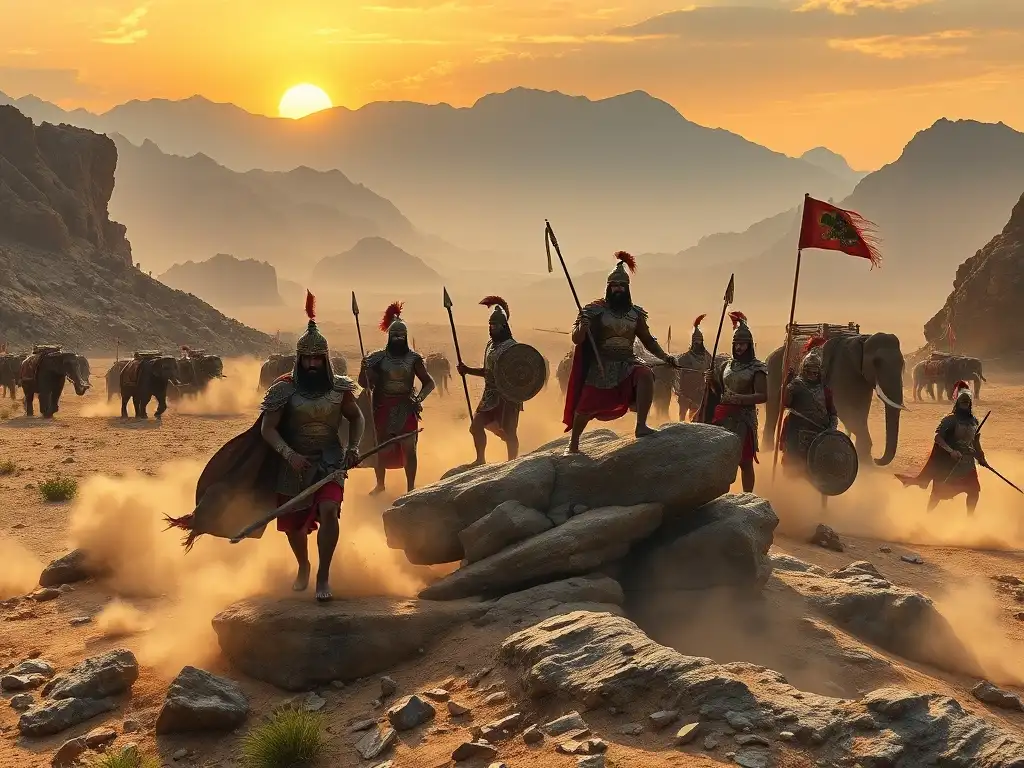
Welcome to Ancient India History, where we embark on a captivating journey through the remarkable tapestry of India’s past. Here, we delve into the intricate interplay between geography and military strategies in shaping the outcomes of ancient battles. Did you know that the unique landscapes and terrains played crucial roles in the tactics employed by ancient Indian warriors?
In our featured article, “The Role of Geography in Shaping Ancient Indian Battle Strategies,” we uncover how the diverse topography influenced historical conflicts, inviting you to explore the fascinating connections between land and warfare. Join us as we unlock the secrets of ancient Indian battle geography and its profound impact on the civilizations that thrived across this majestic land.
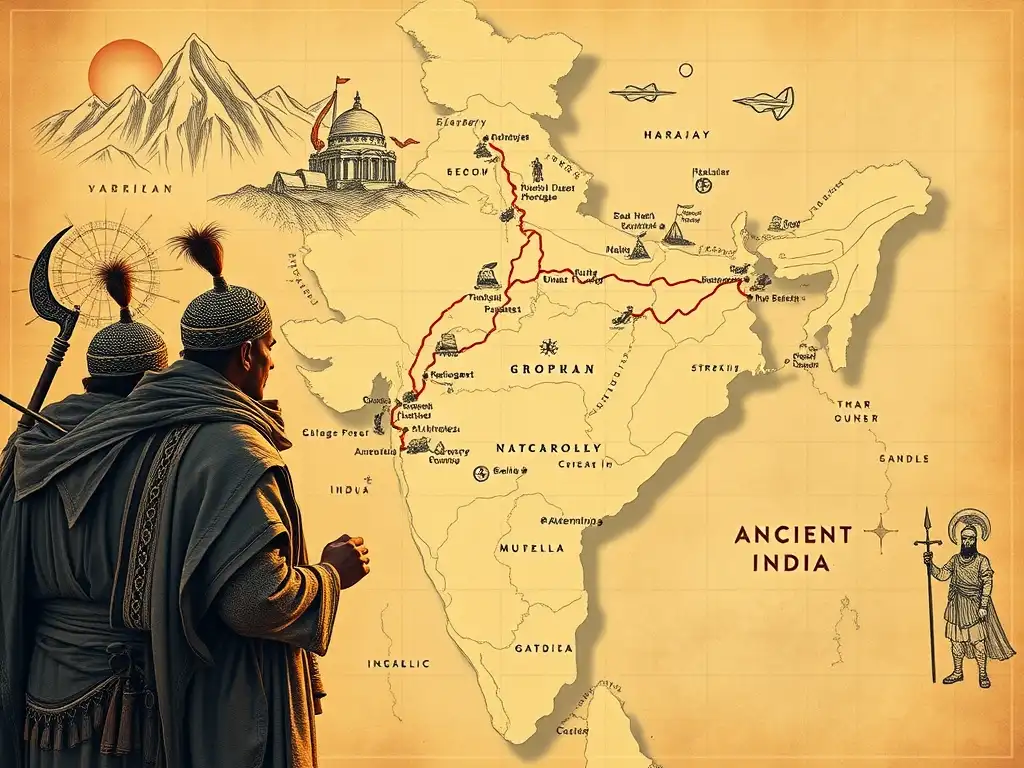
Introduction to Ancient Indian Battle Geography
The geography of ancient India played a crucial role in shaping its military strategies, tactics, and the overall conduct of warfare. From the formidable Himalayas in the north to the vast river valleys and arid deserts, the diverse landscapes influenced how battles were fought, where armies were deployed, and how resources were utilized.
Understanding the interplay between geography and military strategy allows us to appreciate not just the outcomes of notable battles but also the strategic thinking that underpinned them. This exploration into ancient Indian battle geography reveals how geographical features dictated the ebb and flow of conflicts, contributing significantly to the evolution of warfare in this region.
Understanding the Importance of Geography in Warfare
Geography is often a decisive factor in warfare, influencing everything from troop movement to the logistics of supply chains. In ancient India, commanders had to consider the following aspects:
- Natural Barriers: Mountains, rivers, and forests could serve as obstacles or advantages in battle.
- Resource Availability: Fertile areas provided sustenance for troops, while arid regions could hinder prolonged campaigns.
- Visibility and Concealment: Terrain features could affect visibility, offering opportunities for ambushes or stealthy movements.
Understanding these elements was vital for success in the numerous conflicts that characterized ancient Indian history.
The Influence of Terrain on Military Tactics
The diverse terrains of ancient India necessitated varying military tactics. For instance:
- Hilly Regions: Troops often utilized high ground to gain a tactical advantage, making it difficult for enemies to approach.
- River Crossings: Controlling river crossings was critical, as they served as vital routes for supply lines and troop movements.
- Desert Warfare: In arid areas, strategies differed significantly due to limited resources, emphasizing speed and surprise.
These tactical adaptations highlight the ingenuity of ancient Indian military leaders in responding to geographical challenges.
Key Geographic Features of Ancient India
Ancient India boasted a variety of geographic features that significantly impacted its battle strategies. The following sections delve into some of the most influential characteristics:
The Himalayas: Natural Barriers and Strategic Advantages
The majestic Himalayas served as a formidable barrier to invasions from the north. This natural wall not only provided protection but also offered strategic advantages in warfare:
- Defensive Stronghold: Kingdoms like the Mauryas and Guptas utilized the mountains for fortifications.
- Cultural Exchange: The mountains also facilitated trade and cultural exchanges, which could lead to alliances or support during conflicts.
The Himalayas were thus not merely obstacles; they shaped the political landscape of ancient India.
River Valleys: Fertility and Movement of Troops
The river valleys, particularly those of the Ganges and Indus, were the lifeblood of ancient Indian civilizations. Their significance included:
- Agriculture: Fertile plains supported large populations, providing resources for sustaining armies.
- Transportation: Rivers served as crucial routes for troop movements, allowing for rapid deployments.
Control over these river valleys often determined the outcome of battles and the rise and fall of empires.
Deserts and Plains: Challenges and Opportunities
Deserts, such as the Thar, presented unique challenges for ancient Indian armies:
- Logistical Difficulties: The scarcity of water and food required careful planning and swift engagements.
- Guerrilla Tactics: Armies often engaged in guerrilla warfare, taking advantage of the terrain to outmaneuver larger forces.
Conversely, the expansive plains provided ample opportunities for large-scale battles, allowing for the deployment of vast numbers of troops.
The geographical features of ancient India not only influenced military strategies but also shaped the historical narrative of its empires and conflicts. Understanding these elements is essential for comprehending the complexities of ancient Indian military history.
Historical Context of Ancient Indian Battles
Ancient India was characterized by a complex tapestry of kingdoms and empires, each vying for power and dominance over the subcontinent. The geographic diversity of the region, which includes the formidable Himalayas in the north, the expansive Indo-Gangetic plains, dense forests, and arid deserts, played a crucial role in shaping military strategies and outcomes of battles. The geography not only influenced the movement of armies but also determined the resources available for warfare, including food, water, and shelter.
The historical context of ancient Indian battles is marked by a series of notable conflicts, each reflecting the interplay between geography and military strategy. The rise and fall of various kingdoms, such as the Mauryas, Guptas, and various regional states, were often dictated by their ability to leverage their geographic advantages. Understanding these battles within their geographic context provides insights into how topography, climate, and natural resources influenced tactics and strategies employed by ancient Indian rulers.
Major Kingdoms and Their Geographic Locations
The ancient Indian subcontinent was home to several powerful kingdoms, each occupying distinct geographic regions. These included:
- The Maurya Empire: Centered around the Indo-Gangetic plains, this empire leveraged its fertile lands for agriculture, supporting large armies. The rivers, especially the Ganges and Yamuna, facilitated trade and troop movement.
- The Gupta Empire: Known for its golden age, the Gupta Empire was primarily located in the northern part of India. The proximity to the Himalayas provided natural defenses, while the Gangetic plains allowed for a robust agricultural base.
- The Kalinga Kingdom: Situated along the eastern coast, Kalinga was strategically positioned for trade and naval power. Its coastal geography allowed for maritime engagements and access to external resources.
- The Chola Dynasty: Occupying the southern regions, the Cholas were adept at naval warfare due to their access to the Indian Ocean, enabling them to conduct expeditions across Southeast Asia.
These kingdoms' geographic locations significantly influenced their military capabilities, trade routes, and interactions with neighboring states, shaping the broader landscape of ancient Indian warfare.
Influence of Geography on Political Boundaries
Geography played a pivotal role in defining political boundaries in ancient India. Natural barriers such as mountains and rivers often served as demarcations between kingdoms. For instance, the Himalayas provided a formidable barrier against invasions from the north, while the Indus River delineated territories in the west.
Additionally, geographic features influenced the formation of alliances and rivalries. Kingdoms that controlled key passes and river crossings often held strategic advantages, leading to conflicts over these territories. The fertile plains attracted various rulers aiming to expand their domains, while the arid regions often remained contested due to their inhospitable nature.
The impact of geography on political boundaries also extended to resource distribution. Access to water sources, mineral wealth, and agricultural land dictated the prosperity of kingdoms, influencing their military strength. As a result, the interplay between geography and politics was instrumental in shaping the ancient Indian battle landscape.
Case Studies of Notable Battles
The Battle of the Hydaspes: Geography and Strategy
The Battle of the Hydaspes, fought in 326 BCE between Alexander the Great and King Porus, is a prime example of how geography influenced battle strategies. The Hydaspes River, which formed a natural barrier, played a critical role in the tactics employed by both commanders. Alexander, aware of the river's strategic importance, used it to his advantage by launching a surprise night crossing, positioning his troops for a decisive encounter.
The surrounding terrain, characterized by dense forests and high banks, favored the mobility of Alexander’s forces, allowing them to outmaneuver the larger army of Porus. Despite the challenging conditions, Alexander’s strategy demonstrated the effective use of geography in overcoming numerical disadvantages. The battle not only showcased the strategic significance of the river and terrain but also highlighted how geography could dictate the flow of military engagements.
The Kalinga War: Terrain as a Tactical Element
The Kalinga War (circa 261 BCE), fought between the Mauryan Empire under Ashoka and the kingdom of Kalinga, illustrates the importance of terrain in ancient Indian warfare. Kalinga's geography, with its hilly landscapes and dense forests, posed significant challenges for the Mauryan army. The rugged terrain hindered troop movements and made traditional battle formations difficult to maintain.
Ashoka's forces had to adapt their strategies, using guerrilla tactics to navigate the difficult landscape and engage Kalinga’s forces effectively. The war ultimately resulted in a significant loss of life and led to Ashoka's transformation towards Buddhism. This battle emphasizes how terrain can influence not only tactical decisions but also the broader political and philosophical shifts in a kingdom.
The Role of Geography in the Gupta Empire's Military Campaigns
During the Gupta Empire's reign (circa 320-550 CE), geography continued to play an essential role in military campaigns. The empire's geographic position, with its heart in the fertile Ganges valley, provided a strong agricultural base that supported large armies.
Gupta military strategies often capitalized on the diverse geography of the subcontinent, utilizing rapid troop movements through well-established trade routes and river systems. The empire engaged in several campaigns against rival states, where controlling the high ground in mountainous regions or securing river crossings became crucial to their success.
The Gupta Empire's ability to adapt to the geographic challenges of their campaigns allowed them to maintain a vast and prosperous realm, highlighting the continued significance of geography in shaping ancient Indian battle strategies.
Geographic Factors Influencing Battle Strategies
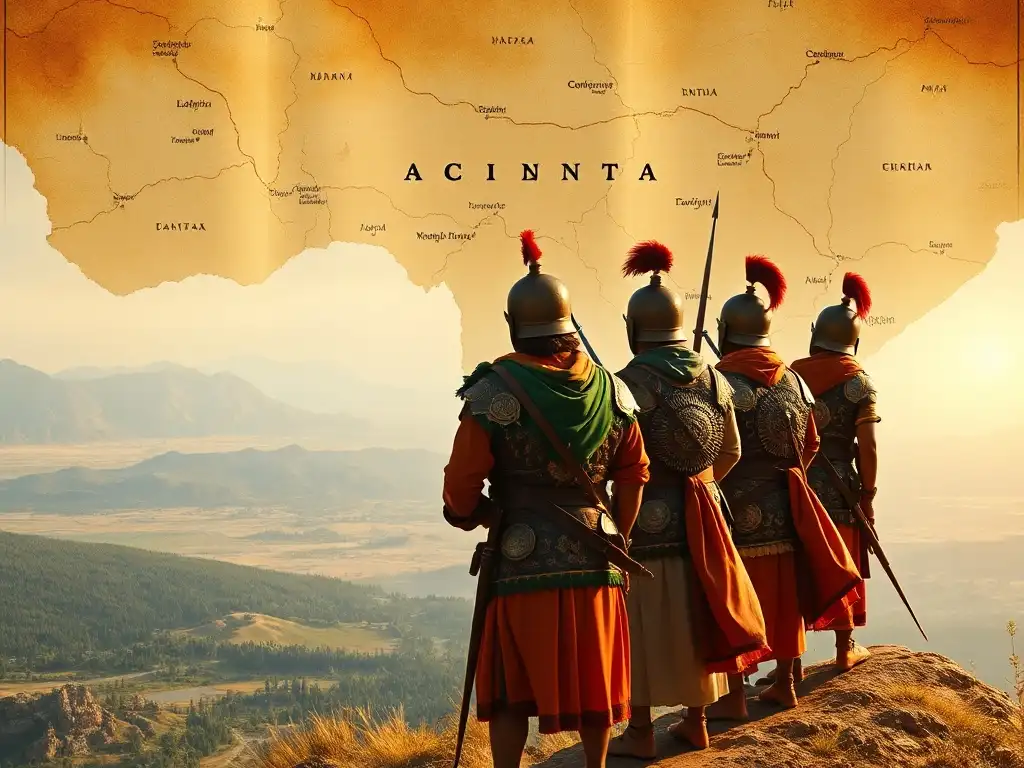
Geography played a pivotal role in shaping the battle strategies of ancient Indian civilizations. The diverse landscapes, from the towering Himalayas in the north to the vast Deccan plateau in the south, influenced the tactics employed by various kingdoms. Key geographic factors included climate, natural resources, and the strategic use of terrain for fortifications and defensive positions. Understanding these elements is crucial for comprehending how ancient Indian powers adapted their military strategies to their environments.
Climate and Seasonal Variations in Warfare
Climate significantly impacted military campaigns in ancient India. The monsoon season, which typically lasted from June to September, brought heavy rainfall that could hinder troop movements and logistics. Armies had to plan their campaigns around these seasonal changes, often delaying battles until after the monsoon had passed to ensure better conditions for movement and supply lines.
For instance, the Kalinga War, fought around 262–261 BCE, was influenced by seasonal considerations. Ashoka's forces took advantage of the drier months to launch a campaign against Kalinga, as the rivers were more manageable, and the terrain less treacherous. Furthermore, the harsh climates of the Thar Desert in western India necessitated different strategies, such as rapid raids and quick retreats, to avoid prolonged exposure to extreme heat.
Natural Resources: Access to Water and Provisions
Access to natural resources was critical in determining the success of military campaigns in ancient India. Water sources, such as rivers and lakes, provided not only hydration for troops but also a means of transporting supplies. Regions with abundant water resources, like the fertile lands near the Ganges River, supported larger armies due to the availability of provisions.
The Mauryan Empire, for example, capitalized on this by establishing supply routes along major rivers to sustain its vast army during campaigns. Conversely, armies operating in arid regions faced significant challenges in securing adequate provisions. The use of local knowledge to identify water sources and fertile areas became essential in planning military actions, resulting in strategies that focused on controlling such vital resources.
Strategic Use of Fortifications and Defensive Positions
The strategic use of geography for fortifications was a hallmark of ancient Indian military tactics. Many kingdoms constructed formidable forts on elevated terrain, such as hilltops or rocky outcrops, to enhance their defensive capabilities. These fortifications not only provided a tactical advantage in terms of visibility and protection but also served as psychological deterrents against potential invaders.
The Rajput clans, known for their valor, often built their strongholds in rugged landscapes, utilizing the natural terrain to create nearly impregnable positions. The fort of Chittorgarh is a prime example of this strategy, where its commanding height and extensive walls provided defense against sieges. Similarly, the Gupta Empire used fortifications strategically to protect its territories from invasions, leveraging the geography to create barriers against enemy forces.
Comparisons of Battle Strategies Across Regions
The geographic diversity of India led to distinct battle strategies across different regions. Northern and southern India, for instance, exhibited varied military tactics shaped by their unique landscapes and climatic conditions. Such differences highlight how geography influenced the nature of warfare in ancient times.
Northern India vs. Southern India: Geographic Influences
In northern India, the presence of the Himalayas and the Indo-Gangetic plains influenced military strategies that emphasized large-scale, organized warfare. The open plains allowed for cavalry charges and the deployment of chariots, which were essential components of northern armies. The various kingdoms, such as the Mauryas and the Kushans, effectively utilized these tactics in their conquests.
Conversely, southern India’s terrain, characterized by dense forests and hilly regions, necessitated guerrilla warfare tactics. The Chola and Pandya dynasties adapted their strategies to navigate through challenging landscapes, employing surprise attacks and mobility to outmaneuver their adversaries. This regional adaptation underscores the profound impact of geography on military strategy in ancient India.
Coastal Warfare: Strategies in the Maritime Regions
The coastal regions of ancient India, particularly along the western and eastern coasts, developed unique battle strategies influenced by their access to the sea. Maritime trade routes were vital for economic prosperity, leading to the establishment of powerful naval forces. The Chola dynasty, renowned for its naval capabilities, expanded its influence across the Indian Ocean, employing strategies that involved swift maritime assaults and control of trade routes.
Naval battles often required different tactics compared to land warfare, such as the use of smaller, more maneuverable ships that could exploit coastal geography. The strategic significance of ports and coastal access shaped the military actions of coastal kingdoms, leading to the rise of powerful naval empires in the region.
By understanding these geographic influences, one can appreciate how ancient Indian civilizations tailored their battle strategies to effectively respond to the challenges posed by their unique environments.
Conclusion: The Lasting Impact of Geography on Ancient Indian Warfare
The geographical landscape of ancient India played a critical role in shaping the strategies and outcomes of numerous battles. From the towering Himalayas in the north to the vast deserts of Rajasthan and the fertile plains of the Gangetic valley, geography influenced troop movements, supply lines, and battle formations. The strategic use of rivers for transportation and defense, as well as the manipulation of terrain features, enabled ancient Indian leaders to command significant advantages over their adversaries.
Moreover, the diverse climates and ecosystems across the subcontinent necessitated unique tactical adaptations. For instance, the monsoon season heavily influenced military campaigns, often determining the timing and success of invasions. As such, the ability to read and respond to geographic cues became a hallmark of effective military leadership. The legacy of these strategies reveals not only the ingenuity of ancient Indian military commanders but also underscores the profound relationship between geography and warfare that continues to resonate in modern military studies.
Reflections on the Role of Geography in Modern Military Studies
The study of geography’s influence on military strategies is not confined to ancient history; it remains a cornerstone of modern military thought. Contemporary military strategists often analyze geographical factors, including terrain, climate, and resource distribution, when planning operations. Understanding the historical context of ancient Indian battle geography can provide valuable insights into current military practices.
Modern conflicts, much like those of ancient India, highlight the importance of terrain in shaping strategic outcomes. For example, the use of mountains for defensive positions or rivers as barriers demonstrates that geographical considerations continue to dictate military success. This reflection encourages military scholars and practitioners to examine historical case studies, such as those from ancient India, to inform and enhance contemporary strategies.
The Legacy of Ancient Indian Battle Geography in Historical Narratives
The geographical strategies employed during ancient Indian battles have left an indelible mark on historical narratives. Chroniclers and historians have often highlighted how geographic features influenced key battles, shaping the outcomes that would define dynasties and empires. Works like the Mahabharata and the Ramayana not only recount epic battles but also illustrate how geography was intricately woven into the fabric of warfare.
These narratives have perpetuated the understanding that geography is not merely a backdrop for conflict but an active participant in shaping military history. The legacy of ancient Indian battle geography serves as a reminder of the need to consider environmental factors as integral to the study of warfare, enriching the historical discourse with a multidimensional perspective.
References and Further Reading
For those interested in delving deeper into the intricate relationship between geography and ancient Indian warfare, the following resources provide valuable insights and information:
Suggested Books and Articles on Ancient Indian Military History
-
"The Art of War in Ancient India" by K. M. Shrimali
This book explores the military strategies and tactics used in ancient Indian warfare, emphasizing the role of geography.
-
"Warfare in Ancient India" by K. R. K. Sinha
A comprehensive analysis of various battles and military campaigns, highlighting the influence of geographical features.
-
"The Historical Atlas of South Asia" by Joseph E. Schwartzberg
This atlas provides a detailed look at the geographical and political landscapes of ancient India.
Online Resources for Exploring Ancient Indian Battles and Geography
-
Ancient Indian Warfare (Wikipedia)
An overview of the military history of ancient India, including significant battles and geographical considerations.
-
Digital South Asia Library
A resource offering maps and documents related to the geography of ancient India, facilitating research into its military history.
-
The Indian Military History Society
An organization dedicated to the study of India’s military past, featuring articles, papers, and discussions on ancient and modern warfare.
- Introduction to Ancient Indian Battle Geography
- Key Geographic Features of Ancient India
- Historical Context of Ancient Indian Battles
- Case Studies of Notable Battles
- Geographic Factors Influencing Battle Strategies
- Comparisons of Battle Strategies Across Regions
- Conclusion: The Lasting Impact of Geography on Ancient Indian Warfare
- References and Further Reading
- What is the significance of geography in ancient Indian battles?
- How did the Indus Valley's geography influence its civilization?
- What geographical features were prominent during the Gupta Empire's battles?
- How did ancient Indian rulers adapt their strategies to different terrains?
- Can you give examples of famous battles influenced by geography in ancient India?
Frequently Asked Questions
What is the significance of geography in ancient Indian battles?
Geography played a crucial role in shaping battle strategies by affecting troop movements, supply lines, and the selection of battlefield locations.
How did the Indus Valley's geography influence its civilization?
The river systems and fertile plains of the Indus Valley enabled early civilizations to thrive, facilitating agriculture and trade, which were essential for military sustenance.
What geographical features were prominent during the Gupta Empire's battles?
During the Gupta Empire, features like the Himalayas and extensive river systems provided natural defenses and influenced the tactics used in warfare.
How did ancient Indian rulers adapt their strategies to different terrains?
Ancient Indian rulers often tailored their battle strategies to the local geography, using tactics suitable for mountains, forests, or plains to gain advantages over opponents.
Can you give examples of famous battles influenced by geography in ancient India?
Notable battles, such as the Battle of the Hydaspes, showcased how river crossings and terrain influenced the outcome, demonstrating the significance of geography in warfare.
Final Reflection: The Enduring Influence of Ancient Indian Battle Geography
The intricate relationship between geography and battle strategies in ancient India remains profoundly relevant today, as it highlights how environmental factors can shape not only military outcomes but also cultural identities. The strategic use of terrain, climate, and natural resources in ancient Indian warfare serves as a reminder of the critical role that geography plays in human endeavors. As we navigate modern conflicts and geopolitical tensions, understanding these historical contexts can provide valuable insights into contemporary strategies.
The lessons drawn from ancient Indian battle geography continue to resonate in our cultural and social landscapes, influencing how we perceive conflict and cooperation in diverse environments. The geographical considerations that guided ancient warriors also echo in modern military tactics and strategic planning. As Sun Tzu famously said, “Know your enemy and know yourself and you can fight a hundred battles without disaster.” This timeless wisdom underscores the importance of understanding one’s environment, a principle that remains vital in today’s complex world.
As we reflect on the significance of geography in shaping ancient Indian battle strategies, I invite you to consider how these lessons can be applied in your own life. Take a moment to reflect on the environments you navigate daily—how do they influence your decisions, relationships, and strategies for success? Embrace the wisdom of the past to inform your present and future, recognizing that just as geography shaped the battles of ancient India, it can also guide you in your personal and professional journeys.
Unveil the Secrets of Ancient Warfare!
Thank you for diving into the fascinating world of ancient Indian battle strategies shaped by geography! Your interest in understanding the nuances of history not only enriches your knowledge but also brings the wisdom of ancient warriors to life. Now, it's time to take your exploration further!
Here are a few actionable steps you can take to deepen your understanding and connect with this captivating history:
- Join a local history group or participate in an online community to discuss and share insights about ancient strategies and their relevance today.
- Explore informative articles on ancient Indian history to broaden your perspective on how geography influenced various civilizations.
- Try your hand at recreating a classic Indian battle strategy based on the regions we've discussed—be sure to share your findings and insights with us!
What aspect of geography do you believe had the greatest impact on ancient Indian warfare? Let's spark a conversation!