
Ashoka’s Vision for a United India: A Historical Perspective

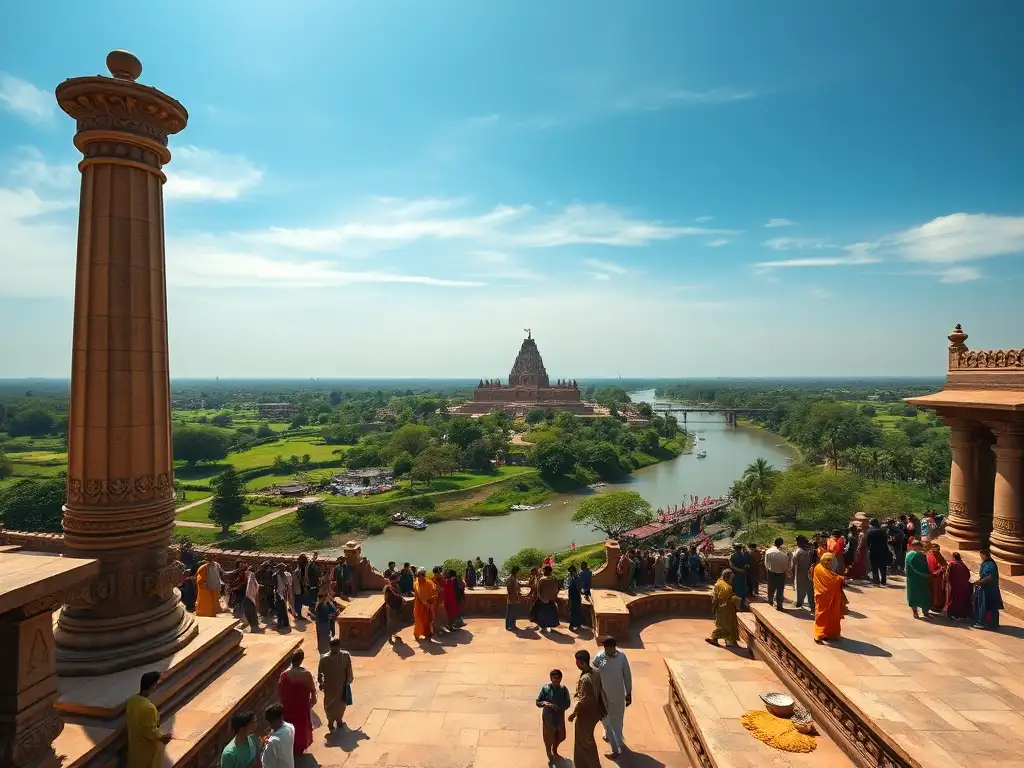
Welcome to Ancient India History, where we embark on a captivating journey through the rich tapestry of ancient Indian civilizations. From the flourishing Indus Valley to the remarkable Gupta Empire, we delve into the profound cultural and historical contributions that have shaped this vibrant heritage. In our featured article, “Ashoka’s Vision for a United India: A Historical Perspective,” we explore the transformative ideas of Ashoka, one of history's most visionary leaders.
Discover how his ideals resonate through time, inviting you to reflect on the concept of unity in diversity. Prepare to be intrigued and inspired as you uncover the legacies of this remarkable figure and more!
- Introduction to Ashoka’s Vision for a United India
- Historical Context of Ashoka’s Reign
- Ashoka's Vision for a United India
- The Role of Edicts in Promoting Unity
- Challenges to Ashoka's Vision for a United India
- Legacy of Ashoka’s Vision in Modern India
- Conclusion: Reflecting on Ashoka's Vision for a United India
- Frequently Asked Questions
- Final Reflection: Embracing Ashoka's Vision for a United India
- Embrace Ashoka's Legacy and Unify Our Vision!
Introduction to Ashoka’s Vision for a United India
Ashoka the Great, one of India's most celebrated emperors, is a pivotal figure in the annals of ancient Indian history. His reign marked a transformative period characterized by profound political, cultural, and spiritual developments. Ashoka's vision for a united India not only shaped the Indian subcontinent but also laid the groundwork for a legacy of peace and governance that resonates even today.
This article delves into the multifaceted aspects of Ashoka's vision, exploring how his policies and philosophies aimed to unify diverse populations under a common ethos, fostering a sense of belonging and mutual respect among various communities. By examining Ashoka's life and contributions, we gain valuable insights into the dynamics of ancient Indian civilization and the enduring impact of his ideals on contemporary society.
Overview of Ashoka the Great
Ashoka, who ruled from approximately 268 to 232 BCE, was the third emperor of the Maurya Dynasty. His reign is often regarded as the golden age of ancient India, marked by significant advancements in art, architecture, and governance. Initially, Ashoka was known for his military prowess, expanding the Mauryan Empire through conquests. However, after the devastating Kalinga War, which caused immense suffering and loss of life, Ashoka experienced a profound transformation. This pivotal moment led him to embrace Buddhism and adopt the principles of non-violence and compassion, which became central to his governance.
Ashoka's administration was characterized by a commitment to dharma (moral law), which he interpreted as a guide for ethical conduct and social responsibility. He implemented a series of reforms aimed at ensuring justice, welfare, and harmony among his subjects. His famous edicts, inscribed on pillars and rocks across the empire, communicated his vision of a unified and peaceful society, emphasizing the importance of ethical behavior, tolerance, and respect for all living beings.
Significance of Ashoka in Ancient Indian History
Ashoka's significance extends beyond his political achievements; he is often credited with the spread of Buddhism as a major world religion. His patronage of Buddhist institutions and missionaries facilitated the dissemination of Buddhist teachings across Asia, influencing cultures and societies far beyond India's borders. This cultural exchange contributed to a shared identity among diverse populations, fostering a sense of unity that transcended regional differences.
Moreover, Ashoka's emphasis on governance based on ethical principles has left a lasting legacy in Indian political thought. His ideals resonate in contemporary discussions about governance, human rights, and social justice. The concept of a ruler's responsibility towards the welfare of their subjects, as articulated by Ashoka, continues to inspire leaders and policymakers today.
Purpose of the Article: Exploring Ashoka's Vision
This article aims to provide a comprehensive exploration of Ashoka's vision for a united India, examining how his policies and philosophies sought to bridge the gaps between diverse cultures and communities. By analyzing historical evidence, including edicts, inscriptions, and accounts from contemporary scholars, we will uncover the strategies Ashoka employed to foster unity and harmony in an increasingly complex and diverse society.
Through this exploration, readers will gain a deeper understanding of Ashoka's contributions to ancient Indian civilization and the broader implications of his vision for unity in the context of historical and modern India. As we journey through Ashoka's life and legacy, we will also reflect on the relevance of his ideals in today's world, where the challenges of division and conflict remain prevalent.
Historical Context of Ashoka’s Reign
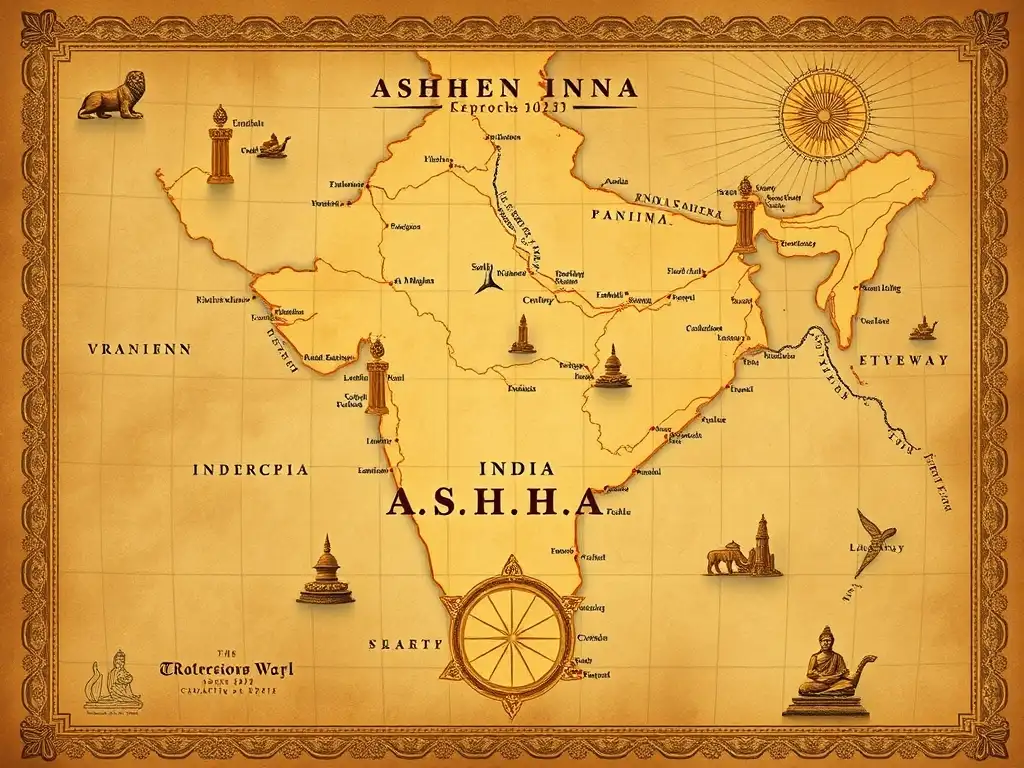
The Mauryan Empire: A Unified Political Landscape
The Mauryan Empire, established in 322 BCE by Chandragupta Maurya, marked a significant turning point in the political landscape of ancient India. At its zenith, under Ashoka's reign (268-232 BCE), the empire encompassed a vast territory stretching from the northern regions of present-day Afghanistan to the southern tip of India, serving as a unifying force among diverse cultures and ethnicities.
Key Features of the Mauryan Empire:
- Centralized Administration: The Mauryan Empire was characterized by a highly organized bureaucratic system that facilitated efficient governance. Ashoka inherited this structure, which allowed for the implementation of laws and policies across the empire.
- Economic Integration: A robust trade network flourished during this period, linking various regions and contributing to economic prosperity. This integration further supported Ashoka's vision for a united India.
- Cultural Exchange: The empire facilitated the exchange of ideas, religions, and cultural practices among its populace, fostering a sense of unity despite regional differences.
Ashoka recognized the importance of maintaining this unified political landscape as a foundation for promoting his values of Dharma (moral law) and fostering a sense of belonging among his subjects.
Socio-Political Dynamics of Ancient India
The socio-political dynamics of ancient India during Ashoka’s reign were complex and multifaceted. The interplay between diverse religious beliefs, social hierarchies, and regional identities played a crucial role in shaping Ashoka's policies.
Religious Pluralism
- Buddhism's Rise: Ashoka’s conversion to Buddhism marked a pivotal moment in the promotion of moral and ethical governance. His advocacy of non-violence and compassion resonated with a broad audience, transcending societal boundaries.
- Diversity of Beliefs: Despite the prominence of Buddhism, Hinduism, Jainism, and various local cults coexisted, presenting both challenges and opportunities for Ashoka. His approach encouraged tolerance and respect for different faiths.
Social Structures
- Caste System: The rigid caste hierarchy influenced societal interactions and governance. Ashoka’s policies aimed to uplift the marginalized, promoting welfare programs that benefited all strata of society.
- Local Governance: The existence of local chieftains and regional powers necessitated a balance between central authority and local autonomy. Ashoka’s administration sought to integrate local leaders into the governance framework, thereby stabilizing his rule.
These dynamics underscored Ashoka's vision for a united India, where diverse communities could coexist harmoniously under a framework of mutual respect and shared values.
Ashoka's Ascension to the Throne: Key Events
Ashoka's rise to power was marked by significant events that not only defined his leadership but also shaped his vision for a united India.
- Battle of Kalinga (261 BCE):
- The Kalinga War was a turning point in Ashoka’s life. The immense loss of life and suffering caused by the conflict led to his profound transformation and commitment to non-violence and Dharma.
- Following the war, Ashoka issued the Rock Edicts, which outlined his principles of governance, emphasizing compassion and ethical conduct.
- Embracing Buddhism:
- Ashoka's conversion to Buddhism catalyzed his efforts in spreading its teachings across the empire and beyond. He supported the establishment of monasteries and the promotion of Buddhist values, which aligned with his vision for a peaceful, united society.
- He dispatched missionaries to regions as far as Sri Lanka, fostering cross-cultural exchanges that further unified diverse populations.
- Welfare Programs:
- Ashoka implemented a series of welfare initiatives aimed at improving the quality of life for his subjects. He established hospitals, planted trees for shade, and built water wells, demonstrating his commitment to the well-being of all citizens.
- These programs were designed to promote social cohesion, reinforcing his vision of a united India that prioritized the welfare of its people.
Through these key events, Ashoka's vision for a united India was not merely a political ambition but a transformative ideology rooted in compassion, tolerance, and ethical governance. His reign left a lasting legacy that continues to inspire discussions on unity and moral leadership in contemporary society.
Ashoka's Vision for a United India
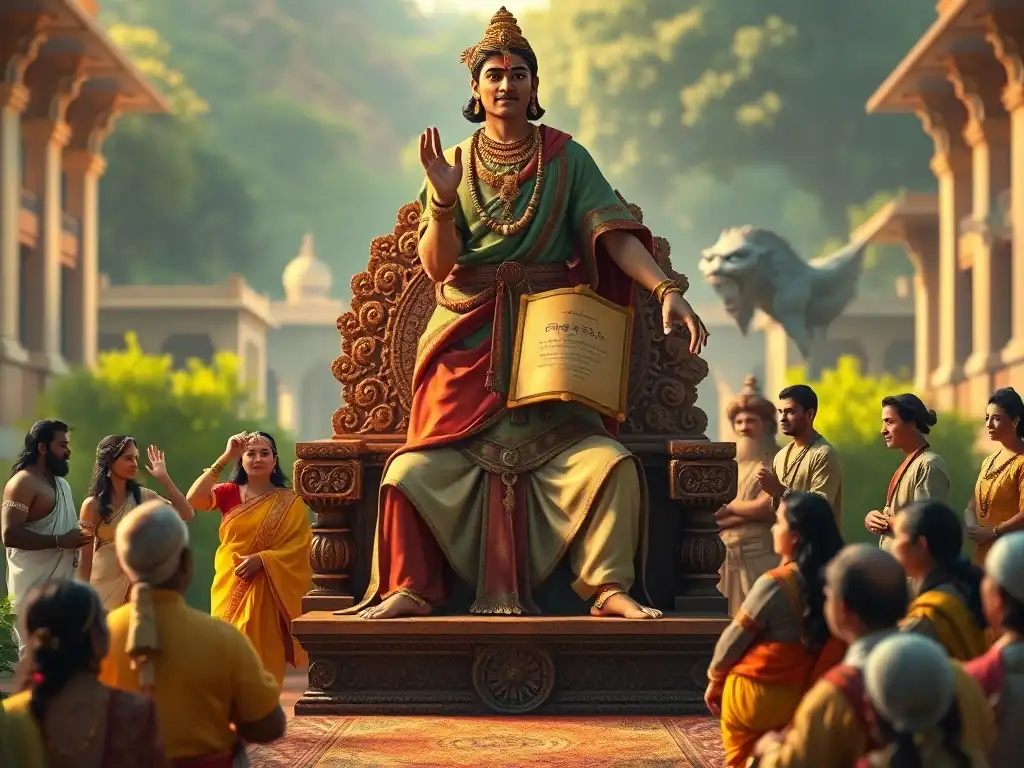
The Concept of Dhamma: Principles of Unity and Peace
Ashoka's vision for a united India was deeply rooted in the concept of Dhamma, which can be understood as a moral law or a set of ethical principles aimed at promoting harmony and peace. Dhamma encompassed values such as non-violence (ahimsa), truthfulness, compassion, and respect for all living beings. Through the promotion of Dhamma, Ashoka sought to unify the diverse peoples of his empire under a common ethical framework.
- Non-Violence: Ashoka's adherence to non-violence was a transformative principle that marked a departure from the militaristic traditions of previous rulers. This commitment not only aimed to avoid bloodshed but also fostered an environment conducive to social and political unity.
- Compassion and Kindness: By emphasizing compassion, Ashoka encouraged his subjects to care for one another, enhancing social cohesion. This was particularly significant in a culturally and religiously diverse empire, wherein mutual respect was essential for maintaining peace.
- Moral Governance: Ashoka's administration was characterized by his belief that rulers should embody moral principles. He believed that a just and ethical government would naturally lead to a stronger, more united society. His edicts, inscribed on pillars and rocks across the empire, served as constant reminders of these values to his subjects.
The promotion of Dhamma was a cornerstone of Ashoka's vision, creating a shared identity among the diverse populations of ancient India, ultimately laying the groundwork for a more unified nation.
Policies Promoting Religious Tolerance and Inclusivity
One of the most remarkable aspects of Ashoka's reign was his commitment to religious tolerance and inclusivity, which played a crucial role in fostering unity in a multi-religious society. Ashoka recognized that his empire was home to various religious traditions, including Buddhism, Hinduism, Jainism, and others. To promote harmony, he implemented several key policies:
- Edicts of Tolerance: Ashoka's rock edicts reflected his respect for all religions. He urged his subjects to respect each other's beliefs and highlighted the importance of understanding and dialogue. For instance, one of his edicts states: "All religions should reside everywhere, and in every place, one should not be denigrated."
- Support for Multiple Faiths: While Ashoka is often associated with Buddhism, he provided support for other religions as well. He funded the construction of temples and monasteries for various faiths, demonstrating his commitment to inclusivity.
- Promotion of Dialogue: Ashoka encouraged interfaith dialogues, which helped to bridge the cultural and religious divides among his subjects. By fostering discussions on common ethical values, he aimed to cultivate a spirit of coexistence.
These policies not only solidified Ashoka's vision for a united India but also set a precedent for future rulers, emphasizing the importance of tolerance in governance.
Ashoka’s Efforts in Infrastructure Development for Unity
Ashoka’s vision for a united India also extended to infrastructure development, which played a vital role in enhancing communication and connectivity across his vast empire. Recognizing that physical infrastructure could facilitate trade, cultural exchange, and administrative efficiency, Ashoka invested significantly in various projects:
- Road Construction: Ashoka initiated the construction of extensive road networks that connected major cities and trade routes. These roads facilitated easier movement of people and goods, promoting economic integration and cultural exchange.
- Rest Houses and Wells: Along these routes, Ashoka established rest houses (or dharamshalas) and wells to ensure the welfare of travelers. This not only encouraged trade and travel but also fostered a sense of community among diverse populations.
- Buddhist Monuments: Ashoka commissioned the construction of stupas and other Buddhist monuments, which served as centers of pilgrimage. These sites attracted people from various regions, reinforcing cultural ties and shared spiritual practices.
Through these infrastructure initiatives, Ashoka not only enhanced the logistical capabilities of his empire but also promoted unity among its diverse inhabitants, reflecting his deep commitment to a vision for a united India.
The Role of Edicts in Promoting Unity
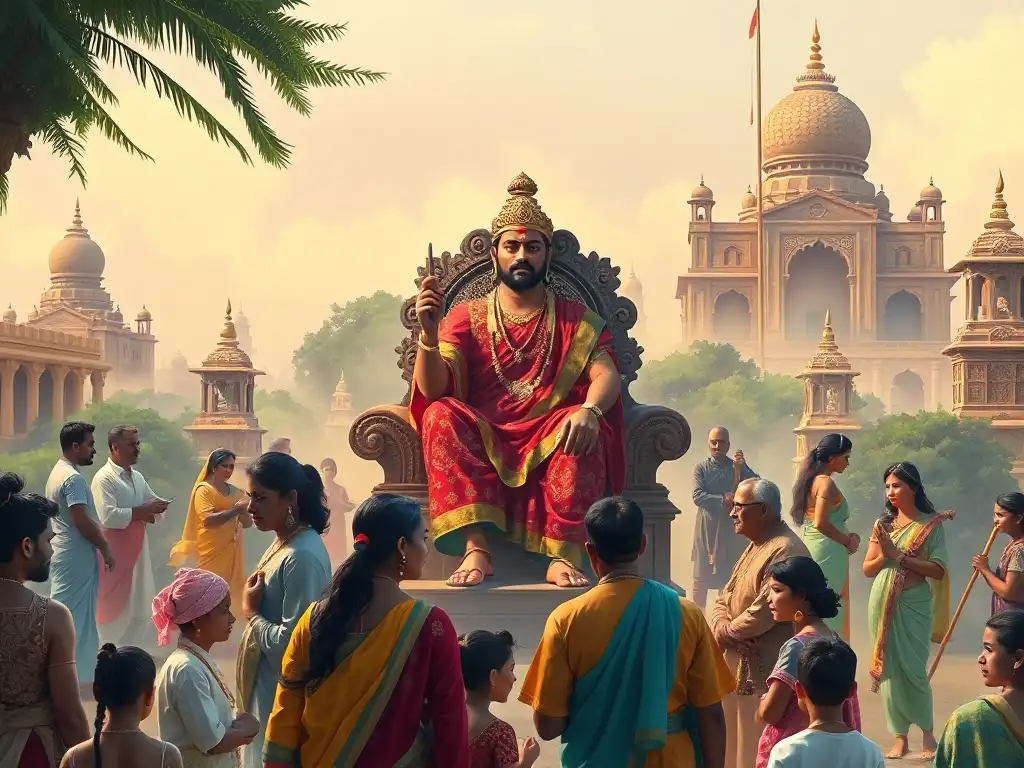
Overview of Ashoka’s Edicts: An Historical Insight
Ashoka the Great, the third Mauryan emperor, ruled from 268 to 232 BCE and is celebrated for his profound commitment to the principles of non-violence, compassion, and moral governance. His vision for a united India was notably articulated through a series of edicts inscribed on pillars, rocks, and caves throughout his empire. These edicts serve as crucial historical documents, offering insight into Ashoka's governance, societal values, and aspirations for unity among his diverse subjects.
The edicts were written in several languages, including Brahmi and Kharosthi, making them accessible to a wider audience across different regions. This effort not only facilitated communication but also underscored Ashoka’s desire to foster a sense of common identity among the people of his vast empire. The inscriptions reflect his transformation after the Kalinga War, where he renounced violence and sought to promote the welfare of his subjects through ethical governance.
The most significant of these edicts are the Rock Edicts and Pillar Edicts, which provide a comprehensive overview of Ashoka’s policies and philosophies. For instance, the Second Rock Edict emphasizes the importance of Dharma (moral law) and the need for rulers to act with compassion and justice towards all beings, thereby setting a framework for a united and harmonious society.
Key Messages of Unity and Moral Governance in the Edicts
Ashoka’s edicts contain several key messages that promote unity and moral governance, which can be categorized into three main themes:
- Promotion of Dharma:
- Ashoka’s edicts consistently advocate for the adherence to Dharma, which encompasses principles of truth, non-violence, and respect for all living beings. This emphasis on ethical conduct was intended to unify the population under a common moral framework, fostering social cohesion and harmony.
- Encouragement of Tolerance:
- The edicts encourage tolerance among different religious and cultural groups. Ashoka explicitly mentions the importance of respecting various beliefs and practices, which was crucial in a culturally diverse empire. This message of tolerance aimed to mitigate sectarian conflicts and promote peaceful coexistence among various communities.
- Responsibility of Rulers:
- Ashoka articulated that rulers have a moral obligation to ensure the welfare of their subjects. His edicts urged officials to engage in selfless service and to prioritize the needs of the people over personal ambitions. By establishing a government founded on ethical principles, Ashoka sought to create a unified and just society.
These messages resonate through several edicts, such as the Fifth Pillar Edict, which calls for the promotion of welfare and the provision of public amenities, highlighting Ashoka’s vision for a benevolent and united governance structure.
Impact of Edicts on Various Regions of India
The impact of Ashoka's edicts transcended geographical boundaries and significantly influenced the various regions of India. Their effects can be assessed through the following points:
- Cultural Integration:
- The edicts played a crucial role in the cultural integration of the vast Mauryan Empire. By disseminating the principles of Dharma and promoting ethical governance, Ashoka fostered a shared identity that transcended local customs and traditions. This cultural integration laid the groundwork for a more unified Indian civilization.
- Administrative Framework:
- The establishment of an administrative framework based on the edicts facilitated more efficient governance across diverse regions. Local officials were tasked with implementing the principles outlined in the edicts, thereby promoting uniformity in administrative practices and policies throughout the empire.
- Long-term Legacy:
- The legacy of Ashoka’s edicts extended beyond his reign, influencing subsequent rulers and shaping the political landscape of India. Many later empires drew inspiration from Ashoka’s model of governance, which emphasized ethical leadership and the importance of societal welfare.
Ashoka’s vision for a united India was profoundly articulated through his edicts, which served as a moral compass for his administration and the society at large. The key messages within these edicts not only promoted unity but also established a framework for ethical governance that resonated throughout the regions of India, leaving a lasting impact on its historical trajectory.
Challenges to Ashoka's Vision for a United India
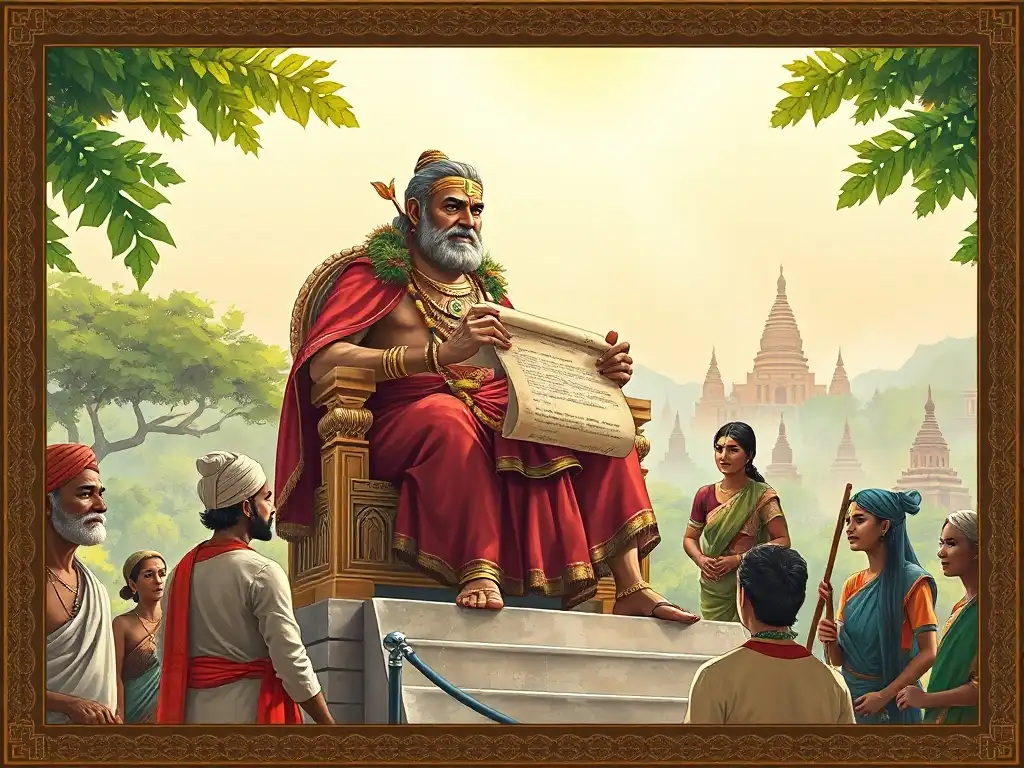
Ashoka's vision for a united India was monumental, aiming to transcend regional and cultural divides to foster a cohesive society under the Mauryan Empire. However, this vision was met with numerous challenges that hindered its realization and sustainability. The complexities of internal conflicts, regional diversities, and resistance to his policies shaped the landscape of his reign, ultimately impacting the longevity of his ideals.
Internal Conflicts and Regional Diversities
The vastness of the Mauryan Empire encompassed a multitude of ethnicities, languages, and cultural practices. This diversity, while a source of richness, also posed significant challenges:
- Ethnic and Cultural Differences: The empire included various groups such as the Indo-Aryans, Dravidians, and tribal populations, each with distinct traditions and social structures. The lack of a unified identity often led to friction and discord.
- Political Fragmentation: Regional governors, or Mahamatras, held significant power and often acted in ways that reflected local interests rather than Ashoka's centralized policies. This decentralized governance diluted the authority of Ashoka's vision.
- Religious Tensions: While Ashoka promoted Buddhism as a unifying force, the presence of other religions, including Hinduism and Jainism, sometimes resulted in conflicts. The challenge was to balance these beliefs without alienating significant segments of the population.
These internal conflicts not only hindered Ashoka's ability to implement his vision but also set the stage for ongoing regional grievances that would persist long after his reign.
Resistance to Policies: Case Studies
Ashoka implemented various policies aimed at promoting dharma (moral law) and welfare, but these initiatives met with resistance in several instances:
- Taxation Policies: Some local leaders resented the increased taxes imposed to support Ashoka's welfare programs. For example, in regions like Kalinga, the enforcement of these taxes sparked rebellion among local rulers who felt their autonomy was being undermined.
- Religious Edicts: Ashoka's Rock Edicts, which preached non-violence and respect for all living beings, faced pushback from segments of society that relied on traditional practices, including animal sacrifices. In regions where such customs were deeply ingrained, his policies were perceived as encroachments.
- Administrative Overreach: The establishment of an extensive bureaucracy to enforce Ashoka's policies often alienated local leaders, leading to resentment and revolt. For instance, in the Deccan Plateau, local chieftains resisted the central authority, viewing it as an imposition on their governance.
These case studies exemplify how Ashoka's well-intentioned policies were sometimes met with opposition, undermining the unity he sought to create.
The Impact of Ashoka's Death on His Vision
The aftermath of Ashoka's death in 232 BCE marked a pivotal juncture for the Mauryan Empire and his vision for a united India:
- Succession Challenges: The empire faced a succession crisis, with weak successors who struggled to maintain control over the vast territories. This power vacuum led to fragmentation, as local rulers seized the opportunity to assert their autonomy.
- Diminished Central Authority: Ashoka's death resulted in a decline in the centralized governance that had characterized his reign. Without his strong leadership, regional disparities and internal conflicts resurfaced, further eroding the unity he had worked to establish.
- Cultural Reversion: Following his death, there was a notable shift back towards regional identities and practices. The emphasis on Buddhism waned in many areas, as regional religions and customs regained prominence. This cultural reversion diluted Ashoka's vision for a cohesive moral framework across the empire.
While Ashoka's vision for a united India was ambitious and forward-thinking, it faced significant challenges from internal conflicts, resistance to his policies, and the eventual disintegration of his centralized authority after his death. These factors collectively contributed to the complex historical narrative of Ashoka's legacy and his aspirations for a united India.
Legacy of Ashoka’s Vision in Modern India
Influence on Contemporary Indian Nationalism
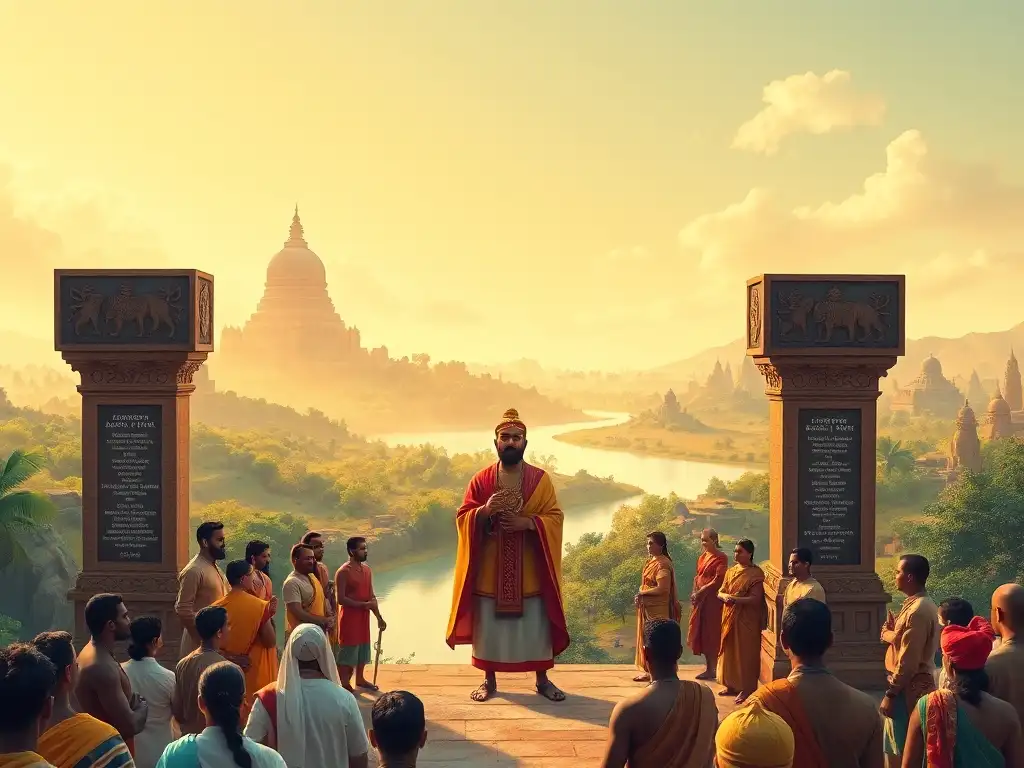
Ashoka’s vision for a united India has had a profound impact on the development of contemporary Indian nationalism. His emphasis on Dhamma—a moral code based on ethics, respect, and compassion—resonates deeply with modern values of unity and integrity. The Edicts of Ashoka, inscribed on pillars and rocks across the subcontinent, advocate for non-violence, tolerance, and social welfare. These principles have been adopted by various nationalist movements throughout history, promoting the idea that a unified nation can exist among diverse cultures and religions.
The revival of Ashoka's ideals in the 20th century, especially during the Indian independence movement, can be seen in the works of leaders like Mahatma Gandhi. Gandhi’s philosophy of ahimsa (non-violence) and the belief in communal harmony draw directly from Ashoka's teachings. The Indian National Congress, while striving for freedom from British colonial rule, often invoked Ashoka as a symbol of a united and ethical India.
| Aspect | Ashoka's Influence | Contemporary Reflection |
|---|---|---|
| Ethical Governance | Promoted Dhamma for rulers | Calls for transparent and ethical governance |
| Religious Tolerance | Advocated respect for all beliefs | Secularism in modern India |
| Social Welfare | Focused on the welfare of his subjects | Modern policies on poverty alleviation |
Ashoka’s Role in Shaping Indian Identity
Ashoka's reign marked a significant turning point in the cultural and political landscape of ancient India. His vision for a united India transcended geographical boundaries, fostering a sense of shared identity among diverse communities. By promoting Buddhism and sponsoring various cultural exchanges, Ashoka laid the groundwork for a collective Indian identity that balanced regional diversities with a sense of unity.
The Ashoka Chakra, featured on the national flag of India, symbolizes the eternal wheel of law and progress, reflecting Ashoka’s commitment to justice and moral governance. This emblem serves not only as a reminder of his legacy but also as a unifying force in a nation characterized by its myriad languages, religions, and cultures. The emphasis on Sanskrit and Prakrit as mediums of communication in administration and literature further solidified a cohesive cultural framework.
Moreover, Ashoka’s respect for local customs and traditions, as noted in his edicts, illustrates a model of governance that values pluralism. This recognition of diversity remains a cornerstone of Indian identity today, influencing how various communities interact and coexist within the framework of a modern nation-state.
Relevance of Ashoka's Vision in Today's Diverse Society
In today's diverse Indian society, Ashoka's vision for a united India continues to hold significant relevance. The principles of tolerance, dialogue, and coexistence he championed are essential in addressing contemporary challenges like communalism and social discord. As India grapples with issues of identity and unity amidst increasing polarization, revisiting Ashoka’s ideals can inspire a more inclusive approach to nation-building.
Modern initiatives that echo Ashoka's vision include efforts to promote interfaith dialogue, cultural festivals celebrating diversity, and educational programs aimed at fostering mutual respect among various communities. The growing recognition of Ashoka as a national icon reinforces the notion that unity does not necessitate uniformity; rather, it thrives on the coexistence of differences.
Moreover, Ashoka's legacy serves as a guiding light for policymakers and leaders advocating for a society where every individual, regardless of their background, feels valued and included. By integrating Ashoka's principles into contemporary governance and social frameworks, India can work towards realizing a more harmonious and integrated nation, fulfilling the vision of a united India that Ashoka so passionately articulated.
Conclusion: Reflecting on Ashoka's Vision for a United India
Summary of Key Points
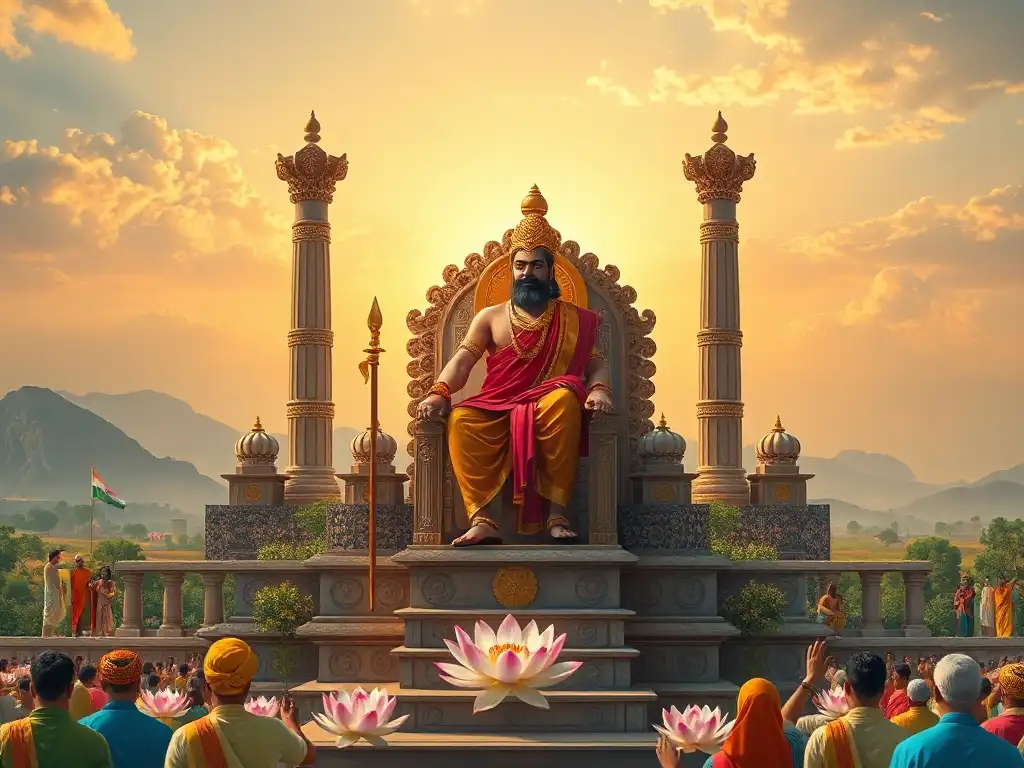
Ashoka's vision for a united India was deeply rooted in his commitment to Dhamma, or righteous living, which transcended the boundaries of culture, region, and religion. Through his edicts and policies, he aimed to foster a sense of community among the diverse populations of his empire. Key points that underscore Ashoka's vision include:
- Promotion of Non-Violence: Ashoka actively advocated for non-violence and compassion toward all living beings, significantly influenced by his conversion to Buddhism after the Kalinga War.
- Cultural Integration: By supporting various religions and philosophies, Ashoka encouraged a syncretic culture that celebrated diversity while promoting mutual respect.
- Administrative Reforms: His establishment of a centralized administration facilitated better governance, ensuring that all regions of his empire could contribute to and benefit from a unified state.
- Infrastructure Development: Ashoka's investment in roads, hospitals, and educational institutions helped unify the vast territories under his rule, enhancing communication and cultural exchange.
The Lasting Impact of Ashoka’s Ideals on Indian History
The ideals espoused by Ashoka have had a profound and enduring impact on Indian history. His emphasis on Dhamma and ethical governance laid the groundwork for future leaders and empires. Some notable influences include:
- Moral Governance: Ashoka's principles inspired subsequent rulers, such as the Mauryan emperors and later dynasties, to adopt ethical frameworks in their rule, promoting welfare and public morality.
- Cultural Legacy: The propagation of Buddhism, supported by Ashoka, led to the spread of its teachings across Asia, influencing cultures and societies far beyond India, including in regions like East Asia and Southeast Asia.
- Unity in Diversity: Ashoka's approach to governance emphasized unity amidst diversity, which resonates with modern India’s ethos. His legacy serves as a reminder of the value of cultural pluralism in maintaining societal harmony.
- Humanitarian Efforts: The establishment of hospitals and welfare programs during Ashoka's reign set precedents for public health and social responsibility in governance, influencing how future leaders approached the well-being of their citizens.
Final Thoughts on Unity and Diversity in Ancient India
Ashoka's vision for a united India not only reflects a historical narrative but also presents a timeless lesson on the importance of unity amidst diversity. His reign serves as a model for contemporary society, advocating for a harmonious coexistence of various cultures, religions, and philosophies.
The legacy of Ashoka encourages us to embrace our differences while working towards common goals, fostering a society that values compassion, dialogue, and mutual respect. As we reflect on the ideals he championed, it becomes evident that Ashoka's vision for a united India resonates profoundly in our ongoing quest for unity and understanding in the face of diversity.
Frequently Asked Questions
What was Ashoka's vision for a united India?
Ashoka's vision for a united India centered around non-violence, tolerance, and the promotion of Dharma as a guiding principle for governance and society.
How did Ashoka's policies contribute to cultural unity?
Ashoka implemented policies that encouraged inter-religious dialogue and the spread of Buddhism, which fostered a sense of shared identity and cultural harmony among diverse communities.
What are some key achievements of Ashoka in promoting unity?
Key achievements include the establishment of edicts that communicated ethical governance, the promotion of trade and infrastructure, and the spread of education that transcended regional boundaries.
How did Ashoka's reign impact future Indian empires?
Ashoka's emphasis on a unified and ethical state influenced subsequent empires, such as the Gupta Empire, which adopted similar principles of governance and cultural integration.
Why is Ashoka's vision still relevant today?
Ashoka's vision remains relevant as it emphasizes the importance of tolerance, peace, and social justice, ideals that continue to resonate in contemporary discussions on national unity and cohesion.
Final Reflection: Embracing Ashoka's Vision for a United India
In exploring Ashoka's vision for a united India, we uncover a timeless message that resonates profoundly in today's fragmented world. The principles of compassion, tolerance, and unity that Ashoka championed over two millennia ago are not just relics of history; they are essential guiding lights for contemporary society. As we navigate the complexities of modern life, we must remember that the essence of Ashoka's vision is as relevant now as it was during his reign, reminding us that unity is not merely an ideal but a necessity for progress.
The influence of Ashoka's ideals continues to shape our cultural and social landscape, urging us to reflect on our shared humanity. In a world often divided by differences, Ashoka's emphasis on dharma and ethical governance serves as a powerful reminder of our collective responsibility. As Mahatma Gandhi once said, "> The best way to find yourself is to lose yourself in the service of others." This sentiment echoes Ashoka's commitment to the welfare of all beings, urging us to foster a sense of community and empathy that transcends borders and beliefs.
As we conclude this exploration of Ashoka's vision, I invite you to reflect on how these ancient teachings can inspire your own journey. Consider how you can embody the principles of unity and compassion in your daily life, fostering connections that bridge divides. Let us carry forward Ashoka's legacy by striving to create a more harmonious world, where understanding and cooperation flourish. Together, we can honor the past and build a future that truly reflects the spirit of a united India.
Embrace Ashoka's Legacy and Unify Our Vision!
Thank you for exploring the profound insights of Ashoka's vision for a united India. Your engagement with this historical perspective is invaluable and underscores the significance of unity and peace in our society. Now, let’s take that inspiration and put it into action!
Here are some empowering ways you can bring Ashoka’s ideals to life:
- Join or start a community dialogue: Engage with local groups to discuss the principles of non-violence and tolerance that Ashoka championed. Your voice can foster meaningful change!
- Share your insights: Spread the word! Discuss Ashoka's vision on social media or with friends to inspire others to reflect on the importance of unity and coexistence.
- Research and explore further: Delve into historical texts about Ashoka's reign. Gaining a deeper understanding of our past can help shape a brighter future!
How can you actively contribute to creating a more united community inspired by Ashoka’s principles today?