
The Spiritual Journey of Ashoka: Transformations and Revelations


Welcome to Ancient India History, where we embark on a fascinating journey through time, exploring the rich tapestry of culture and civilization that shaped one of the world's oldest societies. Today, we invite you to delve into the profound spiritual journey of Ashoka, a pivotal figure whose transformative revelations not only altered his own path but also left an indelible mark on the moral landscape of ancient India.
Prepare to uncover the layers of his evolution from a fierce warrior to a compassionate leader, as we unravel the intricate narratives that define this remarkable era. Join us as we uncover the truths behind Ashoka's legacy and explore how his journey continues to resonate through the ages.

Introduction to Ashoka's Spiritual Journey History
The spiritual journey of Ashoka, one of ancient India's most significant emperors, is a profound narrative that intertwines the realms of governance, philosophy, and personal transformation. Born into the Maurya dynasty around 304 BCE, Ashoka ascended to the throne amidst a backdrop of political ambition and military conquest.
However, his path took a dramatic turn following the brutal Kalinga War, where the immense loss of life and suffering ignited a profound introspection within him. This pivotal moment marked the beginning of Ashoka's spiritual journey, leading him to embrace the principles of Buddhism and advocate for non-violence, compassion, and moral governance.
As we delve deeper into Ashoka's spiritual evolution, we uncover the layers of his life that reflect a transformation from a fierce warrior to a benevolent ruler, whose policies significantly shaped the cultural and ethical landscape of ancient India. The exploration of Ashoka's journey not only highlights his contributions to Buddhism and peace but also serves as an enduring testament to the power of personal change and its capacity to influence society at large.
The Historical Context of Ashoka's Reign
Overview of the Maurya Empire
The Maurya Empire, established in 322 BCE by Chandragupta Maurya, was a formidable force that dominated the Indian subcontinent. At its zenith, the empire encompassed a vast territory that stretched from modern-day Afghanistan in the northwest to Bangladesh in the east. Under the leadership of Ashoka, who ruled from 268 to 232 BCE, the Maurya Empire witnessed significant advancements in administration, trade, and culture.
- Key Features of the Maurya Empire:
- Centralized Administration: A well-organized bureaucracy facilitated efficient governance.
- Trade Networks: Extensive trade routes enhanced economic prosperity.
- Cultural Flourishing: The period saw a blend of diverse cultural influences, leading to remarkable artistic achievements.
Ashoka's reign is often considered the golden age of the Maurya Empire, marked by stability and prosperity, which laid the groundwork for his subsequent spiritual journey.
Key Events Leading to Ashoka's Transformation
Several pivotal events catalyzed Ashoka's transformation from a ruthless conqueror to a compassionate leader.
- The Kalinga War (circa 261 BCE):
- This war, characterized by its brutality, resulted in the death and suffering of thousands. The aftermath profoundly impacted Ashoka, leading him to reconsider his approach to warfare and governance.
- Encounter with Buddhism:
- Following the war, Ashoka's exposure to Buddhist teachings played a crucial role in shaping his new ideology. His interactions with Buddhist monks and sages introduced him to the principles of non-violence and compassion.
- Edicts of Ashoka:
- To propagate his newfound beliefs, Ashoka issued a series of edicts inscribed on rocks and pillars throughout his empire. These edicts emphasized moral conduct, social welfare, and religious tolerance, reflecting his commitment to a more humane form of governance.
Through these transformative experiences, Ashoka's spiritual journey became a remarkable saga of redemption and enlightenment, influencing not only his reign but also the spiritual landscape of India and beyond.
Early Life and Influences on Ashoka's Spiritual Path
Ashoka, one of the most prominent rulers of ancient India, experienced a spiritual transformation that significantly influenced his reign. Understanding the early influences in his life provides essential context for his later philosophical and ethical shifts. His upbringing, the figures he encountered, and his initial beliefs played vital roles in shaping his spiritual journey.
Childhood and Upbringing of Ashoka
Born around 304 BCE to Emperor Bindusara and his queen, Ashoka hailed from the Maurya dynasty. His childhood was marked by the privileges of royal life, providing him with access to education and resources. Despite the opulence, the political environment was fraught with competition among royal siblings for power. Ashoka’s early years were spent in the palace of Pataliputra, where he was exposed to diverse cultures, philosophies, and the complexities of governance and war.
His upbringing under a powerful yet austere father instilled in Ashoka the significance of strength and leadership. However, it also created an internal conflict, as he grappled with the expectations of becoming a formidable monarch while also seeking deeper meaning in life beyond conquest and authority.
Influential Figures in Ashoka's Life
Key figures in Ashoka’s life significantly impacted his spiritual journey. Among them were his mother, Queen Dharma, whose emphasis on ethical living and compassion left a lasting impression on him. Additionally, Ashoka was influenced by his grandfather, Chandragupta Maurya, the founder of the Mauryan Empire, who was known for his strategic prowess and governance.
Another pivotal figure was the Buddhist monk Upagupta, who played a crucial role in introducing Ashoka to Buddhist teachings. The philosophical ideas espoused by Upagupta, particularly those emphasizing non-violence and compassion, began to resonate deeply with Ashoka, laying the groundwork for his spiritual evolution.
Early Beliefs and Practices of Ashoka
In his youth, Ashoka adhered to the traditional Kshatriya values of bravery and honor, often engaging in activities that showcased his martial skills. His early beliefs were heavily influenced by the religious practices of the time, including Hindu rituals and ancestor worship. However, amidst these practices, Ashoka exhibited curiosity toward various philosophies, including Jainism and Buddhism, which later played a significant role in his transformation.
As a ruler, Ashoka initially focused on expanding his empire through military conquests, reflecting his early beliefs in power and dominance. However, the seeds of compassion and ethical governance were beginning to take root within him, setting the stage for the profound changes that would follow.
The Turning Point: The Kalinga War
The Kalinga War marked a significant turning point in Ashoka's life and reign, profoundly influencing his spiritual journey. The events surrounding the war catalyzed a radical transformation in his beliefs and approach to leadership.
Overview of the Kalinga War and Its Impact
The Kalinga War, fought around 261 BCE, was one of the bloodiest conflicts in ancient India. Ashoka sought to annex the Kalinga region to expand his empire but faced fierce resistance from its inhabitants. The war resulted in massive casualties, with historical accounts suggesting that over 100,000 soldiers and civilians lost their lives. This conflict starkly revealed the brutal realities of warfare and its devastating impact on humanity.
The aftermath of the Kalinga War left a profound mark on Ashoka. Witnessing the suffering and destruction firsthand, he was deeply troubled by the consequences of his conquests. The stark contrast between his desire for power and the humanitarian cost of his ambitions ignited a profound internal crisis, prompting Ashoka to reevaluate his priorities and the very essence of leadership.
Ashoka's Reflection and Regret Post-War
In the wake of the Kalinga War, Ashoka experienced profound remorse. His reflections on the brutalities of war compelled him to question the moral implications of his actions. Historical texts indicate that Ashoka was particularly struck by the sorrow of those who lost loved ones and the desolation left in the war's wake.
This period of reflection led him to renounce violence and embrace a path of non-violence and compassion. Ashoka’s remorse was not merely a fleeting emotion; it was a catalyst for a lasting transformation that reshaped his identity as a ruler and as a person. He began to seek a deeper understanding of suffering and the human condition, which ultimately guided his subsequent policies.
The Shift from Conquest to Compassion
The Kalinga War marked the definitive shift in Ashoka's philosophy from a focus on military conquest to an emphasis on compassion and ethical governance. Following his transformation, Ashoka adopted Buddhism as his guiding philosophy, which promoted non-violence, tolerance, and the well-being of all beings.
In his reign after the war, Ashoka implemented a series of reforms aimed at promoting peace and welfare. He established hospitals, built roads, and encouraged trade, all while spreading the teachings of Buddhism. His edicts, inscribed on pillars and rocks throughout his empire, emphasized the importance of compassion, ethical behavior, and the rejection of violence.
This new direction not only redefined Ashoka’s legacy but also had a profound impact on the cultural and spiritual landscape of ancient India. By prioritizing compassion over conquest, Ashoka became a symbol of enlightened leadership and a revered figure in the history of human spirituality.
Embracing Buddhism: The Spiritual Awakening of Ashoka
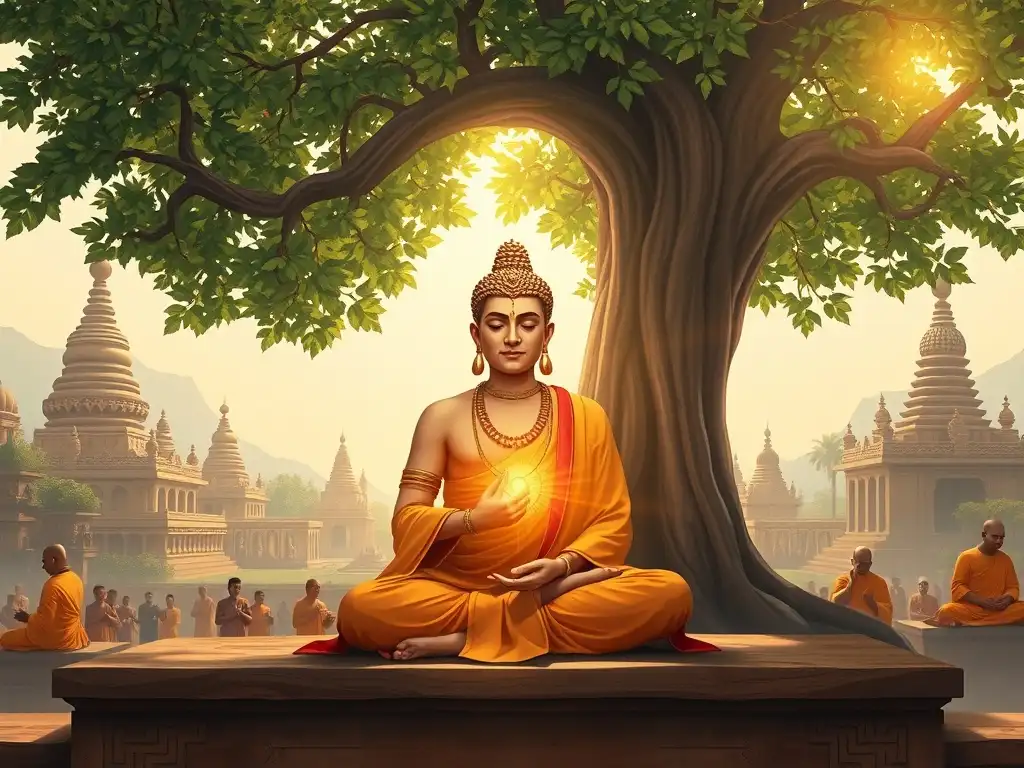
Ashoka's spiritual journey is a profound testament to the transformative power of faith and the quest for inner peace. Initially an emperor known for his military conquests, Ashoka's life took a dramatic turn following the Kalinga War, which became a pivotal moment in his spiritual evolution.
Witnessing the immense suffering and loss of life during this conflict, Ashoka experienced a deep sense of remorse that propelled him towards a search for meaning beyond the battlefield. This quest ultimately led him to embrace Buddhism, marking the beginning of a new chapter in his life dedicated to the principles of non-violence, compassion, and righteousness.
Introduction to Buddhism and Its Principles
Buddhism, founded by Siddhartha Gautama (the Buddha) in the 5th century BCE, emphasizes the path to enlightenment through the understanding of suffering, its causes, and the means to overcome it. Central to its teachings are the Four Noble Truths, which articulate the nature of suffering and the path towards liberation:
- The Truth of Suffering (Dukkha): Life is inherently filled with suffering.
- The Truth of the Cause of Suffering (Samudaya): Desire and attachment are the root causes of suffering.
- The Truth of the End of Suffering (Nirodha): It is possible to end suffering by overcoming desire.
- The Truth of the Path Leading to the End of Suffering (Magga): The Eightfold Path provides the guidance needed to achieve enlightenment.
The Eightfold Path consists of:
- Right Understanding
- Right Intent
- Right Speech
- Right Action
- Right Livelihood
- Right Effort
- Right Mindfulness
- Right Concentration
These principles not only provide a framework for personal development but also promote ethical conduct and societal harmony, which resonated deeply with Ashoka after his awakening.
Ashoka's Conversion: Key Events and Influences
Ashoka's conversion to Buddhism was marked by several key events that highlighted his transformation. The most significant of these was the aftermath of the Kalinga War in 261 BCE, where the extensive loss of life and suffering he witnessed led him to reflect on the futility of violence. Seeking a new path, Ashoka began to engage with Buddhist teachings and sought the counsel of Buddhist monks.
Another influential factor in his conversion was his interaction with Buddhist missionaries. Notably, the monk Upagupta played a crucial role in guiding Ashoka towards the Buddhist doctrine, emphasizing the importance of compassion and non-violence as means to foster peace and harmony. Ashoka's conversion was not merely a personal decision; it was a public declaration that set the tone for his reign and his approach towards governance.
The Role of Buddhist Monks in Ashoka's Journey
Buddhist monks were instrumental in Ashoka's spiritual journey, serving as both teachers and advisors. After his conversion, Ashoka actively sought out monks to learn more about Buddhist philosophy and practices. He established monasteries and supported the monastic community, which became a crucial part of his administration.
One prominent monk, Mahinda, Ashoka's son, played a vital role in spreading Buddhism across India and beyond. Mahinda's missions helped to institutionalize Buddhism as a major religion in ancient India, and Ashoka's patronage ensured that Buddhism flourished during his reign. The monks not only provided spiritual guidance but also helped Ashoka implement his vision of a just and compassionate society rooted in Buddhist teachings.
Ashoka's Edicts: A Testament to His Spiritual Evolution
Ashoka's edicts stand as enduring symbols of his commitment to Buddhist principles and his dedication to the welfare of his subjects. These inscriptions, carved on rocks and pillars throughout his empire, communicated his beliefs and policies, reflecting his spiritual evolution from a conqueror to a compassionate ruler.
The Content and Significance of Ashoka's Edicts
The edicts outline Ashoka's vision of governance based on dharma, or moral law. They emphasize non-violence, respect for all living beings, and the promotion of welfare for both humans and animals. The edicts also advocate for the importance of compassion, tolerance, and ethical behavior, capturing Ashoka's resolve to create a peaceful society.
Significantly, these inscriptions served not only as a means of communication with his subjects but also as a historical record of his transformation. They illustrate how Ashoka sought to embed Buddhist values into the fabric of governance, making a lasting impact on Indian history.
Promoting Dharma: Principles of Righteousness
At the heart of Ashoka’s edicts is the promotion of dharma, which encompasses principles of righteousness and moral conduct. Ashoka articulated these principles in his edicts, urging his subjects to practice compassion, truthfulness, and tolerance. He consistently highlighted the importance of self-discipline and the pursuit of ethical living as paths to personal fulfillment and social harmony.
Ashoka’s commitment to dharma was revolutionary for his time, as it marked a shift from traditional notions of power based on conquest to one rooted in moral authority. By aligning his rule with these ethical principles, he set a precedent for future rulers and established a framework for governance that prioritized the well-being of the populace.
The Influence of Edicts on Ancient Indian Society
The impact of Ashoka's edicts on ancient Indian society was profound. They not only reinforced the principles of Buddhism but also encouraged the practice of compassion and non-violence across the empire. The edicts fostered a sense of unity among diverse communities, promoting tolerance among various religious and cultural groups.
Moreover, Ashoka's promotion of dharma contributed to the establishment of a more ethical society, influencing social conduct and behaviors. His edicts also inspired future generations of leaders and thinkers, embedding the values of compassion and righteousness deeply within Indian culture.
In essence, Ashoka's spiritual journey and the subsequent dissemination of his beliefs through his edicts represent a remarkable transformation, showcasing the profound influence of Buddhism on one of India's most celebrated emperors.
The Legacy of Ashoka's Spiritual Journey
Ashoka's spiritual journey is arguably one of the most significant transformations in the history of ancient India, leaving an indelible mark on its cultural and religious landscape. Following his conversion to Buddhism after the Kalinga War, Ashoka sought to spread the principles of Dharma, which emphasized moral conduct, compassion, and non-violence. His edicts, inscribed on pillars and rocks throughout his empire, serve as a testament to his commitment to these ideals. These inscriptions not only conveyed his personal beliefs but also articulated a vision for governance rooted in ethical and humane principles, which resonated with the populace.
The legacy of Ashoka's spiritual journey can be observed in the ways it fostered a sense of unity among diverse cultures and communities within his vast empire. By advocating for tolerance and respect for all religions, he created an environment where different beliefs could coexist harmoniously. This legacy of inclusivity and acceptance continues to influence contemporary Indian society, where multiple religious traditions thrive alongside one another.
Impact on Buddhism and Its Spread
Ashoka's reign marked a pivotal moment in the history of Buddhism, significantly enhancing its prominence both within and beyond India. By promoting the teachings of the Buddha, Ashoka facilitated the establishment of monasteries and stupas, which served as centers for learning and meditation. His patronage attracted monks and scholars, leading to the proliferation of Buddhist texts and teachings.
Moreover, Ashoka's commitment to the spread of Buddhism extended beyond the borders of India. He dispatched missionaries to various regions, including Sri Lanka, Central Asia, and the Mediterranean, effectively laying the groundwork for Buddhism to become a global religion. The impact of his efforts is evident today, as Buddhism continues to thrive across continents, attracting millions of followers.
Ashoka’s Role in Promoting Non-Violence and Tolerance
One of the cornerstone principles of Ashoka's spiritual journey was his unwavering commitment to non-violence (Ahimsa) and tolerance. After witnessing the devastation caused by the Kalinga War, he renounced warfare and violence, realizing the profound suffering it inflicts on humanity. This transformation prompted him to advocate for peaceful coexistence, urging his subjects to embrace compassion and understanding.
Ashoka's edicts reflect this commitment. He emphasized the importance of respecting all living beings and encouraged people to engage in dialogue rather than conflict. His promotion of non-violence and tolerance has had a lasting impact on Indian philosophy and ethics, influencing subsequent leaders and movements that espouse similar values.
Lasting Influence on Indian Culture and History
The spiritual journey of Ashoka has had a profound and lasting influence on Indian culture and history. His emphasis on ethical governance and social welfare set a precedent for future rulers, who sought to emulate his principles. The concept of Dharma as a guiding force in administration became integral to Indian political philosophy.
Furthermore, Ashoka's contributions extended to art and architecture. The stupas and pillars he commissioned, adorned with intricate carvings and inscriptions, are celebrated as masterpieces of ancient Indian art. These structures not only serve as historical landmarks but also as symbols of the moral and spiritual values that Ashoka championed. His legacy continues to inspire contemporary movements that advocate for peace, justice, and ethical leadership.
Conclusion: The Enduring Significance of Ashoka’s Spiritual Journey
Ashoka's spiritual journey is a powerful narrative of transformation, conviction, and the quest for a more compassionate society. His embrace of Buddhism and commitment to non-violence shaped the moral framework of his reign and left a profound impact on the cultural heritage of India. The principles he championed continue to resonate in modern times, highlighting the timeless relevance of his teachings.
Reflections on Ashoka's Transformations
Reflecting on Ashoka's transformations provides valuable insights into the complexities of human nature and the potential for change. His journey from a fierce conqueror to a benevolent ruler underscores the capacity for personal growth and the importance of introspection. Ashoka's life exemplifies how individuals can harness their experiences, even those rooted in violence, to cultivate a path towards peace and enlightenment.
The edicts he inscribed serve as moral compasses, encouraging individuals and societies to contemplate their own values and actions. In a world often marred by conflict and strife, Ashoka's legacy invites us to reflect on our responsibilities towards one another and the environment.
The Relevance of Ashoka's Revelations in Modern Times
The revelations of Ashoka remain highly relevant in contemporary society. His advocacy for non-violence, tolerance, and ethical governance speaks to the pressing issues of our time, including social justice, environmental stewardship, and interfaith dialogue. As communities navigate the challenges of globalization and cultural diversity, Ashoka's teachings offer a framework for fostering understanding and collaboration.
In an era where the consequences of violence and intolerance are starkly evident, revisiting Ashoka's principles serves as a reminder of the power of compassion and ethical leadership. His spiritual journey continues to inspire individuals and movements dedicated to building a more peaceful and inclusive world, illustrating that the essence of his legacy transcends time and remains a guiding light for humanity.
- Introduction to Ashoka's Spiritual Journey History
- The Historical Context of Ashoka's Reign
- Early Life and Influences on Ashoka's Spiritual Path
- The Turning Point: The Kalinga War
- Embracing Buddhism: The Spiritual Awakening of Ashoka
- Ashoka's Edicts: A Testament to His Spiritual Evolution
- The Legacy of Ashoka's Spiritual Journey
- Conclusion: The Enduring Significance of Ashoka’s Spiritual Journey
Frequently Asked Questions
What was Ashoka’s role in ancient India?
Ashoka was the third emperor of the Maurya Dynasty, known for his significant role in spreading Buddhism and promoting non-violence after his conversion following the Kalinga War.
How did the Kalinga War impact Ashoka’s spiritual journey?
The Kalinga War deeply affected Ashoka, leading him to renounce violence and embrace Buddhism, which transformed his approach to governance and personal beliefs.
What contributions did Ashoka make to Buddhism?
Ashoka is credited with the dissemination of Buddhist teachings across India and beyond, establishing edicts and stupas to promote the values of compassion and moral governance.
What are Ashoka's edicts and their significance?
Ashoka's edicts are inscriptions found on rocks and pillars that outline his moral principles, promoting Dharma and ethical governance, showcasing his commitment to a more humane rule.
How is Ashoka remembered in modern times?
Ashoka is often viewed as a symbol of peace and tolerance, with his legacy influencing not only Indian culture but also the global understanding of non-violence and spirituality.
Final Reflection: The Enduring Legacy of Ashoka's Spiritual Journey
Ashoka's spiritual journey history is not just a tale of personal transformation; it resonates deeply with our contemporary quest for meaning and peace. In a world often marked by conflict and division, Ashoka's evolution from a fierce warrior to a compassionate ruler serves as a powerful reminder of the potential for change within us all. His commitment to non-violence and moral governance continues to inspire movements for peace and reconciliation today, proving that the path of spirituality can lead to profound societal impact.
The influence of Ashoka's journey transcends time, shaping cultural and social landscapes across generations. His embrace of Buddhism and the principles of Dharma not only transformed his reign but also laid the foundation for a more humane and ethical society. As we navigate our own spiritual paths, we can draw from Ashoka's wisdom, recognizing that "The greatest victory is the victory over oneself." > This quote encapsulates the essence of Ashoka's journey, reminding us that true transformation begins within.
As you reflect on Ashoka's spiritual journey, consider how his lessons can be applied in your own life. What transformations are you seeking, and how can you embody the principles of compassion and non-violence in your daily actions? Let Ashoka's legacy inspire you to embark on your own journey of self-discovery and growth, fostering a more peaceful and understanding world, one step at a time.
Embrace Your Own Transformative Journey!
Thank you for diving into the inspiring story of Ashoka's spiritual evolution! We hope you found valuable insights that can ignite your own path of transformation. Now it’s time to take action and reflect on how these ancient lessons can shape your life today.
- Start your personal journey by dedicating just 10 minutes each day to mindfulness or meditation, allowing you to connect with your deeper self.
- Explore Ashoka’s teachings by reading his edicts; consider sharing your thoughts with others to inspire a broader conversation.
- Join a community of seekers by participating in local workshops or online forums that focus on personal growth and spirituality.
What insights from Ashoka's journey resonate most with you, and how do you plan to integrate them into your life?