
From the Indus to the Aegean: Tracing the Historical Ties Between India and Greece

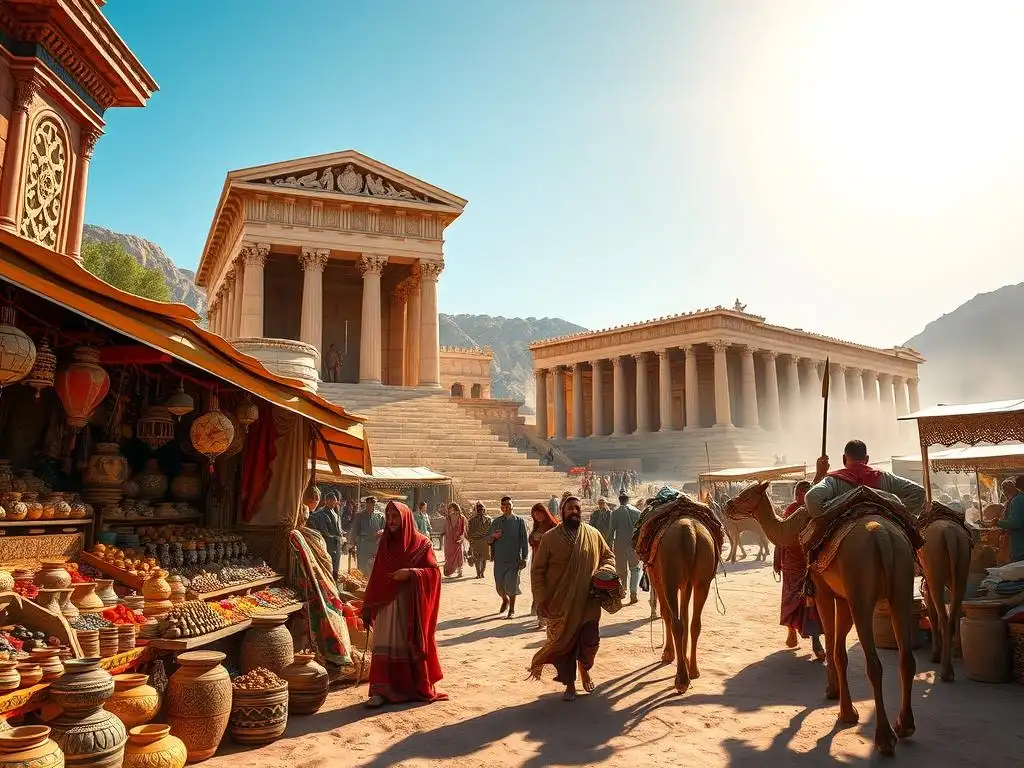
Welcome to Ancient India History, where we embark on a journey through the rich tapestry of India's past, exploring the remarkable connections that have shaped civilizations. In our featured article, "From the Indus to the Aegean: Tracing the Historical Ties Between India and Greece," we delve into the intriguing India Greece historical connections that reveal unexpected interactions and exchanges between these two great cultures.
Whether you're a history buff or a curious newcomer, prepare to uncover the fascinating stories that intertwine these ancient worlds and discover how their legacies continue to resonate today. Dive in and let the exploration begin!
Introduction to India Greece Historical Connections
The historical connections between India and Greece represent a fascinating tapestry woven through centuries of trade, philosophy, and cultural exchange. These interactions, which began as early as the Indus Valley Civilization and continued through the Hellenistic period, highlight the profound influence that both civilizations had on each other. As ancient societies navigated the complexities of commerce and diplomacy, they shared knowledge and ideas, leading to significant advancements in various fields such as mathematics, astronomy, and art.
This article delves into the rich narrative of India-Greece historical connections, exploring pivotal moments and exchanges that shaped their relations. From the early trade routes established by Indian merchants to the intellectual dialogues fostered by scholars like Aryabhata and Pythagoras, the interplay between these two great cultures reveals a deep-seated legacy that continues to resonate today. As we trace the paths from the Indus River to the Aegean Sea, we uncover not only the exchanges of goods and ideas but also the enduring impact of these relationships on contemporary understanding of civilization and culture.
Join us on this journey as we unravel the threads of history that bind India and Greece, illuminating the shared heritage that transcends geographical boundaries and time.
- What are the main historical connections between India and Greece?
- How did the Indus Valley Civilization interact with Greek culture?
- What role did Alexander the Great play in India-Greece historical ties?
- How did the Gupta Empire influence Greek perspectives on India?
- Why is understanding India-Greece connections important today?
Ancient Civilizations: A Comparative Overview
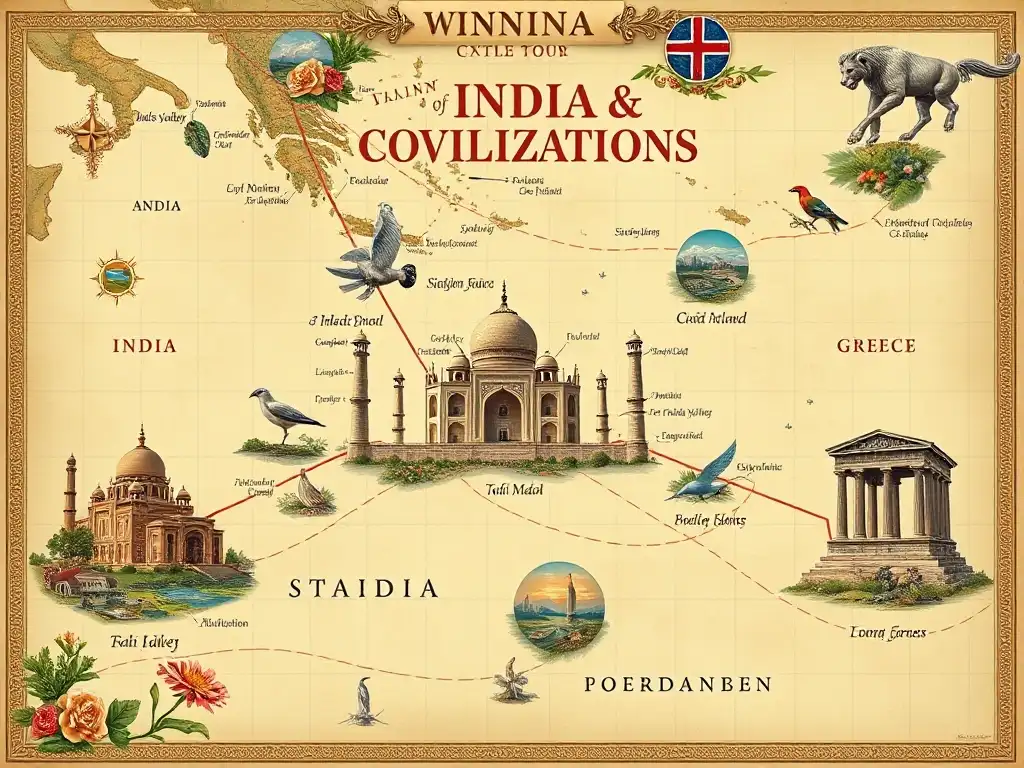
The ancient civilizations of India and Greece, while geographically distant, share a myriad of connections that reflect their rich tapestries of culture, trade, and intellectual exchange. Understanding these civilizations in a comparative framework sheds light on their unique developments and mutual influences.
The Indus Valley Civilization
The Indus Valley Civilization (IVC), flourishing around 2500 BCE in present-day Pakistan and northwest India, is renowned for its advanced urban planning, sophisticated drainage systems, and impressive architecture. Key cities like Harappa and Mohenjo-Daro were characterized by grid patterns, standardized bricks, and large public baths, indicating a high degree of social organization and civic planning.
The economic structure of the IVC was primarily agrarian, supplemented by trade with neighboring regions. Archaeological findings suggest that the Indus people engaged in extensive commerce with Mesopotamia and possibly even with ancient Egypt. Items such as beads, seals, and pottery have been discovered in distant lands, indicating a vibrant trade network.
Moreover, the cultural practices of the IVC, including their script (still undeciphered), pottery styles, and religious artifacts, reflect a complex society with deep spiritual beliefs. The presence of figurines that resemble deities hints at their religious life, which may have influenced later Hindu beliefs.
Despite its decline around 1900 BCE, the legacy of the Indus Valley Civilization laid the groundwork for subsequent Indian cultures, particularly in terms of urbanization, trade practices, and socio-economic structures.
The Greek Civilization in Antiquity
The civilization of ancient Greece, which blossomed from the 8th century BCE to the 6th century CE, is characterized by its profound contributions to philosophy, politics, art, and science. Greek city-states, such as Athens and Sparta, showcased diverse forms of governance, including democracy, oligarchy, and monarchy.
The philosophical advancements made by figures like Socrates, Plato, and Aristotle established foundational concepts in Western thought. Their inquiries into ethics, metaphysics, and epistemology influenced not only Greek society but also later civilizations, including Indian scholars. The philosophical dialogues and ideas often paralleled discussions found in ancient Indian texts, indicating a possible convergence of thoughts.
In terms of art and architecture, the Greeks excelled in sculpture and monumental buildings, such as the Parthenon. Their art emphasized proportion, balance, and harmony, reflecting their cultural values. The Greek achievement in literature, with epics like Homer's "Iliad" and "Odyssey," shaped literary traditions across the world.
Trade and cultural exchanges also played a significant role in Greek society. The Mediterranean trade routes facilitated interaction with various cultures, including the Egyptians and Phoenicians, and later with Indian traders. This interconnectedness allowed for the sharing of ideas, goods, and technologies, enriching both civilizations.
While the Indus Valley Civilization and ancient Greece emerged in different contexts, their respective developments in urban planning, trade, philosophy, and art demonstrate a fascinating interplay of human ingenuity and cultural exchange. Understanding these ties not only highlights the achievements of these civilizations but also emphasizes the interconnectedness of ancient societies across the globe.
Early Interactions Between India and Greece
The Arrival of Alexander the Great
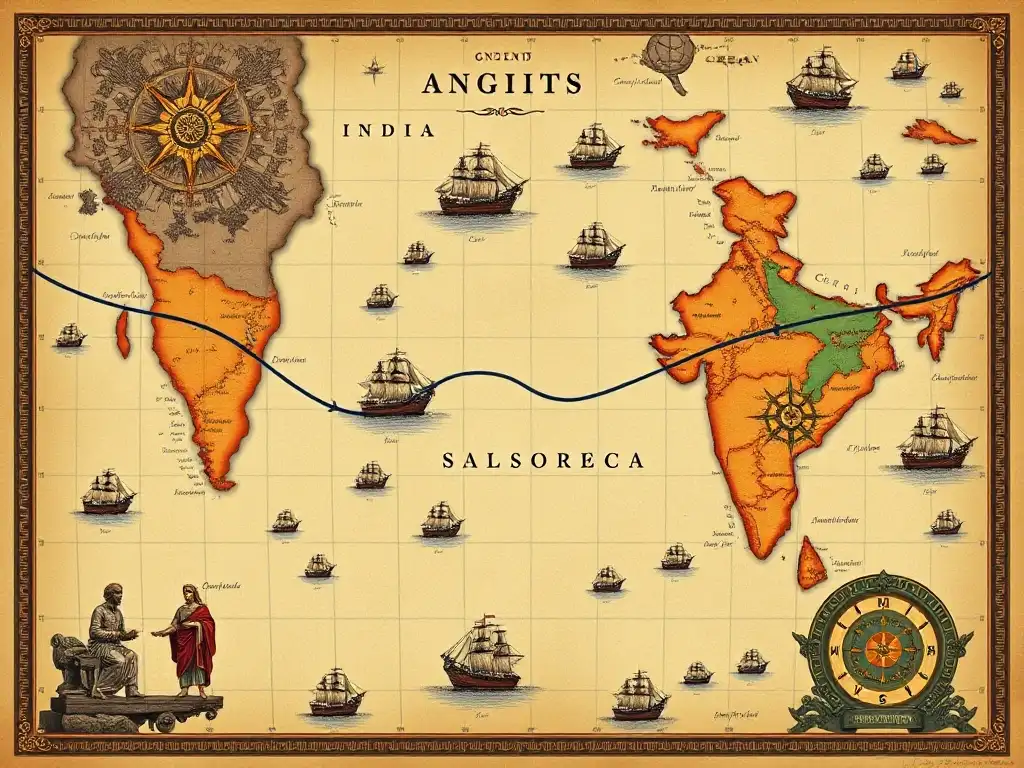
The arrival of Alexander the Great in 326 BCE marked a significant turning point in the historical connections between India and Greece. As a towering figure of military conquest, Alexander aimed to expand his empire into the Indian subcontinent, encountering various kingdoms along the way. His campaign led to a series of battles, most notably the Battle of the Hydaspes against King Porus, which showcased not only military prowess but also the cultural exchanges that would ensue.
- Military Engagements: Alexander's expeditions brought him face-to-face with formidable Indian armies and introduced Greek military tactics to Indian warfare. This exchange influenced subsequent military strategies in the region.
- Cultural Exchange: Following his conquests, Alexander established several cities, including Alexandria Nicaea and Alexandria Bucephala. These cities became melting pots of Greek and Indian cultures, encouraging dialogue, trade, and the sharing of philosophies.
The aftermath of Alexander’s campaigns saw the establishment of the Mauryan Empire, which embraced aspects of Hellenistic culture, establishing a framework for future interactions. Greek ambassadors, like Megasthenes, who served at the Mauryan court, documented their experiences, further enriching the historical narrative of Indo-Greek relations.
Trade Routes Connecting India and Greece
The trade routes between India and Greece were vital arteries of commerce and cultural exchange, facilitating the flow of goods, ideas, and cultural practices. These routes can be primarily classified into two categories: land routes and maritime routes.
Land Routes
- Silk Road: The famed Silk Road served as a crucial land link, connecting the Indian subcontinent with various regions, including Persia and eventually Greece. This route enabled the exchange of silks, spices, and precious stones, thereby creating a lucrative trade relationship.
- Royal Road: The Persian Royal Road also played a critical role in facilitating trade between the two regions. This route allowed for quicker transport of goods and ideas, enhancing the economic and diplomatic ties between Indian states and Greek territories.
Maritime Routes
- Indian Ocean Trade: The maritime routes through the Indian Ocean linked Indian port cities with Greek colonies along the Mediterranean coast. This trade network allowed for the exchange of cotton, indigo, and aromatic spices, which were highly sought after in the Greek markets.
- Port Cities: Greek traders established colonies in port cities such as Barygaza (modern Bharuch) and Muziris (on the coast of Kerala), which became bustling centers of trade that linked India with the broader Mediterranean world.
Overall, these trade routes not only facilitated economic exchanges but also promoted cultural interactions, leading to the intermingling of Hellenistic and Indian philosophies, art forms, and religious beliefs. This interplay between India and Greece laid the groundwork for a rich tapestry of historical connections that would influence both civilizations for centuries to come.
Cultural Exchanges and Influences
Art and Architecture: A Blend of Styles
The historical connections between India and Greece have significantly influenced art and architecture in both civilizations. As trade flourished between the two regions, there was a remarkable exchange of artistic techniques and styles that can still be observed today.
- Gandhara Art: One of the most notable examples of this cultural fusion is Gandhara art, which emerged in the region of present-day Pakistan and Afghanistan. This art form displayed strong Hellenistic influences characterized by:
- Realistic human forms: Sculptures from this period reveal a focus on naturalism, showcasing intricate details and lifelike representations influenced by Greek sculpture.
- Iconography: The depiction of Buddhist themes and figures, particularly the Buddha, merged with Greco-Roman motifs, creating a unique visual language.
- Architectural Innovations: The melding of Indian and Greek architectural elements is evident in structures such as stupas and monasteries:
- Stupa Architecture: The design of stupas, particularly in the Gandhara region, incorporated elements like circular domes, reminiscent of Greek temples. These structures often featured relief carvings that narrated stories from both Indian and Greek traditions.
- Urban Planning: The grid layout of cities like Pataliputra showcased urban planning principles that were shared between the two cultures. The use of columns and porticos in Indian architecture also bears similarities to Greek designs.
These artistic and architectural exchanges highlight the dynamic interactions between India and Greece, demonstrating how cultural influences shaped the development of both civilizations.
Philosophical and Scientific Exchanges
The philosophical and scientific exchanges between India and Greece laid the groundwork for significant advancements in various fields, including mathematics, astronomy, and philosophy. The historical connections between India and Greece fostered an environment ripe for intellectual growth.
- Mathematics: Indian mathematicians significantly influenced Greek thought, particularly in the realm of numbers and calculations. The concepts of zero and the decimal system, originating in India, were instrumental in shaping Greek mathematical principles.
- Notable Scholars: The works of scholars like Aryabhata were eventually transmitted to the Greeks, intertwining the mathematical traditions of both cultures.
- Astronomy: The exchange of astronomical knowledge was another critical area where Indian and Greek scholars collaborated.
- Planetary Theories: Indian texts, such as the Surya Siddhanta, contained advanced astronomical calculations that influenced Greek astronomers like Hipparchus. This cross-pollination of ideas led to a more profound understanding of celestial phenomena.
- Philosophy: The philosophical dialogues that took place between Indian and Greek thinkers enriched both traditions.
- Comparative Philosophy: The dialogues explored concepts such as metaphysics, ethics, and the nature of reality. Indian philosophies like Vedanta and Samkhya began to intersect with Greek philosophies, particularly Stoicism and Platonism.
These philosophical and scientific exchanges not only enhanced the intellectual landscape of both India and Greece but also laid the foundation for future advancements in various disciplines, demonstrating the profound impact of their historical connections.
Religion and Spirituality: Cross-Cultural Influences
The Spread of Buddhism and Greek Philosophy
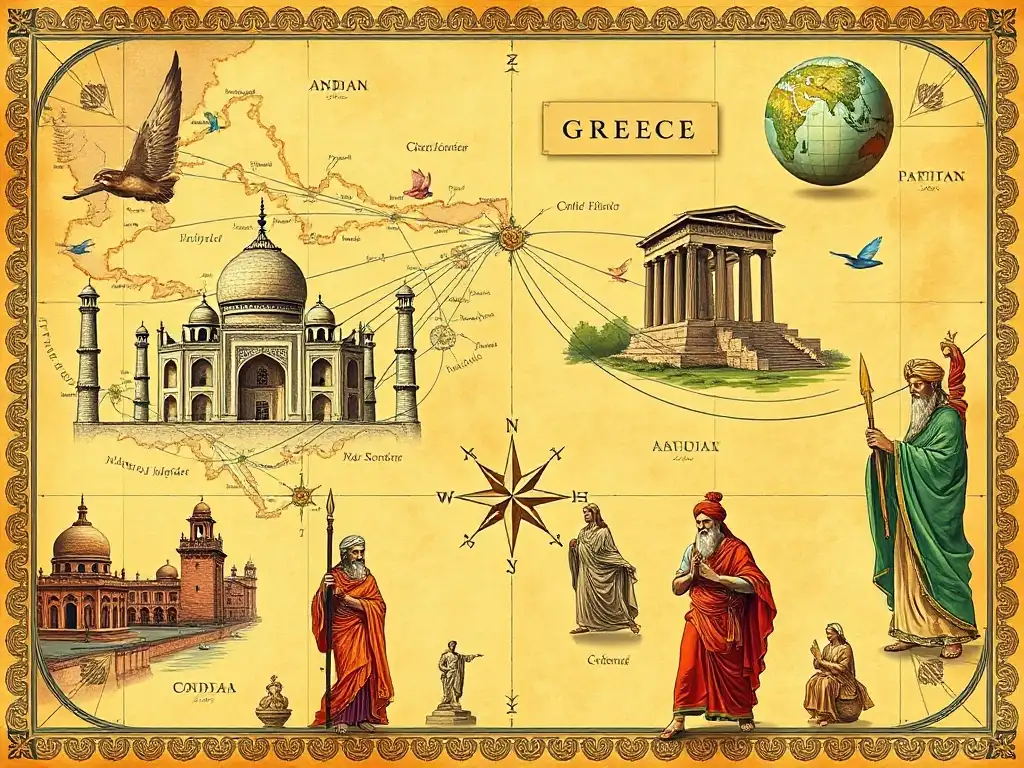
The intersection of Buddhism and Greek philosophy represents a profound cross-cultural dialogue that emerged during the period following Alexander the Great's conquests in the 4th century BCE. As Greek influences permeated the Indian subcontinent, the dissemination of Buddhist ideas and practices became increasingly entwined with Hellenistic thought.
Buddhism, founded by Siddhartha Gautama (the Buddha), emphasized principles such as impermanence, suffering, and the path to enlightenment. As Buddhist monks traveled westward, many encountered Greek scholars and philosophers, leading to a rich exchange of ideas. This synthesis is notably evident in several key aspects:
- Conceptual Parallels: Both traditions grapple with the nature of reality and existence. For instance, the Greek philosophical inquiry into ethics and the nature of the good resonates with Buddhist discussions on right action and compassion.
- Artistic Representation: The visual arts of Buddhism were significantly influenced by Hellenistic styles, particularly in the depiction of the Buddha and Bodhisattvas. The incorporation of Greek artistic techniques contributed to a more humanized representation of divine figures, moving away from aniconic symbolism.
The spread of Buddhism into the Hellenistic world facilitated the establishment of monastic communities that served as centers of learning, allowing for the cross-pollination of ideas. This exchange enriched not only Buddhist thought but also provided a framework for Greek philosophers to explore themes of ethics, metaphysics, and the nature of happiness.
The Impact of Hellenistic Culture on Indian Religions
The influence of Hellenistic culture on Indian religions, particularly during the Maurya Empire, marked a significant transformation in the spiritual landscape of the subcontinent. As the Macedonian Empire extended its reach, various cultural exchanges took place, leading to new religious ideologies and practices.
One of the most notable impacts of Hellenistic culture on Indian religions includes:
- The Integration of Deities: The syncretism of Greek and Indian deities created new religious expressions. For example, the Greco-Buddhist art of Gandhara depicted the Buddha with attributes reminiscent of Greek gods, suggesting a blend of spiritual iconography.
- Philosophical Synthesis: The arrival of Greek philosophical concepts such as Stoicism and Epicureanism provided fertile ground for Indian thinkers. This cross-pollination contributed to the development of Vedanta and Samkhya philosophies, which began to incorporate rational and empirical approaches to spirituality.
Moreover, the Hellenistic emphasis on rational discourse influenced Indian philosophical debates, leading to a more systematic approach to spiritual inquiry. The introduction of Greek rhetorical techniques enriched the dialogues found in texts like the Yoga Sutras and Bhagavad Gita, fostering a deeper engagement with metaphysical questions.
The interactions between India and Greece during the ancient period resulted in a dynamic exchange of religious ideas and philosophies. This cross-cultural relationship not only shaped the development of Buddhism and other Indian religions but also left a lasting legacy on the broader landscape of spiritual thought in both cultures.
Later Historical Connections
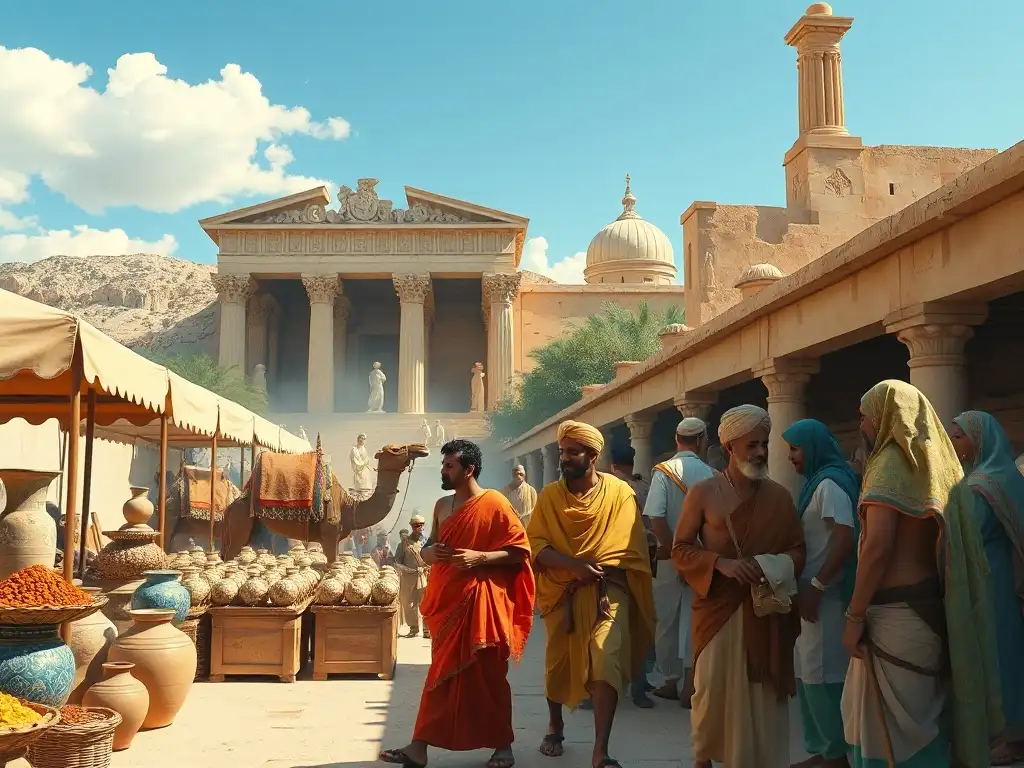
The historical connections between India and Greece did not cease with the decline of the Indus Valley Civilization. Instead, they evolved, particularly during the periods of the Mauryan Empire and the Gupta Empire. These empires served as significant conduits for cultural, economic, and intellectual exchanges, which contributed to the rich tapestry of Indian history.
The Mauryan Empire and Hellenistic Kingdoms
The Mauryan Empire, which flourished from 322 to 185 BCE, marked a pivotal moment in the historical ties between India and Greece. Founded by Chandragupta Maurya, this empire expanded rapidly, covering most of the Indian subcontinent. Its interactions with the Hellenistic kingdoms, particularly after the conquests of Alexander the Great, led to a significant blend of cultures.
Alexander the Great's Invasion
In 326 BCE, Alexander the Great invaded India, crossing the Indus River and engaging in battles with local kingdoms. Although his stay was brief, the impact of his campaigns was profound. Through these interactions, Greek culture and ideas began to permeate Indian society.
- Cultural Exchange: The introduction of Greek art forms influenced Indian sculpture, leading to the emergence of the Gandhara art style. This fusion can be seen in the depiction of Buddhist figures with Hellenistic features.
- Philosophical Dialogues: Greek philosophers, such as Pyrrho, accompanied Alexander and later engaged with Indian philosophical traditions, leading to dialogues that enriched both cultures.
Diplomatic Relations
Following Alexander's departure, the Mauryan Empire established diplomatic ties with the Hellenistic kingdoms. Notably, Ambassadors were exchanged, facilitating further interactions:
- Megasthenes, one of the most famous Greek ambassadors, served in the court of Chandragupta Maurya. His accounts in "Indica" provide valuable insights into the political structure and cultural practices of ancient India.
- The Mauryan Empire's trade routes connected with the Mediterranean, enhancing commerce and cultural exchanges.
The Gupta Empire and Greco-Roman Interaction
The Gupta Empire, which reigned from approximately 320 to 550 CE, represents another peak of Indian history characterized by remarkable prosperity and cultural achievements. During this period, Greco-Roman interaction continued to flourish.
Trade and Commerce
The Gupta Empire benefitted immensely from trade links with the Roman Empire, which significantly influenced economic growth.
- Silk and Spices: Indian merchants exported silk, spices, and gems to Rome, while importing wine, olive oil, and textiles. This trade not only enriched both economies but also fostered cultural exchanges.
- Maritime Routes: The establishment of maritime trade routes in the Indian Ocean facilitated direct contact between Indian and Mediterranean traders.
Cultural and Intellectual Exchanges
The intellectual exchanges during the Gupta period were notable, particularly in the fields of mathematics, astronomy, and philosophy.
- Mathematics: The Gupta mathematicians, such as Aryabhata, made significant contributions that would later influence Greek scholars. The concept of zero, a revolutionary idea, found its way into the Greek mathematical lexicon.
- Astronomy: Indian astronomy, enriched by earlier Greek works, saw significant advancements. The interaction between Indian and Greek astronomers led to a synthesis of astronomical knowledge.
The later historical connections between India and Greece during the Mauryan and Gupta Empires illustrate a dynamic relationship characterized by cultural, economic, and intellectual exchanges. These interactions not only shaped the civilizations involved but also laid the groundwork for future engagements between the two regions. The legacy of these connections continues to resonate in the annals of history, highlighting the enduring impact of India's relationships with ancient Greece.
Conclusion: The Legacy of India Greece Historical Ties
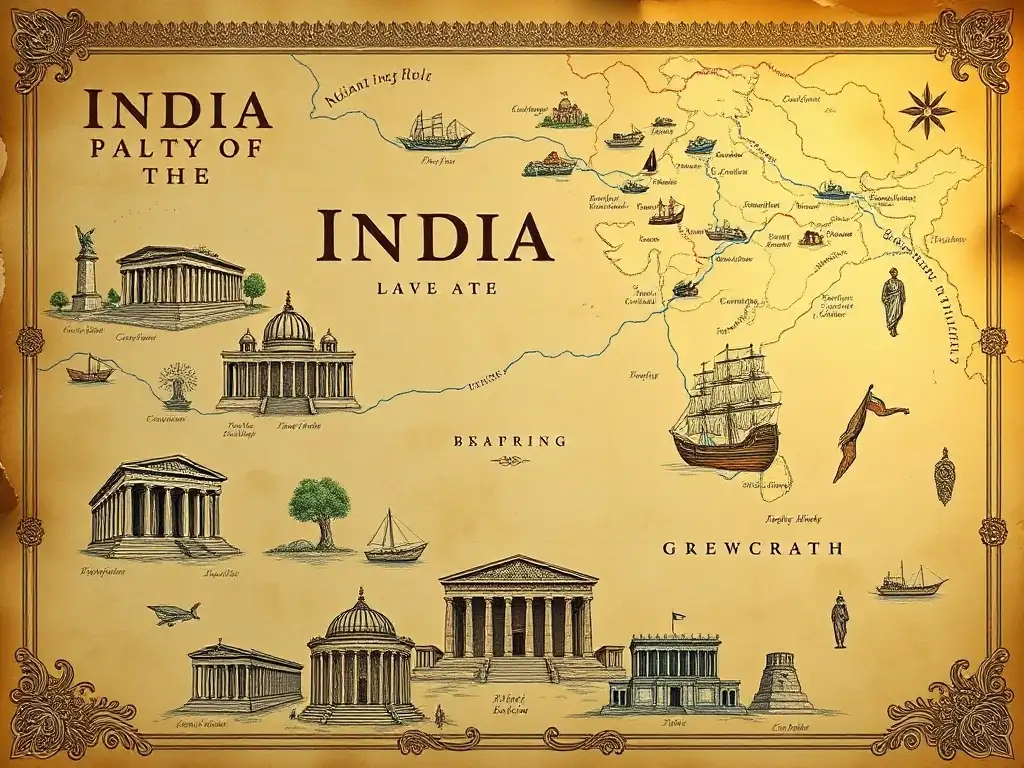
The historical connections between India and Greece have left an indelible mark on both civilizations, shaping their cultural, philosophical, and economic landscapes. From the earliest interactions during the Indus Valley period to the profound exchanges of ideas and art during the Hellenistic era, these ties have fostered a rich tapestry of shared knowledge and influence.
Summary of Key Points
- Early Interactions: The initial ties between India and Greece can be traced back to the trade routes established during the Indus Valley civilization, which facilitated the exchange of goods and ideas.
- Cultural Exchanges: The arrival of Alexander the Great in the 4th century BCE catalyzed deeper cultural exchanges, leading to the spread of Hellenistic influences in Indian art, architecture, and philosophy.
- Philosophical Parallels: Both civilizations contributed significantly to philosophical thought, with Greek philosophy influencing Indian thinkers and vice versa, particularly through the dialogues of Buddhist and Stoic philosophies.
- Artistic Influence: The fusion of Greek and Indian artistic styles is evident in sculptures and architecture, particularly in the Gandhara art movement, which showcases the synthesis of Greek and Indian motifs.
- Trade and Economy: The trade routes between India and Greece not only facilitated economic prosperity but also led to the exchange of luxury goods, spices, and technologies, enriching both cultures.
- Literary Contributions: The literary exchanges, including translations and adaptations, further solidified the historical connections, enabling a cross-pollination of ideas and narratives.
This legacy is not just an artifact of the past; it continues to resonate in the cultural practices, philosophies, and artistic expressions of both nations today.
Contemporary Relevance of Ancient Ties
The ancient ties between India and Greece hold significant contemporary relevance, particularly in the context of globalization and cultural diplomacy.
- Cultural Festivals: Modern festivals celebrating Indo-Greek heritage highlight the importance of these historical connections, fostering mutual understanding and appreciation. Events such as the Indo-Greek Cultural Festival showcase art, music, and dance from both cultures, reinforcing the legacy of collaboration.
- Academic Collaborations: Universities and research institutions are increasingly focusing on Indo-Greek studies, offering programs that explore the historical ties and their implications for contemporary society. This academic interest fosters a deeper understanding of shared histories and cultural narratives.
- Philosophical Dialogue: The philosophical parallels between the two civilizations continue to inspire dialogue among scholars and thinkers. Contemporary discussions on ethics, governance, and spirituality often draw from the rich traditions of both Indian and Greek philosophies, promoting a holistic understanding of human thought.
- Trade Relations: Modern trade between India and Greece reflects the historical economic connections, with both nations exploring opportunities for collaboration in sectors like technology, tourism, and agriculture.
The historical connections between India and Greece are a testament to the enduring power of cultural exchange. These ties not only shaped the ancient world but continue to influence modern interactions, fostering a spirit of cooperation and mutual enrichment that remains vital in today's interconnected global landscape.
Frequently Asked Questions
What are the main historical connections between India and Greece?
The historical connections between India and Greece can be traced back to the Indo-Greek kingdoms, where cultural and trade exchanges flourished, influencing art, philosophy, and governance.
How did the Indus Valley Civilization interact with Greek culture?
While direct interactions were limited, the Indus Valley Civilization set the stage for later connections through the trade routes that eventually linked it with Greek territories, allowing for cultural exchanges.
What role did Alexander the Great play in India-Greece historical ties?
Alexander the Great’s conquests in the 4th century BCE opened up new avenues for interaction, leading to the establishment of Indo-Greek states and greater cultural assimilation.
How did the Gupta Empire influence Greek perspectives on India?
The Gupta Empire (c. 320-550 CE) was known for its advancements in science and philosophy, which intrigued Greek scholars, leading to significant cross-cultural exchanges that influenced both societies.
Why is understanding India-Greece connections important today?
Studying the historical ties between India and Greece enhances our understanding of cultural interrelationships and the shared heritage that continues to influence modern civilizations.
Final Reflection: Bridging Cultures Through Historical Connections
The exploration of India and Greece's historical connections reveals a tapestry of shared ideas, trade, and cultural exchanges that have shaped both civilizations. Today, as globalization brings diverse cultures closer together, understanding these historical ties is more relevant than ever. The lessons from the past remind us that our world is interconnected, and the threads that bind us can foster mutual respect and collaboration.
Cultural exchanges between India and Greece have not only enriched their respective histories but continue to influence contemporary society. The philosophical ideas, artistic expressions, and scientific advancements that emerged from this connection have left an indelible mark on both cultures. As we reflect on this ongoing influence, we are reminded of the words of the philosopher Heraclitus: The only constant in life is change.
This quote encapsulates the essence of our shared history, urging us to embrace the evolution of ideas and cultures while recognizing their origins.
As we look to the future, let us take a moment to reflect on how we can apply the lessons learned from the historical connections between India and Greece in our own lives. Consider how you can foster understanding and appreciation for different cultures in your community. By engaging with diverse perspectives and celebrating our shared heritage, we can build bridges that promote peace and collaboration. Let the rich history of India and Greece inspire you to seek connections that transcend borders and time, enriching your life and the lives of those around you.
Unveil the Connections: Deepen Your Exploration of India and Greece!
Thank you for taking the time to journey through the fascinating ties between India and Greece! By diving into this rich historical narrative, you've gained valuable insights that weave together cultures and civilizations spanning centuries. Now, it's time to take that knowledge further and actively engage with this vibrant history.
Here are some practical steps you can take right now:
- Explore further by reading additional literature on Indo-Greek relations. Discover how these interactions uniquely shaped both cultures.
- Share your insights with friends or on social media by starting a discussion on this topic. What are the most surprising connections you discovered?
- Connect with history enthusiasts in online forums or local history clubs. Engage with others who share your passion and exchange perspectives on the influence of these ancient civilizations.
What aspect of the India-Greece connection resonates most with you, and how will you explore it further? Let's dive into a conversation!