
Ashoka’s Dhammavijaya: The Conquest of Truth and Morality

Welcome to Ancient India History, where we embark on a captivating journey through the rich tapestry of ancient Indian civilizations. Today, we delve into the profound significance of Ashoka's Dhammavijaya, a remarkable tale of the conquest of truth and morality that reshaped the very fabric of society. Have you ever wondered how a ruler transformed from a fierce warrior to a beacon of peace?
Join us as we explore the life and legacy of Emperor Ashoka, whose principles continue to resonate through time. Get ready to uncover the layers of history that define this extraordinary period—your adventure into the heart of ancient India begins now!
- Introduction to Ashoka's Dhammavijaya
- The Concept of Dhammavijaya
- Significance of Ashoka's Dhammavijaya
- Ashoka's Dhammavijaya in Practice
- Legacy of Dhammavijaya
- Conclusion: The Enduring Significance of Ashoka’s Dhammavijaya
- Frequently Asked Questions
- Final Reflection: The Enduring Significance of Ashoka's Dhammavijaya
- Unveil the Path of Ashoka's Truth and Morality!
Introduction to Ashoka's Dhammavijaya
Ashoka the Great, an emblematic figure in ancient Indian history, is renowned not just for his expansive empire but also for his profound philosophical transformation following the Kalinga War. His commitment to the principles of Dharma, or moral law, is encapsulated in the concept of Dhammavijaya, which translates to the "Conquest of Dharma." This pivotal ideology represents a shift from military conquest to the pursuit of truth and morality, marking a significant chapter in the evolution of governance and ethical leadership in ancient India.
The significance of Ashoka's Dhammavijaya lies in its enduring legacy, influencing not only the Indian subcontinent but also the broader spectrum of Asian civilizations. This article delves into the essence of Dhammavijaya, examining its profound implications on Ashoka's reign and the cultural fabric of ancient India.
Understanding Dhammavijaya: Conquest of Truth and Morality
Ashoka's Dhammavijaya is characterized by several core tenets, which emphasize the importance of ethical governance and the welfare of all beings. The following aspects illustrate the significance of this concept:
- Moral Leadership: Ashoka's shift from conquest through violence to one focused on moral authority set a precedent for future leaders. His emphasis on Dharma as a guiding principle redefined the role of kingship in ancient Indian society.
- Promotion of Non-violence: After witnessing the devastating effects of war, Ashoka embraced Ahimsa (non-violence) as a fundamental tenet of his rule. This approach fostered a culture of peace and tolerance, serving as a model for ethical conduct.
- Public Welfare Initiatives: Ashoka implemented various social welfare programs, including the establishment of hospitals, roads, and rest houses. His administration prioritized the well-being of his subjects, reflecting the moral underpinnings of Dhammavijaya.
- Spread of Buddhism: Ashoka played a pivotal role in the propagation of Buddhism, both within his empire and beyond. His support for Buddhist missions significantly contributed to the global spread of its teachings, emphasizing compassion and ethical living.
These elements collectively highlight how Ashoka’s Dhammavijaya transcended mere political strategy, becoming a transformative force that reshaped societal values and inspired future generations.
The Historical Context of Ashoka's Reign
To fully appreciate the significance of Ashoka's Dhammavijaya, it is essential to understand the historical backdrop of his reign.
- The Kalinga War: The brutal conflict with Kalinga marked a turning point in Ashoka's life. The immense loss of life and suffering deeply affected him, prompting a reevaluation of his approach to leadership.
- Cultural Flourishing: Ashoka's reign (circa 268-232 BCE) coincided with a period of notable cultural advancement in ancient India. This era saw the flourishing of art, architecture, and literature, contributing to a rich cultural heritage.
- Political Landscape: Ashoka inherited a vast empire that required effective governance. His commitment to Dhammavijaya not only stabilized his rule but also fostered loyalty among his subjects by promoting justice and moral integrity.
- Religious Diversity: The religious landscape of Ashoka's empire was diverse, with Hinduism, Buddhism, and Jainism coexisting. His efforts to promote religious tolerance and understanding are a testament to the inclusive nature of his policies.
Ashoka's Dhammavijaya stands as a significant milestone in the annals of history, reflecting a remarkable evolution from a warrior king to a benevolent ruler dedicated to truth and morality. Understanding this transformation provides valuable insights into the cultural and ethical dimensions of ancient Indian civilization, underscoring the lasting impact of Ashoka's reign.
The Concept of Dhammavijaya
Definition of Dhammavijaya in Ancient Indian Philosophy
Dhammavijaya, often translated as the "Conquest of Dharma," is a pivotal concept in ancient Indian philosophy, particularly during the reign of Emperor Ashoka, who ruled from approximately 268 to 232 BCE. This term encapsulates the ideals of moral victory and the promotion of righteousness over mere territorial conquest.
In essence, Dhammavijaya signifies the triumph of ethical principles, compassion, and the pursuit of truth, as opposed to the traditional notion of victory achieved through warfare and domination. Ashoka's interpretation of this concept was revolutionary for his time, as it shifted the focus from physical conquest to spiritual and moral leadership.
The importance of Dhammavijaya lies in its emphasis on non-violence (ahimsa), tolerance, and the welfare of all living beings. This philosophy is intricately connected with the teachings of Buddhism, which Ashoka embraced after the Kalinga War, a conflict that deeply affected him and catalyzed his transformation into a proponent of peace.
The Role of Morality and Truth in Ashoka's Vision
Morality and truth were central to Ashoka's vision of governance and society. Following his conversion to Buddhism, he sought to implement policies that reflected these values, striving for a kingdom governed by ethical principles rather than fear or coercion.
- Promotion of Non-Violence: Ashoka's commitment to non-violence was not only a personal conviction but also a governing principle. He encouraged his subjects to adopt ahimsa in their daily lives, fostering a culture of compassion that permeated various aspects of society.
- Edicts of Ashoka: The edicts inscribed on pillars and rocks across his empire serve as a testament to his dedication to morality and dharma. These inscriptions communicate messages of tolerance, respect for all religions, and the importance of ethical conduct. They are pivotal documents that outline Ashoka's vision for a harmonious society built on truth and justice.
- Social Welfare Programs: Ashoka implemented numerous social welfare initiatives aimed at improving the lives of his subjects. These included the establishment of hospitals for humans and animals, planting trees along roads for shade, and the construction of wells and rest houses. Such actions illustrate the practical application of his moral philosophy, reinforcing the significance of dhammavijaya in governance.
- Impact on Future Generations: Ashoka's emphasis on morality and truth not only shaped his own reign but also left a lasting legacy on Indian civilization. His vision influenced subsequent rulers and established a framework for ethical governance that would resonate throughout history.
Ashoka's interpretation of Dhammavijaya as a conquest of truth and morality remains a significant aspect of his legacy. It underscores the transformative power of ethical principles in leadership and governance, illustrating how a ruler can profoundly impact society by prioritizing compassion and righteousness over traditional notions of power and dominance.
Significance of Ashoka's Dhammavijaya
Political Implications of Dhammavijaya in Ancient India
Ashoka's Dhammavijaya, or "Conquest of Dharma," was not merely a philosophical ideal but a significant political strategy that reshaped the landscape of ancient India. This approach marked a departure from conventional militaristic conquests, emphasizing moral authority and ethical governance instead.
- Shift from Military Conquest:
- Unlike his predecessors who expanded territory through warfare, Ashoka sought to unify his empire by spreading the principles of Dharma. This shift resulted in a more stable and cohesive society, as it promoted justice and welfare over fear and subjugation.
- Centralization of Power:
- By advocating for Dhammavijaya, Ashoka strengthened the central authority of the Mauryan Empire. It allowed him to cultivate allegiance among diverse regions and cultures by presenting himself as a benevolent ruler focused on the common good.
- Administrative Reforms:
- Ashoka’s commitment to Dharma led to significant administrative reforms. He established a network of officials, known as Dhamma Mahamatras, who were responsible for promoting ethical conduct and welfare policies throughout the empire.
- Diplomatic Relations:
- The principles of Dhammavijaya extended beyond borders, influencing Ashoka’s diplomatic strategies. His interactions with foreign kingdoms were often framed around shared values of peace and morality, fostering alliances built on mutual respect rather than aggression.
The Cultural Impact of Ashoka’s Dhammavijaya on Indian Society
Ashoka's Dhammavijaya profoundly influenced the cultural fabric of ancient Indian society. It not only altered the way governance was perceived but also left a lasting legacy on Indian culture and identity.
- Promotion of Non-Violence:
- Ashoka’s emphasis on Ahimsa (non-violence) resonated deeply within society, shaping ethical norms and practices. This cultural shift encouraged compassion and respect for all living beings, laying the groundwork for future philosophical schools and movements.
- Support for Arts and Education:
- The principles of Dhammavijaya fostered an environment conducive to artistic and intellectual pursuits. Ashoka patronized the arts, resulting in the proliferation of stupas, pillars, and inscriptions that celebrated Buddhist teachings and moral values.
- Integration of Diverse Cultures:
- The Mauryan Empire under Ashoka was marked by diversity. Dhammavijaya facilitated the integration of various cultural practices and traditions, creating a rich tapestry of societal norms that embraced pluralism and inclusivity.
- Legacy of Tolerance:
- The promotion of Dharma encouraged religious tolerance, allowing various sects and philosophies to coexist. This legacy can be seen in subsequent Indian history, where Ashoka’s ideals continued to inspire movements advocating for unity and harmony.
Religious Dimensions of Dhammavijaya: Buddhism and Beyond
The religious significance of Ashoka's Dhammavijaya cannot be overstated, particularly in the context of Buddhism and its spread across Asia.
- Propagation of Buddhism:
- Ashoka was instrumental in the promotion of Buddhism as a major religious force in India and beyond. His edicts, inscribed on pillars and rocks, disseminated Buddhist teachings and values, making them accessible to a wider audience.
- Establishment of Monastic Institutions:
- Under Ashoka, monasteries and stupas became centers for learning and meditation. This institutional support allowed Buddhism to flourish and adapt to different cultural contexts, leading to its eventual spread to Central Asia, Sri Lanka, and Southeast Asia.
- Interfaith Dialogue:
- Ashoka's commitment to Dhammavijaya fostered a spirit of dialogue among different religious traditions. His edicts encouraged respect for other faiths, emphasizing a universal moral code that transcended sectarian boundaries.
- Influence on Subsequent Religious Movements:
- The principles established through Dhammavijaya not only shaped Buddhism but also influenced other religious movements in India. The emphasis on morality and ethical conduct became foundational elements in Hindu reform movements and Jain philosophy.
Ashoka's Dhammavijaya was a transformative force that redefined political, cultural, and religious landscapes in ancient India. Its significance continues to echo through Indian history, influencing modern perspectives on governance, ethics, and interfaith relations.
Ashoka's Dhammavijaya in Practice
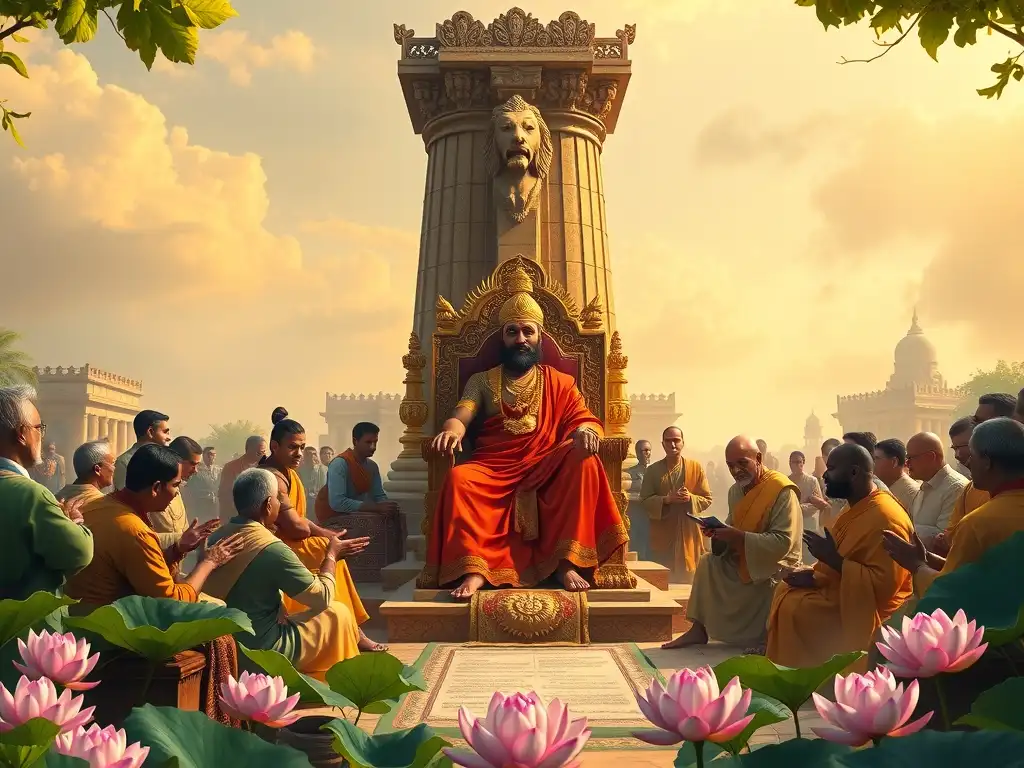
Implementation of Dhammavijaya: Policies and Edicts
Ashoka's Dhammavijaya, or the "Conquest of Truth and Morality," was not merely an abstract concept but was implemented through a series of thoughtful policies and edicts that sought to promote ethical governance and social harmony. Central to this endeavor was the Edicts of Ashoka, a collection of inscriptions carved on rocks and pillars throughout his empire. These edicts served as a moral guide for both his subjects and future generations.
- Moral and Ethical Guidelines:
- Ashoka emphasized principles such as ahimsa (non-violence), satya (truth), and dana (charity). These teachings were intended to cultivate a sense of responsibility and compassion among his subjects.
- His edicts called for the fair treatment of all beings, promoting respect for life and the environment.
- Social Welfare Initiatives:
- Ashoka established hospitals for humans and animals, as well as rest houses for travelers. His commitment to public welfare reflected his belief that a ruler should prioritize the well-being of their subjects.
- The creation of infrastructure such as roads and irrigation systems facilitated trade and improved living conditions, showcasing the practical application of his moral principles.
- Religious Tolerance:
- While promoting Buddhism as the state religion, Ashoka advocated for religious pluralism and respect for all faiths. His edicts encouraged dialogue and understanding among different religious communities, fostering a spirit of unity in diversity.
The Spread of Buddhist Values through Dhammavijaya
The concept of Dhammavijaya significantly contributed to the spread of Buddhist values both within and beyond the borders of Ashoka’s empire. As a proponent of Buddhism, Ashoka utilized various strategies to disseminate these values:
- Missionary Activities: Ashoka sent emissaries, including his own son Mahinda, to regions as far away as Sri Lanka, to propagate Buddhist teachings. This outreach not only established Buddhism as a major religion but also integrated it into the cultural fabric of various societies.
- Cultural Exchanges: Through trade and diplomatic relations, Ashoka facilitated cultural exchanges that allowed Buddhist ideas to intertwine with local customs and beliefs. This syncretism helped Buddhism to take root in diverse environments, adapting to various cultural contexts while retaining its core principles.
- Educational Institutions: Ashoka supported the establishment of monasteries and educational institutions that became centers for learning and the dissemination of Buddhist philosophy. These institutions played a crucial role in the preservation and transmission of Buddhist texts and teachings.
Case Studies: Regions Affected by Ashoka’s Dhammavijaya
Ashoka's Dhammavijaya had a profound impact on various regions, shaping not only the political landscape but also the cultural and ethical frameworks of these areas. Here are a few notable case studies:
- Sri Lanka:
- Following Mahinda's mission, Buddhism flourished in Sri Lanka, profoundly influencing its culture, art, and governance. The establishment of the Sangha (monastic community) helped solidify Buddhist practices among the populace.
- Ashoka's commitment to non-violence resonated with the Sinhalese, fostering a legacy of peace and ethical governance that persists to this day.
- Kalinga:
- The Kalinga War marked a pivotal moment in Ashoka’s life, leading to his conversion to Buddhism. The aftermath of this conflict catalyzed his efforts in promoting Dhammavijaya as a means to prevent further bloodshed.
- The transformation of Kalinga from a war-torn region to a model of peace and moral governance exemplifies the practical applications of Ashoka's edicts.
- Central Asia:
- Ashoka’s influence extended to Central Asia, where Buddhist missionaries established links with the Silk Road trade routes. This connection aided the spread of Buddhist philosophy and Ashoka’s ethical ideals beyond India.
- The establishment of monasteries along these trade routes facilitated the exchange of ideas, contributing to the broader dissemination of Buddhism throughout Asia.
Ashoka's Dhammavijaya was not merely a philosophical ideal but a practical framework that influenced governance, culture, and ethical standards across vast regions. Its significance continues to resonate in contemporary discourses on morality, governance, and interfaith dialogue.
Legacy of Dhammavijaya
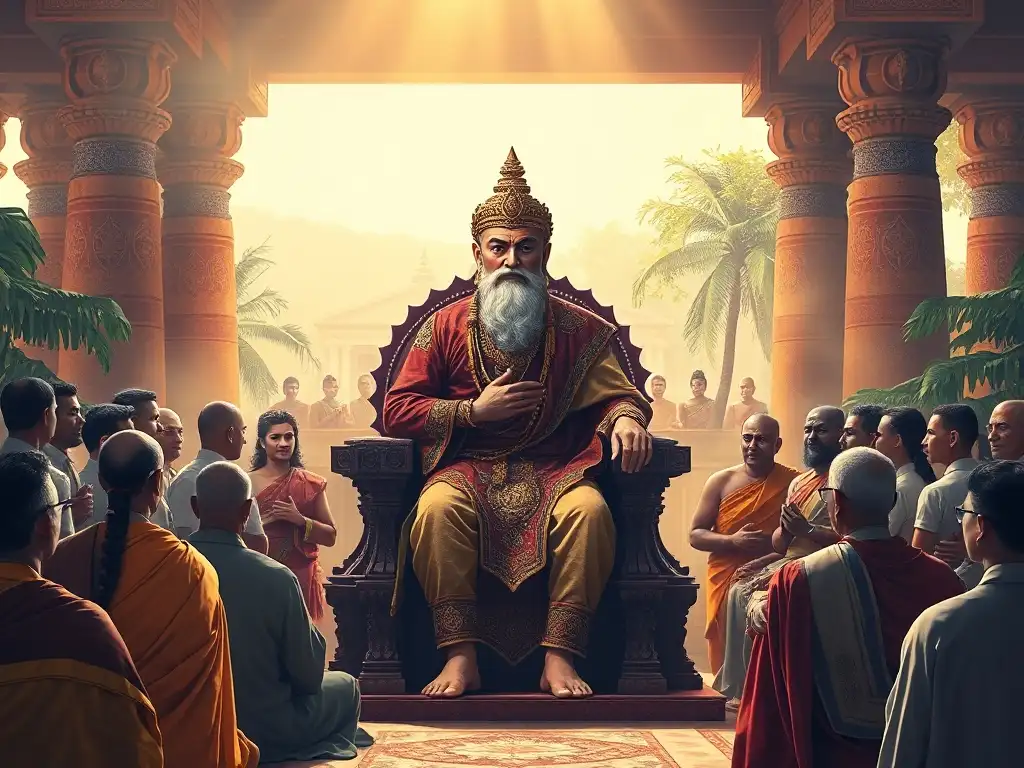
Long-term Effects of Ashoka’s Dhammavijaya on Indian Civilization
Ashoka's Dhammavijaya, or the "Conquest of Dharma," was not merely a campaign of expansion but rather a profound transformation in the realm of governance and societal values within ancient India. This initiative marked a pivotal shift from traditional militaristic conquests to a focus on moral and ethical leadership. The long-term effects of this campaign can be observed in several key areas:
- Promotion of Non-violence (Ahimsa):
- Following the Kalinga War, Ashoka's commitment to non-violence became a cornerstone of his rule. His edicts propagated the principles of Ahimsa, reverberating throughout Indian society and fostering a culture that revered peace and compassion.
- Spread of Buddhism:
- Ashoka’s advocacy for Buddhism played a significant role in its spread beyond India. Through missionary efforts, he facilitated the establishment of Buddhist communities in regions like Sri Lanka, Central Asia, and even as far as Greece, ensuring the proliferation of its teachings and ethical frameworks.
- Cultural Syncretism:
- The Dhammavijaya initiated a blending of diverse cultural practices. By integrating various local customs into the Buddhist framework, Ashoka fostered a rich tapestry of religious and cultural expressions that would influence Indian civilization for centuries.
- Legal Reforms:
- Ashoka’s edicts emphasized the importance of justice, moral conduct, and the welfare of his subjects. His principles laid the groundwork for future legal systems in India, which increasingly incorporated ideas of natural law and ethical governance.
- Social Welfare Programs:
- The establishment of hospitals, rest houses, and wells during Ashoka's reign can be seen as an early form of a welfare state. His focus on public health and welfare influenced subsequent rulers to adopt similar policies, enhancing the quality of life for their subjects.
Dhammavijaya's Influence on Subsequent Indian Leaders
The legacy of Dhammavijaya significantly influenced subsequent Indian rulers, shaping their approach to governance and leadership. Several notable aspects include:
- Adoption of Ethical Governance:
- Many rulers who followed Ashoka were inspired by his model of ethical governance. They recognized that a ruler's legitimacy derived not merely from military prowess but from moral authority and the welfare of their subjects.
- Promotion of Religious Tolerance:
- Ashoka’s edicts emphasized respect for all religions, a principle that resonated with later rulers, such as the Mughal Emperor Akbar, who advocated for religious harmony and inclusivity within their diverse empires.
- Inspiration for Reforms:
- Leaders like Sher Shah Suri and later Mughal emperors drew from Ashoka's administrative framework, implementing reforms that prioritized public welfare and infrastructure development, echoing the ideals of Dhammavijaya.
- Historical Narratives:
- The accounts of Ashoka’s reign, particularly his conversion to Buddhism and commitment to Dharma, became part of the historical narrative that rulers used to legitimize their own rule. This narrative emphasized the importance of morality in governance and inspired later dynasties to adopt similar ideologies.
Ashoka’s Dhammavijaya: A Model for Ethical Governance
Ashoka’s Dhammavijaya serves as a foundational model for ethical governance, emphasizing principles that resonate through time. Key elements of this model include:
- Moral Leadership:
- Ashoka's reign exemplified the idea that leaders should embody ethical values. His personal transformation from a conqueror to a proponent of Dharma illustrates the potential for moral leadership to create lasting change.
- Public Engagement and Accountability:
- The emperor’s use of edicts to communicate directly with his subjects reflects an early form of public accountability. This approach encouraged leaders to be transparent and responsive to the needs and grievances of their people.
- Civic Responsibility:
- Ashoka promoted the idea that all citizens share a responsibility to contribute to the welfare of society. This concept laid the groundwork for civic engagement and participation, which are vital components of modern democratic governance.
- Legacy of Compassion:
- The emphasis on compassion and empathy in Ashoka’s rule has influenced countless leaders and movements over the centuries, creating a legacy that champions the importance of moral integrity in public service.
Ashoka's Dhammavijaya is not just a historical event but a profound legacy that continues to resonate in discussions of ethical governance, social responsibility, and the enduring quest for justice in leadership.
Conclusion: The Enduring Significance of Ashoka’s Dhammavijaya
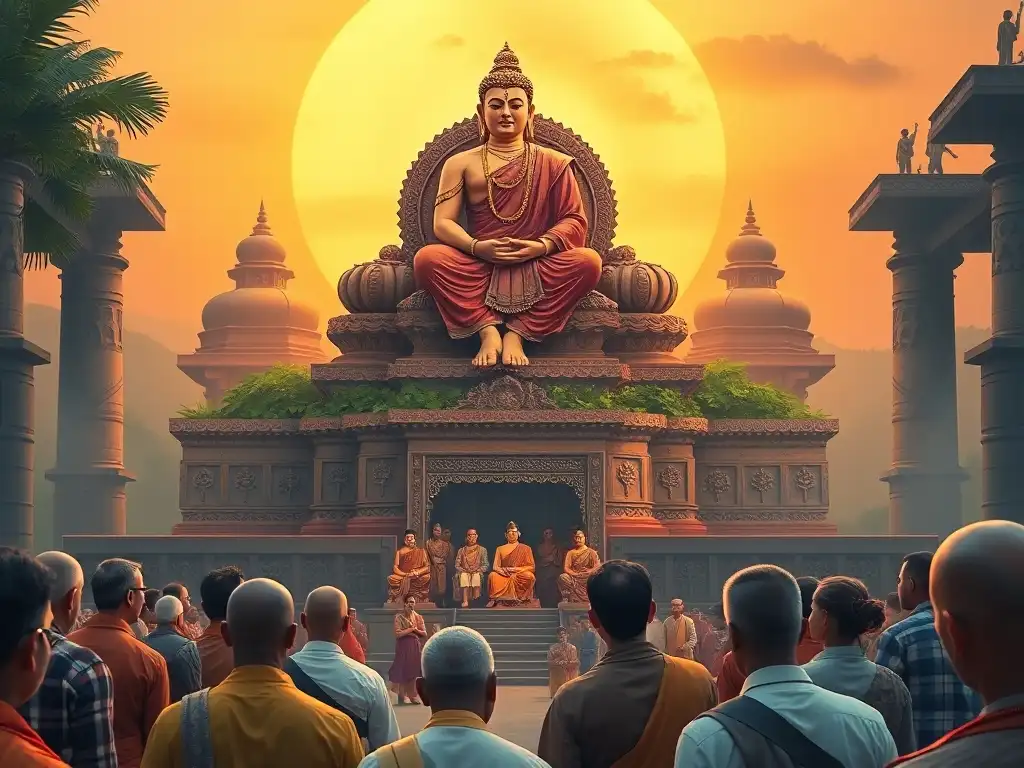
The legacy of Ashoka’s Dhammavijaya, or the conquest of truth and morality, remains a cornerstone of Indian history and philosophy. This monumental achievement not only transformed Ashoka himself but also set a precedent for governance and ethics that resonates through centuries. His commitment to Dharma—righteousness and moral law—has become a guiding principle, illustrating the profound impact of ethical leadership on societal well-being.
Ashoka's Dhammavijaya was distinct from traditional military conquests; it emphasized the importance of compassion, non-violence, and moral persuasion over brute force. This approach challenges the conventional notions of power and success, advocating for a governance model where moral integrity is paramount. The edicts carved in stone across his empire serve as a testament to his vision, promoting values that transcend time and culture.
Moreover, Ashoka's legacy is not merely historical; it encapsulates an enduring philosophy that continues to influence modern thought. The principles derived from Dhammavijaya encourage individuals and leaders alike to prioritize ethical considerations in their decision-making processes, fostering a society that values truth and justice.
Reflections on Truth and Morality in Modern Contexts
In contemporary society, the significance of Ashoka's Dhammavijaya can be seen in various domains, including politics, business, and community leadership. The turbulent political climates in many regions highlight the need for leaders who uphold ethical standards and prioritize the welfare of the populace. Ashoka's example serves as a reminder of the positive outcomes that can arise from prioritizing truth and morality over self-interest.
The rise of corporate social responsibility (CSR) initiatives in businesses today reflects a shift towards ethical governance, mirroring Ashoka's principles. Companies are increasingly recognizing the importance of aligning their operations with moral values, which not only fosters trust but also contributes to sustainable development. This alignment echoes Ashoka's vision of a just society where the well-being of all individuals is considered.
Furthermore, in personal relationships and community engagements, the emphasis on truth and moral integrity can lead to stronger bonds and mutual respect. Ashoka's teachings encourage individuals to reflect on their actions and decisions, promoting a culture of accountability and ethical behavior.
Lessons from Ashoka’s Dhammavijaya for Contemporary Society
The lessons from Ashoka’s Dhammavijaya extend beyond historical analysis; they offer practical guidance for contemporary society. Here are some key takeaways:
- Ethical Leadership: The importance of leaders who prioritize moral values and ethical decision-making.
- Non-Violence: Promoting peaceful resolutions to conflicts and prioritizing dialogue over aggression.
- Compassion and Tolerance: Cultivating a society that values empathy and understanding among diverse groups.
- Social Responsibility: Encouraging businesses and individuals to act in ways that contribute positively to society.
- Long-term Vision: Understanding that the repercussions of today’s actions shape future societies; thus, decisions should be made with foresight.
Ashoka's Dhammavijaya remains a powerful testament to the importance of truth and morality in governance and daily life. As we navigate the complexities of modern existence, returning to these principles can guide individuals and societies toward a more just and harmonious future. By embracing the lessons of Ashoka, we can contribute to building a world that values integrity, compassion, and the relentless pursuit of truth.
Frequently Asked Questions
What is Ashoka's Dhammavijaya?
Ashoka's Dhammavijaya refers to his conquest of truth and morality, emphasizing the spread of Buddhist principles rather than military victories.
How did Ashoka promote Dhammavijaya?
Ashoka promoted Dhammavijaya through edicts and pillars spread across his empire, advocating for non-violence, compassion, and moral governance.
Why is Dhammavijaya significant in Indian history?
The significance of Dhammavijaya lies in its impact on Indian culture, promoting an era of peace and ethical governance, influencing future leaders and societies.
What role did Buddhism play in Ashoka's vision of Dhammavijaya?
Buddhism played a central role in Ashoka's vision, guiding his policies towards ahimsa (non-violence) and encouraging the ethical treatment of all beings.
How did Ashoka's Dhammavijaya influence later empires?
Ashoka's Dhammavijaya set a precedent for later empires to adopt moral governance and social welfare, shaping the political and cultural landscape of ancient India.
Final Reflection: The Enduring Significance of Ashoka's Dhammavijaya
Ashoka's Dhammavijaya remains profoundly relevant in today's world, where the pursuit of truth and morality is often overshadowed by conflict and division. The principles that guided Ashoka in his quest for a moral conquest resonate deeply in our contemporary society, reminding us that true victory lies not in territorial expansion, but in the cultivation of compassion and ethical governance. As we navigate the complexities of modern life, Ashoka's commitment to Dharma offers a timeless blueprint for fostering peace and understanding among diverse communities.
The impact of Ashoka's Dhammavijaya extends far beyond its historical context; it continues to shape cultural and social landscapes across the globe. From the promotion of non-violence to the emphasis on ethical leadership, Ashoka's legacy inspires movements advocating for social justice and human rights. In the end, the best way to find yourself is to lose yourself in the service of others.
This quote encapsulates the essence of Dhammavijaya, urging us to reflect on our responsibilities towards one another and the world we inhabit.
As we contemplate the lessons of Ashoka's Dhammavijaya, I invite you to consider how you can embody these principles in your daily life. Reflect on your own journey towards truth and morality, and strive to make choices that contribute to a more compassionate and just society. Each small action can create ripples of change, leading us closer to the harmonious world that Ashoka envisioned. Let us honor his legacy by committing ourselves to the conquest of truth and morality in our own lives.
Unveil the Path of Ashoka's Truth and Morality!
Thank you for diving deep into the inspiring story of Ashoka's **Dhammavijaya**! You've uncovered the essence of a ruler who transformed a kingdom through the power of truth and morality. Now, let’s harness that inspiration and take actionable steps toward embodying these values in our own lives.
- Reflect: Take a moment to journal about how you can incorporate truth and ethical principles into your daily routines.
- Share: Engage in discussions about Ashoka’s impact with friends or join an online community to explore how historical figures influence modern ethics.
- Engage: Participate in local community service projects that promote truth and moral integrity—remember, actions speak louder than words!
What change will you start today to align your life with the moral compass inspired by Ashoka?