
The Role of Invaders: How Leaders like Alexander Influenced Indian Dynamics

Welcome to Ancient India History, where we dive deep into the fascinating tapestry of civilizations that shaped one of the world's oldest cultures. In our featured article, we unravel "Alexander's impact on India," exploring how the legendary conqueror's ambitions not only altered the course of history but also left an indelible mark on the Indian subcontinent. Join us as we journey through the intricate dynamics of power, culture, and legacy, revealing the profound influences of invaders like Alexander on ancient Indian society. Prepare to uncover the layers of history that connect our past to the present!
Introduction to Alexander's Impact on India
The influence of foreign rulers on the subcontinent's history is a fascinating aspect of Ancient India's historical narrative. Among these figures, Alexander the Great stands out as a pivotal leader whose campaigns left an indelible mark on Indian society, politics, and culture.
His brief yet significant incursion into India during the 4th century BCE not only altered the existing power dynamics but also initiated a series of cultural exchanges that would shape the region for centuries to come. Understanding Alexander's impact on India requires a comprehensive exploration of his motivations, the responses of Indian kingdoms, and the long-term consequences of his campaigns on the continent.
Overview of Alexander the Great
Born in 356 BCE in Pella, Macedonia, Alexander III, commonly known as Alexander the Great, was a military genius and the son of King Philip II. His ambition to create a vast empire led him to embark on a series of conquests that extended from Greece to Egypt and into the heart of Persia. In 327 BCE, Alexander turned his sights eastward, crossing the Hindu Kush and leading his troops into the Indian subcontinent. Notable battles, such as the Battle of the Hydaspes against King Porus, showcased his tactical brilliance and highlighted the formidable resistance he faced.
Alexander's campaigns were characterized by a blend of military prowess and diplomacy. He often sought alliances with local rulers, incorporating their forces into his army and facilitating a relatively smoother assimilation of Hellenistic culture into the Indian context.
Significance of Alexander's Campaigns in Indian History
The significance of Alexander's campaigns in India extends beyond mere military achievements. His presence catalyzed a complex interplay of cultural, economic, and political transformations.
- Cultural Exchange: Alexander's invasion introduced Greek art, literature, and philosophical thought to Indian society. This fusion laid the groundwork for the subsequent Indo-Greek period, which saw the emergence of new artistic styles and cultural syncretism.
- Political Repercussions: The power vacuum created by Alexander's military engagements prompted a reevaluation of local governance structures. It set the stage for the rise of powerful empires, such as the Maurya Empire, which capitalized on the disruption caused by the invasion.
- Trade and Diplomatic Relations: Alexander's incursions opened new trade routes, enhancing commercial exchanges between India and the Hellenistic world, which had lasting implications for economic development in the region.
Historical Context of Alexander's Invasion
To fully grasp the implications of Alexander's invasion, it is essential to understand the historical context of India during the 4th century BCE.
The Political Landscape of India in the 4th Century BCE
At the time of Alexander's arrival, India was a patchwork of kingdoms and republics, each with its own governance and alliances. The political landscape was marked by:
- Regional Kingdoms: Prominent powers included the Nanda Empire in Magadha, which was one of the largest and wealthiest empires of the time. Other important kingdoms such as the Kuru, Panchala, and the various Janapadas were also influential.
- Fragmentation: The absence of a unified Indian state made it easier for an external force like Alexander to penetrate the subcontinent. Local rivalries often distracted kingdoms from forming a cohesive defense against foreign invaders.
Key Kingdoms and Powers Prior to Alexander's Arrival
Prior to Alexander's invasion, several key kingdoms and powers shaped the Indian subcontinent's dynamic:
- The Nanda Dynasty: Known for its wealth and military strength, the Nandas were a formidable force in northeastern India. Their vast resources and political influence would later pose a challenge for Alexander.
- The Persian Influence: Prior to Alexander’s campaigns, parts of northwestern India were already under Persian control, which facilitated his entry into the region. The Satrapies established by Darius I set the stage for Hellenistic influences to permeate Indian culture.
- Other Influential States: Regional powers such as the Mauryas were beginning to rise, showcasing the dynamic and often tumultuous political landscape of the time.
Understanding these elements sets the foundation for exploring how Alexander's actions not only transformed the immediate political scene but also laid the groundwork for future interactions between Indian and Hellenistic civilizations.
Alexander's Invasion of India
Alexander the Great, one of history's most renowned conquerors, embarked on his invasion of India in 326 BCE as part of his larger campaign to expand his empire. After having successfully conquered the Persian Empire, Alexander aimed to extend his reach into the Indian subcontinent, which was known for its wealth and diversity. His entry into India marked a significant turning point, not just for the Indian states he encountered but also for the broader dynamics between East and West.
Alexander crossed the Hindu Kush mountains, entering India through the region of present-day Punjab. His army faced various challenges, including unfamiliar terrain, climate, and fierce resistance from local rulers. Despite these obstacles, Alexander's military prowess and tactical innovations allowed him to achieve significant victories that would leave a lasting impact on the Indian landscape.
The Macedonian Campaign: Timeline and Key Events
- 334 BCE: Alexander begins his campaign against the Persian Empire.
- 331 BCE: After conquering Persia, he turns his attention toward India.
- 326 BCE: Alexander crosses the Hindu Kush, entering the Indian subcontinent.
- Battle of the Hydaspes (326 BCE): This pivotal battle against King Porus takes place along the banks of the Hydaspes River. It showcases Alexander's military strategies and his ability to adapt to new forms of warfare, including the use of war elephants.
- Post-Hydaspes Campaign: Following his victory, Alexander establishes several cities, including Alexandria on the Hydaspes, further solidifying his influence in the region.
- 325 BCE: Alexander's troops, weary from years of campaigning, refuse to march further eastward, prompting him to turn back.
This timeline encapsulates the major events of Alexander's invasion, illustrating the rapid and impactful nature of his military campaign in India.
Major Battles: The Battle of the Hydaspes and Its Consequences
The Battle of the Hydaspes was one of the most significant confrontations during Alexander's campaign in India. Fought against King Porus, this battle showcased not only Alexander's tactical genius but also the resilience of Indian rulers.
- Tactics and Strategies: Alexander employed innovative strategies, utilizing the element of surprise and his cavalry effectively against Porus's war elephants. The use of terrain to his advantage, along with his skilled archers, played a crucial role in securing his victory.
- Consequences: The aftermath of the battle led to several important developments:
- Integration of Indian States: Alexander's victory over Porus led to the integration of his territory into Alexander's empire, although he allowed Porus to remain as a satrap (governor), recognizing his strength and leadership.
- Cultural Exchange: The battle paved the way for increased interactions between Greek and Indian cultures, leading to a fusion of ideas, art, and philosophies.
- Political Landscape: The defeat of Porus and the subsequent establishment of Macedonian control altered the political dynamics in northern India, leading to a period of instability among local kingdoms.
Influence of Alexander on Indian Dynamics
Alexander's invasion had profound and lasting influences on the Indian subcontinent, shaping its cultural, political, and economic landscape for centuries to come.
Cultural Exchanges: Hellenistic Influence on Indian Society
The encounters between Alexander's forces and Indian civilizations led to significant cultural exchanges. The Hellenistic influence manifested in several ways:
- Art and Architecture: The introduction of Greek artistic styles influenced local art forms, leading to the emergence of unique Indo-Greek artistic expressions. Sculptures and coins from this period reflect a blend of Greek and Indian motifs.
- Philosophical Ideas: The interactions facilitated the exchange of philosophical thoughts, with Greek ideas about governance, ethics, and science permeating Indian thought. This exchange laid the groundwork for subsequent developments in Indian philosophy.
- Cultural Syncretism: The merging of Greek and Indian traditions fostered a sense of cultural syncretism, evident in the adaptation of Hellenistic practices in local customs, literature, and religious beliefs.
Economic Impact: Trade and Resources Post-Invasion
Alexander's campaign opened new avenues for trade and economic interaction between India and the Mediterranean world:
- Increased Trade Routes: Following Alexander's invasion, trade routes between India and the Hellenistic world expanded. This led to the exchange of goods such as spices, textiles, and precious stones, significantly enriching both economies.
- Resource Exploitation: The Macedonian presence encouraged the exploitation of local resources, which were now more accessible to traders and merchants from the west.
- Economic Interdependence: The resultant economic interactions fostered a degree of interdependence between Indian states and the Hellenistic world, influencing local economies and leading to increased wealth and prosperity in certain regions.
Alexander's impact on India extended far beyond military conquests. His invasion catalyzed significant cultural, economic, and political changes that would shape the historical trajectory of the Indian subcontinent for generations, marking a crucial chapter in the story of ancient India.
Political Ramifications of Alexander's Conquests
Alexander the Great's incursions into the Indian subcontinent in the 4th century BCE had profound political ramifications that reshaped the landscape of Indian governance and territorial control. His military campaigns, particularly the Battle of the Hydaspes in 326 BCE against King Porus, not only displayed the might of the Macedonian Empire but also exposed the vulnerabilities of the Indian kingdoms. The political dynamics shifted significantly as local rulers grappled with the threat of foreign invasion and the need for alliances.
The immediate aftermath of Alexander's conquests led to a fragmentation of power among the Indian states. Many regional rulers, previously engaged in their own conflicts, faced the necessity to reconsider their political strategies. This fragmentation made it challenging for any single entity to unite against foreign invaders, thereby altering the trajectory of Indian political history.
The Fragmentation of Indian Kingdoms After Alexander
Following Alexander's campaigns, the Indian subcontinent experienced notable fragmentation among its kingdoms. The significant shock of his military prowess prompted many rulers to reassess their territorial ambitions. Kingdoms such as the Nanda Empire, which had been dominant prior to Alexander's arrival, found themselves vulnerable. Some rulers, fearing further invasions, even formed temporary alliances, while others chose isolationist policies.
This fragmentation was not merely a consequence of military defeat but also a reflection of the changing political landscape. Local dynasties, including the Mauryas, began to rise in prominence as they capitalized on the disarray left by Alexander’s campaigns. The vacuum of power created by the weakening of established kingdoms led to the emergence of new political entities that would eventually shape the future of India.
The Rise of New Powers in the Wake of Alexander's Departure
The power vacuum left in the wake of Alexander's departure facilitated the rise of new political powers, most notably the Maurya Empire. Chandragupta Maurya, inspired by the disintegration of the Nanda Empire and the strategic insights gained during Alexander’s invasion, established a new dynasty. The Mauryan Empire expanded rapidly, consolidating various regions and creating a centralized governance structure.
Additionally, the influence of Alexander's conquests encouraged the development of trade routes and cultural exchanges. The influx of Hellenistic ideas and practices into Indian society fostered an environment of innovation and adaptation among the emerging powers. The rise of these new entities was not solely a military phenomenon; it also marked a significant evolution in administrative techniques, military strategies, and diplomatic relations.
Alexander's Legacy in Indian History
Alexander's legacy in Indian history is complex and multifaceted, transcending mere military conquest. His interactions with Indian states left an indelible mark on the region's political, cultural, and military landscapes. While his empire quickly disintegrated after his death, the influences of his campaigns continued to resonate long after his departure.
Long-term Effects on Indian Governance and Military Strategy
The military strategies employed by Alexander had a lasting impact on Indian warfare and governance. His use of cavalry and phalanx formations introduced new tactics that Indian rulers later adapted to their own military practices. The experience and techniques brought by Alexander's army influenced the evolution of Indian military strategies, leading to a more organized and efficient approach to warfare.
Moreover, the political structures that emerged in Alexander's wake incorporated elements of Hellenistic governance, including centralized control and bureaucratic administration. These innovations would later influence the governance models of successive empires, including the Mauryas, who adopted and modified these strategies to suit the Indian context. The legacy of Alexander thus contributed to a significant transformation in the Indian political framework.
The Perception of Alexander in Indian Historical Narratives
The perception of Alexander in Indian historical narratives is varied and often polarized. In some accounts, he is depicted as a formidable conqueror, while in others, he is regarded as an invader whose ambitions were ultimately thwarted by the resilience of Indian rulers. The contrasting representations reflect the complex nature of his impact on Indian society.
Indian literature and historical texts often portray Alexander as a symbol of both fear and admiration. His encounters with local kings, particularly the legendary battle with Porus, are celebrated in folklore and historical narratives, highlighting themes of valor and defiance against foreign domination. Over time, Alexander's image evolved, becoming a subject of fascination in both Indian and global contexts, influencing artistic expressions and cultural interpretations.
While Alexander's direct control over India was brief, the ramifications of his conquests deeply influenced the subsequent political landscape, military strategies, and cultural perceptions within the region. His legacy remains a significant chapter in the annals of Indian history, illustrating the interplay between invaders and indigenous cultures.
Comparison with Other Invaders in Indian History
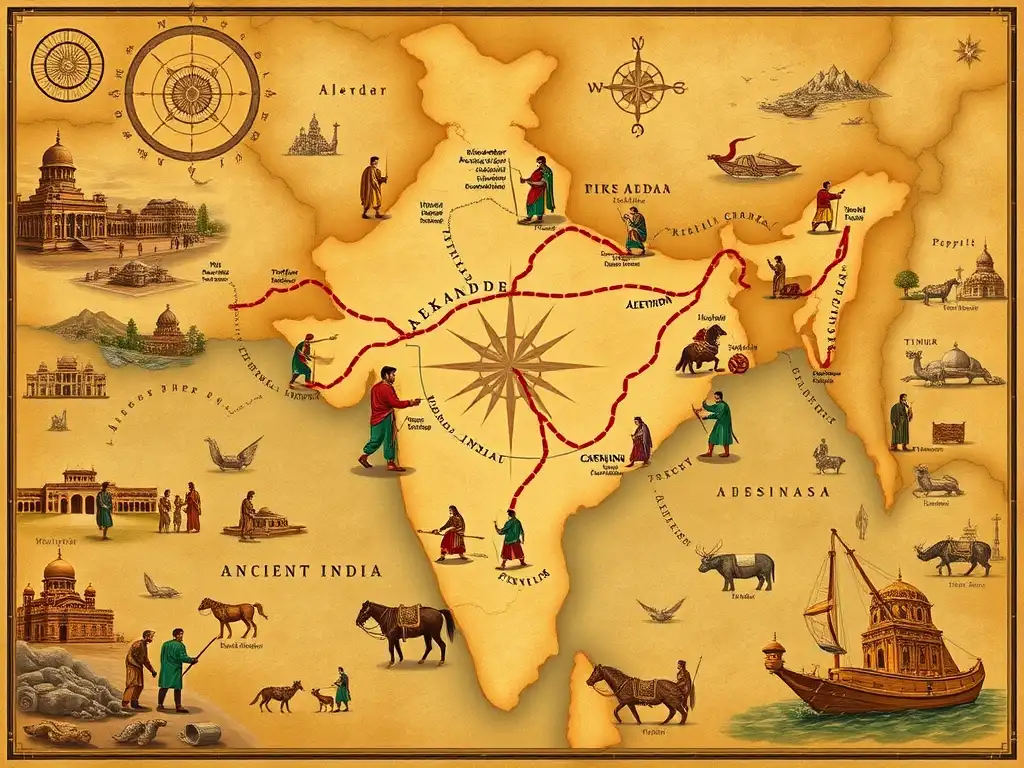
Throughout history, India has witnessed numerous invasions that significantly shaped its socio-political landscape. While Alexander the Great is one of the most well-known invaders, his impact can be compared and contrasted with several other key figures, such as Darius I of Persia and Ashoka the Great of the Maurya Empire. Each of these leaders brought their unique styles of governance, military strategies, and diplomatic approaches, leading to varied outcomes in Indian history.
Similarities and Differences with Other Invaders
One notable similarity between Alexander and other invaders like Darius is the use of military might to establish influence. Both leaders utilized advanced military tactics and strategies to conquer territories. Alexander's tactics, particularly his phalanx formation and use of cavalry, were revolutionary and allowed him to defeat much larger armies. Darius, on the other hand, focused on administrative control and infrastructure development, such as the Royal Road, to facilitate trade and communication across his empire.
However, significant differences also exist. Alexander's invasion was more about conquest and establishing a fleeting empire; his stay in India was relatively brief, and he did not establish a lasting administrative framework. In contrast, Darius aimed to integrate the conquered regions into a vast Persian Empire with a structured governance system. Similarly, Ashoka, after his conversion to Buddhism, emphasized non-violence and moral governance, promoting cultural and religious syncretism, which had a lasting impact on Indian society.
Influence of Leaders like Darius and Ashoka on Indian Dynamics
Leaders like Darius and Ashoka had profound influences on the Indian subcontinent, albeit through different methods. Darius's administrative strategies and infrastructure projects facilitated trade and cultural exchanges between the East and West, laying the groundwork for a more interconnected India. His policies also set the stage for later empires to adopt similar methods of governance.
Ashoka’s reign marked a significant shift in Indian dynamics due to his promotion of Buddhism and ethical governance. After the Kalinga War, he embraced non-violence and sought to spread Buddhist ideals across his empire, influencing not just political strategies but also cultural and religious practices in India and beyond. His edicts, inscribed on pillars and rocks, are crucial historical documents that reflect the values of compassion and tolerance, impacting Indian society long after his reign.
Conclusion: The Lasting Impact of Alexander on India
Alexander's foray into India marked a pivotal moment in its history, bringing with it a blend of cultural exchanges and military confrontations. While his empire did not endure, the repercussions of his invasion were felt long after he departed.
Summary of Key Contributions and Changes
Alexander's campaigns introduced Greek culture and ideas to the Indian subcontinent, leading to a fusion of Hellenistic and Indian traditions. This cultural exchange influenced art, architecture, and philosophy, with Greek styles leaving an imprint on local practices. Furthermore, his encounters with local rulers and the subsequent dissemination of knowledge about India to the Western world played a crucial role in shaping perceptions of the subcontinent.
Reflections on the Role of Invaders in Shaping Indian History
The role of invaders like Alexander, Darius, and Ashoka in shaping Indian history is multifaceted. While invasions often brought destruction and upheaval, they also facilitated cultural exchanges, economic integration, and the evolution of political systems. Each invader left a unique mark on the subcontinent, contributing to its rich tapestry of history. The narratives of these leaders illustrate the complexity of interactions between cultures and the long-lasting impacts these encounters had on India's development, highlighting that the legacies of invaders extend far beyond their military conquests.
- Introduction to Alexander's Impact on India
- Historical Context of Alexander's Invasion
- Alexander's Invasion of India
- The Macedonian Campaign: Timeline and Key Events
- Influence of Alexander on Indian Dynamics
- Political Ramifications of Alexander's Conquests
- Alexander's Legacy in Indian History
- Comparison with Other Invaders in Indian History
- Influence of Leaders like Darius and Ashoka on Indian Dynamics
- Conclusion: The Lasting Impact of Alexander on India
Frequently Asked Questions
What was Alexander's impact on India?
Alexander's campaigns in the 4th century BCE introduced Greek culture and ideas, significantly influencing Indian art and philosophy.
How did Alexander's invasion affect Indian politics?
The invasion led to the disruption of local kingdoms and prompted a shift in power dynamics, paving the way for future empires to emerge in the region.
Did Alexander establish any lasting connections with India?
Yes, Alexander's presence facilitated cultural exchanges between Greece and India, affecting trade routes and interactions in subsequent years.
What were the reactions of Indian rulers to Alexander's invasion?
Many Indian rulers attempted to resist Alexander's forces, leading to significant battles and showcasing the strength and resilience of Indian kingdoms.
How did Alexander's legacy influence later invaders in India?
Alexander’s military strategies and political tactics served as a model for later invaders, influencing their approaches to conquest and governance in the subcontinent.
Final Reflection: The Enduring Legacy of Alexander's Impact on India
In examining Alexander's impact on India, we uncover a tapestry of historical interactions that continue to resonate in our contemporary world. The conquests of Alexander the Great were not merely military campaigns; they were transformative events that reshaped cultural, political, and social dynamics in the regions he touched.
Today, as we navigate an increasingly interconnected global landscape, the lessons from these historical encounters remind us of the profound influence that leaders can have on the course of nations and civilizations. The past is not just a series of events; it is a living narrative that informs our present and shapes our future.
The legacy of Alexander's influence on Indian dynamics is a testament to the complex interplay of cultures and ideas. His campaigns catalyzed a fusion of Hellenistic and Indian traditions, fostering exchanges that enriched both societies. This ongoing dialogue between cultures is evident in various aspects of modern Indian society, from art and philosophy to governance and trade. As historian Romila Thapar poignantly stated, History is not just about the past; it is about the present and the future.
This observation underscores the importance of understanding historical figures like Alexander, as their impacts are woven into the very fabric of our contemporary identities.
As we reflect on the lessons from Alexander's journey, I invite you to consider how the themes of leadership, cultural exchange, and resilience resonate in your own life. What can we learn from the way leaders like Alexander navigated challenges and fostered connections across diverse cultures? Let this reflection inspire you to embrace the complexities of our world, to seek understanding in diversity, and to recognize the power of influence—both positive and negative. By acknowledging the past, we can forge a more inclusive and enlightened future, one that honors the intricate legacies left by those who came before us.
Unveil the Impact of Leaders on History!
Thank you for exploring the fascinating connections between historical figures and the dynamics of India in this article! Your journey into the past not only enriches your understanding but also highlights the profound influence of leadership in shaping civilizations. Now, let’s dive deeper into this captivating topic and take action!
- Join the Discussion: Share your thoughts on how these historical leaders shaped not just India, but also global dynamics. We invite you to comment below!
- Explore Further: Discover our in-depth articles on other influential leaders throughout history to broaden your perspective.
- Connect with Fellow History Buffs: Follow us on social media to engage with a community that shares your passion for historical exploration.
Which aspect of leadership do you find most surprising or impactful in shaping the course of history? 🗺️