
The Wisdom of Shantideva: How His Teachings Resonate Today


Welcome to Ancient India History, where we embark on a fascinating journey through the rich tapestry of ancient Indian civilizations. From the enigmatic Indus Valley to the illustrious Gupta Empire, we delve into the profound insights and cultural treasures that shaped a nation. In our featured article, "The Wisdom of Shantideva: How His Teachings Resonate Today," we explore the timeless relevance of Shantideva's teachings in our modern world.
What lessons can we glean from this ancient sage that might illuminate our contemporary lives? Join us as we unravel the connections between past and present, igniting your curiosity to learn more about the profound impact of ancient Indian religions on today’s society.
The teachings of Shantideva, an eminent 8th-century Buddhist scholar and monk, continue to echo throughout the corridors of time, offering profound insights that remain relevant in our contemporary world. His seminal work, Bodhicaryāvatāra (A Guide to the Bodhisattva's Way of Life), is not just a religious text but a timeless manual on compassion, ethics, and the pursuit of enlightenment. As we explore the rich tapestry of ancient Indian philosophies, Shantideva's contributions stand out for their depth and universality.
This article delves into the essence of Shantideva's teachings, illustrating how they resonate with modern audiences and can guide us in navigating the complexities of contemporary life. The relevance of his wisdom transcends cultural and temporal boundaries, making it a beacon for those seeking meaning and purpose in today's fast-paced world.
Understanding Shantideva's Teachings
Shantideva's teachings are rooted in the Mahayana Buddhist tradition, emphasizing the importance of altruism and the cultivation of wisdom. His emphasis on compassion and the interconnectedness of all beings invites us to reflect on our own actions and their impact on others. Key concepts from his teachings include:
- Bodhicitta: The aspiration to attain enlightenment for the benefit of all sentient beings.
- The Four Immeasurables: Love, compassion, joy, and equanimity as foundational virtues to cultivate.
- Mindfulness and Presence: The significance of being present in the moment and aware of one's thoughts and actions.
These principles not only provide a framework for spiritual growth but also offer practical tools for personal development in today's society.
The Relevance of Shantideva's Wisdom Today
In an age marked by rapid change and often overwhelming challenges, Shantideva's teachings provide a pathway to inner peace and social harmony. Modern readers can draw parallels between his insights and contemporary issues such as:
- Mental Health: The cultivation of compassion and mindfulness can significantly improve mental well-being.
- Social Justice: His emphasis on altruism encourages us to engage in acts of kindness and advocate for the marginalized.
- Environmental Ethics: Recognizing our interconnectedness with all forms of life fosters a sense of responsibility towards the planet.
By implementing Shantideva's teachings, individuals can navigate personal struggles and contribute positively to their communities.
Conclusion
Shantideva's profound insights remind us that wisdom and compassion are as vital today as they were in ancient India. His teachings not only enrich our understanding of Buddhism but also provide a comprehensive ethical framework that can guide our actions in the modern world. As we rediscover the relevance of Shantideva's wisdom, we are encouraged to embody his teachings in our daily lives, fostering a more compassionate and interconnected society.
- What are the main teachings of Shantideva?
- How do Shantideva's teachings relate to contemporary issues?
- Why is Shantideva considered significant in Buddhist philosophy?
- How can individuals apply Shantideva's teachings in daily life?
- What is the relevance of Shantideva's teachings in a global context?
Introduction to Shantideva and His Teachings

Overview of Shantideva’s Life and Background
Shantideva, an influential figure in Mahayana Buddhism, was born in the 8th century CE in the region of modern-day India, specifically in the area of what was then known as Nalanda. He was a monk at the Nalanda Monastic University, which was one of the first residential universities in the world, renowned for its scholarly pursuits in various fields including philosophy, science, and the arts.
Shantideva's early life was marked by a sense of detachment from worldly affairs. According to historical accounts, he came from a noble family but chose the path of renunciation, dedicating himself to the study and practice of Buddhism. His most notable work, "Bodhicaryavatara" (The Way of the Bodhisattva), is a profound text that elaborates on the principles of compassion and altruistic intent—central tenets of Mahayana Buddhism. It is said that Shantideva composed this text during a public recitation at Nalanda, where he demonstrated his remarkable insight into Buddhist philosophy.
Significance of Shantideva in Buddhist Philosophy
Shantideva's contributions to Buddhist philosophy are both profound and far-reaching. His teachings emphasize the importance of Bodhicitta, the aspiration to achieve enlightenment for the sake of all sentient beings. This concept is pivotal in Mahayana Buddhism, as it encourages practitioners to cultivate compassion and selflessness.
His work not only serves as a guide for personal spiritual development but also addresses the broader implications of ethical conduct in society. The "Bodhicaryavatara" is structured as a step-by-step guide, beginning with the cultivation of Bodhicitta and culminating in the realization of enlightenment. In this text, Shantideva employs a variety of rhetorical devices, analogies, and examples to elucidate complex philosophical concepts, making them accessible to a wider audience.
Moreover, Shantideva's teachings resonate with contemporary issues, emphasizing the interconnectedness of all beings and the importance of compassion in our daily lives. His insights on overcoming adversity and maintaining equanimity are particularly relevant in today’s fast-paced world, where individuals often grapple with stress and disconnection.
Introduction to the Concept of Bodhicitta
Bodhicitta, often translated as "the mind of enlightenment," is a cornerstone of Shantideva's teachings. It represents the altruistic intention to attain Buddhahood for the benefit of all beings. Shantideva articulates this concept in two forms: relative Bodhicitta, which involves the compassionate wish to help others, and ultimate Bodhicitta, which is the realization of emptiness and the true nature of reality.
Understanding Bodhicitta involves several key components:
- Compassion: The aspiration to alleviate the suffering of others, which is fundamental to the Bodhisattva path.
- Wisdom: The insight into the nature of reality, recognizing that all phenomena are interdependent and devoid of inherent existence.
- Dedication: The commitment to practice and cultivate these qualities consistently throughout one’s life.
Shantideva's teachings encourage practitioners to integrate Bodhicitta into their daily lives, promoting a mindset that values kindness and empathy. By fostering this quality, individuals can not only enhance their spiritual journey but also contribute positively to the world around them.
The relevance of Shantideva's teachings today lies in their timeless message of compassion and interconnectedness, urging us to reflect on our roles in the broader tapestry of life. As we navigate the complexities of modern existence, embracing the principles of Bodhicitta can lead to profound personal transformation and a deeper understanding of our shared humanity.
Key Teachings of Shantideva
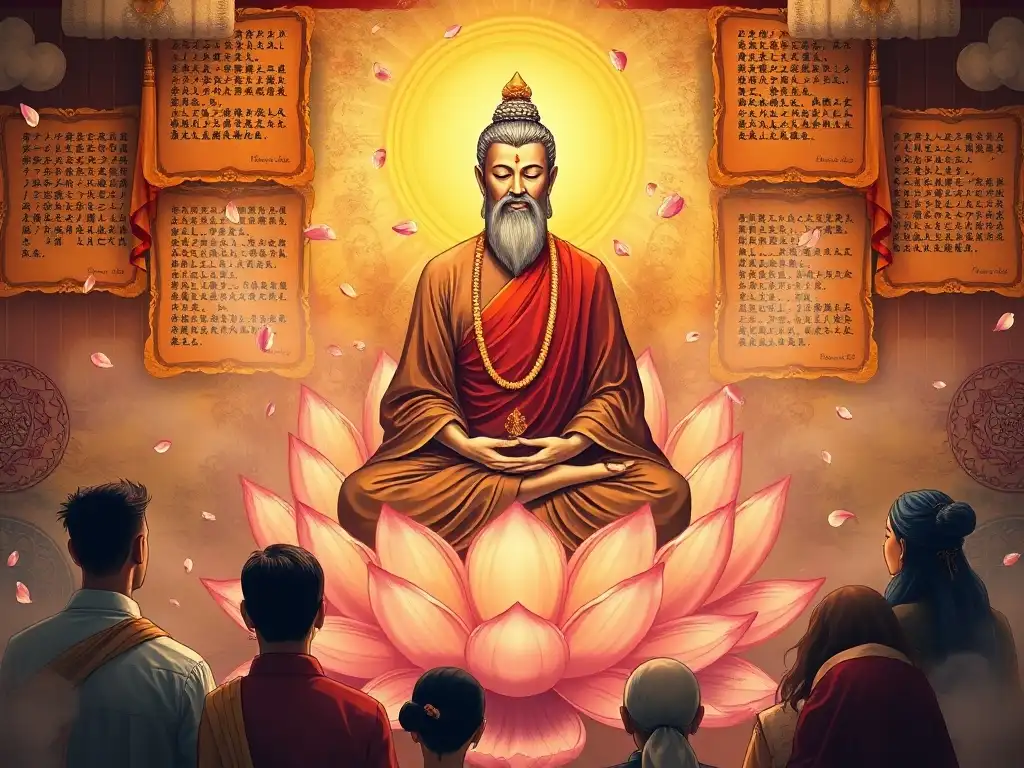
Shantideva, a prominent figure in Mahayana Buddhism, is revered for his profound insights into compassion, ethics, and wisdom. His teachings, encapsulated primarily in the "Bodhicaryavatara" (A Guide to the Bodhisattva's Way of Life), have transcended time, offering guidance that resonates powerfully in contemporary society. Let's delve into the core aspects of his teachings and explore their relevance today.
The Essence of Compassion in Shantideva's Teachings
At the heart of Shantideva's philosophy lies the principle of compassion. He emphasized that genuine compassion is not merely an emotion but a profound commitment to alleviating the suffering of all sentient beings.
-
Compassion as a Core Value: Shantideva articulated that compassion is essential for personal and collective well-being. He famously stated:
May I be a protector for those without protection,
A guide for those who have lost their way.
-
Bodhisattva Ideal: The ideal of the Bodhisattva, one who seeks enlightenment not only for oneself but for the sake of all beings, is central to his teachings. This selfless approach encourages individuals to cultivate an expansive heart, fostering empathy and action towards others.
-
Practical Applications: In today’s context, Shantideva’s emphasis on compassion invites us to engage in acts of kindness, social justice, and environmental stewardship. For instance, community service and activism can be seen as modern expressions of this age-old wisdom.
The Path of the Bodhisattva: Principles and Practices
Shantideva outlines a systematic approach to embodying the Bodhisattva path, consisting of various principles and practices aimed at fostering spiritual growth and societal harmony.
- Generosity (Dana): One of the foundational practices is generosity, which Shantideva posits as a means to cultivate attachment-free interactions with others. This principle encourages individuals to give without expectation, enriching both the giver and the receiver.
- Ethical Conduct (Sila): Ethical conduct forms the bedrock of the Bodhisattva path. Shantideva highlights the importance of adhering to moral precepts, which guide individuals in making choices that are beneficial for themselves and others.
- Patience (Kshanti): In dealing with the challenges of life, Shantideva advocates for patience, emphasizing that enduring hardship with grace is a sign of strength. This principle is particularly relevant in our fast-paced world, where patience is often in short supply.
- Meditation and Mindfulness: Shantideva encourages the practice of meditation as a means to develop inner peace and insight. Mindfulness practices today, such as meditation and yoga, echo this aspect of his teachings, promoting mental well-being and self-awareness.
The Role of Wisdom and Ethical Conduct in Daily Life
Shantideva’s teachings offer profound insights into the interplay between wisdom, ethical conduct, and daily life.
- Cultivation of Wisdom: He asserts that wisdom is essential for discerning the nature of reality and understanding the impermanence of existence. This awareness fosters a deeper appreciation for life and encourages individuals to act with intention.
- Integration of Ethics in Daily Actions: Ethical conduct, as taught by Shantideva, is not limited to monastic life but is applicable to all areas of daily life. Practicing honesty, integrity, and respect in our interactions lays the groundwork for a more compassionate society.
- Practical Wisdom: Shantideva’s teachings remind us that wisdom should translate into practical actions. For example, making informed choices that promote sustainability and community welfare can be seen as living out these timeless principles.
Shantideva's teachings not only form a cornerstone of Mahayana Buddhism but also provide invaluable guidance for contemporary life. His emphasis on compassion, the Bodhisattva path, and the integration of wisdom and ethical conduct resonates with our ongoing journey towards a more harmonious and just world.
The Relevance of Shantideva's Teachings Today

Shantideva, an influential figure in Mahayana Buddhism, has left a profound legacy through his writings, particularly in "Bodhicaryavatara" (The Way of the Bodhisattva). His teachings, centered on compassion, mindfulness, and ethical conduct, remain remarkably relevant in today's fast-paced world. As society grapples with issues such as stress, mental health, and interpersonal conflict, Shantideva's insights offer practical guidance that can help individuals navigate the complexities of modern life.
Shantideva's Teachings and Modern Mindfulness Practices
Shantideva’s emphasis on mindfulness can be seen as a precursor to contemporary mindfulness practices. His teachings encourage individuals to cultivate awareness of their thoughts and actions, fostering a deeper connection to the present moment. This focus resonates with the modern mindfulness movement, which promotes mental well-being through meditation and conscious living.
- Mindfulness Meditation: Shantideva advocates for the practice of meditation as a means to develop concentration and insight. This aligns with modern mindfulness techniques that emphasize breath awareness and non-judgmental observation of one’s thoughts and emotions.
- Self-Reflection: His teachings urge practitioners to engage in self-reflection, allowing for a greater understanding of one's motivations and desires. This practice is essential in today’s context, where self-awareness is increasingly recognized as a key component of emotional intelligence.
- Compassionate Action: Shantideva’s call for compassionate action is echoed in modern mindfulness practices that emphasize kindness towards oneself and others. This aspect fosters a sense of community and interconnectedness, vital for addressing the isolation many feel in contemporary society.
The Impact of Compassionate Living on Society
Shantideva’s teachings on compassion hold significant implications for societal well-being. By promoting a lifestyle rooted in empathy and altruism, his philosophy can catalyze positive change within communities:
- Reduction of Conflict: Compassionate living encourages understanding and tolerance, reducing interpersonal conflicts. As individuals adopt Shantideva’s principles, communities may experience enhanced harmony and cooperation.
- Mental Health Benefits: Emphasizing compassion not only benefits interpersonal relationships but also contributes to individual mental health. Studies reveal that engaging in compassionate practices can lead to lower levels of anxiety and depression, fostering a healthier society overall.
- Collective Responsibility: Shantideva’s teachings inspire a sense of collective responsibility towards the welfare of all beings. This perspective is particularly relevant today as global challenges, such as climate change and social inequality, require united, compassionate efforts for effective resolution.
How Shantideva's Wisdom Addresses Contemporary Challenges
The challenges faced by modern society—ranging from technological overload to social disconnection—can be approached through Shantideva’s timeless wisdom:
- Navigating Technological Stress: In an age dominated by digital communication, Shantideva’s teachings encourage mindfulness in interactions. By fostering deeper, more meaningful connections, individuals can combat feelings of isolation and superficiality that often accompany digital life.
- Promoting Emotional Resilience: His emphasis on understanding suffering equips individuals with tools to cope with adversity. By cultivating compassion for oneself and others, one can build emotional resilience, essential for navigating the stresses of contemporary life.
- Encouraging Ethical Leadership: Shantideva’s call for ethical conduct among leaders is increasingly pertinent as society seeks leaders who are not only competent but also compassionate. His teachings advocate for a leadership style grounded in empathy and service, which can inspire positive societal transformation.
The relevance of Shantideva's teachings today transcends temporal boundaries, offering invaluable insights that resonate with contemporary challenges. By integrating his principles of mindfulness, compassion, and ethical living, individuals and societies can foster a more harmonious and inclusive world.
Applications of Shantideva's Teachings in Daily Life

Integrating Compassion into Personal Relationships
Shantideva, a revered figure in Mahayana Buddhism, emphasizes compassion as a cornerstone of his teachings. His seminal work, the Bodhicaryavatara (A Guide to the Bodhisattva's Way of Life), provides profound insights into the importance of compassion in interpersonal relationships.
To integrate compassion into personal relationships, one can adopt the following practices:
- Active Listening: Engage fully when others speak, showing genuine interest in their thoughts and feelings. This aligns with Shantideva's view that understanding others fosters empathy.
- Practicing Forgiveness: Holding onto grudges creates barriers. Shantideva encourages letting go of resentment, which can lead to deeper connections and emotional healing.
- Acts of Kindness: Small gestures, like offering help or complimenting someone, can significantly impact relationships. Such actions resonate with Shantideva's teachings on altruism.
In this way, the relevance of Shantideva's teachings today manifests in our ability to nurture relationships through compassion and understanding, promoting harmony in our social environments.
Mindful Decision-Making Inspired by Shantideva
Shantideva's teachings offer valuable guidance for making mindful decisions in a fast-paced world. He advocates for a thoughtful approach to actions and their consequences, emphasizing the importance of intention behind each choice. Here are some strategies to incorporate his wisdom into daily decision-making:
- Pause and Reflect: Before making decisions, take a moment to assess your motivations. Ask yourself if the action aligns with the values of compassion and wisdom that Shantideva espouses.
- Consider the Consequences: Evaluate how your choices will affect others. Shantideva teaches that actions rooted in selflessness contribute to collective well-being.
- Seek Guidance: Consult with trusted friends or mentors when faced with challenging decisions. Discussing your dilemmas can lead to clearer insights and align your choices with a compassionate framework.
By adopting these mindful decision-making practices, individuals can navigate life's complexities while honoring the essence of Shantideva's teachings, thus enhancing their relevance in contemporary contexts.
Cultivating Resilience Through Wisdom
Resilience is a key trait that allows individuals to overcome adversity and challenges. Shantideva’s insights into suffering and the impermanence of life provide a robust foundation for cultivating resilience. Here are ways to apply his teachings to build this essential quality:
- Embrace Impermanence: Recognizing that all situations are transient helps reduce attachment and anxiety. Shantideva teaches that understanding impermanence can lead to a more balanced perspective on life’s ups and downs.
- Learn from Adversity: Each challenge presents an opportunity for growth. Shantideva’s emphasis on transforming suffering into wisdom encourages individuals to view difficulties as chances to develop inner strength.
- Practice Mindfulness: Engaging in mindfulness practices, such as meditation, aligns with Shantideva’s teachings. These practices help center the mind, fostering resilience in the face of stress and uncertainty.
Through these methods, Shantideva's teachings on resilience remain profoundly relevant today, enabling individuals to navigate life's challenges with wisdom and grace.
Case Studies: Modern Figures Inspired by Shantideva

Thich Nhat Hanh: Promoting Engaged Buddhism
Thich Nhat Hanh, the renowned Vietnamese Zen master, has profoundly integrated the teachings of Shantideva into his concept of Engaged Buddhism. His approach emphasizes the application of Buddhist principles in everyday life, advocating for mindful living as a means to alleviate suffering.
- Mindfulness and Compassion: Thich Nhat Hanh's teachings echo Shantideva's emphasis on compassion and altruism. He encourages practitioners to engage in mindfulness to cultivate a compassionate heart, allowing individuals to respond to the suffering of others with empathy and action.
- Interconnectedness: Central to both Thich Nhat Hanh and Shantideva's philosophies is the understanding of interconnectedness. Hanh emphasizes that the well-being of oneself is intrinsically linked to the well-being of others, mirroring Shantideva’s teachings on the importance of selflessness and collective happiness.
In a modern world fraught with conflict and division, Thich Nhat Hanh's Engaged Buddhism serves as a practical embodiment of Shantideva's wisdom, making these ancient teachings relevant today.
The Dalai Lama: Advocacy for Compassion and Peace
The Dalai Lama, as a prominent spiritual leader, embodies the essence of Shantideva's teachings through his relentless advocacy for compassion and peace. His public life and teachings draw heavily from the principles articulated by Shantideva, particularly in how they apply to contemporary issues.
- Universal Responsibility: The Dalai Lama often speaks about the concept of universal responsibility, which aligns with Shantideva's call for compassion towards all sentient beings. He argues that peace begins with individual responsibility, urging people to adopt a compassionate mindset in their daily interactions.
- Non-Violence: The Dalai Lama's commitment to non-violence is a modern reflection of Shantideva’s teachings on overcoming anger and hostility. He promotes dialogue and understanding as essential tools in conflict resolution, demonstrating how ancient wisdom can address modern challenges.
Through his teachings and actions, the Dalai Lama illustrates how Shantideva's principles continue to resonate, encouraging a more peaceful and compassionate world.
Pema Chödrön: Teaching Resilience Through Buddhist Principles
Pema Chödrön, an American Buddhist nun, has made significant contributions to the understanding of Shantideva's teachings, particularly in the context of resilience and emotional healing. Her work emphasizes how ancient Buddhist practices can help individuals navigate modern life's challenges.
- Embracing Impermanence: Chödrön often highlights the importance of embracing impermanence, a concept that resonates deeply with Shantideva's teachings on the nature of suffering and the transient nature of life. By accepting change and uncertainty, individuals can cultivate resilience and adaptability.
- Loving-Kindness Practices: Central to Chödrön's teachings is the practice of loving-kindness (metta), which reflects Shantideva's emphasis on compassion. She teaches that by actively cultivating loving-kindness, individuals can create a more compassionate society, illustrating the practical relevance of Shantideva's insights in today's world.
Pema Chödrön's teachings on resilience serve as a bridge between ancient wisdom and contemporary life, demonstrating how the relevance of Shantideva's teachings can empower individuals to face adversity with strength and compassion.
Conclusion: The Enduring Legacy of Shantideva's Teachings

The teachings of Shantideva, a revered figure in Mahayana Buddhism, stand as a testament to the profound impact of his wisdom on contemporary spiritual practices and philosophical thought. His works, particularly the "Bodhicaryavatara" (The Way of the Bodhisattva), emphasize the importance of compassion, altruism, and the pursuit of enlightenment, highlighting how these principles are not only relevant but vital in today’s society.
Shantideva's teachings encourage practitioners to cultivate a mindset of compassion and empathy towards all beings. This focus on interconnectedness resonates deeply in modern contexts where individualism often prevails. His insights into the nature of suffering and the importance of engaging in acts of kindness serve as a reminder of our shared humanity, fostering a greater sense of community and understanding.
Reflection on Shantideva’s Impact on Buddhism Today
Shantideva's influence on Buddhism is not limited to historical texts; his teachings continue to shape the beliefs and practices of many modern Buddhists. His emphasis on the Bodhisattva ideal, which advocates for the liberation of all sentient beings, is particularly relevant as global issues such as climate change, social injustice, and mental health crises intensify.
- Modern Applications of Shantideva’s Teachings:
- Compassion in Action: Many contemporary Buddhists integrate Shantideva's teachings into humanitarian efforts, promoting compassion through community service and activism.
- Mindfulness Practices: The principles outlined in his writings are reflected in modern mindfulness practices that encourage individuals to cultivate awareness and compassion in their daily lives.
- Educational Influence:
- Buddhist Studies: Academic institutions continue to explore Shantideva’s work, ensuring that new generations understand his relevance in both historical and modern contexts.
- Global Reach:
- Interfaith Dialogue: Shantideva's universal message of compassion transcends cultural boundaries, fostering dialogues among various religious traditions and promoting an understanding of shared values.
The Future of Shantideva's Wisdom in a Changing World
As society faces unprecedented challenges, the relevance of Shantideva's teachings becomes increasingly pronounced. His call to cultivate compassion and altruism can serve as a guiding principle in addressing the complexities of modern life.
- Adapting Teachings for Modern Needs:
- Digital Age: In a world dominated by technology, Shantideva's wisdom can inspire new ways of connecting with others, promoting online communities focused on compassion and support.
- Mental Health: The emphasis on self-care and compassion in Shantideva's teachings can provide valuable insights for addressing mental health issues, encouraging individuals to treat themselves and others with kindness.
- Global Movements:
- Social Justice: The Bodhisattva ideal can galvanize movements aimed at social justice and environmental sustainability, reinforcing the idea that individual actions contribute to the collective well-being of society.
The teachings of Shantideva offer timeless wisdom that remains strikingly relevant today. As we navigate the complexities of the modern world, embracing his principles can lead to a more compassionate, interconnected, and enlightened society, ensuring that his legacy endures for generations to come.
Call to Action
As we delve into the profound wisdom of Shantideva, we encourage readers to engage actively with his teachings. His insights not only offer a window into the philosophical landscape of ancient India but also provide practical guidance that remains relevant in today’s fast-paced world.
Encouraging Readers to Explore Shantideva’s Works
Shantideva’s works, particularly the Bodhicaryāvatāra (The Way of the Bodhisattva), serve as a treasure trove of knowledge that addresses the fundamental aspects of compassion, mindfulness, and ethical living. We urge readers to explore these texts, which are not only foundational in Mahayana Buddhism but also resonate with universal themes of human experience.
- Key Themes to Explore:
- Compassion: Understand the transformative power of compassion in personal and societal well-being.
- Mindfulness: Embrace practices that enhance awareness and presence in daily life.
- Ethics: Reflect on the moral principles that guide interactions with others.
Exploring Shantideva’s teachings can ignite a deeper understanding of one’s own values and how they align with the pursuit of a meaningful life.
Invitation to Reflect on the Relevance of Ancient Teachings in Modern Life
In a world often characterized by chaos and disconnection, the teachings of Shantideva offer timeless wisdom that encourages reflection and action. His emphasis on compassion and altruism is particularly relevant today, as we navigate complex social and environmental challenges.
Consider the following reflections:
- How can the practice of compassion influence our relationships?
- By fostering empathy and understanding, we can create supportive communities that thrive on collaboration rather than competition.
- In what ways can mindfulness enhance our approach to daily challenges?
- Practicing mindfulness allows us to respond thoughtfully rather than react impulsively, leading to healthier decision-making.
- What role do ethical principles play in today’s society?
- Upholding ethical standards can counteract the trends of greed and selfishness, promoting a culture of integrity.
As you contemplate these questions, consider integrating the teachings of Shantideva into your own life. By reflecting on and applying his wisdom, we can cultivate a more compassionate and mindful existence, bridging the ancient with the contemporary.
Frequently Asked Questions
What are the main teachings of Shantideva?
Shantideva emphasized compassion, mindfulness, and the importance of altruism. His work encourages individuals to cultivate wisdom and benevolence, which are relevant to modern ethical dilemmas.
How do Shantideva's teachings relate to contemporary issues?
His teachings promote mental resilience and emotional well-being, addressing issues like anxiety and stress. By practicing compassionate actions, individuals can find solutions to today's societal challenges.
Why is Shantideva considered significant in Buddhist philosophy?
Shantideva's writings, particularly the Bodhicaryavatara, outline the path to Buddhahood through selflessness. His insights continue to inspire spiritual seekers and scholars alike, making his work timeless.
How can individuals apply Shantideva's teachings in daily life?
Practicing mindfulness and engaging in compassionate actions can transform daily interactions. Incorporating his teachings fosters a more empathetic and connected community in today's fast-paced world.
What is the relevance of Shantideva's teachings in a global context?
Shantideva's principles of universal compassion and interconnectedness resonate in our increasingly globalized society. They offer valuable insights for addressing conflict, promoting peace, and nurturing understanding among diverse cultures.
Final Reflection: The Timeless Relevance of Shantideva's Teachings
Shantideva's teachings resonate deeply in our modern world, reminding us that the pursuit of compassion and wisdom is not just a historical endeavor but a vital necessity for our times. In an age marked by division and uncertainty, his insights on selflessness and the interconnectedness of all beings offer a path toward healing and understanding. As we navigate the complexities of contemporary life, the wisdom of Shantideva serves as a beacon, guiding us toward a more compassionate existence.
The influence of Shantideva's teachings extends far beyond the confines of Buddhist philosophy; they permeate our cultural and social landscapes, encouraging a collective shift toward mindfulness and empathy. His emphasis on cultivating inner peace and altruism is increasingly relevant as we face global challenges that demand cooperation and understanding. The mind is the source of happiness and unhappiness,
Shantideva reminds us, highlighting the profound impact our thoughts and actions have on our world. This perspective invites us to reflect on our individual roles in fostering a more compassionate society.
As we conclude our exploration of Shantideva's teachings, I invite you to take a moment to reflect on how these timeless principles can be woven into the fabric of your daily life. Consider how you can embody compassion in your interactions, cultivate mindfulness in your thoughts, and contribute to a more harmonious world. The teachings of Shantideva are not merely historical artifacts; they are living wisdom that calls us to action, urging us to transform our understanding into meaningful practice. Let us carry this legacy forward, allowing it to inspire our journey toward a more compassionate future.
Embrace Shantideva’s Teachings and Transform Your Life!
Thank you for diving into the profound wisdom of Shantideva! By exploring his teachings, you’ve undoubtedly uncovered valuable insights that can foster compassion and mindfulness in today’s fast-paced world. Now, let’s take those insights and put them into action!
Here’s how you can further integrate Shantideva’s wisdom into your life and inspire others:
- Start a daily reflection practice: Dedicate just 5 minutes each day to reflect on a teaching from Shantideva and consider how it applies to your life.
- Share your insights: Engage in discussions about Shantideva’s teachings with friends or share your thoughts on social media—your reflections may inspire someone else to embark on their own journey of self-discovery!
- Join or create a community group: Connect with like-minded individuals by finding or forming a study group to explore Buddhist philosophies together.
How can you embody Shantideva’s teachings in your daily interactions? **We invite you to share your thoughts and experiences below! **