
Artistic Inspirations: The Persian Influence on Indian Miniature Painting

Welcome to Ancient India History, where we delve into the captivating tapestry of India's past, rich with vibrant cultures and remarkable civilizations. In our featured article, Artistic Inspirations: The Persian Influence on Indian Miniature Painting, we explore the profound impact of Persian artistry on the exquisite world of Indian miniatures. Have you ever wondered how these two ancient cultures intertwined to create such breathtaking art?
Join us as we uncover the intricate layers of influence and innovation that shaped Indian art, inviting you to discover the beauty of this cultural dialogue. Dive in, and let your curiosity guide you through the wonders of our shared heritage!
- Introduction to Persian Influence on Indian Art
- Historical Context of Persian Influence on Indian Art
- Characteristics of Persian Influence in Indian Miniature Painting
- Prominent Indian Miniature Painters Influenced by Persian Art
- The Role of the Mughal Empire in the Evolution of Indian Miniature Painting
- Comparative Analysis: Persian vs. Indian Miniature Painting
- The Lasting Impact of Persian Influence on Indian Art
- Conclusion
- References
-
Frequently Asked Questions
- What is the Persian influence on Indian art?
- How did the Mughal Empire contribute to this influence?
- What are the key characteristics of Persian-inspired Indian miniature paintings?
- Which famous artists exemplified the Persian influence in their works?
- How does the Persian influence continue to be relevant today?
- Final Reflection: Embracing the Persian Influence on Indian Art
- Unleash Your Creativity: Dive into the World of Miniature Art!
Introduction to Persian Influence on Indian Art
The intricate and vibrant world of Indian miniature painting serves as a testament to the rich tapestry of cultural interactions that have shaped the subcontinent's artistic heritage. One of the most significant influences on this artistic form is the Persian aesthetic, which permeated Indian art during various historical periods, particularly following the establishment of the Delhi Sultanate and later, the Mughal Empire.
As artists from Persia migrated to India and the two cultures began to intersect, a unique synthesis emerged, blending the detailed techniques and themes of Persian art with indigenous Indian styles. This article delves into the profound Persian influence on Indian art, exploring how these interactions enriched the artistic expressions of the time and laid foundations for future developments in Indian art.
Overview of Indian Miniature Painting
Indian miniature painting, characterized by its meticulous detail and vibrant colors, evolved over centuries, reflecting the socio-political and cultural milieu of its time. This art form primarily flourished during the medieval period, particularly under the patronage of royal courts.
- Historical Roots:
- Originating in the 10th century, Indian miniature painting initially drew inspiration from religious texts and manuscripts.
- With the arrival of Persian artists and styles in the 13th century, the art form began to incorporate new techniques and themes.
- Characteristics:
- Miniature paintings are generally small in size but rich in detail, often depicting court scenes, landscapes, and mythological narratives.
- Use of natural pigments and gold leaf was common, enhancing the visual appeal and longevity of the artworks.
- Key Schools:
- Different regional styles emerged, such as the Mughal, Rajput, and Pahari schools, each reflecting local traditions while integrating Persian influences.
The fusion of Persian and Indian elements in miniature painting not only enriched the visual language of the art but also created a dynamic cultural dialogue that continues to resonate in contemporary art forms.
Significance of Persian Influence in Art History
The impact of Persian influence on Indian art extends far beyond mere stylistic changes; it represents a significant chapter in the broader narrative of cultural exchange between civilizations.
- Cultural Exchange:
- The arrival of Persian artists in India facilitated a two-way exchange of ideas, techniques, and aesthetics, fostering a collaborative artistic environment.
- Persian themes of nature, romance, and courtly life began to intermingle with Indian narratives, creating a new visual vocabulary.
- Technological Advancements:
- Persian artists introduced new techniques such as the use of perspective and shading, which were less prominent in earlier Indian art forms.
- The incorporation of intricate detailing and vibrant color palettes became characteristic of Indian miniature paintings, enhancing their emotional and narrative depth.
- Legacy:
- The enduring influence of Persian aesthetics can be observed in various art forms, literature, and architectural styles that emerged in India, particularly during the Mughal period.
- This artistic legacy laid the groundwork for future developments in Indian art, shaping the evolution of styles and genres that are celebrated today.
The Persian influence on Indian art represents a crucial intersection of cultures that not only transformed the visual arts but also contributed to the rich historical narrative of artistic collaboration and innovation in ancient India.
Historical Context of Persian Influence on Indian Art
The Arrival of Persian Aesthetics in India
The Persian influence on Indian art, particularly in the realm of miniature painting, can be traced back to the early medieval period when the Iranian cultural sphere began to intersect with the Indian subcontinent. This exchange was not merely a one-way street; it was characterized by a reciprocal relationship that enriched both cultures.
The Mughal Empire, founded in the early 16th century, is often credited as the most significant force in the dissemination of Persian aesthetics in India. The Mughal emperors, such as Akbar and Jahangir, were not only patrons of the arts but also avid collectors of Persian works. They invited Persian artists to their courts, leading to a synthesis of styles, techniques, and themes that would define Indian miniature painting for centuries.
Key Characteristics of Persian Aesthetics
- Vibrant Colors: Persian artists employed a rich palette, utilizing natural pigments derived from minerals and plants. This approach fostered a vibrancy that was distinctive and captivating.
- Intricate Detailing: Persian miniatures are renowned for their meticulous detail, and this technique found its way into Indian paintings, emphasizing the beauty of nature, clothing, and architecture.
- Themes and Iconography: Persian art often depicted courtly life, romance, and nature, subjects that resonated with Indian artists and were seamlessly integrated into their works.
Key Historical Events Facilitating Cultural Exchange
Several pivotal events facilitated the exchange of ideas and artistic techniques between Persia and India, significantly shaping the trajectory of Indian art.
- The Invasion of Timur (1398): Timur’s invasion brought about not just destruction but also a mingling of cultures. Persian artisans who fled to India introduced their techniques and styles, laying the groundwork for future artistic collaborations.
- The Establishment of the Mughal Empire (1526): The Mughal Empire under Babur marked a new chapter in Indian history. Babur’s successors, particularly Akbar, actively sought to merge Persian cultural elements with Indian traditions. This led to the establishment of royal workshops, known as "karkhanas," where Persian and Indian artists collaborated.
- The Arrival of Portuguese Traders (16th Century): The Portuguese presence in India introduced Western art styles, which, when combined with Persian and Indian elements, created a unique fusion. This period saw the introduction of European techniques, such as oil painting, which influenced Indian miniature styles.
- Cultural Exchanges through Marriage Alliances: Marriages between Mughal emperors and Persian princesses facilitated cultural exchange and the movement of artists across borders. These alliances not only strengthened political ties but also enriched the cultural tapestry of the Mughal court.
- The Influence of Sufi Mysticism: The Sufi movement, which reverberated through Persia and into India, brought with it a rich tradition of poetry and philosophy that inspired artists. The themes of love, nature, and spirituality found in Persian literature deeply influenced the subjects of Indian miniatures.
The Persian influence on Indian art, particularly in the domain of miniature painting, is a testament to the rich tapestry of cultural exchanges that have shaped the subcontinent's artistic heritage. The convergence of Persian aesthetics with local traditions has resulted in a unique and vibrant art form that continues to enchant audiences today.
Characteristics of Persian Influence in Indian Miniature Painting
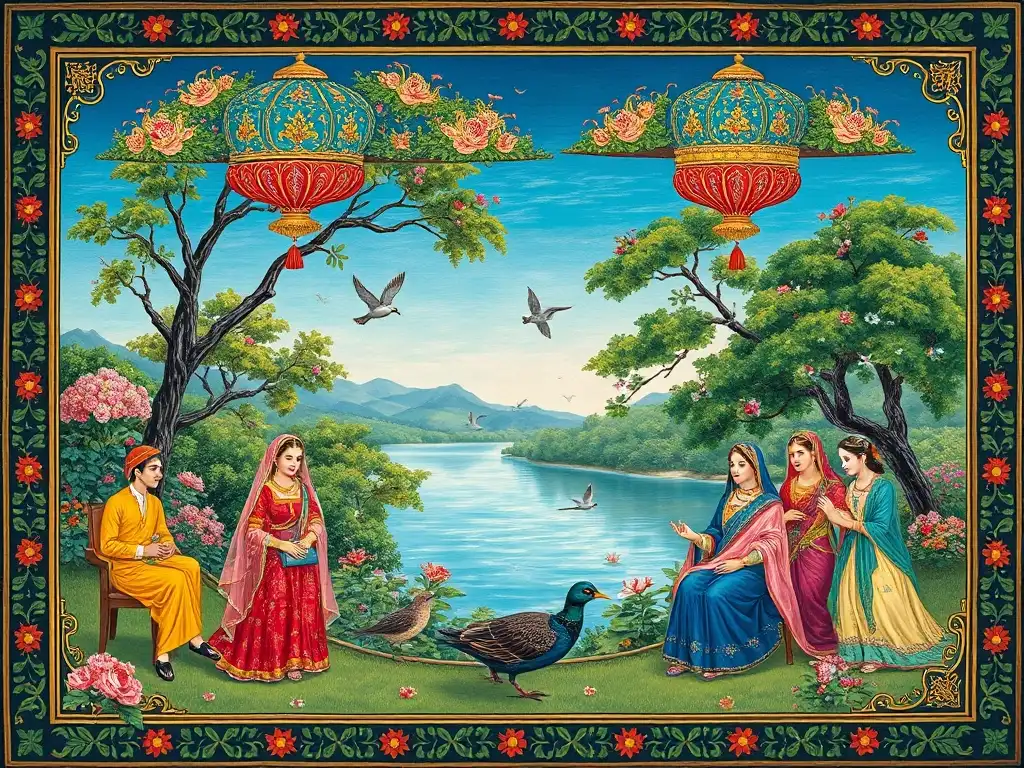
The Persian influence on Indian miniature painting is a remarkable example of cross-cultural exchange that flourished during the medieval period. This interaction brought forth a unique style that combined indigenous Indian elements with Persian artistic traditions. The intricate details, vibrant colors, and thematic diversity of Indian miniature paintings reflect this rich amalgamation, resulting in artworks that are both visually captivating and culturally significant.
Artistic Techniques Borrowed from Persian Traditions
One of the most prominent aspects of Persian influence on Indian miniature painting is the adoption of specific artistic techniques. Persian painters employed meticulous methods that emphasized precision and detail, which were embraced by Indian artisans. Some key techniques include:
- Linear Perspective: Persian artists introduced the concept of linear perspective, which allowed for the creation of depth and dimension in paintings. Indian miniature artists began to experiment with these techniques, resulting in more realistic spatial representations.
- Layering and Glazing: The Persian method of layering colors and using glazes added richness to the texture and luminosity of the paintings. Indian miniature artists adopted this technique, enhancing the visual complexity of their works.
- Use of Gold and Silver: Persian miniatures often featured gold and silver leaf for embellishment. This practice was incorporated into Indian painting, where the use of metallics became a hallmark of the genre, adding a luxurious quality to the artwork.
The interplay of these techniques not only enriched the visual appeal of Indian miniatures but also highlighted the technical mastery of the artists involved.
Color Palettes and Themes: A Blend of Styles
The color palettes used in Indian miniature painting underwent a transformation under Persian influence.
- Vibrancy and Variety: Persian artists utilized a broader range of colors, often employing vibrant hues derived from minerals and organic sources. Indian miniature painters adopted these color choices, resulting in bright, bold artworks that captured the viewer's attention.
- Thematic Fusion: Persian themes such as courtly life, romance, and nature were integrated into Indian miniatures. This thematic blend led to the creation of narratives that reflected both Persian and Indian cultural contexts. For example, the depiction of hunting scenes, a popular theme in Persian art, found its place in Indian miniatures, often reinterpreted with local flora and fauna.
| Aspect | Persian Influence | Indian Adaptation |
|---|---|---|
| Color Palette | Bright and vibrant hues | Rich colors with local variations |
| Themes | Courtly life, nature, romance | Local cultural narratives |
| Techniques | Layering, glazing, use of gold | Emphasis on detail and richness |
This fusion of styles created a distinctive aesthetic that resonated with audiences in both regions and showcased the artistic dialogue between the two cultures.
Iconography and Symbolism in Persian and Indian Contexts
The iconography and symbolism present in Persian and Indian miniature paintings reveal the depth of cultural interaction.
- Shared Motifs: Many motifs, such as floral patterns and intricate borders, were common in both Persian and Indian art. These designs were often used to convey themes of beauty, nature, and spirituality, reflecting the values and beliefs of both cultures.
- Symbolic Interpretation: The symbolism in Persian art often emphasized themes of love, power, and divinity, which were similarly important in Indian culture. For instance, the depiction of animals, such as peacocks and elephants, carried significant meanings in both traditions, symbolizing royalty and strength.
- Narrative Styles: Persian miniature paintings often featured elaborate storytelling through images, a technique that Indian artists adopted and adapted. The incorporation of narrative elements allowed Indian miniatures to convey moral lessons and historical events, making them not only artistic expressions but also educational tools.
This blending of iconography and symbolism not only enriched the narrative quality of the artworks but also highlighted the shared cultural values between Persian and Indian civilizations, showcasing the profound impact of Persian influence on Indian art.
Prominent Indian Miniature Painters Influenced by Persian Art
The influence of Persian art on Indian miniature painting is a significant aspect of the cultural exchange between these two rich traditions. This interaction led to the emergence of several prominent Indian miniature painters who adopted and adapted Persian techniques and themes into their work. These artists not only contributed to the evolution of miniature painting in India but also created unique styles that blended Persian aesthetics with Indian sensibilities.
Notable Artists and Their Contributions
- Kamal ud-Din Behzad
- Background: Originally from Persia, Behzad played a crucial role in the development of miniature painting in India during the late 15th and early 16th centuries.
- Contributions: He is credited with introducing a more intricate and delicate style, characterized by detailed landscapes and rich color palettes. His works often depicted court scenes and themes from Persian literature, effectively merging the two artistic traditions.
- Mansoor
- Background: A prominent artist at the Mughal court during the reign of Emperor Akbar, Mansoor was known for his exceptional ability to capture the beauty of nature and wildlife.
- Contributions: He blended traditional Persian techniques with Indian subjects, leading to a distinctive style that emphasized realism and detail. His famous works include meticulous studies of animals and plants, showcasing the Persian influence in both composition and technique.
- Ustad Ahmad Lahori
- Background: A celebrated artist and architect, Ustad Ahmad Lahori was instrumental in the Mughal artistic renaissance.
- Contributions: His miniature paintings often reflected Persian themes while incorporating Indian motifs. He is known for his intricate illustrations that adorned manuscripts and royal albums, bridging the gap between Persian and Indian artistic traditions.
- Bihzad
- Background: Often considered one of the foremost painters of the Mughal era, Bihzad was heavily influenced by Persian art forms.
- Contributions: His work is characterized by elaborate compositions and a vibrant color palette. He excelled in portraying courtly life, legends, and historical events, infusing Persian narrative styles into his paintings.
The contributions of these artists underscore the profound impact of Persian influence on Indian art, particularly in the realm of miniature painting. Their ability to integrate Persian aesthetics with local themes has resulted in a unique art form that continues to be celebrated today.
Case Study: Mirza Ali and Their Work
Mirza Ali is a notable figure in the realm of Indian miniature painting, whose work exemplifies the fusion of Persian and Indian artistic traditions. Active during the Mughal era, Mirza Ali's contributions to the art form are significant in understanding the Persian influence on Indian art.
- Artistic Style: Mirza Ali's paintings are characterized by their meticulous detail, vibrant colors, and intricate patterns. His ability to capture human emotions and expressions reflects the Persian influence, particularly in the portrayal of courtly scenes and figures.
- Notable Works: One of his most celebrated works includes the "Shahnama of Firdawsi," which showcases his skill in illustrating epic narratives through miniature painting. This piece is notable for its elaborate depictions of battles and courtly life, drawing heavily from Persian literature.
- Legacy: Mirza Ali's work not only contributed to the Mughal court's artistic legacy but also paved the way for future generations of miniature painters. His ability to harmonize Persian themes with Indian elements highlights the rich tapestry of cultural interaction that defined this period.
The artistic contributions of figures like Mirza Ali illustrate the enduring impact of Persian influence on Indian miniature painting, showcasing a unique blend of styles that emerged from centuries of cultural exchange. This interaction not only enriched Indian art but also left a lasting legacy that continues to inspire artists today.
The Role of the Mughal Empire in the Evolution of Indian Miniature Painting
The Mughal Empire, which reigned from the early 16th to the 19th century, played a pivotal role in shaping the landscape of Indian miniature painting. This era marked a significant confluence of artistic traditions, particularly through the Persian influence on Indian art. The Mughals, being of Central Asian origin, brought with them a rich cultural heritage that intertwined with the existing Indian traditions, creating a unique and vibrant style of miniature painting that reflected the ethos of both cultures.
The Mughal Court as a Cultural Melting Pot
At the heart of the Mughal Empire was the imperial court, which functioned as a cultural melting pot where artists, poets, and scholars from various backgrounds converged. The court of Emperor Akbar (1556-1605) is particularly notable for promoting an inclusive atmosphere where creativity flourished. This environment not only encouraged indigenous artisans but also attracted Persian artists, leading to a blending of styles and techniques.
- Patronage of the Arts: The Mughal emperors were avid patrons of the arts. Akbar, for instance, commissioned numerous works, resulting in the establishment of royal workshops (karkhanas) that specialized in miniature painting. Artists from different regions collaborated, bringing their unique perspectives and techniques to the forefront.
- Cultural Exchanges: The Mughal court facilitated cultural exchanges between India and Persia. Persian poets, like Mirza Ghalib, and artists influenced the thematic and stylistic choices in miniature paintings, promoting narratives that resonated with both cultures.
This cross-pollination of ideas and aesthetics not only enriched Indian art but also established a distinct identity for Mughal miniature painting that retained its roots while embracing new influences.
Integration of Persian Elements in Mughal Art
The integration of Persian elements into Mughal miniature painting was evident in several aspects, ranging from techniques to thematic content. This fusion created a distinctive style that remains influential even today.
- Techniques and Materials: Mughal artists adopted Persian techniques such as the use of vivid colors and intricate detailing. The use of natural pigments and gold leaf, commonly found in Persian manuscripts, became standard in Mughal miniatures. Artists meticulously applied these materials to create depth and vibrancy in their works.
- Subject Matter: Persian narratives and folklore significantly influenced the themes depicted in Mughal paintings. Scenes from Persian literature, such as the Shahnameh (Book of Kings), found their way into Indian miniatures, showcasing valorous deeds and romantic tales. This thematic choice enriched the storytelling aspect of the paintings, making them more engaging for the viewer.
- Composition and Style: The Mughal miniature painting style was characterized by a balance of intricate patterns and serene landscapes, echoing the Persian aesthetic. The use of finely detailed borders, floral motifs, and the depiction of courtly life reflected the Persian influence while also incorporating Indian elements, creating a harmonious visual language.
The Persian influence on Indian art, particularly during the Mughal era, was instrumental in the evolution of miniature painting. The interplay of styles, techniques, and themes not only defined Mughal art but also laid the groundwork for future artistic expressions in India, showcasing the rich tapestry of cultural interactions that characterized this period.
Comparative Analysis: Persian vs. Indian Miniature Painting
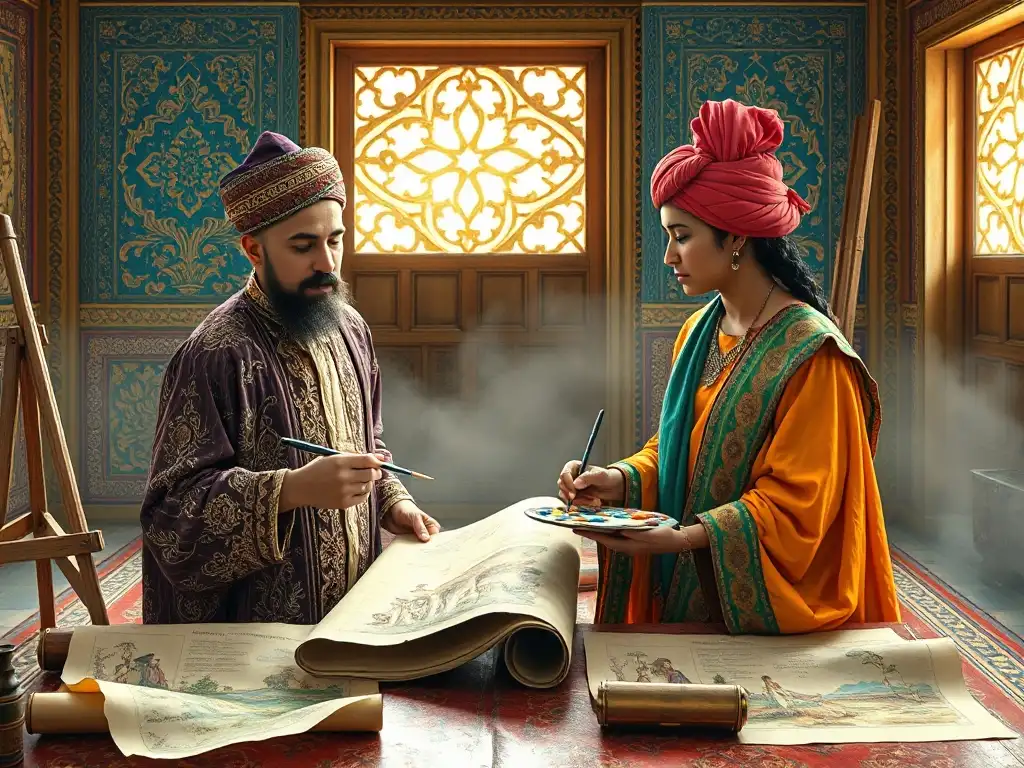
The artistic interplay between Persian and Indian miniature painting is a fascinating study of how two rich traditions can influence each other while retaining their unique characteristics. This section delves into the similarities and differences that define these two forms of art, particularly reflecting on the Persian influence on Indian art.
Similarities in Techniques and Styles
Both Persian and Indian miniature painting share several techniques and stylistic elements that showcase their intertwined histories. Here are some notable similarities:
-
Use of Vibrant Colors:
Both traditions employ a rich palette, utilizing natural pigments derived from minerals and plants. The result is a vivid array of colors that enhances the visual appeal of the artworks.
-
Attention to Detail:
Miniature paintings from both cultures exhibit meticulous attention to intricate details. Artists often depict complex patterns, ornate costumes, and delicate facial expressions, demonstrating their skill and patience.
-
Layering and Composition:
Both styles utilize a layering technique to create depth. In Persian miniatures, for instance, backgrounds often feature elaborate landscapes, while Indian miniatures might integrate architectural elements, both creating a sense of space and context.
-
Narrative Elements:
Miniature paintings in both traditions often tell stories, whether from literature, mythology, or historical events. This narrative quality serves not only to convey aesthetic pleasure but also to communicate cultural values and beliefs.
-
Calligraphy Integration:
In both Persian and Indian miniature paintings, calligraphy plays a significant role. Persian artists often included poetic verses alongside their visual art, while Indian miniatures frequently showcased inscriptions, enhancing the narrative and aesthetic quality.
Differences in Cultural Themes and Motifs
Despite their similarities, Persian and Indian miniature paintings diverge significantly in terms of cultural themes and motifs. Key differences include:
-
Cultural Context:
Persian miniatures often reflect themes of courtly life, romance, and literature, deeply rooted in Persian culture and history. In contrast, Indian miniatures encompass a broader range of themes, including religious narratives, royal patronage, and folk tales, reflecting the diverse cultures and religions of India.
-
Symbolism and Motifs:
Persian art frequently employs motifs such as gardens, birds, and intricate floral patterns, symbolizing paradise and beauty. Indian art, on the other hand, might incorporate motifs like animals, deities, and vibrant depictions of festivals, which are deeply connected to Hindu and Islamic traditions.
-
Figures and Representation:
The representation of figures also varies. Persian miniature paintings often portray elongated and graceful figures, emphasizing elegance. Indian miniatures tend to depict more robust and colorful forms, reflecting the dynamism and vibrancy of Indian culture.
-
Stylistic Approaches:
While both traditions admire symmetry and balance, Persian miniatures might lean towards a more refined and delicate approach, whereas Indian miniatures often embrace boldness and a more expressive style, showcasing energy and movement.
-
Historical Influences:
The historical context surrounding the development of these art forms also plays a role in their differences. Persian miniatures were influenced by Islamic artistic traditions, focusing on abstraction and geometric patterns. Indian miniatures, while also influenced by Persian styles during the Mughal era, retained indigenous elements that celebrate local traditions, religions, and narratives.
The Persian influence on Indian art can be seen as a dynamic exchange of ideas and techniques, leading to a rich tapestry of artistic expression. While similarities in techniques and styles highlight their interconnectedness, the differences in cultural themes and motifs underline the unique identities of each tradition, enriching the overall landscape of miniature painting.
The Lasting Impact of Persian Influence on Indian Art
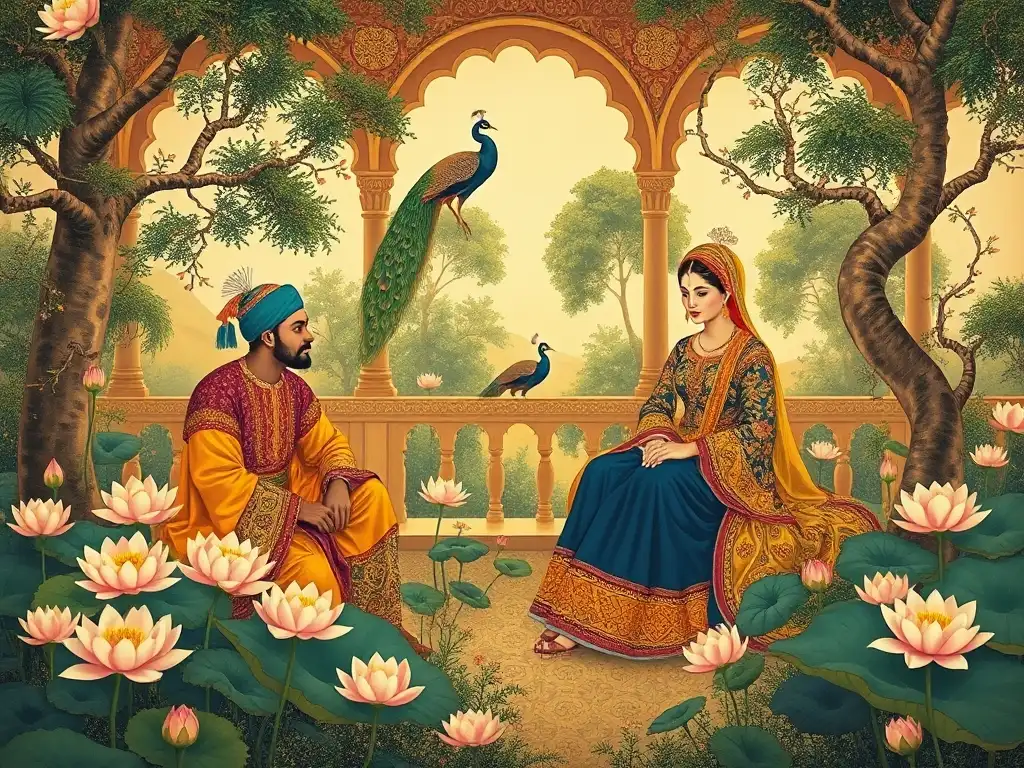
The interplay between Persian and Indian art forms has produced a rich tapestry of artistic expression that spans centuries. The Persian influence on Indian art is particularly evident in the realm of miniature painting, which flourished during various historical epochs. This impact can be traced back to the Mughal era, when Persian artists and artisans were invited to India, leading to a vibrant cultural exchange. The fusion of styles not only redefined the techniques and themes of Indian art but also established a distinctive identity for Indian miniature painting.
Evolution of Artistic Styles Across Eras
The evolution of miniature painting in India under the Persian influence can be categorized into several distinct phases:
- Early Mughal Period (16th Century):
- The arrival of Babur marked the beginning of a new artistic tradition that melded Persian techniques with indigenous aesthetics.
- Key features included the use of vibrant colors, intricate detailing, and a focus on naturalism.
- Notable works from this period include portraits of emperors and scenes from court life, which often incorporated Persian motifs and themes.
- Akbar's Reign (1556-1605):
- Under Emperor Akbar, the art of miniature painting reached new heights with the establishment of the Imperial Workshop.
- Artists like Basawan and Mansoor integrated Persian styles with Indian themes, creating a unique blend characterized by elaborate backgrounds and intricate ornamental designs.
- The "Akbarnama" is a prime example of this era, showcasing narrative scenes that combine Persian artistry with Indian storytelling.
- Jahangir and Shah Jahan (1605-1658):
- Jahangir's passion for naturalism and detail further enhanced the Persian influence. Artists began to depict landscapes, flora, and fauna with unprecedented realism.
- The use of gold leaf and precious stones became prominent, reflecting Persian opulence and craftsmanship.
- During Shah Jahan's reign, architectural representation in paintings became more pronounced, as seen in works that featured the Taj Mahal and other monumental structures.
- Decline and Regional Styles (Late 17th Century Onwards):
- As the Mughal Empire waned, regional styles emerged, incorporating Persian elements into local traditions.
- The Rajput and Pahari schools of painting adopted Persian techniques while integrating their cultural narratives, resulting in a diverse artistic landscape.
- This period saw the creation of works that emphasized vibrant colors and dynamic compositions, further showcasing the lasting impact of Persian aesthetics.
Modern Interpretations of Traditional Miniature Painting
In contemporary art, the Persian influence on Indian art continues to resonate, as modern artists reinterpret traditional miniature painting through various mediums and themes.
- Revival and Innovation:
- Artists today are reviving ancient techniques while incorporating modern themes, exploring issues such as identity, globalization, and cultural heritage.
- The blending of traditional styles with contemporary narratives allows for a dialogue between the past and present, making the art form relevant to new generations.
- Exhibitions and Cultural Exchange:
- Numerous art exhibitions showcase the ongoing dialogue between Persian and Indian art, highlighting the fusion of techniques and inspirations.
- Collaborations between Indian and Persian artists foster a renewed appreciation for this rich artistic heritage, promoting cross-cultural understanding.
- Educational Initiatives:
- Workshops and courses on miniature painting are gaining popularity, where artists learn both traditional Persian techniques and Indian styles.
- This educational resurgence aims to preserve and innovate upon the ancient traditions, ensuring their survival in the modern art scene.
The Persian influence on Indian art is a testament to the enduring legacy of cultural interactions. As artists continue to draw inspiration from this rich history, miniature painting remains a vibrant and evolving form of artistic expression.
Conclusion
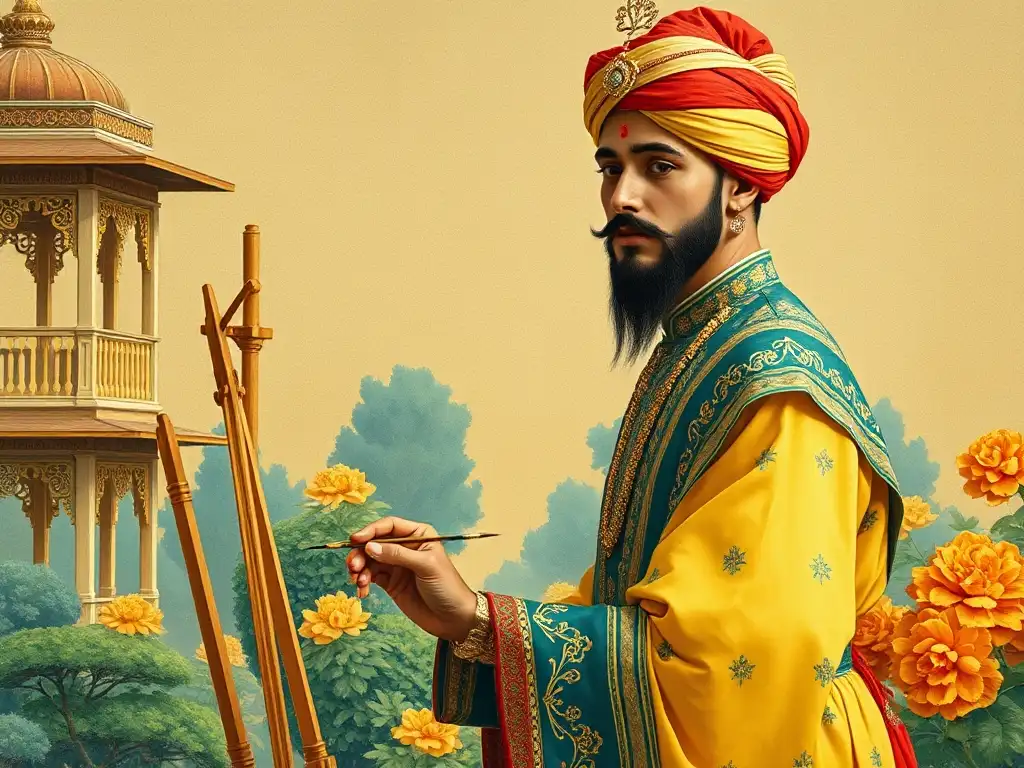
Recap of Persian Influence on Indian Art
The Persian influence on Indian art is a captivating narrative that highlights the dynamic exchange between two rich cultures. This interaction primarily unfolded during the Mughal era, where Persian aesthetics merged with indigenous styles to create a unique form of miniature painting. The intricate details, vibrant colors, and elaborate themes representative of Persian art found their way into Indian miniature paintings, enriching the artistic landscape of the subcontinent.
Key elements of Persian influence can be categorized as follows:
- Techniques and Materials:
- Use of natural pigments and gold leaf
- Introduction of new brush techniques for fine detailing
- Themes and Subjects:
- Court scenes and royal portraits
- Depictions of nature, including flora and fauna
- Composition and Style:
- Use of intricate borders and patterns
- Greater emphasis on perspective and depth
Prominent artists, such as Bihzad and his successors, not only embraced Persian styles but also adapted them to reflect Indian narratives and contexts. This cross-pollination of artistic techniques and themes led to masterpieces that celebrated the cultural heritage of both civilizations, making the Persian influence on Indian art a pivotal chapter in the history of art in the region.
The Importance of Cross-Cultural Interactions in Art History
Cross-cultural interactions have always played a crucial role in the evolution of art, serving as a catalyst for innovation and creativity. The Persian influence on Indian art exemplifies how cultural exchanges can lead to the development of new artistic forms and styles. Through such interactions, artists gain exposure to diverse techniques, materials, and themes, which they can then incorporate into their own practices.
The significance of cross-cultural interactions in art history can be summarized as follows:
- Cultural Enrichment:
- Exposure to different artistic traditions enhances creativity and broadens artistic horizons.
- Innovation:
- New ideas and techniques generated from cultural exchanges can lead to the evolution of distinct art forms.
- Historical Understanding:
- Artistic collaborations provide insights into the socio-political contexts of the time, reflecting the interconnectedness of civilizations.
The Persian influence on Indian art not only transformed the visual aesthetics of Indian miniature paintings but also serves as a testament to the enduring power of cultural dialogue. By exploring these influences, we can appreciate the rich tapestry of artistic heritage that has emerged from the interactions between diverse civilizations throughout history.
References
The rich tapestry of Indian miniature painting is profoundly shaped by various cultural influences, notably the Persian impact. This section outlines key references that delve into the intricate relationships between Persian art and its Indian counterparts, providing a solid foundation for understanding this dynamic artistic exchange.
Suggested Reading on Persian Influence and Indian Art
-
"The Persian Influence on Indian Art"
This comprehensive volume explores how Persian aesthetics and techniques permeated Indian art forms, particularly during the Mughal era. It highlights key artists and their works, shedding light on the cross-cultural dialogues that led to the evolution of miniature painting.
-
"Miniature Paintings of the Mughal Court"
Focused on the Mughal period, this book emphasizes the synthesis of Persian styles with indigenous Indian elements. It offers a detailed analysis of the themes, colors, and subjects prevalent in miniature paintings, illustrating the unique blend that characterizes this art form.
-
"A History of Indian Painting: The Modern Period"
This work places Indian miniature painting within a broader historical context, discussing the enduring legacy of Persian influence from the 16th century onwards. The author examines how political, social, and cultural factors contributed to artistic developments in India.
-
"Persian Art and Architecture in India"
A scholarly resource that discusses the architectural and artistic influences of Persia on Indian traditions. This book provides insights into how Persian motifs and techniques were integrated into Indian art, particularly in the realm of miniature painting.
-
"The Art of India: Traditions of Indian Miniature Painting"
This text not only explores the various styles of Indian miniature painting but also emphasizes the Persian elements that have been incorporated. It serves as an excellent resource for understanding the stylistic transitions and adaptations that occurred over centuries.
Key Sources for Further Research on Miniature Painting
-
Exhibition Catalogs
Many museums featuring Indian miniature paintings have published catalogs detailing their collections. Notable examples include the Metropolitan Museum of Art and the British Museum. These catalogs often include essays by art historians that discuss the Persian influence on specific artworks.
-
Research Journals
Academic journals such as the Journal of Indian Art and Iconography and The Art Bulletin frequently publish articles that explore the connections between Persian and Indian art forms. These articles provide in-depth analyses and case studies that are valuable for researchers.
-
Documentaries and Lectures
Various documentaries on Indian art history, available on platforms like YouTube, provide visual insights into the evolution of miniature painting. Additionally, lectures by art historians can often be found online, offering expert perspectives on the Persian influence in the context of Indian art.
-
Online Databases
Digital archives such as JSTOR and Google Scholar are excellent resources for finding scholarly articles and papers that discuss the interplay between Persian and Indian artistic traditions. They serve as a gateway to a wide range of research material.
By exploring these references and suggested readings, one can gain a comprehensive understanding of the Persian influence on Indian art and its lasting legacy in the realm of miniature painting.
Frequently Asked Questions
What is the Persian influence on Indian art?
The Persian influence on Indian art refers to the incorporation of Persian styles, techniques, and themes into Indian art forms, particularly during the Mughal era when Persian artists and artisans migrated to India.
How did the Mughal Empire contribute to this influence?
The Mughal Empire played a significant role in merging Persian artistic traditions with Indian aesthetics, resulting in a unique style of miniature painting that combined detailed imagery and vibrant colors.
What are the key characteristics of Persian-inspired Indian miniature paintings?
Key characteristics include intricate designs, vivid colors, and the use of natural motifs. The focus on narrative storytelling and courtly scenes also reflects Persian traditions.
Which famous artists exemplified the Persian influence in their works?
Artists like Bichitr and Ustad Mansur are notable for their works that showcase the fusion of Persian techniques with Indian themes, creating masterpieces that highlight this cultural exchange.
How does the Persian influence continue to be relevant today?
The Persian influence remains significant in contemporary art, as it has shaped the visual language of Indian artists and continues to inspire modern interpretations of miniature painting and other art forms.
Final Reflection: Embracing the Persian Influence on Indian Art
The intricate dance between Persian and Indian art has created a rich tapestry of creativity that continues to resonate today. As we explore the depths of Indian miniature painting, we uncover not just a historical narrative but a living testament to cultural exchange and artistic evolution. The Persian influence on Indian art is not merely a relic of the past; it is a vibrant force that shapes contemporary artistic expressions and inspires new generations of artists.
Cultural intersections have always played a pivotal role in shaping societies, and the Persian influence on Indian miniature painting is a prime example of this dynamic. The delicate brushwork, vibrant colors, and intricate detailing that characterize these artworks serve as a reminder of the beauty that arises when diverse traditions converge. As the renowned artist Anish Kapoor once said, Art is a language that speaks to the heart, transcending boundaries and uniting us in our shared humanity.
This sentiment encapsulates the ongoing impact of Persian aesthetics on Indian art, fostering a dialogue that enriches both cultures.
As we reflect on the lessons drawn from this artistic journey, I invite you to consider how you can embrace the spirit of cross-cultural inspiration in your own life. Let the Persian influence on Indian art serve as a reminder that creativity knows no borders.
Whether through exploring new artistic styles, collaborating with diverse communities, or simply appreciating the beauty of different cultures, each of us has the power to contribute to a more interconnected world. Embrace this opportunity to reflect on your own artistic inspirations and consider how they can shape your unique expression in the tapestry of life.
Unleash Your Creativity: Dive into the World of Miniature Art!
Thank you for exploring the rich tapestry of Persian influence on Indian miniature painting. We hope this article has ignited your passion for art and culture, uncovering the beauty of this unique artistic heritage. Now, it’s your turn to take the next step and experience the world of miniature art yourself!
Here are some **exciting activities** you can start today:
- Visit a local art gallery or museum that showcases miniature artworks or similar styles to immerse yourself in their intricate designs.
- Join a workshop or online class to learn about miniature painting techniques—gain hands-on experience and unleash your artistic side.
- Share the knowledge you’ve gained by **discussing this article with friends** or hosting an art-themed gathering to explore further inspirations together.
What element of Persian artistry resonates with you the most, and how might you incorporate that into your own creative expressions?