
The Impact of Religion on Ancient Indian Warfare Practices

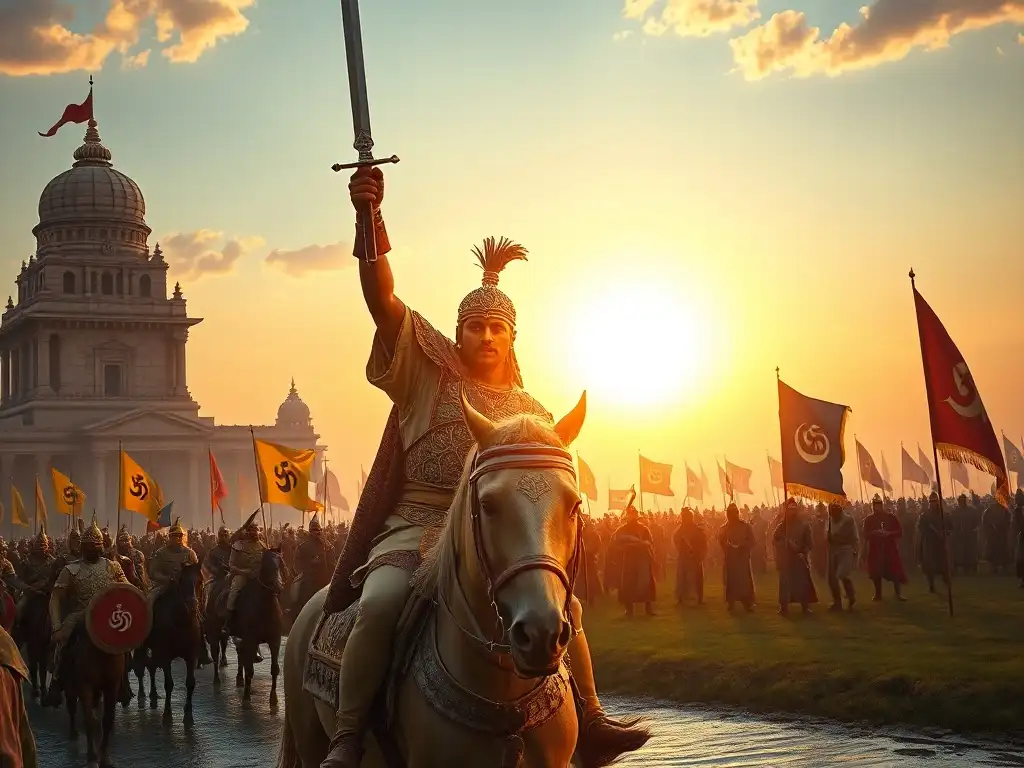
Welcome to Ancient India History, where we embark on a fascinating journey through time, unraveling the rich tapestry of ancient civilizations that shaped the Indian subcontinent. In today's exploration, we delve into the captivating intersection of religion and ancient Indian warfare, uncovering how spiritual beliefs influenced military strategies and practices throughout history. What role did the divine play on the battlefield? How did sacred texts and rituals guide the warriors of yore? Join us as we unveil the profound impact of faith on the art of war, and discover the stories that continue to resonate through the ages.
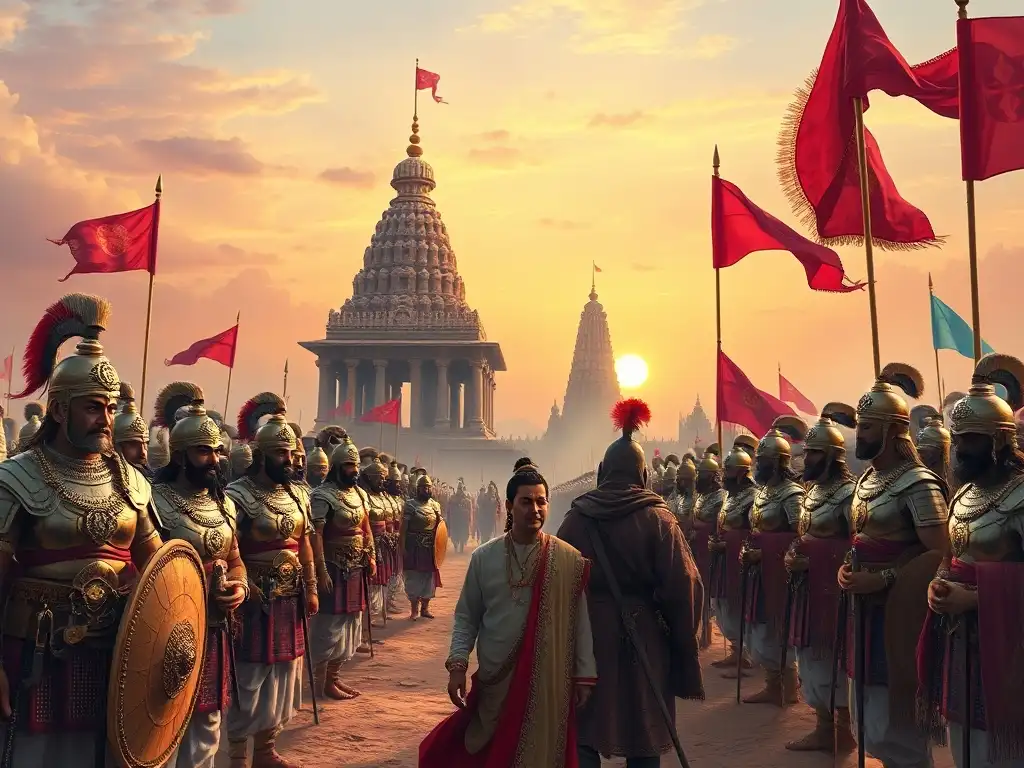
Introduction to Religion and Ancient Indian Warfare
The interplay between religion and warfare in ancient India is a fascinating subject that unveils the complexities of how spiritual beliefs influenced military practices and strategies. From the early Indus Valley civilization to the grandeur of the Gupta Empire, religious ideologies played a pivotal role in shaping not only the motivations behind conflicts but also the methodologies employed in warfare.
The ancient Indian societies viewed warfare not merely as a physical contest but as a sacred duty, often intertwined with their spiritual beliefs and cultural ethos. This article delves into the profound impact that religion, particularly Hinduism, had on ancient Indian warfare practices, exploring how sacred texts, concepts of righteousness, and rituals framed the conduct of war.
Overview of Ancient Indian Warfare
Ancient Indian warfare was characterized by its diverse strategies, weaponry, and military organization. The art of warfare evolved significantly over centuries, influenced by technological advancements, regional dynamics, and, importantly, religious beliefs.
- Militaristic Evolution: The transition from simple skirmishes to organized military campaigns can be observed through various historical epochs, such as the Vedic period, Mauryan Empire, and the rise of regional kingdoms.
- Weapons and Tactics: The use of chariots, archery, and infantry formations were prevalent, with advancements in metallurgy contributing to more effective weaponry.
- Cultural Context: Battles were often fought for territory, resources, and power, but they were also imbued with a sense of divine purpose, reflecting the prevailing religious and cultural norms.
Significance of Religion in Ancient Indian Society
Religion in ancient India was not confined to personal belief systems; it permeated every aspect of life, including governance, social order, and military conduct.
- Moral Framework: The teachings of religious texts provided ethical guidelines that influenced decisions in warfare, including justifications for conflict and rules of engagement.
- Unity and Identity: Religion served as a unifying force, fostering a collective identity among warriors and their followers, which was crucial during times of war.
- Divine Mandate: Many rulers claimed divine support for their military campaigns, believing that their victories were sanctioned by the gods, which further reinforced the importance of religious belief in warfare.
The Role of Hinduism in Shaping Warfare Practices
Hinduism, as a predominant religion in ancient India, significantly shaped the principles and practices surrounding warfare.
Hindu Texts and Their Influence on Military Strategies
The ancient scriptures, particularly the Vedas and the epic Mahabharata, offer insights into the military strategies and ethical considerations of warfare.
- The Mahabharata: This epic not only narrates the great Kurukshetra War but also discusses the philosophies of war, duty, and righteousness. The character of Arjuna, for example, embodies the internal conflict between moral duty and the horrors of battle, reflecting the complexities faced by warriors.
- Strategic Wisdom: Texts such as the Arthashastra by Kautilya provide systematic approaches to statecraft and military strategy, emphasizing the need for intelligence, espionage, and strategic alliances.
The Concept of Dharma Yuddha in Warfare
The notion of Dharma Yuddha, or righteous war, is central to understanding the ethical dimensions of warfare in ancient India.
- Moral Justification: This concept posits that war must be fought for a just cause and with adherence to moral codes, influencing how battles were approached.
- Rules of Engagement: Dharma Yuddha established rules that governed the conduct of warriors, emphasizing fairness and the protection of non-combatants, which were revolutionary ideas for their time.
Rituals and Prayers Before Battles
Before engaging in battle, various rituals and prayers were conducted to seek divine favor and ensure victory.
- Spiritual Preparations: Warriors would often participate in rituals, including fire sacrifices and chanting of mantras, to invoke blessings from deities.
- Symbolic Acts: The use of sacred symbols and the presence of spiritual leaders during military campaigns served to reinforce the belief that the war was not merely a physical struggle but a sacred endeavor.
The intricate relationship between religion and warfare in ancient India highlights the profound influence of spiritual beliefs on military practices. This exploration of religious ideologies not only sheds light on the dynamics of ancient Indian warfare but also enriches our understanding of the cultural and ethical frameworks that shaped one of history's most complex societies.
Buddhism's Perspective on Warfare
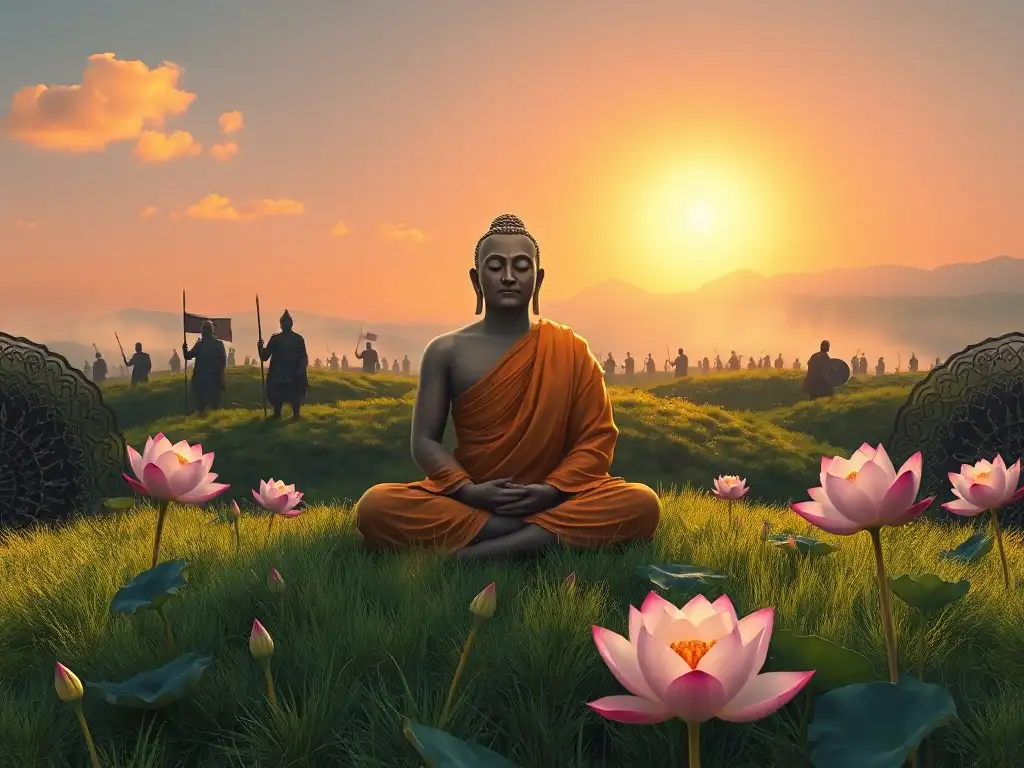
Buddhism, founded in the 5th century BCE by Siddhartha Gautama, emphasizes peace, compassion, and non-violence, which profoundly influenced its followers' views on warfare. The overarching Buddhist principle of ahimsa (non-harming) played a significant role in shaping the attitudes of its adherents toward conflict. Unlike many other religious traditions that sanctioned warfare as a means of achieving political or territorial ends, Buddhism encouraged a path of resolution through dialogue and understanding rather than violence.
Buddhist texts and teachings advocate for the use of wisdom and compassion in resolving disputes, promoting the idea that violence only leads to suffering and continued cycles of conflict. However, the reality of historical circumstances often complicated this idealistic perspective, as the political and social contexts of ancient India sometimes necessitated involvement in warfare, leading to a nuanced interpretation of Buddhist teachings concerning violence and conflict.
The Buddhist Approach to Conflict and Violence
The Buddhist approach to conflict and violence can be encapsulated in the Four Noble Truths and the Eightfold Path. These foundational teachings encourage practitioners to understand the nature of suffering and the importance of overcoming it through ethical living, meditation, and wisdom. In the context of warfare, this perspective translates to a preference for non-violent solutions and the minimization of harm to all beings.
Despite this, historical evidence suggests that Buddhist kings and leaders occasionally participated in warfare, often justifying their actions through the lens of dharma (righteousness) and the need to protect their subjects. For instance, Ashoka the Great (c. 268–232 BCE), one of the most famous Buddhist rulers, initially led military campaigns but later adopted a policy of non-violence after witnessing the horrors of war. Ashoka’s transformation led him to promote Buddhism and its principles, advocating for peace and the welfare of all living beings, signaling a profound shift in the use of military power aligned with Buddhist values.
Historical Instances of Buddhist Military Involvement
While Buddhism generally espouses non-violence, there are notable historical instances where Buddhist figures engaged in military actions. For example, during the reign of Ashoka, after the Kalinga War, he expressed remorse for the bloodshed and sought to promote a policy of peace, emphasizing the importance of moral governance over military conquest. His edicts, inscribed on rocks and pillars across his empire, reflect a commitment to non-violence and compassion.
Additionally, in the later periods of ancient India, particularly during the rise of the Pala Empire (8th to 12th centuries CE), Buddhist kings sometimes engaged in military campaigns to defend their realms against invasions, particularly from the rising power of the Hindu kings and later, Islamic incursions. These instances illustrate the complexity of Buddhist involvement in warfare, as rulers balanced their spiritual beliefs with the pragmatic needs of governance and defense.
Jainism and Its Pacifist Ideologies
Jainism, another ancient Indian religion, is deeply rooted in the principles of ahimsa, emphasizing non-violence to an even greater extent than Buddhism. The Jain belief system posits that all living beings possess a soul, and thus, the practice of harming any creature is seen as a significant moral wrongdoing. This foundational ideology profoundly influenced Jain communities' engagement—or lack thereof—in warfare throughout ancient Indian history.
Jains are known for their strict adherence to non-violence, which permeates all aspects of their culture and daily life. This commitment extends to their refusal to participate in warfare, even when faced with threats, highlighting their pacifist approach to conflict resolution and ethical conduct.
Influence of Jain Beliefs on Warfare Ethics
Jain beliefs have significantly influenced the ethics of warfare in ancient India. The stringent adherence to ahimsa led Jain leaders and communities to advocate for peaceful coexistence and conflict resolution through dialogue rather than armed conflict. As a result, Jains often acted as mediators in disputes, promoting non-violent solutions and encouraging warring factions to seek peaceful resolutions.
The pacifist ideologies of Jainism also contributed to the overall cultural landscape of ancient India, where the moral implications of warfare were critically examined. While Jains themselves refrained from military engagement, their influence can be seen in the ethical frameworks of other religious traditions, including Buddhism and Hinduism, which grappled with the moral dilemmas posed by warfare.
The Role of Jain Communities in Ancient Warfare
Despite their pacifist beliefs, Jain communities played a unique role in the context of ancient warfare. While they did not engage in combat, many Jains served as advisors and diplomats, using their influence to advocate for peace and non-violence among warring states. Their societal status as merchants and landowners allowed them to wield considerable influence, often resulting in their involvement in negotiations that sought to prevent conflict.
Further, Jains contributed to the sustenance of armies by providing financial support and resources. This indirect involvement highlights the complexities of their position; while they maintained a strict commitment to non-violence, they recognized the pragmatic realities of the socio-political environment and sought to navigate it with their ethical principles in mind.
The interplay between religion and ancient Indian warfare practices illustrates a rich tapestry of beliefs and ethical considerations that shaped the conduct of warfare and conflict resolution in this diverse civilization.
The Interaction of Religion and Politics in Warfare
In ancient India, the intertwining of religion and politics profoundly influenced warfare practices. Rulers often leveraged religious ideologies to justify military campaigns, presenting them as dharmic duties or righteous wars. This connection is evident in various historical texts, such as the Mahabharata, where the epic battle of Kurukshetra is framed as a struggle between good (Dharma) and evil (Adharma).
Political leaders utilized religious legitimacy to rally support from their subjects, creating a sense of collective identity rooted in shared beliefs. The invocation of divine favor was a common tactic; kings would perform yajnas (sacrificial rituals) to appease gods before embarking on campaigns, believing that such acts would ensure victory. This dynamic not only motivated soldiers but also solidified the ruler's status as a protector of dharma, validating their authority and governance.
Moreover, religious leaders often played significant roles in political matters, influencing military strategies and decisions. The merging of religious and political realms contributed to the shaping of societal norms regarding warfare, including the ethical considerations of engaging in battle and the treatment of enemies. The resultant synergy between religion and politics in warfare established a framework that resonated through centuries of Indian military history.
Religion as a Tool for Mobilization in Warfare
Religion served as a powerful mobilization tool in ancient Indian warfare, rallying troops and communities around a common cause. Leaders enlisted the support of religious figures to inspire and energize their forces, framing battles not just as territorial conquests but as sacred missions. This practice was especially prominent during large-scale campaigns, where the need for unity and morale was paramount.
In many instances, the call to arms was accompanied by religious symbolism, invoking deities and mythological narratives to motivate soldiers. For example, the figure of Lord Krishna in the Bhagavad Gita emphasizes the importance of performing one's duty (dharma) in the face of conflict, which served to galvanize warriors into action. Such religious exhortations instilled a sense of purpose, transforming ordinary soldiers into zealots fighting for a divine cause.
Furthermore, the promise of spiritual rewards for those who fought bravely in the name of religion added an additional layer of motivation. Soldiers were often led to believe that valor in battle would grant them a place in the afterlife or favor in the eyes of the gods. This spiritual dimension thus played a crucial role in mobilizing not only armies but also entire communities, fostering a culture where warfare was seen as a divine obligation.
Case Studies of Religious Leaders in Military Campaigns
Throughout ancient Indian history, several religious leaders played pivotal roles in military campaigns, shaping both the outcomes of battles and the cultural narratives surrounding them. One prominent example is the figure of Chandragupta Maurya, who was guided by the teachings of the philosopher Chanakya. Chanakya, a Brahmin, not only provided military strategies but also infused the Mauryan campaigns with a sense of dharma, framing them as necessary for the restoration of order in a fragmented India.
Another notable case is that of the Sikh Gurus, particularly Guru Gobind Singh, who transformed the Sikh community into a formidable military force. Facing oppression from the Mughal Empire, Guru Gobind Singh emphasized the concept of "Saint-Soldier," encouraging his followers to take up arms in defense of their faith. This blend of spirituality and martial prowess not only galvanized the Sikh community but also left a lasting impact on Indian warfare dynamics.
Additionally, the role of the Bhakti saints, who preached against oppression and inequality, often inspired revolts and uprisings. Their teachings motivated common people to rise against tyrannical rulers, showcasing how religious leaders influenced military actions beyond mere strategy—fostering a revolutionary spirit that would shape the sociopolitical landscape of ancient India.
The Evolution of Military Techniques Influenced by Religion
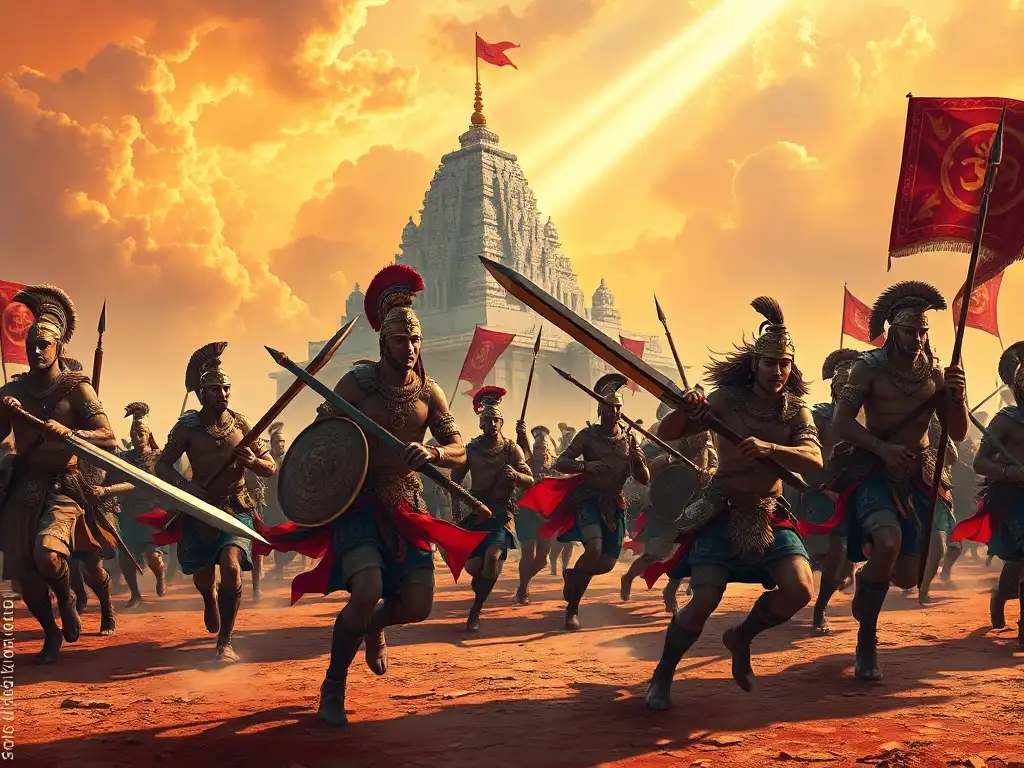
The influence of religion on military techniques in ancient India is evident in the evolution of various strategies, formations, and weaponry. Religious doctrines often dictated the conduct of warfare, from the ethical treatment of prisoners to the strategic use of certain battle formations that were believed to be favored by the deities.
For instance, the concept of "dharma yudhha" (righteous warfare) emphasized ethical conduct in battle, leading to the development of techniques that minimized unnecessary violence and destruction. This principle encouraged the use of strategies that sought to resolve conflicts with honor and integrity, rather than through sheer brutality. The evolution of military formations, such as the "Chakra Vyuha," showcases how religious tenets influenced tactical approaches on the battlefield.
Religious Festivals and Their Military Significance
Religious festivals in ancient India often held significant military implications, serving as both a period of reflection and a time for preparation for potential conflicts. Festivals such as Dussehra celebrated the victory of good over evil, symbolizing the triumph of dharma through the performance of dramatic reenactments of historical battles.
These celebrations were not merely cultural but also strategic, as they provided an opportunity for rulers to showcase their military might and reinforce the unity of their forces. During these festivals, warriors would often engage in training and drills, ensuring that they were prepared for any military endeavors that might arise. The communal spirit fostered during such occasions also served to strengthen the bonds between soldiers and their leaders, creating a motivated and cohesive fighting force.
Moreover, religious festivals often coincided with auspicious dates for launching military campaigns. Leaders would consult astrological charts and religious texts to determine the most favorable times for battle, further intertwining religion with military strategy. This practice highlights the profound influence of religious beliefs on the timing and execution of warfare in ancient India.
Weaponry and Armor Inspired by Religious Symbolism
The design and development of weaponry and armor in ancient India were often deeply infused with religious symbolism, reflecting the cultural significance of warfare. Many weapons were adorned with motifs of deities, inscriptions from sacred texts, or symbols that represented protection and victory. This practice was not only aesthetic but also carried spiritual connotations, as warriors believed that these symbols could invoke divine protection during battle.
For example, swords and shields often featured carvings of symbols like the Om or images of gods such as Durga, who is revered as a warrior goddess. Such adornments were thought to provide warriors with strength and courage, reinforcing the belief that they were fighting under divine auspices.
Additionally, the crafting of armor was sometimes accompanied by rituals intended to bless the equipment, ensuring that the warrior would be favored in combat. This connection between weaponry and spirituality underscores how deeply intertwined religion was with the martial culture of ancient India. The result was a unique military landscape where the physical tools of war were imbued with spiritual significance, shaping the psychological and emotional aspects of warfare for soldiers and leaders alike.
The Aftermath of Warfare: Religious Reflections
The aftermath of warfare in ancient India often brought forth significant religious reflections that shaped both the spiritual and cultural landscape of the time. Victorious and defeated armies alike sought divine favor and interpreted their experiences through the lens of their religious beliefs. The concept of dharma, or duty, played a critical role in how warriors viewed their actions and the consequences that followed. Many believed that success in battle was a manifestation of divine approval, while defeat could be seen as a punishment for failing to uphold moral and ethical standards.
Additionally, the aftermath of conflicts frequently led to the establishment of new rituals and practices aimed at appeasing deities and seeking forgiveness for the violence incurred during warfare. Temples were often constructed or renovated as acts of devotion, symbolizing both gratitude for victory and a plea for protection against future conflicts. These religious reflections not only served to provide solace to individuals but also helped in weaving a narrative that influenced future generations regarding the role of religion in warfare.
Religious Narratives and Historical Accounts of Battles
Ancient Indian texts, such as the Mahabharata and the Ramayana, provide rich narratives that intertwine warfare and religion. These epic tales illustrate the moral dilemmas faced by warriors, emphasizing the role of divine guidance in their decisions. The characters in these stories, often depicted as avatars of gods, showcase the belief that divine intervention played a crucial role in the outcomes of battles. For instance, Arjuna’s struggle with his duty in the Bhagavad Gita reveals the complexities of righteousness and the moral obligations of a warrior.
Historical accounts, such as inscriptions and texts from the Maurya and Gupta empires, also detail how religious beliefs influenced military strategies and decisions. Kings often sought the counsel of sages and priests before engaging in warfare, believing that rituals and sacrifices could tip the scales of fate in their favor. These narratives not only chronicle events but also serve as reflections of the societal values and religious convictions of the time.
The Impact of Warfare on Religious Structures and Practices
Warfare in ancient India significantly impacted religious structures and practices, leading to the evolution of both military and spiritual dimensions. The establishment of military conquests often resulted in the construction of temples dedicated to victorious deities, which served as physical manifestations of the divine favor bestowed upon the rulers. For example, the construction of temples in honor of gods like Vishnu and Shiva became prevalent as a way to legitimize the authority of kings and their military triumphs.
Furthermore, the need for resources to support warfare led to the creation of new religious practices, including the gathering of offerings and tributes from conquered territories. This incorporation of wealth into religious structures allowed for the expansion of religious institutions and the promotion of religious festivals that celebrated military victories. The blending of military success and religious devotion not only reinforced the power of rulers but also solidified the connection between religion and warfare in the collective consciousness of ancient Indian society.
Conclusion: The Lasting Influence of Religion on Ancient Indian Warfare
The interplay between religion and warfare in ancient India left a profound legacy that shaped the development of military practices, societal values, and cultural narratives. The intertwining of spiritual beliefs with martial duties created a unique framework where warriors not only fought for their kingdoms but also for divine approval and cosmic order. This multifaceted relationship influenced not just the outcomes of battles, but also the very fabric of ancient Indian civilization.
Summary of Key Points on Religion and Ancient Indian Warfare
- Dharma and Duty: The concept of dharma shaped the moral compass of warriors, influencing their decisions in battle.
- Epic Narratives: Texts like the Mahabharata and Ramayana depict the divine involvement in warfare, serving as moral guides for warriors.
- Religious Structures: Warfare prompted the construction and renovation of temples, linking military success to divine favor.
- Rituals and Practices: The aftermath of battles led to the establishment of new religious rituals aimed at appeasing the gods and seeking protection.
Reflection on the Legacy of Ancient Indian Warfare Practices
The legacy of ancient Indian warfare practices, deeply rooted in religious beliefs, continues to resonate in contemporary cultural and spiritual practices. The values derived from these historical narratives influence modern perceptions of duty, honor, and spirituality in conflict. Additionally, the temples and religious sites established during this era remain significant cultural landmarks, embodying the historical intertwining of religion and warfare. As we explore the rich tapestry of ancient Indian history, it becomes evident that the impact of religion on warfare practices not only defined the past but also continues to shape the spiritual and cultural identity of India today.
- Introduction to Religion and Ancient Indian Warfare
- Overview of Ancient Indian Warfare
- Significance of Religion in Ancient Indian Society
- The Role of Hinduism in Shaping Warfare Practices
- Buddhism's Perspective on Warfare
- Jainism and Its Pacifist Ideologies
- The Interaction of Religion and Politics in Warfare
- The Evolution of Military Techniques Influenced by Religion
- The Aftermath of Warfare: Religious Reflections
- Conclusion: The Lasting Influence of Religion on Ancient Indian Warfare
- What role did religion play in ancient Indian warfare?
- How did the caste system affect warriors in ancient India?
- Were there any specific rituals associated with ancient Indian battles?
- How did philosophical texts influence military strategies in ancient India?
- What impact did the Gupta Empire have on warfare and religion?
Frequently Asked Questions
What role did religion play in ancient Indian warfare?
Religion significantly influenced ancient Indian warfare by providing moral justification for conflicts and establishing ritualistic practices that warriors adhered to before battle.
How did the caste system affect warriors in ancient India?
The caste system determined the social status of warriors, with Kshatriyas being the primary military class, which shaped their training, duties, and religious obligations in warfare.
Were there any specific rituals associated with ancient Indian battles?
Yes, warriors often performed rituals and ceremonies to seek blessings from their deities, which were believed to ensure victory and protection during conflicts.
How did philosophical texts influence military strategies in ancient India?
Philosophical texts like the Arthashastra and the Mahabharata provided guidance on military tactics, ethics of war, and the importance of dharma (duty) in warfare.
What impact did the Gupta Empire have on warfare and religion?
The Gupta Empire witnessed the blending of religion and statecraft, leading to a more organized military system where religious patronage played a role in supporting the army and its campaigns.
Final Reflection: The Enduring Legacy of Religion in Ancient Indian Warfare
The intricate relationship between religion and ancient Indian warfare remains profoundly relevant today, as it shapes our understanding of cultural identity and conflict. The exploration of how religious beliefs influenced the strategies, ethics, and motivations behind warfare in ancient India reveals not only historical truths but also echoes in contemporary discussions about the role of faith in modern conflicts. This connection invites us to reconsider how the past informs our present and future.
Culture and society are continually molded by the narratives we inherit, and the impact of religion on warfare is a testament to this dynamic. The lessons drawn from ancient practices remind us that the motivations behind conflict are often deeply intertwined with belief systems. As noted by historian Romila Thapar, History is not just about the past; it is about how we understand our present.
This understanding prompts us to reflect on the ongoing influence of these ancient practices in shaping societal values and conflicts in today's world.
As we contemplate the lessons of religion and ancient Indian warfare, I invite you to reflect on your own beliefs and how they inform your actions and interactions in the world. Consider how the principles derived from ancient practices can guide us in fostering peace and understanding in our diverse societies. By acknowledging the complexities of our histories, we can strive to create a future where the lessons of the past inspire us to seek harmony rather than conflict.
Unveil the Strategies of Ancient Indian Warfare!
Thank you for diving into the fascinating world of ancient Indian warfare and its profound connections to religion! You've explored how belief systems shaped battle strategies and the codes of conduct for warriors throughout history. Now, it’s time to transform that knowledge into action!
Here are some enriching ways you can deepen your understanding and share your newfound insights:
- Engage with our community: Join discussions in our forums to share your thoughts and learn from fellow history enthusiasts.
- Explore further: Discover additional readings on the interplay between religion and warfare in various cultures. You might find many surprising insights!
- Host a debate: Consider organizing a friendly discussion with friends or family about how these ancient practices can inform modern perspectives on conflict resolution.
What aspect of religious influence on warfare intrigued you the most, and how do you think it can enhance our understanding of contemporary conflicts?