
The Enduring Influence of Indian Thought in the Hellenistic World

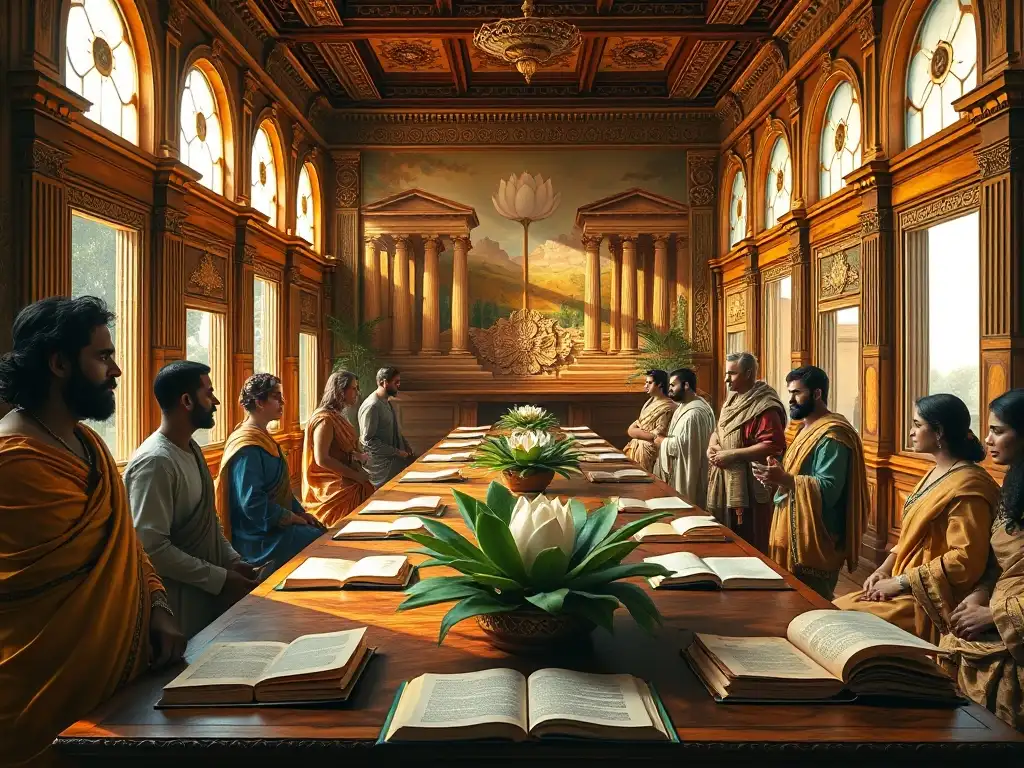
Welcome to Ancient India History, where we embark on a fascinating journey through the rich tapestry of ancient Indian civilizations. Our exploration takes us from the remarkable Indus Valley to the illustrious Gupta Empire, revealing the profound cultural legacies that have shaped our world.
In this captivating article, we delve into the intriguing intersection of Indian philosophy in Hellenistic culture, uncovering how ancient Indian thought influenced and enriched the intellectual landscape of the Hellenistic world. Join us as we unravel the threads of interaction between these great civilizations, sparking curiosity and inviting you to explore the depths of their enduring impact.

Introduction to Indian Philosophy in Hellenistic Culture
The intersection of Indian philosophy and Hellenistic culture presents a fascinating tapestry of intellectual exchange that has profoundly shaped thought systems across civilizations. Following the conquests of Alexander the Great in the 4th century BCE, a bridge was formed between the East and West, leading to an unprecedented flow of ideas, beliefs, and cultural practices.
Indian philosophy, with its rich traditions encompassing metaphysics, ethics, and epistemology, found its way into the Hellenistic world, influencing prominent thinkers and schools of thought. This article delves into the ways Indian philosophical concepts permeated Hellenistic culture and how this interaction shaped philosophical discourse during and after the Hellenistic period.
Overview of Indian-Greek Relations
The relationship between Indian and Greek civilizations can be traced back to the Macedonian conquests and the subsequent establishment of the Maurya Empire. Historical accounts, such as those by Megasthenes, who served as an ambassador in the Mauryan court, suggest that there was a mutual curiosity and respect between these two cultures. The following points outline key aspects of Indian-Greek relations:
- Cultural Exchange: The exchange of ideas, art, and religious practices flourished during the Hellenistic period. Greek scholars became increasingly interested in Indian texts, philosophies, and the profound spiritual systems that characterized Indian thought.
- Philosophical Parallels: Scholars noted striking similarities between Indian and Greek philosophies, particularly in areas like ethics, metaphysics, and the nature of reality. Thinkers such as Pyrrho are believed to have been influenced by Indian concepts of skepticism and renunciation.
- Buddhism and Hellenism: The spread of Buddhism into regions influenced by Hellenistic culture further catalyzed the exchange of ideas. Buddhist texts were translated and disseminated, bridging beliefs of enlightenment and the nature of suffering with Greek philosophical inquiries into human existence.
- Artistic Influence: The artistic legacy of both civilizations combined to produce unique styles. The Greco-Buddhist art of Gandhara is a prime example, showcasing how Hellenistic techniques melded with Indian iconography.
Through these multifaceted interactions, Indian philosophy not only contributed to the diversity of the Hellenistic world but also left an enduring impact that resonated through subsequent intellectual traditions. As we explore the various dimensions of this influence, we will uncover how these ancient exchanges shaped philosophical thought and cultural practices in profound ways.
Historical Context of the Hellenistic Era
The Hellenistic Era, spanning from the death of Alexander the Great in 323 BCE to the emergence of the Roman Empire around 31 BCE, was characterized by a significant expansion of Greek culture across vast regions, including parts of Asia and Africa. Following Alexander's conquests, Greek settlers, soldiers, and traders populated new cities, leading to a fusion of cultures. This period is marked by the establishment of Hellenistic kingdoms, such as the Seleucid Empire and the Ptolemaic Kingdom in Egypt, where Greek language, art, and philosophy flourished alongside local traditions.
The confluence of different cultures during this era created a unique environment for intellectual exchange. The cities of Alexandria, Antioch, and Pergamon became vibrant centers of learning and culture, where scholars from diverse backgrounds engaged with each other's ideas. This cross-pollination of thought not only enriched Greek philosophy but also allowed for the introduction of Eastern philosophies, including Indian thought, which would leave a lasting impact on Hellenistic culture.
The Spread of Hellenistic Culture
The spread of Hellenistic culture was facilitated by trade routes and military conquests, which connected Greek city-states with the East. As Greek influence expanded, so did the exchange of ideas, particularly in philosophy and science. The establishment of cities like Alexandria, which became a hub for scholars and philosophers, played a crucial role in disseminating Hellenistic culture. The famous Library of Alexandria housed texts from various traditions, making it a melting pot of knowledge.
Cultural interactions led to the incorporation of Eastern religious practices, artistic styles, and philosophical concepts into the Hellenistic worldview. This cultural syncretism resulted in a rich tapestry of ideas where Greek rationalism began to intertwine with Eastern mysticism, including aspects of Indian philosophy. Such interactions laid the groundwork for a philosophical dialogue that would influence later thinkers in both the Hellenistic and Roman worlds.
Key Features of Hellenistic Thought
Hellenistic thought is characterized by several key features that distinguish it from earlier Greek philosophy. One prominent aspect is the emphasis on individualism and personal ethics. Philosophers such as the Stoics and Epicureans focused on the individual's experience and the pursuit of happiness, often grounded in practical wisdom and ethical living. This shift from communal values to personal fulfillment marked a significant evolution in philosophical discourse.
Another feature is the blending of various philosophical systems. Hellenistic thinkers synthesized ideas from different traditions, including Platonic, Aristotelian, and Cynical thought, resulting in diverse schools of philosophy. This eclecticism allowed for greater inclusivity and adaptability, paving the way for dialogues with Eastern philosophies, including the Indian systems of thought that emphasized the nature of reality, consciousness, and ethics.
Additionally, the Hellenistic period saw advancements in scientific thought, particularly in mathematics and astronomy, which were influenced by earlier Indian contributions. The integration of these scientific ideas with philosophical inquiry enriched the intellectual landscape of the era, reflecting a holistic approach to understanding the universe.
Indian Philosophical Traditions and Their Core Concepts
Indian philosophy is rich and diverse, encompassing various schools of thought that have evolved over thousands of years. The foundational texts of Indian philosophy, such as the Vedas, Upanishads, and later the Buddhist and Jain scriptures, present a wide array of ideas about existence, consciousness, and the nature of reality. Central to these traditions is the exploration of metaphysics, ethics, and epistemology, often reflecting a deep inquiry into the self and its relationship to the cosmos.
Core concepts of Indian philosophy include Dharma (duty/righteousness), Karma (action and its consequences), and Moksha (liberation from the cycle of birth and death). These concepts resonate with the Hellenistic focus on ethics and personal fulfillment, creating a fertile ground for philosophical dialogue between Indian and Hellenistic thinkers.
Major Schools of Indian Philosophy
Indian philosophy comprises several major schools, each offering unique perspectives:
- Vedanta: Focused on the study of the Upanishads, Vedanta emphasizes the nature of reality and the self's ultimate unity with Brahman, the cosmic spirit.
- Buddhism: Founded by Siddhartha Gautama (Buddha), this school explores concepts like the Four Noble Truths and the Eightfold Path, emphasizing the impermanence of life and the cessation of suffering.
- Jainism: Highlighting non-violence (Ahimsa) and truth, Jain philosophy advocates for the liberation of the soul from karmic bondage through ethical living and ascetic practices.
- Nyaya: A school of logic and epistemology, Nyaya focuses on the means of obtaining knowledge and the nature of reality, laying the groundwork for rigorous philosophical debate.
- Samkhya: An atheistic dualistic philosophy that distinguishes between purusha (consciousness) and prakriti (matter), offering insights into the nature of existence and consciousness.
These schools not only shaped Indian philosophical thought but also contributed to dialogues with Hellenistic philosophies, enhancing the mutual exchange of ideas.
Key Philosophical Themes in Indian Thought
Indian philosophical traditions explore several key themes that resonate with both their own context and the broader Hellenistic discourse:
- The Nature of Reality: Indian philosophy delves into metaphysical questions regarding the nature of existence. Different schools offer diverse interpretations, from the non-dualism of Advaita Vedanta to the dualism of Samkhya.
- Consciousness and Self: The exploration of consciousness is central to Indian thought. Concepts like Atman (the individual soul) and Brahman (the universal soul) highlight the quest for understanding the self's true nature and its relation to the cosmos.
- Ethics and Morality: Indian philosophy places significant emphasis on ethical living. The concepts of Dharma guide individuals toward righteous action, reflecting a moral framework that parallels the ethical considerations of Hellenistic thought.
- Suffering and Liberation: The theme of suffering and the quest for liberation (Moksha) is prevalent, particularly in Buddhism and Jainism. This resonates with the Hellenistic emphasis on overcoming life's challenges through philosophical understanding.
The interplay between these themes in Indian philosophy and their relevance to Hellenistic culture exemplifies the enduring influence of Indian thought in shaping broader philosophical inquiries across civilizations.
The Intersection of Indian Philosophy and Hellenistic Thought

The intersection of Indian philosophy and Hellenistic thought represents a fascinating confluence of ideas that shaped the intellectual landscape of the ancient world. Both traditions emerged during periods of significant cultural and philosophical development, with the Hellenistic era beginning after the death of Alexander the Great in 323 BCE. This era was characterized by the spread of Greek culture across the regions conquered by Alexander, including parts of India. As these cultures met, they began to exchange philosophical ideas that would influence both traditions profoundly.
Indian philosophy, with its deep roots in texts like the Vedas, Upanishads, and later schools such as Buddhism and Jainism, offered a rich tapestry of metaphysical and ethical theories. On the other hand, Hellenistic philosophy, represented by schools such as Stoicism, Epicureanism, and Skepticism, provided frameworks for understanding ethics, happiness, and the nature of reality. The dialogue between these two philosophical traditions was not merely superficial but involved a genuine engagement with each other's ideas, leading to a synthesis that has had lasting impacts.
Points of Contact: Trade and Cultural Exchange
The exchange between Indian and Hellenistic thought was facilitated by numerous points of contact, primarily through trade routes that connected the two regions. The famous Silk Road and maritime routes enabled not only the movement of goods but also the flow of ideas, beliefs, and cultural practices. Cities like Alexandria became melting pots where thinkers from both cultures could meet and exchange knowledge.
Indian merchants and travelers brought their philosophical ideas to the Hellenistic world, while Greek philosophers and traders ventured into Indian territories, further deepening the dialogue. This cultural exchange was not limited to philosophical texts but also included practices such as art, science, and religion. The blending of Indian and Hellenistic cultures can be seen in various artifacts, sculptures, and writings that reflect elements from both traditions.
Influential Figures in Indian-Greek Interactions
Several influential figures played key roles in fostering Indian-Greek interactions. One of the most notable was Alexander the Great himself, whose conquests brought him into direct contact with Indian kingdoms. His encounters with Indian philosophers, such as those described by his historian Arrian, illustrate the mutual curiosity and respect between the two cultures.
Another significant figure was the Greek philosopher Pyrrho, who traveled to India with Alexander's army. Pyrrho's exposure to Indian thought, particularly Buddhism, influenced his development of Skepticism, emphasizing the relativity of knowledge and experience. Additionally, later figures such as the Stoic philosopher Epictetus and the Neoplatonist Plotinus drew upon Eastern ideas, reflecting the enduring legacy of Indian philosophy within Hellenistic thought.
Philosophical Exchanges: Ideas and Theories

The philosophical exchanges between Indian and Hellenistic thinkers led to rich dialogues on various ideas and theories, particularly in the realms of metaphysics and ethics. One of the most significant exchanges was the exploration of concepts like the nature of the self, the universe, and the ultimate reality.
The Hellenistic focus on individual ethics and the pursuit of happiness found resonance with Indian ideas about dharma (duty) and moksha (liberation). The synthesis of these ideas paved the way for a more comprehensive understanding of human existence, ethics, and the cosmos.
The Concept of Yoga and Its Hellenistic Reception
The concept of yoga, which encompasses physical, mental, and spiritual practices aimed at achieving a state of union with the divine or ultimate reality, found a unique reception in the Hellenistic world. Indian yogic practices, particularly those described in the Yoga Sutras of Patanjali, emphasized discipline, meditation, and self-realization.
Hellenistic thinkers were intrigued by the practical aspects of yoga and its potential for personal development. The Stoics, for example, emphasized the importance of self-control and rationality, drawing parallels between their practices and the meditative aspects of yoga. This cross-pollination of ideas enriched both traditions, leading to a broader understanding of the human experience.
Ethical Philosophies: Comparing Indian and Hellenistic Views
The ethical philosophies of ancient India and the Hellenistic world present intriguing comparisons. Indian philosophies such as Buddhism and Jainism emphasized non-violence (ahimsa), compassion, and the pursuit of enlightenment through ethical living. In contrast, Hellenistic philosophies like Stoicism advocated for virtue, wisdom, and self-mastery as pathways to achieving a good life.
Despite differences in foundational beliefs, both traditions shared a commitment to ethical living and the cultivation of personal character. This common ground fostered a dialogue that allowed for a deeper exploration of ethics, shaping moral thought in both cultures. The intermingling of these ideas has had a lasting impact on subsequent philosophical developments.
The Influence of Indian Metaphysics on Hellenistic Philosophy
Indian metaphysics, particularly concepts surrounding the nature of reality, the self, and the cosmos, significantly influenced Hellenistic philosophy. Indian thinkers proposed intricate ideas about the interconnectedness of all beings and the transient nature of the material world, which resonated with Hellenistic metaphysical inquiries.
The notion of an ultimate reality, as articulated in the Upanishads, found echoes in the Hellenistic pursuit of understanding the divine and the structure of the universe. Thinkers like Plotinus incorporated elements of Indian metaphysical thought into their own frameworks, leading to a richer understanding of existence that transcended cultural boundaries. This influence is evident in the ways later philosophers synthesized these ideas, contributing to the development of metaphysics in the Western tradition.
The interplay between Indian philosophy and Hellenistic thought exemplifies how cultural exchanges can lead to profound intellectual advancements. The legacy of this interaction continues to inspire philosophical inquiry and enrich our understanding of human thought.
Case Studies: Notable Examples of Indian Influence
The interaction between Indian thought and Hellenistic culture is evidenced by various notable examples throughout history. These case studies highlight the profound influence that Indian philosophy had on key Hellenistic schools of thought, showcasing a rich exchange of ideas that shaped philosophical discourse.
The Impact on Early Stoicism
Early Stoicism, which emerged in the 3rd century BCE, reflects several concepts that resonate with Indian philosophical traditions, particularly those found in Buddhism and early Hindu thought. The Stoic emphasis on self-control, virtue, and the importance of living in harmony with nature parallels the Indian ideals of dharma (duty/righteousness) and moksha (liberation).
Notably, figures such as Zeno of Citium, the founder of Stoicism, and later Stoics like Epictetus and Seneca, demonstrated a keen interest in moral philosophy that bears resemblance to Indian teachings on ethics and the nature of suffering. The Stoic concept of the Logos, representing rationality and order, can be compared to the Indian view of Brahman as the ultimate reality, suggesting a convergence of thought that enriched both traditions.
The Reception of Indian Thought in Neoplatonism
Neoplatonism, which developed in the 3rd century CE, also illustrates the influence of Indian philosophy. The philosopher Plotinus, in particular, was instrumental in integrating diverse philosophical ideas, including those from Indian sources. The Neoplatonist concept of the One, a transcendent source from which all existence emanates, shares similarities with the Indian concept of Brahman.
Furthermore, Neoplatonists were interested in the nature of the soul and its relationship to the divine, concepts that resonate with the Indian philosophical discourse on atman (the self) and its unity with Brahman. This cross-pollination of ideas fostered a deeper understanding of metaphysical questions, illustrating the lasting impact of Indian thought on Hellenistic intellectual traditions.
Indian Philosophical Texts in Hellenistic Libraries
The presence of Indian philosophical texts in Hellenistic libraries, such as the Library of Alexandria, stands as a testament to the exchange of knowledge between these cultures. Scholars and travelers, including the likes of Alexander the Great's entourage, brought back insights from Indian philosophers, which were subsequently translated and disseminated in Greek.
The Yoga Sutras and various Upanishads are believed to have been studied by Hellenistic thinkers, influencing their understanding of metaphysics and ethics. The translations of these texts not only preserved Indian philosophical ideas but also introduced them to a broader audience, fostering an appreciation for Indian wisdom within the Hellenistic intellectual tradition.
The Legacy of Indian Philosophy in the Hellenistic World
The legacy of Indian philosophy within Hellenistic culture is multifaceted, influencing various philosophical movements and shaping the development of Western thought in significant ways. This enduring impact continues to be relevant in contemporary discussions on ethics, metaphysics, and spirituality.
Long-term Effects on Western Thought
The long-term effects of Indian philosophy on Western thought are evident in the evolution of various philosophical schools, particularly during the Renaissance and the Enlightenment. Concepts such as non-dualism and the nature of consciousness from Indian thought have gradually permeated Western philosophy, leading to a more holistic understanding of existence.
Additionally, the integration of Indian ideas into Western philosophical discourse has contributed to the development of modern psychology and existentialism, emphasizing the importance of inner experience and self-awareness. The cross-cultural dialogue initiated during the Hellenistic period laid the groundwork for ongoing philosophical exploration that transcends cultural boundaries.
The Role of Translations in Preserving Indian Ideas
Translations played a crucial role in preserving and disseminating Indian philosophical ideas throughout the Hellenistic world. The efforts of translators and scholars who bridged the linguistic and cultural gap enabled a rich exchange of thoughts and concepts.
The translation of Indian texts into Greek and later into Latin allowed for the integration of Indian philosophies into the broader tapestry of Western intellectual heritage. This process not only safeguarded Indian wisdom from fading into obscurity but also sparked philosophical inquiries and dialogues that continue to influence contemporary thought.
The enduring influence of Indian philosophy in the Hellenistic world exemplifies a remarkable chapter in the history of cross-cultural exchanges, demonstrating how ideas can transcend geographical and temporal boundaries to shape the course of human thought.
Conclusion: The Lasting Impact of Indian Philosophy on Hellenistic Culture

The intersection of Indian philosophy and Hellenistic culture marks a significant chapter in the annals of human thought. As Indian ideas permeated the Hellenistic world, they fostered a rich tapestry of intellectual exchange that shaped the development of various philosophical schools. The introduction of concepts such as karma, dharma, and moksha found resonance among Hellenistic philosophers, particularly those within the schools of Stoicism and Neoplatonism. This cross-pollination not only enriched Greek philosophy but also facilitated a broader understanding of self, ethics, and the cosmos.
The impact of Indian thought is evident in the writings of philosophers like Plotinus and Chrysippus, who integrated Eastern ideas into their frameworks. The dialogues between these cultures spurred new interpretations of existence and morality, leading to a more nuanced view of the human experience. This enduring influence is not merely a historical curiosity; it continues to echo through the ages, reminding us of the profound interconnectedness of diverse philosophical traditions.
Reflections on the Significance of Cross-Cultural Exchanges
Cross-cultural exchanges have always played a pivotal role in the evolution of thought and ideas. The interaction between Indian and Hellenistic philosophies exemplifies how diverse perspectives can lead to intellectual enrichment and innovation. Such exchanges challenge rigid worldviews and encourage the synthesis of knowledge, fostering a spirit of inquiry that transcends geographical and cultural boundaries.
The dialogue between these two civilizations highlights the importance of tolerance and understanding in philosophical discourse. By engaging with different perspectives, thinkers were able to refine their own beliefs and practices, leading to a more comprehensive understanding of complex issues such as ethics, metaphysics, and the nature of reality. This spirit of collaboration is especially crucial in today's globalized world, where diverse philosophies can contribute to addressing contemporary challenges.
The Relevance of Indian Thought in Contemporary Philosophy
Today, the insights of Indian philosophy resonate profoundly in contemporary philosophical discussions. Concepts such as mindfulness, the nature of suffering, and the interconnectedness of all beings have gained significant traction in modern thought, particularly in fields such as psychology, ethics, and environmental philosophy. The resurgence of interest in Eastern philosophies, including Buddhism and Vedanta, reflects a growing recognition of their relevance in addressing the complexities of modern life.
Furthermore, the integration of Indian thought into contemporary philosophical discourse encourages a holistic approach to understanding the self and the universe. As we grapple with existential questions in a rapidly changing world, the teachings of Indian philosophy offer valuable perspectives on achieving balance, harmony, and inner peace. By embracing these diverse intellectual traditions, contemporary philosophy not only honors the legacy of the past but also enriches the ongoing dialogue about the human condition.
- Introduction to Indian Philosophy in Hellenistic Culture
- Overview of Indian-Greek Relations
- Historical Context of the Hellenistic Era
- Indian Philosophical Traditions and Their Core Concepts
- The Intersection of Indian Philosophy and Hellenistic Thought
- Points of Contact: Trade and Cultural Exchange
- Influential Figures in Indian-Greek Interactions
- Philosophical Exchanges: Ideas and Theories
- Case Studies: Notable Examples of Indian Influence
- The Legacy of Indian Philosophy in the Hellenistic World
- Conclusion: The Lasting Impact of Indian Philosophy on Hellenistic Culture
- Reflections on the Significance of Cross-Cultural Exchanges
- The Relevance of Indian Thought in Contemporary Philosophy
- What is the significance of Indian philosophy in the context of Hellenistic culture?
- How did Indian thought influence Hellenistic philosophers?
- What are some key texts that highlight the connection between Indian philosophy and the Hellenistic world?
- In what ways did trade contribute to the spread of Indian philosophy in the Hellenistic region?
- What was the impact of Indian philosophical thought on later Western philosophies?
Frequently Asked Questions
What is the significance of Indian philosophy in the context of Hellenistic culture?
The significance lies in the exchange of ideas between Indian and Hellenistic thinkers, which enriched both traditions and promoted cross-cultural dialogue.
How did Indian thought influence Hellenistic philosophers?
Indian thought introduced concepts such as metaphysics, ethics, and spirituality, which were integrated into the works of Hellenistic philosophers, enhancing their philosophical frameworks.
What are some key texts that highlight the connection between Indian philosophy and the Hellenistic world?
Key texts include the Upanishads and Buddhist scriptures, which were translated and studied by Hellenistic scholars, showcasing the intertwining of ideas.
In what ways did trade contribute to the spread of Indian philosophy in the Hellenistic region?
Trade routes facilitated the movement of merchants and scholars, allowing for the exchange of philosophical ideas and texts, which helped spread Indian philosophical concepts.
What was the impact of Indian philosophical thought on later Western philosophies?
The impact was significant, as it laid the groundwork for mystical and ethical explorations in Western philosophy, influencing figures such as Plato and Plotinus.
Final Reflection: The Lasting Legacy of Indian Philosophy in Hellenistic Culture
The intersection of Indian philosophy and Hellenistic culture reveals a profound and enduring influence that resonates even in today's globalized world. As we explore the rich tapestry of ideas exchanged between these two ancient civilizations, we uncover a timeless dialogue that continues to shape our understanding of ethics, metaphysics, and the nature of existence. The relevance of this exchange is not merely historical; it serves as a reminder of the interconnectedness of human thought and the universal quest for wisdom.
Cultural exchanges have always been catalysts for growth and transformation, and the influence of Indian thought on Hellenistic philosophy is a testament to this dynamic interplay. The philosophical inquiries that emerged from this synthesis have left an indelible mark on Western thought, encouraging us to reflect on our own beliefs and values. As the philosopher Aldous Huxley once said, "> The greatest triumphs of the human spirit are the triumphs of the human mind." This sentiment underscores the importance of embracing diverse perspectives, as they enrich our collective understanding and foster a more inclusive worldview.
As we contemplate the lessons drawn from the enduring influence of Indian philosophy in Hellenistic culture, I invite you to reflect on your own journey of intellectual exploration. Consider how the principles of interconnectedness, compassion, and self-inquiry can inform your daily life and interactions with others. Let the wisdom of the past inspire you to seek knowledge beyond borders, fostering a spirit of curiosity and openness that transcends cultural divides. In doing so, we not only honor the legacy of these ancient thinkers but also contribute to a more harmonious and enlightened future.
Unveil the Impact of Indian Thought Today!
Thank you for exploring the fascinating connections between Indian thought and the Hellenistic world! Your curiosity highlights the enduring legacy of cultural exchange. As you reflect on what you’ve learned, it's time to take action and continue the conversation.
- Explore further by delving into literature that examines how Indian philosophies have influenced various schools of thought across the globe.
- Share your insights on social media to engage others in this enlightening discourse, using the hashtag #IndianThoughtInfluence.
- Join our community by signing up for our newsletter to receive updates on related topics and historical insights.
What aspect of Indian thought do you find most intriguing, and how do you believe it has shaped contemporary philosophies? We invite you to share your thoughts in the comments below!