
The Upanishads: Connecting Ancient Wisdom with Contemporary Issues

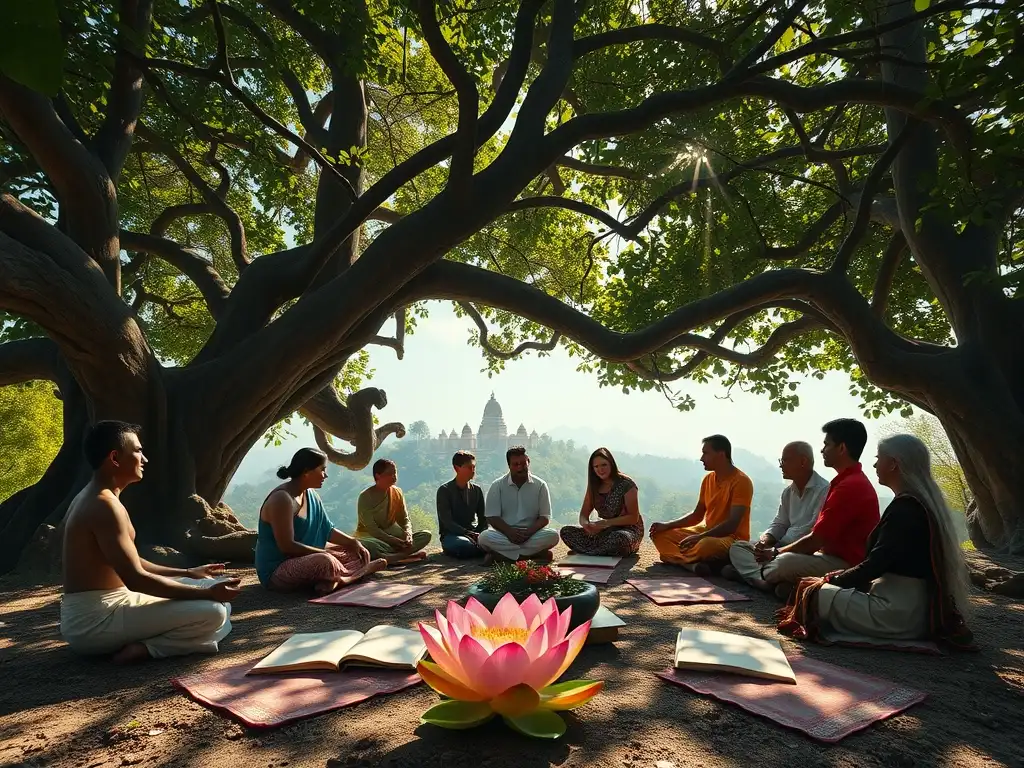
Welcome to Ancient India History, where we embark on a journey through the rich tapestry of time, unraveling the diverse histories, cultures, and monumental contributions of ancient Indian civilizations. In our featured article, " The Upanishads: Connecting Ancient Wisdom with Contemporary Issues," we delve into the profound realm of ancient Indian philosophy and relevance, exploring how the timeless insights of these sacred texts resonate with modern-day challenges.
Prepare to be captivated as we bridge the past with the present, igniting your curiosity to discover how ancient wisdom continues to shape our world today. Dive in and let the exploration begin!
The Upanishads, a collection of ancient Indian texts, serve as a cornerstone of philosophical thought and spiritual inquiry in the Hindu tradition. Composed between 800 and 400 BCE, these writings delve into profound questions about the nature of reality, the self, and the ultimate purpose of life, bridging the gap between the material and spiritual worlds. They represent a shift from ritualistic practices found in the earlier Vedas to more introspective and philosophical discourses.
In an increasingly complex modern world, the teachings of the Upanishads resonate with contemporary issues, offering insights into personal identity, ethical living, and the interconnectedness of all beings. This article aims to explore the relevance of ancient Indian philosophy, particularly the Upanishads, and how their wisdom can illuminate our understanding of modern dilemmas.
Introduction to the Upanishads
What are the Upanishads?
The Upanishads are a collection of philosophical texts that are considered the end part of the Vedas, the oldest sacred scriptures of Hinduism. They explore the relationship between the individual soul (Atman) and the universal consciousness (Brahman). Characterized by their rich metaphysical content, these texts invite readers to engage in deep contemplation and meditation.
- Key Features of the Upanishads:
- Metaphysical Inquiry: The Upanishads address fundamental questions about existence, reality, and consciousness.
- Self-Realization: They emphasize the importance of self-awareness and understanding one's true nature.
- Dialogical Structure: Many Upanishads are written in the form of dialogues, often between a teacher and a student, making the teachings accessible and relatable.
Historical Context of the Upanishads in Ancient Indian Philosophy
The Upanishads emerged during a period of significant transformation in ancient Indian society, characterized by the rise of urban centers and a shift in religious practices. This era, known as the "Axial Age," saw a flourishing of philosophical thought across various cultures.
- Significant Developments:
- Transition from Ritual to Philosophy: The Upanishads marked a departure from the ritualistic focus of the Vedas, prioritizing philosophical inquiry and personal experience.
- Influence of Other Philosophical Traditions: The emergence of Buddhism and Jainism during this time also contributed to the philosophical landscape, prompting a reevaluation of spiritual beliefs and practices.
The Essence of Ancient Indian Philosophy
Key Concepts of Ancient Indian Philosophy
Ancient Indian philosophy, particularly as articulated in the Upanishads, is rich in concepts that address the fundamental nature of reality and existence.
- Core Philosophical Ideas:
- Brahman: The ultimate reality or cosmic spirit, representing the source of all existence.
- Atman: The individual soul, which is ultimately identical to Brahman.
- Maya: The illusionary nature of the world, emphasizing the distinction between the material and spiritual realms.
- Karma and Rebirth: The principles of cause and effect that govern existence and the cycle of life.
Major Philosophical Schools Influenced by the Upanishads
The teachings of the Upanishads laid the groundwork for various philosophical schools in ancient India, each interpreting the texts in unique ways.
- Notable Schools:
- Advaita Vedanta: Promotes a non-dualistic understanding of Brahman and Atman, asserting their unity.
- Samkhya: A dualistic philosophy that distinguishes between consciousness and matter, influenced by Upanishadic concepts.
- Yoga: Integrates the philosophical teachings of the Upanishads with practical approaches to self-realization and meditation.
The enduring relevance of the Upanishads in contemporary discussions around spirituality, ethics, and personal identity highlights their significant contributions to ancient Indian philosophy and their applicability to modern life.
Relevance of the Upanishads in Contemporary Society
The Upanishads, revered as one of the foundational texts of ancient Indian philosophy, continue to resonate in contemporary society. Their teachings offer profound insights into the nature of reality, the self, and the universe, addressing existential questions that remain pertinent today. As modern individuals grapple with the complexities of life, the Upanishads provide a framework for understanding our place in the cosmos and the interconnectedness of all beings.
By emphasizing concepts such as Brahman (the ultimate reality) and Atman (the individual soul), the Upanishads encourage a holistic view of existence that transcends materialism. This perspective is particularly relevant in an age marked by rapid technological advancement and consumerism, where deeper values and spiritual fulfillment are often overlooked. The teachings of the Upanishads invite individuals to reflect on their inner selves and seek a more meaningful and purpose-driven life.
Addressing Modern Ethical Issues through Ancient Wisdom
The ethical dilemmas faced by contemporary society, such as environmental degradation, social inequality, and the quest for justice, can find guidance in the teachings of the Upanishads. The principle of Ahimsa (non-violence) is a fundamental tenet that resonates with current discussions around sustainability and compassion towards all living beings. By embracing a non-violent approach, individuals are encouraged to live harmoniously with nature and promote social equity.
Moreover, the Upanishads advocate for Dharma (righteousness) and the pursuit of truth, which can guide modern ethical frameworks. In a world where moral relativism often prevails, the Upanishadic emphasis on universal truths and the importance of ethical living serves as a beacon for navigating complex social issues. By fostering a sense of responsibility towards others and the environment, the wisdom of the Upanishads can inspire collective action and positive change.
The Role of Upanishadic Teachings in Personal Development
Personal development is a significant area where the Upanishads have much to offer. Their teachings encourage self-inquiry and introspection, urging individuals to explore their true nature beyond the external identities shaped by society. This journey of self-discovery is essential for fostering emotional resilience and mental well-being.
Practices rooted in Upanishadic philosophy, such as meditation and mindfulness, have gained popularity as tools for personal growth. These practices not only enhance self-awareness but also cultivate a sense of inner peace and clarity. As individuals engage with the teachings of the Upanishads, they are empowered to align their actions with their deeper values, leading to a more fulfilling life.
The Upanishads and Their Influence on Modern Thought
The influence of the Upanishads extends far beyond the boundaries of ancient Indian philosophy, permeating various fields of modern thought. Their exploration of metaphysics, spirituality, and ethics has inspired numerous thinkers and movements across cultures, making them a vital part of the intellectual discourse today.
The Impact of Upanishadic Philosophy on Western Philosophy
The Upanishads have significantly impacted Western philosophical thought since their introduction to the West in the 19th century. Philosophers such as Arthur Schopenhauer and Friedrich Nietzsche drew inspiration from the Upanishadic concepts of Brahman and the unity of existence. Schopenhauer, in particular, admired the Upanishadic view of the world as an illusion, paralleling his own ideas on the nature of reality and suffering.
Moreover, the dialogue between Eastern and Western philosophies has enriched the understanding of concepts like consciousness and existence. The Upanishadic teachings challenge the dualistic perspectives often found in Western philosophy, advocating for a more integrated view of the self and the universe. This synthesis has opened new avenues for philosophical inquiry and has encouraged a more inclusive approach to understanding human experience.
Contemporary Thinkers Inspired by Upanishadic Wisdom
In recent times, numerous contemporary thinkers and spiritual leaders have drawn on the wisdom of the Upanishads to address modern challenges. Figures such as Eknath Easwaran and Swami Vivekananda have popularized the teachings, making them accessible to a global audience. Their interpretations highlight the relevance of Upanishadic philosophy in fostering spiritual growth and ethical living.
Additionally, the influence of the Upanishads can be seen in various fields, including psychology, literature, and environmental studies. Modern psychologists have explored concepts of consciousness and self-awareness rooted in Upanishadic thought, while writers and artists have found inspiration in its poetic and philosophical depth. As society continues to confront unprecedented challenges, the timeless wisdom of the Upanishads remains a guiding light, encouraging a return to profound spiritual values that can navigate the complexities of contemporary life.
Bridging the Gap: Ancient Wisdom and Modern Challenges
The Upanishads, revered as the culmination of Vedic thought, hold a treasure trove of philosophical insights that resonate powerfully with contemporary issues. As we navigate the complexities of modern life, the teachings of the Upanishads offer profound guidance, addressing challenges such as environmental degradation, mental health crises, and the quest for meaning in an increasingly fast-paced world. By bridging ancient wisdom with current struggles, we can uncover pathways that not only promote individual well-being but also foster collective harmony.
Environmental Sustainability and Upanishadic Principles
The Upanishads emphasize the interconnectedness of all life forms, presenting a holistic understanding of nature that is remarkably relevant in today's context of environmental sustainability. The principle of Ahimsa (non-violence) extends beyond human interactions to encompass all living beings, urging respect and care for the environment.
One notable example is the concept of Prakriti (nature), which is viewed as a divine manifestation. This perspective encourages individuals to recognize their role as stewards of the earth. For instance, the Upanishadic idea that "the world is full of the divine" underscores the importance of nurturing and preserving our ecosystems.
Furthermore, the cyclical nature of existence, emphasized in the Upanishads, aligns with modern sustainable practices, advocating for a balance between consumption and conservation. By viewing resources as sacred, we can cultivate a more sustainable approach to living, which is crucial for addressing the climate crisis and ensuring a healthy planet for future generations.
Mental Health and Spiritual Practices in the Upanishads
The Upanishads offer a rich framework for addressing mental health through spiritual practices that promote inner peace and self-awareness. The teachings advocate for Dhyana (meditation) and Jnana (knowledge) as essential tools for understanding the self and the universe.
Meditation, as highlighted in the Upanishads, serves as a means to quiet the mind and foster a deeper connection with the self. This practice has been scientifically validated for its efficacy in reducing anxiety and depression, demonstrating that ancient techniques can significantly contribute to modern mental health strategies.
Moreover, the exploration of the concept of Atman (the self) encourages individuals to seek deeper meaning and purpose in their lives, promoting psychological resilience. By understanding the transient nature of life and embracing a broader perspective, individuals can cultivate a sense of belonging and peace, mitigating feelings of isolation that often accompany contemporary living.
Conclusion: The Timeless Nature of Upanishadic Teachings
The teachings of the Upanishads are not merely historical artifacts; they are living philosophies that continue to inspire and guide us in addressing the complexities of modern existence. Their insights into environmental stewardship and mental well-being illuminate paths toward a more harmonious life, urging us to reflect on our actions and their consequences.
Summarizing the Relevance of Ancient Indian Philosophy Today
The relevance of ancient Indian philosophy, particularly the Upanishads, is increasingly recognized in today's world. Their teachings provide a framework for navigating the ethical dilemmas posed by technological advancements, environmental crises, and mental health challenges. By integrating these ancient insights into contemporary practices, we can cultivate a more compassionate and sustainable society.
Encouraging a Return to Ancient Wisdom for Future Generations
As we face unprecedented challenges, it is imperative to encourage a return to the wisdom of the Upanishads for future generations. By instilling these principles in education and community practices, we can nurture a sense of responsibility toward the environment and promote mental well-being. The timeless nature of Upanishadic teachings serves as a reminder that the answers to our most pressing issues may lie in the very philosophies that shaped our ancient civilizations. Embracing this legacy can empower individuals to create a more just and harmonious world, rooted in the wisdom of the past.
- Introduction to the Upanishads
- The Essence of Ancient Indian Philosophy
- Relevance of the Upanishads in Contemporary Society
- The Upanishads and Their Influence on Modern Thought
- Bridging the Gap: Ancient Wisdom and Modern Challenges
- Conclusion: The Timeless Nature of Upanishadic Teachings
Frequently Asked Questions
What are the Upanishads?
The Upanishads are ancient Indian texts that form the philosophical basis of Hindu thought. They explore concepts such as ultimate reality, the nature of the self, and the universe.
How do the Upanishads relate to ancient Indian philosophy?
The Upanishads are a critical component of ancient Indian philosophy, presenting ideas about knowledge, existence, and spirituality that have influenced various philosophical schools in India.
What contemporary issues do the Upanishads address?
The Upanishads offer insights into personal identity, ethical living, and the nature of suffering, making their teachings relevant to today's societal challenges and moral dilemmas.
Why is the study of the Upanishads important today?
Studying the Upanishads helps individuals understand the foundational ideas of ancient Indian philosophy and their relevance to modern life, fostering a deeper appreciation for cultural heritage and spiritual wisdom.
How can one apply the teachings of the Upanishads in contemporary life?
The teachings of the Upanishads encourage self-reflection, mindfulness, and a deeper connection to both self and society, providing valuable guidance for personal growth and ethical decision-making in today's complex world.
Final Reflection: Bridging Ancient Wisdom with Modern Relevance
In a world increasingly defined by rapid change and technological advancement, the teachings of the Upanishads remind us of the timeless nature of ancient Indian philosophy. These texts, rich in spiritual insight and philosophical depth, offer profound guidance on navigating contemporary issues such as mental well-being, ethical dilemmas, and the quest for meaning in our lives. As we grapple with the complexities of modern existence, the wisdom of the Upanishads serves as a beacon, illuminating paths toward self-awareness and interconnectedness.
The influence of the Upanishads extends far beyond their historical context, shaping cultural and social landscapes across the globe. Their teachings resonate with individuals seeking deeper understanding and connection in an increasingly fragmented world. As we witness a resurgence of interest in mindfulness and holistic living, the words of the Upanishads echo the sentiments of many modern thinkers. The greatest gift is the ability to think for yourself,
a reminder that the quest for knowledge and self-discovery is as relevant today as it was thousands of years ago.
As you reflect on the insights gleaned from the Upanishads, I invite you to consider how these ancient philosophies can be woven into the fabric of your daily life. Embrace the opportunity to cultivate mindfulness, foster ethical relationships, and seek a deeper understanding of your own existence. Let the wisdom of the Upanishads inspire you to not only navigate contemporary challenges but also to contribute positively to the world around you. In doing so, we honor the legacy of ancient Indian philosophy and its enduring relevance in our lives today.
Unveil New Perspectives on Ancient Wisdom!
Thank you for joining us on this enlightening journey through the Upanishads! We hope you found inspiration and insight into how this ancient knowledge resonates with contemporary issues. Now it's time to take that inspiration and put it into action!
- Dive Deeper: **Choose a specific Upanishad** that captivates you and reflect on its relevance in your life today.
- Share the Wisdom: **Engage in discussions** about the ideas from the Upanishads with friends or on social media to spark meaningful conversations.
- Engage with Our Community: **Become a member of our forum** to connect with fellow enthusiasts and share your insights or experiences related to ancient wisdom.
What ancient principle from the Upanishads do you believe is most needed in today’s world, and why?