
How Ashoka’s Legacy Endures in Today’s World


Welcome to Ancient India History, your gateway to uncovering the rich tapestry of India's ancient past! As we delve into the remarkable journey of civilizations from the Indus Valley to the Gupta Empire, we invite you to explore how Ashoka's legacy resonates in modern society. Discover the profound impact of this iconic emperor, whose principles of governance and compassion continue to influence our world today. Are you ready to unlock the secrets of his remarkable contributions? Join us as we embark on this fascinating exploration!
- Introduction to Ashoka's Legacy in Modern Society
- Historical Context of Ashoka’s Reign
- Key Elements of Ashoka's Legacy
- Ashoka's Legacy in Modern Society
- Case Studies of Ashoka's Influence Today
- Challenges in Upholding Ashoka’s Legacy
- Conclusion
- Frequently Asked Questions
- Final Reflection: The Enduring Legacy of Ashoka in Modern Society
- Embrace Ashoka’s Vision Today!
Introduction to Ashoka's Legacy in Modern Society
Ashoka the Great, one of the most celebrated emperors in Indian history, is renowned not only for his military conquests but also for his remarkable transformation into a proponent of peace and non-violence. His reign, which lasted from 268 to 232 BCE, marked a significant turning point in the history of ancient India, particularly through his embrace of Buddhism and the promotion of ethical governance.
Today, Ashoka's legacy resonates deeply in modern society, influencing contemporary discussions on leadership, social justice, and environmental stewardship. This article delves into the enduring aspects of Ashoka's legacy and their relevance in our current world, illuminating how his principles continue to inspire individuals and movements around the globe.
Overview of Ashoka the Great
Ashoka, born into the Maurya dynasty, ascended to the throne after a period of intense struggle and bloodshed. His initial focus on military expansion was dramatically altered following the gruesome Kalinga War, which left him profoundly affected by the suffering it caused. This pivotal moment led to a profound change in his outlook, resulting in his commitment to the spread of Buddhism and the ideals of Dharma (righteousness).
- Major Contributions:
- Promotion of Buddhism: Ashoka played a crucial role in the spread of Buddhism both within and beyond India. He established stupas and monasteries, and sent missionaries to far-off lands.
- Edicts of Ashoka: His edicts, inscribed on pillars and rocks across his empire, communicated messages of peace, tolerance, and ethical governance, serving as a moral compass for future generations.
Ashoka's governance was characterized by a focus on the welfare of his subjects, advocating for non-violence and compassion. His legacy is encapsulated in the emblem of India, featuring the Lion Capital of Ashoka, a symbol of strength and peace that continues to represent the values he espoused.
Importance of Studying Ashoka's Impact Today
Understanding Ashoka's legacy is not merely an academic endeavor; it offers valuable insights for addressing contemporary challenges.
- Ethical Leadership: In an era where leaders often prioritize power over principles, Ashoka's commitment to Dharma serves as a powerful reminder of the importance of ethical governance and accountability.
- Social Justice: His edicts promoted social welfare and justice, echoing the global movements advocating for equality and human rights today.
- Environmental Stewardship: Ashoka's respect for nature and advocacy for sustainable practices resonate with modern environmental movements, emphasizing the need for harmony between progress and preservation.
Ashoka's legacy transcends time, offering a roadmap for navigating the complexities of modern society. By studying his impact, we can draw inspiration from his teachings and apply them to foster a more just, peaceful, and sustainable world.
Historical Context of Ashoka’s Reign
The Mauryan Empire and Its Influence
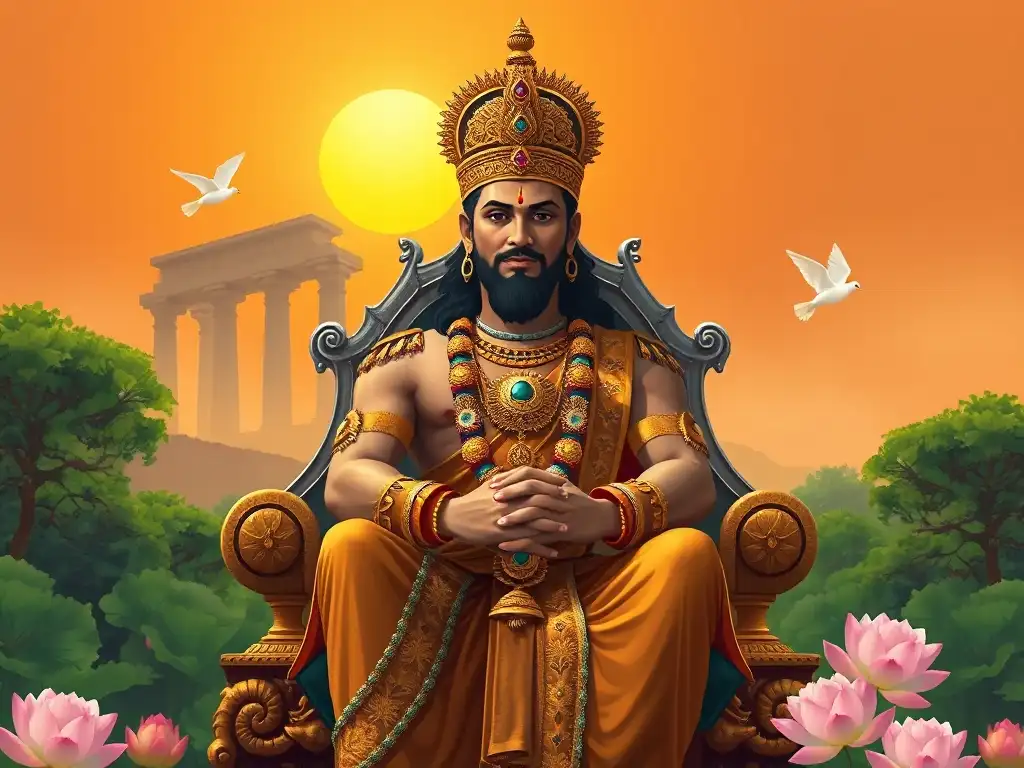
The Mauryan Empire, established in 322 BCE by Chandragupta Maurya, marked a significant turning point in ancient Indian history. By the time Ashoka, the grandson of Chandragupta, ascended to the throne around 268 BCE, the empire had expanded to encompass a vast territory that included most of the Indian subcontinent. This expansion was not merely territorial; it also facilitated a rich exchange of culture, trade, and ideas that shaped the socio-political landscape of the time.
The Mauryan Empire is characterized by several key features:
- Centralized Administration: The empire was one of the first in ancient India to implement a centralized bureaucracy that allowed for efficient governance across its diverse territories.
- Economic Prosperity: The Mauryan Empire thrived economically, with extensive trade networks connecting it to regions as far as the Mediterranean. This economic foundation supported advancements in arts and sciences.
- Cultural Synthesis: The empire was a melting pot of various cultures, languages, and religions, fostering an environment where diverse traditions could coexist and flourish.
Ashoka's reign, which began after a series of military conquests, was pivotal in further solidifying the empire's influence across the region. His administration focused on welfare and public works, promoting infrastructure development, including roads, hospitals, and schools. This commitment to public welfare not only enhanced the quality of life for his subjects but also reinforced the empire's stability and unity.
Ashoka's Conversion to Buddhism and Its Significance
Ashoka's conversion to Buddhism around 260 BCE was a transformative moment, both for him personally and for the empire he governed. Following the bloody Kalinga War, which resulted in significant loss of life and suffering, Ashoka underwent a profound change of heart. His embrace of Buddhist principles marked a departure from the violent conquests that characterized his early reign and set the stage for a new approach to governance.
The significance of Ashoka's conversion can be outlined as follows:
- Promotion of Non-Violence: Ashoka adopted the principle of ahimsa, or non-violence, as a cornerstone of his rule. This commitment influenced not only his policies but also the broader societal norms within the empire, promoting peace and coexistence among diverse populations.
- Spread of Buddhism: Under Ashoka's patronage, Buddhism flourished. He commissioned the construction of stupas and monasteries, sent missionaries to various regions (including Sri Lanka and Central Asia), and played a critical role in establishing Buddhism as a major world religion.
- Edicts of Ashoka: The edicts inscribed on pillars and rocks throughout the empire serve as a testament to his policies and philosophies. These edicts emphasized moral governance, ethical conduct, and the importance of compassion, reflecting his belief in the moral responsibility of rulers.
Ashoka's legacy in modern society can be seen in the continued relevance of his teachings on peace, tolerance, and ethical governance. His life and reign offer valuable lessons for contemporary leaders and societies striving for harmony and understanding amidst diversity.
Key Elements of Ashoka's Legacy

Ashoka the Great, the third Mauryan emperor, is widely recognized for his significant contributions to the formation of a unified Indian state and the promotion of Buddhist philosophy. His legacy is characterized by several key elements that continue to resonate in modern society. These elements include the edicts he promulgated, his advocacy for non-violence and tolerance, and his commitment to the welfare of his subjects. Understanding these components allows us to appreciate how Ashoka’s legacy in modern society remains influential and pertinent.
The Edicts of Ashoka and Their Modern Relevance
The Edicts of Ashoka are a series of inscriptions on pillars, rocks, and caves across the Indian subcontinent, dating back to the 3rd century BCE. These edicts communicate Ashoka’s policies and moral directives, reflecting his transformation after the Kalinga War, which spurred him to adopt Buddhism.
Key Features of the Edicts:
- Moral and Ethical Guidelines: The edicts emphasize principles such as honesty, compassion, and respect for all life. They serve as a moral compass that can guide contemporary ethical discussions.
- Promotion of Dharma: Ashoka’s concept of Dharma, or righteous living, advocates for social justice and ethical governance, which is increasingly relevant in today’s political climate.
- Universal Values: The edicts promote peace, tolerance, and coexistence among diverse communities, which aligns with modern principles of human rights and social harmony.
Modern Applications:
- In contemporary governance, the edicts inspire leaders to adopt policies that prioritize ethical conduct and social welfare.
- Organizations focused on peacebuilding often reference Ashoka’s ideals to promote dialogue and understanding among conflicting groups.
Principles of Non-Violence and Tolerance in Today’s World
Ashoka's commitment to non-violence (Ahimsa) and tolerance is perhaps one of his most enduring legacies. Following the Kalinga War, he renounced violence and sought to spread the message of peace through Buddhism.
Non-Violence as a Core Principle:
- Influence on Global Figures: Ashoka’s principles of non-violence significantly influenced leaders such as Mahatma Gandhi, who adopted similar philosophies in their quests for justice and social change.
- Conflict Resolution: In modern society, non-violence serves as a powerful tool for resolving conflicts, encouraging dialogue over hostility.
Promoting Tolerance:
- The emphasis on tolerance in Ashoka’s edicts encourages respect for diverse beliefs and practices, which is crucial in today’s multicultural societies.
- Educational initiatives that promote intercultural understanding can draw parallels with Ashoka’s teachings, fostering environments of inclusivity and acceptance.
Promotion of Welfare and Public Good
Ashoka’s dedication to the welfare of his subjects is evident in his policies aimed at enhancing public good. His reign marked a significant shift towards governance that prioritized the needs of the populace.
Welfare Initiatives:
- Public Infrastructure: Ashoka invested in building hospitals, wells, and rest houses, which served the common people and highlighted the responsibility of rulers to their subjects.
- Agricultural Development: He implemented policies to improve agricultural practices, ensuring food security and economic stability for his kingdom.
Relevance Today:
- Modern governance models can learn from Ashoka's focus on welfare, emphasizing the importance of social services and public infrastructure in improving citizens' quality of life.
- Non-governmental organizations (NGOs) often draw from Ashoka’s principles to advocate for social justice and community development, mirroring his commitment to the welfare of all.
Ashoka's legacy in modern society transcends time, offering valuable lessons in ethics, governance, and social responsibility. His enduring principles continue to inspire leaders and citizens alike, promoting a vision of a more just and compassionate world.
Ashoka's Legacy in Modern Society
Influence on Contemporary Political Thought
Ashoka the Great, the third Mauryan emperor, is often regarded as a pioneer of enlightened governance. His commitment to the principles of Dhamma—a moral code that emphasized non-violence, tolerance, and social welfare—has left a profound imprint on contemporary political thought. Ashoka’s edicts, inscribed on pillars and rocks throughout his empire, serve as early examples of promoting ethical governance and civic responsibility.
- Non-Violence in Politics: Ashoka's transformation after the Kalinga War led him to advocate for non-violence (Ahimsa) not only in personal conduct but also in statecraft. His policies encourage modern politicians to seek diplomatic solutions over military ones. This commitment is echoed in the work of contemporary leaders such as Mahatma Gandhi, who drew heavily on Ashoka's principles.
- Inclusive Governance: The idea of governance that includes diverse voices resonates in today’s democratic societies. Ashoka’s edicts called for respect for all religions and cultures, which is a cornerstone of pluralistic societies today. His approach serves as a model for inclusive policies that aim to ensure representation for minorities and promote societal harmony.
- Ethical Leadership: Ashoka’s legacy also emphasizes the role of ethics in leadership. Modern political theorists often cite Ashoka as an example of how leaders can create policies rooted in compassion and justice, inspiring movements that seek to hold leaders accountable to ethical standards.
Ashoka's Impact on Modern Buddhism and Spirituality
The spread of Buddhism during and after Ashoka’s reign had a lasting impact on spiritual practices and philosophical thought across Asia. Today, Ashoka’s influence is evident in various aspects of modern Buddhism and spirituality.
- Promotion of Buddhism: Ashoka’s patronage of Buddhism facilitated its spread throughout the Indian subcontinent and beyond. This expansion laid the groundwork for Buddhist teachings that focus on compassion, mindfulness, and ethical living. Many contemporary spiritual movements draw from these core teachings, advocating for inner peace and social harmony.
- Interfaith Dialogue: Ashoka’s edicts emphasized respect for all religions, fostering an environment of tolerance and dialogue. In modern spirituality, this principle is crucial as various faiths engage in interfaith discussions to promote understanding and coexistence. His legacy encourages individuals to seek common ground, bridging divides between different religious communities.
- Mindfulness Practices: The principles of mindfulness and meditation, which are integral to contemporary spiritual practices, can trace their roots back to the teachings that flourished under Ashoka’s reign. Modern wellness movements incorporate elements of these ancient practices, promoting mental well-being and holistic health.
Ashoka’s commitment to social justice and welfare has inspired numerous movements that advocate for human rights and equity in modern society. His policies sought to address the needs of the marginalized, making him an enduring symbol for social reform.
- Advocacy for the Underprivileged: Ashoka’s concern for the welfare of all citizens, particularly the marginalized, resonates with today’s social justice movements. Activists often reference his edicts that emphasize the importance of caring for the poor and ensuring access to resources, echoing calls for equity in contemporary societies.
- Environmental Consciousness: Ashoka’s respect for nature and wildlife is manifested in his policies promoting environmental conservation. This awareness is mirrored in today’s movements advocating for sustainable practices and environmental justice. The principles he championed encourage modern society to consider the impact of actions on future generations.
- Non-Discrimination: Ashoka’s emphasis on tolerance and respect for diversity informs contemporary campaigns against discrimination. His legacy serves as a rallying point for movements advocating for the rights of marginalized communities, emphasizing that justice and equality are fundamental to a harmonious society.
Ashoka's legacy in modern society is profoundly influential across various domains, shaping contemporary political thought, spiritual practices, and social justice movements. His ideals continue to inspire leaders and individuals striving for a more just and compassionate world.
Case Studies of Ashoka's Influence Today
Examples of Non-Violent Activism Inspired by Ashoka
Ashoka the Great's commitment to non-violence and compassion has inspired numerous activists and movements across the globe. His principles resonate particularly in the realm of non-violent activism, serving as a guiding light for those advocating for social change without resorting to violence.
Several contemporary movements can be traced back to Ashoka's teachings:
- Mahatma Gandhi's Movement: Gandhi, a pivotal figure in the Indian independence movement, frequently referenced Ashoka's principles. His approach to civil disobedience was deeply influenced by Ashoka's commitment to non-violence, emphasizing that "an eye for an eye only ends up making the whole world blind."
- Martin Luther King Jr.: The American civil rights leader also drew inspiration from Ashoka's philosophy. King's commitment to non-violent protest and civil rights was a testament to the enduring influence of Ashoka's legacy.
- Modern Peace Movements: Organizations such as the Nonviolent Peaceforce continue to advocate for peaceful conflict resolution, echoing Ashoka's belief in dialogue and understanding as tools for resolving disputes.
By studying these examples, it becomes clear that Ashoka's legacy is not just a relic of the past; it is a living philosophy that shapes contemporary social movements and ideologies around the world.
Global Leaders Who Embrace Ashoka's Principles
The legacy of Ashoka has transcended geography and time, influencing leaders across various nations who prioritize peace and ethical governance. Here are notable examples:
- Angela Merkel: Former German Chancellor Merkel has often emphasized the importance of dialogue in international relations, aligning her approach with Ashoka's values of understanding and compassion.
- Nelson Mandela: The late South African president and anti-apartheid revolutionary adopted a philosophy of forgiveness and reconciliation, reminiscent of Ashoka's efforts to unify his empire after the Kalinga War.
- Aung San Suu Kyi: The Burmese leader, despite facing her own controversies, has referenced Ashoka's principles of non-violence and peace during her campaigns for democracy in Myanmar.
These leaders, in various contexts, have demonstrated that Ashoka's ideas about governance, ethics, and human rights remain relevant and applicable in addressing modern challenges.
Cultural References to Ashoka in Modern Literature and Media
Ashoka's legacy continues to be a source of inspiration in contemporary literature, film, and media, reflecting his enduring impact on cultural narratives.
- Literature: Several authors have drawn upon Ashoka's life and philosophy in their works. For instance, the historical novel Ashoka: The Search for the Lost Emperor by [Author Name Pending] explores the complexities of Ashoka's reign and his transformation into a proponent of peace.
- Television and Film: The Indian television series Chakravartin Ashoka Samrat dramatizes Ashoka's life, highlighting his journey from a warrior to a benevolent ruler. Such portrayals help modern audiences connect with Ashoka's ideals.
- Art and Music: Various artists and musicians have created works that celebrate Ashoka's legacy, using his image and philosophies to promote messages of peace and harmony.
These cultural references serve not only to educate but also to inspire new generations to reflect on the values that Ashoka embodied, reinforcing his relevance in today’s society.
Ashoka's legacy in modern society is evident through the non-violent activism inspired by his principles, the embrace of his ideas by global leaders, and the continuous cultural references that keep his teachings alive. The values he championed—compassion, dialogue, and ethical governance—remain crucial in addressing the complexities of contemporary life.
Challenges in Upholding Ashoka’s Legacy
Ashoka the Great, renowned for his promotion of Dharma and non-violence, left a profound impact on the moral and ethical framework of society. However, his legacy faces several challenges in the modern context. These challenges stem from misinterpretations of his teachings and the difficulty of applying non-violence in a world rife with conflict.
Misinterpretations of Ashoka’s Teachings
Ashoka's teachings, primarily derived from his edicts and the principles of Buddhism, advocate for compassion, tolerance, and moral conduct. Yet, these teachings are often misinterpreted or oversimplified.
-
Overemphasis on Non-Violence:
Many view Ashoka's commitment to non-violence as a rejection of all forms of aggression, disregarding the nuances of his philosophy. While Ashoka emphasized ahimsa (non-harm), he also recognized the complexities of human interactions and the need for justice. This narrow interpretation can lead to a passive approach to conflict resolution, potentially allowing injustices to persist.
-
Cultural Context Ignored:
Ashoka's edicts were crafted within a specific historical and cultural milieu. Modern interpretations may overlook this context, leading to anachronistic applications of his teachings. For example, the call for tolerance in a multi-religious society must consider the dynamics of contemporary pluralism, which differ markedly from those in Ashoka's time.
-
Political Manipulation:
In various political contexts, Ashoka's image has been co-opted to bolster nationalistic narratives or justify state actions. This manipulation undermines the essence of his teachings, which are fundamentally about moral governance and social responsibility. As a result, the true spirit of Ashoka's legacy can become obscured by political agendas.
-
Simplistic Messaging:
The proliferation of simplified messages about Ashoka's life and teachings, often through media and educational curricula, tends to reduce the complexity of his ideas to mere slogans. This simplification can lead to a superficial understanding of ethical principles, failing to engage deeper philosophical discussions that are essential for genuine moral growth.
The Struggle for Non-Violence in a Conflict-Ridden World
In a world increasingly characterized by violence and conflict, Ashoka's commitment to non-violence presents significant challenges.
-
Escalating Global Conflicts:
The rise of terrorism, civil wars, and geopolitical tensions creates an environment where advocating for non-violence can seem impractical. Ashoka’s principles call for conflict resolution through dialogue and understanding, but such approaches can be difficult to implement in situations where parties are entrenched in hostility.
-
Societal Disconnect:
Modern societies often grapple with disconnection from the values of empathy and compassion. The fast-paced, individualistic nature of contemporary life can lead to a lack of communal responsibility, making it harder to embody Ashoka’s ideals. As people become more self-focused, the collective pursuit of peace and understanding diminishes.
-
Education and Awareness:
There is a pressing need for educational initiatives that convey the depth of Ashoka’s teachings on non-violence. Without a comprehensive understanding of his philosophy, individuals may struggle to apply these principles effectively in their lives. Educational frameworks that integrate Ashoka's teachings into modern ethical discussions could help bridge this gap.
-
Role of Technology:
The digital age presents both challenges and opportunities for promoting non-violence. Social media can amplify conflicts and spread misinformation, often exacerbating tensions. Conversely, it also provides a platform for dialogue and the sharing of peaceful messages. The challenge lies in harnessing technology to promote Ashoka’s vision of non-violence while mitigating its potential for harm.
While Ashoka’s legacy remains relevant, the challenges of misinterpretation and the struggle for non-violence in a conflict-ridden world necessitate a deeper engagement with his teachings. By addressing these challenges, society can better uphold and embody the principles that Ashoka championed.
Conclusion

Reflection on the Enduring Nature of Ashoka's Legacy
Ashoka the Great, often hailed as one of India's most influential emperors, left behind a legacy that transcends time and geography. His reign marked a pivotal transition from a period of conquest to one of peace and moral governance. The principles he espoused—non-violence (ahimsa), tolerance, and respect for all beings—continue to resonate in contemporary society.
Today, Ashoka's legacy in modern society is evident in various realms, from international diplomacy to grassroots movements advocating for social justice. The Edicts of Ashoka, inscribed on pillars and rocks throughout his empire, serve as early examples of human rights advocacy, emphasizing ethical behavior and community welfare. These edicts have inspired countless leaders and thinkers, reinforcing the idea that governance should prioritize the well-being of citizens rather than mere territorial expansion.
Moreover, Ashoka's emphasis on Buddhism as a guiding philosophy has contributed to a rich tapestry of cultural and spiritual practices that thrive today. This influence is particularly notable in regions beyond India, such as Southeast Asia, where Buddhism has shaped societal values and norms.
As we reflect on Ashoka's impact, it becomes clear that his vision of a just and compassionate society is more relevant than ever. In an increasingly polarized world, the values championed by Ashoka can guide us toward more harmonious coexistence and collective progress.
Call to Action: Embracing Ashoka's Principles in Daily Life
Incorporating Ashoka's principles into our daily lives is not only a tribute to his legacy but also a path toward personal and societal transformation. Here are some actionable steps you can take:
- Practice Non-violence: Strive to resolve conflicts peacefully, whether in personal relationships or community interactions. This could involve active listening, empathy, and seeking common ground.
- Promote Tolerance: Embrace diversity by learning about different cultures and beliefs. Engage in dialogues that foster understanding and respect for others' viewpoints.
- Advocate for Social Justice: Get involved in local initiatives aimed at improving community welfare. This could include volunteering, supporting ethical businesses, or participating in advocacy campaigns.
- Encourage Sustainability: Reflecting Ashoka's emphasis on environmental stewardship, adopt sustainable practices in your daily life—such as reducing waste, conserving resources, and supporting eco-friendly initiatives.
- Cultivate Mindfulness: Incorporate practices such as meditation or yoga into your routine, which can enhance your well-being and foster a sense of inner peace, akin to the serenity promoted by Ashoka’s teachings.
By embracing these principles, we can not only honor Ashoka's enduring legacy but also contribute to a more compassionate and enlightened society. Let us take these lessons to heart and actively work towards creating a world that reflects the ideals he championed.
Frequently Asked Questions
What was Ashoka's significance in ancient India?
Ashoka was the third ruler of the Maurya Dynasty and is known for spreading Buddhism and promoting non-violence through his edicts after the Kalinga War.
How did Ashoka's policies impact modern society?
His policies of tolerance, welfare, and environmental sustainability continue to influence contemporary governance and ethical practices in many societies today.
What are Ashoka's edicts and their relevance today?
Ashoka's edicts are inscriptions that communicate his moral principles and governance strategies, serving as a guide for ethical leadership and social justice in modern contexts.
In what ways does Ashoka's legacy manifest in modern culture?
Ashoka’s legacy is reflected in art, literature, and spiritual practice, inspiring movements that advocate for peace and social responsibility around the world.
How is Ashoka remembered in current educational systems?
Many educational curriculums include Ashoka's life and achievements to teach students about leadership, morality, and the importance of compassionate governance in society.
Final Reflection: The Enduring Legacy of Ashoka in Modern Society
Ashoka's legacy in modern society resonates profoundly in today's world, where the principles of compassion, non-violence, and ethical governance are more relevant than ever. As we navigate through complex global challenges, the teachings of Ashoka remind us that true leadership is not merely about power but about fostering peace and understanding among diverse communities. His commitment to the welfare of his people and the promotion of Dharma offers a timeless blueprint for contemporary leaders striving to create a more just and harmonious society.
Culture and social dynamics continue to be shaped by the values that Ashoka championed. His emphasis on tolerance and respect for all living beings has inspired movements for civil rights, environmental sustainability, and social justice across the globe. As we reflect on the impact of his reign, we can see how his vision of a unified society transcends borders and cultures. The greatest victory is the victory over oneself,
Ashoka once proclaimed, a sentiment that echoes in the hearts of those advocating for change today.
As we consider the lessons from Ashoka's life, I invite you to reflect on how you can embody these principles in your own life. What steps can you take to promote peace and understanding in your community? Whether through acts of kindness, advocacy for justice, or simply by fostering dialogue, each of us has the power to contribute to a legacy of compassion. Let us carry forward Ashoka's vision and strive to make a positive impact in our modern society, ensuring that his teachings continue to inspire future generations.
Embrace Ashoka’s Vision Today!
Thank you for taking the time to explore the enduring legacy of Ashoka! You've uncovered the wisdom of a ruler whose principles of peace and compassion are more relevant now than ever. As you reflect on his impactful reign, it's time to turn this inspiration into action.
- Start by practicing compassion in your daily interactions—small acts can lead to significant change.
- Join a local or online community focused on promoting peace and non-violence, and share Ashoka's teachings with others.
- Explore ways to advocate for social justice in your area, using Ashoka's legacy as a guiding principle.
What step will you take today to spread Ashoka’s message of peace in your community?