
The Battle of Plassey: The Dawn of British Colonialism in India

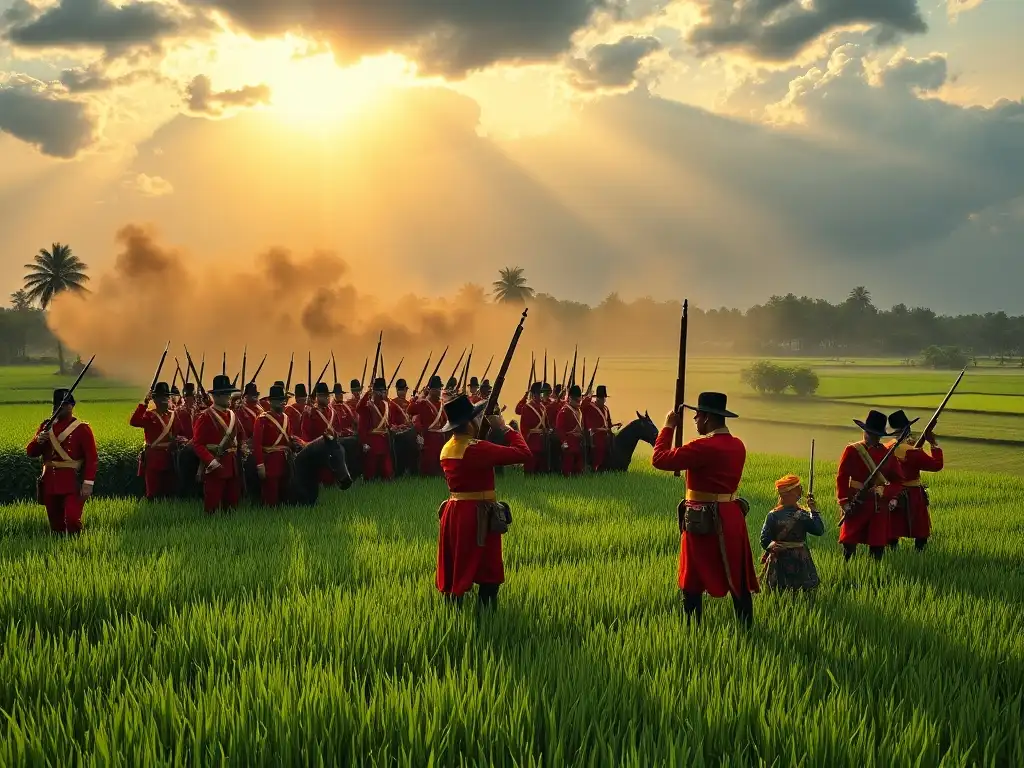
Welcome to Ancient India History, where we embark on a fascinating journey through the intricate tapestry of India's past. From the majestic cities of the Indus Valley to the profound achievements of the Gupta Empire, our exploration uncovers the rich cultural heritage and remarkable contributions of ancient Indian civilizations. In our featured article, "The Battle of Plassey: The Dawn of British Colonialism in India," we delve into the pivotal moments that shaped the subcontinent's destiny.
What led to this monumental clash, and how did it alter the course of Indian history forever? Join us as we unravel the stories behind the battles and the empires, igniting your curiosity about the past and its enduring impact on the present.
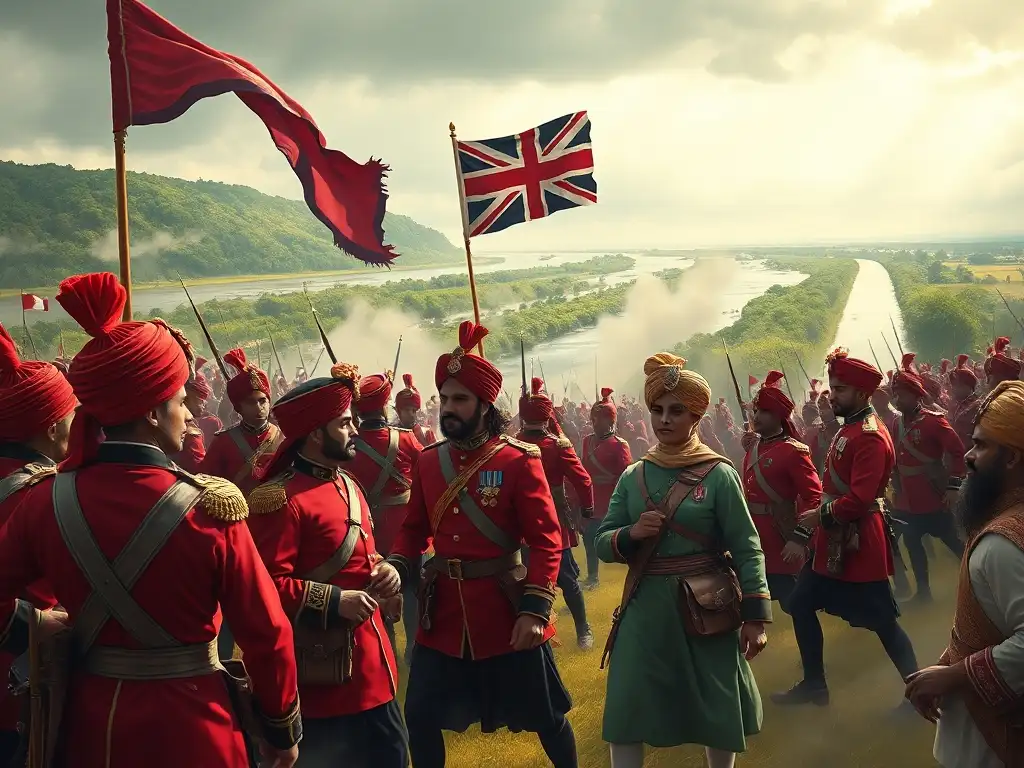
The Battle of Plassey, fought on June 23, 1757, stands as a pivotal moment in Indian history, marking the beginning of British colonialism in India. This battle not only altered the course of Indian politics but also set the stage for a prolonged period of British rule, which would have profound implications for the subcontinent's social, economic, and cultural fabric.
Understanding the dynamics of this battle requires examining the intricate historical context, the political landscape leading up to it, and the key figures involved. The relevance of the Battle of Plassey extends beyond military tactics; it symbolizes the intersection of local power struggles and foreign ambitions, ultimately reshaping India's destiny.
Introduction to the Battle of Plassey
The Battle of Plassey was not merely a military engagement but a confluence of strategic maneuvering, alliances, and betrayals. As the British East India Company sought to expand its influence in India, the battle emerged from the complex interplay of various regional powers. This conflict highlighted the vulnerabilities of Indian rulers and the opportunistic nature of colonial ambitions. The outcome of Plassey had far-reaching consequences, establishing a foundation for British dominance in India while simultaneously undermining indigenous governance.
Historical Context of British Colonialism in India
British colonialism in India evolved from trade interests to territorial control, driven by the desire for resources and strategic advantage. The roots of this expansion can be traced back to the early 17th century, when the British East India Company was established, primarily to compete with other European powers for trade in the lucrative markets of the Indian subcontinent.
- Key Developments Leading to Colonialism:
- The establishment of trading posts in key locations like Surat and Calcutta.
- The decline of Mughal power, which created a vacuum that the British could exploit.
- The rise of regional powers and their conflicts, which presented opportunities for intervention by foreign entities.
The Battle of Plassey was thus a significant turning point that marked the transition from commercial interests to direct political control, paving the way for the establishment of British rule in India.
Importance of the Battle in Indian History
The significance of the Battle of Plassey lies in its immediate and long-term effects on Indian society and governance.
- Immediate Effects:
- The British East India Company emerged victorious, leading to the establishment of British control over Bengal, a rich and populous province.
- The defeat of Siraj-ud-Daula, the Nawab of Bengal, marked the decline of regional powers and the rise of British authority.
- Long-term Consequences:
- The battle set a precedent for future British military and political interventions in India.
- It initiated a series of events that ultimately led to the establishment of British colonial rule across the entire Indian subcontinent.
- The economic exploitation that followed fundamentally transformed India's economy and society.
Prelude to the Battle
The lead-up to the Battle of Plassey was characterized by a complex web of alliances, rivalries, and geopolitical maneuvering that highlighted the fragility of the Indian political landscape at the time.
The Political Landscape of India Before Plassey
Before the battle, India was a mosaic of kingdoms and principalities, each vying for power and influence. The decline of the Mughal Empire created a power vacuum, allowing regional rulers to assert their autonomy and engage in conflicts.
- Key Characteristics:
- Fragmentation of power among various regional rulers, such as the Marathas, Sikhs, and Nawabs.
- Tensions between the British East India Company and local rulers, particularly over trade and territorial rights.
- The role of diplomacy and treachery in shaping alliances, as seen in the shifting loyalties leading up to the battle.
This chaotic political environment provided the British with opportunities to exploit rivalries and secure their foothold in India.
Key Players in the Conflict
Several key figures played crucial roles in the events leading to the Battle of Plassey, shaping its outcome and the future of British colonialism in India.
- Siraj-ud-Daula: The young Nawab of Bengal, who sought to assert his authority against both internal rivals and external threats, including the British.
- Robert Clive: A military officer of the British East India Company, whose strategic acumen and willingness to engage in political machinations were instrumental in the British victory.
- Mir Jafar: The Nawab's general, whose betrayal significantly altered the balance of power, ultimately aiding the British cause.
The interplay between these figures and their motivations set the stage for the historic battle that would change the trajectory of India forever.
The Battle of Plassey: Key Events
The Battle of Plassey, fought on June 23, 1757, was a significant turning point in Indian history, marking the beginning of British colonial dominance in India. This battle showcased not only military strategies but also political maneuvering, leading to the eventual establishment of British rule in the subcontinent. Here, we explore the key events leading up to the battle, the strategies employed by the British East India Company, the pivotal role of betrayal, and the aftermath that shaped India's future.
Timeline of Events Leading to the Battle
- Pre-1750s Tensions: The power struggle between the British East India Company and the French East India Company in India escalated during the mid-18th century. The British aimed to expand their influence over Bengal, a region rich in resources and economically vital.
- 1756: Siraj ud-Daula ascended to the throne of Bengal. Concerned about the growing influence of the British, he sought to curb their power, leading to tensions between his forces and the Company.
- Siege of Calcutta: In June 1756, Siraj ud-Daula captured Calcutta, leading to the infamous incident known as the "Black Hole of Calcutta," where British prisoners faced dire conditions.
- British Counteraction: In response to the siege, the British East India Company sought military assistance from the Nawab of Awadh and began to regroup their forces.
- Formation of Alliances: The British, led by Robert Clive, allied with discontented local rulers and officials, including Mir Jafar, who was dissatisfied with Siraj ud-Daula's rule.
- Battle Commencement: The battle commenced on June 23, 1757, with Clive’s forces facing Siraj ud-Daula’s troops at Plassey near the banks of the Bhagirathi River.
Strategies Employed by the British East India Company
The British East India Company employed several strategic maneuvers that contributed to their victory at the Battle of Plassey:
- Political Alliances: The British adeptly formed alliances with local leaders, particularly Mir Jafar, who was promised the Nawabship of Bengal in exchange for his support against Siraj ud-Daula.
- Intelligence and Espionage: The Company gathered intelligence on the movements and morale of Siraj ud-Daula's forces, allowing them to exploit weaknesses and plan their assault effectively.
- Superior Military Tactics: The British forces, although outnumbered, utilized disciplined formations and artillery, which were more advanced than those employed by Siraj ud-Daula.
- Psychological Warfare: The British instilled fear in the enemy ranks by showcasing their military readiness and the potential for betrayal among Siraj ud-Daula’s ranks, leading to a lack of confidence among his troops.
The Role of Betrayal in the Battle Outcome
Betrayal played a central role in the outcome of the Battle of Plassey. Mir Jafar, who was promised a position of power by the British, defected during the battle. His forces withheld their support from Siraj ud-Daula at a crucial moment, significantly weakening the Nawab's military position. This act of treachery not only facilitated the British victory but also highlighted the importance of local dynamics in the struggle for power. The betrayal by Mir Jafar ultimately sealed Siraj ud-Daula's fate, leading to his defeat and subsequent execution.
Aftermath of the Battle
The aftermath of the Battle of Plassey had profound implications for India and the trajectory of British colonialism, marking the start of a new era in Indian history.
Immediate Consequences for India
The immediate consequences of the battle were devastating for Indian sovereignty. Following their victory, the British East India Company installed Mir Jafar as the Nawab of Bengal, effectively making him a puppet ruler. This shift in power led to increased exploitation of Bengal's resources, including heavy taxation, resulting in widespread discontent and economic hardship for the local populace. The battle not only disrupted local governance but also set a precedent for British intervention in Indian affairs.
Establishment of British Rule in Bengal
The victory at Plassey laid the groundwork for the establishment of British rule in Bengal and, subsequently, all of India. The British East India Company expanded its control over Bengal, securing lucrative trade routes and establishing a strong foothold in the region. This consolidation of power allowed the Company to influence local politics and governance, leading to a systematic dismantling of traditional power structures and the establishment of British legal and administrative systems.
Long-term Impact on British Colonialism in India
The long-term impact of the Battle of Plassey on British colonialism in India was profound. It marked the beginning of a colonial regime that would last for nearly two centuries. The battle not only demonstrated the effectiveness of British military and political strategies but also instigated a series of conflicts and resistance movements across the Indian subcontinent.
The legacy of colonial rule, characterized by exploitation, cultural imperialism, and socio-economic changes, would shape the course of Indian history, leading to eventual struggles for independence in the 20th century. The Battle of Plassey thus stands as a pivotal moment in the narrative of British colonialism in India, initiating a complex interplay of power, resistance, and transformation that would define the subcontinent for generations.
The Legacy of the Battle of Plassey
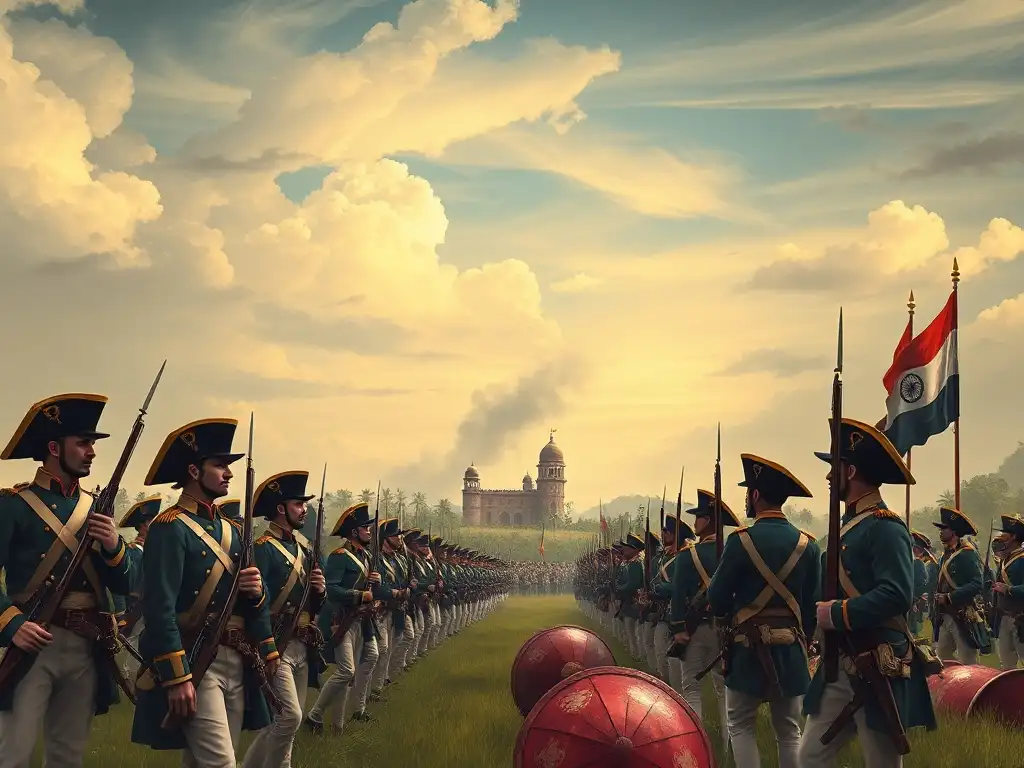
The Battle of Plassey, fought on June 23, 1757, is heralded as a pivotal moment in the history of British colonialism in India. This battle not only marked the beginning of the British East India Company's political dominance in India but also set the stage for the subsequent expansion of British rule across the subcontinent. The legacy of Plassey is multifaceted, influencing political, social, and economic dynamics in India, which would reverberate through subsequent generations.
The immediate aftermath of the battle established the British East India Company as a significant political power, fundamentally altering the traditional power structures in India. By defeating Siraj ud-Daulah, the Nawab of Bengal, the British gained control over one of the richest provinces in India, which served as a base for further territorial expansion. The victory also demonstrated the effectiveness of political intrigue and alliances, as the betrayal of key Indian leaders played a crucial role in the British triumph.
Furthermore, the Battle of Plassey represents a shift in warfare strategies in India, showcasing the impact of European military tactics on traditional Indian warfare. The incorporation of espionage and treachery into military strategy became a hallmark of British colonial warfare, which would be employed in various conflicts throughout their rule in India.
How Plassey Shaped British Colonial Policies
The outcome of the Battle of Plassey significantly influenced British colonial policies in India. The victory not only established the British East India Company as a formidable political entity but also prompted a series of legislative and administrative changes aimed at consolidating power. The Company began to implement policies that prioritized revenue generation, often at the expense of local agrarian communities.
One of the key policies that emerged from this period was the introduction of the Permanent Settlement of 1793, which formalized land revenue systems and solidified British control over land ownership. This policy transformed the agrarian landscape of India and created a class of landlords who were often more loyal to the British than to their own communities. Consequently, this led to widespread unrest and resentment among peasant classes, setting the stage for future resistance movements.
Additionally, the British began to view India through the lens of economic exploitation, leading to the extraction of resources and wealth that fueled the Industrial Revolution back in Britain. As such, Plassey marked the transition from a mercantile approach to a more systematic form of colonial governance, characterized by consolidation, control, and exploitation.
Influences on Future Conflicts and Resistance in India
The Battle of Plassey had profound implications for future conflicts and resistance movements in India. The early consolidation of British power and the subsequent policies enacted by the East India Company sowed the seeds of discontent among various Indian factions. The exploitation of resources, coupled with the imposition of foreign rule, inspired a multitude of uprisings and revolts.
Notable among these was the Indian Rebellion of 1857, often regarded as the first war of independence. The discontent that stemmed from policies initiated after Plassey fueled a sense of nationalism and resistance among various segments of Indian society. Leaders from different regions and backgrounds began to unite against British oppression, leading to a more organized and fervent struggle for independence.
Moreover, the legacy of Plassey can be traced in the organizational strategies adopted by resistance movements. The use of guerilla tactics, mobilization of local populations, and the establishment of alliances were all influenced by earlier encounters with British forces, including the strategies seen at Plassey.
Reflections on Colonialism and Its Effects on Indian Society
The Battle of Plassey not only marked the onset of British colonialism but also initiated a complex interplay of cultural, social, and economic changes within Indian society. The imposition of British rule led to significant transformations in various aspects of life, including education, governance, and social hierarchies.
The introduction of Western education systems began to create a new class of educated Indians who were exposed to new ideas about governance, rights, and individualism. This educated elite played a crucial role in the eventual push for independence, as they began to critique colonial practices and advocate for reform. However, the colonial rule also deepened social divisions, often exacerbating caste and communal tensions, leading to a fragmented society.
Economically, the extraction of resources and wealth shifted the traditional agrarian economy to one that primarily served British interests. This resulted in widespread poverty and economic hardship for many Indians, which would later contribute to collective movements against colonial rule. The reflective lens on colonialism reveals a complex legacy where both advancements and detrimental impacts coexisted, shaping the future trajectory of Indian society.
Conclusion: The Significance of the Battle in the Context of British Colonialism in India
The Battle of Plassey stands as a landmark event in the annals of Indian history, symbolizing the dawn of British colonialism in India. Its significance extends far beyond the battlefield, affecting various aspects of governance, society, and resistance. Understanding the far-reaching consequences of this battle is essential to grasp the complexities of British rule and its enduring impact on India.
Summary of the Battle's Impact on Indian History
The Battle of Plassey catalyzed a series of events that would redefine the political landscape of India. The British East India Company's victory not only facilitated their emergence as a dominant power but also altered the dynamics of governance and economic relations within the region. The legacy of Plassey is evident in the events that followed, as the battle ignited a chain reaction of resistance, reform, and ultimately a struggle for independence that would shape the course of Indian history.
Lessons Learned from the Battle of Plassey
The Battle of Plassey imparts several important lessons regarding the nature of power, alliance, and resistance. It highlights the significance of strategic planning and the impact of betrayal in political conflicts. Additionally, it serves as a reminder of how external forces can dramatically reshape local dynamics, leading to profound and often detrimental changes within societies.
Ultimately, Plassey illustrates the complexities of colonialism, revealing both the opportunities it presented and the challenges it imposed. The lessons learned from this battle continue to resonate in contemporary discussions around power, governance, and the legacy of colonialism in global contexts.
References and Further Reading
The Battle of Plassey, fought on June 23, 1757, was a pivotal moment in the history of British colonialism in India. To fully grasp the complexities of this battle and its aftermath, a wealth of resources is available for further exploration. Below are some suggested materials that provide deep insights into the historical context, key figures, and the broader implications of this critical event.
Suggested Books on British Colonialism in India
-
"The Great Game: The Struggle for Empire in Central Asia" by Peter Hopkirk
A captivating narrative that delves into the broader struggles for power in Central Asia and India, featuring the rise of British colonialism and its consequences.
-
"The Anarchy: The Relentless Rise of the East India Company" by William Dalrymple
This book provides an in-depth account of the East India Company's expansion in India, including the events leading up to the Battle of Plassey.
-
"India: A History" by John Keay
A comprehensive overview of Indian history that includes detailed accounts of the political landscape during the time of British colonialism.
-
"The British in India: A Social History of the Raj" by David Gilmour
Gilmour offers a detailed social history of British rule in India, providing context to the events surrounding the Battle of Plassey.
-
"Empire: The British Imperial Experience from 1765 to the Present" by Denis Judd
This book examines the impact of British imperialism, including the consequences of the Battle of Plassey on India's future.
Articles for Further Exploration of the Battle of Plassey
-
"The Battle of Plassey: A Turning Point in Indian History"
This article discusses the strategic significance of the battle and its role in establishing British dominance in India. It highlights key military strategies employed during the conflict.
-
"The Role of Mir Jafar in the Battle of Plassey"
An analysis of Mir Jafar's betrayal and how his actions at the Battle of Plassey influenced the course of British colonialism in India.
-
"Economic Consequences of the Battle of Plassey"
This article explores the economic ramifications following the battle, focusing on how British control affected trade and local economies in India.
-
"The Aftermath of the Battle of Plassey: A New Era in Indian Politics"
A detailed examination of the political changes in India that occurred post-battle, shedding light on the shift in power dynamics and governance.
-
"Colonial Narratives: The Battle of Plassey in Literature"
This article looks at how the Battle of Plassey has been represented in various literary works, reflecting the perceptions and interpretations of British colonialism in India.
These resources will deepen your understanding of the Battle of Plassey and the broader narrative of British colonialism in India, offering multiple perspectives on this transformative period in history.
- Introduction to the Battle of Plassey
- Prelude to the Battle
- The Battle of Plassey: Key Events
- Aftermath of the Battle
- The Legacy of the Battle of Plassey
- Conclusion: The Significance of the Battle in the Context of British Colonialism in India
- References and Further Reading
Frequently Asked Questions
What was the Battle of Plassey?
The Battle of Plassey, fought in 1757, marked a crucial turning point in Indian history, leading to the establishment of British colonial rule in India.
How did the Battle of Plassey influence British Colonialism in India?
The victory at Plassey allowed the British East India Company to gain significant control over Bengal, paving the way for wider British dominance across India.
Who were the key figures involved in the Battle of Plassey?
Key figures included Robert Clive, a British officer, and Mir Jafar, the Nawab of Bengal, whose betrayal played a pivotal role in the British victory.
What were the consequences of British Colonialism post-Plassey?
The aftermath of the battle led to economic exploitation, cultural changes, and significant political shifts that would shape India for centuries.
How is the Battle of Plassey viewed in modern India?
Today, the battle is seen as a symbol of colonial oppression and a reminder of the need for national unity and independence from foreign rule.
Final Reflection: The Legacy of British Colonialism in India
The Battle of Plassey stands as a pivotal moment in history, marking the beginning of British colonialism in India, which has shaped the subcontinent's socio-political landscape in profound ways. Today, as we navigate the complexities of globalization and cultural exchange, understanding the implications of this historical event is more crucial than ever. The ramifications of colonialism continue to resonate, influencing contemporary discussions around identity, power dynamics, and economic disparities.
Critical reflection on the impact of British colonialism reveals its enduring influence on India's cultural and social fabric. The legacy of Plassey is not merely a chapter in history; it is a lens through which we can examine the ongoing struggles for justice and equality in post-colonial societies. As historian Shashi Tharoor aptly stated, "> The British left behind a legacy of division and discord, which continues to affect the Indian subcontinent today." This observation underscores the importance of acknowledging our past to better understand our present and future.
As we contemplate the lessons from the Battle of Plassey and the broader narrative of British colonialism in India, I invite you to reflect on your own role in this ongoing story. Consider how the echoes of history shape your understanding of cultural identity and social responsibility. Engage with these themes not just as passive observers, but as active participants in the dialogue about our shared history and its implications for a more equitable future. Let us strive to learn from the past, fostering a deeper understanding that can guide us toward a more just and inclusive world.
Uncover the Legacy of Plassey—Take Action Today!
Thank you for diving into the fascinating world of the Battle of Plassey! We hope this exploration has illuminated how pivotal this event was in shaping Indian history and ushering in British colonialism. Now that you have a deeper understanding, it’s time to extend that knowledge and make a meaningful impact.
Here are a few actions you can take:
- Join a local history group or forum to discuss the implications of colonialism and its relevance in contemporary society.
- Share this article with friends and family to ignite conversations about history and its enduring lessons.
- Explore further — read about other significant battles in Indian history to enhance your perspective.
What new insights have you gained about the impact of the Battle of Plassey on modern India, and how can we apply these lessons from history in our lives today?