
The Role of Trade in Shaping Ancient India's Interactions with Neighboring Cultures

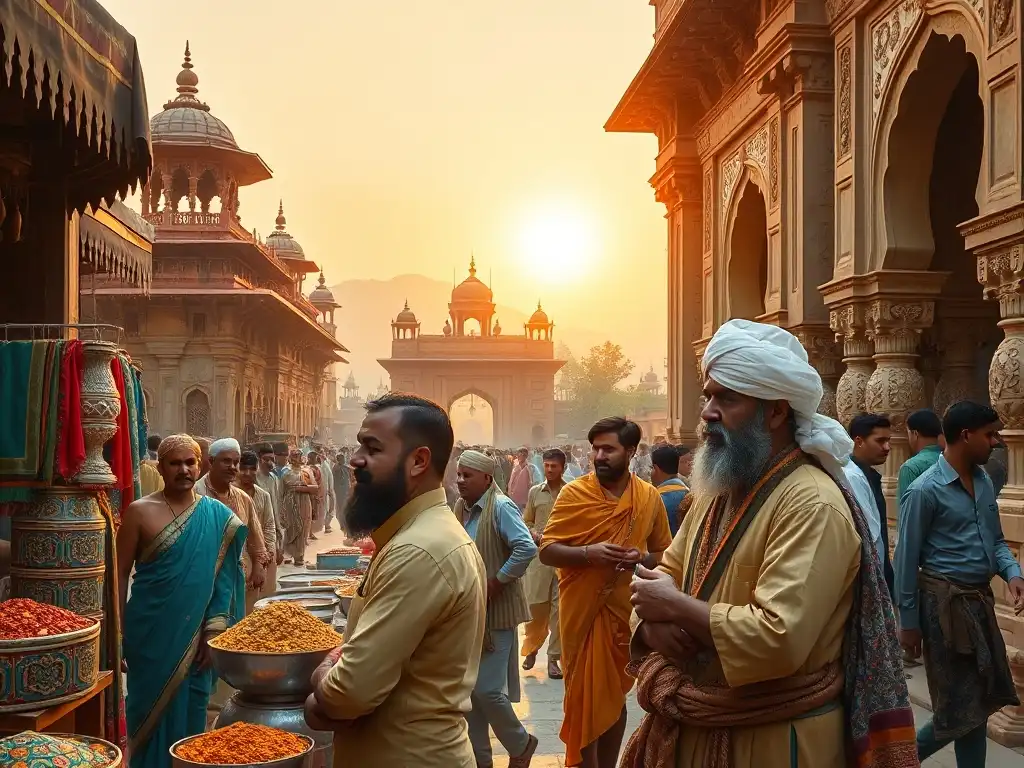
Welcome to Ancient India History, where we embark on a fascinating journey through the rich tapestry of ancient Indian civilizations. In this exploration, we shine a light on Ancient India's trade interactions, a vital thread that wove connections between diverse cultures and shaped the very fabric of society. Discover how trade not only facilitated the exchange of goods but also ideas, art, and innovations that influenced neighboring civilizations. Are you ready to unlock the secrets of ancient commerce and its profound impact on cultural exchanges? Dive deeper into our main article to uncover the intricate dynamics at play!
Introduction to Ancient India's Trade Interactions
Trade played a pivotal role in shaping the interactions of ancient India with neighboring cultures, significantly influencing its social, economic, and cultural landscape. From the bustling markets of the Indus Valley Civilization to the thriving trade hubs of the Gupta Empire, ancient India's trade interactions were characterized by a dynamic exchange of goods, ideas, and innovations.
These exchanges not only facilitated economic prosperity but also fostered cultural synergies that enriched the diverse tapestry of Indian civilization. By exploring the intricate web of trade connections that ancient India maintained with its neighbors, we gain valuable insights into how these interactions helped to forge a rich legacy that continues to resonate today.
Overview of Trade in Ancient India
The trade networks of ancient India were expansive and sophisticated, encompassing both land and maritime routes. At the heart of these trade interactions was the exchange of valuable commodities such as spices, textiles, precious stones, and metals. The emergence of urban centers, such as Mohenjo-Daro and Harappa, marked the beginning of organized trade practices, where merchants and traders played a vital role in facilitating the exchange of goods.
- Key commodities traded included:
- Spices (e.g., black pepper, cardamom)
- Textiles (e.g., silk, cotton)
- Gems and precious stones (e.g., diamonds, sapphires)
- Metals (e.g., gold, silver, copper)
The trade was not merely an economic venture; it also served as a conduit for the transfer of ideas, technology, and cultural practices. This exchange ultimately led to the enrichment of Indian culture and the establishment of a diverse society that was open to influences from various civilizations.
Importance of Trade in Cultural Exchanges
Trade in ancient India was crucial for cultural exchanges, enabling the flow of not just goods but also philosophies, religions, and artistic expressions. The interactions with neighboring cultures, such as the Persians, Greeks, and later the Arabs, facilitated a blend of traditions that shaped Indian society.
- Cultural impacts of trade included:
- The introduction of new religious beliefs (e.g., Buddhism and Jainism spreading through trade routes)
- The exchange of artistic styles and architectural influences
- The diversification of languages and literature through contact with traders from different regions
These interactions helped to create a rich cultural milieu that fostered innovation and cultural development, solidifying ancient India's status as a significant player on the world stage.
Key Trade Routes of Ancient India
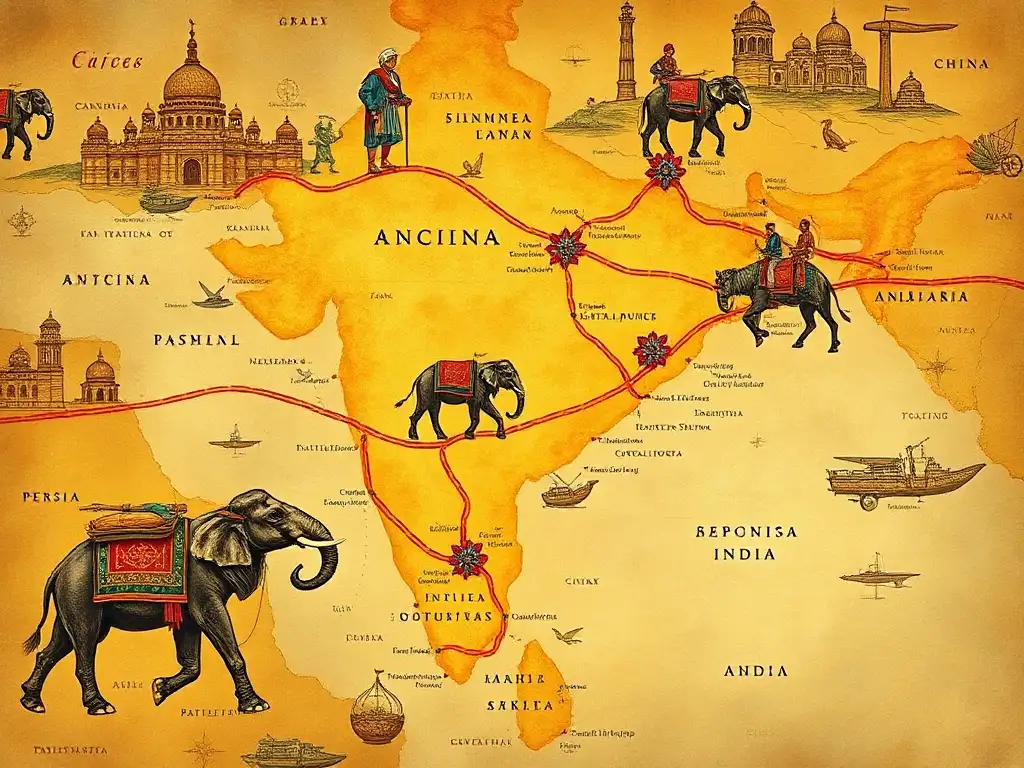
As ancient India thrived as a center of trade, several key routes emerged that connected it to various regions, facilitating the exchange of goods and cultural ideas.
Major Land Trade Routes
The land trade routes of ancient India were extensive, linking it to Central Asia, the Middle East, and beyond. The Silk Road, for instance, was a major artery that connected Indian traders with distant markets, allowing for the exchange of silk, spices, and other valuable goods.
- Notable land routes included:
- The Grand Trunk Road, which connected India to the northern regions and beyond.
- The Uttarapatha, facilitating trade with the Persian Empire and Central Asia.
These routes not only enhanced economic transactions but also served as pathways for cultural exchanges, allowing for the movement of people, ideas, and innovations.
Prominent Maritime Trade Routes
In addition to land routes, ancient India was well-connected through maritime trade, which played a significant role in facilitating interactions with distant civilizations. The Indian Ocean became a hub of commercial activity, where Indian merchants traded with countries in Southeast Asia, Africa, and the Arabian Peninsula.
- Key maritime routes included:
- The Arabian Sea route, connecting India to the Arabian Peninsula and East Africa.
- The Bay of Bengal route, linking India with Southeast Asian nations such as Indonesia and Vietnam.
These maritime connections not only enabled the exchange of goods but also facilitated the spread of cultural and religious ideas, significantly contributing to the rich tapestry of ancient Indian civilization.
Goods Traded in Ancient India
Trade in ancient India was a vital component of its economy and played a significant role in facilitating interactions with neighboring cultures. The vast geographical diversity of India contributed to a rich variety of goods that were both exported and imported. This intricate web of trade routes, which included land and maritime paths, connected India to regions as far as the Middle East, Africa, and Southeast Asia. The exchange of goods was not merely an economic transaction; it also led to the exchange of ideas, beliefs, and cultural practices, enriching the civilizations involved.
Exported Goods and Resources
Ancient India was renowned for a range of valuable exports that captured the interest of traders from various civilizations. Some of the key goods exported included:
- Spices: India was known as the "land of spices," with products like black pepper, cardamom, and cinnamon being highly sought after. These spices were prized not only for their culinary uses but also for their medicinal properties.
- Textiles: Indian textiles, especially cotton and silk, were well-regarded across the world. The intricate designs and vibrant colors made them a favorite in markets from the Mediterranean to East Asia.
- Jewelry and Precious Stones: India was a significant source of gemstones, such as diamonds, rubies, and emeralds. These items were crafted into exquisite jewelry, appealing to affluent buyers in distant lands.
- Metals and Minerals: The subcontinent was rich in various minerals, including iron, copper, and gold. These metals were used for making tools, weapons, and ornaments, which were valuable in trade.
These exports not only provided economic wealth but also fostered diplomatic relations and cultural exchanges with foreign traders.
Imported Goods and Cultural Influences
While ancient India was a prominent exporter, it was also a significant importer of various goods that influenced its culture and society. The key imported items included:
- Luxury Goods: Items such as silk from China and glassware from the Roman Empire were highly coveted in Indian markets. These luxuries reflected the social status of their owners and were often used in ceremonies and rituals.
- Cultural Ideas: Trade routes facilitated the exchange of philosophical and religious ideas. Indian traders and merchants came into contact with various cultures, leading to the introduction of foreign concepts, including Buddhism and later, Islam.
- Agricultural Products: Certain crops, such as sugarcane and new varieties of rice, were introduced through trade, enhancing agricultural practices and dietary diversity in India.
This influx of goods and ideas contributed to the rich tapestry of Indian culture and helped shape its social and religious landscape.
The Impact of Trade on Neighboring Cultures

The impact of ancient India's trade interactions extended well beyond mere economic benefits; it significantly influenced neighboring cultures in various regions. The connections forged through trade allowed for a two-way exchange of goods, ideas, and customs, enhancing regional ties.
Trade Interactions with Central Asia
Trade with Central Asia was marked by the exchange of goods such as horses, furs, and precious metals. The Silk Road played a crucial role in facilitating these interactions. Indian traders brought with them not only products but also cultural elements, such as art forms and religious practices. The influence of Buddhism spread to Central Asia as a result of these trade routes, establishing a cultural link that enriched both regions.
Influence of Trade on Southeast Asian Cultures
Southeast Asia was profoundly influenced by trade with ancient India. Indian merchants established trade links with the region, introducing not only spices and textiles but also significant cultural elements. The spread of Hinduism and Buddhism in Southeast Asia can be traced back to Indian traders who settled in places like Java and Sumatra. Temples, art, and architectural styles in these regions bear strong Indian influences, illustrating the depth of cultural exchange resulting from trade.
Links with the Middle East and Africa
Trade interactions with the Middle East and Africa were equally impactful, as Indian traders engaged in the exchange of spices, textiles, and precious stones for goods such as incense, ivory, and textiles from these regions. The maritime trade routes connecting India with the Arabian Peninsula facilitated the flow of cultural and technological exchanges. Indian numerals and mathematical concepts significantly influenced the development of mathematics in the Middle East, showcasing the reciprocal nature of these trade interactions.
Ancient India's trade interactions played a pivotal role in shaping its relationships with neighboring cultures, fostering a rich exchange of goods and ideas that left a lasting legacy on the civilizations involved.
Case Studies of Trade Interactions
Trade in ancient India was not merely an economic activity; it was a fundamental driver of cultural exchanges and interactions with neighboring civilizations. Various trade routes, both overland and maritime, facilitated the movement of goods, ideas, and technologies, significantly shaping the socio-political landscape of the region. Below, we explore key case studies that highlight the importance of trade interactions in ancient India.
The Role of the Silk Road in Ancient Indian Trade
The Silk Road served as a crucial overland trade route connecting India to Central Asia, the Middle East, and beyond. This network allowed for the exchange of a variety of goods, including silk, spices, precious stones, and textiles. Indian merchants played a pivotal role in this trade, often acting as intermediaries between the East and the West.
- Cultural Exchange: The Silk Road facilitated not just the exchange of goods but also ideas, art, and religion. Buddhism, for instance, spread from India to Central Asia and China through these trade routes, profoundly influencing cultures along the way.
- Economic Impact: The trade along the Silk Road contributed significantly to the wealth of Indian kingdoms, leading to the establishment of vibrant trading cities like Taxila and Peshawar. These cities became melting pots of culture and commerce, attracting traders from distant lands.
Maritime Trade with the Roman Empire
Ancient India's maritime trade with the Roman Empire was another significant aspect of its trade interactions. The Indian Ocean trade network connected Indian ports with Roman markets, allowing for the exchange of various commodities.
- Goods Exchanged: Indian exports included spices, textiles, and exotic goods, while Rome exported wine, glassware, and olive oil. This trade was vital for both economies, enhancing luxury consumption and stimulating local industries.
- Cultural Influences: Maritime trade also led to cultural exchanges, including the spread of religious ideas and artistic motifs between the two civilizations. Indian art influenced Roman decorative styles, while Roman architecture had a lasting impact on Indian temple designs.
The Socio-Economic Effects of Trade on Ancient Indian Society
The influence of trade extended beyond economic benefits; it also played a key role in shaping the social structure and cultural identity of ancient Indian society.
Economic Growth and Urbanization
Trade was a catalyst for economic growth and urbanization in ancient India. The wealth generated from trade allowed for the development of urban centers, which became hubs of commerce and cultural exchange.
- Urban Centers: Cities like Pataliputra and Ujjain emerged as major trading hubs, featuring advanced infrastructure and diverse populations. These urban centers facilitated not only trade but also the exchange of ideas, leading to advancements in science, literature, and philosophy.
- Agricultural Development: Increased trade also stimulated agricultural production, as surplus goods were exchanged for foreign commodities. This agricultural surplus supported larger populations and contributed to the rise of a complex society.
Social Stratification and Class Dynamics
The wealth generated from trade led to distinct social stratification in ancient Indian society, impacting class dynamics significantly.
- Merchant Class Emergence: A prosperous merchant class rose, gaining influence and wealth that often rivaled traditional aristocracy. This new class contributed to the economic power and political influence of trading cities.
- Caste and Trade: Trade also influenced the caste system; new occupational groups emerged, leading to the reconfiguration of social hierarchies. The interactions between different cultures resulted in a more fluid social structure, albeit within the constraints of the caste system.
Through these socio-economic transformations, trade interactions in ancient India not only shaped its economy but also redefined social relations and cultural identities, leaving a lasting legacy on the subcontinent's history.
Conclusion: Legacy of Ancient India's Trade Interactions
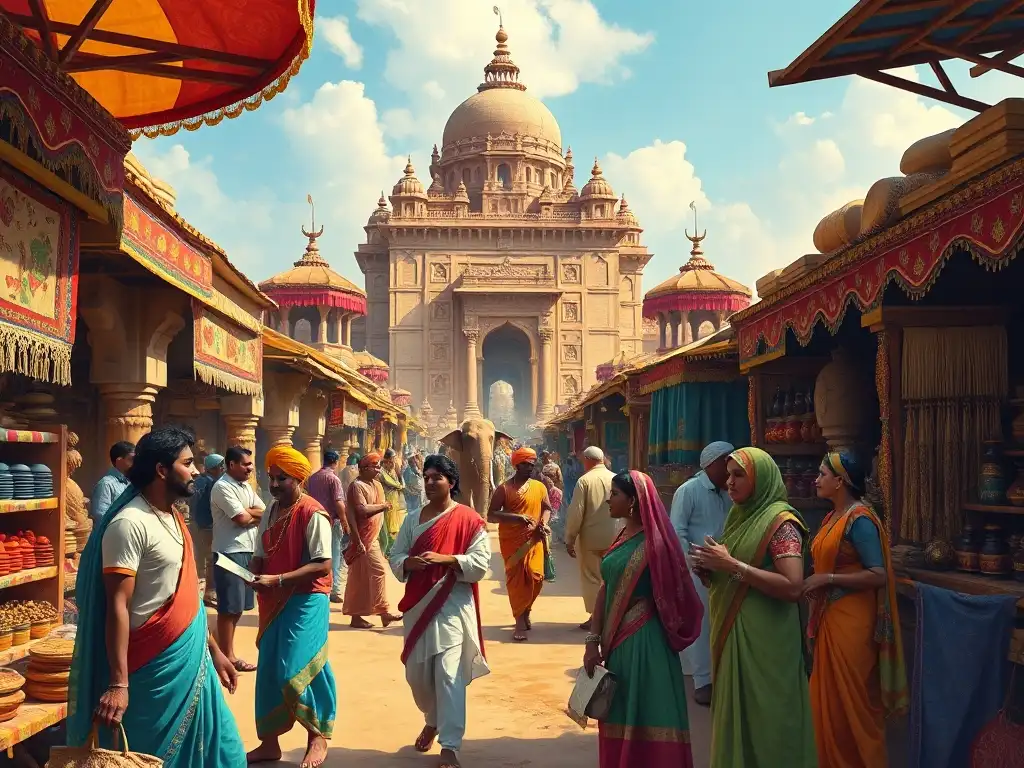
The trade interactions of ancient India laid a profound foundation for the cultural and economic exchanges that shaped not only the subcontinent but also the wider regions of Asia and beyond. The intricate networks established during various periods, from the Indus Valley Civilization to the Gupta Empire, facilitated not only the exchange of goods but also ideas, technologies, and cultural practices. These interactions contributed to India's role as a significant player in global trade, influencing various civilizations and creating a legacy that continues to resonate today.
The emphasis on trade routes, such as the Silk Road and maritime pathways, underscores the strategic importance of India in ancient global commerce. This connectivity fostered a sense of cosmopolitanism, enabling diverse cultures to intermingle and exchange their unique traditions. As a result, the rich tapestry of Indian culture, marked by a blend of influences from Persia, the Middle East, and Southeast Asia, can be traced back to these early trade interactions.
Lasting Impact on Modern Trade Practices
The historical trade practices of ancient India have left an indelible mark on contemporary trade methods. Modern trade dynamics can be observed in the way goods are exchanged across borders today, emphasizing the importance of strategic trade routes and the role of commerce in fostering international relationships. The principles of bartering, trade agreements, and the establishment of market towns that originated in ancient times are echoed in today’s global economy.
For instance, the concept of guilds, which emerged during ancient trade interactions, continues to influence business organizations and trade associations worldwide. Additionally, the emphasis on quality and craftsmanship, particularly in textiles and handicrafts, reflects the standards set by ancient Indian artisans and merchants. The trade interactions also sparked the development of maritime technologies and navigational skills, which are vital to modern shipping and logistics industries.
Preservation of Cultural Heritage through Trade
Trade in ancient India was not merely an economic activity but a vital conduit for cultural exchange and preservation. As merchants traversed various regions, they carried with them not only goods but also ideas, languages, and artistic expressions. This exchange was instrumental in preserving and enriching India's cultural heritage.
For example, the spread of Indian philosophies, religions, and art forms across Asia can be attributed to the interactions facilitated by trade. Buddhism, which originated in India, found its way to Southeast Asia primarily through trade routes, leading to the establishment of cultural and educational exchanges that enriched the local traditions and practices.
Furthermore, the trade of artifacts and manuscripts helped in the preservation of knowledge, as these items were transported and shared among different civilizations. The impact of this cultural exchange is evident in the architectural styles, religious practices, and even culinary traditions that emerged in regions influenced by ancient Indian traders. In essence, the legacy of ancient India's trade interactions is woven into the very fabric of cultural identity across various societies.
- Introduction to Ancient India's Trade Interactions
- Key Trade Routes of Ancient India
- Goods Traded in Ancient India
- The Impact of Trade on Neighboring Cultures
- Case Studies of Trade Interactions
- The Socio-Economic Effects of Trade on Ancient Indian Society
- Conclusion: Legacy of Ancient India's Trade Interactions
- Lasting Impact on Modern Trade Practices
- Preservation of Cultural Heritage through Trade
Frequently Asked Questions
What were the primary trade routes in ancient India?
Ancient India was connected by significant trade routes, including the Silk Road and maritime paths to Southeast Asia. These routes facilitated the exchange of goods and ideas, enhancing cultural interactions.
How did trade influence ancient Indian culture?
Trade introduced various cultural elements, including art, religion, and language, enriching ancient India's cultural tapestry. This interaction led to the blending of traditions with neighboring civilizations, like the Persians and Greeks.
What were some key commodities traded by ancient India?
Ancient Indian traders exported spices, textiles, gemstones, and metals, while importing goods like horses, ivory, and wine. These commodities played a crucial role in establishing economic relationships with other cultures.
How did trade impact the economy of ancient India?
Trade significantly boosted the economy of ancient India, creating wealth and promoting urbanization. It also contributed to the rise of influential merchant classes and the development of market towns.
What was the role of the Gupta Empire in trade?
The Gupta Empire marked a golden age in trade, enhancing internal and external commerce through improved infrastructure. This period saw an increase in trade with China, the Middle East, and Southeast Asia, strengthening India's global economic position.
Final Reflection: The Enduring Legacy of Ancient India's Trade Interactions
The intricate web of trade interactions that Ancient India established with neighboring cultures is not merely a historical footnote; it is a testament to the profound impact of commerce on cultural exchange and societal development. Today, as we navigate an increasingly globalized world, the lessons from Ancient India’s trade practices remind us of the importance of connectivity and mutual influence among diverse cultures. The ancient trade routes were not just conduits for goods; they were pathways for ideas, beliefs, and innovations that shaped civilizations.
The influence of Ancient India's trade interactions continues to resonate in our contemporary cultural landscape. From the spread of religions like Buddhism and Hinduism to the exchange of art and technology, these interactions laid the groundwork for a rich tapestry of cultural diversity. As historian Romila Thapar aptly noted, Trade was not merely an economic activity; it was a means of cultural exchange that shaped the identities of societies.
This observation highlights how the legacy of trade transcends mere transactions, fostering relationships that challenge and enrich our understanding of one another.
As we reflect on the significance of Ancient India's trade interactions, I invite you to consider how these historical lessons can be applied to our lives today. How can we foster connections across cultures in our own communities? Whether through supporting local artisans, engaging in cultural exchanges, or simply embracing the diversity around us, each action contributes to a broader narrative of interconnectedness. Let us carry forward the spirit of Ancient India's trade, recognizing that every interaction has the potential to build bridges and create a more harmonious world.
Unveil the Secrets of Ancient Trade!
Thank you for diving into the fascinating world of Ancient India's trade and its cultural connections. From the exchange of goods to the mingling of ideas, you’ve uncovered key insights into how trade shaped interactions with neighboring cultures. Now, it's time to take these revelations further!
Here are some actionable steps you can take to deepen your understanding and share this knowledge:
- Explore local museums to discover artifacts and exhibits related to ancient trade — you might find some hidden gems!
- Start a discussion with friends or online communities about how trade has influenced modern culture and society.
- Read deeper: Choose a book focused on historical trade routes and take notes on the aspects that resonate most with you.
What aspect of ancient trade intrigues you the most: the goods exchanged, the cultures that interacted, or its lasting impact on modern society? We’d love to hear your thoughts!