
The Evolution of Labor Systems from the Indus Valley to the Gupta Empire


Welcome to Ancient India History, where we embark on a fascinating journey through time to uncover the rich tapestry of India's past. In our featured article, we delve into the evolution of labor systems from the Indus Valley to the Gupta Empire, exploring the intricate frameworks that shaped daily life and society in ancient civilizations. What drove these systems, and how did they influence the lives of countless individuals?
Join us as we unravel the complexities of ancient Indian labor systems and discover how they laid the foundation for a remarkable cultural legacy. Your exploration begins here—dive deeper into the stories that shaped a civilization!

Introduction to Ancient Indian Labor Systems
The exploration of ancient Indian labor systems provides a profound insight into the intricate tapestry of social, economic, and cultural dynamics that shaped Indian civilization from the Indus Valley to the Gupta Empire. Labor systems, which encompass the organization of work, roles, and professions, reflect the values, innovations, and challenges faced by societies throughout history. By examining these systems, we can glean a deeper understanding of how ancient communities functioned, thrived, and adapted to changing circumstances. This article aims to unravel the complexities of labor systems in ancient India, highlighting their evolution and significance over time.
Overview of Labor Systems in Ancient India
Labor systems in ancient India were characterized by a diverse range of occupations that evolved in response to economic needs, technological advancements, and social structures. Key components of these systems included:
- Agricultural labor: Farming was the backbone of ancient Indian economies, with a majority of the population engaged in agriculture. Crops such as rice, wheat, and millet formed the staples of sustenance.
- Artisanal and craft work: Skilled artisans contributed to the economy through the production of textiles, pottery, metalwork, and other crafts. These professions were often passed down through generations and were vital for local and regional trade.
- Trade and commerce: As civilizations advanced, trade networks expanded, leading to the emergence of merchant classes that facilitated the exchange of goods across vast distances.
The interplay of these labor systems laid the groundwork for social hierarchies and economic structures that defined ancient Indian society.
Importance of Studying Labor Systems in Historical Context
Understanding ancient Indian labor systems is crucial for several reasons:
- Social structure insights: Labor roles often reflected broader social hierarchies, including caste dynamics that influenced access to professions and resources.
- Economic development: Analyzing labor systems reveals how ancient economies adapted to challenges, such as resource scarcity and technological changes.
- Cultural heritage: The contributions of various labor sectors highlight the rich cultural heritage of ancient India, showcasing the skills and innovations of its people.
By studying these systems, historians can piece together the daily lives of individuals and communities, providing a more comprehensive picture of ancient Indian society.
The Indus Valley Civilization: Foundations of Labor
Overview of the Indus Valley Civilization
The Indus Valley Civilization, which flourished around 2500 BCE in present-day Pakistan and northwest India, is one of the earliest urban societies in the world. Characterized by advanced city planning, sophisticated drainage systems, and a remarkable level of urbanization, this civilization laid the foundations for subsequent developments in ancient Indian society. The cities of Harappa and Mohenjo-Daro stand out as exemplars of this civilization, showcasing their architectural prowess and rich cultural life.
Key Features of Labor Systems in the Indus Valley
Labor systems in the Indus Valley were marked by several distinctive features:
- Specialization of labor: The presence of various crafts and trades indicates a significant level of specialization, with individuals focusing on specific skills such as bead-making, pottery, and metallurgy.
- Urban labor organization: The layout of cities suggests the existence of organized labor, with distinct areas designated for different trades and crafts.
- Agricultural practices: The civilization relied heavily on agriculture, supported by sophisticated irrigation techniques that allowed for increased productivity and sustained growth.
These key features not only highlight the economic foundations of the Indus Valley Civilization but also set the stage for the evolution of labor systems in later Indian societies.
The Vedic Period: Transition in Labor Systems
The Vedic Period, spanning from approximately 1500 BCE to 500 BCE, marked a significant transition in labor systems in ancient India. Following the decline of the Indus Valley Civilization, the Vedic society emerged with a new socio-economic structure that emphasized pastoralism and agriculture. The shift from urban centers to agrarian communities initiated changes in labor roles and organization.
With the introduction of Vedic texts, particularly the Rigveda, we see a reflection of the changing nature of work. The economy began to pivot towards agriculture, with evidence of farming practices, animal husbandry, and trade. This period also saw the emergence of specialized occupations, as communities began to engage in crafts, trade, and governance, laying the groundwork for a more complex economic environment.
Socio-Economic Changes during the Vedic Period
The socio-economic landscape during the Vedic Period underwent profound changes. The transition from a primarily nomadic lifestyle to settled agricultural communities led to the establishment of villages. This shift not only increased food production but also encouraged population growth and the diversification of occupations.
The Vedic society was predominantly agrarian, with the majority of the population engaged in farming. However, as villages developed, various trades and crafts emerged, including pottery, weaving, and metallurgy. The rise of trade routes facilitated commerce, leading to the growth of merchant classes. The socio-economic changes were further enhanced by the introduction of cattle as a form of wealth, which played a crucial role in trade and social status.
The Role of Varna System in Labor Organization
Integral to the labor organization during the Vedic Period was the Varna system, which classified society into four main categories: Brahmins (priests and scholars), Kshatriyas (warriors and rulers), Vaishyas (merchants and landowners), and Shudras (laborers and service providers). This hierarchical system dictated labor roles and responsibilities, establishing a framework for social order and economic production.
The Varna system ensured that each group contributed to the economy according to their skills and social status. Brahmins focused on religious and intellectual pursuits, while Kshatriyas engaged in governance and protection. Vaishyas handled trade and agriculture, and Shudras provided essential labor. Although the Varna system was initially flexible, over time it became more rigid, influencing labor organization and social mobility.
The Maurya Empire: Centralization and Labor
The Maurya Empire, which flourished from 322 BCE to 185 BCE, represents a significant phase in the evolution of labor systems in ancient India. Founded by Chandragupta Maurya, the empire was characterized by centralized governance and extensive administrative structures that profoundly impacted labor organization.
The Mauryan state played a crucial role in regulating economic activities, including agriculture, trade, and crafts. Under the reign of Ashoka, the empire expanded its influence and laid down policies that fostered economic stability and growth. The emphasis on infrastructure development, such as roads and irrigation systems, facilitated trade and improved agricultural productivity, further shaping the labor landscape.
Overview of the Maurya Empire
The Maurya Empire was one of the largest and most powerful empires in ancient India. It unified a vast region under a centralized administration, which was essential for managing diverse populations and economies. The empire's capital, Pataliputra, became a hub of political and economic activity, showcasing the importance of urban centers in labor dynamics.
During this period, there was a notable increase in agricultural productivity, largely due to state-led initiatives and technological advancements in farming techniques. The Mauryan economy was multifaceted, encompassing agriculture, trade, and artisan crafts. The state's involvement in economic affairs created a structured labor environment, where workers were organized into guilds and cooperatives, promoting collective labor practices.
The Role of State in Regulating Labor Systems
The Mauryan state played a pivotal role in regulating labor systems, establishing laws and policies that shaped economic interactions. The Arthashastra, attributed to Kautilya, outlines various administrative and economic strategies that governed labor relations. This treatise highlights the importance of state intervention in ensuring fair labor practices and protecting workers' rights.
The central government oversaw various aspects of economic life, including taxation, trade regulation, and labor organization. This oversight led to the establishment of a structured labor force, where artisans, farmers, and merchants operated within a framework designed to enhance productivity and economic stability. The state also promoted the importance of crafts and trades, fostering a culture of specialization and skill development that would set the foundation for future labor systems in ancient India.
The Gupta Empire: Flourishing of Labor Specializations

The Gupta Empire, often referred to as the Golden Age of India, witnessed a remarkable flourishing of labor specializations that significantly contributed to its prosperity and cultural achievements. This period, spanning roughly from the 4th to the 6th century CE, was characterized by advancements in various fields, including arts, science, and trade. The labor systems during this time evolved to support the burgeoning economy and the complex societal structure.
The Gupta rulers encouraged the emergence of specialized craftsmen, merchants, and agricultural laborers, allowing for a more refined and productive division of labor. This specialization not only enhanced the quality of goods produced but also fostered a vibrant marketplace where artisans and traders could thrive. The rise of guilds, known as "shrenis," became a key feature of this period, regulating trade practices, maintaining quality standards, and protecting the interests of their members.
Overview of the Gupta Empire
The Gupta Empire is celebrated for its extensive contributions to various domains of knowledge, including mathematics, astronomy, and literature. Founded by Sri Gupta, the empire reached its zenith under the rule of Chandragupta II and later, Kumaragupta I. It was during this time that India saw significant advancements in trade and commerce, leading to increased economic activities.
The social structure of the Gupta Empire was hierarchical yet flexible, allowing for mobility among different occupational groups. This flexibility was essential in accommodating the diverse skills and trades that emerged, thus enhancing the labor systems. The patronage of arts and education from the Gupta rulers further encouraged individuals to pursue specialized professions, leading to a well-organized labor force.
Expansion of Occupations and Trade
During the Gupta period, there was a notable expansion of occupations beyond traditional farming and craftsmanship. The empire’s strategic location along major trade routes facilitated trade with regions such as Southeast Asia, the Middle East, and even parts of Europe. This not only brought wealth to the empire but also introduced a variety of goods and ideas that enriched local cultures.
The rise of urban centers, such as Pataliputra, saw a complex interplay of various occupations. Merchants, traders, and artisans coexisted and collaborated, creating a dynamic economic environment. The development of banking systems and standardized currency further stimulated trade activities, allowing for greater participation from diverse labor groups. Such economic growth necessitated new roles, including accountants and market overseers, thereby broadening the labor spectrum.
Comparative Analysis of Labor Systems across Civilizations
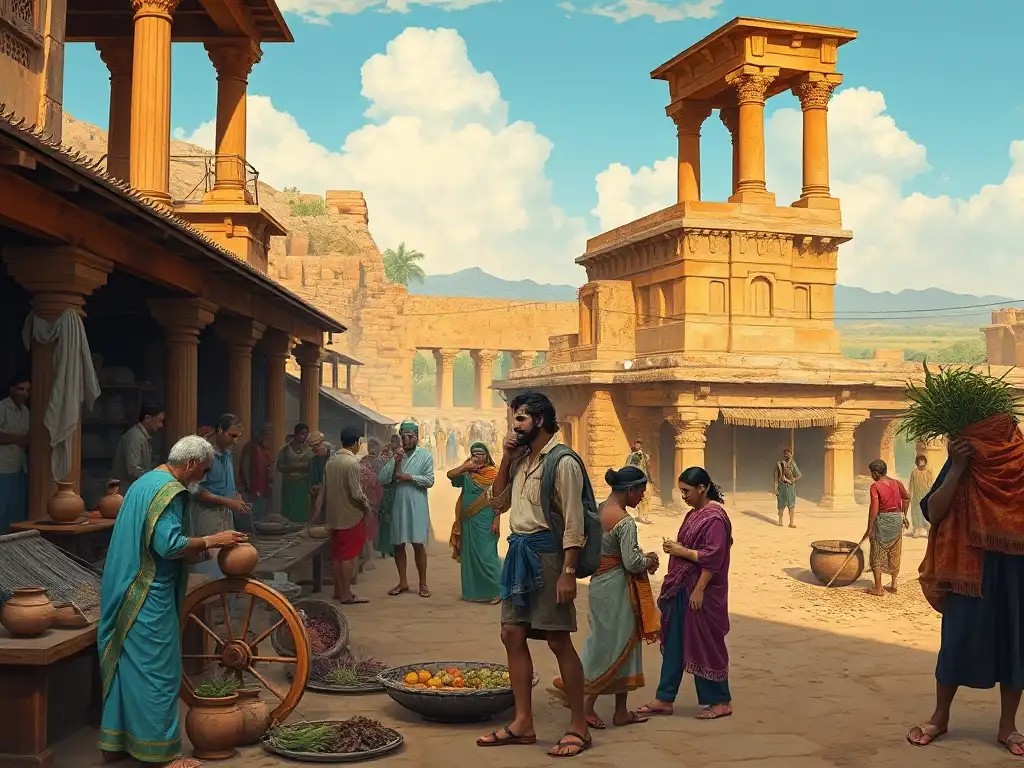
When examining the labor systems from the Indus Valley Civilization to the Gupta Empire, it is essential to identify both the similarities and differences that emerged over time. These comparisons reveal not only the evolution of labor practices but also the socio-economic factors that influenced them.
Similarities in Labor Practices between Different Periods
Across various ancient Indian civilizations, certain labor practices exhibited remarkable continuity. For instance, agriculture remained the cornerstone of the economy throughout these periods, with farmers forming the backbone of society. Similarly, the existence of specialized artisans and craftspeople can be traced from the Indus Valley, where intricate bead-making and pottery were prevalent, to the Gupta Empire, where specialized craftsmanship flourished.
Moreover, the role of guilds, which regulated various trades, can be observed across these civilizations. The shrenis of the Gupta period can be seen as a continuation of earlier trade associations, emphasizing the importance of collaboration and collective bargaining among workers.
Differences in Labor Management and Organization
Despite the similarities, significant differences in labor management and organization emerged over time. In the Indus Valley Civilization, labor was likely more communal and organized around kinship ties, with limited specialization. However, as societies evolved, especially during the Gupta Empire, labor became more formalized and hierarchical.
The Gupta period saw the rise of a more structured labor force, with formal guilds establishing regulations and standards for trades. This shift indicated a movement towards a more organized economic system, where labor was not only a means of survival but also a pathway to social mobility and economic prosperity.
The evolution of labor systems in ancient India reflects the dynamic nature of its civilizations, showcasing a progression from communal practices to a complex web of specialized occupations that contributed to the rich tapestry of Indian history.
The Legacy of Ancient Indian Labor Systems
The legacy of ancient Indian labor systems is profound and multifaceted, showcasing the evolution and complexity of work in a society driven by agriculture, trade, and craftsmanship. From the sophisticated urban planning of the Indus Valley Civilization to the diverse occupational roles in the Gupta Empire, these labor systems laid the groundwork for various economic and social structures that influenced not only the subcontinent but also the wider world.
Labor systems in ancient India were characterized by a division of labor that was often based on caste and guild systems. The Varna system categorized society into four major groups—Brahmins (priests), Kshatriyas (warriors), Vaishyas (merchants), and Shudras (laborers and service providers)—establishing a framework that dictated occupational roles. This hierarchical organization ensured that each group performed specific functions essential for societal stability and growth.
Moreover, the craftsmen and artisans of ancient India, particularly during the Mauryan and Gupta periods, were organized into guilds known as shrenis. These guilds not only regulated trade practices but also influenced the training and apprenticeship of new laborers. As a result, the knowledge and skills passed down through generations became vital to the economic fabric of ancient Indian society.
Impact on Later Indian Societies
The labor systems established in ancient India had a significant impact on subsequent societies, shaping economic practices and influencing social hierarchies. After the decline of the Gupta Empire, many of these labor systems persisted, albeit with modifications that reflected changing socio-political dynamics.
In the medieval period, the feudal system introduced new structures of land ownership and labor relations, yet the essence of caste-based labor remained prevalent. The integration of ancient occupational roles into emerging social frameworks demonstrated continuity amidst change. For instance, the artisanal skills developed during the Gupta era continued to thrive, contributing to the rich tapestry of Indian craftsmanship that characterized subsequent dynasties.
Furthermore, the trade networks established during ancient times laid the groundwork for later economic interactions, both domestically and internationally. The legacy of ancient labor systems can be observed in the way various communities and regions maintained their specialized crafts and trades, contributing to a vibrant economy that would endure through centuries.
Contributions to Modern Labor Concepts
The ancient Indian labor systems also provide insights into modern labor concepts, particularly in understanding economic organization, division of labor, and social stratification. The notion of guilds, for example, underscores the importance of collective bargaining and mutual support among workers, principles that resonate in contemporary labor unions.
Additionally, the caste system's role in defining occupational roles can be examined in the context of modern discussions about meritocracy and social mobility. While the rigid structures of ancient labor are not directly applicable today, they invite critical reflections on how societies allocate jobs and roles based on various factors, including social identity and economic status.
Moreover, the historical practice of apprenticeship within guilds informs current vocational training systems, emphasizing the importance of hands-on learning and mentorship in skill development. As labor markets evolve with technology and globalization, understanding these ancient systems can provide valuable lessons on adaptability and resilience in the face of change.
Conclusion: Understanding Ancient Indian Labor Systems
Summary of Key Points
The evolution of labor systems from the Indus Valley to the Gupta Empire reflects a rich tapestry of economic organization, social structure, and cultural practices. Major takeaways include:
- The division of labor based on caste and guild systems played a critical role in societal organization.
- Ancient labor systems influenced later Indian societies, with many practices persisting through time.
- The principles derived from these systems offer insights into modern labor dynamics, including collective organization and vocational training.
The Significance of Labor Systems in Ancient Indian Society
Understanding ancient Indian labor systems is crucial for appreciating the complexities of daily life in historical contexts. Labor was not merely a means of survival; it was intertwined with social identity, cultural practices, and economic strategies. The systems established during this era not only supported the immediate needs of communities but also laid the foundations for the social and economic structures that would shape the future of the Indian subcontinent.
By studying these labor systems, we gain a deeper understanding of how ancient Indian societies functioned and how their legacies still resonate in contemporary discussions around labor, identity, and economic development. The significance of these systems extends beyond history, offering valuable lessons that continue to inform our understanding of work and society today.
- Introduction to Ancient Indian Labor Systems
- The Indus Valley Civilization: Foundations of Labor
- The Vedic Period: Transition in Labor Systems
- The Maurya Empire: Centralization and Labor
- The Gupta Empire: Flourishing of Labor Specializations
- Overview of the Gupta Empire
- Expansion of Occupations and Trade
- Comparative Analysis of Labor Systems across Civilizations
- The Legacy of Ancient Indian Labor Systems
- Conclusion: Understanding Ancient Indian Labor Systems
- What were the main labor systems in ancient India?
- How did the Indus Valley civilization influence labor systems?
- What role did caste play in ancient Indian labor systems?
- How did labor systems change during the Gupta Empire?
- What are some contributions of ancient Indian labor systems to modern society?
Frequently Asked Questions
What were the main labor systems in ancient India?
Ancient Indian labor systems included agricultural labor, craftsmanship, and trade. These systems evolved significantly from the Indus Valley civilization to the Gupta Empire, reflecting changes in society and economy.
How did the Indus Valley civilization influence labor systems?
The Indus Valley civilization was known for its advanced urban planning and craft production. Its labor system included a mix of agriculture and specialized craftspeople, which laid the foundation for future labor practices in India.
What role did caste play in ancient Indian labor systems?
The caste system played a crucial role in defining labor roles in ancient India. It assigned individuals to specific occupations, often determining their social status and the type of work they could pursue.
How did labor systems change during the Gupta Empire?
During the Gupta Empire, labor systems became more organized with the rise of guilds and mercantile practices. This period saw an increase in trade and craft specialization, enhancing the economy and societal structure.
What are some contributions of ancient Indian labor systems to modern society?
Ancient Indian labor systems contributed to modern society through the development of trade routes, craft techniques, and agricultural practices. Their legacy can be seen in contemporary economic structures and cultural practices.
Final Reflection: The Enduring Legacy of Ancient Indian Labor Systems
The evolution of labor systems from the Indus Valley to the Gupta Empire underscores the profound impact of historical practices on contemporary society. As we navigate the complexities of modern labor dynamics, it becomes increasingly clear that understanding these ancient systems provides invaluable insights into our current economic and social frameworks. The intricate web of labor practices that emerged in ancient India not only shaped its civilization but also laid foundational principles that resonate in today’s workforce.
Cultural and social structures have been deeply influenced by these ancient labor systems, which continue to echo in our modern lives. The hierarchical organization of labor, the roles of artisans, and the significance of trade in ancient India reflect a sophisticated understanding of economic interdependence that is still relevant today. > “History is not a burden on the memory but an illumination of the soul.” This quote encapsulates the idea that by studying our past, we can better understand our present and shape our future.
As we reflect on the lessons learned from ancient Indian labor systems, I invite you to consider how these historical insights can inspire your own approach to work and collaboration. What can you take from the past to enhance your understanding of labor today? Embrace the opportunity to learn from history, allowing it to inform your actions and decisions in the modern world. By doing so, we honor the legacy of those who came before us and contribute to a more equitable and informed future.
Unveil the Rich Tapestry of Ancient Labor Systems!
Thank you for exploring the fascinating evolution of labor systems from the Indus Valley to the Gupta Empire! Your curiosity is crucial in understanding how these ancient societies shaped our modern world. Now, let's take this knowledge a step further and get involved!
Here are some ways you can dive deeper into this intriguing topic:
- Join a discussion in our community forum to share your thoughts and insights on labor systems in ancient civilizations.
- Explore related articles to uncover more about daily life and the economy in ancient India—there’s so much to learn!
- Share this article with friends and family who are passionate about history to spark engaging conversations.
What aspect of ancient labor systems intrigues you the most, and how do you think it has influenced our current work environments?