
The Use of Storytelling as a Teaching Tool in Ancient Indian Education

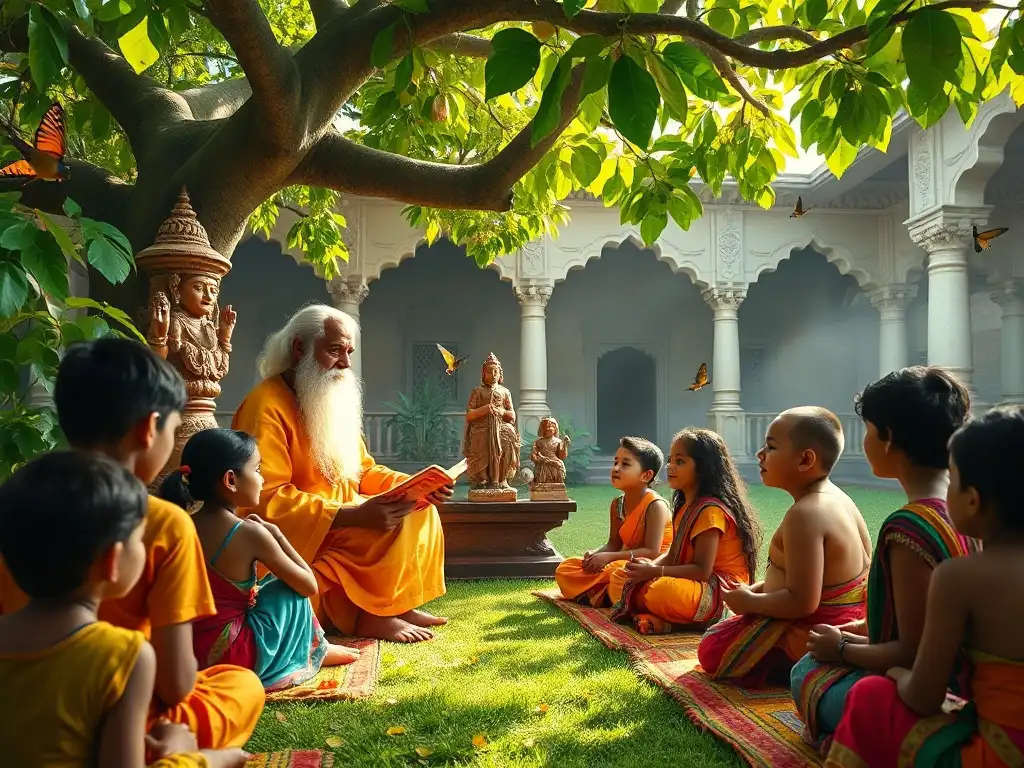
Welcome to Ancient India History, where we embark on a journey through time to uncover the rich tapestry of civilizations that shaped one of the world's oldest cultures. In this exploration, we delve into the fascinating realm of Ancient Indian storytelling education, a powerful teaching tool that not only imparted knowledge but also wove the moral fabric of society.
Discover how storytelling was intricately tied to the educational systems of the past and how these ancient narratives continue to resonate in today’s world. Prepare to be intrigued as we unravel the secrets behind this captivating method of learning, inviting you to dive deeper into the educational practices that have stood the test of time.
Introduction to Ancient Indian Storytelling Education
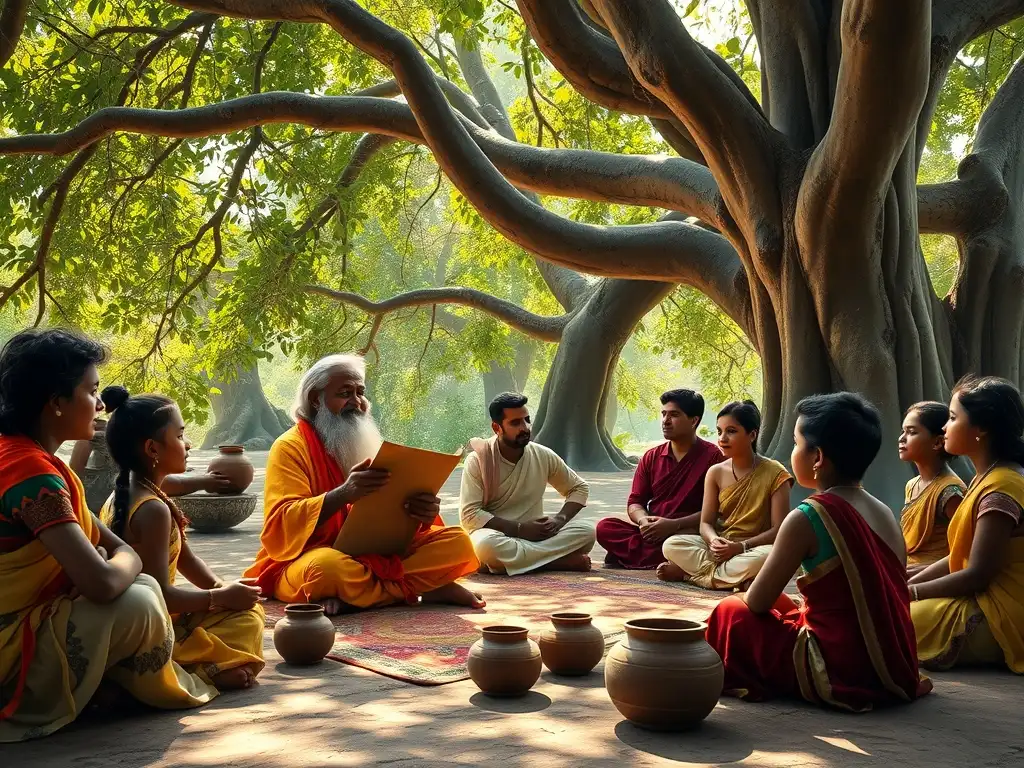
Storytelling has been an integral part of human culture for millennia, serving as a powerful medium for communication, learning, and preservation of knowledge. In the context of Ancient Indian education, storytelling transcended mere entertainment; it was a vital pedagogical tool that enriched the learning experience. Through the ages, ancient Indian storytellers, or “kathakars,” played a significant role in imparting wisdom, moral lessons, and cultural heritage to their audiences. This article explores the multifaceted dimensions of ancient Indian storytelling as a teaching tool, examining its historical significance, techniques, and lasting impact on educational practices.
Definition of Storytelling in Ancient Indian Context
In Ancient India, storytelling was more than just a narrative form; it was a sophisticated art that engaged the mind and spirit. Storytelling (known as “katha”) encompassed a wide range of narratives, including myths, epics, fables, and parables, often embedded with ethical and philosophical lessons. These stories were conveyed orally, performed with dramatic flair, and often accompanied by music and dance, creating a rich, immersive experience for the audience.
Importance of Storytelling in Educational Practices
The importance of storytelling in ancient Indian education cannot be overstated. It served several critical functions, including:
- Cultural Transmission: Stories were a means of passing down traditions, values, and beliefs from one generation to the next.
- Moral Instruction: Many stories contained moral dilemmas and resolutions, providing listeners with frameworks for ethical decision-making.
- Cognitive Engagement: The narrative format encouraged critical thinking and imagination, allowing students to explore complex ideas in an accessible manner.
- Community Building: Storytelling sessions fostered a sense of community and belonging, bringing together learners from diverse backgrounds.
Historical Context of Storytelling in Ancient India
Storytelling in ancient India has deep roots, woven into the fabric of its civilizations. Understanding this historical context is essential to appreciate its evolution and significance in education.
Origins of Storytelling in Ancient Indian Civilizations
The origins of storytelling can be traced back to the Indus Valley Civilization (circa 2500–1900 BCE), where early forms of narrative expression emerged. As societies evolved, so did storytelling, with the Vedas and Upanishads introducing philosophical and spiritual themes. Later, the Mahabharata and Ramayana epitomized epic storytelling, blending mythology with profound life lessons, thereby establishing a rich tradition of narrative education.
Evolution of Storytelling Techniques Over Time
As ancient Indian civilizations progressed, storytelling techniques also evolved. By the time of the Gupta Empire (circa 320–550 CE), storytelling had become more structured, with established formats and performance styles. Techniques such as dramatic narration, dialogue enactment, and use of props enhanced engagement and retention. The incorporation of visual arts and music further enriched the storytelling experience, making it a dynamic tool for education.
The rich tapestry of ancient Indian storytelling not only illuminated the values and beliefs of its civilizations but also served as a cornerstone of educational practices. Through the exploration of this fascinating topic, we gain insight into the innovative ways that ancient Indians harnessed the power of narrative to teach and inspire.
The Role of Storytelling in Ancient Indian Education Systems
Storytelling has been a fundamental aspect of education in ancient India, serving not only as a means of entertainment but also as a powerful pedagogical tool. It played a pivotal role in transferring knowledge, values, and cultural heritage from one generation to the next. In ancient Indian society, storytelling was often integrated into various forms of learning, including formal education at institutions like the Gurukuls and informal settings within communities.
Within the Gurukul system, the teacher, or guru, utilized storytelling to engage students and make lessons memorable. This approach fostered a deep connection between the learners and the material, encouraging active participation and critical thinking. The oral tradition allowed for flexibility; stories could be adapted to suit the audience and context, making learning dynamic and relatable. Furthermore, storytelling promoted creativity, as students were often encouraged to retell or reinterpret stories, thus reinforcing their understanding and retention of the content.
The significance of storytelling in ancient Indian education is also evident in its ability to cultivate a sense of identity and belonging. Through tales of heroes, deities, and historical figures, students gained insights into their cultural roots and the moral frameworks that shaped their society. As a result, storytelling became a vital vehicle for instilling not only knowledge but also a sense of purpose and direction in life.
Storytelling as a Pedagogical Tool
In ancient India, storytelling was recognized as an effective pedagogical tool that facilitated holistic learning. It encompassed various educational aspects, including cognitive development, emotional engagement, and social interaction. Educators employed storytelling techniques to convey complex ideas in a simplified manner, making abstract concepts more tangible for students.
The use of narratives allowed learners to explore diverse perspectives and contexts, fostering empathy and critical thinking. Stories often included characters facing dilemmas, enabling students to analyze situations and draw conclusions. This interactive learning process encouraged dialogue between the teacher and students, enhancing comprehension and retention of knowledge.
Moreover, storytelling contributed to the development of language and communication skills. As students listened to and recounted stories, they expanded their vocabulary and improved their narrative abilities. This multifaceted approach to education ensured that learners were not only absorbing information but also developing essential life skills.
Key Themes and Subjects Taught Through Storytelling
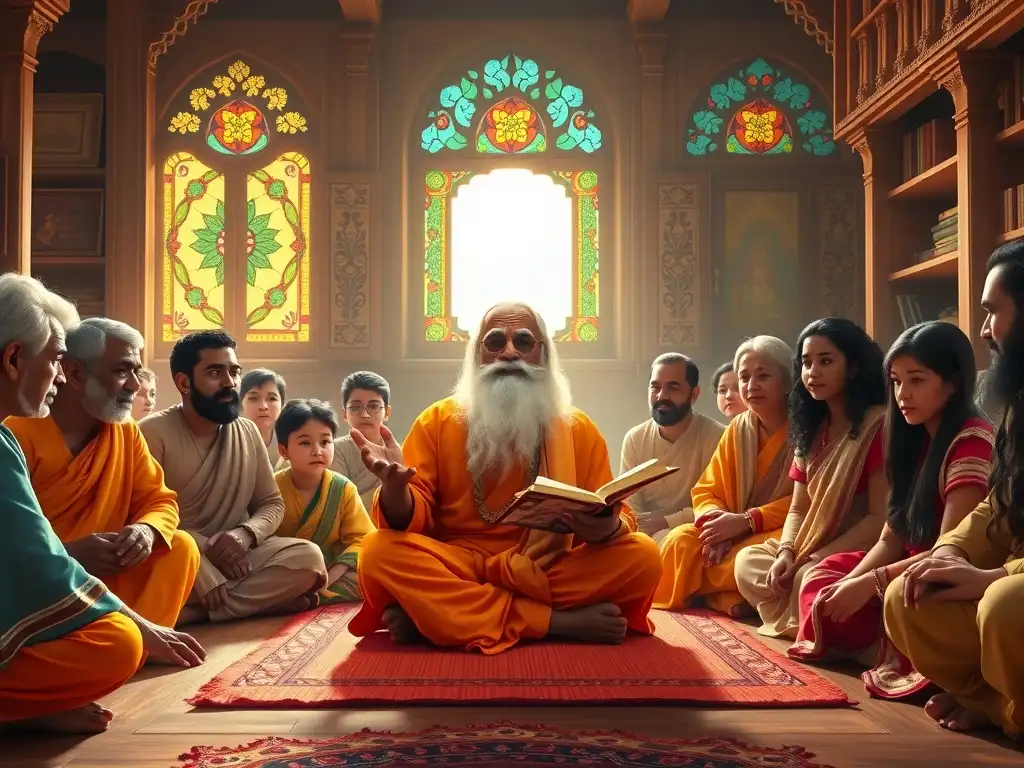
Storytelling in ancient Indian education encompassed a wide range of themes and subjects, each with its unique contributions to the learners' development. These themes served as vehicles for imparting knowledge and instilling values that were crucial for personal and societal growth.
Moral Lessons and Ethical Values
One of the primary themes in ancient Indian storytelling was the impartation of moral lessons and ethical values. Stories often revolved around virtuous characters who exemplified qualities such as honesty, bravery, and compassion. These narratives served as moral compasses for students, guiding them in their personal and social conduct.
For example, the tales of Panchatantra, a collection of fables featuring animals, were designed to teach practical wisdom and ethical behavior. Each story concluded with a moral lesson, illustrating the consequences of actions and the importance of making wise choices. By engaging with these stories, students were encouraged to reflect on their values and the impact of their decisions on the community.
Historical Events and Cultural Heritage
Another significant theme in ancient storytelling was the portrayal of historical events and cultural heritage. Through narratives of kings, battles, and significant cultural achievements, students learned about their history and the rich tapestry of their civilization. This not only fostered a sense of identity but also instilled pride in their heritage.
Epic narratives such as the Mahabharata and Ramayana served as foundational texts that conveyed the history, philosophies, and cultural practices of ancient India. These stories were not merely historical accounts; they also contained lessons about duty, righteousness, and the complexities of human relationships, thus providing a comprehensive understanding of the past.
Mythology and Spiritual Teachings
Mythology and spiritual teachings were integral themes in ancient Indian storytelling, often used to explain natural phenomena, moral dilemmas, and the human experience. These stories introduced students to the pantheon of Hindu deities and the philosophical concepts underlying spiritual practices.
The narratives surrounding deities like Vishnu, Shiva, and Devi not only entertained but also imparted deeper spiritual lessons about devotion, sacrifice, and the nature of reality. Through these stories, learners explored the complexities of existence while developing a connection to their spiritual beliefs. This integration of mythology in education reinforced the cultural values and religious practices that were central to ancient Indian society, promoting a holistic understanding of life and spirituality.
Prominent Figures and Texts in Ancient Indian Storytelling
Ancient Indian storytelling is deeply rooted in the educational practices of the time, with key figures and texts that played a significant role in shaping the methods used to impart knowledge. Storytelling was not merely a form of entertainment; it was an essential educational tool that helped transmit values, morals, and cultural heritage.
The Role of Gurus and Storytellers
In ancient India, gurus were more than just teachers; they were revered figures responsible for the holistic development of their students. These educators often employed storytelling as a primary method to engage their disciples. Through narratives, gurus conveyed complex philosophical ideas and ethical lessons, making them accessible and relatable. The storytelling sessions often took place in serene environments, where the natural setting complemented the wisdom being imparted.
Additionally, traditional storytellers, or kathakars, played a crucial role in society. They would travel from village to village, sharing tales that were rich in moral and spiritual significance. Their ability to captivate audiences with expressive storytelling helped ensure that important cultural narratives were preserved and passed down through generations.
Notable Texts Featuring Storytelling Techniques
Several ancient Indian texts exemplify the use of storytelling as a pedagogical approach. One of the most notable is the Mahabharata, an epic that not only recounts a great war but also includes moral lessons, philosophical discourses, and intricate tales of its characters. The storytelling within this text serves to educate readers about duty, righteousness, and the complexities of human relationships.
Another significant text is the Panchatantra, a collection of fables that utilize animal characters to impart wisdom. Each story concludes with a moral, demonstrating the practical application of its lessons. The Jataka tales, which recount the previous lives of the Buddha, also serve as an educational tool, emphasizing the values of compassion, kindness, and wisdom through engaging narratives.
Benefits of Storytelling in Ancient Indian Educational Practices
The integration of storytelling into ancient Indian education offered numerous benefits, enhancing the learning experience and fostering personal development among students.
Enhancing Memory and Retention of Knowledge
One of the most significant advantages of storytelling in education is its ability to enhance memory and retention. Stories capture attention and evoke emotions, making the information more memorable. When students hear a tale that resonates with them, they are more likely to recall the associated lessons later. This technique was particularly effective in ancient India, where oral transmission of knowledge was vital. The rhythmic and engaging nature of stories aided in the retention of complex ideas, ensuring that they were not easily forgotten.
Fostering Creativity and Imagination
Storytelling encourages creativity and imagination, allowing students to explore diverse perspectives and scenarios. In ancient India, this method of teaching inspired learners to think critically and visualize concepts beyond the confines of rigid academic structures. By immersing themselves in narratives, students developed their imaginative faculties, which played a crucial role in problem-solving and innovation. The stories often included fantastical elements, prompting students to wonder and dream, which is essential for creative thinking.
Building Communication Skills
Another notable benefit of storytelling in ancient Indian education is the development of communication skills. Engaging in storytelling activities required students to articulate their thoughts and express emotions effectively. This practice improved their vocabulary and public speaking abilities, essential skills for personal and professional success. Additionally, listening to stories helped students learn the nuances of language and narrative structure, enhancing their overall communication prowess. As they practiced storytelling, students became adept at conveying complex ideas, a skill that has enduring relevance in contemporary education.
Comparative Analysis of Ancient Indian Storytelling Education
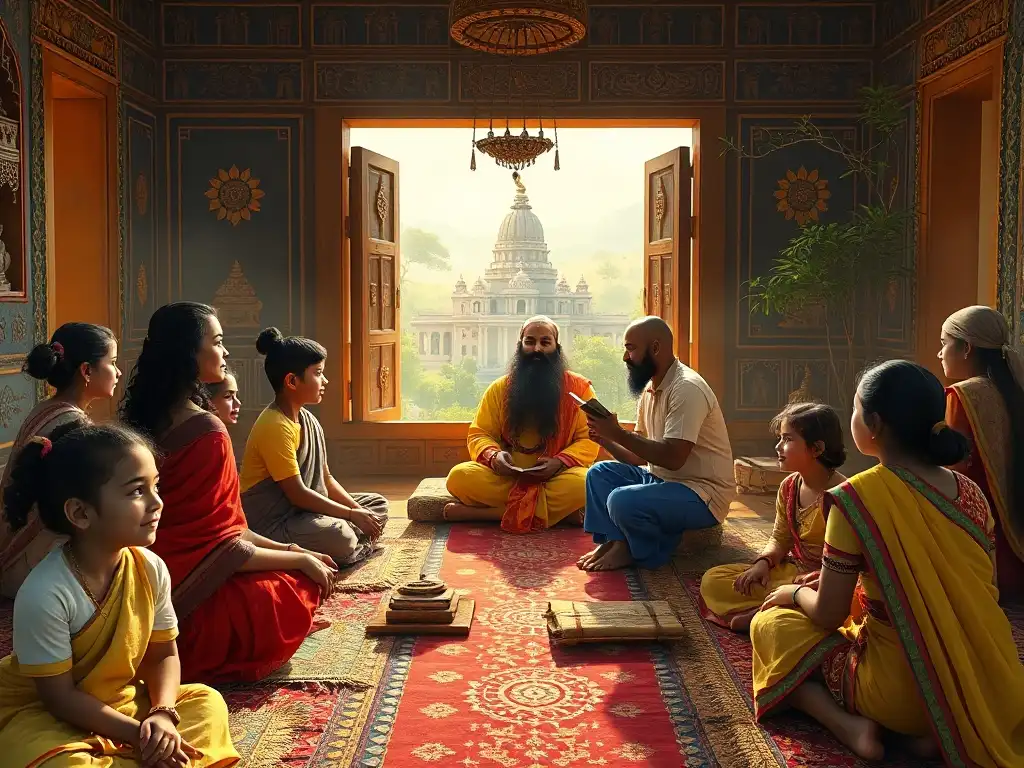
The practice of storytelling in ancient Indian education is a rich tapestry woven with cultural, spiritual, and moral threads. Ancient Indian storytelling education primarily thrived through oral traditions, where sages and teachers imparted knowledge using narratives that captivated the minds of students. This method not only preserved history but also conveyed moral lessons and philosophical ideas, making it a multifaceted educational tool.
In contrast to other ancient civilizations, such as Mesopotamia and Egypt, where education often centered around formalized written texts, ancient Indian storytelling emphasized experiential learning. For instance, the use of epics like the Mahabharata and Ramayana served not just as literary works but also as educational resources that taught ethics, governance, and the nature of dharma (duty). Through storytelling, students learned to reflect on complex moral dilemmas, allowing them to internalize values in a profound manner.
Moreover, compared to Greek education, which focused heavily on rhetoric and debate, ancient Indian storytelling incorporated elements of music, drama, and dance, creating a more holistic learning experience. This integration of arts into education fostered creativity and critical thinking, skills that are as essential today as they were in ancient times.
Storytelling in Other Ancient Civilizations
Storytelling as an educational tool was not unique to ancient India; various civilizations utilized narrative to impart knowledge. In ancient Greece, philosophers like Plato employed allegories, such as the Allegory of the Cave, to explore complex ideas about perception and reality. Similarly, the use of Aesop’s Fables served to teach moral lessons through simple, engaging stories.
In Egypt, storytelling often took the form of myths and legends inscribed on temple walls or papyrus scrolls, serving both religious and educational purposes. The Egyptian Book of the Dead used narrative to guide the deceased through the afterlife, illustrating the importance of storytelling in spiritual education.
The Native American tribes also have a rich tradition of oral storytelling, where elders pass down wisdom and cultural values through tales that connect generations. Each of these civilizations highlights the universal role of storytelling in education, demonstrating its effectiveness in fostering moral development and cultural identity.
Modern Implications of Ancient Indian Storytelling Education
The techniques and philosophies underlying ancient Indian storytelling education hold significant relevance in today's educational landscape. Modern educators increasingly recognize the power of storytelling as a pedagogical strategy that enhances engagement and retention. By integrating stories into lessons, teachers can create a more interactive learning environment that resonates with students on an emotional level.
Furthermore, the emphasis on moral lessons found in ancient storytelling can be applied to contemporary character education programs. In a world facing ethical dilemmas, the narratives from ancient Indian texts can serve as valuable case studies that help students navigate complex moral landscapes.
Relevance of Storytelling in Contemporary Education
In contemporary education, storytelling fosters a sense of community and belonging among students. It encourages empathy and understanding by allowing learners to see the world from different perspectives. This aligns with current educational goals focused on social-emotional learning (SEL), where the ability to relate to others is crucial.
Moreover, storytelling can bridge cultural gaps in increasingly diverse classrooms. By sharing stories from various traditions, educators can promote inclusivity and highlight the rich tapestry of human experience. This practice not only enriches the curriculum but also prepares students for a globalized world.
Integrating Ancient Techniques into Modern Curricula
Integrating ancient Indian storytelling techniques into modern curricula can take various forms. Teachers can incorporate storytelling sessions where students retell ancient tales, fostering both creativity and oral communication skills. Additionally, using multimedia resources such as animations or podcasts can modernize these stories, making them accessible and engaging for today's tech-savvy students.
Project-based learning can also benefit from storytelling. Students can create their narratives around historical events, exploring their significance through research and creative expression. This method not only reinforces historical knowledge but also cultivates critical thinking and collaborative skills.
The ancient Indian practice of storytelling in education offers a wealth of insights that can be adapted to modern teaching methodologies. By embracing these timeless techniques, educators can create dynamic learning environments that resonate with students and foster lifelong learning.
Conclusion
The exploration of storytelling as a teaching tool in ancient Indian education reveals a rich tapestry of methods and philosophies that underpinned learning in this vibrant civilization. By integrating narratives into educational practices, ancient Indian educators not only imparted knowledge but also nurtured values, ethics, and cultural identity among students. This approach fostered an environment where lessons were not merely memorized but deeply understood and experienced.
Summary of Key Points on Ancient Indian Storytelling Education
- Cultural Transmission: Storytelling served as a vital method for passing down traditions, myths, and historical events, ensuring the continuity of cultural heritage.
- Moral Lessons: Many stories were crafted to convey ethical principles and moral values, allowing students to reflect on their behavior and societal roles.
- Engagement and Retention: The narrative format made learning more engaging, stimulating imagination and fostering better retention of information among students.
- Diverse Genres: Ancient Indian storytelling encompassed various genres, including epics like the Mahabharata and Ramayana, fables, and folk tales, each contributing uniquely to educational practices.
- Oral Tradition: The reliance on oral storytelling highlighted the importance of memory and oratory skills, which were crucial in a predominantly oral culture.
- Inclusivity: Storytelling was an inclusive educational practice that transcended social strata, allowing diverse groups to share and learn from each other’s experiences and wisdom.
Final Thoughts on the Legacy of Storytelling in Education
The legacy of storytelling in ancient Indian education remains significant, influencing modern educational practices and philosophies. As we recognize the power of narratives to shape minds and societies, we can draw inspiration from ancient methods to enhance contemporary learning environments. The principles embedded in storytelling—engagement, cultural relevance, and moral instruction—continue to resonate today, reminding us of the timeless value of narratives in shaping knowledge and fostering community. By revisiting these ancient practices, educators can create rich, immersive learning experiences that honor the past while preparing students for the future.
- Introduction to Ancient Indian Storytelling Education
- Historical Context of Storytelling in Ancient India
- The Role of Storytelling in Ancient Indian Education Systems
- Key Themes and Subjects Taught Through Storytelling
- Prominent Figures and Texts in Ancient Indian Storytelling
- Benefits of Storytelling in Ancient Indian Educational Practices
- Comparative Analysis of Ancient Indian Storytelling Education
- Modern Implications of Ancient Indian Storytelling Education
- Conclusion
- What role did storytelling play in ancient Indian education?
- How did ancient Indian storytelling impact cultural transmission?
- What are some examples of storytelling methods used in ancient India?
- How did the Indus Valley civilization utilize storytelling?
- What contributions did the Gupta Empire make to storytelling in education?
Frequently Asked Questions
What role did storytelling play in ancient Indian education?
Storytelling served as a crucial teaching tool, conveying moral values, cultural heritage, and historical knowledge through engaging narratives.
How did ancient Indian storytelling impact cultural transmission?
Through oral traditions, storytelling facilitated the preservation and transmission of cultural practices and beliefs across generations, ensuring continuity.
What are some examples of storytelling methods used in ancient India?
Methods included fables, epics, and folk tales, often narrated by gurus or elders to impart lessons and entertain, enriching the learning experience.
How did the Indus Valley civilization utilize storytelling?
While direct evidence is limited, it's believed that symbolic art and possible oral traditions were used to share stories, contributing to their cultural identity.
What contributions did the Gupta Empire make to storytelling in education?
The Gupta Empire is known for its patronage of arts and literature, enhancing storytelling through written texts and performances, which became integral to education.
Final Reflection: The Enduring Legacy of Ancient Indian Storytelling in Education
The art of storytelling has always been a powerful tool in education, especially in the context of ancient Indian traditions. In a world increasingly dominated by technology and rapid information exchange, the timeless methods of ancient Indian storytelling education remind us of the profound impact narratives can have on learning and personal development. As we navigate the complexities of modern education, we must not forget the wisdom embedded in these age-old practices.
The influence of storytelling in ancient Indian education extends far beyond mere entertainment; it shapes cultural identity, moral values, and critical thinking. The stories of our ancestors served as a bridge connecting generations, fostering a sense of belonging and understanding. Stories are the communal currency of humanity,
said Tahir Shah, emphasizing how narratives unite us across time and space. This ongoing relevance of storytelling in our lives underscores its role as a vital educational tool, capable of engaging minds and nurturing empathy in an increasingly fragmented world.
As we reflect on the lessons drawn from ancient Indian storytelling education, let us embrace the power of narratives in our own lives. Consider how you can incorporate storytelling into your daily interactions, whether in teaching, parenting, or simply sharing experiences with friends. By doing so, you not only honor a rich tradition but also contribute to a more connected and compassionate society. The stories we tell today will shape the minds of tomorrow, so let us choose them wisely and share them generously.
Unveil the Power of Storytelling in Education!
Thank you for diving into the fascinating world of storytelling in education! You’ve explored how narratives shape learning and impart wisdom, making complex ideas accessible and engaging. Now it’s time to take action and harness the power of storytelling in your own teaching or learning journey.
Consider these actionable steps:
- Incorporate storytelling into your lessons: Start by sharing a personal story or a cultural tale related to your subject matter to spark interest and create a connection with your audience.
- Join a local storytelling group or workshop: Enhance your skills and learn new techniques that can be applied in diverse educational settings.
- Share your favorite educational story on social media: Inspire others in your community by showcasing the transformative impact that storytelling can have on learning.
What story resonates most with you and has the potential to transform your teaching or learning experience?