
The Geography of the Mahabharata: Mapping the Ancient Indian World

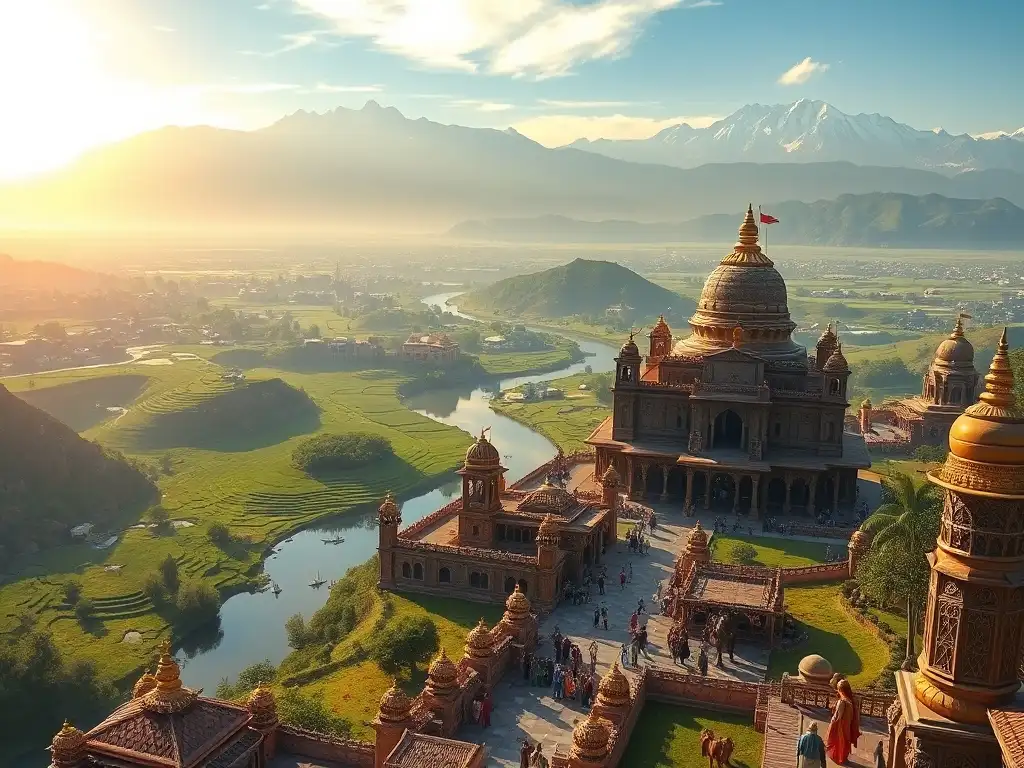
Welcome to Ancient India History, where we embark on a captivating journey through the rich tapestry of ancient Indian civilizations! In this exploration, we delve into the intricate geography of ancient India, illuminating how its diverse landscapes shaped the epic narratives found in works like the Mahabharata. Discover how the physical world not only influenced the lives of those who walked its lands but also inspired timeless stories steeped in culture and philosophy. Are you ready to navigate the ancient realms and uncover the hidden connections between geography and epic literature? Let's dive deeper into this fascinating topic!
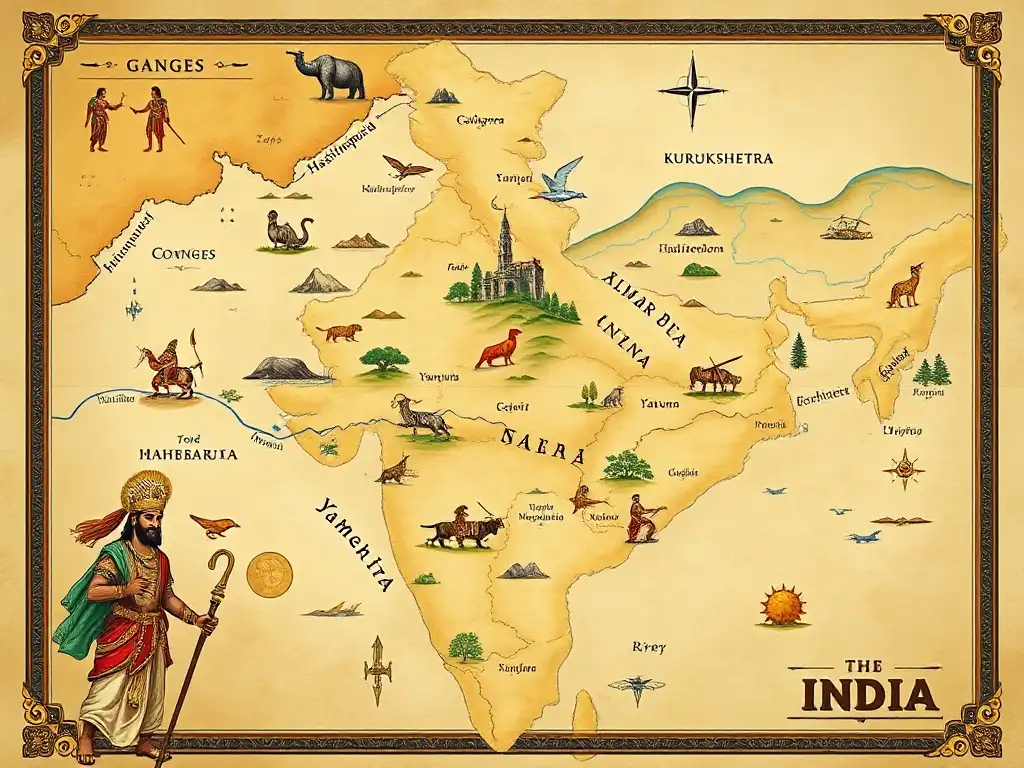
Introduction to the Geography of Ancient India
The Geography of ancient India plays a pivotal role in understanding the narratives and themes of the Mahabharata, one of the most significant epics in Indian literature. This ancient text not only weaves a complex tale of morality, duty, and dharma but also intricately maps the diverse landscapes of ancient India, providing insights into how geography influenced the lives, cultures, and interactions of its characters.
By exploring the geographical context of the Mahabharata, readers can gain a deeper appreciation of the story’s setting, as well as its characters’ motivations and the socio-political dynamics of the time. As we delve into the geography that shaped this epic, we uncover not just a map of locations, but a tapestry of historical significance, cultural evolution, and the natural environment that influenced one of the world’s greatest literary works.
Overview of the Mahabharata and its Significance
The Mahabharata, attributed to the sage Vyasa, is an epic narrative that chronicles the dynastic struggle between the Pandavas and Kauravas, culminating in the great war of Kurukshetra. Spanning over 100,000 shlokas, it is not merely a tale of conflict; it embodies philosophical discourses, moral dilemmas, and insights into human nature. The epic serves as a historical document that reflects the values, traditions, and societal structures of ancient Indian civilization.
In addition to its literary merit, the Mahabharata holds immense cultural significance, influencing art, dance, drama, and religious practices in India and beyond. The geographical elements within the epic provide a backdrop that enhances the storytelling, allowing readers to visualize the vast landscapes, cities, and forests that played critical roles in the unfolding drama of the narrative.
The Role of Geography in Epic Literature
Geography in epic literature is not merely a backdrop; it serves as a character in its own right, shaping the narrative and influencing the plot. In the Mahabharata, the varied landscapes—including mountains, rivers, and kingdoms—are essential to the characters’ development and the events that transpire.
For instance, the sacred river Ganga is not only a physical entity but also symbolizes purity and spirituality, impacting the lives of the characters associated with it. Similarly, the geographical settings facilitate the exploration of themes such as conflict, harmony, and the balance of nature and civilization. By understanding the geography of ancient India, readers can better appreciate how the physical world informed the spiritual and moral lessons conveyed through the epic.
Ancient Indian Geography: A Contextual Background
To fully grasp the significance of the geography depicted in the Mahabharata, it is essential to contextualize it within the broader framework of ancient Indian geography. This includes examining the physical landscape, climate, and cultural regions that defined the life of ancient Indians and influenced their narratives.
The Physical Landscape of Ancient India
Ancient India was characterized by diverse geographical features, ranging from the towering Himalayas in the north to the vast Deccan Plateau in the south. The Indus River and Ganges River systems were vital to the agricultural economy, supporting thriving civilizations. The rich alluvial plains provided fertile grounds for cultivation, while the coastal regions facilitated trade and cultural exchange.
Key geographical features include:
- Himalayas: The northern boundary, acting as a natural barrier and influencing the climate.
- Gangetic Plain: A crucial agricultural area and the heartland of many ancient kingdoms.
- Deccan Plateau: Known for its unique biodiversity and mineral resources, significant for trade and military expeditions.
- Thar Desert: A harsh landscape that shaped the lifestyles of the communities residing around it.
This varied topography not only defined the livelihoods of ancient Indians but also influenced the political boundaries, trade routes, and cultural interactions of the time.
Cultural Regions of Ancient India
Ancient India was not just a geographical entity; it was a mosaic of diverse cultural regions, each with its own distinct identity, language, traditions, and practices. The Mahabharata reflects this diversity through its portrayal of various kingdoms and their unique characteristics.
Key cultural regions include:
- Bharatavarsha: The mythological land encompassing the Indian subcontinent.
- Magadha: A prominent kingdom known for its political power and cultural achievements.
- Kuru Kingdom: Central to the Mahabharata, home to both the Pandavas and Kauravas.
- Panchala: Known for its vibrant culture and significant role in the epic.
These regions provide essential context for the events of the Mahabharata, as they inform the social dynamics, alliances, and conflicts that shape the narrative. Understanding the cultural landscapes of ancient India allows readers to appreciate the epic’s depth and the richness of its historical context.
Mapping the Mahabharata: Key Locations and Their Significance
The Mahabharata, one of the two great epics of ancient India, intricately weaves a narrative that is deeply rooted in its geographical settings. The locations mentioned in the epic are not merely backdrops but play critical roles in shaping the storylines and character developments. Understanding these key locations provides insight into the cultural and political landscapes of ancient India. Below, we explore some of the most significant sites depicted in the Mahabharata, their meanings, and their contributions to the epic's themes.
Hastinapura: The Heart of the Kuru Kingdom
Hastinapura serves as the capital of the Kuru Kingdom and is central to the narratives of the Mahabharata. This city symbolizes political power and royal heritage, being the birthplace of key characters such as the Kauravas and Pandavas. Its geographical location, situated near the confluence of the Ganges and Yamuna rivers, facilitated trade and communication, making it a bustling center of economic and social activity in ancient times.
The significance of Hastinapura extends beyond its political stature; it embodies the struggles for power and the moral dilemmas faced by its rulers. The court of Hastinapura is where pivotal events, such as the game of dice and the subsequent exile of the Pandavas, occur, illustrating how geography impacts human decisions and relationships.
Indraprastha: The Symbol of Power and Prosperity
Indraprastha, the city established by the Pandavas after their exile, represents a new beginning and a stark contrast to Hastinapura. Built with divine assistance, it is often depicted as a magnificent city adorned with opulent palaces and lush gardens. The geographical location of Indraprastha, near the modern-day Delhi, signifies strategic importance, as it lies at the crossroads of various trade routes.
The establishment of Indraprastha reflects the themes of ambition and prosperity. It serves as a testament to the Pandavas' strength and vision, showcasing their ability to create a thriving kingdom from the ashes of defeat. Indraprastha's grandeur also sets the stage for the eventual conflict in Kurukshetra, highlighting how geography can be a catalyst for competition and rivalry.
Kurukshetra: The Sacred Battlefield
Kurukshetra is perhaps the most famous location in the Mahabharata, known as the battlefield where the great war between the Kauravas and Pandavas took place. This sacred land, associated with various religious and cultural traditions, is marked by its significance in Hindu mythology as a site of dharma (righteousness).
The geography of Kurukshetra, characterized by its vast plains, symbolizes the scale of the conflict and the moral complexities surrounding it. The battlefield is not only a physical space where warriors clash but also represents the internal struggles of characters grappling with duty, morality, and fate. The war fought here is a microcosm of the larger human experience, emphasizing the interplay between geographical space and human action.
Other Notable Locations in the Mahabharata
In addition to the major cities, the Mahabharata features numerous other locations that enrich its narrative.
- Dwaraka: The city of Lord Krishna, representing divine intervention and ideal governance.
- Varnavata: The location of the infamous lac palace, where the Kauravas attempted to assassinate the Pandavas.
- Khandavaprastha: The forest cleared by the Pandavas to build Indraprastha, symbolizing transformation and renewal.
These locations contribute to the epic's thematic depth, illustrating the diversity of ancient India's geography and the interconnectedness of its cultural narratives.
The Interrelation of Geography and Culture in the Mahabharata
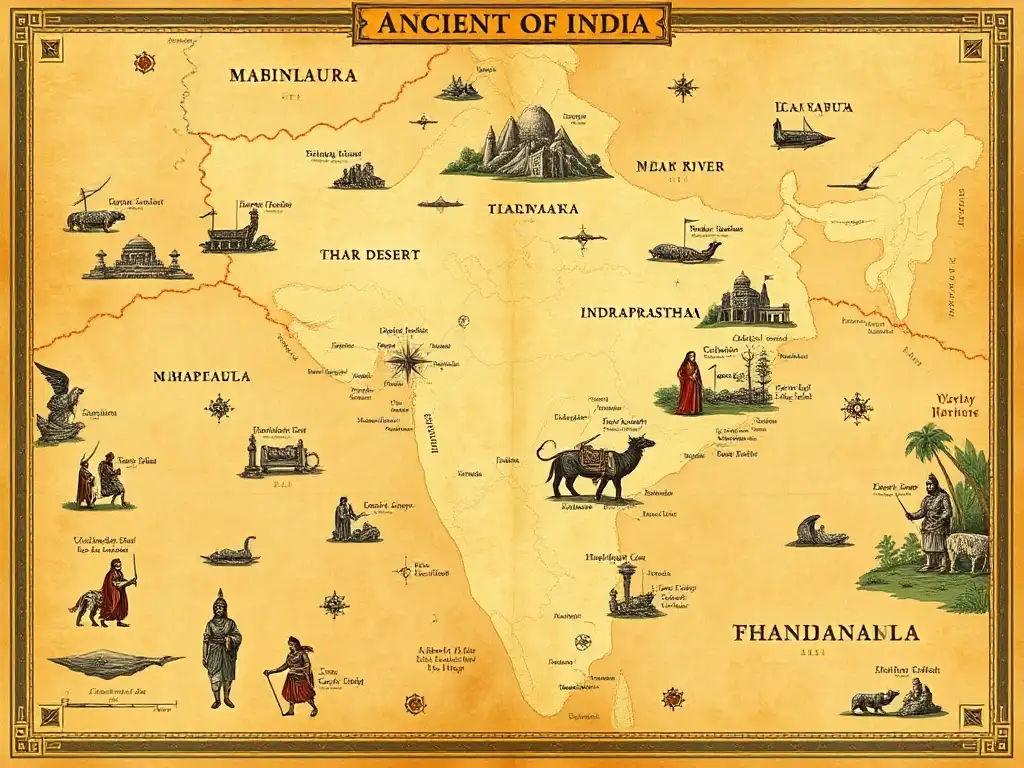
The geography of ancient India plays an integral role in the Mahabharata, influencing the epic's cultural and social contexts. The physical landscapes depicted in the narrative not only serve as settings but also as symbols that reflect the values, beliefs, and struggles of the characters. This interrelation between geography and culture creates a rich tapestry of meaning within the epic.
How Geography Shaped the Narratives of the Mahabharata
The geographical settings of the Mahabharata significantly shape its narratives by providing context and backdrop to the characters' actions. The diverse landscapes, from the fertile plains of Kurukshetra to the dense forests where the Pandavas spent their exile, influence the plot's progression and the characters' development.
For instance, the transition from Hastinapura to Indraprastha marks a shift in power dynamics, illustrating how geographical changes can lead to new political realities. The challenges faced by the Pandavas in the wilderness highlight themes of resilience and survival, while the eventual return to Kurukshetra underscores the inevitability of conflict rooted in geography.
The Representation of Nature and Landscape in the Mahabharata
Nature and landscape are portrayed vividly throughout the Mahabharata, serving as more than mere descriptions; they reflect the emotional states and moral dilemmas of the characters. The lush forests, rivers, and mountains often symbolize the inner turmoil and spiritual journeys undertaken by the protagonists.
The depiction of sacred rivers, such as the Ganges, reinforces the themes of purity and redemption, while the arid landscapes of Kurukshetra evoke a sense of desolation and conflict. This representation of nature not only enriches the narrative but also invites readers to contemplate the profound connection between the physical world and the human experience within the ancient Indian context.
The Legacy of the Geography of Ancient India in the Mahabharata
The Mahabharata, one of the greatest epic tales of ancient India, is not only a narrative of conflict and dharma but also a profound representation of the geography of ancient India. The geographical context within the Mahabharata provides a rich tapestry that enhances the understanding of cultural, political, and social dynamics of the time. The epic vividly describes various regions, rivers, mountains, and cities, creating a backdrop that informs the story and its characters.
The legacy of this geographical representation is significant, as it allows readers to appreciate the intricate relationship between the physical landscape and the unfolding drama of human life. For instance, the mention of the Ganges River, the Himalayas, and the forests of Dandaka not only serves as a physical setting but also symbolizes the spiritual and moral landscapes that the characters navigate. This geographical awareness helps modern readers grasp the complexities of the narrative, as well as the values and beliefs of ancient Indian society.
Moreover, this epic has influenced subsequent literature and arts, inspiring countless interpretations and adaptations that continue to explore the geography of ancient India. Through the lens of the Mahabharata, the legacy of ancient geography persists, shaping contemporary views of Indian history and culture.
How Ancient Geography Influences Modern Understanding
The geography of ancient India, as detailed in the Mahabharata, plays a crucial role in shaping modern understandings of historical narratives, cultural identities, and regional dynamics. By mapping the locations mentioned in the epic, scholars and enthusiasts alike can discern patterns of settlement, trade routes, and the socio-political landscape of ancient civilizations.
For instance, the identification of sites like Hastinapura and Kurukshetra provides insights into the power struggles and territorial claims of ancient kingdoms. This geographical mapping aids historians in reconstructing historical events and understanding the significance of these locations in the context of ancient Indian civilization.
Additionally, the geography presented in the Mahabharata serves as a reflection of ancient Indian cosmology and worldview. The interplay between nature and human action depicted in the epic underscores the importance of environmental factors in shaping cultural practices and societal norms. Modern scholars draw on these details to analyze how geographical features influenced everything from agriculture to warfare in ancient societies.
Lessons from the Geography of the Mahabharata
The geography depicted in the Mahabharata offers valuable lessons that resonate even today. One of the primary lessons is the significance of the natural environment in shaping human destiny. The epic illustrates how the characters' fates are intricately tied to the landscapes they inhabit, highlighting the notion that nature is a powerful force that influences human behavior and societal outcomes.
Furthermore, the Mahabharata presents a vision of unity amidst diversity. The various regions described within the epic, from the fertile plains of the Ganges to the rugged terrains of the Deccan plateau, showcase the richness of India's geographical diversity. This diversity is mirrored in the multitude of characters and their distinct backgrounds, emphasizing cooperation and coexistence among different groups.
Another crucial lesson is the concept of dharma, or righteousness, which is often influenced by geographical context. The decisions made by characters in the epic are frequently informed by their surroundings, reinforcing the idea that ethical considerations are not only personal but also geographically situated. This understanding encourages a more nuanced view of morality that acknowledges the complexities of place and context.
Conclusion: The Enduring Impact of the Geography of the Mahabharata
The geography of the Mahabharata extends beyond mere descriptions of landscapes; it serves as an enduring element that informs the narrative's themes, character development, and moral lessons. This geographical framework not only enriches the epic but also provides a lens through which to view ancient Indian society and its values.
As modern readers engage with the Mahabharata, they uncover layers of meaning that stem from its geographical context, facilitating a deeper appreciation of its historical and cultural significance. The enduring impact of this geography can be seen in contemporary interpretations of the epic, where scholars and artists continue to explore and analyze the relationship between geography and narrative.
Summary of Key Insights
The geography of ancient India as depicted in the Mahabharata offers profound insights into the interplay between environment and human experience. Key insights include:
- Cultural and Historical Context: The geographical settings enrich the narrative and offer a backdrop for understanding ancient Indian society.
- Influence on Modern Scholarship: Mapping the geography of the Mahabharata aids in the reconstruction of historical events and enhances our understanding of regional dynamics.
- Moral and Ethical Lessons: The epic illustrates the significance of nature in shaping human destiny and ethical considerations, reinforcing the need for a contextual understanding of morality.
Future Directions for Exploring Ancient Indian Geography and Literature
Looking ahead, there are numerous avenues for exploring the geography of ancient India through the lens of the Mahabharata. Future research could focus on:
- Interdisciplinary Approaches: Combining geography, archaeology, and literature to provide a more comprehensive understanding of ancient Indian landscapes.
- Technological Advancements: Utilizing Geographic Information Systems (GIS) to map ancient sites and analyze their significance within the epic.
- Cultural Studies: Investigating how the geographical narratives of the Mahabharata continue to influence contemporary cultural expressions in India and beyond.
By delving into these future directions, scholars and enthusiasts can continue to unravel the rich tapestry of ancient Indian geography and its lasting impact on literature and culture.
- Introduction to the Geography of Ancient India
- Ancient Indian Geography: A Contextual Background
- Mapping the Mahabharata: Key Locations and Their Significance
- The Interrelation of Geography and Culture in the Mahabharata
- The Legacy of the Geography of Ancient India in the Mahabharata
- Conclusion: The Enduring Impact of the Geography of the Mahabharata
- What was the significance of the geography in the Mahabharata?
- How does the geography of ancient India affect its historical development?
- Which regions are highlighted in the Mahabharata?
- How did the Indus Valley Civilization relate to the Mahabharata?
- What can we learn about the culture of ancient India through its geography?
Frequently Asked Questions
What was the significance of the geography in the Mahabharata?
The geography of the Mahabharata plays a crucial role in shaping the narrative, as the landscape influences military strategies, cultural exchanges, and the interactions of various kingdoms.
How does the geography of ancient India affect its historical development?
The geography of ancient India, with its rivers, mountains, and plains, facilitated trade, agriculture, and the rise of civilizations, contributing to the economic and cultural growth of the region.
Which regions are highlighted in the Mahabharata?
The Mahabharata prominently features regions like Hastinapura, Indraprastha, and Kurukshetra, each significant for their historical and mythological connections, showcasing the diversity of the ancient Indian landscape.
How did the Indus Valley Civilization relate to the Mahabharata?
While the Indus Valley Civilization predates the Mahabharata, its geographic features, such as river systems, laid the foundation for later civilizations that are referenced in the epic.
What can we learn about the culture of ancient India through its geography?
The geography of ancient India reveals much about its culture, including religious practices, social structures, and trade networks, illustrating how the land shaped the lives and beliefs of its people.
Final Reflection: The Enduring Legacy of Ancient Indian Geography
The exploration of the Geography of ancient India through the lens of the Mahabharata reveals not only the intricate landscapes that shaped its narratives but also the profound connections between geography and culture that resonate today. In a world increasingly defined by globalization and technological advancement, understanding the geographical context of ancient texts like the Mahabharata allows us to appreciate the rich tapestry of human experience and the timeless relevance of these stories. The landscapes of ancient India are not just backdrops; they are integral to the identity and ethos of the civilizations that flourished there.
The influence of the Mahabharata extends far beyond its historical and literary significance; it continues to shape our cultural and social landscapes. The intricate mapping of ancient India serves as a reminder of the interconnectedness of geography, spirituality, and human endeavor. As we navigate our modern lives, the lessons embedded in these ancient tales encourage us to reflect on our own environments and the narratives they hold. The land is not just a backdrop for the stories we tell; it is a character in its own right.
This quote encapsulates the essence of how geography informs our understanding of identity and community, urging us to consider how our surroundings influence our lives today.
As we conclude this exploration of the Geography of the Mahabharata, I invite you to reflect on your own relationship with the landscapes that surround you. How do they shape your experiences, beliefs, and stories? In a world where we often overlook the significance of place, let us strive to cultivate a deeper awareness of our environments and the histories they carry. Embrace the lessons of the past as you forge your path forward, recognizing that every landscape has a story to tell and a legacy to inspire.
Embark on Your Journey Through Ancient India!
Thank you for exploring the fascinating world of the Mahabharata and the intricate geography that shaped this epic tale. We hope you've gained valuable insights that ignite your curiosity about ancient Indian history! Now, it's time to take your exploration further.
Here’s how you can dive deeper into this epic journey:
- Explore an Interactive Map: Discover and visualize the ancient landscapes by using our interactive map of the Mahabharata's geography. Click here to start your adventure!
- Join the Community: Connect with fellow history enthusiasts and share your thoughts about the Mahabharata. Join our forum here to engage in lively discussions!
- Share Your Insights: Spread the knowledge! Share this article with friends or on social media to spark conversations about this ancient epic.
What aspect of the Mahabharata’s geography intrigues you the most, and how do you think it influenced the narrative?