
The Vedas and Their Connection to Ancient Science and Technology

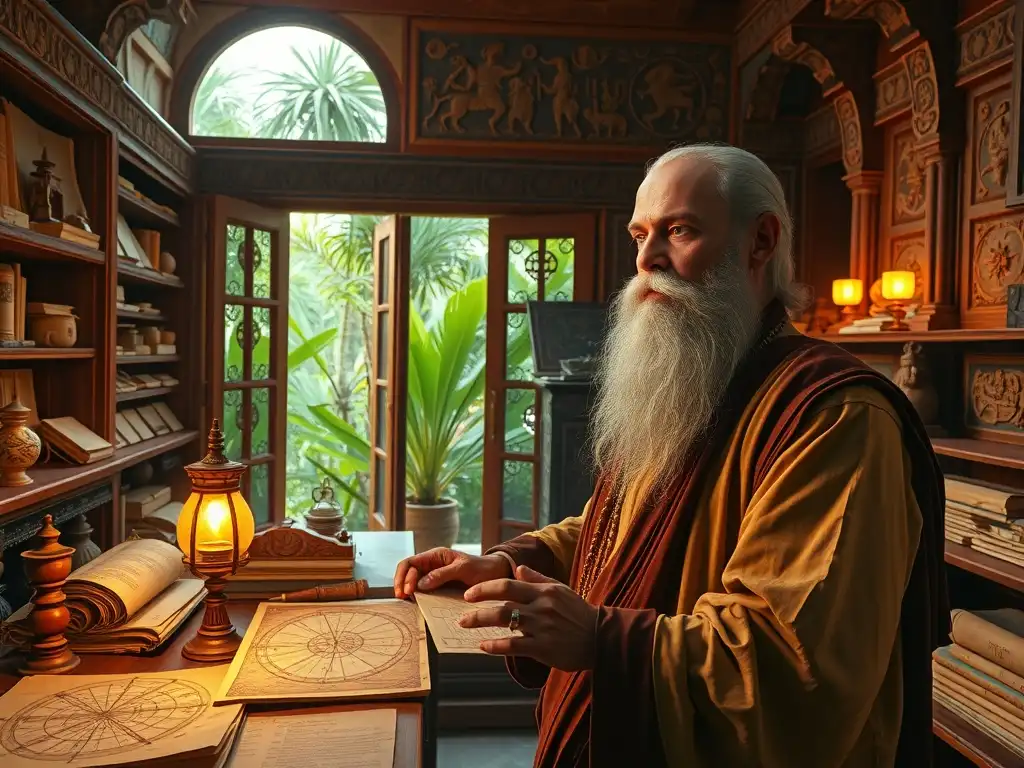
Welcome to Ancient India History, where we embark on a fascinating journey through the rich tapestry of ancient Indian civilizations! Here, you'll uncover the remarkable contributions of cultures that flourished from the enigmatic Indus Valley to the illustrious Gupta Empire.
Dive into our featured article, “The Vedas and Their Connection to Ancient Science and Technology,” and discover how these epic texts not only shaped spiritual beliefs but also paved the way for groundbreaking advancements in science and technology. Prepare to be intrigued as we unravel the profound connections between ancient wisdom and modern innovation—your adventure into the depths of history begins now!
- Introduction to the Vedas and Ancient Indian Science and Technology
- The Four Vedas and Their Contributions
- Ancient Indian Science and Technology Reflected in the Vedas
- The Interplay Between Spirituality and Science in the Vedas
- Influence of Vedic Knowledge on Later Indian Civilizations
- Conclusion: The Legacy of the Vedas in Modern Science and Technology
-
Frequently Asked Questions
- What are the Vedas?
- How did the Vedas contribute to ancient Indian science and technology?
- What role did the Vedic texts play in the development of mathematics?
- How did ancient Indian science and technology differ from other civilizations?
- Are there modern applications of the knowledge found in the Vedas?
- Final Reflection: The Enduring Legacy of Ancient Indian Science and Technology
- Uncover the Wisdom of the Vedas Today!
Introduction to the Vedas and Ancient Indian Science and Technology

The Vedas, a collection of ancient sacred texts, serve as a cornerstone of Indian culture, philosophy, and spirituality. Composed in Sanskrit, these texts encapsulate the beliefs, rituals, and knowledge of early Indian civilization. Beyond their spiritual significance, the Vedas also provide remarkable insights into ancient Indian science and technology, showcasing a civilization that was not only rich in culture but also advanced in various scientific endeavors.
From intricate astronomical observations to sophisticated medical practices, the Vedic texts reveal a deep understanding of the natural world and its phenomena. This article delves into the profound connection between the Vedas and ancient Indian science and technology, highlighting how these texts laid the foundation for many advancements that are still relevant today.
Overview of the Vedas
The Vedas are divided into four main texts: the Rigveda, Samaveda, Yajurveda, and Atharvaveda. Each Veda serves a unique purpose and covers various aspects of life:
- Rigveda: The oldest of the Vedas, it consists of hymns dedicated to various deities and is primarily a collection of prayers and philosophical musings.
- Samaveda: This Veda is focused on melodies and chants, serving as a musical guide for rituals and ceremonies.
- Yajurveda: It deals with the procedures and instructions for rituals, outlining how offerings should be made to the gods.
- Atharvaveda: This text includes hymns, spells, and incantations that address daily life, health, and well-being.
The Vedas not only form the basis of Hindu philosophy but also reflect the scientific prowess of ancient Indian civilization. They encompass various fields, including mathematics, medicine, and astronomy, indicating a sophisticated understanding of the universe.
Importance of Ancient Indian Science and Technology
Ancient Indian science and technology are often overlooked in discussions of historical advancements, yet they played a crucial role in shaping various disciplines. The Vedas are instrumental in this context, as they document early scientific thought and practices. Some key areas of contribution include:
- Mathematics: The Vedic texts include concepts of zero, calculations, and geometric principles, which laid the groundwork for modern mathematics.
- Astronomy: Ancient Indians made significant observations of celestial bodies, which are documented in the Vedas. They understood planetary movements and eclipses, demonstrating advanced astronomical skills.
- Medicine: The Atharvaveda contains references to medicinal plants and healing practices, indicating a deep knowledge of herbal medicine and surgery.
The integration of scientific and technological knowledge into the fabric of the Vedas illustrates the innovative spirit of ancient Indian civilization. By exploring these texts, we can appreciate the contributions of ancient Indian science and technology and their lasting impact on the world today.
The Four Vedas and Their Contributions

Rigveda: The Foundation of Ancient Knowledge
The Rigveda, one of the oldest texts in the world, serves as a seminal foundation for ancient Indian science and technology. Composed around 1500 BCE, it comprises hymns that explore various aspects of life, nature, and the cosmos. The Rigveda is not merely a religious text; it is a repository of knowledge that reflects the scientific understanding of its time.
- Cosmology and Astronomy: The Rigveda includes references to celestial phenomena and cosmological theories. For example, the hymns describe the creation of the universe and the movement of celestial bodies, suggesting an early understanding of astronomy. The text mentions the cycles of day and night, the seasons, and the positions of stars, indicating that ancient Indians were observant of their environment.
- Mathematics and Measurement: The Rigveda features numerical hymns that illustrate an understanding of mathematics. The use of numbers in rituals and the division of time into units like days, months, and seasons show that the ancient Indians had developed sophisticated mathematical skills. This mathematical knowledge laid the groundwork for later advancements in various scientific fields.
- Medicine and Healing: The Rigveda also contains references to medicinal plants and healing practices, showcasing the early development of Ayurveda, the traditional system of medicine in India. The hymns discuss the properties of various herbs and their applications in healing, reflecting an empirical approach to medicine.
Samaveda: Music, Sound, and Science
The Samaveda, often regarded as the Veda of melodies, emphasizes the importance of sound and music in ancient Indian culture. While primarily known for its musical aspects, the Samaveda also contributes significantly to the understanding of acoustics and its relation to ancient Indian science and technology.
- Acoustics and Sound Waves: The Samaveda's rich collection of melodies highlights the mathematical principles of sound waves. The text demonstrates an understanding of how different frequencies and rhythms can produce various effects, leading to the development of early acoustic theories. This knowledge was not only essential for musical performances but also had implications for architectural design, especially in temples and public spaces.
- Rituals and Their Scientific Basis: The hymns of the Samaveda are intricately linked to rituals, where music plays a crucial role in invoking deities. These rituals often incorporate specific sounds that are believed to have a transformative effect on the environment and the practitioners. This connection between sound and ritual underscores the significance of auditory elements in ancient Indian science.
- Cultural Transmission of Knowledge: The Samaveda's oral tradition facilitated the preservation and transmission of knowledge over generations. By embedding scientific principles within musical compositions, the Samaveda ensured that complex ideas were accessible and memorable, aiding in the dissemination of ancient Indian science and technology.
Yajurveda: Rituals and Technological Applications
The Yajurveda is a unique Veda that focuses on the practical aspects of rituals and sacrifices, providing insights into the technological applications of ancient Indian practices. Composed around the same time as the other Vedas, the Yajurveda serves as a manual for conducting rituals, intertwining spirituality with practical science.
- Engineering and Architecture: The Yajurveda includes detailed descriptions of altars and sacrificial implements, reflecting advanced knowledge of engineering and architecture. The techniques described for constructing altars demonstrate an understanding of geometry and material properties, which were essential for creating stable structures for rituals.
- Agricultural Practices: The rituals described in the Yajurveda often pertain to agricultural cycles, emphasizing the connection between spiritual practices and agricultural technology. The text includes hymns that invoke favorable weather and abundant harvests, indicating an early recognition of the importance of environmental conditions in farming.
- Alchemy and Metallurgy: The Yajurveda also touches upon alchemical processes and the use of metals in rituals. The knowledge of metallurgy is evident in the descriptions of various metal implements used in sacrifices, showcasing the technological advancements in metalworking that were present in ancient India.
By examining the contributions of the four Vedas, it becomes clear that ancient Indian science and technology were deeply intertwined with spirituality, ritual, and culture. Each Veda not only served its religious purpose but also laid the groundwork for various scientific disciplines that would influence generations to come.
Atharvaveda: Medicine and Healing Techniques
The Atharvaveda, one of the four Vedas of ancient Indian literature, holds a unique position due to its extensive focus on medicine and healing techniques. Unlike the Rigveda, which primarily encompasses hymns and rituals, the Atharvaveda serves as a repository of medical knowledge that reflects the advanced understanding of health and wellness in ancient Indian civilization.
Ancient Medical Practices
The Atharvaveda contains an array of verses that detail various medical practices, treatment methodologies, and herbal remedies that were prevalent during its time. It includes over 60 hymns dedicated specifically to healing, showcasing a comprehensive system of medicine. These hymns provide insights into the use of plants, minerals, and animal products for therapeutic purposes, indicating a well-established practice of pharmacology. Notable plants mentioned in the texts include:
- Tulsi (Holy Basil): Revered for its anti-inflammatory and anti-microbial properties.
- Ashwagandha: Known for its adaptogenic qualities, helping to reduce stress and enhance vitality.
- Turmeric: Celebrated for its anti-inflammatory and healing properties.
Healing Techniques and Rituals
In addition to herbal remedies, the Atharvaveda introduces various healing techniques that interweave physical and spiritual dimensions. The text describes rituals intended to invoke divine blessings for health and protection against ailments. Some prominent techniques include:
- Mantras and Chants: Specific incantations were believed to possess healing powers, often recited by practitioners during treatment.
- Rituals for Protection: Ceremonies were conducted to ward off diseases and misfortunes, emphasizing the connection between spirituality and physical health.
- Purification Practices: These practices aimed at cleansing the mind and body, believed to be essential for maintaining health.
Influence on Ayurveda
The medical concepts found in the Atharvaveda laid the groundwork for the development of Ayurveda, the ancient Indian system of medicine that continues to thrive today. Ayurveda draws heavily from the principles outlined in the Atharvaveda, incorporating its theories on balance, wellness, and preventative care. The text's holistic approach to health, emphasizing the interconnectedness of body, mind, and spirit, remains a fundamental aspect of Ayurvedic practice.
Conclusion
The Atharvaveda’s contributions to medicine and healing techniques illustrate the advanced knowledge of ancient Indian science and technology. Through its detailed descriptions of herbal remedies and spiritual healing practices, it not only serves as a historical document but also continues to influence modern practices in alternative medicine and holistic health. As such, the Atharvaveda stands as a testament to the rich legacy of ancient Indian civilization in the realm of health and wellness.
Ancient Indian Science and Technology Reflected in the Vedas

The Vedas, the oldest sacred texts of Hinduism, are not just spiritual documents; they also provide a window into the scientific and technological advancements of ancient Indian civilization. These texts, composed between 1500 and 500 BCE, encompass a vast body of knowledge that reflects the intellectual pursuits of the time. The insights found within the Vedas demonstrate a remarkable understanding of various scientific disciplines, including astronomy, mathematics, and agricultural practices, underscoring the sophisticated nature of ancient Indian science and technology.
Astronomy and Cosmology in the Vedas
The Vedas exhibit a profound understanding of astronomy and cosmology, showcasing ancient India's advanced knowledge of celestial bodies and their movements. The Rigveda, one of the primary texts, contains hymns that describe the cycles of the moon and sun. For instance, the "Sūrya Sūkta" elaborates on the significance of the sun in daily life and rituals, indicating an appreciation for solar phenomena.
Key Concepts in Vedic Astronomy:
- Lunar Cycles: The Vedas meticulously outline lunar phases, which were crucial for calendar systems.
- Cosmic Order (Rita): This principle reflects the belief in a universal order governing the cosmos, demonstrating a philosophical understanding of the universe.
- Star Constellations: The identification of various star groups and their implications for navigation and agriculture is documented, revealing practical applications of celestial observations.
The Vedic texts not only document these astronomical phenomena but also offer calculations for timing rituals based on astronomical events, illustrating an integration of science with spirituality.
Mathematics and Measurement: Insights from Ancient Texts
Mathematics in the Vedas is evident in various aspects, including geometry, arithmetic, and measurement systems. The Sulbasutras, which are appendices to the Vedas, provide detailed instructions on constructing altars for rituals, showcasing significant mathematical knowledge.
Mathematical Contributions:
- Geometric Principles: The Vedic texts delve into geometric shapes, particularly in altar construction, where precise measurements were crucial. The Pythagorean theorem, for example, is believed to have been known in some form, as illustrated in the construction of right-angled altars.
- Decimal System: The ancient Indian numeral system, which includes concepts of zero and place value, is rooted in Vedic mathematics. This system laid the groundwork for advanced calculations and was integral to astronomy and commerce.
- Measurement Standards: The Vedas define units of measurement, which were essential for trade and agriculture. Knowledge of length, area, and volume is articulated, demonstrating practical applications of mathematics.
The mathematical insights from the Vedas significantly influenced later developments in Indian mathematics and science, establishing a foundation that would be built upon in subsequent centuries.
Agricultural Techniques and Innovations
Agriculture, the backbone of ancient Indian civilization, is well-documented in the Vedic texts, which include references to various farming techniques and innovations that highlight the sophisticated agricultural practices of the time.
Agricultural Practices in the Vedas:
- Crop Cultivation: The Vedas reference the cultivation of several crops, including rice, barley, and wheat. Detailed descriptions of seasonal cycles for planting and harvesting reveal an understanding of agricultural cycles.
- Irrigation Systems: Techniques for managing water resources, including the use of canals and wells, are mentioned, indicating advanced irrigation practices that supported agricultural productivity.
- Animal Husbandry: The texts also discuss the importance of cattle in agriculture, including their role in plowing and as a source of manure for fertilization.
The agricultural knowledge embedded in the Vedas not only reflects practical innovations but also emphasizes the spiritual connection to nature, where farming was considered a sacred duty. This integration of science and spirituality in agriculture illustrates the holistic view of ancient Indian society.
The Vedas serve as a crucial repository of ancient Indian science and technology, offering insights into astronomy, mathematics, and agriculture that laid the groundwork for future advancements. The depth of knowledge reflected in these texts highlights the intellectual richness of ancient Indian civilization and its enduring impact on various scientific disciplines.
The Interplay Between Spirituality and Science in the Vedas

The Vedas, the ancient texts of India, encapsulate a profound relationship between spirituality and science. This interplay is evident in the way these texts approach understanding the universe, life, and the human experience. They are not merely religious scriptures but also serve as repositories of knowledge that contribute to what we now recognize as ancient Indian science and technology.
Philosophical Underpinnings of Ancient Indian Science
The Vedas present a unique philosophical framework that integrates metaphysics with empirical observation. This synthesis is crucial for the development of early scientific thought in ancient India. For instance, the Rigveda explores concepts of creation and existence through hymns that reflect on the nature of reality. Key philosophical ideas include:
- Cosmology: The Vedic texts describe the universe's origin through various narratives, emphasizing a cyclic view of time that contrasts with linear Western perspectives. This cyclicity laid the groundwork for understanding natural phenomena as interconnected processes.
- Epistemology: The Vedas introduce the concept of Pramana, or valid knowledge sources, which include perception, inference, and testimony. This classification underscored the importance of observation and logical reasoning in scientific inquiry.
- Ethics of Knowledge: The Vedic texts advocate for the responsible use of knowledge, highlighting the moral implications of scientific and technological advancements. This ethical dimension is integral to the practice of ancient Indian science, ensuring that knowledge serves humanity positively.
The Role of Rituals in Technological Advancements
Rituals in the Vedic tradition played a significant role in the development of various technologies and practices. These rituals often necessitated sophisticated understanding and application of techniques that could be seen as precursors to modern scientific methods. Key aspects include:
- Agricultural Innovations: Many Vedic rituals were tied to agricultural cycles, promoting methods for effective farming. The systematic approach to seasonal changes reflects an understanding of environmental science that is crucial for agricultural productivity.
- Metallurgy and Craftsmanship: The Vedas contain references to the creation of weapons, tools, and ornaments, indicating advanced knowledge of metallurgy. The Atharvaveda, for example, mentions the use of specific minerals and techniques for crafting tools, showcasing the practical application of scientific principles.
- Medicine and Healing Practices: Rituals often incorporated medicinal plants and healing practices, revealing a comprehensive understanding of herbal medicine that later influenced Ayurveda. The Vedic texts detail various plants' properties, emphasizing a systematic approach to health and wellness.
The connection between the Vedas and ancient Indian science and technology is profound and multifaceted. The philosophical underpinnings, coupled with the practical applications seen in rituals, highlight a rich tradition where spirituality and scientific inquiry coexist harmoniously, paving the way for future advancements in various fields.
Influence of Vedic Knowledge on Later Indian Civilizations

The Vedas, ancient Indian texts composed in Sanskrit, are not merely religious scriptures but also repositories of knowledge that have profoundly influenced subsequent Indian civilizations. Their impact on various domains, especially in science and technology, can be traced through centuries and is particularly evident in the achievements of later civilizations, such as the Gupta Empire and the medieval period. This section delves into the Vedic contributions that shaped the scientific landscape of ancient India, establishing a foundation that would support advancements in diverse fields.
Vedic Contributions to the Gupta Empire's Scientific Achievements
The Gupta Empire, often referred to as the Golden Age of India, witnessed remarkable advancements in various fields, including mathematics, astronomy, and medicine. The intellectual groundwork laid by Vedic texts played a crucial role in these developments.
- Mathematics:
- The concept of zero, crucial for the development of mathematics, finds its philosophical roots in Vedic numerology. The Vedic texts introduced systems of counting and mathematical operations that paved the way for more complex calculations.
- Aryabhata, a prominent mathematician and astronomer of the Gupta period, built upon these Vedic mathematical principles. His treatise, the Aryabhatiya, reflected Vedic influence, particularly in its methodologies for solving quadratic equations and calculating the value of π (pi).
- Astronomy:
- The Vedic texts provided the initial frameworks for astronomical observations. The Surya Siddhanta, an important astronomical text from the Gupta period, was significantly influenced by the observations and calculations mentioned in the Vedas.
- Indian astronomers, inspired by Vedic cosmology, developed sophisticated models for predicting celestial events, such as eclipses, which showcased their understanding of planetary motion and geometry.
- Medicine:
- Ayurveda, the ancient Indian system of medicine, is deeply rooted in Vedic texts. The principles of health and wellness articulated in the Atharva Veda laid the foundation for later medical practices.
- The Sushruta Samhita, a seminal text on surgery and medicine from the Gupta period, integrates Vedic concepts of health, emphasizing the balance of body, mind, and spirit.
These contributions illustrate how Vedic knowledge not only served as a catalyst for scientific inquiry during the Gupta Empire but also fostered a culture of learning and exploration that has resonated throughout Indian history.
Continuation of Vedic Traditions in Medieval Science and Technology
The legacy of Vedic knowledge continued to influence Indian science and technology well into the medieval period, manifesting in various forms that shaped the subcontinent's intellectual landscape.
- Alchemy and Chemistry:
- The principles of alchemy, known as Rasayana, were rooted in Vedic texts, which discussed the transformation of substances. Medieval scholars expanded on these ideas, leading to advancements in chemistry and metallurgy, including the production of high-quality steel and the art of producing medicinal compounds.
- Architecture and Engineering:
- The Vedic emphasis on geometry and mathematics found expression in the architectural marvels of medieval India. The texts provided guidelines for sacred geometry, influencing temple construction and urban planning, as seen in the intricate designs of temples built during the Chola and Vijayanagara dynasties.
- The use of advanced engineering techniques, such as water management systems and irrigation, can also be traced back to Vedic practices that emphasized harmony with nature.
- Philosophy and Scientific Inquiry:
- The philosophical inquiries initiated in the Vedas, particularly regarding the nature of reality and consciousness, continued to inspire medieval scholars. These discussions led to a more systematic approach to scientific inquiry, encouraging empirical observation and rational thought.
- Notable figures like Bhaskara II and Madhava of Sangamagrama integrated Vedic philosophy with their scientific pursuits, contributing significantly to mathematics and astronomy.
The continuation of Vedic traditions in medieval science and technology exemplifies the enduring legacy of these ancient texts, which not only enriched Indian civilization but also contributed to a broader understanding of the natural world. By intertwining philosophy with empirical observation, ancient Indian scholars laid the groundwork for future advancements, solidifying the connection between ancient Indian science and technology and the Vedic heritage.
Conclusion: The Legacy of the Vedas in Modern Science and Technology

The Vedas, ancient texts that form the foundation of Hindu philosophy and spirituality, also encapsulate a wealth of knowledge pertaining to science and technology. Their influence has transcended time and continues to resonate in various domains of modern knowledge, proving that ancient Indian science and technology were not merely rudimentary but remarkably advanced for their time.
Relevance of Ancient Indian Science and Technology Today
The relevance of ancient Indian science and technology in today's world can be observed in multiple fields, including mathematics, astronomy, medicine, and environmental science. For instance, the concept of zero, a significant mathematical innovation credited to ancient Indian scholars, revolutionized mathematics globally.
- Mathematics and Astronomy: The Sulbasutras, part of the Vedic texts, provide intricate methods for geometric constructions, which have implications in modern architecture and engineering. The astronomical calculations found in the Jyotisha texts demonstrate a sophisticated understanding of celestial movements, influencing contemporary astronomy.
- Ayurveda: Ancient Indian medicine, rooted in the Vedic texts, continues to thrive today. Ayurveda emphasizes holistic healing and has gained global recognition for its approach to wellness, emphasizing the balance of body, mind, and spirit.
- Environmental Awareness: The Vedic teachings highlight the importance of living in harmony with nature. This ancient wisdom is increasingly relevant as modern society grapples with environmental challenges, guiding sustainable practices and conservation efforts.
Incorporating these ancient insights into modern practices not only preserves the legacy of ancient Indian science and technology but also enhances contemporary approaches to problem-solving in various sectors.
Final Thoughts on the Vedic Influence on Contemporary Knowledge Systems
The Vedas serve as a testament to the intellectual prowess of ancient Indian civilizations. Their contributions to science and technology reflect a deeply ingrained understanding of the natural world, emphasizing observation, experimentation, and philosophical inquiry.
As we explore the interplay between ancient and modern knowledge systems, it becomes evident that the Vedic texts offer timeless wisdom that can inform and inspire current scientific advancements.
The legacy of the Vedas in ancient Indian science and technology is not merely historical; it is a living tradition that continues to shape contemporary thought and innovation. By acknowledging and integrating these ancient insights, we pave the way for a more comprehensive understanding of science that honors the past while looking toward the future.
Frequently Asked Questions
What are the Vedas?
The Vedas are the oldest sacred texts of Hinduism, composed in ancient Sanskrit, containing hymns, philosophies, and rituals that provide insights into ancient Indian culture and science.
How did the Vedas contribute to ancient Indian science and technology?
The Vedas include knowledge on mathematics, astronomy, and medicinal practices, forming a foundation for the scientific advancements seen in later Indian civilizations.
What role did the Vedic texts play in the development of mathematics?
Vedic texts introduced concepts such as zero, decimal system, and geometry, which were crucial to the evolution of mathematics in ancient India and influenced future scientific developments.
How did ancient Indian science and technology differ from other civilizations?
Ancient Indian science, as reflected in the Vedas, emphasized a holistic approach, integrating spirituality with practical applications, distinguishing it from the more empirical methods of other civilizations.
Are there modern applications of the knowledge found in the Vedas?
Yes, many principles of ancient Indian science and technology, such as Ayurveda and Vedic mathematics, continue to be relevant today, influencing healthcare and educational practices worldwide.
Final Reflection: The Enduring Legacy of Ancient Indian Science and Technology
The exploration of ancient Indian science and technology through the lens of the Vedas reveals a profound connection between spirituality and scientific inquiry. Today, as we navigate an increasingly complex world, the wisdom embedded in these ancient texts serves as a reminder that the pursuit of knowledge is not merely a modern endeavor but a timeless quest. The Vedas encourage us to reflect on the harmonious relationship between nature and human innovation, urging us to embrace a holistic approach to science that respects both tradition and progress.
Cultural and social landscapes are continuously shaped by the principles found in the Vedas, which emphasize the importance of observation, experimentation, and ethical considerations in scientific pursuits. The teachings of these ancient texts resonate in contemporary discussions about sustainability and technological advancement. As Mahatma Gandhi once said, "> The future depends on what you do today." This quote encapsulates the essence of how our understanding of ancient wisdom can guide our present actions and decisions, fostering a culture of responsible innovation that honors our heritage while addressing modern challenges.
As we conclude this exploration, I invite you to reflect on the lessons of the Vedas and their relevance in your own life. Consider how the principles of ancient Indian science and technology can inspire you to approach your endeavors with a sense of curiosity, respect for nature, and a commitment to ethical practices. Let us carry forward the legacy of these ancient teachings, integrating them into our daily lives and future innovations, ensuring that the wisdom of the past continues to illuminate the path ahead.
Uncover the Wisdom of the Vedas Today!
Thank you for joining us on this enlightening journey through the profound connections between the Vedas and ancient science and technology. You’ve explored the rich heritage of knowledge that has shaped civilization, and now it’s time to take that insight even further!
Here’s how you can deepen your engagement with this fascinating topic:
- Dive into a Vedic Text: Select a specific Veda and read a chapter to discover how its teachings can enhance your daily life.
- Join a Discussion Group: Engage with individuals who share your interest in ancient science. Exchange insights and expand your understanding together!
- Explore Online Courses: Seek out free resources or courses focused on Vedic science to further enrich your knowledge and learn practical applications.
What surprising insights do you believe the Vedas could offer modern science today? We’d love to hear your thoughts in the comments!