
Ancient Indian Texts and Greek Scholars: A Dialogue Across Cultures

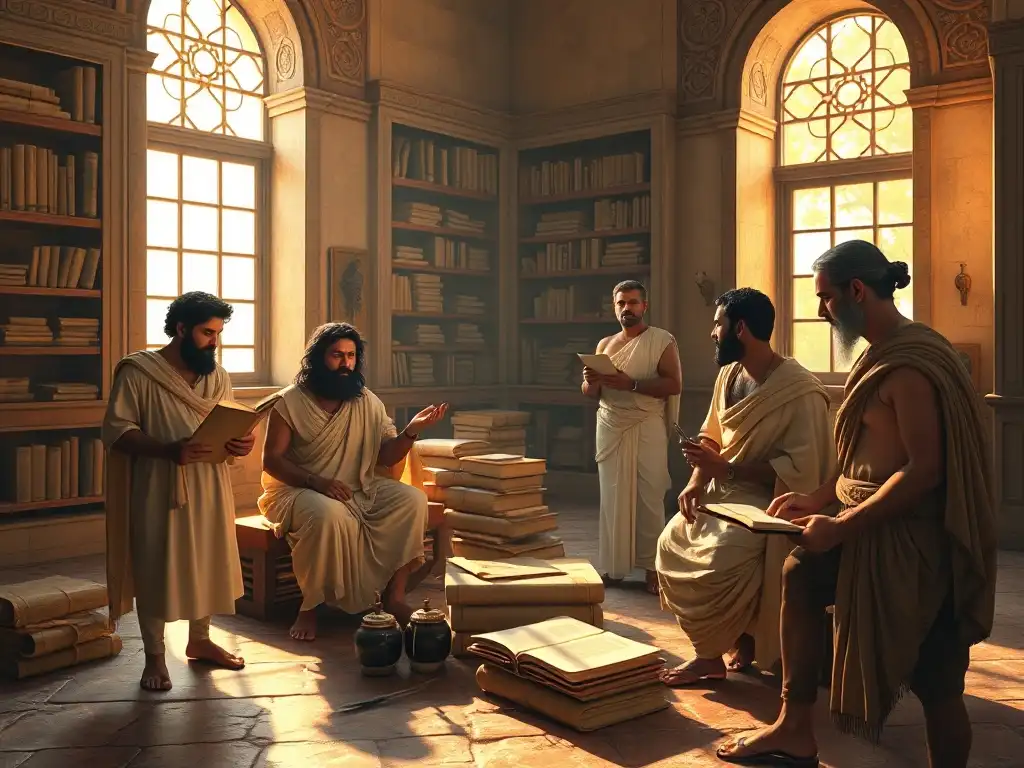
Welcome to Ancient India History, where we embark on a fascinating journey through time to uncover the rich tapestry of ancient Indian civilizations. In this article, we delve into the intriguing dialogue between ancient Indian texts and Greek scholars, exploring how these profound writings influenced thought, culture, and philosophy across continents. What secrets do these ancient texts hold that captivated the minds of Greek thinkers? Join us as we unravel the layers of this cross-cultural exchange and discover the lasting impact of India's intellectual heritage on the world. Your adventure into the past starts here!
- Introduction to Ancient Indian Texts and Greek Scholars
- Historical Context of Indian-Greek Relations
- Influence of Ancient Indian Texts on Greek Thought
- Comparative Analysis of Philosophical Ideas
- The Linguistic Exchange: Sanskrit and Greek
- The Legacy of Ancient Indian Texts in Greek Scholarship
- Conclusion: The Enduring Dialogue Between Cultures
- Frequently Asked Questions
- Final Reflection: The Enduring Dialogue of Ancient Wisdom
- Unveil the Secrets of Cultural Dialogue!
Introduction to Ancient Indian Texts and Greek Scholars
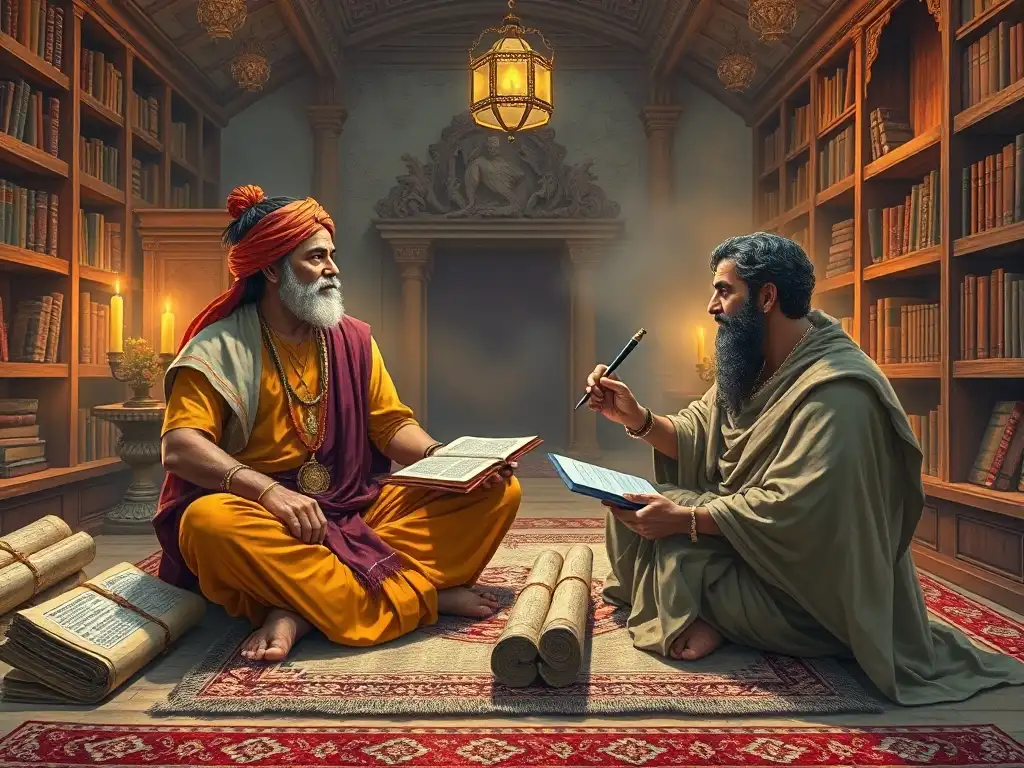
The interaction between ancient Indian civilizations and Greek scholars represents a fascinating chapter in the tapestry of global history. This dialogue not only reflects the exchange of ideas and knowledge but also highlights the profound influence that ancient Indian texts had on Greek thought and philosophy. Understanding this relationship sheds light on how cultural exchanges can shape intellectual landscapes across borders and time.
In this article, we will explore the rich body of ancient Indian texts, the significance of Greek scholars in this historical context, and the overarching purpose of this cross-cultural dialogue. Through this exploration, we aim to unravel the complexities of ancient Indian texts' influence on Greece, providing insights into one of history's most intriguing interactions between two great civilizations.
Overview of Ancient Indian Texts
Ancient Indian texts encompass a wide array of literature, philosophy, and scientific knowledge, dating back thousands of years. Some of the most influential texts include:
- Vedas: The oldest sacred scriptures, consisting of hymns, rituals, and philosophical discourses.
- Upanishads: Philosophical texts that delve into the nature of reality and the self, exploring concepts such as Brahman (universal consciousness) and Atman (individual soul).
- Puranas: A genre of literature that includes mythological stories, traditions, and cosmology, providing insights into the cultural fabric of ancient India.
- Mahabharata and Ramayana: Epic narratives that convey moral lessons, societal values, and the complexities of human nature.
These texts not only served religious and philosophical purposes but also laid the groundwork for various fields, such as mathematics, astronomy, and medicine, which would later influence scholars across the world, including those in Greece.
Importance of Greek Scholars in Ancient History
Greek scholars played a crucial role in the dissemination and interpretation of knowledge, acting as bridges between different cultures. Notable figures include:
- Alexander the Great: His conquests facilitated cultural exchanges, bringing Greek and Indian civilizations into closer contact.
- Megasthenes: As an ambassador to the Maurya Empire, he documented the social, political, and economic conditions of India, providing valuable insights into Indian life for Greek readers.
- Aristotle and Plato: Their philosophical inquiries laid the groundwork for later interpretations of Indian philosophical concepts, particularly those found in the Upanishads.
The curiosity of Greek intellectuals about Indian wisdom not only enriched their own philosophical traditions but also sparked a dialogue that would resonate for centuries.
Purpose of the Dialogue Between Cultures
The dialogue between ancient Indian texts and Greek scholars was driven by several purposes:
- Knowledge Exchange: Both cultures sought to expand their understanding of the universe, ethics, and human existence. This exchange led to a fusion of ideas that enriched both traditions.
- Philosophical Inquiry: The quest for truth and understanding prompted scholars to analyze and compare philosophical concepts, fostering a deeper comprehension of metaphysical themes.
- Cultural Appreciation: Through translations and interpretations, Greek scholars helped preserve and disseminate Indian knowledge, highlighting the importance of cross-cultural respect and appreciation.
The dialogue between ancient Indian texts and Greek scholars exemplifies the power of intellectual exchange in shaping civilizations. By examining this interaction, we can appreciate the enduring legacy of these ancient cultures and their contributions to the global intellectual heritage.
Historical Context of Indian-Greek Relations
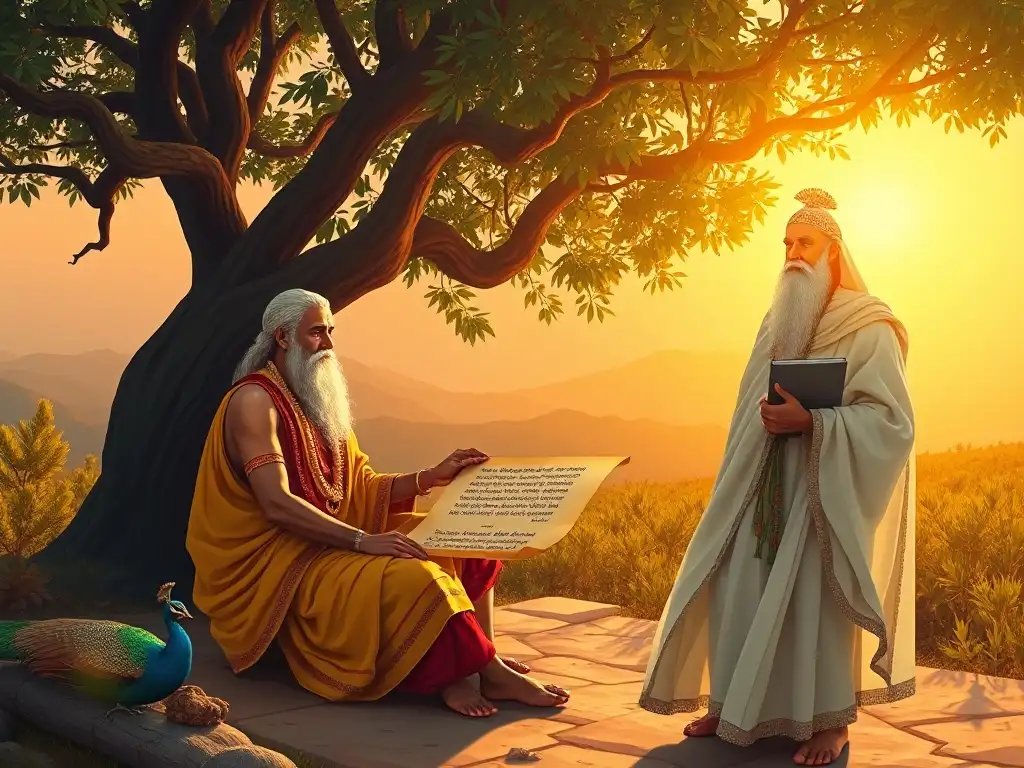
The historical context of Indian-Greek relations provides a fascinating backdrop for understanding how ancient Indian texts have influenced Greek thought and culture. The interactions between these two great civilizations were largely shaped by trade, conquest, and the pursuit of knowledge. This period saw the movement of ideas, philosophies, and texts that transcended geographical borders, creating a rich tapestry of cultural exchange.
The encounters began in earnest following the campaigns of Alexander the Great in the late 4th century BCE, which opened pathways for direct interaction. However, even before Alexander, there were earlier connections through trade routes that facilitated the exchange of goods and ideas. The subsequent establishment of the Hellenistic kingdoms in the regions of Bactria and Indo-Greece further solidified these interactions, allowing for a deeper exchange of philosophical and literary ideas.
Timeline of Interaction Between India and Greece
The timeline of interaction between India and Greece can be traced through several key events:
- 326 BCE: Alexander the Great's invasion of the Indian subcontinent initiated significant contact between Greek and Indian cultures. This marked the first large-scale interaction, where Greek soldiers encountered Indian kingdoms and philosophies.
- 250 BCE: The establishment of the Indo-Greek Kingdom under Demetrius and his successors fostered an environment for cultural and intellectual exchange. The blending of Greek and Indian cultures began to take shape during this period.
- 1st Century BCE: The flourishing of trade along the Silk Road and maritime routes facilitated the movement of goods, including textiles and spices, but also texts and philosophical works.
- 1st to 2nd Century CE: The translation of Indian texts into Greek and the adaptation of Indian philosophies into Hellenistic thought occurred during this period, exemplified by figures like Menander I, who embraced Buddhism.
- 4th Century CE: The Gupta Empire's rise coincided with the continued influence of Greek thought on Indian scholars and vice versa, leading to a vibrant exchange of ideas, especially in mathematics, astronomy, and philosophy.
Key Historical Figures in Indian-Greek Relations
Several historical figures played pivotal roles in establishing and fostering the dialogue between ancient Indian texts and Greek scholarship:
- Alexander the Great: His conquests opened new frontiers for cultural exchange. The encounters between his army and Indian sages, such as the gymnosophists, sparked interest in Indian philosophies.
- Menander I: The Indo-Greek king known for his patronage of Buddhism, his reign was marked by significant cultural integration. Menander's dialogues with Buddhist philosopher Nagasena, as recorded in the Milinda Panha, illustrate the synthesis of Greek and Indian ideas.
- Kanishka: Although primarily associated with Buddhism, Kanishka’s reign in the 2nd century CE saw the flourishing of arts and literature, influenced by Hellenistic styles and themes.
- Arius Didymus: A Greek philosopher who translated Indian texts into Greek, facilitating the spread of Indian philosophical ideas in the Hellenistic world.
These figures exemplify how individuals acted as conduits for the exchange of knowledge, allowing ancient Indian texts to influence Greek thought.
The Role of Trade in Cultural Exchange
Trade played a crucial role in the cultural exchange between ancient India and Greece. The exchange of goods was often accompanied by the movement of ideas, philosophical texts, and cultural practices. Key aspects of this trade-based cultural exchange include:
- Silk Road and Maritime Routes: These trade networks enabled merchants and travelers to carry not just goods, but also texts and knowledge. The shared interest in commodities like spices, textiles, and gems fostered relationships that transcended mere commerce.
- Buddhism's Spread: The trade routes became conduits for the dissemination of Buddhism from India to Greece and beyond. The integration of Indian religious texts into Greek thought illustrates how trade facilitated deeper cultural connections.
- Philosophical Exchanges: The interactions between traders and scholars led to the translation and adaptation of texts, allowing for cross-pollination of ideas. Greek scholars were particularly interested in Indian mathematics, astronomy, and metaphysics, which were incorporated into their own studies.
- Cultural Diplomacy: Through trade partnerships, cultural diplomacy flourished, as kingdoms exchanged not only goods but also scholars and philosophers, leading to enriched intellectual landscapes on both sides.
The role of trade in cultural exchange between ancient India and Greece was instrumental in shaping the interactions that allowed ancient Indian texts to influence Greek thought, enriching both civilizations in the process.
Influence of Ancient Indian Texts on Greek Thought
Key Texts from Ancient India
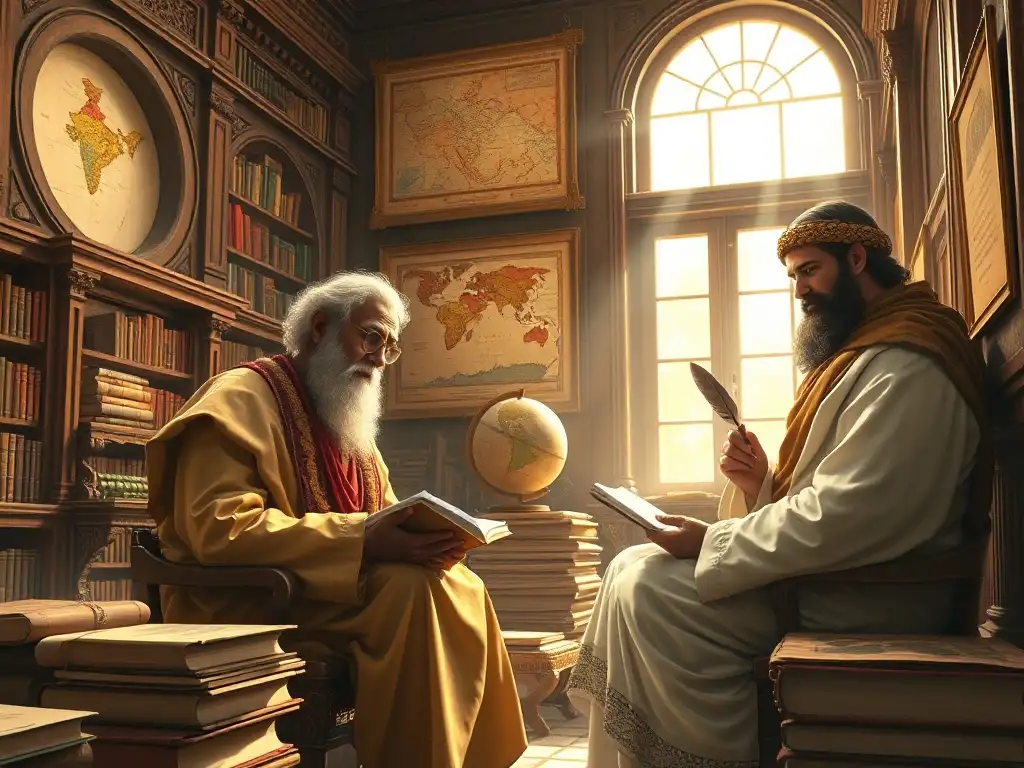
The profound influence of ancient Indian texts on Greek thought can be traced through several key works that served as philosophical, spiritual, and literary foundations. These texts not only encapsulated the essence of Indian civilization but also provided a rich tapestry of ideas that resonated with Greek scholars.
Vedas and Upanishads
The Vedas, the oldest sacred texts of Hinduism, consist of four collections: the Rigveda, Samaveda, Yajurveda, and Atharvaveda. They encompass hymns, rituals, and philosophical discourses that explore the nature of existence, the cosmos, and the divine.
- Philosophical Insights: The Upanishads, which are part of the Vedic literature, delve deeply into metaphysical concepts such as Brahman (the ultimate reality) and Atman (the self). These discussions paralleled Greek philosophical inquiries about the essence of reality.
- Impact on Greek Philosophy: The notions of duality and the exploration of self-consciousness in the Upanishads found echoes in the works of Greek philosophers like Plato and later Neoplatonists, suggesting a mutual engagement in metaphysical thought.
Mahabharata and Ramayana
The Mahabharata and Ramayana are two of the most significant epics in ancient Indian literature.
- Moral and Ethical Frameworks: Both epics address complex themes of duty ( dharma), righteousness, and the human condition, offering insights into the moral dilemmas faced by individuals. These narratives provided a rich context for discussions on ethics that Greek scholars found compelling.
- Cultural Exchange: The stories and characters, particularly those in the Mahabharata, inspired Greek narratives, fostering a cross-cultural dialogue that influenced literary forms and ethical considerations in Greek literature.
Greek Scholars’ Engagement with Indian Texts
The engagement of Greek scholars with ancient Indian texts was not merely a one-sided affair; it involved a dialogue that enriched the intellectual landscape of both cultures. This interaction was particularly evident during the conquests of Alexander the Great and the subsequent Hellenistic period.
Alexander the Great’s Influence
Alexander the Great's expeditions into India during the late 4th century BCE marked a significant point of contact between Greek and Indian civilizations.
- Cultural Confluence: The encounters with Indian philosophers, especially the gymnosophists (naked philosophers), fascinated Alexander and his entourage. This interaction led to a sharing of philosophical ideas, particularly regarding asceticism and ethics.
- Documentation of Knowledge: Accounts from Alexander's historians, such as Arrian, provide valuable insights into the philosophical exchanges that occurred, showcasing how Indian thought began to permeate Greek intellectual circles.
References by Hellenistic Philosophers
The influence of ancient Indian texts extended beyond Alexander, permeating the works of Hellenistic philosophers.
- Influence on Stoicism: The ethical teachings found in Indian texts, particularly concerning detachment and the nature of suffering, resonated with Stoic philosophers. The parallels between Stoic philosophy and Indian thought have been a subject of scholarly inquiry.
- Integration of Ideas: Greek scholars like Apollonius of Tyana referenced Indian wisdom, suggesting that ideas about ethics, cosmology, and the nature of the divine were exchanged and integrated into the broader philosophical discourse of the time.
The dialogue between ancient Indian texts and Greek scholars fostered a rich exchange of ideas that shaped the philosophical and ethical frameworks of both civilizations, illustrating the profound interconnectedness of their intellectual traditions.
Comparative Analysis of Philosophical Ideas

The interaction between ancient Indian texts and Greek scholars led to a fascinating exchange of philosophical ideas that shaped both civilizations. This comparative analysis highlights similarities and differences in their philosophical tenets, revealing how ancient Indian texts influenced Greek thought and vice versa.
Similarities Between Indian and Greek Philosophies
The philosophical traditions of ancient India and Greece share notable similarities, particularly in their exploration of ethics, cosmology, and metaphysics. These commonalities provide a foundation for understanding how these two great civilizations engaged with profound questions about existence, morality, and the nature of the universe.
Concepts of Dharma and Virtue
In ancient Indian philosophy, Dharma refers to the moral law and ethical duty that governs individual behavior and societal norms. This concept is central to texts like the Bhagavad Gita, which outlines the responsibilities one must fulfill based on their role in society. Greek philosophers, particularly Aristotle, articulated a similar concept through the idea of virtue ethics, which emphasizes character and the pursuit of moral excellence.
- Key parallels:
- Both traditions advocate for a life guided by moral principles.
- The idea of fulfilling one's duty (Dharma) resonates with Aristotle's notion of achieving eudaimonia, or human flourishing, through virtuous actions.
Ideas of Cosmology and Metaphysics
Ancient Indian texts, particularly the Upanishads, delve deeply into questions of existence, consciousness, and the nature of reality. These texts propose that the ultimate reality, Brahman, is a universal consciousness that transcends the material world. Similarly, Greek philosophers like Plato explored the concept of the Forms, positing that the physical world is a mere shadow of a higher, unchanging reality.
- Common themes:
- Both traditions grapple with the relationship between the material and the spiritual realms.
- The quest for knowledge about the universe is a shared goal, with metaphysical inquiries driving philosophical thought.
Differences in Interpretation and Application
Despite these similarities, significant differences exist in how ancient Indian and Greek philosophies interpret and apply their ideas. These distinctions can be observed in their ethical frameworks and approaches to knowledge.
Ethical Frameworks
While Indian philosophy often emphasizes collective duty and societal roles, Greek ethical thought tends to focus on individual virtue and personal responsibility. In Indian texts, the concept of karma plays a vital role in shaping one's ethical responsibilities, whereas Greek philosophy often centers around rational deliberation and the pursuit of personal excellence.
- Divergent perspectives:
- Indian texts advocate for a social context in ethical decision-making.
- Greek philosophers prioritize individual agency and rationality in ethical considerations.
Approaches to Knowledge and Wisdom
Ancient Indian texts frequently emphasize experiential knowledge and introspection as pathways to understanding, particularly through practices like meditation. In contrast, Greek philosophy places a stronger emphasis on logic, debate, and empirical observation as the primary means of acquiring knowledge.
- Notable contrasts:
- The Indian approach often integrates spirituality with knowledge acquisition.
- The Greek method values dialectical reasoning and the scientific method as essential to the pursuit of wisdom.
The comparative analysis of philosophical ideas from ancient Indian texts and Greek scholarship reveals a rich tapestry of thought shaped by both shared concepts and distinct interpretations. The dialogue between these two cultures not only enriched their respective philosophical landscapes but also laid the groundwork for future intellectual exchanges.
The Linguistic Exchange: Sanskrit and Greek

The interaction between ancient Indian texts and Greek scholars facilitated a significant linguistic exchange that profoundly influenced both cultures. One of the most notable aspects of this exchange was the impact of Sanskrit—a language rich in philosophical and scientific terminology—on the Greek language. As scholars engaged in the translation and interpretation of texts, they not only shared knowledge but also borrowed linguistic elements that enriched their own lexicons.
The Impact of Sanskrit on Greek Language
The influence of Sanskrit on the Greek language is evident in various domains, primarily in philosophy, mathematics, and astronomy. Greek scholars who delved into ancient Indian texts often encountered concepts that were not easily translatable, necessitating the adoption of specific Sanskrit terms.
For instance, the term "dharma," which encapsulates the idea of duty, law, and moral order in Indian philosophy, found its way into Greek thought, particularly in discussions of ethics. Similarly, concepts like "karma" and "yoga" were also integrated, reflecting a broader philosophical dialogue.
Moreover, the similarities between the Indo-European language families suggest that some linguistic features may have been mutually influenced through this interaction. Scholars like Pāṇini, who systematized Sanskrit grammar, provided frameworks that may have inspired Greek grammarians, leading to advancements in the study of syntax and morphology in both languages.
Cross-Pollination of Terminologies
The cross-pollination of terminologies between Sanskrit and Greek led to the emergence of new fields of study and intellectual traditions. This exchange can be observed in several key areas:
- Mathematics:
- Sanskrit mathematicians, such as Aryabhata, introduced concepts like zero and the decimal system, which were later adopted and adapted by Greek mathematicians.
- Terms like "sine" (from the Sanskrit "jya") illustrate how mathematical terminology transitioned between cultures.
- Astronomy:
- The translation of astronomical texts facilitated the sharing of knowledge about celestial bodies and cosmology.
- Greek scholars adopted Indian terms related to planetary positions and movements, enriching their own astronomical lexicon.
- Medicine:
- Ancient Indian medical texts, particularly those on Ayurveda, introduced Greek scholars to new medicinal herbs and practices, leading to the incorporation of terms related to health and wellness.
This mutual exchange not only expanded the vocabulary of both languages but also deepened the understanding of complex concepts across cultural boundaries.
Preservation of Knowledge Through Translation
The translation of ancient Indian texts into Greek played a crucial role in preserving knowledge and fostering intellectual growth. As scholars from both cultures engaged in this process, they ensured that valuable content was not lost to history. Key elements include:
- Translation Projects: Initiatives to translate Sanskrit texts into Greek, such as the works of scholars like Megasthenes and later Iamblichus, created a bridge between the two cultures, allowing for the transmission of ideas.
- Cultural Exchange Centers: Institutions like the Library of Alexandria became melting pots for scholars from diverse backgrounds, facilitating the sharing and translation of texts. This led to a rich repository of knowledge that combined elements from various civilizations, including Indian and Greek.
- Legacy of Translations: The translated texts influenced later scholars in the Islamic Golden Age and Renaissance, further extending the reach of ancient Indian wisdom. The preservation of these translations ensures that the intellectual contributions of ancient India continue to resonate in modern scholarship.
The linguistic exchange between Sanskrit and Greek not only influenced language development but also fostered a rich dialogue that shaped the intellectual landscapes of both cultures. The impact of ancient Indian texts on Greece serves as a testament to the enduring legacy of cross-cultural interactions throughout history.
The Legacy of Ancient Indian Texts in Greek Scholarship
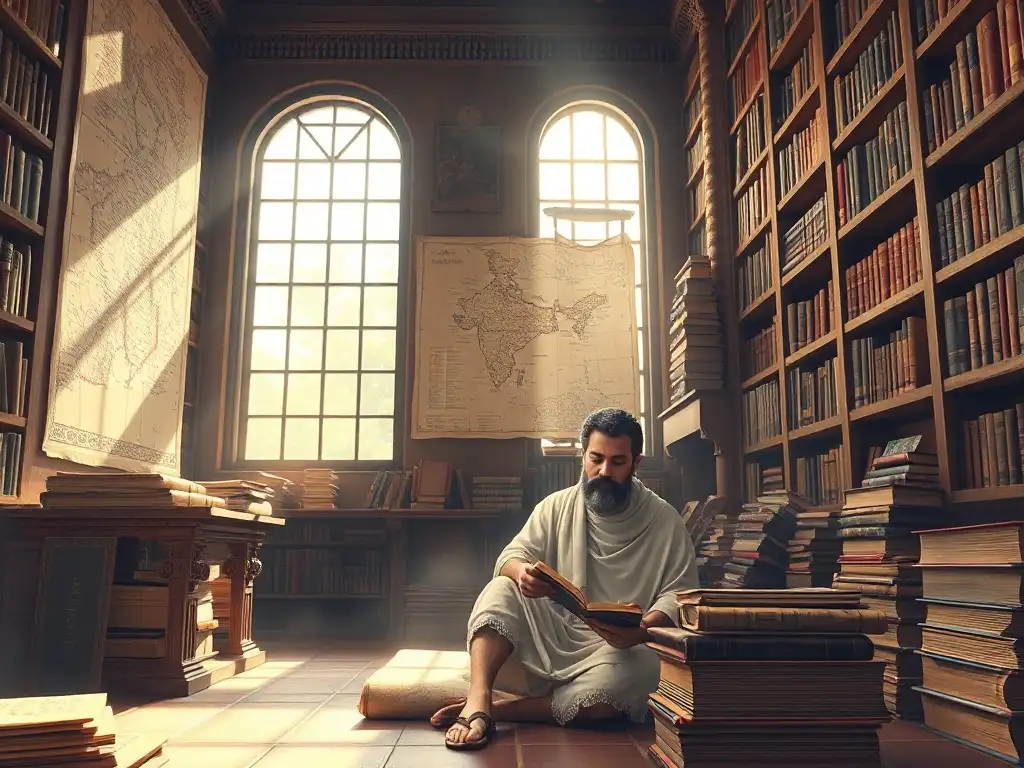
The legacy of ancient Indian texts significantly influenced Greek scholarship, marking a profound interaction between these two great civilizations. This dialogue, primarily during the Hellenistic period, led to the exchange of philosophical ideas, scientific knowledge, and cultural practices that enriched both traditions.
Lasting Effects on Western Philosophy
The philosophical tenets found in ancient Indian texts, such as the Vedas and Upanishads, offered unique perspectives that eventually permeated Greek thought. Key concepts such as:
- Brahman and Atman: The relationship between the universal soul and the individual self resonated with Greek philosophers, particularly in the works of Plato and later, Neoplatonists, who explored similar notions of the ideal forms.
- Karma and Dharma: The ethical implications of actions and duties found within Indian philosophy provided a framework for understanding morality that influenced Greek ethics. For instance, Stoicism, which emphasized rationality and virtue, echoed the Indian understanding of righteous living (dharma).
The synthesis of these ideas contributed to the development of Western philosophical thought, establishing a foundation for later movements that sought to understand the nature of existence and morality.
Influence on Later Scholars and Thinkers
The transmission of ancient Indian texts to Greek scholars was facilitated by various means, including trade routes and the conquests of Alexander the Great. Notable figures such as Megasthenes, who documented his observations of Indian society, played a crucial role in this cross-cultural exchange. His accounts contained insights into Indian philosophy, mathematics, and cosmology, which were of great interest to Greek intellectuals.
Furthermore, the works of Ptolemy and Plotinus reveal the integration of Indian astronomical knowledge and metaphysical concepts. The mathematical treatises from ancient India, particularly in the fields of geometry and algebra, influenced Greek mathematicians, leading to advancements in their own methodologies.
Modern Relevance of Ancient Dialogues
Today, the dialogue between ancient Indian texts and Greek scholarship continues to resonate in various fields, including philosophy, science, and comparative religion. The exploration of these ancient interactions has fostered a greater appreciation for:
- Interdisciplinary Studies: Modern scholars increasingly recognize the importance of cross-cultural dialogues in shaping human thought. This has led to collaborative efforts in academia that bridge Eastern and Western philosophies.
- Cultural Understanding: Engaging with the ancient texts from both traditions encourages a deeper understanding of the shared human experience, promoting dialogue that transcends geographical and temporal boundaries.
As we delve into the rich tapestry of ancient Indian texts and their influence on Greece, the enduring legacy of this intellectual exchange remains a vital area of study, reflecting the interconnectedness of human civilizations throughout history.
Conclusion: The Enduring Dialogue Between Cultures
Summary of Key Points
The exploration of ancient Indian texts reveals a rich tapestry of knowledge that has significantly influenced Greek thought and philosophy. Key points include:
- Literary Exchange: The dialogues between ancient Indian scholars and Greek philosophers emphasize the transmission of ideas, particularly in areas such as mathematics, astronomy, and ethics.
- Philosophical Parallels: Texts such as the Upanishads and Bhagavad Gita showcase concepts that resonate with Greek philosophies, particularly Stoicism and Platonism, highlighting a shared quest for understanding the nature of existence.
- Scientific Contributions: Ancient Indian texts, particularly in mathematics and medicine, laid foundational principles that were later adopted and adapted by Greek scholars, illustrating a profound impact on scientific advancements.
- Cultural Syncretism: The interactions led to a blending of cultural practices and ideologies, influencing art, literature, and religious thought within both civilizations.
Reflection on the Importance of Cross-Cultural Influence
The dialogue between ancient Indian texts and Greek scholarship underscores the significance of cross-cultural interactions in shaping intellectual landscapes. This relationship not only enriched both civilizations but also fostered a spirit of inquiry and exchange that transcended geographical boundaries.
- Mutual Enrichment: The synthesis of ideas from diverse cultures encourages innovative thinking and broadens perspectives. For instance, the integration of Indian numeral systems into Greek mathematics exemplifies how collaborative scholarship can lead to monumental shifts in understanding.
- Legacy of Collaboration: The enduring impact of these exchanges is evident in modern academic pursuits. The philosophical and scientific legacies of ancient India and Greece continue to inform contemporary thought, emphasizing the need for a global perspective in education and research.
Future Directions for Research in Ancient Indian-Greek Relations
To further understand the complexity of ancient Indian-Greek relations, future research should focus on:
- Archaeological Evidence: Investigating archaeological sites that may reveal artifacts or inscriptions linking both cultures could provide tangible insights into their interactions.
- Textual Analysis: A deeper analysis of translated texts and commentaries may uncover lesser-known influences and the nuances of cross-cultural dialogues.
- Comparative Studies: Expanding comparative studies between ancient Indian and Greek thought can illuminate the broader implications of their interactions and influence on subsequent civilizations.
- Interdisciplinary Approaches: Engaging scholars from various fields, including anthropology, linguistics, and philosophy, can provide a holistic view of the cultural exchanges and their significance in shaping global intellectual heritage.
By pursuing these avenues, scholars can continue to unravel the profound and enduring dialogue between ancient Indian texts and Greek scholarship, enriching our understanding of their historical and cultural contexts.
Frequently Asked Questions
What are ancient Indian texts known for?
Ancient Indian texts are notable for their profound wisdom, covering subjects such as philosophy, science, and literature. They have significantly influenced various cultures, including Greece.
How did ancient Indian texts influence Greek scholars?
Greek scholars were deeply impacted by ancient Indian texts, which introduced them to concepts in mathematics, astronomy, and ethics. This cross-cultural dialogue enriched both civilizations.
What specific texts had an impact on Greek thought?
Key texts such as the Vedas, Upanishads, and the Mahabharata provided insights into metaphysics and moral philosophy, which were later explored by Greek philosophers like Plato and Aristotle.
Were there any notable Greek figures who studied Indian texts?
Yes, figures like Alexander the Great and his scholars, including Megasthenes, encountered Indian thought during their conquests, leading to a blend of cultural and intellectual exchange.
How did this exchange shape modern understanding of both cultures?
The dialogue between ancient Indian and Greek texts laid the foundation for many modern philosophical and scientific ideas, highlighting the importance of cross-cultural influences in shaping knowledge.
Final Reflection: The Enduring Dialogue of Ancient Wisdom
The exchange of ideas between ancient Indian texts and Greek scholars exemplifies the profound interconnectedness of human thought. Today, as we navigate a world increasingly defined by cultural exchange and globalization, the insights derived from this ancient dialogue remind us of the timeless nature of knowledge. The influence of ancient Indian texts on Greece not only enriched Greek philosophy but also laid the groundwork for a more holistic understanding of existence that transcends geographical boundaries.
The impact of this cross-cultural dialogue continues to resonate in our modern society, shaping philosophical discourse and spiritual practices across the globe. As we delve into the teachings of ancient Indian texts, we uncover a wealth of wisdom that encourages introspection and a deeper understanding of our place in the universe. In the end, we will remember not the words of our enemies, but the silence of our friends.
– Martin Luther King Jr. This quote serves as a poignant reminder of the importance of dialogue and the sharing of ideas, urging us to engage with diverse perspectives to foster unity and understanding.
As we reflect on the lessons from ancient Indian texts and their influence on Greece, let us embrace the opportunity to cultivate a dialogue within our own lives. I invite you to explore the wisdom of these ancient traditions and consider how they can inform your personal journey. By integrating these teachings into our daily lives, we can contribute to a richer, more inclusive cultural tapestry that honors the legacy of our ancestors while paving the way for future generations.
Unveil the Secrets of Cultural Dialogue!
Thank you for diving into the rich tapestry of Ancient Indian texts and their enlightening encounters with Greek scholars! Your interest not only helps preserve this knowledge but also bridges cultures that continue to resonate today. Now, it’s time to take the next step in exploring these profound ideas.
Here are a few ways you can deepen your understanding and share the wisdom of these ancient dialogues:
- Engage with further readings: Explore recommended texts or scholarly articles that delve deeper into the intersections of Indian and Greek philosophies.
- Join the conversation: Share your thoughts and insights on social media or in forums to connect with others who are passionate about these rich cultures.
- Participate in local cultural events: Attend lectures and workshops that highlight ancient philosophies and their relevance in today’s world.
What aspect of the dialogue between Ancient Indian texts and Greek scholars resonated with you the most? How do you think these ancient perspectives can influence modern thought?