
Labor and Society: The Interconnection of Occupations and Social Status in Ancient India

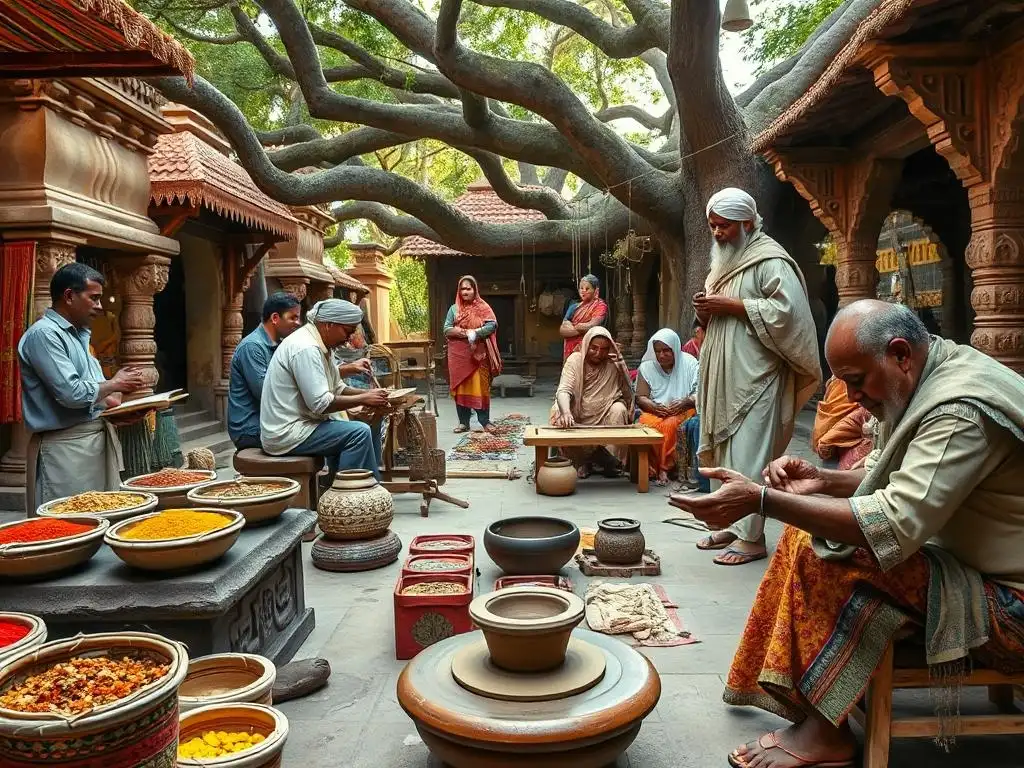
Welcome to Ancient India History, where we embark on a captivating journey through the rich tapestry of ancient civilizations that shaped the Indian subcontinent. In our feature article, “Labor and Society: The Interconnection of Occupations and Social Status in Ancient India,” we unravel the intricate layers of social status and its profound influence on daily life and society. What roles did various occupations play in determining one's place in the social hierarchy?
Join us as we explore this fascinating aspect of ancient Indian culture and uncover the connections that defined a civilization. Dive deeper, and let the stories of the past inspire your understanding of the present!
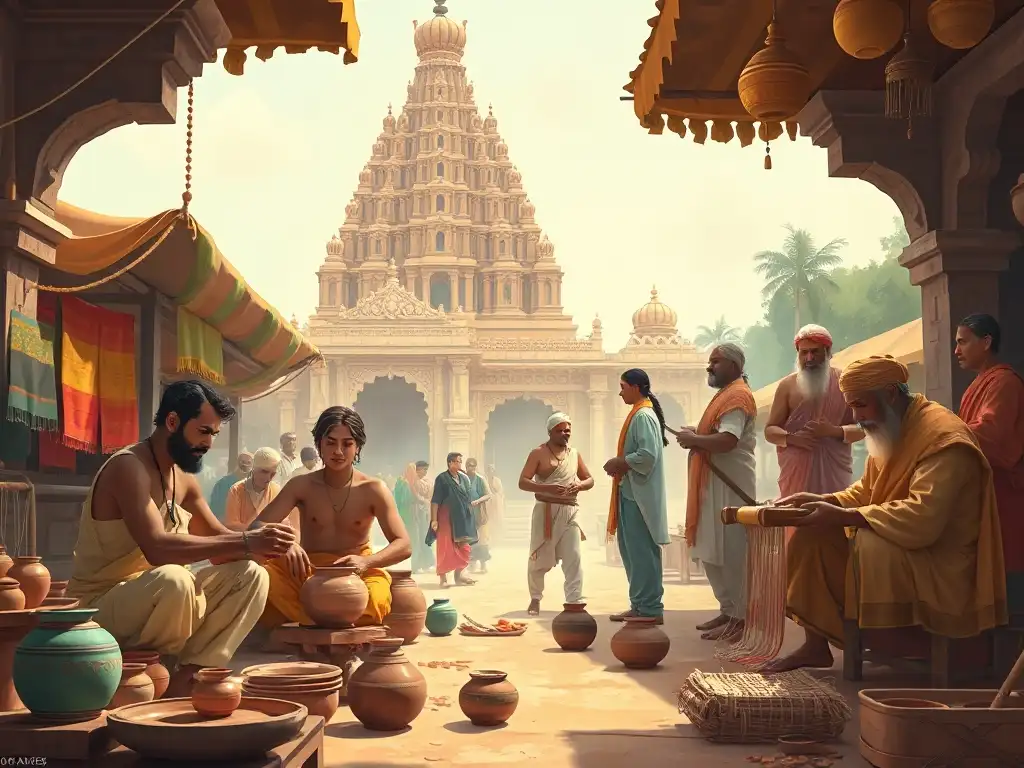
Exploring the complex tapestry of social status in ancient India reveals a fascinating interplay between labor, occupation, and societal hierarchy. The diverse civilizations that flourished on the Indian subcontinent, from the sophisticated urban centers of the Indus Valley to the intellectual zenith of the Gupta Empire, showcased a rich spectrum of occupations that were intricately linked to social status.
In this article, we will delve into how these occupations not only shaped individual identities but also reinforced social stratification, creating a distinctive structure that governed daily life in ancient Indian society. By examining the caste system's profound influence on occupational roles and the implications for social mobility, we can better understand the foundations of social status in ancient India and its lasting impacts on contemporary society.
Overview of Ancient Indian Society
Ancient Indian society was characterized by a complex social structure that evolved over millennia. It was marked by various layers of hierarchy, with each level having its own roles, responsibilities, and expectations. The society was largely agrarian, with a significant emphasis on agriculture, trade, and craftsmanship. Different regions contributed to diverse economic activities, leading to a multifaceted social fabric.
Key features of ancient Indian society included:
- Agricultural Foundations: Most people engaged in farming, which was essential for sustenance and trade.
- Artisan and Craftsmanship: Skilled artisans contributed to economic growth through the production of textiles, pottery, and metalwork.
- Trade Networks: Trade flourished both locally and with distant lands, enhancing cultural exchanges and economic prosperity.
The interplay of these elements defined the social status of individuals, often determined by their occupation and lineage.
Importance of Labor in Social Stratification
Labor played a pivotal role in establishing and maintaining social stratification in ancient India. The types of work individuals performed were often linked to their family background and caste, creating a system where one's occupation could dictate their social standing.
Some crucial points regarding labor and social status include:
- Occupational Roles: Certain tasks were regarded as more prestigious, while others were deemed menial, leading to a hierarchy of occupations.
- Inheritance of Occupations: Many professions were hereditary, meaning individuals often inherited their social status based on their family's occupation.
- Economic Contributions: The economic contributions of various occupations influenced societal perceptions, with some trades receiving greater respect and recognition than others.
This intricate relationship between labor and social status not only shaped individual identities but also reinforced the existing social order.
The Caste System and Its Influence on Occupations
Explanation of the Caste System in Ancient India
The caste system was a fundamental aspect of ancient Indian society that categorized individuals into distinct groups based on their birth, occupation, and social status. This hierarchical structure comprised four primary varnas:
- Brahmins: Priests and scholars responsible for religious rituals and the preservation of sacred texts.
- Kshatriyas: Warriors and rulers who protected and governed society.
- Vaishyas: Merchants and landowners who engaged in trade and agriculture.
- Shudras: Laborers and service providers who performed manual tasks and served the higher castes.
Each of these varnas had specific duties and social expectations, creating a rigid framework that dictated the dynamics of ancient Indian life.
Occupations Associated with Each Caste
The occupations assigned to each caste were deeply entrenched in the social structure of ancient India. Some examples of occupations associated with each varna include:
- Brahmins: Ritual priests, educators, and advisors.
- Kshatriyas: Soldiers, kings, and protectors.
- Vaishyas: Farmers, traders, and artisans.
- Shudras: Servants, laborers, and craftsmen.
This division of labor ensured that each caste contributed to the economy and society in its unique way while simultaneously reinforcing the social hierarchy.
Impact of Caste on Social Mobility
The caste system significantly impacted social mobility, often restricting individuals' ability to rise beyond their assigned caste.
Key factors influencing social mobility included:
- Birthright: An individual’s caste was determined at birth, making it challenging to change one’s social status.
- Occupational Restrictions: Many castes were limited to specific occupations, preventing individuals from pursuing trades that might enhance their status.
- Cultural Norms: Societal perceptions often dictated the acceptability of moving between castes, creating barriers to upward mobility.
As a result, the intertwining of caste and occupation in ancient India created a rigid social structure that limited individuals' opportunities based on their birth, thus solidifying the concept of social status in ancient India.
Major Occupations in Ancient India
Ancient India was marked by a complex tapestry of occupations that shaped its socio-economic landscape. These occupations were not only vital for the sustenance of daily life but also played a crucial role in defining social status and hierarchy. The major occupations included agriculture, craftsmanship, trade, and religious roles, each contributing uniquely to the fabric of society.
Agriculture as the Backbone of Society
Agriculture was the primary occupation in ancient India, forming the foundation of the economy and societal structure. The fertile plains of the Indus Valley and the Ganges River supported a variety of crops, including wheat, barley, rice, and pulses. Farmers, often organized in village cooperatives, were responsible for food production, which was critical for survival and prosperity. The agrarian lifestyle dictated social norms, with the agrarian calendar influencing festivals, rituals, and community gatherings.
The importance of agriculture extended beyond mere sustenance; it was also linked to social status. Wealthy landowners often commanded greater respect and power within their communities, as land ownership was synonymous with wealth and influence. This agricultural framework fostered a stratified society where the labor of farmers was essential yet often undervalued compared to the elite landowners.
Artisans and Craftsmen: The Skilled Labor Force
Artisans and craftsmen constituted a vital segment of ancient Indian society, contributing significantly to both the economy and cultural heritage. They specialized in various trades, including pottery, weaving, metalwork, carpentry, and stone carving. Their work not only met the daily needs of the population but also produced exquisite items for trade and religious purposes.
The skills of artisans were often passed down through generations, forming guilds that preserved techniques and quality. These artisans enjoyed a degree of social status, especially those who created items of artistic or religious significance. For example, master craftsmen who produced intricate sculptures for temples were revered, while others engaged in more common trades might not have enjoyed the same level of respect.
Merchants and Trade: Economic Drivers of Social Status
Merchants played an essential role in the economic development of ancient India, facilitating trade both within the subcontinent and with distant lands such as Persia, Arabia, and Southeast Asia. The flourishing trade routes, including the famous Silk Road, enabled the exchange of goods like spices, textiles, and precious stones, significantly enhancing the wealth of traders.
The status of merchants varied widely depending on their wealth and the volume of trade they engaged in. Successful merchants often accumulated significant wealth, which translated into social prestige and influence. They were crucial in creating a vibrant economic landscape that allowed for greater interaction among different regions and cultures, ultimately shaping the social hierarchy where affluent merchants could rival the traditional elite.
Priests and Scholars: The Intellectual Elite
In ancient India, priests and scholars occupied a distinguished position within society, recognized for their knowledge and spiritual authority. They were responsible for performing rituals, preserving sacred texts, and imparting education, thus playing a pivotal role in maintaining the cultural and religious fabric of society.
The Vedic texts and other religious scriptures were central to their status, as these individuals held the keys to spiritual and intellectual enlightenment. Their role as mediators between the divine and the people elevated their social status, often placing them above traders and artisans in the societal hierarchy. The patronage they received from kings and wealthy landowners further solidified their influence and importance in ancient Indian society.
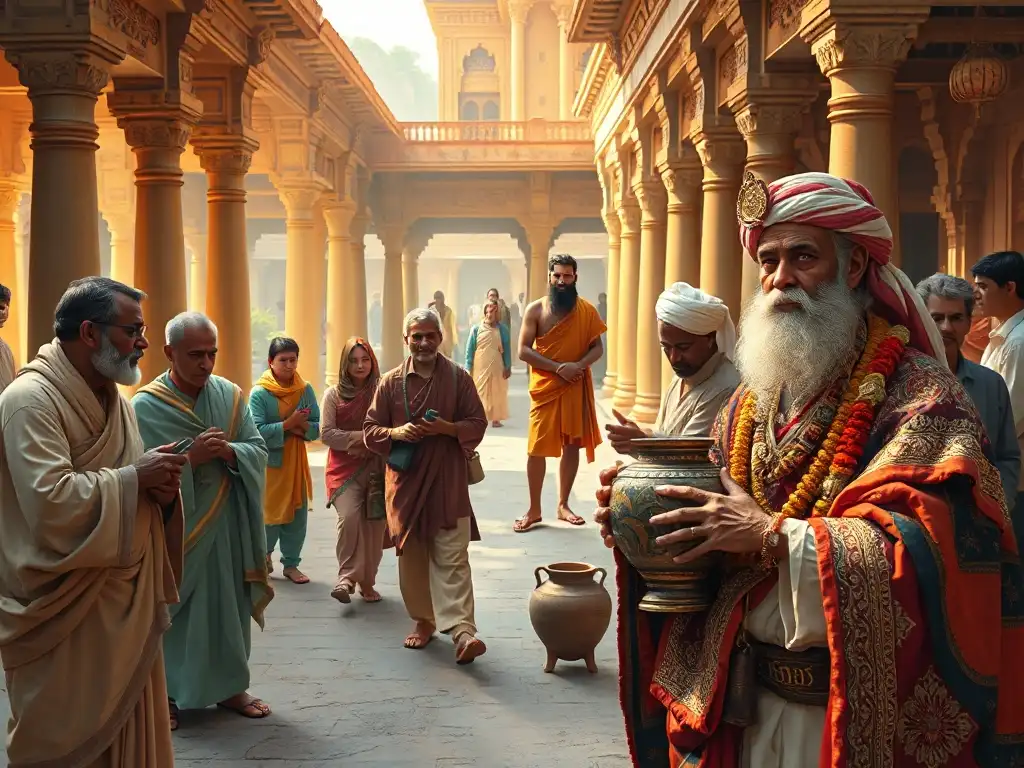
Social status in ancient India was intricately tied to economic roles, with various occupations reflecting and reinforcing the societal hierarchy. The stratification was influenced by factors such as wealth accumulation, land ownership, and the nature of one's work.
How Economic Activities Defined Social Hierarchy
Economic activities were fundamental in defining social hierarchy in ancient India. The caste system, which categorized people based on their occupation, played a critical role in this stratification. Individuals engaged in 'clean' occupations, such as priests and scholars, were often placed at the top of the hierarchy, while those in 'unclean' occupations, like manual laborers, were positioned at the bottom.
The interdependence between economic roles and social status meant that individuals were often seen through the lens of their occupation. This system reinforced existing social structures and determined one's rights, privileges, and place within the community.
The Role of Land Ownership in Social Status
Land ownership was a significant determinant of social status in ancient India. Those who owned vast tracts of land were typically part of the upper echelons of society, enjoying privileges that came with wealth and influence. Landowners had the means to exert control over agricultural production, labor, and trade, thus solidifying their power.
In contrast, landless laborers or those who worked as tenants were often relegated to lower social strata, despite their essential contributions to the economy. This disparity illustrated how land ownership not only affected economic prosperity but also dictated social identity and status.
The Interplay Between Wealth and Caste in Ancient India
The relationship between wealth and caste in ancient India was complex and multifaceted. While the caste system provided a framework for social organization, economic prosperity could sometimes transcend caste boundaries. Wealthy individuals, regardless of their caste, could gain social leverage, allowing them to influence political and religious spheres.
However, this interplay was not straightforward; wealth could elevate one's status but did not always guarantee acceptance into higher caste circles. The rigid structures of the caste system often limited social mobility, reinforcing the notion that one's birth determined their place in society, even in the face of economic success.
The interconnection of occupations and social status in ancient India underscores how economic roles shaped societal structures, creating a complex web of relationships that defined daily life and interactions. Understanding these dynamics provides valuable insights into the rich history of ancient Indian civilization.
Gender Roles in Labor and Society
In ancient India, gender roles were deeply intertwined with labor and social status. The societal norms dictated that men and women had distinct roles that influenced their occupations and their standing within the community. Men were typically associated with roles that emphasized strength, such as agriculture, trade, and warfare, while women were primarily tasked with domestic responsibilities, including child-rearing, cooking, and textile production. However, this division was not absolute, and women occasionally engaged in economic activities that contributed to their families and communities.
The perception of gender roles also extended to the types of skills deemed appropriate for each gender. For instance, activities such as pottery, weaving, and herbal medicine were often seen as suitable for women, allowing them to participate in economic exchanges to some extent. Yet, despite these contributions, women's labor was frequently undervalued in terms of social recognition. The rigid societal hierarchy often placed women at a disadvantage, limiting their opportunities for social mobility and leadership roles.
Women's Occupations in Ancient Indian Society
Women in ancient Indian society were engaged in a variety of occupations, albeit often within the confines of their domestic spheres. Some of the key occupations included:
- Weaving: Women were instrumental in textile production, creating garments not only for their families but also for trade.
- Agricultural Support: While men primarily worked in the fields, women participated in planting, harvesting, and processing crops, contributing significantly to agricultural output.
- Craftsmanship: In many regions, women were involved in pottery and basket-making, skills that were essential for daily life and trade.
- Medicine: Some women practiced traditional medicine, utilizing herbal knowledge passed down through generations to heal their families and communities.
Despite these contributions, women's work was often unrecognized in formal economic records, reflecting a broader trend of undervaluing female labor in ancient societies.
The Impact of Gender on Social Status and Labor
The relationship between gender and social status in ancient India was profound, as it influenced not only individual opportunities but also familial honor and community standing. Men typically occupied higher social tiers, which afforded them access to education, land ownership, and political power. In contrast, women, especially those from lower castes, faced significant barriers to social mobility and were often relegated to subordinate roles within their families and communities.
This disparity was exacerbated by cultural practices that reinforced patriarchal norms. For example, the practice of dowry and the expectation of women's subservience to male relatives diminished their autonomy and economic independence. However, some women from higher social strata could attain elevated status through marriage alliances or by being patronesses of religious and cultural institutions, highlighting a complex interplay between gender, social status, and labor.
Labor Dynamics in the Indus Valley Civilization
The Indus Valley Civilization (c. 3300–1300 BCE) is notable for its advanced urban planning and complex social structure. Labor in this civilization was organized around specialized crafts, trade, and agriculture, with evidence of a stratified society. Archaeological findings suggest that a wide array of professions existed, including artisans, merchants, and laborers.
The presence of granaries and workshops indicates that certain groups, likely based on skill or wealth, held higher social status. For instance, those involved in trade and long-distance commerce, such as merchants, likely enjoyed elevated status compared to agricultural laborers. The urban centers of Harappa and Mohenjo-Daro exemplified this labor stratification, with evidence of comprehensive trade networks reaching as far as Mesopotamia.
Occupations and Social Structure in the Maurya Empire
The Maurya Empire (c. 322–185 BCE) marked a significant evolution in labor dynamics and social structure. With the establishment of a centralized administration, professions became more defined and regulated. The empire's economy thrived on agriculture, trade, and craftsmanship, with a well-structured guild system that facilitated the organization of various trades.
Social status in the Maurya Empire was largely influenced by occupation. The ruling class, including warriors and bureaucrats, occupied the highest tiers of society, while artisans, farmers, and laborers formed the lower strata. Notably, the Arthashastra, an ancient Indian treatise on statecraft attributed to Kautilya, emphasizes the importance of trade and economic activities in maintaining power, illustrating how labor directly influenced social hierarchy during this period.
Gupta Empire: Economic Prosperity and Social Stratification
The Gupta Empire (c. 240–550 CE) is often referred to as the Golden Age of India due to its remarkable achievements in arts, science, and commerce. The economy flourished through extensive agricultural production and vibrant trade networks, which significantly impacted labor and social status.
During this period, the caste system became more pronounced, with specific occupations becoming hereditary. The rise of merchant classes and skilled artisans contributed to a burgeoning middle class, allowing some individuals to climb the social ladder through wealth accumulation. However, rigid caste boundaries still limited social mobility for many, reinforcing the notion that one's occupation was intrinsically linked to their social status.
As a result, social stratification was not just a reflection of economic roles but was also deeply embedded in cultural practices and religious beliefs, making the Gupta Empire a pivotal point in understanding the complexities of labor and societal hierarchy in ancient India.
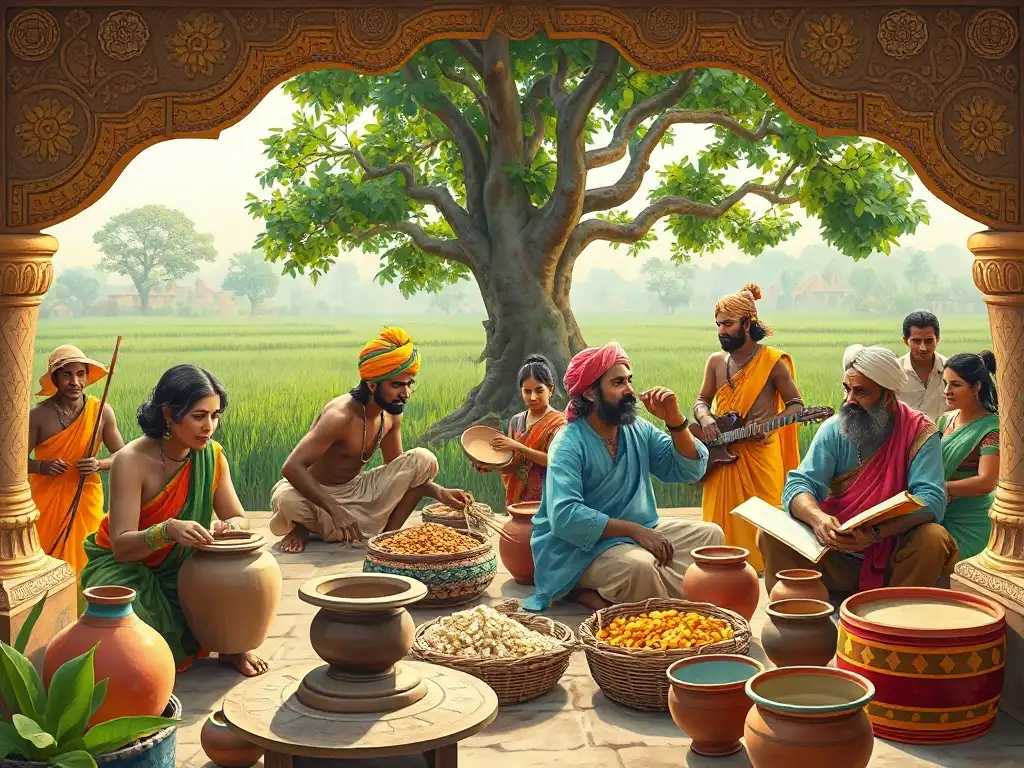
In ancient India, social status was intricately linked to various occupations, forming a complex hierarchy that dictated the roles individuals played within society. This hierarchy was influenced by factors such as caste, economic conditions, and cultural practices. The caste system, which classified people into distinct groups based on their profession and social status, played a significant role in shaping individual identities. Occupations were often hereditary, meaning that social status was typically inherited rather than achieved, leading to a rigid societal structure.
The evolution of labor practices over centuries began with agrarian societies where farming was the predominant occupation. As civilizations advanced, the diversification of jobs emerged, encompassing trades, crafts, and administrative roles. These changes were often driven by economic needs, technological advancements, and external influences, such as trade with other regions. The rise of cities and centers of learning during periods like the Maurya and Gupta empires further complicated the dynamics of labor and social status, allowing for greater specialization and, at times, mobility within the societal structure.
Changes in Occupations Over Time
Throughout ancient Indian history, occupations evolved significantly, reflecting shifts in economic practices and societal values. Initially, a majority of the population was engaged in agriculture. As trade routes expanded, merchants and artisans began to gain prominence, altering the landscape of labor. The emergence of guilds, particularly during the Gupta period, signified a formal recognition of various trades, allowing craftsmen and traders to organize and protect their interests.
This shift also led to the rise of new professions, such as scholars, physicians, and bureaucrats, who gained respect and higher social status due to their specialized knowledge and skills. The introduction of new technologies, such as metallurgy and textile production, further diversified occupational opportunities. However, despite these changes, the caste system remained a dominant force, often limiting the extent to which individuals could transcend their inherited social status.
The Transition from Traditional Roles to New Opportunities
The transition from traditional roles to new opportunities in ancient India was marked by periods of significant social change. For example, the rise of urban centers during the Mauryan and Gupta empires facilitated increased commerce, leading to new jobs in trade, administration, and scholarship. This urbanization allowed individuals to pursue occupations beyond the constraints of their caste, albeit still within certain limitations.
During these times, we also see the emergence of Vaishyas, or merchant class, who began to challenge the traditional dominance of the Brahmins (priests) and Kshatriyas (warriors). As trade flourished, wealth became a crucial determinant of social status, sometimes overshadowing traditional caste roles. The push for greater social mobility was also evident in the rise of women in various professions, including weaving and pottery, although their opportunities remained largely constrained by societal norms.
The intricate relationship between labor and social status in ancient India has left a profound legacy that continues to resonate today. The historical context of occupational hierarchy provides insight into the foundational structures of modern Indian society. The caste system, while having undergone significant changes, still influences social dynamics and occupational choices, demonstrating the enduring impact of these ancient classifications.
Summary of Key Points on Social Status in Ancient India
- Caste System: The foundation of social hierarchy, dictating occupations and social roles.
- Occupational Evolution: Transition from agriculture to trade and specialized professions, reflecting economic and cultural shifts.
- Urbanization: Increased opportunities for social mobility, especially during the Mauryan and Gupta periods.
- Gender Dynamics: While women gained some labor opportunities, societal constraints persisted.
Reflection on the Legacy of Ancient Indian Labor Systems
The labor systems of ancient India exemplify the complexities of social status, where occupation and caste were deeply intertwined. As society progressed, these systems evolved, allowing for new opportunities and challenges. The legacy of these ancient practices is evident in contemporary India, where the dialogue surrounding caste and labor continues to shape social interactions and economic opportunities. Understanding this history is crucial for appreciating the rich tapestry of Indian society and its ongoing developments.
References
Understanding the intricate relationship between labor and social status in ancient India is critical for comprehending the societal structure of the time. The following resources provide valuable insights and detailed analyses on this topic, drawing from historical texts and archaeological evidence.
Suggested Readings on Labor and Society in Ancient India
-
"The Oxford History of India" by Vincent A. Smith
This comprehensive work provides an overview of India's history, including the social hierarchies and labor systems that defined ancient Indian society.
-
"The Ancient Indian Economy" by R. S. Sharma
Sharma explores the economic aspects of ancient India, delving into the roles of various occupations and their impact on social status.
-
"Society and Culture in Ancient India" by D. N. Jha
This book examines the cultural and social frameworks within which occupations were understood, linking them to the overall societal structure.
-
"The Rigveda" (translated by various authors)
The Rigveda, one of the oldest texts, offers insights into early social structures, including references to various professions and their societal implications.
-
"Caste and Class in Indian Society" by M. N. Srinivas
Srinivas provides a detailed analysis of how caste systems have influenced labor roles and social status across different periods in Indian history.
Historical Texts and Archaeological Findings
Historical texts and archaeological findings play a pivotal role in revealing the dynamics of labor and social status in ancient India. Key sources include:
-
The Manusmriti
This ancient legal text outlines the duties and responsibilities associated with different social classes, illuminating the connections between caste, occupation, and social hierarchy.
-
The Arthashastra by Kautilya
This ancient treatise on statecraft and economic policy discusses various professions and their contributions to the economy, reflecting the value placed on different occupations.
-
Archaeological Sites
Excavations at sites such as Harappa and Mohenjo-Daro have uncovered artifacts and evidence of specialized labor practices, providing insights into the division of labor and its relation to social status in the Indus Valley Civilization.
-
Inscriptions and Coins
Inscriptions from various ancient kingdoms often reference guilds and trades, indicating the importance of particular occupations and their standing within society.
Through these texts and findings, researchers can better understand the complexities of social status in ancient India and the integral role that labor played in shaping societal structures.
- Introduction to Social Status in Ancient India
- The Caste System and Its Influence on Occupations
- Major Occupations in Ancient India
- Social Status and Economic Roles
- Gender Roles in Labor and Society
- Case Studies of Labor and Social Status in Specific Regions
- The Evolution of Social Status Through Labor
- Conclusion: The Lasting Impact of Labor and Social Status
- References
- What were the main social classes in ancient India?
- How did occupation influence social status in ancient India?
- Were there any exceptions to the social hierarchy in ancient India?
- What role did religion play in determining social status?
- How did the Gupta Empire influence social status and occupations?
Frequently Asked Questions
The social structure in ancient India was primarily divided into four main classes known as the varna system: Brahmins (priests), Kshatriyas (warriors), Vaishyas (merchants), and Shudras (laborers).
In ancient India, an individual's occupation often determined their social status, with higher prestige associated with intellectual and spiritual roles like priests, while trades and manual work were generally viewed as lower status.
Yes, while the varna system established a rigid hierarchy, there were instances of individuals rising above their assigned social status due to exceptional skills or contributions, particularly in fields like art and scholarship.
Religion was a significant factor in shaping social status in ancient India, as certain religious duties and rituals were reserved for specific classes, reinforcing the hierarchical structure within society.
During the Gupta Empire, there was a notable expansion of trade and urbanization, leading to a more complex social structure where occupational diversity began to emerge, allowing for greater social mobility compared to earlier periods.
The intricate relationship between labor and social status in ancient India remains profoundly relevant today. As we navigate the complexities of modern society, the echoes of historical social stratification continue to shape our perceptions of work and worth. The caste system, deeply rooted in ancient Indian society, serves as a reminder of how occupational roles can dictate one's place in the social hierarchy, influencing not only individual lives but also the broader societal framework. This historical context urges us to examine how our own societal structures may still reflect these age-old dynamics.
The exploration of social status in ancient India reveals a tapestry of cultural values that have persisted through the ages. The roles assigned to various occupations were not merely functional; they were imbued with significance that affected every aspect of life, from personal identity to community interaction. As we reflect on this, we can see how these historical narratives continue to influence contemporary discussions around labor and equality. The past is never dead. It's not even past.
— William Faulkner. This quote encapsulates the idea that understanding our history is essential for addressing present inequalities and shaping a more equitable future.
As we conclude this exploration of labor and social status, I invite you to reflect on your own perceptions of work and its value in your life. Consider how the lessons from ancient India can inspire us to challenge existing social norms and foster a more inclusive society. Let us carry forward the understanding that every occupation holds intrinsic value and that our collective efforts can pave the way for a future where social status is not determined by one's work but rather by the contributions we make to the community as a whole.
Unveil the Rich Tapestry of Ancient Indian Society!
Thank you for diving into the fascinating world of labor and social status in ancient India! Your interest today enriches your understanding of how various occupations shaped societal dynamics during that time. Now it's time to take the next steps toward exploring this captivating subject further.
- Explore additional resources on our website to deepen your knowledge about the diverse roles within ancient Indian society.
- Engage with your friends and family by sharing this article – let’s spread the wisdom of history together!
- Join a discussion in the comments below about how ancient occupational hierarchies might resonate with contemporary societal structures.
How do you think the interconnection of occupations and social status in ancient India influences our current perspectives on careers?