
The Role of Craftsmanship in Ancient India's Trade Networks

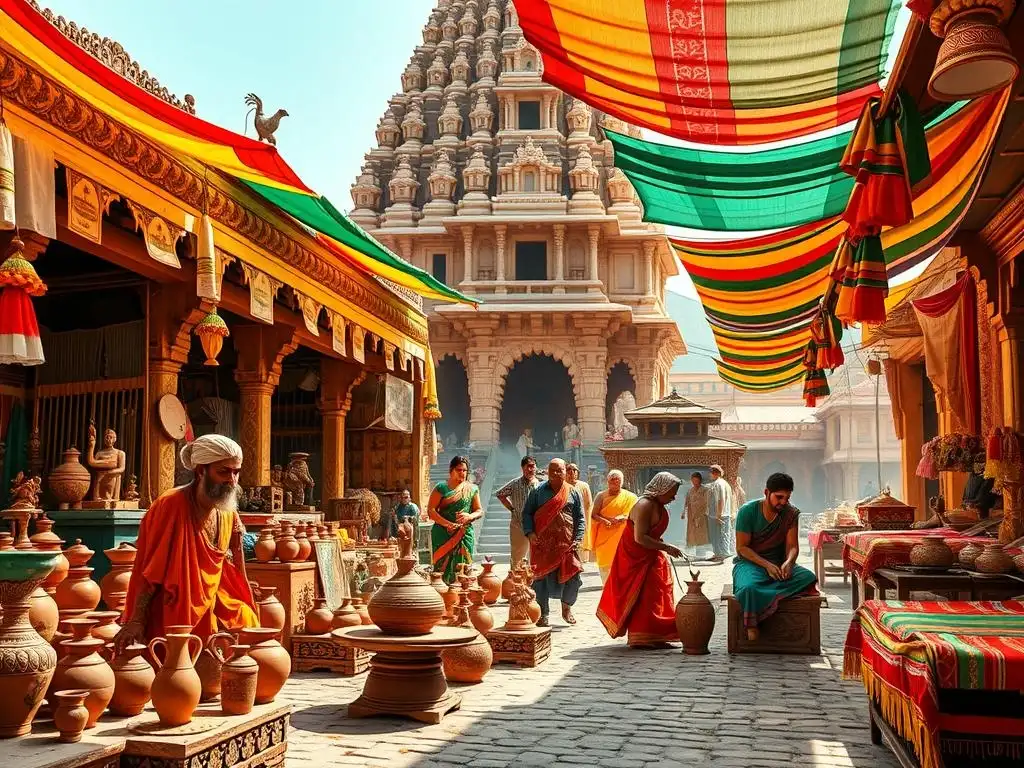
Welcome to Ancient India History, where we invite you to embark on a fascinating journey through time to uncover the rich tapestry of ancient Indian civilization. In our featured article, “The Role of Craftsmanship in Ancient India's Trade Networks,” we delve into the intricate world of ancient Indian craftsmanship trade that not only shaped local economies but also forged connections across distant lands. Discover how the exquisite skills of artisans played a pivotal role in the flourishing trade networks of the Indus Valley and beyond.
Join us as we explore the remarkable contributions of these ancient craftsmen and the profound impact they had on the cultural landscape of India. Your adventure into the depths of history awaits—read on to unravel the stories that lie behind the art of trade!
Introduction to Ancient Indian Craftsmanship Trade
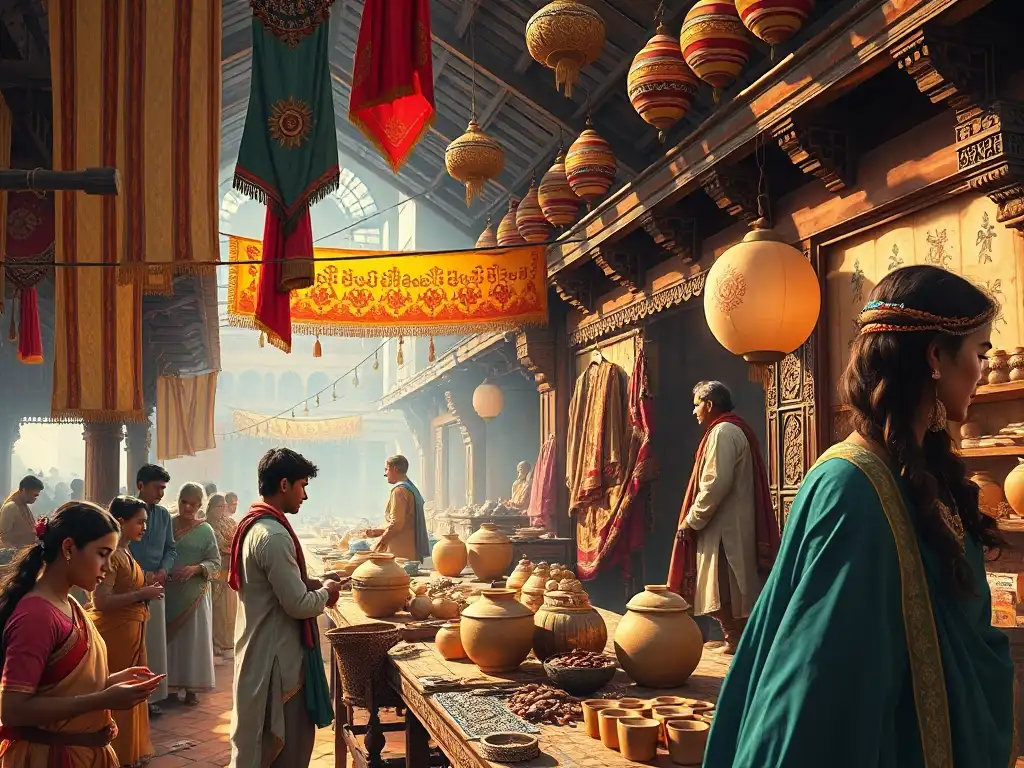
Craftsmanship in ancient India played a pivotal role in shaping the economy and cultural identity of its civilizations. The intricate skills and artistic talents of artisans contributed significantly to the trade networks that connected various regions, facilitating not just the exchange of goods, but also ideas and cultural practices.
From the exquisite textiles of the Indus Valley to the intricate metalwork of the Gupta Empire, ancient Indian craftsmanship was not merely a means of livelihood; it was a vital component of the social fabric that united diverse communities. This article explores the rich legacy of craftsmanship within the context of ancient Indian trade networks, highlighting its impact on economic prosperity and cultural exchange.
Overview of Craftsmanship in Ancient India
Ancient Indian craftsmanship encompassed a wide range of skills including pottery, weaving, metalworking, and stone carving. Each region boasted unique crafts, often influenced by local resources and cultural practices. Notable examples include:
- Textiles: The production of high-quality cotton and silk fabrics was prominent, with regions like Gujarat and Bengal becoming famous for their textiles.
- Pottery: The use of clay and intricate designs showcased the artistic talents of ancient potters, with significant contributions from the Indus Valley civilization.
- Metalwork: Superb craftsmanship in bronze and gold led to the creation of stunning jewelry and tools, particularly during the Maurya and Gupta periods.
- Stone Carving: Temples and monuments exhibit exquisite stone work, reflecting both religious devotion and skilled artistry.
The diversity in craftsmanship not only catered to local demands but also made ancient India a hub for trade, attracting merchants from various parts of the world.
Importance of Trade Networks in Ancient Indian Society
Trade networks were essential for the development of ancient Indian society, serving as conduits for economic growth and cultural exchange. The significance of these networks can be understood through several key aspects:
- Economic Prosperity: Trade facilitated the exchange of goods, allowing artisans to reach broader markets and increasing their economic opportunities.
- Cultural Exchange: Interactions among traders led to the sharing of ideas, technologies, and cultural practices, enriching the social fabric of ancient Indian communities.
- Political Relations: Trade routes often crossed political boundaries, fostering alliances and diplomatic relations between different kingdoms and empires.
- Urban Development: Major trade centers emerged as hubs of commerce, leading to urbanization and the growth of cities, which became centers of art and culture.
The interdependence of craftsmanship and trade networks was a defining feature of ancient Indian civilization, contributing to its richness and dynamism.
Historical Context of Trade in Ancient India
Understanding the historical context of trade in ancient India provides insights into the evolution of craftsmanship and its role in economic interactions. The trade networks thrived due to a combination of geographical advantages, resource availability, and the demand for luxury goods.
Key Trade Routes and Their Significance
The major trade routes in ancient India were vital arteries for the movement of goods and ideas. Some notable routes included:
- The Silk Road: Connecting India with Central Asia and beyond, this route facilitated the exchange of silk, spices, and precious stones.
- The Grand Trunk Road: This ancient highway linked the eastern and western parts of India, promoting trade between regions such as Bengal and Punjab.
- Maritime Routes: The Indian Ocean trade routes allowed for maritime exchanges with countries as far as Africa and Southeast Asia, enhancing the reach of Indian craftsmanship.
These routes not only enabled the physical movement of goods but also played a crucial role in the dissemination of culture, religion, and technology.
Major Trade Centers in Ancient India
Several cities emerged as prominent trade centers, each contributing uniquely to the craft and trade landscape of ancient India. Key centers included:
| Trade Center | Notable Crafts | Significance |
|---|---|---|
| Taxila | Metalwork, textiles | A melting pot for cultural and intellectual exchange. |
| Pataliputra | Spices, silk | The capital of the Mauryan Empire, a major hub for trade. |
| Ujjain | Gems, pottery | A crucial center for both trade and astronomical studies. |
| Kanchi | Weaving, metal crafts | Renowned for fine textiles and cultural exchanges. |
These centers not only facilitated trade but also became focal points for cultural exchange, further enhancing the significance of craftsmanship in ancient Indian society. As we delve deeper into the specifics of craftsmanship and trade, we will uncover the intricate relationships that defined ancient India's economic landscape.
Types of Crafts and Artisans in Ancient India
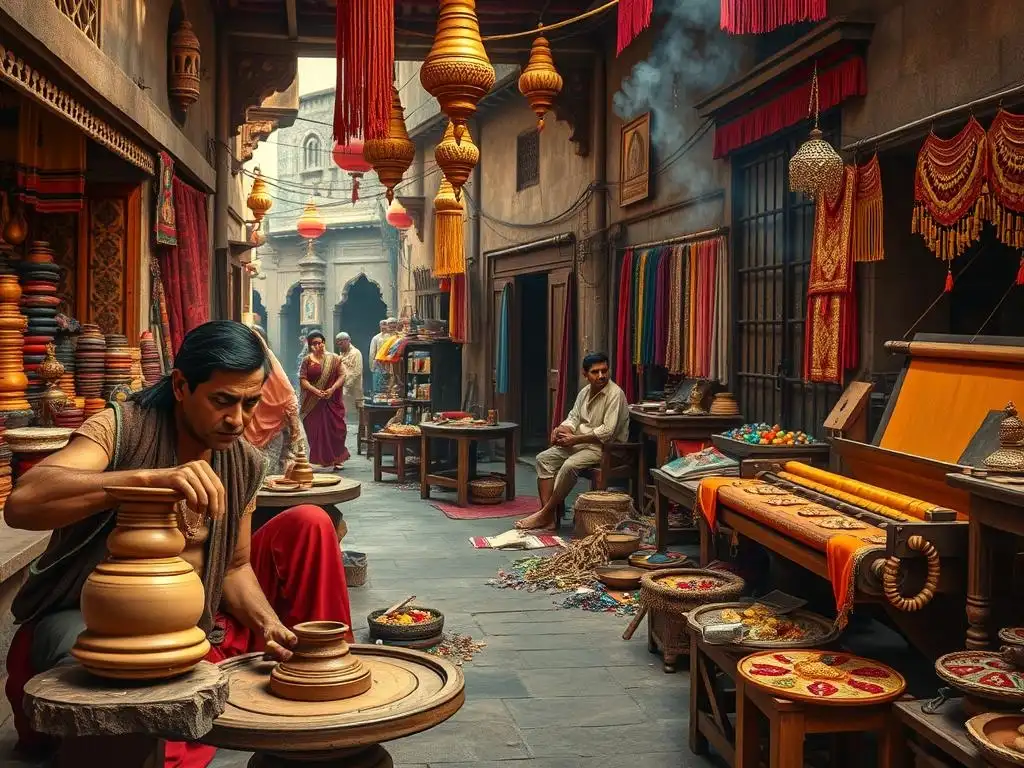
Ancient India was renowned for its diverse craftsmanship, with artisans skilled in various crafts that played a pivotal role in trade networks. Each type of craftsmanship not only showcased the artistic talent of the artisans but also reflected the cultural and economic exchanges that occurred across the region. The following sections delve into specific crafts that were prominent in ancient Indian society.
Textiles and Weaving Techniques
Textiles were one of the most significant crafts in ancient India, with a rich tradition that dates back thousands of years. The Indus Valley Civilization, for instance, is believed to have produced cotton textiles, which were highly sought after in both domestic and international markets.
Artisans developed sophisticated weaving techniques, including the use of looms and dyeing methods, which resulted in vibrant fabrics adorned with intricate patterns. Notably, regions like Varanasi and Ahmedabad became famous for their silk weaving, producing luxurious sarees that were prized across India and beyond. The craftsmanship in textiles not only served practical purposes but also played a ceremonial role in various cultural practices, further enhancing their value in trade.
Pottery and Ceramics Craftsmanship
Pottery and ceramics were essential crafts in ancient Indian civilization, serving both functional and aesthetic purposes. The ancient potters demonstrated exceptional skill in creating a wide variety of pottery, including everyday utensils, decorative items, and ceremonial vessels.
Techniques such as wheel-throwing and glazing were developed, allowing artisans to produce high-quality ceramic goods. The painted pottery styles, particularly from the Neolithic and Chalcolithic periods, such as the black-and-red ware, showcased artistic creativity and technical proficiency. These ceramics became significant trade items, facilitating the exchange of goods and ideas across regions.
Metalwork and Jewelry Making
Metalwork was another crucial aspect of ancient Indian craftsmanship, with artisans skilled in smelting and forging various metals, including gold, silver, and bronze. The ability to create intricate metal objects, such as tools, weapons, and decorative items, played a vital role in both daily life and trade.
Jewelry making flourished, with artisans crafting exquisite pieces adorned with precious stones. The craftsmanship in jewelry was not only a reflection of artistic skill but also a symbol of status and wealth. The trade of metal goods and jewelry extended beyond India, with evidence of ancient Indian metalwork being found in regions as far as the Roman Empire, illustrating the extensive trade networks of the time.
Woodwork and Sculpture
Woodwork and sculpture were highly developed crafts in ancient India, with artisans creating everything from functional items like furniture to elaborate sculptures depicting deities and mythological figures. The use of various types of wood allowed for a range of artistic expressions, with skilled artisans utilizing carving techniques to bring intricate designs to life.
Temples and palaces often featured detailed wooden carvings that showcased the craftsmanship of the artisans. Such works not only served aesthetic and religious purposes but also became valuable trade items. The demand for high-quality woodwork extended to neighboring regions, further intertwining craftsmanship with trade networks.
Impact of Craftsmanship on Trade Networks
The influence of craftsmanship on trade networks in ancient India was profound. Artisans played a vital role in shaping economic interactions and the cultural landscape of the region.
Role of Artisans in Trade Development
Artisans were not only creators of goods but also key players in the development of trade networks. Their expertise in crafting high-quality products attracted merchants and traders, enhancing the flow of goods across regions. The rise of markets and trade routes can be attributed to the demand for crafted items, with artisans often participating in trade fairs and local markets to showcase their products.
Moreover, guilds of artisans emerged, facilitating collective bargaining and standardization of craft quality. This organization fostered better trade practices and contributed to the establishment of robust trading communities.
Exchange of Goods and Cultural Practices
The exchange of crafted goods was accompanied by the exchange of cultural practices, ideas, and technologies. As ancient Indian artisans traded their goods, they also shared their techniques and knowledge with other cultures. This cultural exchange enriched both the artisans' craft and the receiving cultures, leading to innovation and diversification in craftsmanship.
For instance, the introduction of Persian motifs in Indian textiles or the adoption of Indian pottery techniques in Southeast Asia are examples of how trade facilitated cultural interactions, further enhancing the richness of ancient Indian craftsmanship.
Influence of Craftsmanship on Economic Growth
The impact of craftsmanship on economic growth in ancient India cannot be overstated. The production of high-quality crafted goods not only satisfied local demands but also opened up international markets. Trade routes, such as the Silk Road, became conduits for the exchange of Indian craftsmanship, allowing for the infusion of wealth and resources into the Indian economy.
As craftsmanship flourished, so did urbanization and the establishment of trade centers, which became hubs for artisans and merchants alike. This economic dynamism contributed to the rise of prosperous cities and the overall growth of ancient Indian civilization, highlighting the integral role of craftsmanship in shaping its economic landscape.
Regional Variations in Craftsmanship and Trade
Ancient India was a tapestry of diverse cultures, languages, and traditions, each contributing to regional variations in craftsmanship and trade. The geographical features, local resources, and historical influences played a significant role in shaping the unique crafts of different Indian regions. From textiles and pottery to metalwork and stone carvings, the artisans of ancient India adapted their skills to meet the demands of local and international markets.
Regions such as Gujarat and Rajasthan became renowned for their textiles, particularly for the intricate tie-dye and block-printing techniques. Meanwhile, South India, with its rich tradition of bronze casting and temple sculptures, showcased a different set of craftsmanship that attracted traders from far and wide. The trade networks established during these times facilitated not only the exchange of goods but also the transfer of knowledge and techniques among artisans across regions.
The significance of regional craftsmanship can also be observed in the materials used; for example, the abundance of clay in the Indus Valley contributed to advanced pottery techniques, while the availability of precious stones in the Deccan Plateau led to the flourishing of jewelry-making. These regional crafts not only reflected the artistic expressions of their communities but also played a pivotal role in the broader trade networks that spanned ancient India and beyond.
Craftsmanship in the Indus Valley Civilization
The Indus Valley Civilization (circa 3300–1300 BCE) is often celebrated for its advanced urban planning and sophisticated societal organization. At the heart of this civilization was a thriving tradition of craftsmanship that played a crucial role in trade. Artisans in cities like Mohenjo-Daro and Harappa produced a variety of goods, including finely crafted pottery, intricate beadwork, and detailed seals made from steatite.
One of the most remarkable aspects of Indus Valley craftsmanship was its emphasis on quality and standardization. The use of a uniform system of weights and measures facilitated trade, allowing artisans to market their products effectively across vast distances. The seals, often inscribed with animal motifs and script, served not only as trade markers but also as cultural artifacts that provide insight into the civilization's social and religious beliefs.
Moreover, the Indus Valley artisans were adept at metallurgy, utilizing copper and bronze to produce tools, weapons, and decorative items. The trade of these crafted goods extended to regions like Mesopotamia, indicating that the artisans played a vital role in the economic exchanges that characterized this ancient trade network.
Craft Traditions in the Maurya Empire
The Maurya Empire (circa 322–185 BCE) marked a significant period in the evolution of craftsmanship in ancient India. Under the rule of Emperor Ashoka, the empire not only expanded territorially but also saw a flourishing of art and craft. The Mauryan artisans were known for their exquisite stone carvings, particularly seen in the famous rock-cut caves and stupas, such as the Sanchi Stupa.
Craftsmanship during this period was characterized by the use of locally sourced materials, such as sandstone and limestone, to create intricate sculptures and architectural elements. The introduction of new techniques, including advanced metalworking, allowed artisans to produce high-quality tools and weaponry, which were essential for both trade and military purposes.
Trade routes established during the Mauryan Empire facilitated the exchange of crafted goods, leading to the emergence of bustling markets. The artisans not only catered to local demands but also engaged in long-distance trade, exporting their products to regions like Central Asia and beyond. This period saw the integration of various craft traditions, resulting in a rich amalgamation of styles and techniques that enhanced the artistic landscape of ancient India.
Gupta Period Innovations in Craftsmanship
The Gupta Period (circa 320–550 CE) is often referred to as the Golden Age of India, characterized by remarkable advancements in art, science, and culture. Craftsmanship during this era reached new heights, with artisans developing innovative techniques and styles that left a lasting legacy. The use of vibrant colors and intricate designs in textile production became prominent, with the emergence of fine silk weaving and embroidery techniques.
Sculpture flourished during the Gupta Period, with artisans creating exquisite representations of deities and mythological figures. The hallmark of Gupta craftsmanship was the attention to detail and the ability to convey emotion through art, as seen in the iconic Gupta-style sculptures that adorned temples and palaces. This period also witnessed significant developments in metalwork, particularly in the creation of the famous Gupta coinage, which showcased artistic excellence and reflected the empire's economic prosperity.
Moreover, the Gupta artisans were instrumental in the production of manuscripts and paintings, contributing to the preservation of knowledge and culture. The trade networks established during this time facilitated the spread of these innovative crafts beyond India, influencing cultures across Southeast Asia and establishing a reputation for Indian craftsmanship on the global stage.
Challenges Faced by Artisans in Ancient Trade
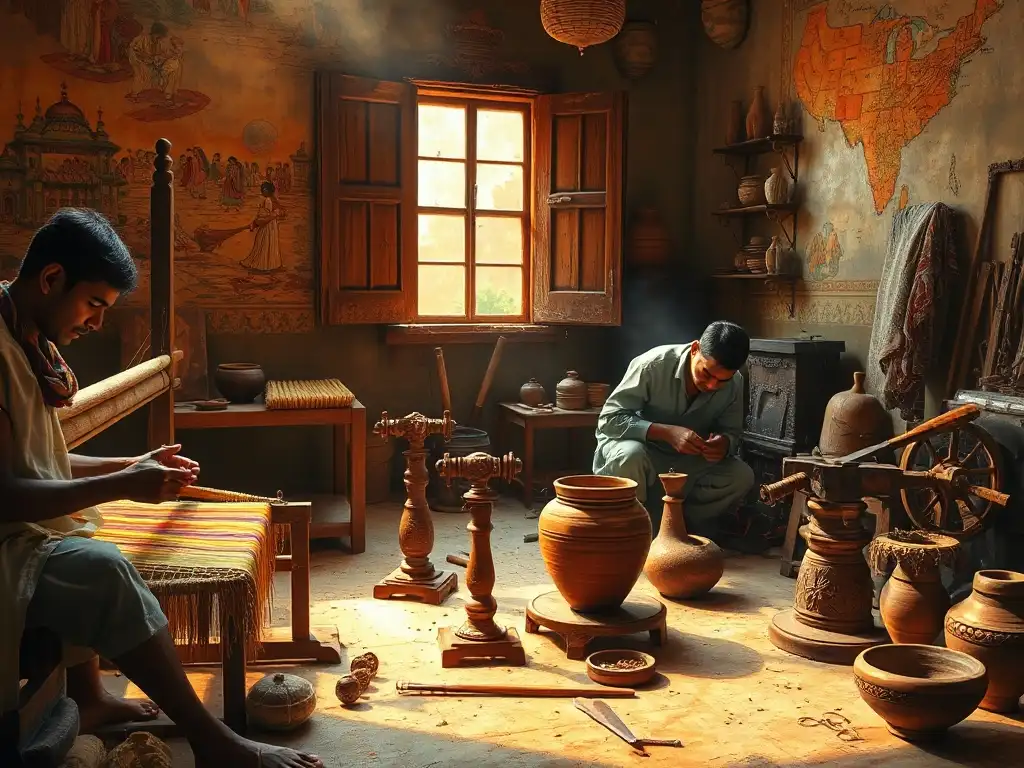
Despite the flourishing craftsmanship that characterized ancient India's trade networks, artisans faced several challenges that impacted their livelihoods and the sustainability of their crafts.
Economic Pressures and Market Demands
The economic landscape of ancient India was constantly evolving, with changing market demands posing a significant challenge for artisans. As trade networks expanded, artisans were often pressured to produce larger quantities of goods to meet the demands of both local and international markets. This shift from artisanal production to mass production often compromised the quality of craftsmanship.
Artisans had to navigate the complexities of pricing and competition, which sometimes led to the undervaluation of their skills. Additionally, the influx of foreign goods and crafts introduced new styles and techniques, which could overshadow traditional craftsmanship. These economic pressures forced many artisans to adapt swiftly or risk losing their place in the market, leading to a decline in some traditional crafts.
Cultural and Social Factors Influencing Craftsmanship
The socio-cultural dynamics of ancient Indian society also influenced craftsmanship. Many artisans belonged to specific caste groups, and their craft often dictated their social status. This association could limit their opportunities and restrict their ability to innovate or collaborate with other communities.
Moreover, the patronage system played a crucial role in the survival of crafts. Artisans relied heavily on royal patronage and the support of wealthy merchants. Changes in political power or patronage could lead to instability for craftsmen, as shifts in allegiance might result in the loss of commissions and opportunities.
Decline of Traditional Crafts with Changing Trade Dynamics
As ancient trade dynamics evolved, traditional crafts faced significant challenges that threatened their existence. The rise of new trade routes and the introduction of foreign goods began to overshadow indigenous craftsmanship. Artisans struggled to compete with cheaper, mass-produced items that flooded the market, leading to a decline in demand for traditional crafts.
Furthermore, the industrialization of trade in later centuries marked a turning point for many traditional crafts. As societies moved towards industrial production, the artisanal skills that had been passed down through generations began to fade, resulting in the loss of unique cultural expressions. This decline not only affected the artisans' livelihoods but also diminished the rich tapestry of craftsmanship that had once flourished in ancient India.
The intricate relationship between craftsmanship and trade in ancient India showcases both the vibrancy of its cultural heritage and the challenges faced by artisans navigating a changing economic landscape. The legacy of these crafts, however, continues to resonate, reminding us of the rich traditions that shaped the subcontinent's history.
Conclusion: Legacy of Ancient Indian Craftsmanship in Trade
The legacy of ancient Indian craftsmanship in trade is a testament to the skill, creativity, and economic foresight of early Indian civilizations. Craftsmanship was not merely an economic activity; it was deeply intertwined with cultural identity and social cohesion. The high-quality goods produced by artisans facilitated trade across vast networks, connecting regions and peoples. These interactions fostered cultural exchanges that enriched the social fabric of ancient India, leaving an indelible mark on its history.
The intricate handicrafts of textiles, pottery, jewelry, and metalwork became symbols of both local pride and global outreach. As a result, ancient Indian craftsmanship not only stimulated economic growth but also established India as a significant player in global trade. The techniques and designs developed during this time continue to inspire modern artisans, ensuring that the spirit of ancient craftsmanship thrives in contemporary practices.
Lasting Influence on Modern Indian Craftsmanship
The influence of ancient Indian craftsmanship is evident in today's vibrant artisan community. Many modern crafts, such as handloom textiles, pottery, and metalwork, draw inspiration from traditional techniques that date back thousands of years. For example, the art of weaving has evolved but retains the core techniques and motifs that were prominent in ancient times. The revival of ancient styles and methods has led to a renaissance of craftsmanship across India, with artisans seeking to preserve their heritage while adapting to modern market demands.
Furthermore, contemporary initiatives that promote fair trade and sustainable practices echo the principles of ancient trade networks, where local artisans thrived through community support and regional exchange. The fusion of traditional craftsmanship with modern design sensibilities is not only preserving these art forms but also enhancing their appeal in the global market.
Lessons from Ancient Trade Networks for Contemporary Economy
Ancient Indian trade networks offer invaluable lessons for today's economy, particularly in the context of globalization and sustainable practices. The success of these networks was rooted in collaboration, mutual respect, and the sharing of resources among diverse communities. Modern economies can benefit from adopting similar principles, focusing on community-building and equitable trade practices.
Additionally, the emphasis on quality craftsmanship in ancient trade highlights the importance of maintaining high standards in production. In a world increasingly dominated by mass production, prioritizing quality over quantity can help local artisans compete in a global marketplace. By fostering a culture that values craftsmanship, societies can stimulate local economies and preserve cultural heritage.
Finally, ancient trade networks exemplified the significance of adaptability and innovation. As markets evolved, artisans were able to modify their products to meet changing consumer preferences. This adaptability remains crucial in today’s fast-paced economic landscape, where businesses must be agile and responsive to trends and consumer demands.
References and Further Reading on Ancient Indian Craftsmanship and Trade
- Mitra, S. (2006). Craft Traditions of India. New Delhi: Craft Council of India.
- Brahmananda, P. (1997). The Art and Craft of Ancient India. New Delhi: National Museum.
- Rao, V. (2011). Trade and Commerce in Ancient India. New Delhi: Motilal Banarsidass.
- Dehejia, V. (2009). Indian Art. London: Phaidon Press.
- Singh, R. (2015). The Economic History of Ancient India. New Delhi: Oxford University Press.
These resources provide deeper insights into the intricacies of ancient Indian craftsmanship and its pivotal role in shaping trade networks, offering a comprehensive view of how these practices have evolved and continue to influence modern economies.
- Introduction to Ancient Indian Craftsmanship Trade
- Overview of Craftsmanship in Ancient India
- Historical Context of Trade in Ancient India
- Types of Crafts and Artisans in Ancient India
- Impact of Craftsmanship on Trade Networks
- Regional Variations in Craftsmanship and Trade
- Challenges Faced by Artisans in Ancient Trade
- Conclusion: Legacy of Ancient Indian Craftsmanship in Trade
- References and Further Reading on Ancient Indian Craftsmanship and Trade
- What was the significance of craftsmanship in ancient Indian trade?
- Which civilizations are known for their craftsmanship in ancient India?
- How did ancient Indian craftsmanship influence trade?
- What materials were commonly used in ancient Indian crafts?
- How has ancient Indian craftsmanship impacted modern practices?
Frequently Asked Questions
What was the significance of craftsmanship in ancient Indian trade?
Craftsmanship played a crucial role in ancient India's trade, as it produced high-quality goods that were highly sought after in both local and international markets.
Which civilizations are known for their craftsmanship in ancient India?
The Indus Valley Civilization and the Gupta Empire are particularly noted for their exquisite craftsmanship, showcasing skills in textiles, metals, and pottery.
How did ancient Indian craftsmanship influence trade?
The diverse craftsmanship not only enhanced the value of traded goods but also established trade routes connecting India to other civilizations, boosting economic interactions.
What materials were commonly used in ancient Indian crafts?
Artisans utilized a variety of materials, including textiles, metals, wood, and stone, to create intricate products that reflected the cultural heritage of their time.
How has ancient Indian craftsmanship impacted modern practices?
Many traditional techniques and styles from ancient craftsmanship continue to influence modern artisans, preserving the rich cultural legacy of ancient India in contemporary crafts.
Final Reflection: The Enduring Legacy of Ancient Indian Craftsmanship in Trade
The intricate artistry of ancient Indian craftsmanship not only shaped trade networks but also laid the foundation for cultural exchange that resonates today. As we navigate a global economy, the lessons from ancient trade practices remind us of the interconnectedness of societies and the value of skilled artisanship. The craftsmanship of ancient India was not merely a means of economic exchange; it was a vibrant expression of identity and creativity that transcended borders.
The influence of ancient Indian craftsmanship continues to permeate our cultural landscape, inspiring modern artisans and trade practices alike. The exquisite textiles, pottery, and metalwork from this era serve as a testament to the skill and dedication of those who came before us. As noted by historian John Smith, “Craftsmanship is the soul of trade; it is the bridge that connects cultures and fosters understanding.” This ongoing legacy encourages us to appreciate the depth of our shared history and the artistry that has shaped our world.
As you reflect on the themes presented in this article, consider how the principles of ancient Indian craftsmanship can be applied in your own life. Embrace the spirit of creativity and dedication in your pursuits, and recognize the importance of craftsmanship in fostering connections, whether in trade or personal relationships. Let the legacy of these ancient artisans inspire you to cultivate your skills and contribute to a world that values the beauty of craftsmanship and the stories it tells.
Unleash Your Inner Artisan and Transform Your Understanding!
Thank you for diving into the captivating world of ancient India's craftsmanship and trade networks! You've discovered how artistry and skill fueled connections across vast lands, enriching cultures and economies. Now it’s time to put that knowledge into action and further explore the significance of craftsmanship in our own lives.
Here’s how you can take the next step:
- Join a local workshop or online class to learn a traditional craft, such as pottery or textile weaving, and connect with a community of artisans.
- Share your insights! Discuss the impact of ancient craftsmanship on modern trades with friends or in online forums. You might inspire someone to appreciate these art forms even more!
- Explore further: Read about other historical craftspeople or start a project that revives a traditional craft in your community.
What traditional craft do you feel most inspired to discover or revive in your life?