
How Ancient Indian Trade Networks Fostered Cultural Exchange


Welcome to Ancient India History, where we embark on a fascinating journey through the tapestry of time, uncovering the rich and diverse heritage of one of the world's oldest civilizations. In our featured article, "How Ancient Indian Trade Networks Fostered Cultural Exchange," we delve into the intricate web of ancient Indian trade networks that not only bolstered economies but also served as vital conduits for cultural dialogue and collaboration.
Prepare to be intrigued by how these networks shaped societies, influenced art and philosophy, and connected distant lands. Join us as we explore the profound legacies of ancient India, and discover the remarkable stories waiting to unfold!
- Introduction to Ancient Indian Trade Networks
- The Structure of Ancient Indian Trade Networks
- Goods and Commodities Traded in Ancient India
- Cultural Exchange through Ancient Indian Trade Networks
- Impact of Ancient Indian Trade Networks on Neighboring Civilizations
- Challenges Faced by Ancient Indian Trade Networks
- Conclusion: The Legacy of Ancient Indian Trade Networks
- References and Further Reading on Ancient Indian Trade Networks
- Frequently Asked Questions
- Final Reflection: The Enduring Legacy of Ancient Indian Trade Networks
- Uncover the Richness of Cultural Exchange!
Introduction to Ancient Indian Trade Networks
The ancient Indian trade networks played a pivotal role in shaping the cultural, economic, and social landscape of the subcontinent. Spanning from the Indus Valley Civilization through the Gupta Empire, these networks facilitated not only the exchange of goods but also the transfer of ideas, technologies, and cultural practices. As a result, ancient Indian trade networks became a cornerstone of a vibrant and interconnected civilization that influenced regions far beyond its borders. Understanding the intricacies of these trade systems provides insight into how ancient Indian societies thrived and contributed to the global narrative of trade and cultural exchange.
Overview of Ancient Indian Trade Networks
Ancient Indian trade networks were extensive and multifaceted, encompassing both internal and external routes that connected various regions of the subcontinent and beyond. Some of the key characteristics of these trade networks include:
- Geographical Range: Trade routes extended from the Indus Valley in the west to the Ganges valley in the east and reached as far south as the Tamil Nadu region.
- Goods Traded: A wide variety of goods were exchanged, including:
- Textiles: Cotton and silk fabrics renowned for their quality.
- Spices: Such as pepper, cardamom, and turmeric, which were highly sought after.
- Metals: Like gold, silver, and copper, used for various purposes.
- Agricultural Products: Grains, fruits, and other produce.
The trading routes were facilitated by well-established paths, rivers, and maritime routes, enabling merchants to traverse vast distances. Notable trade centers, such as Taxila and Pataliputra, emerged as hubs of commerce and cultural exchange, attracting traders from diverse backgrounds.
Importance of Trade in Ancient Indian Civilization
Trade was not merely an economic activity in ancient India; it was a fundamental aspect of civilization that fostered social and cultural interactions. The significance of trade in ancient Indian civilization can be highlighted through several key points:
- Cultural Exchange: Trade networks served as conduits for the exchange of ideas and cultural practices. The arrival of traders from distant lands introduced new philosophies, religions, and art forms, enriching the cultural tapestry of India.
- Economic Prosperity: The wealth generated from trade contributed to the economic stability and prosperity of ancient Indian states. The influx of resources facilitated advancements in architecture, literature, and sciences.
- Political Alliances: Trade often led to the formation of political alliances. Regions that engaged in trade fostered relationships that could lead to mutual benefits, including security and shared resources.
- Technological Advancements: The interaction between different cultures also resulted in the exchange of technologies, such as agricultural techniques and metallurgical skills, which further enhanced productivity and innovation.
Ancient Indian trade networks were instrumental in shaping the civilization's economic and cultural landscape, facilitating a rich tapestry of interactions that left a lasting legacy on both the subcontinent and the world. Understanding these networks is crucial to appreciating the dynamism of ancient Indian society and its contributions to global history.
The Structure of Ancient Indian Trade Networks
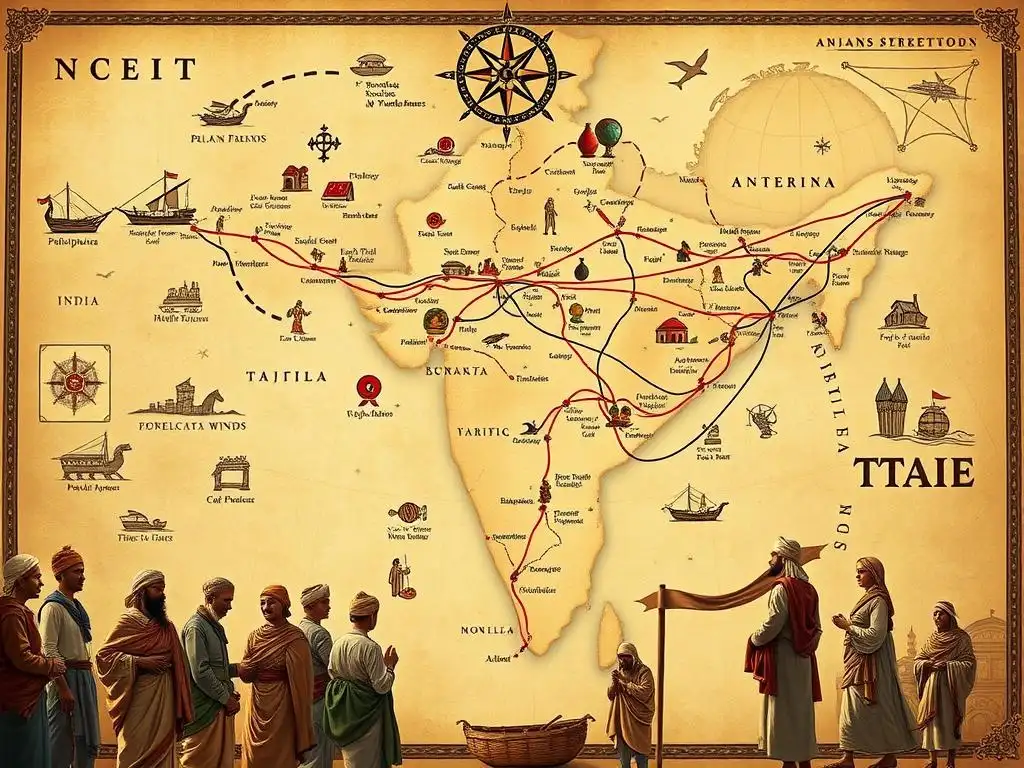
Ancient Indian trade networks were complex and multifaceted, serving as vital conduits for cultural exchange and economic prosperity. These networks not only facilitated the movement of goods but also played a crucial role in the dissemination of ideas, technologies, and cultural practices across vast distances. The structure of these trade networks can be understood through their major trade routes, key trade centers, and the significant influence of geography.
Major Trade Routes of Ancient India
The trade routes of ancient India can be categorized into land and maritime paths, each contributing uniquely to the economic landscape.
- Land Routes:
- Silk Road: Connecting India with Central Asia and beyond, the Silk Road facilitated the exchange of silk, spices, and precious metals.
- Grand Trunk Road: This ancient highway linked the eastern and western regions, allowing for the movement of goods such as textiles, grains, and medicinal herbs.
- Maritime Routes:
- Indian Ocean Trade: Ancient Indian traders navigated the Indian Ocean, establishing trade links with Madagascar, the Arabian Peninsula, and Southeast Asia. Spices, ivory, and gemstones were among the major exports.
- Persian Gulf Trade: The ports along the western coast, such as Lothal and Surat, engaged in trade with Mesopotamia and Persia, exporting textiles and receiving silver and luxury goods in return.
These trade routes not only facilitated commerce but also integrated various cultures, leading to a rich tapestry of interactions and exchanges.
Key Trade Centers and Markets in Ancient India
Ancient India boasted several prominent trade centers that served as hubs for commerce and cultural exchange.
- Taxila: Located at the crossroads of trade routes, Taxila was a thriving center known for its universities and markets, where scholars and traders exchanged knowledge and goods.
- Lothal: This port city of the Indus Valley Civilization was crucial for maritime trade. Its dockyard allowed ships to navigate the waters, making it a key player in sea trade.
- Pataliputra: As the capital of the Mauryan Empire, Pataliputra was a major economic hub, where diverse goods, including spices and textiles, were traded.
- Ujjain: Known for its strategic location, Ujjain became a significant center for trade, particularly in the exchange of precious stones and textiles.
These centers facilitated not just the flow of goods but also the exchange of cultural and intellectual ideas, contributing to the rich heritage of ancient India.
The Role of Rivers and Geography in Trade
Geography played a pivotal role in shaping the ancient Indian trade networks. The extensive river systems, particularly the Ganges, Indus, and Brahmaputra, provided natural highways for trade.
- Rivers as Trade Routes: The navigability of rivers enabled the transport of goods and people, facilitating trade both domestically and internationally. For instance, the Ganges River supported trade with northern regions and beyond.
- Geographical Features: The Himalayas to the north acted as natural barriers but also as gateways for trade with Central Asia. Meanwhile, the Western Ghats and the Deccan Plateau influenced the development of trade routes by providing resources and trade opportunities.
- Climate and Agriculture: The monsoon climate supported agriculture, which was essential for the sustenance of trade networks. Crops such as rice and wheat were not only staples but also significant trade commodities.
The intricate structure of ancient Indian trade networks, characterized by its major trade routes, key centers, and geographical advantages, fostered a rich environment for cultural exchange and economic development. These networks laid the foundation for the vibrant civilizations that flourished in ancient India, leaving a lasting legacy that continues to be studied and appreciated today.
Goods and Commodities Traded in Ancient India
Agricultural Products and Spices
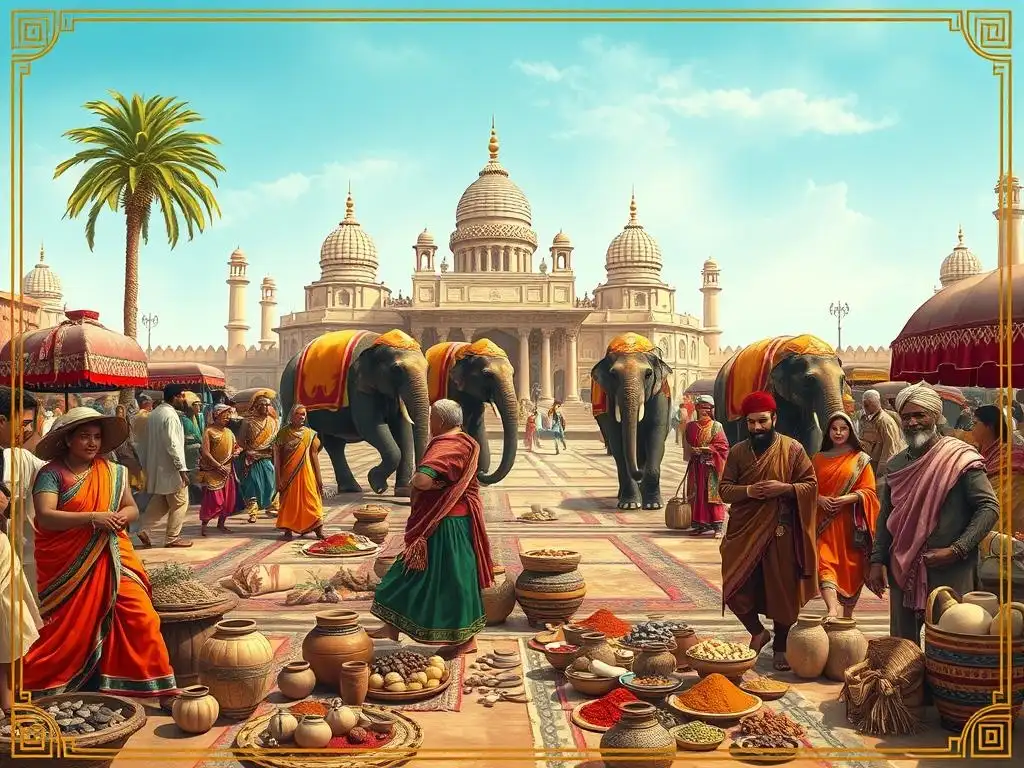
Agricultural products played a crucial role in ancient Indian trade networks, primarily due to the region's fertile land and favorable climate. The Indus Valley Civilization, one of the earliest urban cultures in India, cultivated a variety of crops including wheat, barley, and cotton. These staples were not only vital for local consumption but also served as significant trade items.
- Rice: Cultivated in abundance, rice was a staple food that found its way to markets beyond India. Its cultivation techniques were advanced for the time, contributing to the agricultural surplus.
- Spices: India was renowned for its spices, which were highly sought after in international markets. Spices such as black pepper, cardamom, and turmeric were traded along routes connecting India to Europe and the Middle East.
The demand for these agricultural products and spices established India as a key player in global trade. Historical texts indicate that spices were not only used for cooking but also for medicinal purposes and rituals, further enhancing their value in trade.
Textiles and Handicrafts
The textile industry was another cornerstone of ancient Indian trade networks. India was famous for its intricate weaving techniques and high-quality fabrics, which made its textiles highly desirable across various cultures.
- Cotton and Silk: Cotton, one of the first fiber crops cultivated in India, was traded extensively. The skillful production of silk, particularly in regions like Bengal, led to the flourishing of the silk trade.
- Handicrafts: In addition to textiles, India was known for its handicrafts, including pottery, metalwork, and woodcraft. Each region specialized in unique crafts, contributing to a rich tapestry of products that were exchanged in trade.
The trade in textiles and handicrafts not only stimulated economic growth but also facilitated cultural exchange, as artisans and traders interacted with various societies, sharing techniques and styles.
Precious Metals and Gems
The trade of precious metals and gems was a significant aspect of ancient Indian commerce, with India being a prominent source of these valuable commodities. The subcontinent's rich deposits of gold, silver, and gemstones attracted traders from distant lands.
- Gold and Silver: Ancient texts document the extensive mining and crafting of gold and silver in India. These metals were not only used for currency but also fashioned into elaborate jewelry, which was highly prized.
- Gems: India was known as the "Land of Gems," with diamonds, rubies, and emeralds being particularly sought after. The famous Golconda mines were a key source of diamonds, and these gems were traded along the Silk Road, reaching markets in Persia and beyond.
The trade of precious metals and gems established India as a vital center in the global economy, fostering connections with various cultures and leading to an exchange of not just goods, but also ideas and traditions.
Overall, the diverse array of goods and commodities traded within ancient Indian trade networks highlights the complexity and richness of its economic landscape, paving the way for cultural interactions that shaped the civilizations of the time.
Cultural Exchange through Ancient Indian Trade Networks

Ancient Indian trade networks were not only vital for the exchange of goods but also served as a crucial conduit for cultural exchange. These networks facilitated interactions between diverse civilizations, leading to the spread of ideas, innovations, art, architecture, language, and literature. The flourishing trade routes, including the Silk Road and maritime pathways, connected India to various regions, such as Central Asia, the Middle East, and Southeast Asia, fostering a rich tapestry of cultural intermingling.
Spread of Ideas and Innovations
The exchange of ideas through ancient Indian trade networks significantly influenced various fields, especially science, mathematics, and medicine. Merchants and travelers shared knowledge, leading to the transfer of innovations across regions. For example:
- Mathematics: Indian numerals, including the concept of zero, were introduced to other civilizations via trade routes. This innovation revolutionized mathematical thought and calculations in places like the Middle East and Europe.
- Medicine: Ayurvedic practices traveled along these networks, influencing medical practices in regions such as Persia and beyond. The exchange of herbs and medicinal knowledge enriched the medicinal practices of other cultures.
- Astronomy: Indian astronomical concepts, including the calculations of eclipses and planetary movements, were disseminated through trade interactions, impacting scholars in various civilizations.
The intellectual exchanges across these trade networks exemplify how commerce served as a catalyst for progress and innovation, bridging cultural divides and fostering advancements.
Exchange of Art and Architecture
Art and architecture also flourished due to the interactions facilitated by ancient Indian trade networks. The movement of artists, craftsmen, and architectural ideas led to vibrant cultural syncretism. Significant examples include:
- Buddhist Art: The spread of Buddhism along the trade routes resulted in the dissemination of Buddhist art forms. From the intricate carvings of the Ajanta Caves to the monumental stupas, these artistic expressions influenced regions like Southeast Asia.
- Architectural Styles: The Indo-Islamic architectural style emerged as a result of cultural exchanges, showcasing a blend of indigenous and foreign influences. Techniques and designs traveled through trade, as seen in the construction of temples and mosques.
- Textiles and Craftsmanship: The renowned Indian textiles, such as silk and cotton, were not only traded but also inspired other regions to adopt similar techniques. The art of weaving and dyeing traveled along with these textiles, enriching the artistic traditions of other cultures.
This cross-cultural exchange in art and architecture illustrates how ancient Indian trade networks acted as conduits for creativity, leading to the evolution of diverse artistic expressions.
Influence on Language and Literature
Language and literature were profoundly impacted by the interactions fostered by ancient Indian trade networks. The mingling of cultures led to the exchange of linguistic ideas and literary traditions. Key aspects include:
- Sanskrit and Regional Languages: Trade interactions resulted in the dissemination of Sanskrit, which influenced various regional languages in Southeast Asia. The adoption of Sanskrit vocabulary and grammar can be seen in languages such as Thai, Khmer, and Malay.
- Literary Works: Many ancient Indian literary texts, such as the Mahabharata and Ramayana, traveled along trade routes, influencing storytelling traditions in neighboring cultures. These epics inspired adaptations and retellings in various languages.
- Philosophical Ideas: The exchange of philosophical concepts through trade networks enriched spiritual and philosophical discourses in other cultures. Ideas from Indian philosophy found their way into the teachings of other civilizations, shaping their worldviews.
The linguistic and literary exchanges highlight the profound impact of ancient Indian trade networks on the development of culture and thought across regions, illustrating how trade was not merely economic but also a powerful force for cultural evolution.
Impact of Ancient Indian Trade Networks on Neighboring Civilizations
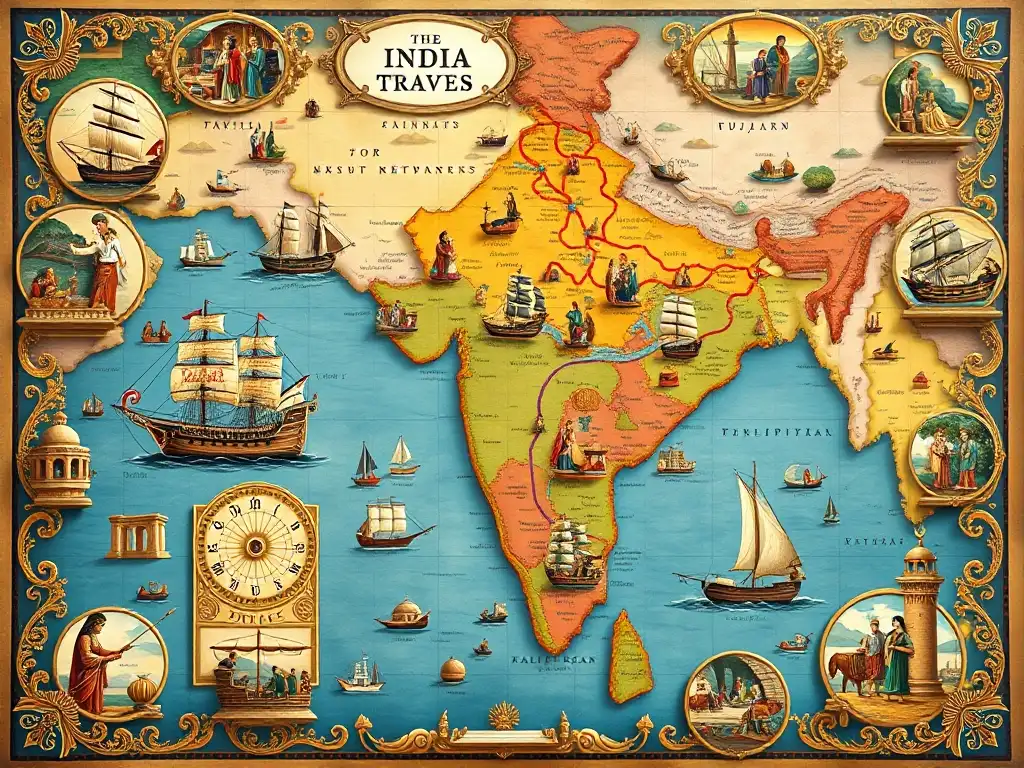
Ancient Indian trade networks were crucial in fostering cultural exchange and economic relations with various neighboring civilizations. These networks not only facilitated the movement of goods but also enabled the transfer of ideas, technologies, and cultural practices. The impact of these trade connections can be observed in several regions, including Central Asia, the Middle East, Africa, and Southeast Asia.
Trade Relations with Central Asia
The trade relations between ancient India and Central Asia were characterized by a vibrant exchange of goods and cultural influences. The Silk Road, which connected India to Central Asia, played a pivotal role in this relationship. Key aspects of these trade relations included:
- Goods Traded: Indian merchants exported textiles, spices, gems, and medicinal plants to Central Asia. In return, they imported horses, precious metals, and wool.
- Cultural Exchange: The movement of traders and travelers led to the exchange of ideas and beliefs. For instance, Buddhism spread along these trade routes to Central Asia, deeply influencing local cultures.
- Trade Hubs: Cities such as Taxila and Bactra emerged as significant trade hubs, where diverse cultures mingled and flourished. These cities facilitated not only commerce but also the exchange of art and scholarship.
The impact of these trade relations on both regions was profound, enhancing the socio-economic fabric of Central Asian societies while enriching Indian culture with diverse influences.
Connections with the Middle East and Africa
The ancient Indian trade networks extended to the Middle East and Africa, significantly impacting trade dynamics and cultural interactions. Key points of interest include:
- Maritime Trade Routes: Indian merchants utilized maritime routes across the Arabian Sea, linking ports like Lothal and Kodom to regions in the Middle East and East Africa. This connection facilitated the exchange of goods such as spices, textiles, and precious stones.
- Cultural Influences: The flow of goods also resulted in a rich interchange of cultural practices, art forms, and religious beliefs. For instance, Indian numerals and concepts significantly influenced Middle Eastern mathematics.
- Historical Records: Ancient texts, such as the Periplus of the Erythraean Sea, document the flourishing maritime trade between India and regions like the Arabian Peninsula and East Africa, highlighting the importance of these connections in a global context.
The trade networks not only enhanced economic ties but also established enduring cultural links between ancient Indian societies and those in the Middle East and Africa.
Influence on Southeast Asia
The impact of ancient Indian trade networks on Southeast Asia is one of the most fascinating aspects of this historical narrative. The following elements are noteworthy:
- Cultural Diffusion: The Indian influence in Southeast Asia is evident in the spread of Hinduism and Buddhism, which were carried by traders and maritime travelers. This cultural diffusion shaped the religious landscape of countries like Indonesia and Cambodia.
- Economic Ties: Southeast Asian kingdoms, such as Srivijaya and Majapahit, thrived due to their strategic location along trade routes. They established robust trade partnerships with Indian merchants, exchanging local products such as spices and exotic woods for Indian textiles and metalwork.
- Architectural Influence: The architectural styles of ancient Indian temples, such as those found in Angkor Wat, reflect the deep cultural connections forged through trade. These structures often incorporated elements of Indian design and iconography, symbolizing the blending of cultures.
Ancient Indian trade networks were instrumental in shaping the interconnectedness of civilizations across regions. The exchanges facilitated by these networks contributed significantly to the cultural, economic, and social development of neighboring regions, underscoring the importance of trade in ancient history.
Challenges Faced by Ancient Indian Trade Networks
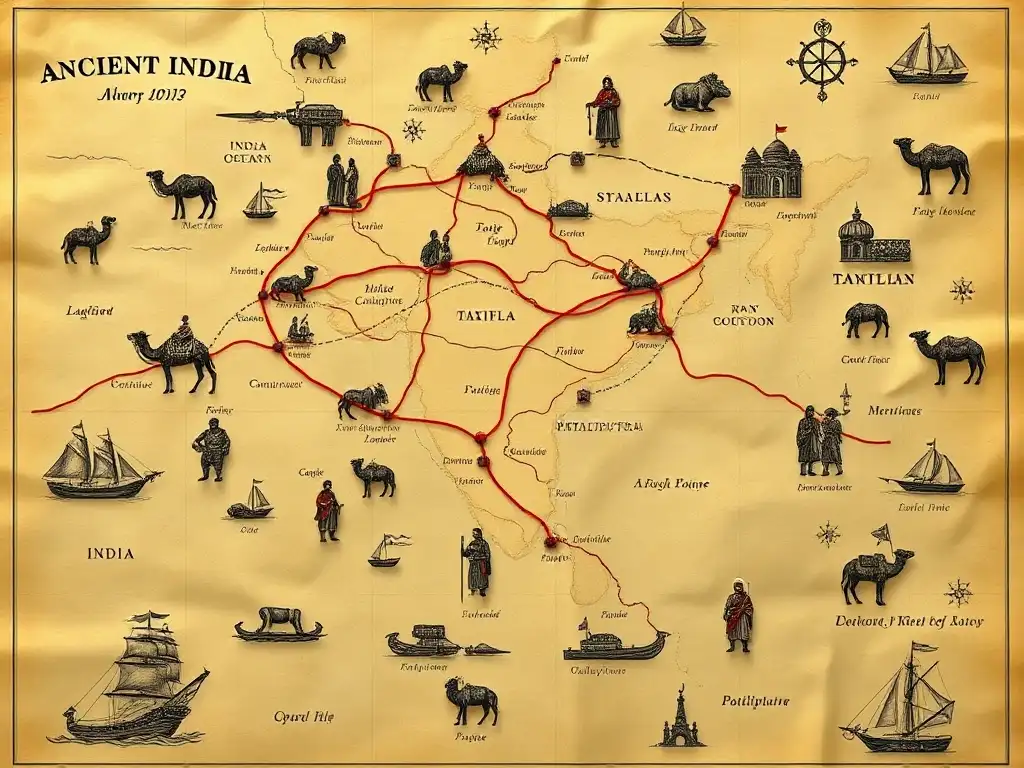
Political Instability and Its Effects on Trade
Political instability has historically posed significant challenges to the success and continuity of ancient Indian trade networks. Various empires and kingdoms, such as the Maurya and Gupta empires, faced internal strife, succession crises, and external invasions that disrupted trade routes and created uncertainty for merchants.
- Impact of Wars and Conflicts: Frequent wars, especially during the rise and fall of dynasties, led to the destruction of trade infrastructure and disruption of established routes. For instance, during the invasions by the Huns in the 5th century CE, many trade cities experienced decline, severely impacting commerce and cultural exchanges.
- Taxation and Regulation: Political entities often imposed heavy taxes on trade, which could deter merchants from engaging in long-distance commerce. The fluctuating policies regarding trade tariffs created an unpredictable environment that adversely affected the profitability of trading ventures.
- Territorial Changes: The shifting boundaries of empires often resulted in the alteration of trade routes. Merchants had to adapt to new political landscapes, which sometimes meant finding alternative routes or negotiating new agreements with local rulers. This flexibility was crucial for maintaining trade continuity but also presented a constant challenge.
Natural Disasters and Trade Disruption
Natural disasters have historically impacted the functionality of ancient Indian trade networks, posing significant hurdles that disrupted commerce and cultural interchange.
- Monsoons and Flooding: The Indian subcontinent relies heavily on monsoons for agriculture. However, erratic monsoon patterns or excessive rainfall could lead to flooding, destroying vital trade routes. For example, flooding of rivers like the Indus would hinder trade activities, making it difficult for goods to be transported.
- Earthquakes and Geographical Changes: Ancient India is prone to seismic activity, which could reshape the landscape and disrupt established trade routes. Earthquakes could damage infrastructure such as roads and ports, therefore necessitating repairs that took time and resources away from trade.
- Droughts and Famine: Periods of drought not only affected local economies but also had broader implications for trade. When agricultural yields diminished, local populations faced food shortages, which could lead to social unrest and a decline in trade activity as communities focused on survival rather than commerce.
Competition from Other Trade Networks
Competition from other trade networks played a crucial role in shaping the dynamics of ancient Indian trade networks, often leading to both challenges and opportunities for merchants.
- Emerging Trade Routes: Competing trade networks, particularly those emerging from Persia and later from the Roman Empire, often sought to capture the lucrative Indian market. The Silk Road, for instance, provided alternative routes for traders to access Indian goods, prompting local merchants to innovate and improve their offerings.
- Naval Competition: The rise of maritime trade routes, particularly in the Indian Ocean, introduced competition from other maritime powers such as the Arabs and later the Europeans. This competition not only shifted trade dynamics but also encouraged Indian traders to expand their maritime capabilities, leading to a more vibrant trade culture.
- Technological Advancements: Competition spurred technological innovations in trade practices, as merchants sought to enhance their efficiency in transport and trade. From advancements in shipbuilding to better navigation techniques, the need to remain competitive led to significant developments that benefited ancient Indian trade networks.
Despite the numerous challenges faced by ancient Indian trade networks, including political instability, natural disasters, and competition, these obstacles ultimately contributed to the resilience and adaptability of merchants. The ability to navigate these challenges fostered not just economic growth but also the rich cultural exchanges that characterized ancient Indian civilization.
Conclusion: The Legacy of Ancient Indian Trade Networks
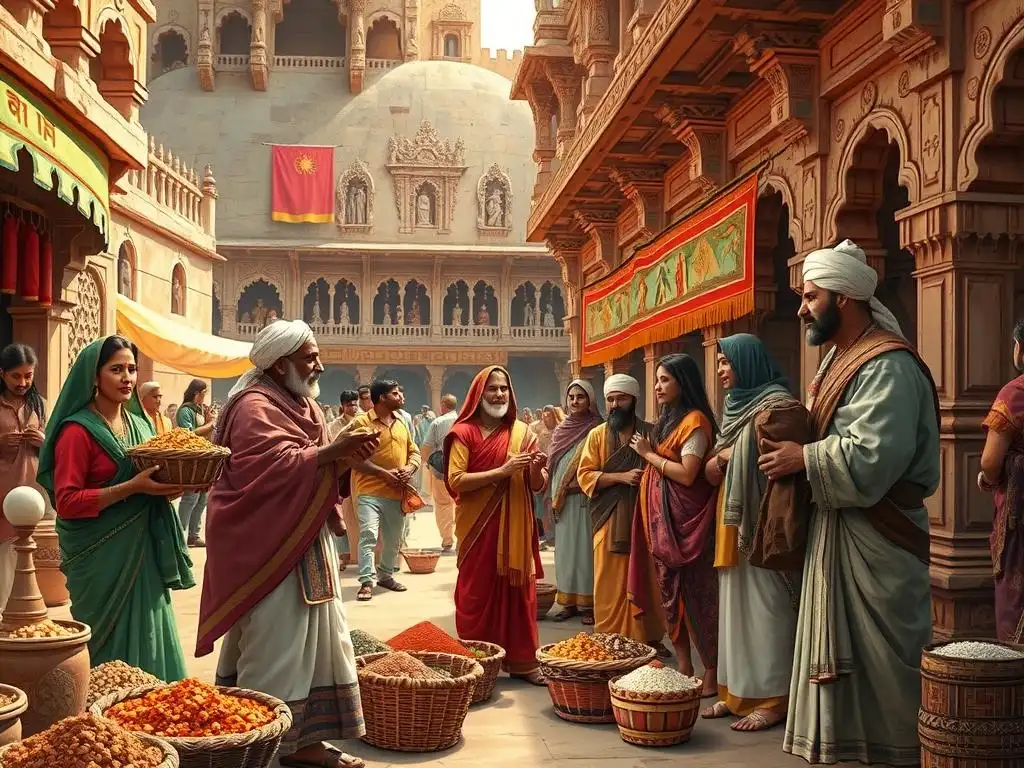
The legacy of ancient Indian trade networks is profound, influencing not only the economic landscape of historical civilizations but also shaping cultural interactions that resonate to this day. These networks facilitated the exchange of goods, ideas, and innovations across vast distances, connecting various regions and fostering relationships that transcended borders.
By enabling trade between different cultures, these networks played a crucial role in the dissemination of knowledge, religions, and art forms. As a result, ancient Indian trade networks can be seen as a driving force behind the rich tapestry of cultural diversity that characterizes India today. The enduring impact of these networks is evident in various modern practices, showcasing how historical trade routes have laid the foundation for contemporary commerce.
Lasting Influence on Modern Trade Practices
Ancient Indian trade networks laid the groundwork for modern trading practices, influencing both regional and global commerce. The principles of trade established during ancient times—such as bartering, establishing trade routes, and creating market towns—are still relevant today.
- Trade Routes: Just as ancient traders navigated through established routes, modern supply chains rely on logistics and transportation networks to move goods efficiently. The Silk Road and maritime routes of the Indian Ocean remain historical references for today's global shipping lanes.
- Cultural Exchange: The ancient practice of cultural exchange through trade has evolved into modern trade agreements that promote mutual understanding and cooperation among nations. These agreements often include cultural exchanges that enrich both parties, echoing the spirit of ancient interactions.
- Market Dynamics: Ancient marketplaces, where diverse goods were exchanged, mirror today's global marketplaces. The concept of a central hub for trade is fundamental in modern economics, with cities like Mumbai and Delhi serving as contemporary centers of commerce.
The organizational strategies and cultural practices established by ancient Indian trade networks continue to influence modern trade, making them integral to understanding the evolution of commerce.
Cultural Heritage and Its Relevance Today
The cultural heritage resulting from ancient Indian trade networks is an invaluable asset that informs contemporary society. The exchanges that took place through these networks had lasting effects on art, religion, and philosophy, which remain relevant in today's cultural landscape.
- Art and Architecture: The influence of trade on art can be seen in the intricate designs and motifs that blend various cultural elements. For instance, the fusion of Indian and Hellenistic art styles during the Maurya and Gupta periods is a direct result of these trade interactions.
- Religious Syncretism: Ancient trade networks facilitated the spread of religions such as Buddhism and Hinduism across Asia. This cultural interchange is evident in modern spiritual practices and philosophies that continue to draw from ancient teachings, showcasing a rich legacy of shared beliefs.
- Culinary Traditions: The movement of spices, grains, and culinary techniques through trade has resulted in a diverse and rich culinary heritage in India. Modern Indian cuisine is a testament to this blend of influences, with flavors and recipes that have evolved over centuries.
The cultural heritage derived from ancient Indian trade networks remains a vital part of contemporary identity, reminding us of the interconnectedness of civilizations and the importance of trade in fostering cultural diversity. The lessons learned from these historical networks continue to inspire and shape modern society, underscoring the enduring relevance of ancient Indian trade networks.
References and Further Reading on Ancient Indian Trade Networks
Suggested Books and Articles
-
"The Ancient Indian Trade Networks" by R. S. Sharma
This book provides a comprehensive analysis of the various trade networks that existed in ancient India, detailing how they facilitated the exchange of goods, culture, and ideas across different regions. Sharma delves into the intricacies of the trade routes, including both land and maritime pathways.
-
"Trade and Politics in Ancient India" by R. C. Majumdar
Majumdar explores the relationship between trade and political structures in ancient India, illustrating how trade networks were influenced by and, in turn, influenced political power dynamics. The book offers case studies on key trading cities and their roles in regional politics.
-
"The Economic History of India: 1857 to 1947" by B. R. Tomlinson
While primarily focused on a later period, Tomlinson’s work provides valuable context on the evolution of trade in India, tracing back to ancient practices. It discusses the legacy of ancient trade networks and their impact on the economy of modern India.
-
"India in the Ancient World" by Richard H. Davis
This work offers insights into the cultural exchanges that occurred through ancient trade networks, highlighting the interactions between India and neighboring civilizations. Davis discusses both the material and intangible exchanges that enriched Indian culture.
Online Resources for Further Exploration
-
Digital South Asia Library
An extensive collection of resources, including maps, texts, and images related to ancient Indian trade networks. This library serves as a valuable tool for researchers and enthusiasts alike, providing access to primary sources.
-
The Indian History Congress Website
This platform offers a plethora of articles and papers presented during the Congress sessions, many of which focus on the trade and economy of ancient India. It is a great resource for finding scholarly discussions and the latest research findings.
-
National Archives of India
The archives contain a wealth of documents and records that provide insights into ancient trade practices, including trade agreements, merchant guilds, and artifacts related to trade.
-
Internet Archive
A digital library that houses numerous historical texts concerning ancient Indian trade. Users can find scanned copies of rare books and documents, making it an excellent resource for in-depth research.
-
Indus Valley Civilization Research Portal
This portal specifically focuses on the Indus Valley Civilization, which is critical in understanding the roots of ancient Indian trade networks. It features scholarly articles, excavation reports, and findings that highlight trade practices of the time.
By utilizing these resources, readers can deepen their understanding of ancient Indian trade networks and their significant role in fostering cultural exchange throughout history.
Frequently Asked Questions
What were the main ancient Indian trade networks?
Ancient Indian trade networks included the Silk Road and maritime routes connecting India with regions like the Middle East, Southeast Asia, and Africa, facilitating both trade and cultural exchange.
How did trade contribute to cultural exchange in ancient India?
Trade allowed for the exchange of not only goods but also ideas, art forms, and religions, enriching the cultural tapestry of ancient Indian civilizations through interactions with other cultures.
What were some significant goods traded in ancient Indian networks?
Key traded goods included spices, textiles, precious stones, and metals, which were highly sought after in international markets, enhancing India's economic importance.
How did the Indus Valley Civilization influence trade?
The Indus Valley Civilization established early trade routes and practices, showcasing advanced urban planning and commerce, which laid the foundation for future ancient Indian trade networks.
What role did the Gupta Empire play in trade?
The Gupta Empire marked a golden age of trade, with increased commercial activity and the establishment of trade guilds, leading to prosperity and enhanced cultural exchanges across Asia.
Final Reflection: The Enduring Legacy of Ancient Indian Trade Networks
The intricate web of ancient Indian trade networks not only facilitated the exchange of goods but also served as a conduit for cultural dialogue and innovation. Today, as globalization continues to shape our world, the lessons from these historical trade routes remind us of the profound impact that connectivity can have on societies. The ability to share ideas, beliefs, and practices across borders is as essential now as it was centuries ago, making the study of these ancient networks ever more relevant.
The influence of ancient Indian trade networks extends far beyond their historical context; they have shaped cultural identities and fostered mutual understanding across diverse communities. The blending of art, philosophy, and technology that emerged from these exchanges is a testament to the power of collaboration and curiosity. Trade is not just about goods; it's about the exchange of ideas that can change the world.
This quote encapsulates the essence of how trade has been a catalyst for cultural evolution, reminding us that the connections we forge today can lead to a richer, more inclusive future.
As you reflect on the insights gained from exploring ancient Indian trade networks, consider how you can apply these lessons in your own life. Embrace the spirit of exchange—whether through travel, dialogue, or collaboration—and recognize the value of diverse perspectives. By fostering connections and engaging with different cultures, you contribute to a legacy of understanding and growth that echoes the vibrant history of ancient trade networks. Let us honor this legacy by actively participating in the cultural exchanges of our time, shaping a future that celebrates diversity and interconnectedness.
Uncover the Richness of Cultural Exchange!
Thank you for diving into the fascinating world of ancient Indian trade networks! You’ve explored how these vibrant connections shaped cultures and influenced societies. Now, it’s time to take that inspiration and apply it to your own journey of discovery and connection.
Here are a few exciting ways you can continue engaging with this topic:
- Explore local history: Visit a nearby museum or historical site to see how trade has influenced your community and its cultural evolution.
- Join a discussion group: Connect with fellow history enthusiasts online or in your area to share insights and perspectives about cultural exchanges.
- Share your learnings: Write a blog post or create a video about your discoveries to inspire others to appreciate the significance of cultural connections!
What cultural exchanges have you experienced in your own life, and how have they shaped your understanding of the world?