
The Evolution of Family Roles in the Gupta Empire


Welcome to Ancient India History, where we embark on a fascinating journey through the rich tapestry of ancient Indian civilizations. Here, we delve into the intricate details of daily life and society, uncovering the profound cultural contributions that shaped a nation.
In our featured article, “The Evolution of Family Roles in the Gupta Empire,” we invite you to explore how family dynamics influenced social structure and community life during this remarkable period. Prepare to be intrigued as we unravel the complexities of familial relationships that defined an era, sparking your curiosity to discover more about the legacies of the Gupta Empire.
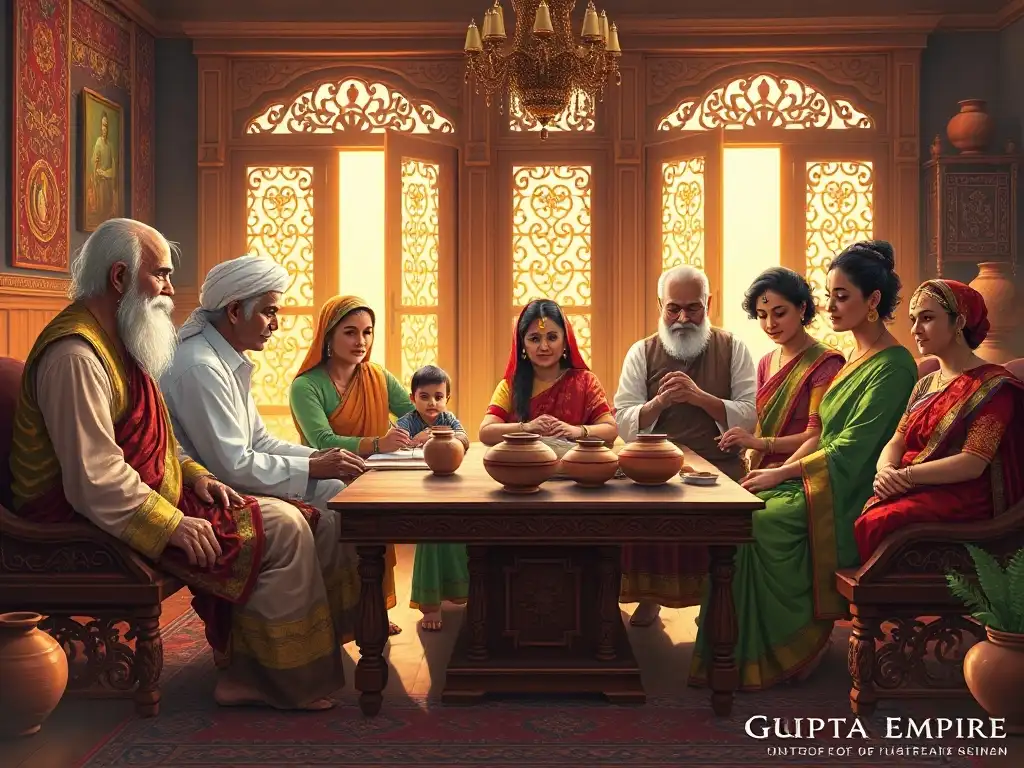
Introduction to Family Roles in the Gupta Empire
The Gupta Empire, often referred to as a golden age of ancient India, flourished between approximately 320 to 550 CE. This era is renowned not only for its remarkable advancements in arts, science, and culture but also for the intricate social structures that defined daily life. Among these structures, the family roles in the Gupta Empire played a pivotal role in shaping societal norms and values, influencing everything from economic activities to cultural practices. Understanding these familial roles provides a comprehensive view of how social dynamics evolved during this significant period in Indian history.
Overview of the Gupta Empire's Historical Context
The Gupta Empire emerged after the decline of the Maurya Empire, establishing a period marked by stability and prosperity. Centered in northern India, its capital, Pataliputra, became a hub of trade, culture, and education. The Guptas promoted Hinduism and supported various art forms, leading to a renaissance in literature and philosophy. This cultural flowering provided a backdrop against which family roles evolved and became more defined, reflecting the changing socio-political landscape.
Importance of Family Structures in Ancient Indian Society
Family structures in ancient India were crucial for maintaining social order and continuity. In the Gupta period, families were primarily patriarchal, where the father figure held authority, and lineage was traced through the male line. This structure was fundamental in determining inheritance, social obligations, and roles within the community. The family unit not only served as a support system but also played a significant role in the transmission of cultural values and practices from one generation to the next.
Historical Background of Family Roles in Ancient India
Family Dynamics Before the Gupta Empire
Before the rise of the Gupta Empire, family roles in ancient India were influenced by various factors, including regional customs, religious beliefs, and economic conditions. The Vedic period, which preceded the Gupta era, saw a more fluid family structure, where roles were often defined by the individual's skills and contributions rather than strict societal norms. Families were generally extended, with multiple generations living together, which facilitated cooperative labor and resource sharing.
Transition to the Gupta Era: Key Changes in Family Roles
The transition to the Gupta era marked significant transformations in family dynamics. With the consolidation of power under the Gupta rulers, societal norms began to formalize, leading to more rigid family structures. The introduction of the varna system further stratified society, influencing family roles based on caste. Women’s roles, while still central to the household, began to adhere more strictly to societal expectations, emphasizing marriage and motherhood over individual autonomy. This evolution of family roles not only reflected the changing priorities of the Gupta Empire but also laid the groundwork for future societal norms in India.
The Gupta Empire's family roles were not just reflections of personal relationships but were deeply intertwined with the broader socio-economic and cultural fabric of the time, highlighting the dynamic interplay between family and society in ancient India.
The Structure of Families in the Gupta Empire
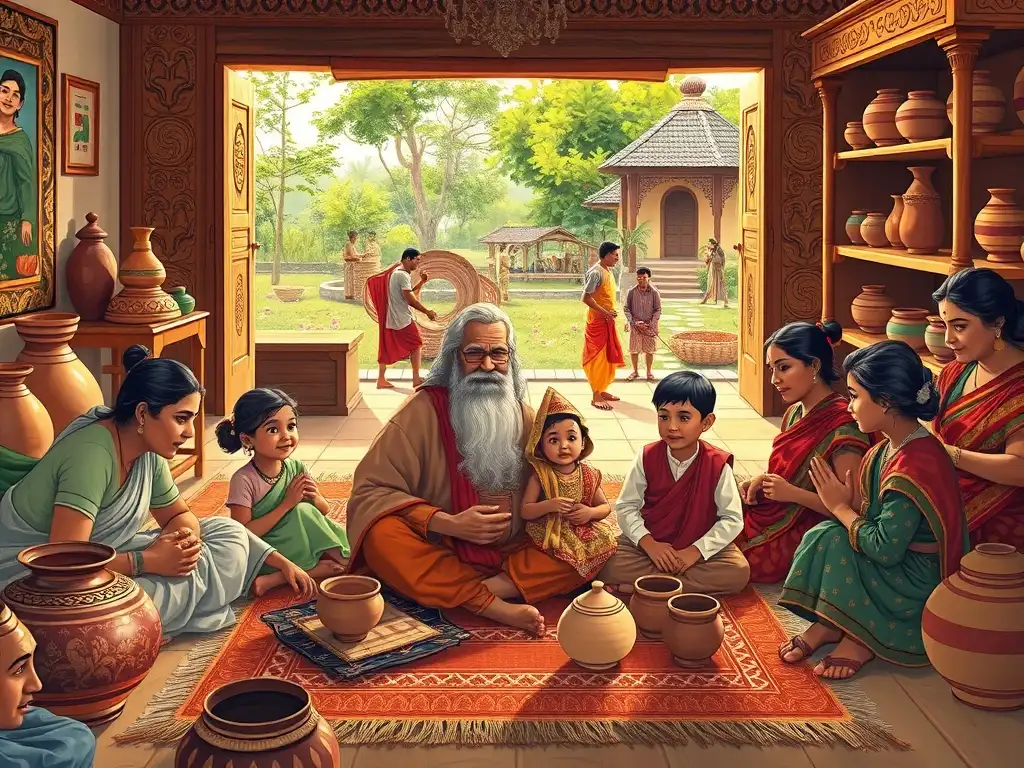
The Gupta Empire, often referred to as the "Golden Age" of India, witnessed a complex and evolving family structure that reflected its rich cultural tapestry. Families during this period were primarily organized into two distinct forms: nuclear families and extended families. The nuclear family typically consisted of parents and their immediate children, focusing on a more intimate household unit. In contrast, extended families included a broader network of relatives, such as grandparents, aunts, uncles, and cousins, living together or in close proximity.
This dual structure allowed for diverse family dynamics, where extended families often provided support systems in terms of childcare, economic stability, and social connections. The roles within these families were clearly defined, with each member contributing to the overall functioning and harmony of the household. The interplay between nuclear and extended family structures facilitated intergenerational relationships and the transmission of cultural values, further enriching the social fabric of the Gupta Empire.
Nuclear vs. Extended Families: Definitions and Differences
Nuclear families in the Gupta Empire were characterized by a smaller, more self-contained unit focused on immediate family members. This structure was advantageous for fostering close relationships between parents and children, enabling a more personalized upbringing. The nuclear family allowed for flexibility and autonomy in decision-making, particularly regarding education and career choices for children.
On the other hand, extended families encompassed a larger network of relatives, often living together or near one another. This arrangement provided a robust support system, especially in times of economic hardship or social challenges. Extended families shared resources, responsibilities, and childcare, creating a sense of community. The differences between these family types highlight the diverse approaches to familial relationships in Gupta society, where both structures coexisted and complemented each other.
Gender Roles Within Gupta Families
Gender roles within Gupta families were largely influenced by the prevailing cultural, religious, and social norms of the time. Men typically held the authority in household decisions and were seen as the primary breadwinners. Their responsibilities often extended beyond the home into the public sphere, where they were engaged in professions, governance, and trade.
Women, while primarily responsible for domestic duties such as managing the household and raising children, also played crucial roles in religious and cultural practices. Their influence was significant in rituals and family gatherings, and they were often tasked with preserving traditions. However, women's autonomy was generally limited, reflecting a patriarchal society where their roles were largely defined by their relationships to men—whether as daughters, wives, or mothers.
Marriage Practices and Their Impact on Family Roles
Marriage practices in the Gupta Empire were central to the social structure and had profound implications for family roles. Marriages were typically arranged, emphasizing familial alliances and social status rather than individual choice. This practice reinforced the importance of family connections and the responsibilities that came with marital unions.
The institution of marriage solidified gender roles, as men were expected to be providers and protectors, while women were often relegated to domestic spheres. The nature of these marriages influenced the dynamics within families and shaped the expectations of each family member.
Types of Marriages in the Gupta Empire
In the Gupta Empire, several types of marriages were practiced, reflecting the diversity of societal values and customs. The most common form was the arranged marriage, where families negotiated unions based on social status, wealth, and compatibility. This practice not only strengthened familial ties but also ensured the continuation of family lineage and property.
Other types included love marriages, though these were less common and often faced societal resistance. There were also forms such as Gandharva marriage, which was based on mutual love and consent, and Asura marriage, where the groom offered a significant bride price. Each type of marriage carried distinct social implications, influencing family roles and the expectations placed on both husbands and wives.
Dowry System: Economic and Social Implications
The dowry system was a significant aspect of marriage in the Gupta Empire, where the bride's family provided gifts, money, or property to the groom's family as part of the marriage arrangement. This practice had both economic and social implications. Economically, it often placed a considerable burden on the bride's family, who had to save and allocate resources for the dowry, sometimes leading to financial strain.
Socially, the dowry system reinforced patriarchal structures by commodifying women and linking their value to the material wealth brought into a marriage. It influenced family roles, as the bride was often viewed as an economic asset, and her worth was measured by the size and value of her dowry. This system perpetuated gender inequalities and shaped the expectations of both families involved in the marriage.
The Influence of Marriage on Family Dynamics
Marriage in the Gupta Empire was not just a personal union; it was a means of establishing alliances and influencing family dynamics. The roles of husband and wife were often clearly defined, with men taking on the role of providers and protectors, while women managed the household and nurtured children.
The impact of marriage on family dynamics extended beyond the immediate family unit. Marriages often tied together larger kinship networks, influencing relationships between families and clans. The expectations surrounding marriage also shaped the behavior of family members, dictating how they interacted with one another and the community at large. These dynamics were critical in maintaining social order and stability within the Gupta Empire.
Child-Rearing and Parenting Practices in Gupta Families
In the Gupta Empire, family roles were intricately woven into the fabric of society, particularly in the context of child-rearing and parenting practices. Families were typically nuclear, consisting of parents and their children, but extended family members often played significant supportive roles. The upbringing of children was seen as a collective responsibility, with each family member contributing to the child's development.
Parents imparted moral values and cultural traditions, ensuring that children grew up with a sense of identity and belonging. This involved storytelling, where elders would narrate tales from scriptures and folklore, instilling ethical principles. The emphasis was on developing virtues such as respect, responsibility, and duty towards family and society.
Additionally, the Gupta period marked a shift towards more structured parenting approaches, particularly for boys. While girls were primarily prepared for domestic roles, boys were encouraged to pursue education and vocational training, aligning with the society's expectations of their future roles.
Education and Upbringing of Children
Education in the Gupta Empire was highly valued and was primarily focused on boys, though girls also received some form of education at home. The Gurukul system was prevalent, where young boys would live with their teachers and learn a variety of subjects, including mathematics, astronomy, literature, and philosophy. This education aimed to prepare them for their future roles as responsible citizens and leaders.
For girls, education was often limited to domestic skills, such as cooking, weaving, and managing household affairs. Some families, particularly those of higher status, recognized the importance of educating their daughters, allowing them to learn reading and writing, thus contributing to their intellectual development. The upbringing of children involved a balance between academic learning and practical skills, ensuring they were well-rounded individuals.
The Role of Elders in Child Development
Elders held a revered position in Gupta family structures, playing a crucial role in child development. Grandparents and other senior family members were often responsible for imparting wisdom and life lessons, shaping the character of young children. Their presence ensured a continuity of cultural practices and values across generations.
The involvement of elders in daily family life provided children with a sense of security and support. They were instrumental in teaching traditional customs, rituals, and the significance of family lineage. This multi-generational approach to parenting enriched the child’s understanding of their heritage and responsibilities within the family unit.
Societal Influences on Family Roles in the Gupta Empire
The family roles in the Gupta Empire were significantly influenced by various societal elements, including religion, economic conditions, and political structures. Each of these factors contributed to shaping the dynamics of family life and the expectations placed upon individuals within the family.
Religion and Its Impact on Family Structures
Religion played a pivotal role in defining family structures during the Gupta Empire. Hinduism, being the predominant religion, influenced family roles through its sacred texts and teachings. The concept of dharma, or duty, was central to family life, dictating the responsibilities of each member according to their age, gender, and social status.
Rituals and religious ceremonies often required the participation of all family members, reinforcing familial bonds and collective identity. Additionally, the practice of arranged marriages was deeply rooted in religious beliefs, with families seeking to align their interests and maintain social standings through these unions. Such practices not only shaped individual roles within the family but also reflected broader societal norms.
Economic Factors Shaping Family Dynamics
The economic landscape of the Gupta Empire also influenced family roles. As a period marked by prosperity and trade, families engaged in various occupations, including agriculture, craftsmanship, and commerce. Economic roles were often gender-specific, with men primarily responsible for external work while women managed household tasks and contributed to family businesses.
This division of labor reinforced traditional family roles but also allowed women to play a vital part in the family economy. Women were involved in textile production and other crafts, which were essential for sustaining the household. The economic contributions of each family member were crucial for the family's stability and growth, promoting a sense of partnership even within prescribed roles.
Political Influences on Family Roles and Responsibilities
Political factors during the Gupta Empire also had a profound impact on family roles and responsibilities. The centralization of power under the Gupta rulers created a structured society where families were expected to align with the state's interests. This alignment often translated into loyalty to local rulers and participation in governance, affecting family dynamics.
Moreover, the political climate influenced marriage alliances, where families sought connections with influential clans to secure power and resources. Such alliances not only reinforced social status but also dictated the roles of family members in political affairs. This intersection of family and politics shaped the responsibilities of individuals, contributing to the complex tapestry of family roles in the Gupta Empire.
Changes and Continuities in Family Roles Over Time
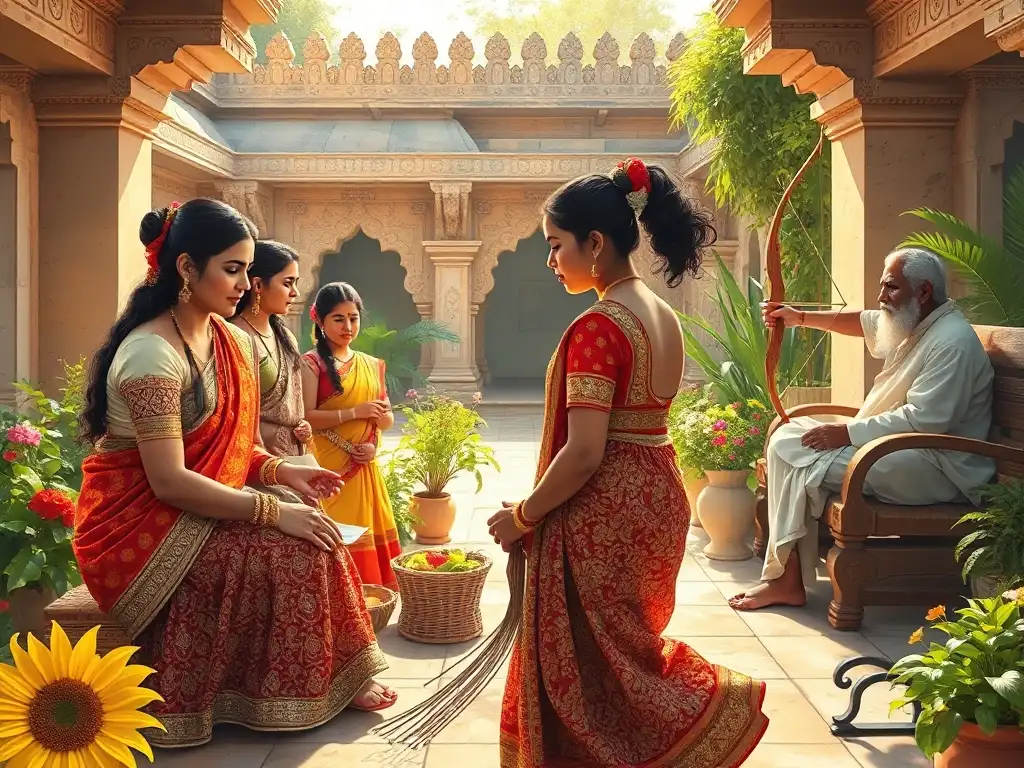
The family roles in the Gupta Empire underwent significant changes while also maintaining certain continuities that traced back to earlier Indian civilizations. The Gupta period, often referred to as the Golden Age of India, saw a flourishing of arts, science, and philosophy, which also influenced societal structures, including family dynamics.
In the early Gupta period, family roles were largely patriarchal, with men assuming the primary responsibilities for economic support and decision-making. Women, while often relegated to domestic spheres, played crucial roles in managing households and preserving cultural traditions. Over time, however, there emerged a greater recognition of women's contributions, particularly in education and spirituality, as seen in the writings of prominent female figures.
Despite these changes, certain elements remained constant, such as the emphasis on familial loyalty, arranged marriages, and the importance of lineage and inheritance. The Gupta era's family structures reflected a blend of traditional values and evolving roles, shaping the framework for future societal norms.
Evolution of Family Roles from the Early Gupta Period
In the early Gupta period (approximately 320 to 500 CE), family roles were predominantly influenced by the Vedic traditions that preceded it. The family unit was typically extended, comprising multiple generations living together, with the patriarch as the head. This hierarchical structure emphasized respect for elders and the transmission of cultural values through generations.
As the Gupta Empire progressed, shifts began to emerge, particularly in urban areas where economic opportunities increased. Families started to adapt to changing social dynamics, leading to more nuanced roles. Women, for instance, began to engage more in educational pursuits, contributing to family discussions and decisions, albeit still within a largely patriarchal framework.
The Gupta period also saw a rise in the importance of the kulin system, which emphasized social status and marital alliances. This led to strategic family arrangements that elevated social standing, impacting the roles and expectations of family members. Thus, the evolution of family roles during this period reflects a complex interplay between tradition and adaptation to new socio-economic realities.
Comparisons with Other Ancient Indian Civilizations
When comparing the family roles in the Gupta Empire with those of earlier Indian civilizations, such as the Indus Valley Civilization and the Maurya Empire, notable differences and similarities emerge.
In the Indus Valley Civilization, evidence suggests a more egalitarian approach, with women possibly enjoying greater freedoms and responsibilities. However, as Indian society evolved, particularly during the Maurya Empire, the family structure became more rigidly patriarchal, reinforcing men's dominance in various spheres of life.
Contrastingly, the Gupta Empire introduced elements of both continuity and change. While maintaining patriarchal norms, the Gupta period also saw women taking on more active roles, particularly in education and religious practices. This was somewhat unique compared to earlier periods, where women's roles were more confined to domestic duties.
Furthermore, the Gupta family structure emphasized the integration of family life with broader social and political networks, a development that can be seen as a departure from previous civilizations. This evolution illustrates how family roles were not static but rather adapted to the needs and values of society over time.
Conclusion: The Legacy of Family Roles in the Gupta Empire
The Gupta Empire's family roles left a lasting legacy that continues to influence Indian society today. The blend of tradition and evolving responsibilities during this period created a framework for family dynamics that emphasized both respect for heritage and adaptation to changing circumstances.
Summary of Key Points on Family Roles
- Patriarchal Structure: The family roles were predominantly patriarchal, with men as heads of households.
- Women's Contributions: Despite limitations, the roles of women began to expand, particularly in education and spirituality.
- Extended Families: Extended family units were common, reflecting the importance of lineage and cultural transmission.
- Kulin System: The rise of the kulin system influenced social status and marital alliances, impacting family dynamics.
The Lasting Influence of Gupta Family Structures on Modern Indian Society
The family structures established during the Gupta Empire continue to resonate in modern Indian society. Many contemporary practices, such as arranged marriages, respect for elders, and the value placed on familial loyalty, trace their roots back to this period.
Moreover, the gradual recognition of women's roles in education and public life during the Gupta era has paved the way for ongoing discussions around gender equality in modern India. The legacy of Gupta family roles is thus not only a reflection of historical practices but also a foundation upon which current societal norms are built. The interplay of tradition and change in family roles during the Gupta Empire remains a vital area of study for understanding the evolution of social structures in India.
References and Further Reading on Gupta Family Roles
Understanding the family roles in the Gupta Empire requires a comprehensive exploration of historical texts, academic research, and archaeological findings. This section provides valuable resources for those interested in delving deeper into the dynamics of family life during this significant period in ancient Indian history.
Suggested Academic Sources
-
"The Gupta Empire: A Comprehensive Study" by Romila Thapar
This book offers an extensive overview of the Gupta Empire, including insights into social structures, family roles, and gender dynamics. Thapar's scholarly approach helps readers understand the broader context of family within the imperial framework.
-
"Family, Caste, and Marriage in Ancient India" by N. S. J. Sriram
Sriram's work delves into the intricacies of family and marriage practices during ancient times, with a focused analysis on the Gupta period. The author examines how caste systems influenced familial roles and responsibilities.
-
"Women in Ancient India: A Historical Perspective" by R. P. K. Kumar
This source explores the role of women in ancient Indian societies, including the Gupta Empire. Kumar's research highlights how women's roles were defined within family structures and the implications of societal norms.
-
"Society and Culture in the Gupta Period" edited by Meera Nanda
This collection of essays discusses various aspects of Gupta society, including family roles. It features contributions from multiple scholars, providing diverse perspectives on family dynamics during this era.
Key Texts on Ancient Indian Family Dynamics
-
"The Family in India: Structure and Dynamics" by Patricia Uberoi
Uberoi's research focuses on the evolution of family structures in India, with references to ancient texts that highlight family roles during the Gupta period. This text is essential for understanding the transition of family dynamics over time.
-
"The Arthashastra" by Kautilya (Chanakya)
Although primarily a treatise on statecraft, the Arthashastra provides insights into the governance of family life and societal roles, including marriage and inheritance practices that shaped family structures during the Gupta Empire.
-
"The Mahabharata" and "The Ramayana"
These ancient epics, while mythological, offer a wealth of information on family roles, duties, and relationships in ancient Indian society. They serve as foundational texts that reflect the values and norms that influenced Gupta family life.
-
"Life and Society in Ancient India" by G. R. Sharma
Sharma's book offers a thorough examination of daily life, including family roles, in ancient India. His analysis of the Gupta period provides crucial context for understanding how family dynamics were shaped by cultural and societal expectations.
These suggested sources and key texts offer a well-rounded foundation for anyone interested in exploring the complexities of family roles in the Gupta Empire, illustrating how historical narratives and scholarly research contribute to our understanding of ancient Indian society.
- Introduction to Family Roles in the Gupta Empire
- Overview of the Gupta Empire's Historical Context
- Importance of Family Structures in Ancient Indian Society
- Historical Background of Family Roles in Ancient India
- The Structure of Families in the Gupta Empire
- Marriage Practices and Their Impact on Family Roles
- Child-Rearing and Parenting Practices in Gupta Families
- Societal Influences on Family Roles in the Gupta Empire
- Changes and Continuities in Family Roles Over Time
- Conclusion: The Legacy of Family Roles in the Gupta Empire
- References and Further Reading on Gupta Family Roles
- What were the primary family roles in the Gupta Empire?
- How did the status of women differ during the Gupta period?
- What impact did the Gupta Empire's family structure have on society?
- Were there any significant changes in family roles throughout the Gupta Empire?
- How did religion influence family roles during the Gupta Empire?
Frequently Asked Questions
What were the primary family roles in the Gupta Empire?
In the Gupta Empire, family roles were largely defined by patriarchy, with men typically taking on the role of breadwinners and women managing the household and children.
How did the status of women differ during the Gupta period?
Women in the Gupta period enjoyed certain freedoms, such as participating in arts and education, but were primarily expected to fulfill domestic roles, indicating a complex status within society.
What impact did the Gupta Empire's family structure have on society?
The family structure in the Gupta Empire fostered a strong sense of community, with extended families often living together, which was crucial for social cohesion and support.
Were there any significant changes in family roles throughout the Gupta Empire?
Yes, over time, family roles evolved, with increasing emphasis on caste and class, leading to more defined roles and responsibilities for each family member based on their societal position.
How did religion influence family roles during the Gupta Empire?
Religion played a significant role in shaping family dynamics, as Hindu values emphasized familial duties and responsibilities, reinforcing the importance of dharmic roles within the family structure.
Final Reflection: Understanding the Shifting Dynamics of Family Roles in the Gupta Empire
The exploration of family roles in the Gupta Empire reveals a profound transformation that resonates with contemporary society. As we dissect the intricate layers of familial structures, we uncover not only the historical significance but also the enduring relevance of these roles in shaping identity and community. The Gupta period serves as a mirror reflecting the complexities of modern family dynamics, reminding us that the evolution of family is a continuous journey that adapts to cultural, social, and economic changes.
The impact of family roles during the Gupta Empire has left an indelible mark on our cultural and social landscape. These historical shifts have influenced how we perceive authority, gender roles, and intergenerational relationships today. The lessons learned from this era encourage us to reflect on our own familial connections and the values we uphold. As historian Romila Thapar aptly stated, History is not just about the past; it is a lens through which we can understand our present and shape our future.
This perspective invites us to consider how the evolution of family roles informs our understanding of community and belonging in the modern world.
As we conclude this exploration, I invite you to reflect on your own family dynamics and consider how they have evolved over time. What lessons can you draw from the Gupta Empire's family structures that might enrich your relationships today? Embrace the opportunity to engage with your family history, fostering connections that honor the past while paving the way for a more inclusive and understanding future. Let the insights gained from the Gupta Empire inspire you to cultivate meaningful family roles that resonate with the values of love, respect, and collaboration in your own life.
Unveil the Legacy: Embrace the Evolution of Family Roles!
Thank you for taking the time to explore the intricate tapestry of family roles in the Gupta Empire! Your interest not only enriches your understanding but also honors the diverse legacies of our ancestors. As you continue your journey through history, consider taking these next steps to deepen your engagement:
- Dive deeper into the past by reading more articles on family structures in ancient civilizations and their influence on societal norms.
- Share your insights with friends or on social media by tagging us and initiating a conversation about the evolution of family roles over time.
- Join our community to discuss how the legacies of ancient families continue to shape modern dynamics—your voice is important!
What aspect of family evolution in the Gupta Empire resonates most with you, and how does it connect to the family roles we see today?