
The Role of Religion in Ancient Indian Military Conflicts

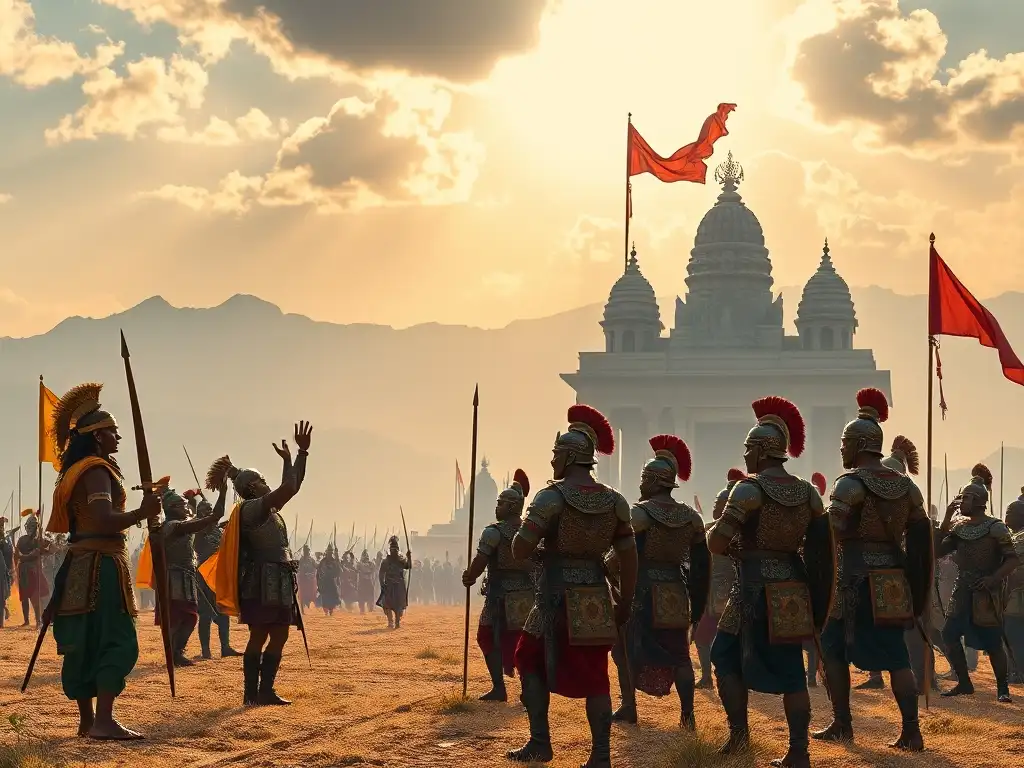
Welcome to Ancient India History, where we embark on an enlightening journey through the tapestry of time that weaves together the rich and diverse civilizations of ancient India. In this exploration, we delve into a fascinating aspect of our past: the role of religion in ancient Indian warfare. How did spiritual beliefs shape military strategies and conflicts from the Indus Valley to the Gupta Empire?
Join us as we uncover the intricate connections between faith and battle, revealing layers of meaning that have influenced both history and culture. Prepare to be captivated as we explore this compelling intersection that not only defined conflicts but also forged the identity of an entire civilization.
- Introduction to Religion in Ancient Indian Warfare
- The Influence of Hinduism on Military Strategy
- Buddhism and Military Conflicts in Ancient India
- Jainism's Perspective on Warfare
- The Role of Religion in Notable Battles
- The Interplay Between Religion and Politics
- Conclusion: The Lasting Legacy of Religion in Ancient Indian Warfare
-
Frequently Asked Questions
- What was the significance of religion in ancient Indian warfare?
- How did different religions affect military strategies in ancient India?
- Were there any specific deities worshipped for victory in battles?
- Did religious texts influence military leadership in ancient India?
- How did the Gupta Empire integrate religion into its military practices?
- Final Reflection: The Enduring Legacy of Religion in Ancient Indian Warfare
- Unveil the Power of Faith in Ancient Warfare
Introduction to Religion in Ancient Indian Warfare
Throughout history, religion has played a pivotal role in shaping civilizations, influencing not only cultural practices but also military strategies and conflicts. In the context of ancient India, the intertwining of religion and warfare is especially profound, with various religious beliefs and practices informing the motivations, conduct, and justifications of military engagements.
This article delves into the intricate dynamics of Religion in Ancient Indian Warfare, exploring how spiritual ideologies and rituals influenced notable battles and campaigns, from the earliest days of the Indus Valley civilization through to the expansive eras of the Maurya and Gupta Empires. By examining the significance of religious beliefs in military conflicts, we gain a deeper understanding of how they shaped the socio-political landscape of ancient India.
Overview of Ancient Indian Military Conflicts
Ancient Indian military conflicts were characterized by a mixture of strategic prowess and religious fervor. From the legendary battles depicted in the epic Mahabharata to the historical campaigns of kings like Ashoka the Great, warfare in ancient India was not merely a struggle for territorial dominance but also a reflection of deeper spiritual convictions.
- Major Conflicts:
- The Kuru War (Mahabharata) serves as a prime example, illustrating how familial ties and moral dilemmas were entangled with religious obligations.
- The Battle of Kalinga, fought by Ashoka, transformed him from a warrior king into a proponent of Buddhism, highlighting the post-war impact of religious beliefs on governance.
- Military Strategies:
- Strategies were often influenced by religious calendars and rituals, with auspicious dates chosen for launching campaigns.
- Deities were invoked for victory, and armies would carry symbols of their faith into battle, believing that divine support would lead to triumph.
Significance of Religion in Ancient Indian Society
Religion in ancient India was more than a personal belief system; it was a cornerstone of community life and governance. The significance of religion in society directly influenced military practices and ideologies.
- Social Cohesion:
- Religious festivals and rituals often served to unite soldiers and civilians, fostering a sense of shared purpose and identity during times of conflict.
- Moral Justification:
- Warfare was frequently justified through religious narratives, with kings and leaders portraying their battles as holy endeavors.
- Texts like the Bhagavad Gita reveal the philosophical underpinnings of duty (dharma) in warfare, emphasizing the moral complexities faced by warriors.
The role of religion in ancient Indian military conflicts is a multifaceted topic that highlights the deep connections between faith, society, and warfare. Understanding this interplay enriches our perspective on the historical events that shaped ancient India and its legacy in military history.
The Influence of Hinduism on Military Strategy
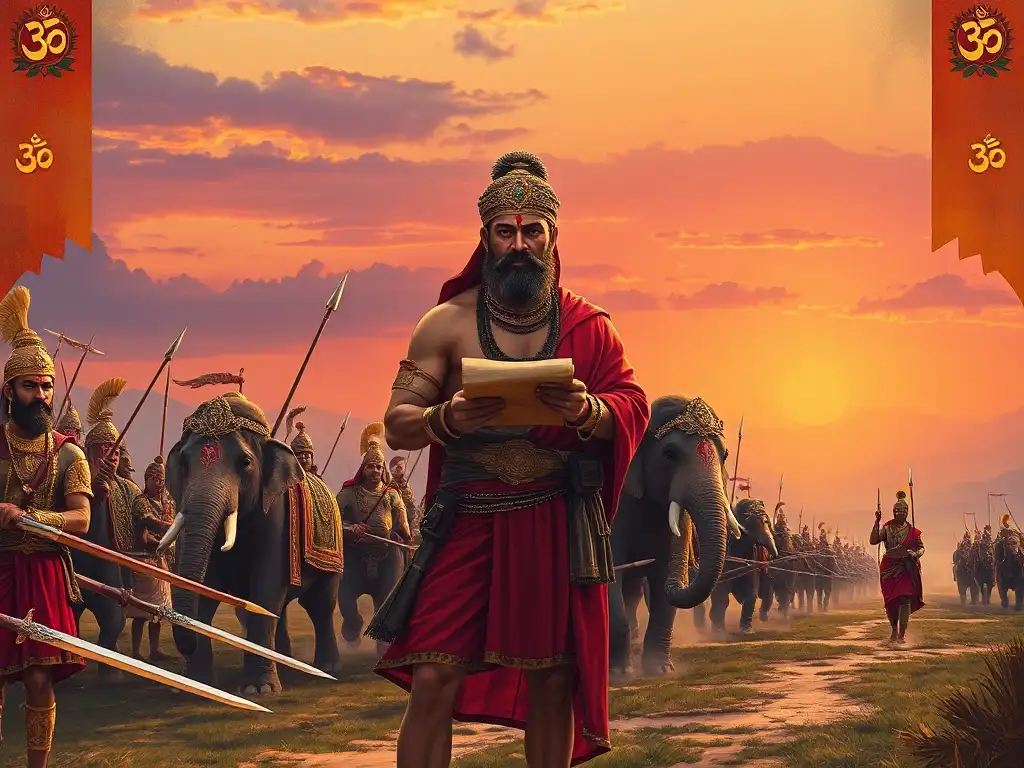
Hinduism has profoundly influenced the military strategies of ancient Indian civilizations, providing not only spiritual guidance but also practical methodologies for warfare. Central to this influence is the concept of Dharma, or duty, which establishes a moral framework for actions taken in both peacetime and conflict. This philosophical underpinning has shaped the conduct of warriors, emphasizing the importance of righteousness and ethical behavior in the face of battle.
Key Texts: The Bhagavad Gita and Its Military Philosophy
The Bhagavad Gita, a 700-verse dialogue between Prince Arjuna and Lord Krishna, serves as a critical text for understanding the interplay between religion and warfare in ancient India. Set against the backdrop of the Kurukshetra War, the Gita addresses the moral dilemmas faced by Arjuna, who is torn between his duty as a warrior (Kshatriya) and his compassion for family members on the opposing side.
Key philosophical concepts from the Gita include:
- Karma Yoga: The path of selfless action, which teaches that one should act according to their duty without attachment to the results. This approach emphasizes that warriors must engage in battle when duty calls, regardless of personal consequences.
- Svadharma: The idea of one's own duty, which varies according to an individual's caste and life stage. For warriors, adhering to Svadharma means fulfilling their responsibilities in warfare with honor and integrity.
- Detachment: Krishna advises Arjuna to maintain detachment from the fruits of his actions, fostering a mindset that prioritizes duty over personal gain. This principle guided many ancient Indian military leaders in their campaigns.
The teachings of the Gita not only provided a moral compass for soldiers but also justified warfare as a necessary aspect of life when conducted in accordance with Dharma.
Religious Rituals and Their Role in Warfare
In ancient India, religious rituals were integral to the preparation for warfare, believed to invoke divine favor and ensure victory. The following rituals were commonly observed:
- Yajnas (Sacrificial Offerings): Before embarking on military campaigns, kings and commanders often performed Yajnas to appease deities and secure their blessings. These rituals typically involved offerings of grains, ghee, and animals, aimed at garnering divine support.
- Prayers and Invocations: Warriors would recite specific prayers and chants to invoke the protection of deities, such as Durga for strength and victory and Hanuman for courage. These invocations served to bolster the morale of troops and instill a sense of divine purpose.
- Ritualistic Armor Blessings: Soldiers often sought blessings for their weapons and armor through rituals to ensure their effectiveness in battle. This practice was believed to imbue their equipment with spiritual power, enhancing their efficacy on the battlefield.
Through these rituals, religion permeated military life, fostering a deep connection between the spiritual and the martial spheres.
Deities and Their Significance in Battle
In the context of ancient Indian warfare, various deities were revered and invoked for their specific attributes and powers that were believed to influence the outcomes of battles. Key deities include:
- Kali: Representing destruction and transformation, Kali was often worshipped by warriors seeking strength and ferocity in combat. Her fierce nature symbolized the inevitability of death and the importance of fierce determination in battle.
- Durga: Known as the warrior goddess, Durga embodies the victory of good over evil. Her narratives often depict her slaying formidable demons, making her a powerful figure for soldiers to seek guidance from during conflicts.
- Indra: As the king of gods and the god of rain and thunderstorms, Indra was associated with strength and valor in battle. He was often invoked for victory and protection in military endeavors.
The reverence for these deities illustrates how religion was woven into the very fabric of military life, shaping the beliefs and actions of ancient Indian warriors. Through rituals and invocations, soldiers and rulers sought to align themselves with divine forces, reinforcing the belief that spiritual favor was crucial for success in warfare.
The intricate relationship between Religion in Ancient Indian Warfare reflects a rich tapestry of beliefs, practices, and philosophies that not only guided military strategies but also shaped the very identities of the civilizations engaged in these conflicts.
Buddhism and Military Conflicts in Ancient India

The Shift in Ideology: From Conflict to Peace
Buddhism, emerging in the 6th century BCE, introduced a transformative ideology that significantly impacted the landscape of ancient Indian warfare. Initially, the Indian subcontinent was rife with conflicts among various kingdoms, often driven by territorial ambitions, dynastic rivalries, and the quest for power. However, with the advent of Buddhism, a notable shift began to occur in the attitudes towards conflict.
The core tenets of Buddhism, particularly the principles of ahimsa (non-violence) and compassion, encouraged rulers and warriors to reconsider the morality of warfare. This philosophical shift can be traced back to the teachings of Siddhartha Gautama, the Buddha, who emphasized the importance of peace and the suffering caused by violence. As the following centuries unfolded, Buddhist doctrines began to permeate the political and military strategies of various rulers, especially during the reign of Emperor Ashoka (c. 268–232 BCE).
Key Points of Shift:
- Emperor Ashoka's Conversion: After the bloody Kalinga War, Ashoka's conversion to Buddhism marked a significant transition. He renounced violence, promoting the idea of governance through moral authority rather than military might.
- Writings and Edicts: Ashoka's edicts, inscribed on pillars and rocks, articulated his commitment to non-violence and ethical governance, influencing subsequent rulers to adopt similar stances.
- Cultural Influence: The Buddhist emphasis on peace and coexistence began to influence societal norms, and even the military ethos of various kingdoms, steering them towards diplomacy over conflict.
This ideological shift did not eliminate warfare entirely; rather, it transformed the justifications for conflict, leading to the prioritization of moral considerations over mere expansionist objectives.
Buddhist Monks and Their Impact on Warfare
Buddhist monks played a crucial role in mediating conflicts and advocating for peace during times of strife in ancient India. Their influence extended beyond religious teachings, as they became vital actors in the socio-political arena.
Roles of Buddhist Monks:
- Mediators: Monks often acted as intermediaries between warring factions, utilizing their moral authority to negotiate peace treaties. Their commitment to non-violence lent credibility to their efforts, making them trusted figures in conflict resolution.
- Advisors to Kings: Many rulers sought the counsel of Buddhist monks, who provided insights on ethics and governance. Their perspectives often discouraged unnecessary bloodshed and encouraged rulers to consider the long-term consequences of warfare.
- Promotion of Non-Violent Resistance: In certain instances, monks inspired communities to resist aggression through non-violent means, fostering a culture of resilience without resorting to arms. For example, during the conflicts involving the Mauryan Empire, teachings on compassion and restraint were often highlighted by monastic leaders.
- Cultural Transmission: Beyond immediate conflict resolution, monks contributed to the spread of Buddhist ideals, which gradually permeated the military ethos of various kingdoms. Their teachings on compassion and the sanctity of life began to reshape the narratives around warfare.
Conclusion: The role of Buddhism in ancient Indian military conflicts illustrates a complex interplay between ideology and warfare. While conflicts persisted, the influence of Buddhist philosophies gradually fostered a culture of peace, significantly altering the motivations behind military engagements. This legacy continues to echo in modern discussions about the intersections of religion and conflict in South Asia.
Jainism's Perspective on Warfare
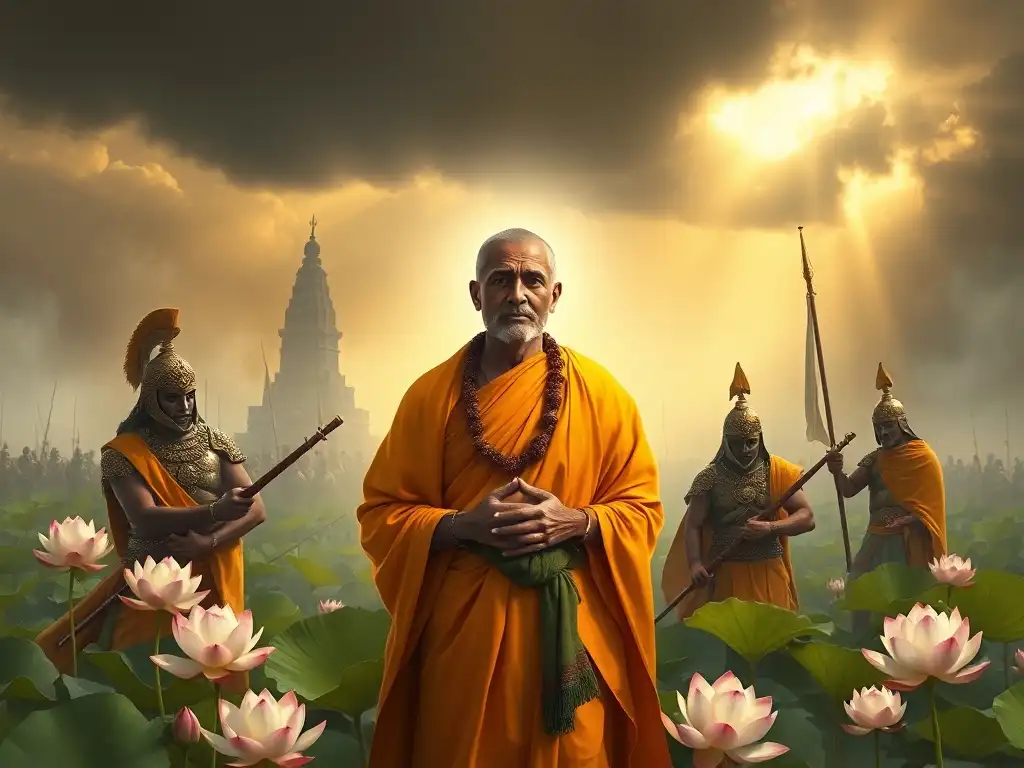
Jainism, one of the ancient religions of India, offers a distinct perspective on warfare, primarily rooted in the principle of ahimsa or non-violence. This foundational tenet profoundly influences the ethical framework of Jain practitioners regarding military conflicts. Unlike many other religious traditions, Jainism emphasizes the sanctity of all living beings, advocating for peace and the resolution of conflicts through non-violent means.
Non-violence and Its Role in Military Ethics
The concept of ahimsa in Jainism is not merely a personal ethical guideline but a comprehensive worldview that extends to all aspects of life, including military ethics. Jains believe that violence, even in the context of war, generates negative karma, which affects the soul's journey through the cycle of birth and rebirth. As a result, engaging in warfare is seen as detrimental not just to the opponent but to the warrior's own spiritual progress.
- Philosophical Underpinnings: Jain philosophy posits that all beings possess a soul (jiva) and that harming any living creature is an affront to the divine nature within it. This belief leads to a profound aversion to war, which is often viewed as a failure of moral and ethical judgment.
- Conflict Resolution: In situations of conflict, Jains often advocated for diplomatic resolutions, negotiation, and compromise rather than armed confrontation. Their historical texts reflect this ideology, showcasing instances where Jains sought to mediate disputes through peaceful means.
- Warrior Ethics: For those Jains who were involved in military roles, there existed a complex interplay between duty and spiritual integrity. While some may have participated in conflicts, they often did so under a strict adherence to minimizing harm, adhering to codes that prioritized the protection of non-combatants and the environment.
Jain Leaders and Their Involvement in Conflicts
While Jainism promotes non-violence, historical evidence indicates that some Jain leaders and kingdoms did engage in military conflicts, often driven by the necessity to protect their communities or uphold justice. This paradox highlights the intricate relationship between Jain values and the realities of political power.
- Historical Figures: Certain Jain rulers, like Raja Bhoja of the Gurjara-Pratihara dynasty, exemplified the duality of Jain ethics in warfare. While they upheld Jain principles in their governance, they also recognized the need for military action to defend their territories against invasions.
- Involvement in Campaigns: Jain communities occasionally supported military campaigns that aligned with their ethical framework, particularly when such actions aimed to restore peace or combat oppression. For instance, during conflicts involving the Chalukyas and the Rashtrakutas, Jain leaders often sought to mediate and influence outcomes in favor of non-violence and justice.
- Legacy and Influence: The involvement of Jain leaders in conflicts has left a lasting impact on the cultural and military history of India. Their ethical stance continues to resonate within modern discussions on warfare, justice, and the moral implications of violence.
Jainism's perspective on warfare, marked by a strong commitment to non-violence, illustrates the complexities and contradictions faced by its followers in historical contexts. The interplay between Jain ethical teachings and the exigencies of military conflict provides a unique lens through which to understand the broader theme of religion in ancient Indian warfare.
The Role of Religion in Notable Battles
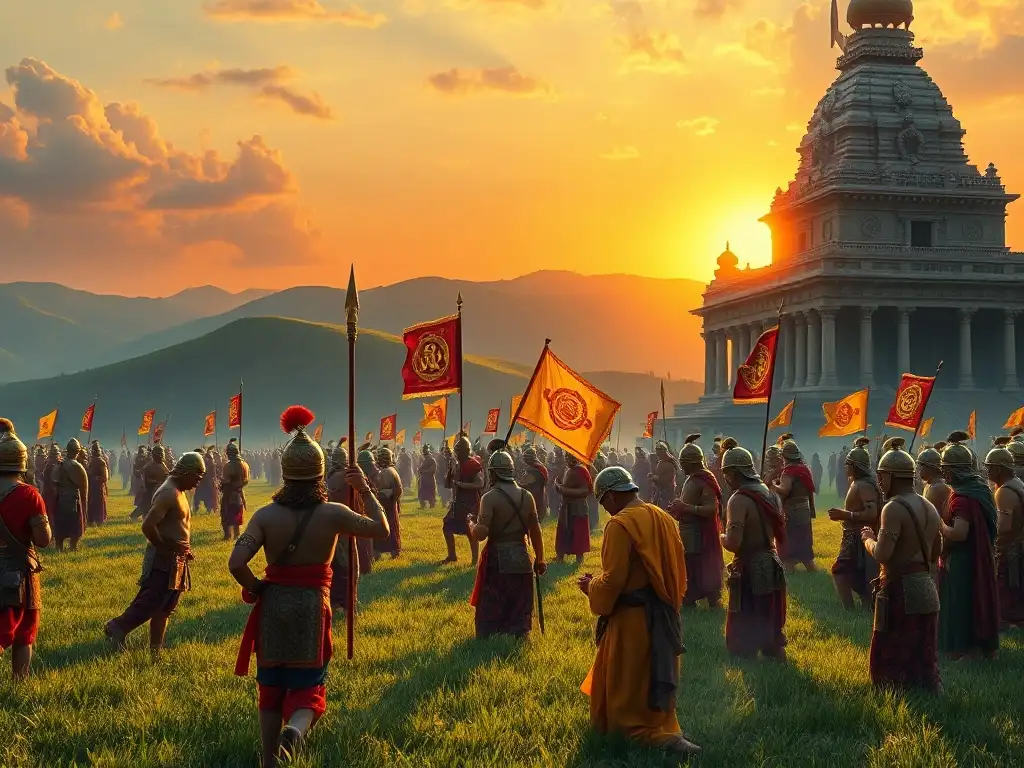
Religion played a pivotal role in shaping the military conflicts of ancient India. The intertwining of spiritual beliefs and warfare not only influenced the motivations behind battles but also affected the strategies and outcomes of conflicts. As we explore notable battles throughout ancient Indian history, we can see how religious ideologies, rituals, and societal norms shaped the course of military engagements.
The Kalinga War: A Turning Point in Indian History
The Kalinga War, fought in 261 BCE, stands as a significant example of religion's influence in ancient Indian warfare. This conflict, waged by Emperor Ashoka of the Mauryan Empire, was not just a territorial conquest; it also had deep religious implications. After witnessing the devastating consequences of the war, Ashoka underwent a profound transformation, embracing Buddhism and its tenets of non-violence.
- Consequences of the War:
- Approximately 100,000 soldiers and civilians lost their lives.
- Ashoka’s remorse led him to renounce further military conquests.
- He dedicated himself to the spread of Buddhism, promoting peace and dharma (moral law).
The Kalinga War serves as a critical turning point that highlights how warfare can impact religious beliefs and vice versa. Ashoka's decision to adopt Buddhism fundamentally altered the religious landscape of India, promoting a culture of peace over aggression.
Influence of Religion in the Mauryan Empire's Campaigns
During the Mauryan Empire, religion profoundly influenced military strategies and campaigns. Ashoka's conversion to Buddhism is perhaps the most notable example; however, the earlier Mauryan rulers also leveraged religious sentiments to galvanize troops and justify their expansions.
- Religious Justification of Warfare:
- Hinduism: Many battles were framed as righteous wars (Dharma Yuddha), where the kings sought to restore order and uphold dharma.
- Buddhism: Ashoka's campaigns were initially justified as efforts to expand the Buddhist faith, which he later redefined to emphasize peace.
- Rituals and Superstitions:
- Before battle, rulers often conducted rituals to appease deities, seeking divine favor.
- Omens and prophecies played a crucial role in decision-making, influencing the timing and tactics of military actions.
The Mauryan Empire's approach to warfare illustrates the complex interaction between religion and military strategy, where both served to unify and motivate the populace while also providing a moral framework for conflict.
Religious Motivations in the Gupta Empire's Military Efforts
The Gupta Empire, often referred to as the "Golden Age" of India, is another era where religion significantly influenced military endeavors. Hinduism experienced a resurgence during this period, impacting both the motivations for war and the conduct of military campaigns.
- Hindu Revival:
- The Gupta rulers, such as Chandragupta II, promoted Hinduism as a means to consolidate power and unify the diverse regions of their empire.
- Temples and religious institutions often served as centers of power and resources for military campaigns.
- Military Campaigns and Religious Sentiment:
- The Guptas justified military conquests as efforts to restore dharma against perceived threats, such as the Huns.
- Festivals and religious ceremonies often coincided with military activities, reinforcing the divine right of rulers to wage war.
- Cultural Impact:
- Military victories were celebrated with grand rituals, further intertwining religious and military identity.
- The Gupta period saw the creation of numerous texts and art forms that glorified both military achievements and religious devotion.
The Gupta Empire exemplified how religion could be employed not only to motivate military actions but also to enhance the cultural fabric of society. The interplay between religion and warfare during this era laid the groundwork for many future conflicts in the subcontinent.
The examination of notable battles such as the Kalinga War, the military campaigns of the Mauryan Empire, and the efforts of the Gupta Empire reveals a complex relationship between religion and warfare in ancient India. The motivations, justifications, and cultural ramifications of these conflicts underscore the significant role that religion played in shaping the military history of this diverse civilization.
The Interplay Between Religion and Politics
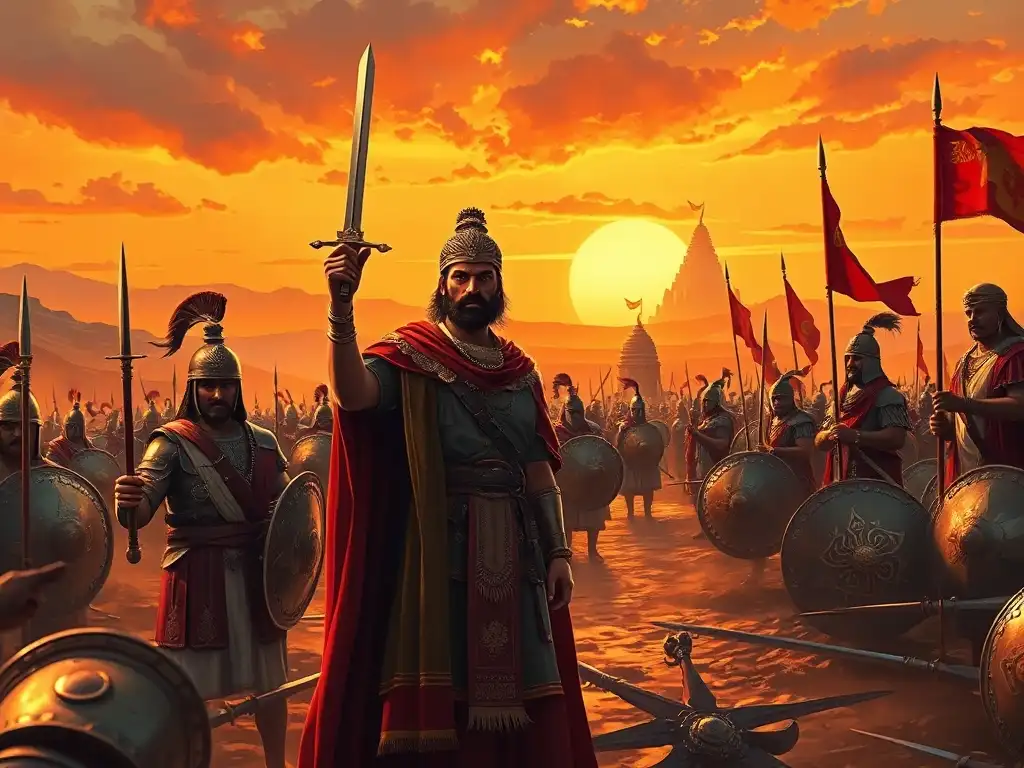
In ancient India, religion and politics were deeply intertwined, with spiritual beliefs often influencing military strategies and decisions. Rulers frequently utilized religious narratives to legitimize their power and actions, creating a framework where military conflicts were perceived not only as political maneuvers but also as divine missions. This intersection of religion and politics facilitated a complex relationship that shaped the socio-political landscape of ancient India.
The Use of Religion to Justify Military Actions
Throughout various epochs in ancient Indian history, rulers invoked religious texts and principles to justify their military endeavors. For example, the Mahabharata, particularly the Bhagavad Gita, served as a philosophical guide for warriors, illustrating the righteousness of battle for the sake of dharma (duty). Arjuna's internal conflict and Krishna's counsel epitomize the moral complexities of warfare, where justice and righteousness were paramount.
Moreover, many kings presented their campaigns as a means of restoring or protecting dharma. The Kalinga War, led by Emperor Ashoka, is a notable instance where the conflict was framed as a necessary action to bring peace and moral order to the region. After witnessing the devastation of war, Ashoka adopted Buddhism and emphasized non-violence, reflecting a radical shift in perspective. This transformation highlights how religious beliefs can alter military approaches and justifications over time.
The legitimacy conferred by religion often translated into enhanced military support. For instance, the Gupta Empire, during its zenith, aligned itself closely with Hinduism, promoting the idea of a divine monarchy. This association not only solidified the emperor's authority but also rallied troops under the banner of a sacred cause. The belief that a ruler was chosen by the gods inspired loyalty among soldiers, creating a formidable force motivated by both devotion and duty.
Religious Unification and Its Impact on Military Alliances
Religious beliefs also played a crucial role in fostering unity among diverse groups, which was essential for forming military alliances. In ancient India, various kingdoms often comprised different ethnic and cultural groups, making it vital to establish a common identity. Religion provided this unifying element, enabling disparate factions to collaborate in military endeavors.
The Maurya Empire exemplifies this unification through the promotion of Buddhism. Ashoka's embrace of Buddhism not only aimed to spread its teachings but also sought to create a cohesive identity among his subjects. This strategy fostered alliances with neighboring states that shared similar beliefs, enabling them to present a united front against external threats.
Furthermore, the festival of Mahashivaratri, which celebrated Lord Shiva, often saw various regional kingdoms joining forces to honor their deities. These festivals served as both religious observances and opportunities for military leaders to forge alliances, creating a network of support that could be mobilized during conflicts.
The notion of Jihad, though primarily associated with Islamic history, can also be paralleled in ancient Indian contexts where the concept of a righteous war was prevalent. Rulers who framed their campaigns within a religious context could inspire a sense of purpose and camaraderie among their forces, leading to more coordinated military efforts.
The intricate relationship between religion and military conflicts in ancient India reveals a landscape where spiritual beliefs were not merely personal convictions but pivotal elements shaping political power and military strategies. The influence of religion in ancient Indian warfare continues to be a significant area of study, illuminating how faith and conflict coalesce to reflect broader societal dynamics.
Conclusion: The Lasting Legacy of Religion in Ancient Indian Warfare
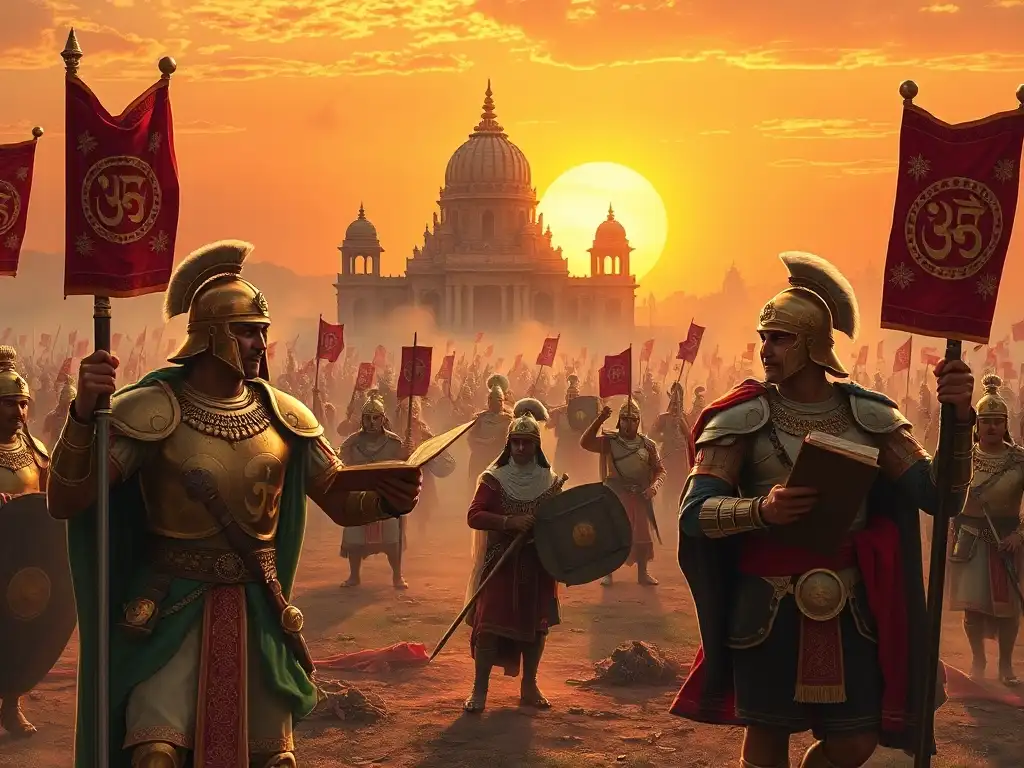
The intertwining of religion and warfare in ancient India has left an indelible mark on the military strategies, cultural ethos, and historical narratives of the subcontinent. The religious beliefs and practices of the time were not mere backdrops but rather integral components that shaped the very fabric of military conflicts. The influence of various faiths — particularly Hinduism, Buddhism, and Jainism — can be traced through the motivations for wars, the conduct of battles, and the moral frameworks that guided soldiers and leaders alike.
Reflection on How Religion Shaped Military Tactics
Throughout ancient Indian history, religious doctrines significantly influenced military tactics. Different sects and religious beliefs provided justifications for warfare, often framing conflicts in terms of divine mandates or moral imperatives. For instance, the concept of Dharma Yudhha (righteous war) in Hindu philosophy emphasized the importance of fighting for justice and upholding dharma, or cosmic order. This philosophical framework not only dictated the conduct of warriors but also influenced the strategies employed in battles.
- Sacred Texts as Military Guides: Texts like the Bhagavad Gita, which is part of the Mahabharata, served as both spiritual guidance and military strategy. Arjuna's moral dilemmas about duty and righteousness highlight the ethical considerations that warriors faced, ultimately shaping their approach to combat.
- Rituals and Divine Favor: Rituals such as yajnas (sacrificial offerings) were performed to seek blessings from deities before engaging in warfare. This belief in divine favor often led to the development of unique military tactics tailored to invoke spiritual support and enhance the morale of troops.
- Religious Symbols in Warfare: The use of religious symbols, such as flags adorned with sacred emblems, not only served to rally troops but also instilled a sense of purpose and unity among soldiers. The presence of these symbols on the battlefield was intended to remind warriors of their sacred duty.
The Continued Influence of Ancient Religious Beliefs on Modern Indian Military Ideology
The legacy of religion in ancient Indian warfare continues to resonate in contemporary military ideologies. Modern Indian military philosophy often draws on historical precedents, incorporating spiritual and ethical dimensions into its strategic framework.
- Moral and Ethical Warfare: The principles of Dharma remain relevant, with modern military leaders often referencing ancient texts to guide their ethical considerations in contemporary conflicts. This reflects a commitment to maintaining moral integrity, even in the face of adversity.
- Cultural Heritage in Military Identity: The historical significance of religious narratives in warfare has fostered a sense of identity and pride within the Indian armed forces. This is evident in ceremonies and commemorations that honor the valor of soldiers, invoking historical religious teachings and the sacrifices made in the name of dharma.
- Interfaith Dialogue and Unity: In a diverse nation like India, the military has also embraced the idea of interfaith dialogue, acknowledging the pluralistic fabric of Indian society. This approach not only fosters unity among soldiers of different backgrounds but also reinforces the notion that the lessons of ancient warfare can promote peace and cooperation in modern times.
The exploration of religion in ancient Indian warfare reveals a complex tapestry where faith and military might intersected, shaping the course of history and leaving a lasting legacy that continues to influence India’s military ethos today.
Frequently Asked Questions
What was the significance of religion in ancient Indian warfare?
Religion played a crucial role in ancient Indian warfare, influencing the motivations of soldiers and the legitimacy of conflicts. Religious rituals were often performed to seek divine favor before battles.
How did different religions affect military strategies in ancient India?
Various religions, such as Hinduism and Buddhism, shaped military strategies by emphasizing moral codes and the righteous conduct of war. These beliefs often dictated the justification for conflict and the treatment of prisoners.
Were there any specific deities worshipped for victory in battles?
Yes, ancient Indian warriors often sought blessings from specific deities like Durga and Krishna, who were associated with strength and protection. Rituals and offerings were made to ensure success in military endeavors.
Did religious texts influence military leadership in ancient India?
Indeed, religious texts such as the Mahabharata and the Ramayana provided guidance on warfare ethics and strategies. Military leaders often drew inspiration from these texts to make decisions in battles.
How did the Gupta Empire integrate religion into its military practices?
The Gupta Empire integrated religion into its military practices by using religious symbols on flags and armor, and by conducting ceremonies to invoke divine support. This integration reinforced the legitimacy of their military campaigns.
Final Reflection: The Enduring Legacy of Religion in Ancient Indian Warfare
The exploration of religion in ancient Indian military conflicts reveals a profound connection between faith and the art of war that remains relevant today. As we navigate a world often divided by belief systems, understanding how religion shaped the strategies, motivations, and outcomes of ancient battles offers valuable insights into the complexities of human conflict. The intertwining of spirituality and warfare not only influenced the warriors of the past but also continues to resonate in contemporary discussions about the role of ideology in global conflicts.
The impact of religion on ancient Indian warfare is a testament to the power of belief in shaping societal values and actions. From the epic tales of the Mahabharata to the historical accounts of various dynasties, we see how faith served as both a rallying cry and a moral compass for soldiers. This legacy persists in modern times, where the echoes of these ancient practices can still be felt in the cultural narratives that guide us. War is a matter of vital importance to the state,
said Sun Tzu, emphasizing that the motivations behind conflict often transcend mere territorial disputes, reflecting deeper ideological divides.
As we reflect on the lessons from ancient Indian warfare, let us consider how the interplay of religion and conflict informs our understanding of the present. I invite you to explore how your own beliefs shape your perspectives on conflict and cooperation. By recognizing the historical significance of religion in warfare, we can cultivate a more nuanced view of contemporary issues, encouraging dialogue and understanding in a world that often finds itself at odds. Embrace the opportunity to learn from the past, and let it guide your actions towards fostering peace and unity in the face of division.
Unveil the Power of Faith in Ancient Warfare
Thank you for diving into the fascinating world of ancient Indian military conflicts with us! You've uncovered the significant role that religion played in shaping strategies and alliances. Now, let's take this knowledge further and explore its implications in today's context.
Here’s how you can deepen your understanding and engage with this captivating subject:
- Join our Community: Subscribe to our newsletter for more insightful articles and discussions on ancient Indian history.
- Share Your Thoughts: Comment below with your perspective on how you believe religion influenced military strategies throughout history.
- Explore Further: Discover related topics on our site, such as the impact of ethics in warfare and the role of spirituality in leadership.
What do you think is the most surprising way religion shaped military conflicts in ancient India? Let’s discuss!