
The Cultural Exchange through Internal Trade in Ancient India

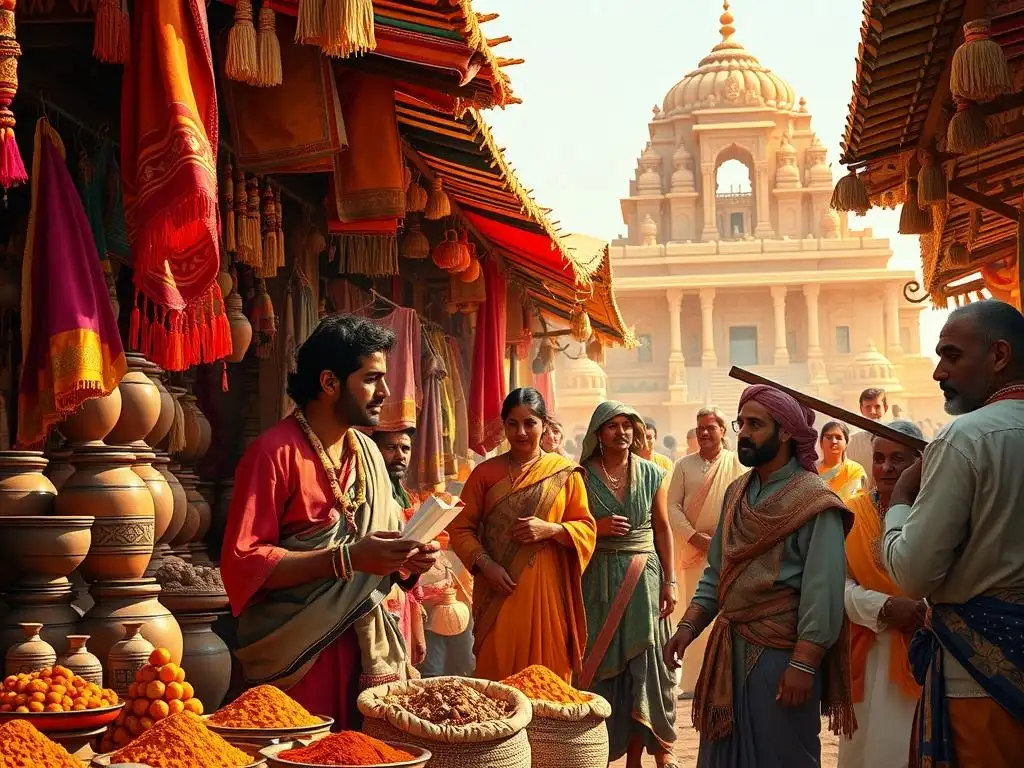
Welcome to Ancient India History, where we embark on an enthralling journey through the rich tapestry of history, culture, and innovation that defines ancient Indian civilizations. In our featured article, "The Cultural Exchange through Internal Trade in Ancient India," we unveil the fascinating dynamics of trade that not only shaped economies but also fostered cultural interactions across diverse regions. Prepare to delve into the intricate web of connections that linked communities together, sparking curiosity and collaboration. Join us as we explore how these exchanges laid the foundation for a vibrant cultural legacy that continues to influence us today!
- Introduction to Cultural Exchange in Ancient India
- Overview of Internal Trade Networks in Ancient India
- Cultural Exchange Through Internal Trade
- Case Studies of Cultural Exchange Through Trade
- The Role of Religion in Cultural Exchange via Internal Trade
- Economic Impact of Cultural Exchange
- Conclusion
- Further Reading and Resources
-
Frequently Asked Questions
- What is the significance of cultural exchange in ancient India?
- How did internal trade facilitate cultural exchange in ancient India?
- What were the main trade routes in ancient India?
- Which ancient civilizations contributed to cultural exchange in India?
- How did religion influence cultural exchange in ancient India?
- Final Reflection: The Enduring Legacy of Cultural Exchange in Ancient India
- Unveil the Rich Tapestry of Ancient India's Trade!
Introduction to Cultural Exchange in Ancient India
The cultural landscape of ancient India was profoundly shaped by various forms of exchange, with internal trade playing a pivotal role in this development. Cultural exchange in ancient India refers to the transfer of ideas, customs, beliefs, and practices among different communities, often facilitated by trade routes that crisscrossed the subcontinent.
From the sophisticated urban centers of the Indus Valley to the flourishing cities of the Gupta Empire, these trade networks not only facilitated economic transactions but also acted as conduits for cultural interactions that enriched Indian civilization. This article delves into the significance of internal trade in fostering cultural exchange, highlighting the diverse influences that shaped the social fabric of ancient Indian society.
Definition of Cultural Exchange
Cultural exchange can be defined as the mutual sharing and integration of cultural elements between different groups. In the context of ancient India, this exchange took place through various means, including:
- Trade: Merchants and traders acted as cultural ambassadors, bringing new ideas, technologies, and artistic styles from one region to another.
- Migration: The movement of people, whether for commerce or settlement, facilitated the blending of cultures and traditions.
- Religious Practices: The spread of philosophical and religious ideas, such as Buddhism and Jainism, often coincided with trade routes, leading to significant cultural transformations.
The dynamic nature of these exchanges contributed to the rich tapestry of Indian culture, marked by a synthesis of local and foreign influences.
Importance of Internal Trade in Cultural Development
Internal trade in ancient India was not merely a means of economic sustenance; it was a catalyst for cultural development. Here are several key aspects highlighting its importance:
- Economic Prosperity: Trade routes connected various regions, allowing for the exchange of goods such as textiles, spices, and precious metals. This economic interdependence laid the foundation for prosperous societies where culture could thrive.
- Cultural Diversity: Regions such as the Deccan Plateau and the Gangetic plains became melting pots of diverse traditions. The interaction among different ethnic and linguistic groups facilitated the exchange of art, music, and culinary practices.
- Knowledge Transfer: The movement of scholars and intellectuals along trade routes allowed for the dissemination of knowledge in fields such as science, mathematics, and philosophy. This exchange significantly contributed to India's intellectual heritage.
- Artistic Influences: Trade brought new artistic styles and techniques to India, evident in the intricate designs found in sculptures and architecture that reflect a blend of local and foreign elements.
- Religious Syncretism: The convergence of various religious beliefs through trade fostered an environment of tolerance and syncretism, leading to the development of rich spiritual traditions that continue to influence India today.
Internal trade networks were essential in shaping the cultural exchange in ancient India, leaving an indelible mark on its history and civilization. The interplay between trade and culture not only enriched the lives of people in ancient times but also laid the groundwork for the diverse and vibrant society that India is today.
Overview of Internal Trade Networks in Ancient India
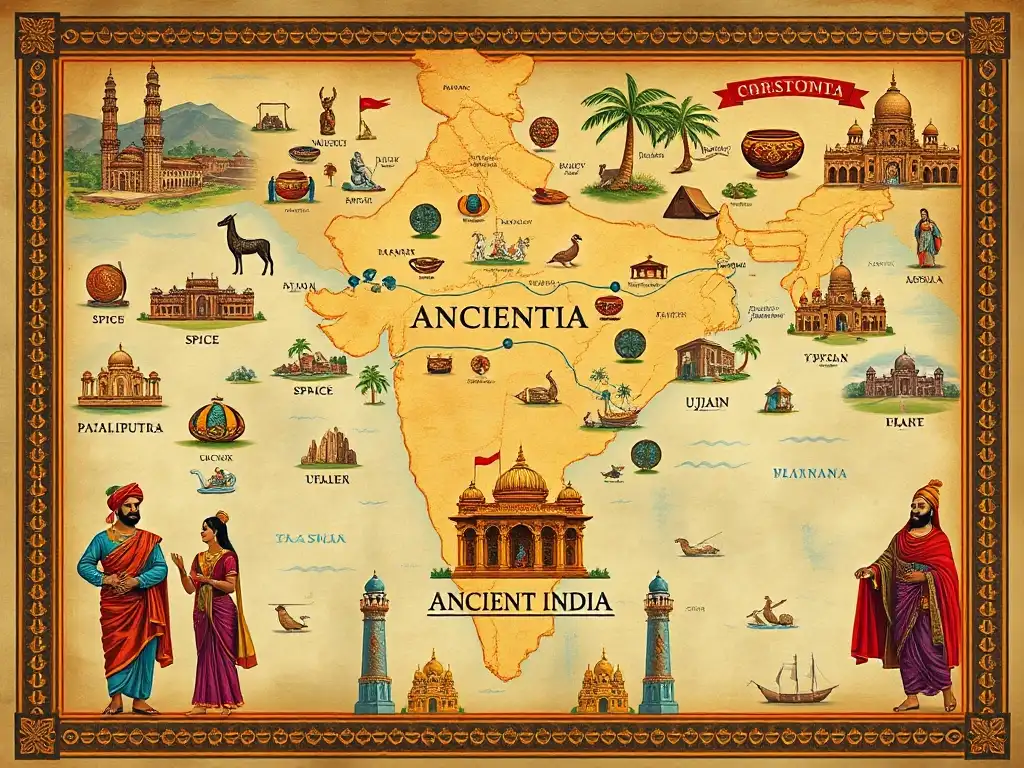
The internal trade networks of ancient India played a crucial role in fostering cultural exchange across various regions. These trade networks facilitated the movement of not only goods but also ideas, customs, and technologies among diverse communities. The interplay of geography, political stability, and economic demand shaped these networks, leading to an intricate web of interactions that contributed significantly to the cultural richness of ancient Indian civilizations.
Major Trade Routes in Ancient India
Ancient India was characterized by a vast array of trade routes that connected different regions, enabling the flow of goods and cultural influences. Some of the most prominent trade routes included:
- North-South Trade Routes: Connecting the northern plains with the southern Deccan, these routes facilitated the exchange of agricultural products, textiles, and spices.
- East-West Trade Routes: These routes linked the eastern regions of India, such as Bengal, with the western coasts, including Gujarat and Maharashtra. The movement of silk, precious stones, and various handicrafts was common along these paths.
- Riverine Trade Routes: Major rivers like the Ganges, Indus, and Brahmaputra served as natural arteries for trade. Boat transportation allowed for the easy movement of bulk goods and fostered interactions between riverine communities.
The establishment of these routes was often supported by the construction of infrastructure, such as way stations and market towns, which provided traders with necessary resources and accommodations.
Key Trading Cities and Their Roles
Several key cities emerged as vital hubs in the internal trade networks of ancient India. Their strategic locations and economic activities made them central to the cultural exchange. Among these cities were:
- Taxila: Located at the crossroads of several trade routes, Taxila was a significant center for commerce and education. It attracted traders from various regions and became a melting pot of cultures.
- Pataliputra: As the capital of the Mauryan Empire, this city served as a major trade center and a political hub. Its strategic position along the Ganges facilitated trade with both northern and southern regions.
- Kannauj: Renowned for its silk production, Kannauj became an essential city in the textile trade. The flourishing market attracted artisans and merchants, enhancing cultural interactions.
These cities were not just commercial centers; they also served as cultural crossroads where ideas, philosophies, and artistic expressions exchanged hands.
Types of Goods Traded Internally
The internal trade networks of ancient India saw the exchange of a wide variety of goods that reflected the region's diverse resources and cultural practices. The main categories of goods traded included:
- Agricultural Products: Staple crops such as rice, wheat, and pulses were transported across regions to meet the demands of urban populations.
- Textiles: Cotton and silk fabrics were in high demand, with regions like Gujarat known for their vibrant textiles. The exchange of textile techniques also played a role in cultural interactions.
- Spices and Herbs: The trade in spices, particularly black pepper, cardamom, and turmeric, was significant. These commodities not only enhanced culinary practices but also carried medicinal uses and cultural significance.
- Metals and Jewelry: Precious metals like gold and silver, along with intricately designed jewelry, were traded extensively. The craftsmanship in jewelry-making contributed to cultural identity and artistic expression.
The diverse array of goods traded internally not only satisfied economic needs but also paved the way for a rich tapestry of cultural exchange in ancient India, influencing lifestyles, traditions, and social structures.
Cultural Exchange Through Internal Trade
Mechanisms of Cultural Exchange in Trade
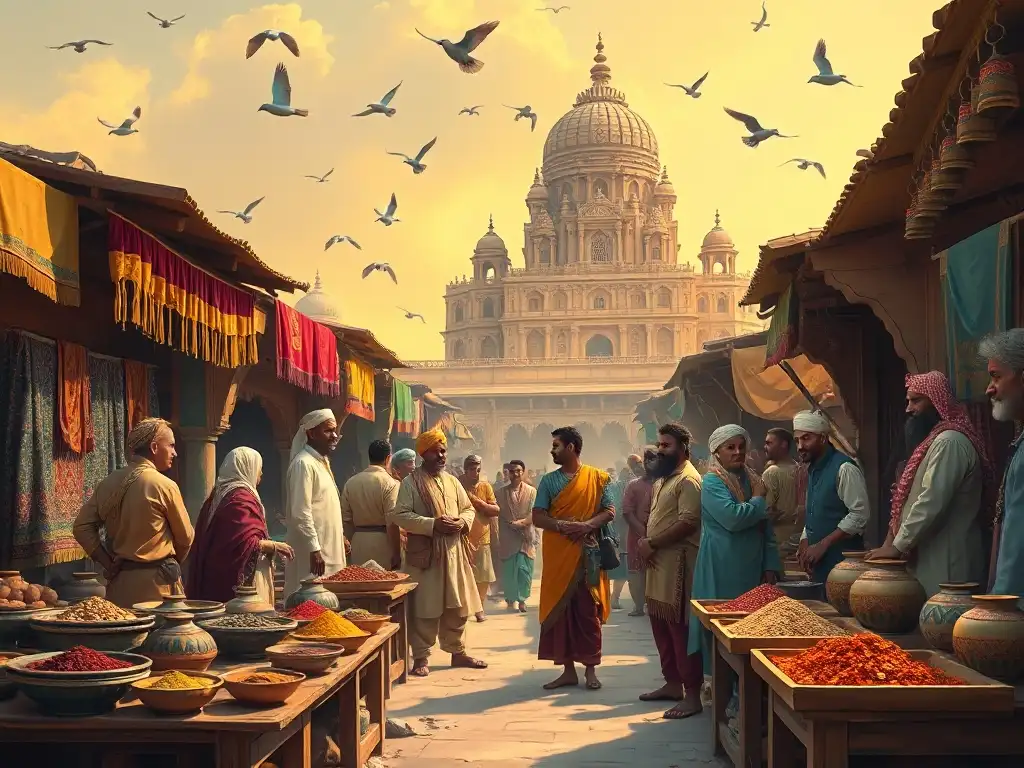
Cultural exchange in ancient India was significantly facilitated through internal trade networks, which functioned as conduits for not only goods but also ideas, beliefs, and practices. The mechanisms of this exchange can be observed in several key areas:
- Trade Routes: Major trade routes, such as the one connecting the Indus Valley to the Ganges region, played a crucial role in cultural diffusion. Merchants traveling along these routes exchanged not only commodities like spices, textiles, and metals but also cultural artifacts and practices.
- Marketplaces: Vibrant marketplaces in ancient cities, such as Pataliputra and Taxila, were melting pots of diverse cultures. These hubs attracted traders from various regions, leading to interactions that stimulated the exchange of languages, customs, and culinary practices.
- Guilds and Associations: Trade guilds, known as "shrenis," were instrumental in facilitating cultural exchange. These organizations often included members from different cultural backgrounds who shared knowledge about trade practices, technologies, and cultural customs.
- Religious Pilgrimages: Trade routes often doubled as pilgrimage paths, where merchants and pilgrims traversed the same roads. This dual purpose allowed for the exchange of religious ideas and practices alongside material goods, enriching the spiritual and cultural landscape of ancient India.
Influence of Trade on Art and Architecture
The impact of internal trade on art and architecture in ancient India is profound and multifaceted. Several aspects highlight this influence:
- Artistic Styles: As traders interacted with diverse cultures, they exchanged artistic techniques and motifs, leading to a fusion of styles. For instance, the intricate carvings found in the temples of Khajuraho reflect influences from various regions, showcasing a blend of local and foreign artistic traditions.
- Construction Materials: Trade facilitated the movement of materials such as sandstone, marble, and metals. The accessibility of these materials allowed for the construction of grand structures, including stupas and temples, which often featured elaborate artistry that reflected the cultural amalgamation resulting from trade.
- Iconography: The themes depicted in art evolved through trade interactions. For instance, the introduction of Buddhist art in ancient India showcased influences from Hellenistic styles due to trade with the west, resulting in unique representations of Buddha and Bodhisattvas that combined local traditions with external influences.
- Urban Planning: Trade also influenced urban architecture and planning. Cities like Harappa exhibited sophisticated urban layouts with grid patterns and drainage systems, a reflection of advanced knowledge likely exchanged through trade interactions.
Exchange of Ideas and Knowledge
The internal trade networks of ancient India were not merely conduits for goods; they were vibrant channels for the exchange of ideas and knowledge. This exchange manifested in several significant ways:
- Scientific Knowledge: Merchants and travelers brought with them knowledge in fields such as astronomy, mathematics, and medicine. For example, the introduction of the numeral system and concepts of zero from interactions with other cultures had a lasting impact on Indian mathematics.
- Philosophical Thought: The movement of traders often coincided with the spread of philosophical ideas. Trade routes facilitated the exchange of texts and teachings, influencing schools of thought like Buddhism and Jainism, which thrived due to the patronage of wealthy traders.
- Agricultural Practices: Trade also led to the exchange of agricultural techniques and crops. For instance, the introduction of new crops from Southeast Asia, such as rice and sugarcane, transformed agricultural practices and contributed to the dietary diversity of ancient Indian civilization.
- Cultural Practices: Festivals, rituals, and culinary traditions were also shared along trade routes. The mingling of different cultural practices enriched local traditions, leading to the celebration of diverse festivals that reflected the confluence of various communities.
The cultural exchange in ancient India, facilitated by internal trade networks, played a pivotal role in shaping the region's rich and diverse cultural heritage. Through the mechanisms of trade, influences on art and architecture, and the exchange of ideas and knowledge, ancient Indian civilizations created a dynamic tapestry of culture that continues to resonate today.
Case Studies of Cultural Exchange Through Trade

Example of the Indus Valley Civilization
The Indus Valley Civilization (IVC), which flourished from approximately 2500 to 1900 BCE, is renowned for its advanced urban planning and sophisticated trade networks. This civilization engaged in extensive trade not only within its own territories but also with neighboring regions, facilitating a significant cultural exchange.
- Urban Centers: Major cities like Harappa and Mohenjo-Daro served as bustling trade hubs. The layout of these cities, with their standardized brick structures and advanced drainage systems, indicates a highly organized society capable of supporting extensive trade activities.
- Trade Goods: The IVC is known for its production of goods such as cotton textiles, pottery, jewelry, and metalwork. These products were traded with regions as far as Mesopotamia, where they exchanged goods for lapis lazuli, tin, and other valuable commodities. This exchange fostered not only economic ties but also cultural interactions, as artisans and merchants shared techniques and ideas.
- Cultural Influences: Evidence suggests that the IVC adopted various cultural elements from its trade partners, including artistic motifs and possibly writing systems. For instance, seals discovered in the IVC display motifs that resemble those found in Mesopotamian culture, indicating a flow of ideas and aesthetic influences.
The trade networks of the Indus Valley thus played a crucial role in shaping the cultural landscape of ancient India, laying the groundwork for future civilizations.
Trade and Cultural Interactions in the Maurya Empire
The Maurya Empire, which thrived from 322 to 185 BCE, marked a significant period of cultural exchange facilitated by its robust internal trade networks. Under the leadership of Emperor Ashoka and his predecessors, the empire expanded its trade routes, enhancing interactions among diverse cultures.
- Major Trade Routes: The Maurya Empire established key trade routes connecting the northwestern regions with the eastern parts of the subcontinent. The Grand Trunk Road, one of the oldest trade routes, enabled merchants to transport goods across vast distances, promoting trade with neighboring regions such as Persia and Central Asia.
- Cultural Synthesis: This era saw an influx of ideas, philosophies, and religious beliefs. For example, the spread of Buddhism, which was supported by Emperor Ashoka, facilitated cultural exchange as Buddhist missionaries traveled along trade routes, disseminating teachings and influencing local cultures.
- Goods and Innovations: The Mauryan trade network not only facilitated the exchange of luxury goods like silk and spices but also innovations in agriculture and technology. The dissemination of agricultural techniques and tools among different regions fostered economic growth and cultural integration.
The Maurya Empire exemplifies how internal trade networks can act as conduits for cultural exchange, resulting in a rich tapestry of interactions that shaped the Indian subcontinent.
Gupta Empire: A Hub of Cultural Exchange
The Gupta Empire, often referred to as the Golden Age of India (approximately 320 to 550 CE), is characterized by remarkable advancements in art, science, and culture, largely driven by its thriving internal trade networks.
- Cultural Flourishing: The Gupta period witnessed a renaissance of arts and sciences, with scholars such as Aryabhata and Kalidasa emerging. The prosperity generated by trade allowed for patronage of the arts, leading to the creation of exquisite sculptures, literature, and architectural marvels.
- Trade Networks: The Gupta Empire established extensive trade links both domestically and internationally. Trade routes connecting the empire to Southeast Asia, the Middle East, and beyond facilitated not only economic transactions but also cultural exchanges. Goods such as textiles, metalwork, and spices were traded, while Indian culture, including religious beliefs, spread to surrounding regions.
- Religious Interactions: The Gupta period also saw the flourishing of various religions, including Hinduism and Buddhism. The movement of traders and pilgrims along trade routes facilitated the exchange of religious ideas and practices, contributing to the syncretic nature of Indian culture.
The Gupta Empire stands as a testament to how internal trade networks can catalyze cultural exchange, leading to significant advancements in society and the arts that resonate through history.
The Role of Religion in Cultural Exchange via Internal Trade
Spread of Religious Ideas Through Trade Networks
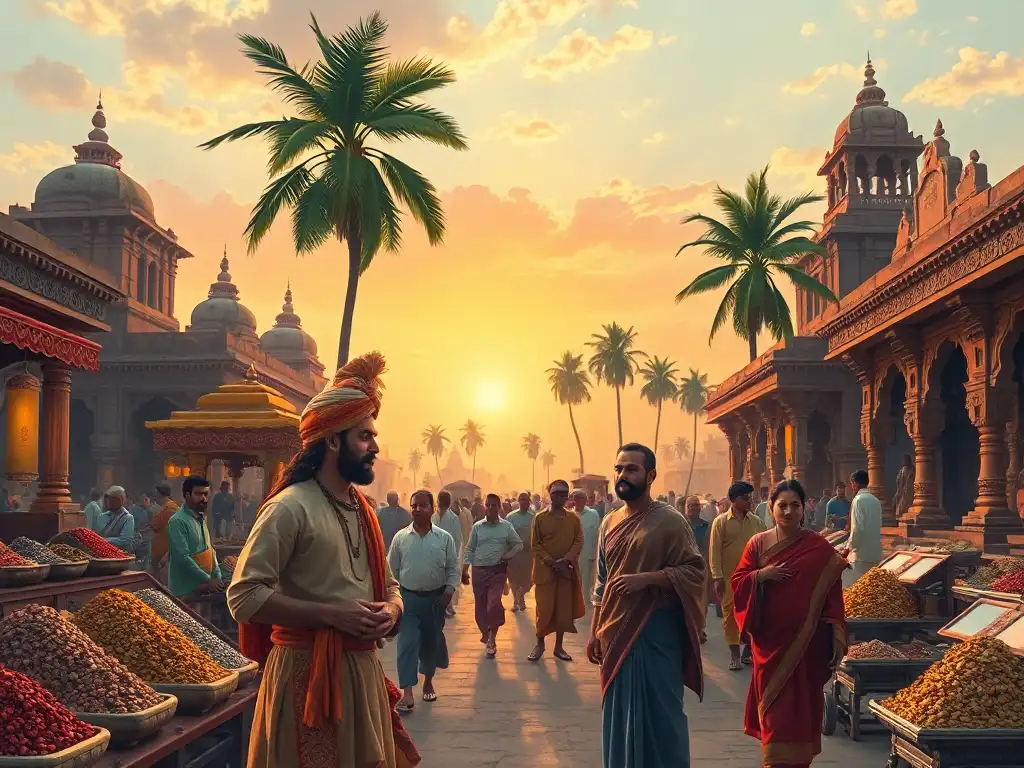
The internal trade networks of ancient India served as vital conduits for the exchange of not just goods but also religious ideas and philosophies. As merchants and traders traversed the vast expanse of the Indian subcontinent, they carried with them the tenets of their respective beliefs, facilitating a dynamic exchange that significantly impacted the spiritual landscape of the region.
- Buddhism and Jainism: The rise of Buddhism and Jainism during the 6th century BCE coincided with the flourishing of trade routes. Merchants often became patrons of these religions, contributing to the construction of stupas and monasteries along trade paths. This patronage helped disseminate religious teachings, attracting followers from different backgrounds. The spread of Buddhist texts and the establishment of monasteries, such as those at Nalanda and Taxila, served as pivotal centers for learning and spiritual exploration.
- Hinduism: As trade expanded, so did the influence of Hinduism. The movement of goods fostered the movement of ideas, leading to the blending of local deities and practices with mainstream Hindu beliefs. The worship of specific deities, such as Shiva and Vishnu, often adapted to include local customs, resulting in a rich tapestry of religious expression across diverse regions.
- Syncretism: The interactions between different cultures and religions through trade fostered syncretic practices, where elements of various faiths merged. This is particularly evident in regions like the Deccan Plateau, where Hindu and Buddhist symbols often coexisted, influencing art, architecture, and ritual practices.
Influence of Trade on Religious Practices and Festivals
Trade not only facilitated the spread of religious ideas but also significantly influenced the religious practices and festivals observed in ancient India. The economic activities surrounding trade often interwove with religious observances, resulting in vibrant cultural expressions.
- Festival Celebrations: Major trade hubs became centers for religious festivals, attracting merchants and travelers. For instance, the Kumbh Mela, celebrated at the confluence of major rivers, is believed to have originated as a trade fair that evolved into a significant pilgrimage and festival. This festival illustrates how economic activity can catalyze religious gatherings, transforming them into grand celebrations that attract participants from far and wide.
- Culinary Exchange: The internal trade routes also facilitated the exchange of culinary practices associated with festivals. For example, the introduction of various spices and cooking techniques from different regions enriched the offerings during religious ceremonies, leading to unique regional variations in food associated with festivals.
- Ritual Offerings: The economic prosperity brought about by trade allowed communities to invest in elaborate rituals and ceremonies. The availability of resources enabled the construction of grand temples and the organization of large-scale religious events, further embedding trade within the fabric of religious life.
The intertwining of internal trade and religious practices in ancient India underscores the profound impact of cultural exchange on the development of religious ideologies and community traditions. The mutual reinforcement of trade and religion not only enriched the spiritual landscape but also fostered a sense of unity and diversity across the subcontinent.
Economic Impact of Cultural Exchange
How Cultural Exchange Fueled Economic Growth
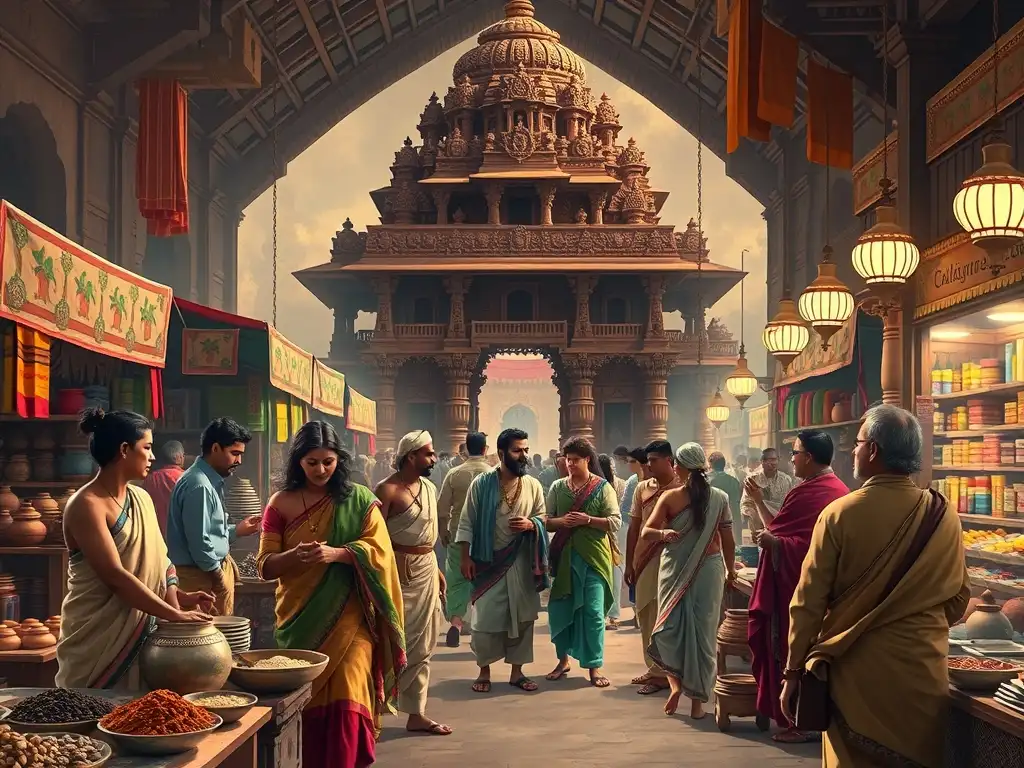
Cultural exchange in ancient India significantly contributed to the economic growth of various regions, primarily through internal trade networks that fostered the movement of goods, ideas, and people. The flourishing trade routes, such as the Grand Trunk Road, enabled merchants to transport commodities ranging from spices and textiles to precious stones and metals. This not only facilitated trade but also led to the mingling of diverse cultures and traditions, which in turn stimulated economic activities.
The Indus Valley Civilization, for instance, showcased advanced urban planning and a profound understanding of trade. The cities of Harappa and Mohenjo-Daro served as critical trade hubs, where merchants engaged in barter systems, exchanging local crafts for goods from distant lands. This exchange was not limited to tangible products; it also included knowledge, art, and religious beliefs, which enriched the local culture and economy.
Moreover, the Mauryan Empire (322-185 BCE) played a pivotal role in enhancing internal trade. Under Emperor Ashoka, the establishment of a uniform currency and standardized weights and measures simplified transactions. The promotion of trade led to economic prosperity and encouraged cultural exchanges through the introduction of diverse art forms and philosophical ideas, particularly Buddhism, which spread across India and beyond.
The Relationship Between Trade and Cultural Prosperity
The interconnectedness between trade and cultural prosperity in ancient India is evident in the way trade routes facilitated not just the movement of goods but also the diffusion of cultural practices. As traders traveled, they brought with them various cultural elements, including languages, religions, and artistic expressions, leading to a rich tapestry of cultural amalgamation.
- Religious and Philosophical Exchange:
- Trade routes allowed for the spread of religions such as Buddhism and Jainism, which gained followers in different regions. For example, the presence of Buddhist stupas in places like Sanchi and Amaravati indicates the influence of trade on the dissemination of religious beliefs.
- Artistic Influences:
- The interaction among diverse cultures led to unique artistic expressions. The Gandhara art style, which emerged in northwestern India, is a prime example of how Greco-Buddhist influences shaped artistic techniques and iconography.
- Culinary Exchange:
- Trade also influenced culinary practices, as spices and cooking techniques were exchanged between regions. The use of spices like black pepper and cardamom not only enhanced local cuisine but also made Indian spices highly sought after in international markets.
The interplay between cultural exchange and economic growth in ancient India underscores the significance of internal trade networks. The economic prosperity generated through trade not only facilitated the exchange of goods but also fostered a vibrant cultural landscape that enriched the heritage of ancient Indian civilizations. The legacy of this cultural exchange continues to resonate, illuminating the profound impact of trade on societal development and cultural evolution.
Conclusion
Summary of Cultural Exchange in Ancient India
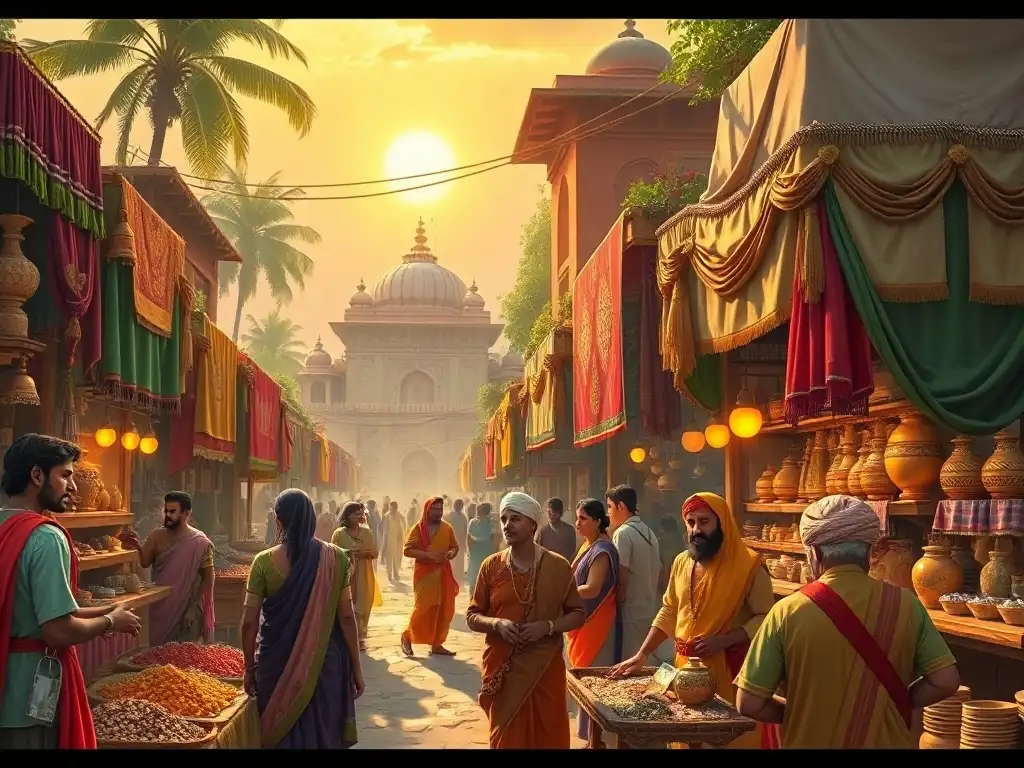
Cultural exchange in ancient India was significantly influenced by the vibrant internal trade networks that sprawled across the subcontinent. These trade routes facilitated not only the exchange of goods but also ideas, customs, and practices among diverse communities. Key trade centers such as Pataliputra, Ujjain, and Taxila became melting pots of cultures, where merchants, artisans, and scholars interacted, leading to a rich tapestry of cultural amalgamation.
The goods traded—ranging from spices and textiles to precious stones—were symbolic of the regions they originated from, embedding local cultural identities into the broader Indian civilization. Festivals, languages, and artistic expressions were shared along these routes, enriching the cultural landscape. For instance, the spread of Buddhism and Jainism was closely tied to trade routes, as monks traveled with merchants to disseminate their teachings, thereby fostering spiritual and philosophical exchanges alongside economic ones.
Lasting Impact of Internal Trade on Indian Culture
The lasting impact of internal trade on Indian culture can be observed in several dimensions:
- Culinary Diversity:
- The exchange of spices and cooking techniques led to a rich culinary heritage. For example, the use of saffron, introduced through trade, became a staple in various regional cuisines.
- Art and Architecture:
- Trade facilitated the movement of artisans and ideas, leading to the fusion of architectural styles. The intricate carvings found in temples across India, such as those in Khajuraho, illustrate how regional styles influenced one another.
- Language and Literature:
- The interaction among traders from different linguistic backgrounds resulted in the borrowing of words and phrases, contributing to the evolution of regional languages. Literary works often reflect this blend, showcasing influences from various dialects and cultures.
- Religious Syncretism:
- Internal trade routes were instrumental in the spread of religious ideas, leading to syncretic practices that combined elements from Hinduism, Buddhism, and Jainism. This blending is evident in festivals and rituals celebrated across different communities.
- Social Structures:
- The rise of merchant classes through trade contributed to changes in social dynamics, leading to the emergence of new social hierarchies and the eventual establishment of guilds that influenced economic and cultural practices.
The internal trade networks of ancient India were not merely conduits for commerce; they were vital channels for cultural exchange that shaped the diverse and rich tapestry of Indian civilization. The legacies of this cultural intermingling continue to resonate in modern Indian society, making it a unique amalgamation of traditions, practices, and beliefs that originated from its ancient roots.
Further Reading and Resources
Recommended Books on Ancient Indian Trade and Culture
-
"The Trade Routes of Ancient India" by R. C. Majumdar
This comprehensive work explores the various trade routes established during ancient times and their impact on cultural exchange. The author delves into the economic systems, trade practices, and the interactions among different civilizations.
-
"Cultural History of Ancient India" by N. Jha
Jha's book examines the cultural dimensions of trade in ancient India, highlighting how economic activities fostered cultural exchanges between various communities and regions.
-
"Indus Valley Civilization: A Cultural Perspective" by S. R. Rao
This insightful book offers a detailed analysis of the Indus Valley Civilization, focusing on its trade practices and the subsequent cultural exchanges that influenced later Indian societies.
-
"The Gupta Empire: A Historical Overview" by R. S. Sharma
Sharma presents an in-depth study of the Gupta Empire, with a specific focus on its trade networks and the cultural exchanges that flourished during this period, contributing to the overall development of ancient Indian civilization.
-
"Silk Roads: Peoples, Cultures, Landscapes" edited by Susan Whitfield
While not exclusively about India, this collection discusses the broader context of the Silk Roads, including India's role in cultural exchanges and trade, which is essential for understanding the interconnectedness of ancient civilizations.
Online Archives and Historical Resources
-
Digital South Asia Library
This online resource provides access to a wealth of documents, maps, and images related to South Asian history. A valuable section focuses on trade routes and the cultural exchanges that occurred in ancient India.
-
Internet Archive
A vast repository of texts, including many historical books and manuscripts related to ancient Indian trade and culture. Users can explore various topics through digitized versions of rare texts.
-
The British Library
The British Library has a significant collection of ancient Indian manuscripts and documents that detail trade practices and cultural interactions. Their online resources include digitized manuscripts, maps, and images from different eras.
-
Archaeological Survey of India (ASI)
The ASI website offers extensive resources on archaeological findings related to trade networks in ancient India, including reports and research papers that highlight cultural exchanges facilitated through trade.
-
India's Ancient History - [Online Course by edX]
This free online course explores various aspects of ancient Indian history, including trade and cultural exchanges. It's an excellent resource for anyone looking to deepen their understanding of the subject.
By leveraging these books and resources, readers can gain a deeper insight into the cultural exchange in ancient India and the vital role internal trade played in shaping this rich and diverse civilization.
Frequently Asked Questions
What is the significance of cultural exchange in ancient India?
Cultural exchange played a crucial role in shaping the diverse civilizations of ancient India, fostering trade relationships and the sharing of ideas, art, and technologies between various regions.
How did internal trade facilitate cultural exchange in ancient India?
Internal trade allowed for the movement of goods and people, leading to interactions among different communities, which in turn promoted the exchange of cultural practices, languages, and religious beliefs.
What were the main trade routes in ancient India?
The main trade routes included the Grand Trunk Road and various river routes, which connected key regions such as the Indus Valley and the Gangetic Plains, facilitating both commerce and cultural interactions.
Which ancient civilizations contributed to cultural exchange in India?
Civilizations such as the Maurya and Gupta Empires significantly contributed to cultural exchange, promoting advancements in art, science, and philosophy through their trade networks and interactions with neighboring cultures.
How did religion influence cultural exchange in ancient India?
Religion was a major factor in cultural exchange, with the spread of Buddhism and Hinduism promoting interactions that led to the sharing of philosophical ideas and artistic expressions across different regions.
Final Reflection: The Enduring Legacy of Cultural Exchange in Ancient India
Cultural exchange in ancient India was not merely a historical phenomenon; it was a vibrant tapestry that wove together diverse traditions, beliefs, and practices, shaping the very essence of Indian civilization. Today, as we navigate an increasingly interconnected world, the lessons from this rich past resonate more than ever. The ability to embrace diversity and foster dialogue among different cultures is crucial in addressing contemporary global challenges. The intricate web of trade routes that facilitated this exchange serves as a reminder that collaboration and mutual respect can lead to profound enrichment.
The impact of cultural exchange in ancient India continues to echo in our modern society, influencing everything from art to philosophy. The fusion of ideas and practices that emerged from this dynamic interaction has laid the groundwork for a pluralistic society that values inclusivity. As we reflect on this legacy, we are reminded of the words of Mahatma Gandhi: Our ability to reach unity in diversity will be the beauty and the test of our civilization.
This sentiment underscores the importance of recognizing and celebrating our differences while finding common ground.
As we conclude this exploration of cultural exchange in ancient India, I invite you to reflect on your own experiences with diversity in your life. Consider how you can foster a spirit of openness and curiosity in your interactions with others. By embracing the lessons of the past, we can cultivate a future that honors the richness of our shared humanity. Let us strive to be ambassadors of cultural exchange, ensuring that the legacy of ancient India continues to inspire and guide us in our journey toward a more harmonious world.
Unveil the Rich Tapestry of Ancient India's Trade!
Thank you for diving deep into the fascinating world of cultural exchange through internal trade in ancient India! Your interest helps illuminate the incredible connections that shaped societies and economies. Now, let's take the next steps to broaden your understanding and appreciation of this rich history.
- Explore further: Discover the various trade routes that facilitated cultural exchanges and uncover the intriguing stories behind them.
- Share your insights: Engage with our community on social media to discuss your thoughts with fellow history enthusiasts!
- Initiate your own conversations by visiting local museums or exhibitions dedicated to ancient trade and culture.
In what ways do you think internal trade has influenced the cultural identities we see in today's society?