
The Role of Agriculture in the Rise and Fall of Ancient Indian Empires


Welcome to Ancient India History, where we delve deep into the rich and diverse tapestry of India's past! In this journey, we invite you to explore the fascinating world of Ancient Indian agriculture history—a cornerstone that fueled the rise and fall of mighty empires. What secrets lie beneath the soil of the Indus Valley or the fields of the Gupta Empire? Join us as we uncover how agricultural practices shaped not just economies, but entire civilizations. Prepare to be intrigued and inspired—your exploration of this captivating narrative starts here!

Introduction to Ancient Indian Agriculture History
The history of agriculture in ancient India is a crucial narrative that intertwines with the rise and fall of its empires. From the early settlements of the Indus Valley Civilization to the sophisticated agrarian systems of the Gupta Empire, agriculture formed the backbone of social, economic, and political stability. The fertile lands of the Indo-Gangetic plains and the innovative irrigation techniques developed over centuries played a pivotal role in sustaining large populations and enabling the growth of powerful states. This article explores how ancient Indian agriculture history not only supported thriving civilizations but also influenced their eventual decline.
Overview of Ancient Indian Agriculture
Agriculture in ancient India was characterized by its diversity and adaptability. The climatic and geographical variety of the subcontinent allowed for a wide range of crops to be cultivated across different regions. Key features of ancient Indian agriculture included:
- Diverse Crops: The cultivation of cereals, pulses, and oilseeds, such as rice, wheat, barley, and mustard.
- Irrigation Systems: The development of sophisticated irrigation methods, including canals and reservoirs, to enhance agricultural productivity.
- Seasonal Practices: The reliance on monsoon patterns for rain-fed agriculture and the adaptation of farming practices to seasonal changes.
The importance of these agricultural practices cannot be overstated, as they provided the necessary sustenance for the growing populations of ancient Indian cities.
Importance of Agriculture in Ancient Civilizations
Agriculture was not merely a means of subsistence; it was integral to the socio-economic framework of ancient Indian civilizations. The significant contributions of agriculture included:
- Economic Stability: Agricultural surpluses supported trade and commerce, facilitating the growth of urban centers.
- Social Structure: The agrarian economy influenced social hierarchies, with landowners often holding substantial power and influence.
- Cultural Significance: Agriculture shaped religious practices and festivals, reflecting the deep connection between farming and the cultural identity of various communities.
The interplay between agriculture, society, and culture created a dynamic environment that fostered the development of some of the most influential empires in ancient history.
The Agricultural Foundations of Ancient Indian Empires
Key Crops in Ancient Indian Agriculture
The agricultural landscape of ancient India was marked by the cultivation of several key crops that were vital to both sustenance and trade:
- Rice: Predominantly grown in the eastern regions, rice became a staple food supporting large populations.
- Wheat: A major crop in the northern plains, wheat was essential for both food and trade with neighboring regions.
- Barley and Millets: These hardy crops were cultivated in arid areas, serving as important food sources.
The cultivation of these crops not only provided food security but also played a role in the economic prosperity of ancient Indian empires.
Agricultural Techniques in Ancient India
The advancement of agricultural techniques was crucial for maximizing productivity and sustaining large populations. Among the notable practices were:
- Crop Rotation: Ancient farmers practiced crop rotation to maintain soil fertility and prevent pest buildup.
- Irrigation Innovations: Techniques such as well digging and canal systems were developed to harness water resources effectively.
- Use of Fertilizers: Organic fertilizers, derived from animal manure and compost, were employed to enhance soil health.
These innovative techniques contributed to the resilience and adaptability of ancient Indian agriculture, supporting the emergence and stability of powerful empires throughout history.
The Economic Impact of Agriculture on Ancient Indian Empires
Agriculture was a cornerstone of the ancient Indian economy, shaping the social and political landscapes across various empires. The abundance or scarcity of agricultural produce directly influenced the prosperity of these civilizations. The interdependence of agricultural practices and economic stability is evident through historical records, showing how the success of crops translated into wealth that supported trade, military campaigns, and urbanization.
Agriculture also dictated land ownership patterns, with fertile regions often leading to the rise of powerful landlords and agrarian elites. These socio-economic structures affected governance, as rulers relied on agricultural output for taxation and resource allocation. The fluctuations in crop yields due to seasonal changes could result in economic booms or famines, illustrating the delicate balance between agriculture and empire stability.
Agriculture as the Backbone of the Economy
In ancient India, agriculture was not just a means of sustenance; it was the backbone of the economy. The majority of the population was engaged in farming, cultivating a variety of crops such as rice, wheat, barley, and pulses. The agrarian lifestyle influenced social organization, with rural communities forming the base of societal structures. The importance of agriculture is reflected in ancient texts, which often emphasized agricultural rituals and the reverence of fertility deities.
The agricultural economy was characterized by intricate systems of land tenure and labor. Villagers worked collectively, sharing tools and resources, and yielding a surplus that was essential for trade and sustenance during lean seasons. Additionally, advancements in agricultural techniques, such as crop rotation and irrigation, enhanced productivity, which in turn facilitated the growth of urban centers that relied on agricultural surplus to thrive.
Trade and Agriculture in Ancient India
Agriculture played a crucial role in shaping trade practices in ancient India. The surplus generated from farming not only ensured food security but also provided goods for barter and commerce. Marketplaces flourished as farmers exchanged their produce for essential items, including textiles, metalwork, and pottery. This exchange was vital for economic interaction both within India and with neighboring regions.
The development of trade routes further reflected the significance of agriculture. The Silk Road and maritime routes allowed for the exchange of agricultural products, such as spices and grains, which were highly sought after. The integration of agriculture into broader economic networks led to increased wealth and cultural exchange, solidifying India's position in the ancient world as a center of commerce.
The Rise of Empires Fueled by Agricultural Success
The success of ancient Indian empires can be attributed significantly to their agricultural advancements. A stable agricultural base allowed these civilizations to support large populations, maintain armies, and engage in extensive trade. The interplay between agricultural productivity and political power significantly influenced the rise and fall of these empires.
The Indus Valley Civilization: A Case Study
The Indus Valley Civilization (c. 3300–1300 BCE) serves as a prime example of how agriculture fueled the growth of an ancient empire. Located along the fertile banks of the Indus River, the civilization thrived due to its advanced agricultural techniques, including irrigation systems that maximized crop yields. Evidence of well-planned cities, such as Mohenjo-Daro and Harappa, suggests that agricultural surplus supported urbanization and complex societal structures.
The economy was likely based on a variety of crops, with rice and wheat being predominant. The ability to produce surplus food allowed for specialization of labor, leading to advancements in crafts, trade, and governance. However, the decline of the Indus Valley Civilization is attributed to changes in climate and river patterns that disrupted agricultural production, highlighting the critical role agriculture played in their rise and eventual fall.
The Maurya Empire: Harnessing Agricultural Wealth
The Maurya Empire (c. 322–185 BCE) exemplified the strategic utilization of agricultural wealth for imperial expansion. Under the leadership of Chandragupta Maurya and later Ashoka, the empire implemented effective agricultural policies, including land revenue systems that maximized tax collection from farmers. This revenue supported a vast military and extensive infrastructure, enabling control over a large territory.
The Mauryan period saw significant advancements in irrigation, which enhanced agricultural productivity. This not only ensured food security for the population but also facilitated trade across the empire. The agricultural surplus allowed for the construction of roads and trade routes that linked various regions, promoting economic integration and cultural exchange. Ultimately, the prosperity derived from agriculture was instrumental in establishing the Maurya Empire as one of the most powerful in ancient Indian history.
Factors Leading to the Decline of Empires Due to Agricultural Failures
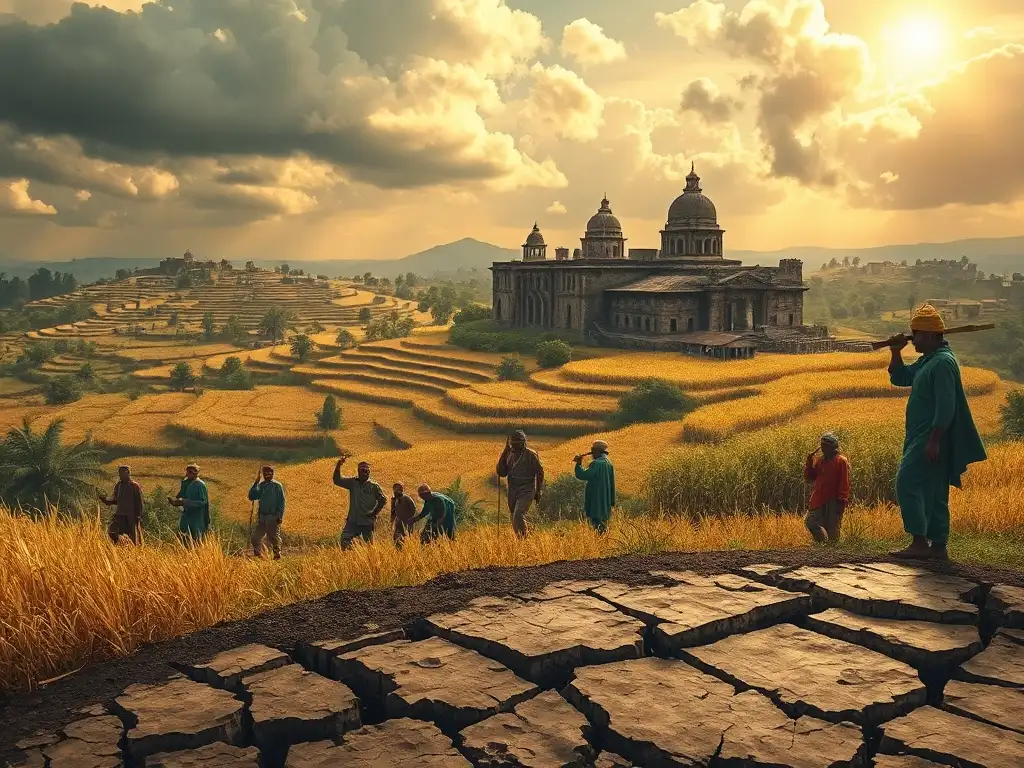
The decline of ancient Indian empires is often intricately linked to failures in agriculture, which served as the backbone of their economies and societal structures. A multitude of factors contributed to these agricultural failures, leading to significant repercussions for the political and economic stability of these empires. Understanding these factors provides insight into how agriculture shaped the trajectory of ancient Indian history.
Environmental Challenges and Agricultural Decline
Environmental factors have historically played a crucial role in the agricultural landscape of ancient India. The monsoon season, essential for watering crops, was often unpredictable, leading to periods of drought or flooding. Such climatic variations had devastating effects on crop yields, ultimately affecting food supply and economic stability.
- Droughts: Prolonged dry spells led to crop failures, pushing agrarian communities into famine, which in turn could incite social unrest.
- Flooding: Excessive rainfall could inundate fields, destroying crops and eroding soil. This decreased agricultural productivity and could lead to displacement of farming populations.
- Soil Degradation: Overcultivation and deforestation for agricultural expansion resulted in soil exhaustion and erosion, diminishing land fertility over time.
These environmental challenges were often compounded by the technological limitations of the time, making it difficult for societies to adapt effectively to changing conditions.
Political Mismanagement of Agricultural Resources
Political mismanagement of agricultural resources was another significant factor contributing to the decline of ancient Indian empires. The administration of agricultural policies, taxation, and resource allocation often reflected the priorities and capabilities of ruling powers.
- High Taxation: Excessive taxes on farmers can lead to discontent and reduced agricultural output as farmers struggle to maintain their livelihoods. When the burden of taxation becomes unbearable, it can lead to widespread rebellion and unrest.
- Corruption and Inefficiency: Corrupt officials may exploit agricultural resources for personal gain, diverting essential supplies away from the populace and undermining the agricultural economy.
- Neglect of Infrastructure: Lack of investment in irrigation systems, roads, and storage facilities contributed to inefficiencies in agricultural production and distribution, exacerbating food shortages and economic instability.
The inability of rulers to effectively manage agricultural resources often resulted in a weakened state, making it vulnerable to external threats and internal dissent.
Case Studies of Specific Empires: Agriculture's Role in Their Fate
The examination of specific empires reveals how agriculture directly influenced their rise and fall. Notably, the Gupta Empire and the Chola Dynasty illustrate the critical role of agricultural practices and policies in shaping historical outcomes.
The Gupta Empire: Agricultural Prosperity and Its Challenges
The Gupta Empire (circa 320 to 550 CE) is often celebrated for its golden age, marked by significant advancements in art, science, and culture. Central to this prosperity was a robust agricultural system that supported a growing population and urbanization.
- Irrigation Techniques: The Guptas implemented advanced irrigation systems, such as wells and canals, enhancing agricultural productivity and ensuring a stable food supply.
- Crop Diversity: Enhanced agricultural practices led to the cultivation of diverse crops, including rice, wheat, and pulses, which contributed to food security.
- Challenges: However, the later years of the Gupta Empire saw a decline in agricultural output due to overextension, invasion, and potential climatic changes that disrupted traditional farming practices. This decline weakened the empire economically and socially, paving the way for its eventual fragmentation.
The Chola Dynasty: Innovations and Agricultural Decline
The Chola Dynasty (circa 300 BCE to 1279 CE) is known for its naval prowess and cultural achievements, but agriculture played a crucial role in its rise and fall.
- Innovative Practices: The Cholas were pioneers in the development of irrigation systems, including an extensive network of canals that improved rice cultivation. These innovations allowed for surplus production, which supported trade and economic growth.
- Decline Factors: Despite their agricultural successes, the Chola Dynasty faced challenges such as environmental changes, overreliance on a single crop, and invasions that disrupted agricultural output. The inability to adapt to these challenges ultimately led to a decline in agricultural productivity, weakening the empire's economic foundation and contributing to its eventual downfall.
The interplay between agriculture, environmental factors, and political management has been pivotal in defining the fates of ancient Indian empires. The lessons learned from these historical examples underscore the importance of sustainable agricultural practices and effective governance in ensuring the stability and growth of civilizations.
Conclusion: The Lasting Legacy of Ancient Indian Agriculture
The agricultural practices established in ancient India laid the groundwork for the development of complex societies and the rise of powerful empires. These practices not only contributed to economic stability and growth but also fostered cultural advancements and social stratification. The innovative methods of irrigation, crop rotation, and the domestication of various plants and animals allowed civilizations such as the Indus Valley and the Maurya Empire to thrive. Today, the effects of these early agricultural practices can still be seen in modern agricultural techniques and the socio-economic structure of contemporary India.
Moreover, the legacy of ancient Indian agriculture is evident in the diverse culinary traditions and agricultural festivals that continue to be celebrated. The reverence for the land and the agrarian lifestyle remains a prominent aspect of Indian culture. In essence, the agricultural innovations of ancient India not only fueled the rise of empires but also established a connection to the earth that has endured through the centuries, shaping both the historical narrative and the cultural identity of India.
Lessons from Ancient Indian Agriculture History
Ancient Indian agriculture history offers several valuable lessons that are applicable even in today's rapidly changing world.
- Sustainable Practices: Ancient farmers utilized sustainable agricultural techniques, such as crop rotation and intercropping, which prevented soil depletion and maintained ecosystem health. Modern agriculture can learn from these practices to enhance sustainability and combat environmental degradation.
- Water Management: The sophisticated irrigation systems developed by ancient civilizations, including wells, canals, and tanks, highlight the importance of water conservation. Contemporary challenges such as water scarcity necessitate revisiting these ancient methods to ensure efficient and sustainable water use.
- Biodiversity: The diverse agricultural practices of ancient India promoted the cultivation of a wide range of crops, which helped in maintaining biodiversity. This serves as a reminder of the significance of preserving indigenous crops and traditional farming methods in the face of monoculture and industrial agriculture.
- Cultural Integration: Agriculture was not merely an economic activity but also a cultural one, influencing festivals, rituals, and social structures. Recognizing the cultural aspects of agriculture can help modern societies establish a more holistic approach to farming that respects traditions while innovating for the future.
The Influence of Ancient Agricultural Practices on Modern India
The agricultural practices of ancient India have had a profound influence on modern Indian agriculture, shaping not just methods but also the socio-economic fabric of the country.
- Crop Diversity: The ancient emphasis on diverse crops has led to the sustenance of traditional varieties that are still cultivated today. This diversity is crucial for food security and resilience against pests and climate change.
- Irrigation Techniques: The principles behind ancient irrigation practices continue to resonate in modern systems. Techniques such as rainwater harvesting and the use of traditional water bodies are being revived to address current water management challenges.
- Agricultural Festivals: The connection between agriculture and culture remains strong. Festivals like Makar Sankranti and Pongal celebrate harvests and agricultural abundance, reflecting the lasting legacy of agrarian societies in the cultural consciousness of India.
- Policy and Education: Understanding ancient agricultural practices has informed agricultural policies and education, promoting a blend of traditional and modern techniques that address contemporary agricultural needs.
References
Key Texts and Archaeological Findings
- "The Indus Civilization: A Contemporary Perspective": by Gregory L. Possehl provides insights into the agricultural practices of the Indus Valley Civilization, highlighting its advanced urban planning and agricultural techniques.
- "Ancient India" by Romila Thapar explores the socio-economic structures of ancient Indian empires, including the pivotal role of agriculture in their development and decline.
- "The Agricultural History of India" by A. K. Singh discusses various historical agricultural practices, including crop cultivation and irrigation systems, and their evolution through time.
- Archaeological findings, such as those from Harappa and Mohenjo-Daro, have revealed evidence of sophisticated granaries and irrigation systems, underscoring the importance of agriculture in urban planning.
Suggested Further Reading on Ancient Indian Agriculture History
- "The Origins of Agriculture in India" by V. N. Misra offers a comprehensive look at the transition from hunter-gatherer societies to settled agricultural communities.
- "Farmers and Kings: The Story of Agriculture in Ancient India": by K. R. K. Rao provides an engaging narrative on how agriculture shaped the political and social landscapes of ancient Indian empires.
- "The Role of Agriculture in Indian History" by Jagdish N. Singh examines the broader implications of agricultural practices on the historical trajectory of Indian civilization.
- "Sustainable Agriculture in Ancient India" by R. S. Sharma discusses ancient practices that align with modern sustainable agriculture principles, providing insights into how these practices can be adapted today.
- Introduction to Ancient Indian Agriculture History
- The Agricultural Foundations of Ancient Indian Empires
- The Economic Impact of Agriculture on Ancient Indian Empires
- The Rise of Empires Fueled by Agricultural Success
- Factors Leading to the Decline of Empires Due to Agricultural Failures
- Case Studies of Specific Empires: Agriculture's Role in Their Fate
- Conclusion: The Lasting Legacy of Ancient Indian Agriculture
- References
- What were the primary crops cultivated in ancient India?
- How did agriculture influence the rise of ancient Indian empires?
- What role did irrigation play in ancient Indian agriculture?
- How did agricultural practices evolve over time in ancient India?
- What factors contributed to the decline of agricultural societies in ancient India?
Frequently Asked Questions
What were the primary crops cultivated in ancient India?
Ancient Indian agriculture history reveals that wheat, barley, rice, and legumes were the primary crops cultivated. These staples significantly supported the population and economy of ancient civilizations.
How did agriculture influence the rise of ancient Indian empires?
Agriculture was a cornerstone of ancient Indian societies, providing the food security needed for population growth and urbanization. This led to the establishment and expansion of great empires, such as the Maurya and Gupta.
What role did irrigation play in ancient Indian agriculture?
Irrigation was crucial for enhancing crop yields and enabling farming in arid regions. Ancient civilizations developed sophisticated irrigation systems, which supported sustainable agriculture and contributed to their prosperity.
How did agricultural practices evolve over time in ancient India?
Over the centuries, ancient Indian agriculture saw the introduction of new techniques and crops through trade and cultural exchange. This evolution included the use of crop rotation and improved tools, which increased efficiency and productivity.
What factors contributed to the decline of agricultural societies in ancient India?
The decline of agricultural societies in ancient India was often linked to environmental changes, invasions, and over-exploitation of resources. These factors disrupted food production and led to the downfall of once-thriving empires.
Final Reflection: The Enduring Legacy of Ancient Indian Agriculture
The intricate relationship between agriculture and the rise and fall of ancient Indian empires underscores the profound impact of agricultural practices on societal development. Today, as we grapple with global food security and sustainable farming, the lessons from ancient Indian agriculture history resonate more than ever. The agricultural innovations and challenges faced by these empires offer invaluable insights into how civilizations can thrive or decline based on their relationship with the land.
The legacy of ancient Indian agriculture continues to shape our cultural and social landscapes. From the sophisticated irrigation techniques of the Indus Valley Civilization to the agrarian policies of the Maurya and Gupta empires, these historical practices laid the groundwork for modern agricultural systems. As historian R. S. Sharma aptly noted, The history of agriculture is the history of civilization itself.
This observation highlights the ongoing relevance of agricultural development in shaping societal structures and cultural identities, reminding us that our past is intricately woven into our present.
As we reflect on the lessons of ancient Indian agriculture, let us consider how we can apply these insights to our contemporary challenges. I invite you to explore your own relationship with agriculture and food production, whether through supporting local farmers, advocating for sustainable practices, or simply being more mindful of what you consume. By honoring the legacy of those who came before us, we can cultivate a future that respects the land and nurtures our communities, ensuring that the lessons of history guide us toward a more sustainable and equitable world.
Uncover the Secrets of Ancient Agriculture!
Thank you for exploring the fascinating world of ancient Indian empires and their agricultural practices! By understanding the pivotal role of agriculture, you've taken a significant step toward appreciating the complexities of our history. Now, it's time to turn that knowledge into action!
Here’s how you can deepen your understanding and become part of the conversation:
- Join a local history group specializing in ancient civilizations— share your newfound insights and learn from others!
- Explore historic sites related to agriculture in India— whether it's a museum or a farm employing traditional techniques, immerse yourself in the past for a richer experience.
- Start a discussion online: Share this article with friends or on social media— spark conversations about how agriculture shaped not only ancient empires but continues to influence societies today!
What aspect of ancient agriculture intrigues you the most—its techniques, societal impacts, or its role in sustaining empires? Let’s discuss!